
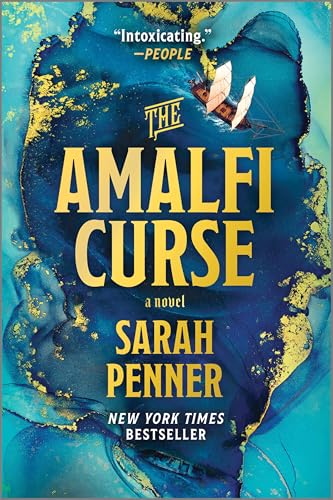
The Amalfi Curse (2025)
Select Sections to Print
×Book Details
The Amalfi Curse (2025)
Jump to Section
⚠️ Trigger Warnings
- Gender discrimination and misogyny
- Death of a parent
- Death of a sibling
- Child loss
- Grief
- Murder
- Suicide
- Suicidal ideation
- Kidnapping and abduction
- Child kidnapping
- Child endangerment
- Physical assault
- Torture
- Medical trauma
- Stroke
- Cardiac arrest
- Graphic injuries
- Drowning
- Shipwreck
- Sexual content
- Alcohol use
- Cursing
- Animal distress
- Natural disaster threat
⏱️ 2-Minute Spoiler Summary
In 1821, sea witch Mari DeLuca falls in love with American sailor Holmes Foster, but their plans to escape together are destroyed when Mari’s jealous cousin betrays her coven to the ruthless Mazza shipping family. After kidnappings, murders, and a battle at sea, Mari’s imprisoned mother Imelda sacrifices herself to cast a century-long curse that destroys the Mazzas’ fleet. Mari and Holmes rescue the captives, fake their deaths, and start a new life together.
In 2025, marine archaeologist Haven Ambrose investigates the legendary Amalfi Curse while searching for treasure her late father believed existed. She uncovers Holmes’s diary, learns the true history of the sea witches, and discovers that grieving witch Savina Rossi has been using magic to keep people away from the cursed waters. Haven helps Savina find peace, exposes her greedy rival’s failed treasure hunt, and realizes the Mazzas hid their fortune inside their ships’ copper-plated bowsprits. Haven reunites with Enzo Rossi, while the novel ends by revealing that Lia preserved Mari and Holmes’s love story by sending Holmes’s journal to the archives decades after their escape.
📖 Full Spoiler Summary
Mari’s Forbidden Love and the Sea Witches of Positano
In 1821, twenty-year-old Mari DeLuca is one of the most powerful streghe del mare—sea witches descended from sirens who have secretly protected Positano for generations. Alongside a coven of twelve women, she uses ancient sea magic to shield the coastline from pirates, storms, and anyone who threatens the village. Although the witches are respected from a distance, their powers must remain hidden, and Mari’s future has already been decided for her. She’s expected to marry her arrogant cousin, Corso, a man she has never loved.
Mari dreams of a different life. She’s secretly in love with Holmes Foster, an American sailor working aboard merchant ships in the Mediterranean. The two have planned to run away together, leaving Positano behind forever. Their hopes are shattered when Corso discovers the relationship. Driven by jealousy and greed, he betrays the witches’ existence to Matteo and Massimo Mazza, ruthless brothers who own Naples’ most powerful shipping empire. The brothers believe the sea witches can help them recover legendary treasures lost beneath the sea, and they’re willing to kidnap and murder to force them into service.
The first attack comes while Mari is teaching two young apprentice witches, Pippa and six-year-old Lia. The Mazzas ambush them, and although Mari unleashes a magical whirlpool powerful enough to drown Massimo, the attackers escape with little Lia. The kidnapping marks the beginning of an all-out assault on Positano.
Matteo soon returns with more men, determined to capture every woman with magical blood. His crew murders Leo, Pippa’s father, before abducting Vivi, Pippa’s mother, along with the red-haired Fontana sisters and other women believed to possess the witches’ gifts. The Mazzas intend to force them to locate priceless treasures hidden beneath the Mediterranean.
The Sinking of the Aquila
Meanwhile, Holmes unknowingly finds himself caught in the middle of the conspiracy aboard the Mazza flagship, the Aquila. He overhears Matteo and his vicious first mate, Quinto, discussing plans to raid Positano and seize every woman in the village. Horrified, Holmes secretly writes Mari a warning and sabotages the ship’s rigging in an attempt to delay the attack.
The sabotage goes terribly wrong. Holmes’s friend Nico dies in the resulting accident, and Holmes is arrested for treason against the crew. He’s locked inside an iron cage deep in the ship, where he makes an astonishing discovery. Another prisoner is Imelda, Mari’s mother, whom everyone in Positano believed had died twelve years earlier.
Imelda reveals the horrifying truth. Matteo has kept her alive all these years because her sea magic allows him to search for shipwrecks and hidden treasure. Refusing to help has earned her years of imprisonment and abuse.
Back in Positano, the witches prepare for war. Believing Matteo is aboard the Aquila, Mari, her stepmother Cleila, her jealous stepsister Paola, and the rest of the coven decide the only way to save their people is to sink the ship. Just before the attack begins, Mari receives Holmes’s delayed warning letter and realizes he’s trapped aboard the vessel she’s about to destroy.
Despite the devastating news, she knows allowing Matteo to survive would doom countless innocent people. The witches unleash their combined magic, raising enormous whirlpools and violent seas that tear the Aquila apart.
As the ship sinks, Holmes escapes with Imelda’s help. Before sacrificing herself, Imelda entrusts Holmes with a glass flask filled with seashells—a final gift meant for Mari.
But she isn’t finished.
Knowing Matteo has another heavily armed warship waiting nearby, Imelda removes her protective cimaruta talisman and performs the forbidden vortice centuriaria. The spell costs her own life but creates a century-long curse that destroys Matteo’s backup vessel, La Dea, and ensures the Mazzas can never threaten the sea witches again.
With Matteo defeated, Mari and Holmes finally reunite. Together they rescue Lia and the other kidnapped women from the island of Ischia with help from Ami and Dante. To escape anyone seeking revenge, Mari and Holmes fake their own deaths before quietly disappearing to begin a new life together in Treviso.
A Modern Expedition Into the Amalfi Curse
More than two centuries later, in 2025, nautical archaeologist Haven Ambrose arrives on the Amalfi Coast to investigate a mystery that has puzzled historians for generations. The waters around Li Galli have experienced an unusually high number of shipwrecks for more than a hundred years, giving rise to the legend of the “Amalfi Curse.”
Haven leads Project Relic, hoping to uncover the truth while finishing work her late father began before his death. He believed a trail of mysterious gemstones pointed toward a legendary treasure hidden somewhere beneath the sea.
Her ambitions quickly collide with office politics. Her ambitious rival Conrad Cass convinces foundation CEO Gage Whitlock to remove Haven from the project so they can pursue the treasure themselves. Rather than give up, Haven continues the investigation independently.
She rents a boat from Enzo Rossi, the charismatic owner of Positano Underwater Adventures. Although the partnership begins as professional, the attraction between them grows as they spend more time exploring shipwrecks together. Haven also works closely with her experienced dive marshal, Mal, searching the remains of the Aquila for new evidence.
The Truth Behind the Modern Curse
As Haven investigates, strange events begin to suggest the old legends may not be entirely fictional.
She discovers that Enzo’s mother, Savina Rossi, secretly practices the same sea magic once wielded by Mari’s coven. Savina has spent years convinced her family is cursed after the sudden death of Enzo’s twin sister, Bria. Believing that rejecting her magical heritage caused Bria’s death, Savina has turned her grief into obsession.
Using sea magic, she deliberately sinks luxury yachts and manipulates scientific readings around Li Galli. She believes keeping outsiders away is the only way to protect Enzo from suffering the same fate as his sister.
While trying to understand Savina’s beliefs, Haven travels to Naples to examine historical archives. There she uncovers Holmes Foster’s diary, providing the first firsthand account of what truly happened in 1821. She also meets Lucille Detti, a descendant of Mari and Holmes, whose family has quietly preserved pieces of the story for generations.
The diary completely changes Haven’s understanding of the so-called curse. Instead of ending in betrayal and tragedy, Mari and Holmes survived, escaped together, and built a happy life. The “curse” was never born from revenge alone—it was the final sacrifice of Imelda, who willingly gave her life to protect future generations.
Sharing these discoveries with Savina finally breaks decades of guilt and fear. Realizing her ancestors’ legacy was meant to protect rather than punish, Savina abandons her campaign of sabotage. Instead of sinking boats, she chooses to use her magic to restore damaged marine ecosystems and help the sea heal.
The Greatest Treasure of All
Meanwhile, Conrad Cass’s obsession with wealth leads him down the wrong path. Following the supposed gemstone trail, he eventually discovers caches filled only with worthless blue glass. The colorful pieces were elaborate decoys planted centuries earlier by the Mazza family to mislead anyone searching for their fortune.
Haven finally solves the mystery her father had been trying to unravel before his death. The real treasure was never hidden inside obvious cargo holds or beneath the ocean floor. The Mazzas concealed their diamonds, gold, and priceless religious relics inside the copper-plated bowsprits of their ships, making the wealth nearly impossible to detect unless someone understood the ships’ construction.
With the mystery solved, Haven is restored as leader of Project Relic, this time on her own terms rather than under Conrad’s control. She also embraces her growing relationship with Enzo. Unlike the love story that came before them, theirs doesn’t depend on magic or fate—only on trust and genuine affection.
The novel closes with one final historical revelation. In 1841, years after Mari and Holmes disappeared into their new life, Lia quietly mailed Holmes’s journal to the Naples archives. She wanted future generations to know the truth about the sea witches, the sacrifices they made, and the love that survived impossible odds.
The hidden treasure may finally have been found, but the story suggests the greatest treasure was never the gold. It was the preservation of Mari and Holmes’s story, ensuring that their courage, sacrifice, and love would never be lost to history.
🔚 Ending Explained
The conclusion of The Amalfi Curse ties together its dual timelines by revealing that the legendary “curse” was never born from vengeance, but from love, sacrifice, and generations of misunderstood women. What begins as a story about buried treasure and ancient magic ultimately becomes one about reclaiming history and breaking free from inherited fear.
How The Amalfi Curse Ends
1821: Mari’s Story Comes Full Circle
Believing she has failed to stop the ruthless Matteo Mazza, Mari DeLuca rows alone to Li Galli, prepared to sacrifice her own life by casting the vortice centuriaria, a century-long maelstrom that will destroy Matteo’s fleet. She thinks she mistakenly sank the wrong ship—the Aquila—while Matteo continues toward Positano aboard La Dea, leaving her with no choice but to give her life.
Before she can complete the ritual, Holmes Foster appears alive. Having survived the sinking of the Aquila, he washed ashore on a nearby island and reaches Mari just in time.
Holmes reveals the truth that changes everything: Mari’s mother, Imelda, had already sacrificed herself to cast the century-long curse. Her death ensured Matteo’s fleet would ultimately be destroyed, meaning Mari never needed to repeat her mother’s sacrifice.
Together, Mari, Holmes, Ami, and Dante travel to Ischia to rescue the kidnapped women. They successfully free Lia and the Fontana sisters, but discover that Vivi died imprisoned after throwing her cimaruta talisman into the sea, using her final act to guide rescuers to the captives.
With Matteo defeated and their enemies believing them dead, Mari and Holmes fake their own deaths. They leave Positano behind forever and settle in Treviso, where they build a peaceful life together and raise a family.
Years later, in 1841, an adult Lia honors Mari’s final request by sending Holmes’s voyage journal to an archive, preserving the true story of the sea witches—and Mari and Holmes’s love—for future generations.
2025: The Truth Changes Everything
In the present day, Haven Ambrose pieces together Mari’s real story through historical records and by contacting descendant Lucille Detti. The discovery proves to Savina Rossi that the DeLuca family legacy was never defined by tragedy or a supernatural curse. Instead, it was built upon courage, survival, and love.
Freed from generations of fear, Savina abandons the destructive magic she had been using to manipulate the sea. Rather than continuing the cycle of resentment, she embraces her heritage and redirects her abilities toward restoring the marine environment.
Meanwhile, Haven’s rival Conrad Cass finally realizes he has spent years chasing an illusion. The precious blue gemstones recovered from shipwrecks are merely glass decoys planted by the Mazza brothers to deceive treasure hunters.
Following the clues left by her late father, Haven uncovers the real secret: the genuine treasure was hidden inside the copper-plated bowsprits of the ships rather than in their cargo.
Haven is reinstated as leader of Project Relic, this time on her own terms rather than under anyone else’s expectations. Most importantly, she reunites with Enzo Rossi, and the relationship they begin is genuine—built on trust instead of magic or destiny.
Ending Explained
The Real Treasure Was Never Gold
The novel cleverly transforms its central mystery into something far more meaningful. Throughout the story, greedy men such as the Mazza brothers and Conrad Cass obsess over material wealth, believing priceless gems are the greatest prize hidden beneath the sea.
Instead, the ending reveals those gems were meaningless decoys.
The true treasure is history itself: Mari’s forgotten story, the survival of the DeLuca bloodline, and the love that endured despite violence, betrayal, and centuries of misunderstanding. Objects like the cimaruta talismans and hagstones symbolize that inheritance, representing resilience, protection, and the enduring strength passed from one generation of women to the next.
Breaking Free from Inherited Destinies
The novel’s major character arcs all revolve around rejecting lives dictated by fear or obligation.
Mari refuses to let sacrifice define her future. Instead of dying as another tragic sea witch, she chooses life, love, and family alongside Holmes.
Haven also rejects the expectations placed upon her. While she initially believes her father’s greatest wish was discovering priceless treasure, she ultimately realizes uncovering the truth—and preserving Mari’s legacy—is a far greater achievement.
Savina undergoes perhaps the most dramatic transformation. Convinced her family’s magic represented a curse, she weaponized it against the sea. Once she learns the truth, she stops fighting her heritage and instead embraces it as something capable of healing rather than harming.
Together, their stories reinforce the idea that the past can shape us without imprisoning us.
From Tragedy to Hope
For much of the novel, readers are led to believe Mari died performing a final act of self-sacrifice, giving the story the weight of an ancient tragedy.
The revelation that she survived fundamentally changes the emotional impact of the ending. Rather than remembering Mari as another doomed heroine, history is rewritten to reveal a woman who escaped violence, found happiness, and ensured her descendants would inherit hope instead of grief.
That shift transforms the novel from a tale of curses into one about survival.
Love Is Stronger Than Legacy
The ending also challenges the idea that bloodlines determine destiny.
Although magical heritage remains important, what ultimately matters is how each generation chooses to use that inheritance. Imelda and Vivi sacrifice themselves not because they are cursed, but because they willingly choose to protect others. Mari chooses life over martyrdom. Haven values truth over riches. Savina chooses restoration over revenge.
Again and again, love proves more enduring than greed, fear, or magic.
What the Ending Means
Ultimately, The Amalfi Curse argues that history is often distorted by those who survive to tell it. What generations believed was a terrible curse turns out to be the legacy of courageous women whose sacrifices were misunderstood.
By recovering Mari’s true story, Haven doesn’t simply solve a historical mystery—she restores an entire family’s identity.
The novel closes on an optimistic note. The streghe del mare are not an extinct, forgotten people but a thriving lineage spread across the world. Haven and Enzo begin a relationship grounded in honesty rather than destiny, while the sea itself becomes a symbol of continuity—vast, patient, and enduring long after human greed and conflict have passed.
👤 Characters & Fates
🔶 Main Characters

Survives the sinking of the Aquila, reunites with Holmes, fakes her death, moves to Treviso, has four children, and dies during the cholera pandemic of the 1840s.

Survives the shipwreck, reunites with Mari, fakes his death, moves inland, fathers four children, and dies in the cholera outbreak.

Dies as the Aquila sinks, her sacrifice powering the curse.

Reclaims her project, returns to Positano on her own terms, and rekindles her romance with Enzo.

Business recovers after the curse is lifted; remains in Positano with Haven.

Finds peace after Haven proves the streghe lineage survived. Her relationship with Enzo improves; she begins correspondence with Lucille Detti.

Humiliated when the treasure he finds turns out to be blue glass decoys. Leaves Positano abruptly.
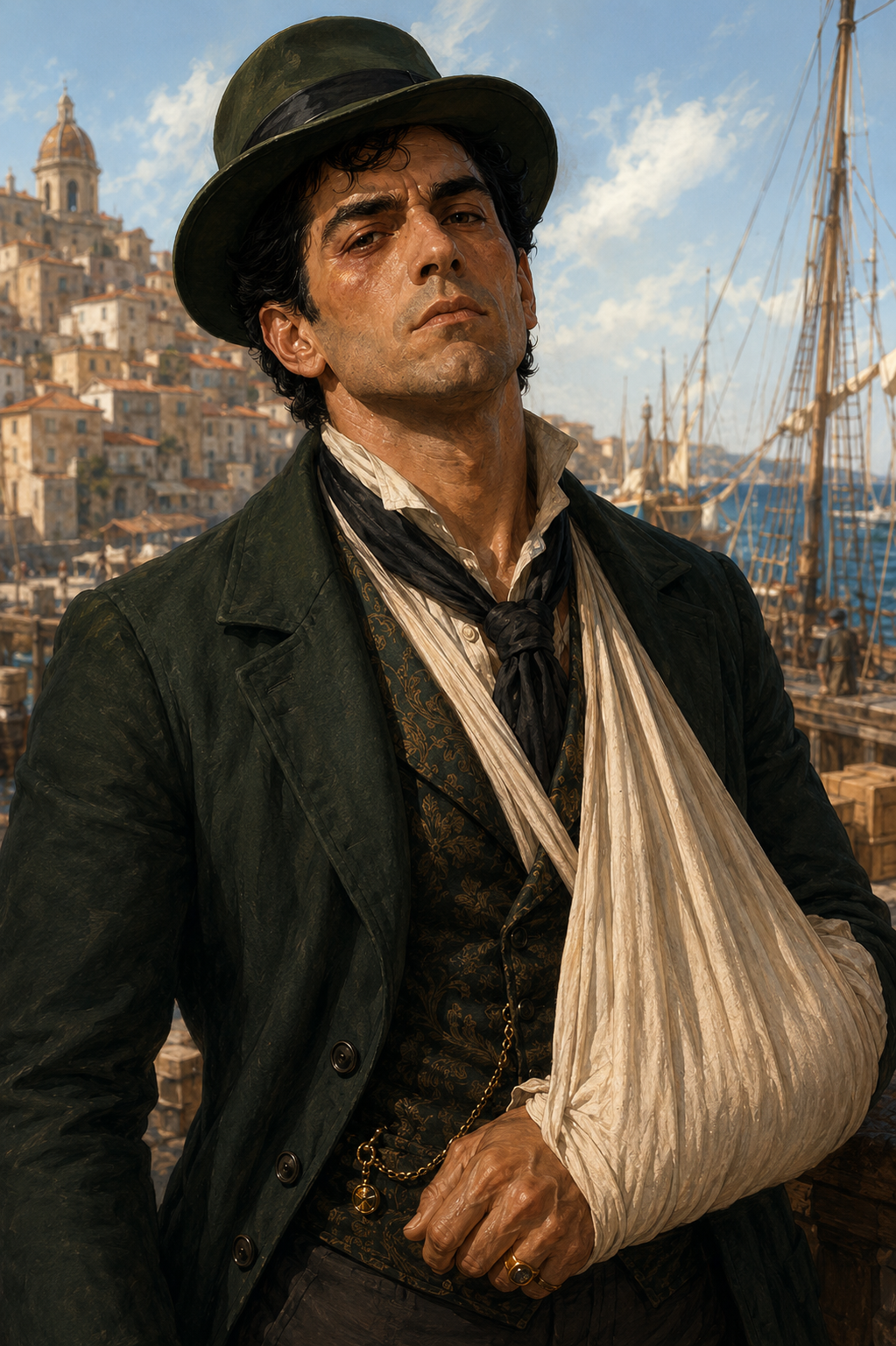
Survives the sinking of the Aquila only because he disembarked earlier — but dies two weeks later when La Dea sinks near Positano.

Rescued from captivity on Ischia; later ensures Holmes’s log reaches the archive, securing the truth for future generations. Married with three daughters.

Leaves the chaos of Project Relic, gets engaged, and chooses a quieter life in Miami.
🔷 Supporting Characters

Helps sink the Aquila; later rescues Lia and the Fontana sisters from Ischia with Dante and Mari. Leaves Positano once the Mazza threat is eliminated.
Helps rescue Lia and the other captured girls from Ischia; leaves Positano with Ami after Lia’s return.
Drowned by Mari using sea witch magic; his death sparks Matteo’s revenge and triggers the broader conflict that destroys the Mazza empire.
Dies in captivity on Ischia.
Shot and killed by Mazza’s men during the second kidnapping wave.
Released shortly after her capture; later stays temporarily with Emilia for safety.
Captured during the kidnappings but escapes when she twists her ankle. Eventually marries Corso — and they are miserably unhappy.
Never receives the payment Matteo promised. Rejected fully by Mari. Marries Paola, resulting in a sour, unhappy marriage.
Suffers severe injuries during the storm, falls unconscious, and dies shortly after. Perishes in the sinking of the Aquila.
Drowns during the sinking of the Aquila.
Forms a scholarly and personal connection with Haven; begins corresponding with Savina.
Leaves Project Relic after Conrad’s takeover; gets engaged to her longtime girlfriend Megan; chooses not to return to the restarted project.
Reinstates Haven under her own terms.
Continues her work; recognizes Haven immediately when she returns months later.
Continues practicing magic with Savina; remains living with her.
🕳️ Potential Plot Holes
Haven discovers Holmes’s journal as part of a Fratelli Mazza archive collection—but the Mazza company was essentially defunct after 1821.
So here’s the issue:
●The journal is dated as being archived in 1842
●Lia supposedly mailed it after Mari and Holmes died
●The Mazza brothers (and their operation) were long gone
👉 The big question: Why would Lia send such a personal—and dangerous—document to the very family that kidnapped her? And how was that archive even still functioning enough to catalog it?
A huge part of the modern plot revolves around decoding where the Mazza treasure is hidden.
Except…
●Multiple historical newspapers (1886, 1922, 1970s) already state the treasure was stored in ship bowsprits
●Divers had apparently accessed these locations before
👉 So why is this treated like a buried secret? It feels odd that something publicly documented for decades still requires intense decoding—and that a major wreck like the Aquila wasn’t fully looted already.
Savina claims everything she does is to protect her son, Enzo.
But her actions include:
●Sinking a yacht
●Creating environmental panic
●Driving tourism away
👉 The problem? Enzo literally runs a tourism-based dive business. Her actions financially devastate him. Protecting him by destroying his livelihood doesn’t quite add up.
Holmes survives a truly wild series of events:
●Shot in the leg
●Thrown into the ocean
●Caught in a massive magical maelstrom powerful enough to destroy a ship
●Loses consciousness
…and still somehow washes up alive.
👉 Even within a magical realism setting, this stretches believability. The storm is described as essentially unsurvivable—yet Holmes makes it out.
The vortice centuriaria is clearly defined as a 100-year curse cast in 1821.
So logically, it should end around 1921.
And in fact, the book suggests maritime issues stop in the 1920s.
👉 But then… in 2025, people are still blaming the Amalfi Curse. Even characters in the story treat it like an active force, despite historical evidence that it already ended.
Conrad threatens Haven by reporting her for breaking confidentiality rules.
But here’s the catch:
●He’s running the project himself
●He’s using questionable (possibly illegal) methods
●Reporting her would invite legal scrutiny onto his own operation
👉 It’s basically a mutual destruction threat—yet Haven treats it as one-sided. Realistically, this could blow back on Conrad just as badly.
📚 Book Club Q&A's
⭐ Final Rating & Thoughts
The Amalfi Curse surprised me in the best way. Even though magical realism is usually not my thing, this book pulled me in with its rich dual timelines, emotional stakes, and genuinely gripping mystery.
The ✨1821 storyline is easily the stronger half — the witches, the Mazza brothers, the curse, the impossible love story — all of it gave me major atmospheric summer blockbuster energy. The modern timeline took a little warming up, but by the end I was fully invested in Haven’s discoveries, the connection to Mari’s lineage, and the way the two narratives dovetail into a final emotional payoff.
The themes also worked beautifully:
love vs. duty, the weight of legacy, mother–daughter bonds, the danger of greed, truth unearthed, and the freedom that comes when history is finally set right.
My only quibbles?
• The magical realism edges weren’t always my personal taste.
• The modern-day conflict sometimes felt slightly less compelling compared to the lush historical storyline.
But the emotional payoff, the final twist with Imelda’s sacrifice, and the beautifully earned reunion between Mari and Holmes absolutely sold me.
Final Verdict:
A lush, atmospheric, surprisingly moving dual-timeline fantasy-lite mystery with high stakes, gorgeous imagery, and a deeply satisfying ending.
✨ Adaptation description
There is currently no announced screen adaptation or film and television option for Sarah Penner’s bestselling novel The Amalfi Curse.
✨ Books Like The Amalfi Curse (2025)
See an error on this page?