
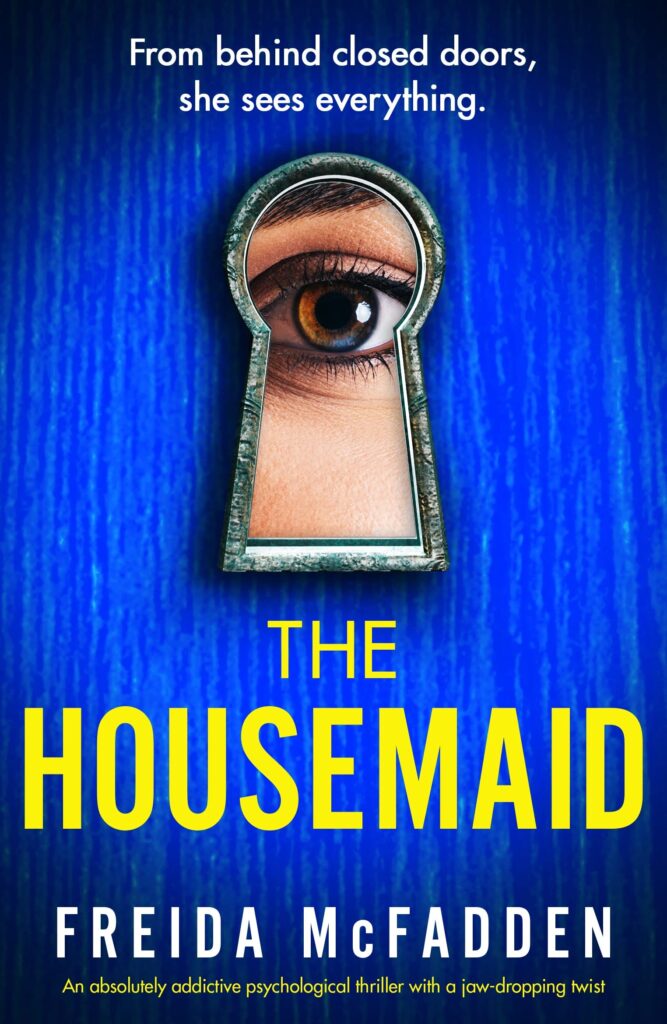
The Housemaid (2022)
Series
Select Sections to Print
×Book Details
The Housemaid (2022)
Series
Jump to Section
⚠️ Trigger Warnings
- Domestic abuse and intimate partner violence
- Physical abuse
- Psychological abuse
- Gaslighting
- Coercive control
- False imprisonment
- Psychological torture
- Forced self-harm
- Child endangerment
- Attempted sexual assault
- Murder
- Graphic violence
- Stalking
- Invasion of privacy
- Mental health stigma
- Psychiatric institutionalization
- Pet death (mentioned)
⏱️ 2-Minute Spoiler Summary
Fresh out of prison, Millie Calloway takes a live-in housekeeping job with the wealthy Winchester family and believes unstable Nina Winchester is terrorizing her long-suffering husband, Andrew. After Millie begins an affair with Andrew, the story flips to Nina’s perspective and reveals the truth: Andrew is a sadistic abuser who has imprisoned and tortured Nina for years inside the attic bedroom where Millie sleeps. Nina deliberately hired Millie because of her violent past, hoping she’d become Andrew’s next target and ultimately stop him. When Andrew traps Millie in the attic, Nina’s hidden key and pepper spray allow her to escape, imprison Andrew in the same room, and force him to endure the abuse he inflicted on others until he dies. Nina and Detective Connors cover up the death as an accident, freeing both women, and Millie moves on to another housekeeping job, implied to involve rescuing another abuse victim.
📖 Full Spoiler Summary
Millie Takes a Job at the Winchester House
Wilhelmina “Millie” Calloway has just been released from prison after serving ten years for manslaughter. With a criminal record making it nearly impossible to find work, she’s living out of her car and desperately applying for housekeeping jobs. When she interviews with the wealthy Winchester family, she expects another rejection. Instead, Nina Winchester hires her on the spot, insisting she has a good feeling about her despite Millie’s suspicious résumé.
The job seems almost too good to be true. Millie receives room and board in the Winchesters’ beautiful home while earning enough money to rebuild her life. But there’s one strange catch: instead of staying in a comfortable guest room, she’s assigned to a tiny finished attic bedroom. The room feels more like a prison cell than a bedroom, complete with a lock on the outside of the door and deep scratches carved into the inside. The unsettling room immediately puts Millie on edge, but with nowhere else to go, she convinces herself she’s just being paranoid.
At first, the Winchesters seem like a family with ordinary problems. Andrew Winchester is handsome, wealthy, and endlessly patient with his wife, while their daughter Cecelia is a spoiled child who alternates between sweet and cruel. The only person who seems unpredictable is Nina.
Nina swings wildly between warm friendliness and explosive cruelty. One day she’ll thank Millie for her work, and the next she’ll accuse her of incompetence over something she secretly sabotaged herself. She claims Cecelia has a life-threatening peanut allergy, yet Millie later discovers Nina deliberately left peanut butter in the pantry, making it seem as though Millie ignored instructions. Similar incidents pile up until Millie starts wondering whether Nina is deliberately trying to make her fail.
Meanwhile, Andrew constantly apologizes for his wife’s behavior. He tells Millie Nina wasn’t always like this and has struggled with severe mental illness for years. His calm, sympathetic demeanor makes him appear like a devoted husband trapped in an impossible marriage.
The House Feels Increasingly Dangerous
As the weeks pass, strange things continue happening around the estate.
The landscaper, Enzo, repeatedly tries to communicate with Millie despite speaking very little English. Every encounter ends with him urgently repeating one word: “Pericolo.” Danger.
Millie doesn’t understand what he’s trying to warn her about.
The neighbors aren’t much more reassuring. Women like Suzanne and Patrice happily gossip about Nina’s history, explaining that she supposedly suffered a complete mental breakdown and was once committed to a psychiatric hospital after attempting to drown young Cecelia in a bathtub. Their stories paint Nina as unstable, manipulative, and dangerous.
Because everyone around her repeats the same version of events, Millie gradually accepts it as the truth.
She begins seeing Andrew as a kind man sacrificing everything to protect his daughter from a mentally unstable wife.
At the same time, Nina’s behavior becomes even more bizarre. She accuses Millie of stealing expensive clothing, publicly humiliates her, and seems determined to create chaos inside the house. Every incident pushes Millie further toward Andrew, who always comforts her afterward.
Eventually, their growing attraction turns into a secret affair.
For the first time in years, Millie begins imagining a future where she finally belongs somewhere.
Then everything appears to fall into place.
After another explosive confrontation, Andrew tells Nina their marriage is over. Nina leaves the house, and Millie believes the nightmare has ended. She thinks Andrew has finally escaped his abusive wife and that the two of them can build a life together.
She’s completely wrong.
Nina Reveals the Truth
Halfway through the novel, the perspective shifts entirely to Nina Winchester, and everything the reader thought they understood is turned upside down.
Nina explains that nearly everything Millie witnessed was carefully staged.
Andrew isn’t a loving husband trapped with an unstable wife.
He’s a sadistic sociopath.
For years, Andrew has controlled every aspect of Nina’s life through psychological torture, manipulation, isolation, and physical abuse. Whenever Nina displeased him—even over something as trivial as letting her dark roots show or wasting electricity—he locked her inside the soundproof attic room for days without food, water, or access to a bathroom. The tiny bedroom where Millie now sleeps was originally Nina’s prison.
The scratches inside the attic door were left by Nina herself while desperately trying to escape.
Andrew’s carefully cultivated public image made everyone believe Nina was mentally ill. Whenever she tried to tell people what was happening, Andrew manipulated doctors, neighbors, and police into believing she was delusional. Even the infamous bathtub incident was orchestrated by Andrew so authorities would see Nina as a danger to her own daughter.
Once Andrew successfully established that reputation, no one believed anything Nina said.
Realizing she could never escape through legal channels, Nina eventually developed a different plan.
She needed someone capable of stopping Andrew permanently.
That’s why she hired Millie.
Before interviewing candidates, Nina secretly researched women with violent criminal histories. Millie’s conviction stood out because she hadn’t murdered for greed or revenge. Years earlier, Millie killed a male classmate while protecting her best friend from being raped. Nina recognized someone who was willing to use violence only when absolutely necessary.
Millie wasn’t randomly chosen.
She was recruited.
Nina deliberately manipulated both Millie and Andrew, carefully encouraging the affair because she knew Andrew always discarded his victims once he’d found a replacement. Nina wanted Andrew to transfer his obsession from herself onto Millie.
Once that happened, Andrew would eventually reveal his true nature.
Andrew Makes Millie His Next Victim
Nina’s plan works exactly as intended.
With Nina gone, Andrew immediately begins treating Millie the same way he treated his wife.
The charming, compassionate man disappears almost overnight.
Instead, Millie sees someone cold, controlling, and terrifying.
When she challenges him, Andrew calmly locks her inside the attic bedroom.
Only then does Millie finally understand everything Nina had been trying to tell her without saying a word.
She experiences the same imprisonment, thirst, terror, and helplessness Nina endured for years.
But Nina planned for this.
Before leaving the house, she secretly hid two crucial items inside the attic: a spare key and a can of pepper spray.
After searching the room, Millie finds both.
When Andrew finally unlocks the door to continue tormenting her, Millie sprays him directly in the face, overpowers him, and reverses their positions.
She locks Andrew inside the attic instead.
Andrew Dies in His Own Prison
Now trapped inside the room he designed to torture others, Andrew experiences the same suffering he inflicted for years.
Millie refuses to kill him quickly.
Instead, she forces him to endure hunger, thirst, fear, and isolation while she watches through Andrew’s own hidden surveillance cameras.
Whenever he begs for water, she reminds him of everything he did to Nina.
Eventually, she gives him a horrifying choice.
If he wants water, he must use a pair of pliers to pull out one of his own teeth.
Desperate and dehydrated, Andrew obeys.
Later she demands another.
Then another.
Each act mirrors the cruelty Andrew inflicted on countless victims throughout his life.
Already weakened by dehydration, starvation, and psychological collapse, Andrew eventually dies alone on the attic floor—the same place where he believed he could imprison women forever.
Nina Covers for Millie
When Nina returns, she finds Andrew dead and Millie emotionally shattered by everything she’s been forced to do.
Rather than allowing Millie to go back to prison, Nina immediately takes control of the situation.
She tells police she’d been home all week and insists Andrew accidentally locked himself inside the attic, turning his death into a tragic accident.
The investigation falls to Detective Connors.
Although he quickly pieces together what really happened, he has his own reasons for letting the case go. Years earlier, his daughter, Kathleen, had been engaged to Andrew before suffering devastating emotional abuse that permanently changed her life. Connors recognizes Andrew for exactly what he was and quietly rules the death accidental rather than pursuing charges against either woman.
Even Andrew’s mother, Evelyn Winchester, offers unexpected approval.
During the funeral, she coldly admits she once pulled one of Andrew’s baby teeth with pliers as punishment, suggesting his lifelong cruelty may have started far earlier than anyone realized. After seeing Andrew’s ruined mouth, she silently understands exactly what happened and offers Nina her blessing instead of condemnation.
With Andrew finally gone, Nina and Cecelia are free from his control.
Millie, meanwhile, leaves the Winchester house determined to start over once again.
The novel ends with her interviewing for another housekeeping position with Lisa Killeffer, a woman recommended by Nina. It’s heavily implied Nina recognized the same warning signs of domestic abuse in Lisa’s marriage and intentionally sent Millie there—not simply to clean another house, but because Millie has become someone willing to protect abused women when no one else can.
🔚 Ending Explained
The ending of The Housemaid reframes the story from one of manipulation and victimization into a calculated act of justice, where both Nina and Millie play roles in ending Andrew’s cycle of abuse.
The Downfall of Andrew Winchester
After successfully isolating Millie and forcing Nina out, Andrew follows his established pattern—locking Millie in the soundproof attic to begin his routine of control and punishment. However, Nina has anticipated this outcome. Hidden in the room are two crucial items: a key and a bottle of pepper spray.
When Andrew enters the attic to punish her, Millie uses the pepper spray to incapacitate him and locks him inside. She then reverses the power dynamic completely. Using Andrew’s own surveillance system, she monitors him and forces him to endure the same degrading punishments he once inflicted—balancing heavy books and inflicting pain on himself. Over several days, weakened by dehydration and psychological trauma, Andrew dies in the attic.
The Cover-Up
Concerned when Millie hasn’t been seen, Enzo alerts Nina, prompting her return to the house. Inside, Nina finds Andrew dead and Millie severely traumatized. Understanding that Millie acted in self-defense, Nina immediately takes control of the situation.
She instructs Millie to leave and constructs a cover story: Millie had been given time off, and Andrew accidentally locked himself in the attic. Nina positions the death as a tragic accident rather than a crime.
Detective Connors and the “Cautionary Tale”
The investigation is led by Detective Connors, who quickly suspects the truth. However, he reveals a personal connection—his daughter was once engaged to Andrew and left the relationship deeply traumatized.
Recognizing Andrew’s long history of abuse and manipulation, Connors chooses not to pursue charges. Instead, he rules the death accidental, describing it as a “cautionary tale,” effectively allowing Nina and Millie to walk free.
The Secret of Evelyn Winchester
At Andrew’s wake, his mother, Evelyn Winchester, provides a final disturbing insight. She reveals that she raised Andrew with harsh, punitive discipline, even pulling out his teeth as a child to teach him lessons.
Seeing the condition of Andrew’s body, she recognizes that he was subjected to his own methods. Rather than expressing horror, she approves—telling Nina she is glad someone “taught him a lesson,” reinforcing the generational nature of his violence.
The Epilogue: A New Mission
In the aftermath, Nina ensures Millie is financially supported before they go their separate ways. Nearly a year later, Millie interviews for a new housekeeping job with a woman Nina recommended.
During the interview, Millie notices signs of abuse—bruises and a controlling husband. She realizes Nina deliberately sent her there, trusting that Millie now has both the willingness and capability to intervene.
The novel closes with Millie accepting the job, implying she has taken on a new role: targeting abusive men and protecting their victims, continuing the cycle Nina set in motion.
👤 Characters & Fates
🔶 Main Characters

Protected by Nina’s lie to police, she avoids prosecution and later takes another housekeeping job to help a new abuse victim

Cleared after Andrew’s death is ruled an accident; relocates to California with her daughter for a fresh start

Trapped in the attic by Millie and left to die, ultimately succumbing to dehydration

Survives and remains nearby, staying in contact with Nina and Millie

Escapes with Nina and is last seen safe and happy in California
🔷 Supporting Characters

Continues her elite social life, subtly acknowledging the truth about Andrew after his death
Closes the case as accidental, ensuring Nina and Millie avoid prosecution
Remains unaware of the events at the Winchester house
Hires Millie and seeks her “help,” suggesting a continuation of this pattern
Remains oblivious, attending Andrew’s wake in search of gossip rather than truth
Lives under a new identity, permanently scarred by her experience
Killed by her husband, her death shaping Enzo’s actions throughout the story
🕳️ Potential Plot Holes
1. The Soundproofing Contradiction
Andrew insists the attic is completely soundproof—so effective that someone could be tortured upstairs while guests remain unaware downstairs. But the story undermines this:
- Millie hears Andrew shouting her name as she walks away from the attic
- She also hears his footsteps outside the door while trapped inside
If the space were truly soundproof to that level, sound shouldn’t travel so clearly into the hallway. The rules of the room seem to shift depending on the scene.
2. The “Accidental Death” Ruling
Andrew’s death being ruled accidental is the biggest stretch in the novel:
- Severe bruising consistent with prolonged torture
- Multiple teeth forcibly removed
- A room that locks only from the outside
- No phone inside the room
Even with Detective Connors’ bias, it’s hard to justify this conclusion—especially given Andrew’s wealth and status, which would likely trigger a far more thorough investigation and scrutiny.
3. Andrew’s Oversight of the Attic
Andrew is portrayed as methodical and controlling, yet he overlooks critical details:
- A hidden bottle of pepper spray in the only container in the room
- A concealed key in the same location
For someone who designed the space specifically for control and torture, failing to check the room for escape tools feels inconsistent with his character.
4. Patrice and the Tracking App
A neighbor casually references Nina tracking Millie’s location through an app:
- This is presented as private information between Nina and Millie
- There’s no clear explanation for how Patrice would know this
It’s a small moment, but it raises questions about how widely known this supposedly discreet arrangement is.
📚 Book Club Q&A's
⭐ Final Rating & Thoughts
The Housemaid is the definition of a “just one more chapter” thriller — messy, addictive, and a little unhinged. I absolutely devoured it, even while side-eyeing some of the logic (because… come on, the attic situation raises questions).
The biggest strength here is how wildly entertaining it is. The twists land, the pacing never lets up, and that revenge arc? Dark, twisted, and weirdly satisfying. Millie stepping into this morally gray “fixer” role by the end was honestly my favorite part — it gives the story a sharp, almost vigilante edge that lingers after you finish.
But let’s be real: this isn’t a tight thriller. It leans hard on convenience, suspension of disbelief, and characters making very questionable decisions to keep the plot moving. If you think too hard, it starts to wobble.
Still… did I enjoy it? Yes. Did I stay up too late reading it? Also yes.
✨ Adaptation description
The Housemaid has been adapted into a feature film directed by Paul Feig, with a screenplay by Rebecca Sonnenshine. The film stars Sydney Sweeney as Millie and Amanda Seyfried as Nina. The adaptation brings the novel’s domestic thriller elements to the screen, focusing on psychological tension, shifting power dynamics, and character-driven suspense.
🔪 Key Differences (At a Glance)
- Ending:
Book = slow, psychological revenge (Andrew dies trapped)
Movie = explosive, physical confrontation (staircase death) - Punishments:
Book = humiliating + psychological control
Movie = graphic, self-harm-driven brutality - Twist Timing:
Book = Andrew’s past unfolds gradually
Movie = revealed earlier, less ambiguity - Enzo:
Book = meaningful supporting role
Movie = reduced presence - Cecelia:
Book = unsettling but underexplored
Movie = visually symbolic + more aware
🎭 Tone Changes
The biggest shift? The movie trades psychological dread for visible, immediate horror.
- Book tone:
Quiet, claustrophobic, creeping realization
You’re constantly questioning who is actually dangerous - Movie tone:
More visceral and shocking
Less ambiguity, more “this is clearly horrifying”
👉 The book unsettles you slowly.
👉 The movie hits you with intensity right away.
🧩 Structural Changes
1. Twist Delivery
- In the book, Andrew’s true nature—and especially his history with his mother—unfolds gradually.
- In the movie, this is telegraphed earlier, reducing the “wait… what is going on?” tension.
2. Ending Sequence
- Book:
Andrew never escapes. Millie maintains total control and prolongs his suffering (teeth pulling, physical torment, starvation). - Movie:
The story escalates:- Nina accidentally frees Andrew
- Leads to a final fight scene
- Ends with Millie pushing him down the spiral staircase
👉 The movie replaces prolonged psychological revenge with a cinematic climax
👤 Character Changes
Millie
- Book: Strategic, controlled, methodical
- Movie: More reactive, more physically aggressive
Her violence becomes more immediate rather than calculated.
Andrew
- Book:
Manipulative, controlled, terrifying in a quiet way
His cruelty is structured and ritualistic - Movie:
More overtly violent and unstable
Feels less like a slow-burn sociopath and more like an immediate threat
Nina
- Book: Survivor playing a long game
- Movie: Still strong, but slightly more reactive due to pacing
Cecelia
- Book: Creepy, ambiguous awareness
- Movie: Given visual storytelling depth
The dollhouse addition is huge:
- Nina figurine in attic → confirms long-term abuse
- Millie figurine moved → shows Cecelia understands the danger
- She actively pushes Nina to go back → gives her agency
👉 This is one of the smartest additions in the movie.
Enzo
- Book:
A meaningful presence with emotional and narrative weight - Movie:
Significantly reduced
👉 The adaptation sacrifices him to keep pacing tight and focus on the central conflict.
🔍 What the Adaptation Emphasizes
The movie leans hard into:
- Shock value
- Graphic violence
- Immediate danger
- Visual storytelling (like the dollhouse)
It wants you to feel the horror quickly rather than piece it together.
✂️ What It Softens, Removes, or Expands
🔥 Expanded
- Physical violence (cuts, stabbing, final fall)
- Cecelia’s awareness and symbolic role
- Action-heavy climax
🧠 Softened / Removed
- Millie’s slow, calculated revenge
- The prolonged psychological punishment of Andrew
- Some of the disturbing restraint (which honestly made the book darker)
⚖️ Changed (Not Better or Worse—Just Different)
- Pepper spray → knife (more cinematic, less strategic)
- Starvation death → instant death (more dramatic, less haunting)
- Subtle dread → explicit horror
💭 Final Take
The book and movie are almost doing two different jobs:
- 📖 The book is about control, manipulation, and slow-burn terror
- 🎬 The movie is about survival, violence, and high-stakes confrontation
If the book leaves you thinking “that was deeply disturbing…”
The movie leaves you thinking “that was intense.”
✨ Books Like The Housemaid (2022)
See an error on this page?