
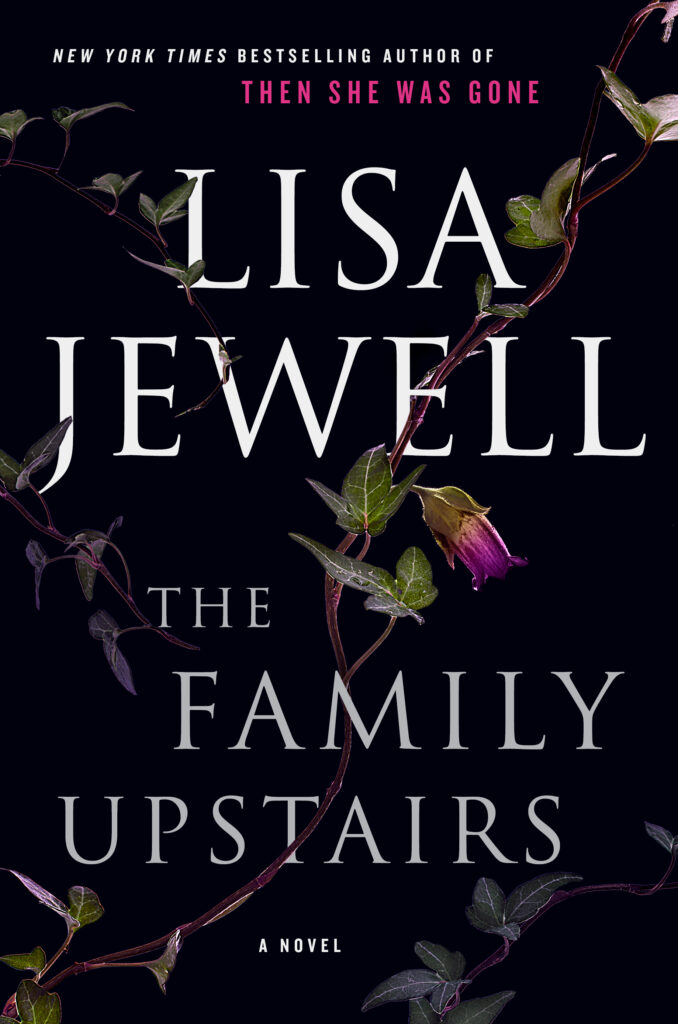
The Family Upstairs (2019)
Series
Select Sections to Print
×Book Details
The Family Upstairs (2019)
Series
Jump to Section
⚠️ Trigger Warnings
- Child abuse
- Child neglect
- Child imprisonment
- Child starvation / malnutrition
- Grooming of a minor
- Statutory rape
- Child pregnancy
- Sexual abuse
- Rape
- Marital rape
- Domestic abuse
- Physical abuse
- Psychological abuse
- Coercive control
- Cults / cult-like behavior
- Isolation and captivity
- Murder
- Poisoning
- Physical assault
- Child death
- Pregnancy loss
- Infant death / stillbirth
- Suicide (staged suicide pact)
- Drug use (LSD)
- Alcoholism
- Animal death
- Animal cruelty
- Homelessness
- Medical neglect
- Medical trauma
- Grief and loss
⏱️ 2-Minute Spoiler Summary
On her twenty-fifth birthday, Libby Jones discovers she is actually Serenity Lamb, the baby rescued from the infamous Chelsea House where three adults were found dead after an apparent cult suicide. As Libby investigates with journalist Miller Roe, flashbacks reveal how David Thomsen manipulated the wealthy Lamb family into a cult-like existence until Henry Lamb accidentally poisoned David and his parents with deadly nightshade before killing Birdie himself. In the present, Libby’s biological mother, Lucy, returns to England after killing her abusive ex-husband in self-defense. The biggest twist reveals that the man posing as Phin Thomsen is actually Henry, who has hidden behind Phin’s identity for decades. Libby also learns that Lucy is her mother and the real Phin is her father. The surviving family members divide the inheritance from the sale of the mansion, and the novel ends with Libby setting out to find the real Phin, who is alive in Botswana.
📖 Full Spoiler Summary
Libby Inherits 16 Cheyne Walk
The novel opens on Libby Jones’s twenty-fifth birthday, the day she has been waiting for her entire life. Ever since she was adopted as a baby, she has known that a trust would become available when she turned twenty-five. Instead of a modest inheritance, however, Libby receives astonishing news from the family solicitor, Mr. Royle. She has inherited 16 Cheyne Walk, a massive but abandoned mansion in Chelsea worth millions of pounds.
Until this moment, Libby has always believed the story told by her adoptive parents—that her biological parents died in a tragic car accident shortly after she was born. Mr. Royle gently explains that none of that is true. He shows her newspaper clippings from one of London’s most infamous unsolved cases.
Libby was actually born Serenity Lamb, the ten-month-old baby discovered alive inside the mansion after police forced their way into the house. Inside, officers found three decomposing bodies dressed in black robes, suggesting some kind of ritualistic mass suicide. The adults and older children who had lived there had disappeared without a trace, leaving only the infant behind.
Unable to accept that this horrifying story is really her past, Libby becomes determined to learn what actually happened inside the house. She joins forces with Miller Roe, an investigative journalist who has spent years trying to solve the mystery of the so-called Chelsea House.
The House Falls Under David Thomsen’s Control
The story then shifts back to the late 1980s, where Henry Lamb, the son of the wealthy owners of 16 Cheyne Walk, narrates the gradual destruction of his family.
Henry’s parents, Martina and Henry Sr., enjoy a glamorous London lifestyle and often open their home to artists and eccentric guests. Their generosity eventually proves disastrous when violinist Birdie Dunlop-Evers and her partner Justin Redding move into the house. At first they seem unconventional but harmless.
Everything changes when Birdie introduces David Thomsen, a magnetic but deeply controlling man, along with his wife Sally and their children, Phin and Clemency.
David slowly takes over every aspect of life inside the mansion. He convinces the adults to abandon their careers, give away their money and possessions, withdraw the children from school, and isolate themselves from the outside world. Food becomes scarce because David insists that spiritual enlightenment requires self-denial. The adults become increasingly dependent on him, while the children quietly endure neglect and abuse.
Henry watches his parents surrender more and more authority until David effectively becomes the head of the household.
Henry also develops an intense crush on Phin, whose confidence and beauty completely captivate him. At the same time, David begins exploiting the women in the house, manipulating both Martina and fourteen-year-old Lucy Lamb into sexual relationships. Lucy is far too young to understand what is happening, but David disguises his abuse as spiritual freedom and emotional connection.
The children gradually realize that none of the adults are capable of protecting them anymore.
Lucy Escapes, Then Loses Everything
Running alongside Libby’s investigation is the story of an adult Lucy, who has spent the last twenty-five years living with the consequences of her childhood.
She is homeless in southern France, surviving alongside her children Marco and Stella. They sleep wherever they can, often on beaches or beneath bridges, scraping together enough money to survive each day. Despite their desperate circumstances, Lucy has only one goal: return to London before the twenty-fifth anniversary of the baby’s rescue.
She believes that when the inheritance is finally released, everything may change.
Unfortunately, she has no legal documents. The only person who can help her obtain fake passports is her wealthy ex-husband, Michael Rimmer, an abusive man she desperately hoped never to see again.
When Lucy meets Michael at his villa, he attacks and rapes her. During the struggle, Lucy grabs a kitchen knife and kills him. Terrified but with no other choice, she gathers Marco, Stella, and their dog Fitzgerald, then flees France and begins making her way back to England before anyone discovers what has happened.
The Truth Hidden Inside the Mansion
As Libby and Miller begin exploring the abandoned house, they discover that someone has secretly been living there for years.
The man identifies himself as Phin Thomsen, one of the missing children from the original household. He tells them that David destroyed everyone’s lives and claims he was one of the few survivors who managed to escape.
Although much of his story matches what Miller already knows, small details never quite fit together. Miller continues investigating while Libby tries to piece together the truth about her family.
Their search leads them to Cornwall, where they meet Clemency and Sally, who now lives under her maiden name, Radlett. Unlike the mysterious man in the mansion, Clemency has spent years trying to leave the past behind.
Little by little, the surviving family members finally reveal what really happened inside Cheyne Walk.
Henry’s Desperate Plan
Life inside the mansion became unbearable as David tightened his grip on everyone living there. The children were hungry, isolated, and increasingly convinced they would never escape if they waited for the adults to come to their senses.
Henry eventually decided he had to act.
Using deadly nightshade growing in Justin’s herb garden, he prepared a tincture that he believed would sedate the adults long enough for the children to escape the house.
Instead, he accidentally created a lethal poison.
The adults drank it, and Henry Sr., Martina, and David died.
The plan spiraled even further out of control when Birdie unexpectedly regained consciousness. Afraid that everything would collapse if she survived, Henry grabbed an ornamental animal tusk and struck her in the head, killing her.
The surviving children then left the house, but Henry refused to abandon baby Serenity. Knowing she would die if everyone disappeared, he remained alone in the mansion for several days while the bodies slowly decomposed downstairs. During that time, he became her sole caregiver, feeding her mashed bananas, porridge, rice, and soya milk, changing her nappies, and singing her to sleep. Before leaving, he tucked Justin’s rabbit’s foot into her blankets as a good-luck charm.
Once he was certain she could be rescued, Henry carefully staged the scene to resemble a bizarre cult suicide, cleaned away evidence that could incriminate the children, and walked to a nearby phone box. Disguising his voice, he made an anonymous 999 call, telling police he was worried about his neighbors because he could hear a baby crying inside the house.
When officers forced their way into 16 Cheyne Walk, they found Martina Lamb, Henry Lamb Sr., and David Thomsen lying hand-in-hand on the kitchen floor in matching black robes. At first they thought the house was empty, but then they heard a tiny sound from upstairs. In a first-floor dressing room, they discovered ten-month-old Serenity Lamb alive in her cot—clean, well-fed, and wearing a fresh Babygro. Her miraculous survival became the defining mystery of the Chelsea House case, while Henry disappeared before anyone realized he had orchestrated the rescue.
Libby Learns Who She Really Is
As the investigation reaches its conclusion, Libby discovers that almost everything she believed about herself is wrong.
Her biological mother is Lucy, not one of the women she had imagined.
Even more shocking, David Thomsen was never her father. Although David abused Lucy, Libby’s father was actually Phin Thomsen, with whom Lucy shared a brief secret relationship when they were teenagers. Their relationship was one of the few genuine connections to survive David’s manipulation.
Then comes the novel’s biggest revelation.
The man everyone believed to be Phin is actually Henry Lamb.
After the events at Cheyne Walk, Henry reinvented himself completely. He underwent cosmetic procedures, assumed Phin’s identity, and spent years secretly watching the mansion from an apartment across the Thames, unable to fully let go of the house that had defined his life. His elaborate deception fooled almost everyone, including Libby and Miller.
Henry’s confession finally explains the inconsistencies that had surrounded his story from the beginning.
A Family Begins Again
With the truth finally exposed, the surviving members of the broken family begin reconnecting after decades apart.
Lucy is reunited with the daughter she was forced to leave behind as a frightened teenager. Marco, Stella, Libby, Henry, and Clemency gradually begin forming something resembling a family despite everything that happened to them.
The enormous value of 16 Cheyne Walk allows them all to start over. Rather than one person claiming the fortune, they agree to share the proceeds from the sale of the mansion, giving each survivor the chance to build a new life free from the house’s long shadow.
Just when the story seems finished, Miller uncovers one final surprise. His investigation reveals evidence that the real Phin Thomsen never died at all. Instead, he has built a completely different life working as a safari guide in Botswana.
Armed with this discovery, Libby prepares to travel there, hoping to finally meet the father she has only just learned exists.
🔚 Ending Explained
The ending of The Family Upstairs resolves the mystery surrounding 16 Cheyne Walk while revealing that the greatest inheritance was never the house itself, but the family the survivors rebuild after decades of trauma. Long-hidden identities are exposed, the surviving victims finally reclaim their lives, and the story closes with hope tempered by the understanding that some wounds never completely disappear.
How the Book Ends
The final twist reveals that the man living secretly inside the Chelsea house is not Phin Thomsen, as Libby and Miller believed, but Henry Lamb. After escaping the house as a teenager, Henry altered his appearance through cosmetic procedures and spent years pretending to be Phin while quietly searching for Serenity—now known as Libby Jones—hoping to find closure for the tragedy that destroyed his childhood.
Libby also uncovers the truth about her origins. The woman she believed to be her mysterious birth mother is actually Lucy Lamb, who became pregnant with Libby after being groomed and sexually abused by David Thomsen when she was only fourteen. Rather than being the child of glamorous socialites, Libby learns she is the daughter of a survivor who spent decades trying to find her again.
With the mystery solved, 16 Cheyne Walk is finally sold for £7.45 million. The proceeds are divided equally between Libby, Lucy, and Clemency, giving each woman financial security and allowing them to leave the house—and everything it represents—behind.
Lucy and her children, Marco and Stella, move into Henry’s flat in Marylebone before beginning a new life near Libby in St Albans. Although Lucy and Libby cannot instantly become a conventional mother and daughter after twenty-five years apart, they begin forming a genuine relationship, describing themselves as feeling more like close friends than strangers connected only by blood.
The novel ends with one final revelation. Having abandoned his ambitions of breaking the biggest story of his career in order to protect Libby, Miller Roe discovers evidence that the real Phin Thomsen survived. Living in Botswana under the name Finn, he works as a safari guide, seemingly unaware that anyone has been searching for him. The family decides to travel there together, and Henry cheerfully asks if there’s “room for one more,” signaling that their fractured family may finally become whole.
Thematic Explanation
The House as a Symbol of Trauma
Throughout the novel, 16 Cheyne Walk represents the lasting grip of abuse and manipulation. The decaying mansion functions almost like another character, filled with unsettling noises and memories that refuse to stay buried. Every room reflects the psychological prison created by David Thomsen.
Selling the house becomes far more than a financial transaction. It symbolizes the survivors finally releasing themselves from the place that defined—and nearly destroyed—their lives. Once the house is gone, they are no longer trapped by it.
Survival Over Perfection
The ending emphasizes that every survivor made morally complicated choices simply to stay alive.
Lucy kills Michael Rimmer to recover the passports that allow her to complete the journey she began decades earlier and return to the daughter she lost.
Henry continues to wrestle with his own actions as a child. Although his plan to drug the adults unintentionally resulted in multiple deaths, he also believes it ultimately freed the children from a life of imprisonment. His greatest act of compassion remains caring for baby Serenity during the aftermath, showing that even someone capable of darkness still possessed genuine humanity.
Rather than judging these characters in simple moral terms, the novel explores how prolonged abuse distorts people’s decisions and forces impossible choices.
A Hopeful but Imperfect Future
The atmosphere shifts dramatically in the final chapters. The suffocating dread that dominates the novel gives way to warmth, reconciliation, and optimism.
That hope is deliberately restrained, however. Lucy knows she may never stop worrying that Michael’s death could one day be discovered, and Libby recognizes that Henry still carries unsettling traits shaped by his traumatic childhood. The survivors have escaped the house, but they cannot erase what happened inside it.
The ending suggests that healing does not mean forgetting—it means learning to live despite the past.
Themes
Trauma leaves lasting scars. The novel rejects the idea that victims simply recover once danger ends. The survivors continue carrying emotional wounds decades later, illustrating how childhood abuse shapes identity long after the events themselves.
Identity is built from truth, not fantasy. Libby spends much of the novel imagining an idealized version of her past. Discovering the painful reality ultimately gives her something far more valuable than the fantasy she invented: an authentic understanding of who she is and where she belongs.
Family is chosen as much as inherited. By the conclusion, the characters have created a new family built on honesty rather than manipulation. Their relationships are imperfect, but they are genuine, making them stronger than the false family David constructed inside the house.
Future Implications
Although the mystery of the Chelsea house is finally solved, the story ends by looking forward instead of backward. The search for the real Phin Thomsen offers the possibility of another reunion and another chance for healing.
Lucy plans to pursue a career in music after years of merely surviving, Libby embraces the family she never knew she had, and Henry cautiously steps into a healthier role within that family.
The novel ultimately argues that the past can never be undone, but it also does not have to dictate the future. The survivors remain forever connected by what happened inside 16 Cheyne Walk, yet for the first time in their lives, they have the freedom to define themselves by something other than tragedy.
👤 Characters & Fates
🔶 Main Characters

Learns Lucy and Phin are her biological parents, sells the house for £7.45 million, splits the money with Lucy and Clemency, reconnects with her family, and begins a relationship with Miller Roe.

Kills her abusive ex-husband Michael Rimmer in self-defense after he rapes her, reunites with Libby after twenty-four years, gains financial independence from the house sale, and resumes her music career.

Poisons the adults with herbal toxins, murders Birdie with an animal tusk when she survives, hides her body for decades, undergoes cosmetic surgery to resemble Phin, impersonates him, is revealed as the mysterious man Libby meets, and ultimately rejoins his surviving family while remaining mentally unstable.
🔷 Supporting Characters

Gives up publishing the sensational story to protect Libby, locates the real Phin alive in Botswana, and starts a relationship with Libby.
Fathers children with Martina and fourteen-year-old Lucy, unknowingly drinks Henry's poisoned tea, and dies on the kitchen floor alongside the other adults.
Dies after drinking Henry's poisoned tea, becoming one of the three adults found dead in the house.
Dies from Henry's poisoned tea alongside Martina and David.
Escapes the house, is mistakenly believed dead for decades, and is eventually found alive in Botswana working as a safari guide under the name Finn.
Escapes to live with her mother, reunites with Libby and Lucy years later, receives part of the inheritance, and begins recovering from her trauma.
Survives the initial poisoning, is beaten to death by Henry with an animal tusk, her body is hidden on the roof for decades before Henry later disposes of it in the Thames.
Leaves the household before its collapse and quietly lives on a smallholding in Wales.
Settles in Cornwall under her maiden name and works as a life coach.
Rapes Lucy during their final encounter, is stabbed to death by her in self-defense, and his body remains hidden in his wine cellar in Antibes.
Moves to London with Lucy, bonds with Libby, and thrives in his new life.
Moves to London, grows close to Libby, excels in school, and enjoys a stable home free from abuse.
He successfully administers the trust, oversees the sale of the Chelsea house for £7,450,000, and helps ensure Libby, Lucy, and Clemency receive their inheritance and financial independence.
🕳️ Potential Plot Holes
Henry claims he hid Birdie's body on the roof of 16 Cheyne Walk for twenty-five years before eventually disposing of her remains. Given that the house required maintenance during that time, including plumbers repairing flood damage, it's difficult to explain how no worker, neighbor, or accidental discovery ever uncovered the body. The novel attributes this to the house being abandoned and largely ignored, but it still requires a significant suspension of disbelief.
Libby inherits the Lamb estate because everyone assumes she is Henry and Martina Lamb's granddaughter. However, it is eventually revealed that she is actually the biological daughter of Lucy Lamb and Phin Thomsen. Despite the enormous value of the inheritance, no DNA testing or stronger proof of parentage is ever required before the trust is distributed, making the legal resolution feel implausibly convenient.
📚 Book Club Q&A's
⭐ Final Rating & Thoughts
Despite an intriguing premise and plenty of unsettling family secrets, The Family Upstairs never fully came together for me. Lisa Jewell creates an eerie atmosphere and a mystery that immediately grabs your attention, but the constant shifts between timelines and perspectives made it difficult to stay emotionally invested. Instead of building suspense, the story often felt like it was adding layers simply to appear more mysterious. While everything eventually comes together in a satisfying enough conclusion, I never felt the payoff matched the amount of work it took to get there. I also struggled to connect with the large cast of characters, which made many of the emotional moments fall flat. That said, readers who enjoy intricate narratives with multiple viewpoints and slowly unraveling family secrets may have a much better experience than I did. Although this one wasn't a winner for me, it hasn't put me off Lisa Jewell entirely—I still think she's a talented writer, and I'm open to picking up another of her books in the future.
✨ Adaptation description
As of August 2026, there is no official screen adaptation of The Family Upstairs.
✨ Books Like The Family Upstairs (2019)
See an error on this page?