

All the Colors of the Dark (2024)
Select Sections to Print
×Book Details
All the Colors of the Dark (2024)
Jump to Section
⚠️ Trigger Warnings
- Child abduction & captivity
- Child abuse
- Domestic violence
- Sexual abuse & incest
- Physical violence
- Murder
- Child death
- Suicide & self-harm
- Cancer & terminal illness
- Death & grief
- Alcoholism & substance abuse
- Pregnancy & abortion
- Imprisonment & death row
- Capital punishment
- Injury & body horror
⏱️ 2-Minute Spoiler Summary
In 1975, thirteen-year-old Patch Macauley saves wealthy local girl Misty Meyer from being abducted in their small Missouri town, only to be kidnapped in her place. During months imprisoned in a pitch-dark basement, Patch survives largely because of another captive, a girl named Grace, whom he falls in love with despite never seeing her. His fiercely devoted best friend, Saint Brown, refuses to give up searching and eventually helps lead police to the property of photographer Eli Aaron, where Patch is rescued. But Aaron escapes, Grace is nowhere to be found, and authorities begin to wonder whether she ever existed.
Patch spends much of his life trying to prove she did. He becomes an artist, repeatedly painting the Grace he imagines and other missing girls, while Saint eventually joins the FBI and continues investigating disappearances herself. Patch also grows close to Misty, and their complicated relationship eventually produces a daughter, Charlotte, although Patch does not initially know she exists. Even as he loves Misty, he remains consumed by finding Grace.
Patch’s obsession eventually pushes him into crime. He begins robbing banks and directing the stolen money toward organizations helping missing children, until Saint is forced to arrest him. After six years in prison, Patch learns about Charlotte and returns home to Misty, who is dying of cancer. Following Misty’s death, he tries to become a father to Charlotte, but his chance at a normal life collapses when he discovers that Saint’s husband, Jimmy Walters, has been violently abusing her. Patch kills Jimmy and is sent back to prison.
Saint also uncovers the truth behind the disappearance of Callie Montrose, a local teenager whose supposed murder sent respected physician Dr. Martin Tooms to death row. Callie had been sexually abused and impregnated by her father, police officer Richie Montrose. She secretly sought an abortion from Tooms, who operated an underground clinic, but died from complications during the procedure. Chief Nix, who was secretly romantically involved with Tooms, helped conceal Callie’s death to protect their secrets. When evidence later implicated Tooms in Callie’s supposed murder, both men remained silent rather than reveal what had happened. Saint eventually exposes the cover-up and secures Tooms’s release.
Patch, meanwhile, finally gets the breakthrough he has spent decades waiting for. A fellow prisoner recognizes a town Patch has repeatedly painted from Grace’s childhood descriptions: Grace Falls, Alabama. Patch escapes prison and travels there, where he finds the house Grace described—and discovers that Grace really is alive.
Even more shocking, Grace is Eli Aaron’s daughter. After Patch was rescued as a boy, Aaron took Grace to Alabama and kept her captive for another twenty-five years, threatening to kill Patch if she ever escaped. Patch finally confronts and kills Aaron, freeing the girl he has spent nearly his entire life searching for and proving that she was never an imaginary companion created during his captivity.
Patch must return to prison, but by 2001 he is free and living aboard a sailboat in the Outer Banks. Saint has retired after raising Charlotte along with her own son, Theodore. After decades defined by Patch’s search for Grace and Saint’s determination to uncover the truth, both finally reach a measure of peace.
📖 Full Spoiler Summary
Patch Disappears
In 1975, thirteen-year-old Joseph “Patch” Macauley lives in the small town of Monta Clare, Missouri. Born with only one eye and fascinated by pirates, Patch is used to being an outsider. His closest friend is Saint Brown, a fiercely loyal girl being raised by her grandmother, Norma.
Patch’s life changes when he sees someone attempting to abduct Misty Meyer, a girl from one of the wealthiest families in town. He attacks the man and manages to save Misty, but the kidnapper takes Patch instead.
Patch wakes in complete darkness, imprisoned in a hidden basement. He has no idea where he is or whether anyone is looking for him. Then he hears the voice of another captive: a girl named Grace.
Grace becomes the reason Patch survives. Because they cannot see each other, their relationship develops entirely through conversation. She tells him stories, teaches him things, comforts him, and keeps him from surrendering to despair. Over time, the two fall in love without ever seeing each other’s faces.
Back in Monta Clare, most people begin preparing themselves for the likelihood that Patch is dead. Saint refuses. She searches relentlessly, following clues until her suspicions lead her to the property of Eli Aaron, an eccentric photographer.
Saint eventually sets fire to Aaron’s compound, drawing the police to the property. Chief Nix and the authorities discover the hidden basement and rescue Patch, who is barely alive. Eli Aaron escapes into the woods.
But there is no sign of Grace.
Patch Devotes His Life to Finding Grace
Patch insists that another girl was imprisoned with him, but the authorities cannot find evidence that Grace existed. Some believe she was a hallucination created by a terrified, starving boy trying to survive months alone in the dark.
Patch knows otherwise.
As he grows older, finding Grace becomes the central obsession of his life. He begins painting her as he imagines her, along with portraits of other missing girls whose stories become intertwined with his search. His talent eventually brings him to Sammy, a cynical gallery owner who recognizes both Patch’s ability and his self-destructive tendencies. Sammy becomes one of the people who looks out for him even when Patch seems determined to ruin his own life.
Misty also remains connected to him. She knows Patch sacrificed himself to save her, but gratitude gradually becomes something deeper. The two begin a complicated romantic relationship, although Patch can never fully give himself to her. Some part of him still belongs to the girl he loved in the darkness.
Saint remains beside him too, although her life begins moving in a different direction. She pursues law enforcement, partly because she has never stopped wanting answers about what happened to Patch and the other missing girls.
Then another disappearance rocks Monta Clare.
A girl named Callie Montrose vanishes, and Saint’s investigation leads her to the property of respected local physician Dr. Martin Tooms. Blood is discovered in a cellar, and Tooms is arrested for Callie’s murder.
The evidence appears devastating. Tooms is convicted and sentenced to death.
Patch becomes convinced that Tooms knows something about Grace. He repeatedly tries to force answers from him, but Tooms refuses to provide the explanation Patch desperately wants. His silence only makes Patch more certain that somewhere behind the secrets surrounding Monta Clare lies the answer to Grace’s disappearance.
Saint Becomes an FBI Agent as Patch Becomes a Criminal
By the early 1980s, Saint marries Jimmy Walters, a former classmate studying veterinary medicine. What initially looks like a chance for Saint to build a normal adult life becomes horrifying. Jimmy is violently abusive, beating Saint even while she is pregnant.
Saint eventually joins the FBI. Her badge gives her access to resources she never had as a teenager, and she continues investigating missing girls and searching for Grace.
Patch, meanwhile, takes a very different path.
His obsession with missing children grows until he begins robbing banks and funneling the money toward charities that help them. Whatever moral justification Patch gives himself, he is now a wanted criminal.
That puts Saint in the impossible position of hunting the person she has spent most of her life protecting.
Their paths finally collide in Arizona. During a confrontation, Saint is forced to shoot Patch and arrest him. He survives, but he is sentenced to prison, where he spends six years.
While incarcerated, Patch learns that his relationship with Misty produced a daughter, Charlotte. Misty has been raising Charlotte with the help of Charlotte’s mother, Mrs. Meyer. Patch connected with the child even though he cannot be there for her.
Then Misty develops cancer.
By the time Patch is released, Misty is dying. Her death leaves Charlotte without her mother, and Patch suddenly has something he has never really had before: a responsibility more important than his search for Grace.
Patch Kills Jimmy and Loses His Freedom Again
Patch tries to build a life with Charlotte and the aging Norma (Saint’s grandmother). For a while, fatherhood gives him a chance to become someone other than the damaged boy still searching for a voice from a dark basement.
Then he encounters Jimmy Walters at a zoo.
Patch learns the extent of what Jimmy did to Saint. His rage overwhelms him, and he kills Jimmy.
The murder sends Patch back to prison, separating him from Charlotte just as he had begun creating a life with her.
There he meets another inmate, Tom White, who becomes unexpectedly important to the mystery Patch has been trying to solve for decades. Patch has spent years painting a particular town connected to his memories and dreams of Grace. When Tom sees it, he recognizes the place.
It is real.
The town is Grace Falls, Alabama.
For the first time in decades, Patch has a concrete destination.
Saint Uncovers the Truth About Callie Montrose
While Patch closes in on Grace, Saint finally begins unraveling the secrets buried inside Monta Clare and discovers that the case against Dr. Martin Tooms was never what it appeared to be.
The truth begins with Callie Montrose and her father, police officer Richie Montrose. Richie had been sexually abusing his own daughter and eventually got her pregnant. Desperate, Callie turned to Tooms, who had secretly been operating an underground clinic for young women who had nowhere else to go.
Tooms performed an abortion on Callie, but something went terribly wrong. She began hemorrhaging, and despite his efforts, Tooms could not stop the bleeding. Callie died during the procedure. Tooms therefore had been involved in her death, but he had not murdered her as the town had believed.
Chief Nix, who was secretly in a relationship with Tooms, discovered what had happened. Rather than expose Callie’s abuse, Richie’s crimes, and Tooms’s illegal clinic, Nix covered everything up. He buried Callie beneath an okame cherry tree on his own property, while the investigation eventually turned toward Tooms.
When blood was discovered in the cellar on Tooms’s property, it appeared to confirm that he had murdered Callie. Tooms allowed himself to be convicted and sentenced to death without revealing the full truth, leaving Saint and Patch to believe for years that he was connected to the disappearances haunting Monta Clare.
Once Saint finally uncovers what really happened, the entire case collapses. Tooms was not a serial killer hiding Callie among his victims; he was a doctor whose attempt to help an abused and pregnant girl had ended catastrophically, followed by a cover-up that condemned him to decades in prison.
Nix is ultimately forced to confront what his silence protected. He finds Richie and shoots him in the chest, killing him for what he did to Callie. Nix then takes his own life.
With the truth finally exposed, Saint is able to clear Tooms of Callie’s murder and secure his release, correcting an injustice that had lasted for decades. But Patch’s search for Grace—the mystery that started everything—is still unfinished.
Patch Finally Finds Grace
While in prison, Patch finally gets the breakthrough he has been waiting for most of his life. His fellow inmate Tom White recognizes the town Patch has repeatedly painted from the descriptions Grace gave him when they were children trapped together in the dark. The streets and landmarks Patch has carried in his memory are not imaginary. They belong to a real place: Grace Falls, Alabama, Tom’s hometown.
Knowing Grace Falls exists changes everything. Patch can no longer sit in prison while the answer he has chased since he was thirteen may finally be within reach, so he escapes and makes his way to Alabama.
Even then, he does not know exactly where Grace lived. In Grace Falls, Patch stops at the Moon Under Water Diner, where he meets a waitress named Katie. He describes the white house Grace told him about decades earlier, including its distinctive trees and shutters. Katie recognizes the property from his description and tells him about a place locals call the Bleached House, located about a mile outside town.
Patch follows her directions and finds it.
During a storm, he takes shelter in a barn on the property. There, after twenty-five years of searching for someone almost everyone else believed had existed only in his traumatized imagination, Patch finally comes face-to-face with Grace.
She is real—and she has been trapped by Eli Aaron all this time.
Grace explains that Eli is her father. After Saint burned his Missouri compound and Patch was rescued, Eli took Grace back to the family property in Alabama. Her captivity continued there for decades. Eli monitors her with cameras and, whenever she displeases him, confines her in a room resembling the dark basement where Patch had once been imprisoned.
Grace has also lived under another threat: Eli promised that if she ever tried to escape, he would kill Patch. Even when Patch finally appears in front of her, her first reaction is fear rather than relief. She desperately wants him to leave before her father discovers he is there.
But Patch has not spent twenty-five years searching for Grace only to abandon her now.
Saint, meanwhile, has followed Patch to Alabama. She knows state troopers are hunting an escaped prisoner and fears Patch will be killed before he can prove Grace exists. Her attempt to protect him leads her onto Eli’s property as well.
The confrontation ultimately moves into Eli’s hidden darkroom. Saint’s life is in danger when Patch reaches them, and Patch fights the man who abducted him as a child and controlled Grace for most of her life. Patch kills Eli Aaron, saving Saint and finally freeing Grace from her father.
Finding Grace proves that the central belief guiding Patch’s entire adult life was true. She was never a hallucination created by a starving, traumatized thirteen-year-old. The girl who spoke to him in complete darkness, told him about her home, kept him alive, and gave him the details he would later paint over and over again had been real all along.
Patch has finally found her but now he must return to prison.
Patch and Saint Finally Find Peace
The story eventually moves forward to 2001.
Patch is free again and living aboard a sailboat in the Outer Banks, an ending that suits the one-eyed boy who spent his childhood imagining himself as a pirate. After decades of captivity in one form or another—first in Eli Aaron’s basement, then inside his obsession with Grace, and finally behind actual prison walls—he has reached the open water.
Saint has retired from law enforcement. She has spent her life searching, investigating, rescuing, and refusing to abandon Patch even when doing so repeatedly cost her pieces of her own happiness.
She has also raised Charlotte, along with her own son, Theodore.
Patch’s long search began with a girl’s voice reaching him through absolute darkness. It carried him through decades of missing girls, paintings, crimes, prisons, deaths, and unanswered questions before finally leading him back to Grace.
By the end, both Patch and Saint have survived the lives that began for them as children in Monta Clare. The frantic searching that defined them has finally ended, leaving them with their children, their freedom, and the peace they spent most of their lives trying to find.
🔚 Ending Explained
How All the Colors of the Dark Ends
The novel ends with a sweeping resolution that stretches across decades, finally answering the mystery of Grace while bringing Patch and Saint’s lifelong search for something brighter out of the darkness.
Patch’s search eventually takes him to Grace Falls, Alabama, where he discovers that Grace was real all along. She is Eli Aaron’s daughter, and she truly was imprisoned alongside Patch when they were children. Grace explains that Aaron kept Patch alive because he believed Patch had not yet “sinned,” while Grace’s companionship in the darkness helped both of them survive.
Their reunion is interrupted when Saint arrives at Aaron’s compound. Aaron attacks her in his darkroom and nearly kills her, but Patch intervenes and kills Eli Aaron, finally ending the threat that has haunted their lives since childhood. The act saves Saint, but it also costs Patch his freedom: he is returned to prison to finish serving his sentence for the crimes he committed during his obsessive search for Grace.
Back in Monta Clare, Saint finally untangles another mystery that has shadowed the town for years: Dr. Tooms did not murder Callie Montrose. Tooms had secretly been helping women obtain safe abortions, and Chief Nix, who was in a relationship with him, had concealed the truth in an attempt to protect him.
Callie had been repeatedly raped and impregnated by her father, police officer Richie Montrose, and died from hemorrhaging after an abortion. Nix ultimately takes justice into his own hands, shooting Richie to death before killing himself.
The aftermath offers something the novel rarely allows its characters: restoration.
Dr. Tooms is released, and Sammy uses money earned from Patch’s increasingly valuable paintings to buy back Tooms’s property for him. Patch’s art, born from captivity and obsession, ultimately becomes something capable of repairing lives. His portraits of missing girls even contribute to the rescue of Eloise Strike, transforming the thing that once consumed him into something meaningful.
Saint also reveals one of her greatest secrets. She did not abort the child she conceived during her abusive marriage. She gave birth to a son, Theodore, and placed him for adoption with a loving family in Madison County. He grows up to become a beekeeper.
Meanwhile, Charlotte, Patch’s daughter, heads to Boston to study law, determined eventually to represent people who cannot afford legal help. She carries pieces of both her parents forward without being trapped by their tragedies.
And Patch eventually becomes free.
The final movement takes Saint and Charlotte to the Outer Banks, where they discover Patch living aboard a sailboat. After spending most of his life searching—for Grace, for missing girls, for answers, for redemption—Patch has finally stopped running after ghosts.
Charlotte reunites with her father.
The novel closes with an image reaching all the way back to the beginning: thirteen-year-old Patch and Saint lying beneath the stars, preserved together in a painting.
What the Ending Means
At first, the novel appears to be about Patch finding Grace. By the end, however, Grace is almost beside the point.
She was real. Patch was right.
But finding her does not magically repair him.
That distinction is crucial. Patch spends decades believing that if he can prove Grace existed, everything that happened to him will somehow acquire meaning. Instead, the novel gives him something more complicated: vindication without restoration. Grace confirms his memories, but she cannot give him back the boy he was before Eli Aaron locked him in the dark.
The person who remains constant throughout Patch’s life is Saint.
That is why the recurring “Rainbow Connection” takes on greater significance at the end. Patch initially associates the idea with Grace—the mysterious person somewhere beyond his reach whom he believes he is destined to find. But the deeper “connection” has always been between Patch and Saint.
Their relationship survives kidnapping, prison, marriages, violence, obsession, separation, and decades of disappointment. They repeatedly lose one another without ever truly letting go.
Their bond is not conventionally romantic, which makes it more powerful rather than less. Saint is Patch’s constant. Patch is Saint’s unfinished sentence.
The Purple Honey
The purple honey carries the same idea in miniature.
As children, Saint tells Patch about purple honey as evidence that strange and wonderful things really exist in the world. It becomes a symbol of their shared belief that darkness is never the whole story.
When purple honey reappears near the end, it therefore means much more than Patch is alive.
It means Patch still believes.
After everything he has endured, some part of the boy who once believed in pirates, miracles, paintings, and impossible colors has survived.
The world really does contain darkness almost beyond comprehension—but it also contains purple honey.
Both things can be true.
Patch’s Art
Patch’s paintings undergo a similar transformation.
Initially, painting is another manifestation of his obsession. He paints Grace and the missing girls because he cannot stop searching for them. His artwork allows him to externalize memories that would otherwise consume him.
But eventually the paintings begin helping other people.
They contribute to finding Eloise. Their financial value helps restore Tooms’s home. And the final painting preserves Patch and Saint as children beneath the stars.
Art therefore becomes the novel’s answer to trauma: you cannot undo what happened, but you can transform what remains of it.
Patch cannot erase the darkness. He can turn it into color.
Saint’s Final Act of Love
Saint’s most important decision may be the moment when she effectively chooses not to find Patch.
She has spent virtually her entire life finding him. As a child, she refuses to believe he is dead. As an adult, that same determination becomes her defining characteristic.
Eventually, though, love requires her to stop searching.
Patch needs something Saint cannot give him: the freedom to finish his journey himself. Allowing him to disappear is therefore the inverse of everything Saint has previously done. Instead of saving Patch by finding him, she saves him by letting him go.
Their eventual reunion is meaningful precisely because neither of them forces it.
Why Nix and Tooms Matter
The revelation surrounding Callie also reinforces one of the novel’s central ideas: truth and justice are not always the same thing.
Nix destroys one innocent man’s life while attempting to protect him. Tooms sacrifices his reputation while secretly helping vulnerable women. Richie Montrose hides monstrous abuse behind the authority of a police badge.
Almost everyone is more complicated than the role the town assigns them.
Nix’s final murder-suicide is not presented as a clean victory. It is another example of damaged people attempting to impose justice after legitimate systems have failed. Richie is punished, but nothing about the outcome can restore Callie or undo what happened to Tooms.
The Next Generation
The ending becomes noticeably more hopeful when it turns toward Charlotte and Theodore.
The older generation spends much of the novel reacting to trauma. The younger generation gets the possibility of building something beyond it.
Charlotte’s decision to study law so she can help poor defendants is especially significant. So much of the novel concerns people failed by institutions—police, courts, prisons, families. Charlotte chooses to enter one of those institutions and potentially make it better.
Theodore’s quiet life as a beekeeper offers another possibility. Saint’s son does not have to inherit the chaos surrounding his conception or his mother’s suffering. He gets an ordinary life.
And in this novel, ordinary happiness is practically miraculous.
The Final Painting
The last image of Patch and Saint as thirteen-year-olds beneath the stars brings the entire novel full circle.
Those children cannot be recovered. Too much has happened.
But they have not disappeared either.
Somewhere inside the damaged adults remain the two children who once looked upward and believed the world contained mysterious, beautiful things waiting to be discovered.
That is ultimately why All the Colors of the Dark does not end in darkness.
Its characters are scarred. Some relationships can never be repaired. Grace’s existence cannot erase Patch’s captivity, and finding the truth cannot resurrect the dead.
But the novel argues that survival does not require becoming untouched by what happened. It means continuing to find beauty alongside it.
Patch spends his life painting missing girls because he cannot forget the darkness.
Saint spends hers searching because she refuses to surrender people to it.
And ultimately they discover what Saint tried to teach Patch when they were children:
The darkness was always real. But it was never the only color.
👤 Characters & Fates
🔶 Main Characters

He kills Eli Aaron while saving Saint, finishes his prison sentence, and eventually settles on a sailboat in the Outer Banks, where he reunites with his daughter Charlotte and finally with Saint.

She raises Patch’s daughter Charlotte, retires from law enforcement, and ultimately finds Patch in North Carolina, where they finally reconnect and fulfill their childhood “rainbow connection.”

She develops an aggressive cancer and dies, leaving Patch and their daughter Charlotte behind.

Patch finally finds her alive in Grace Falls, Alabama, after twenty-five years; she survives her father’s captivity and begins rebuilding her life with financial help from Patch’s artwork.

He remains successful into old age and eventually finds companionship and romance with Misty’s mother, Mary Meyer.
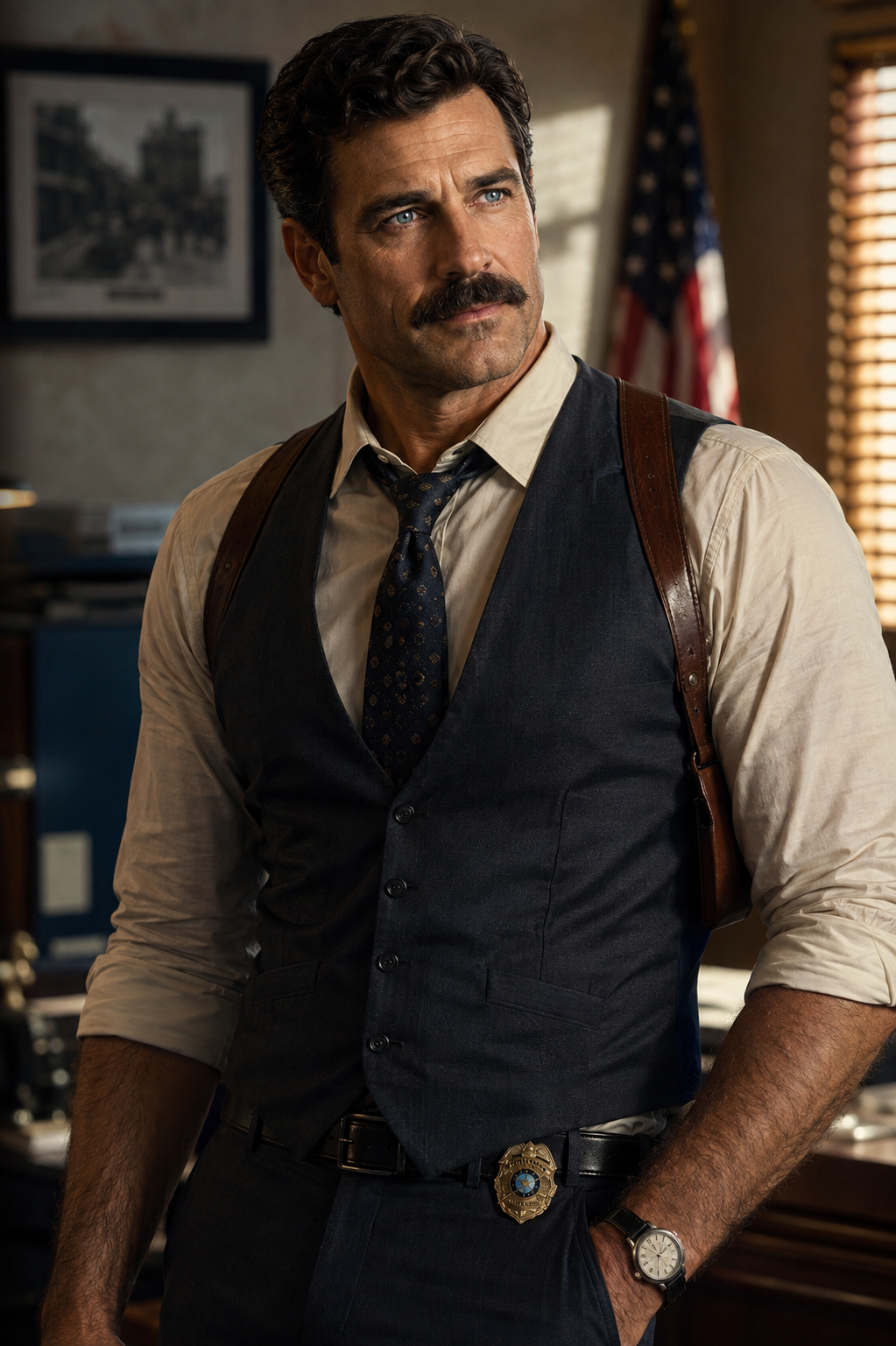
After killing Callie’s abusive father Richie Montrose, Nix dies by suicide in his stables just before Saint can arrest him.

Saint proves his innocence minutes before his scheduled execution; he is released and eventually gets his land back after Sammy purchases it for him.

Patch finally tracks him to Alabama and shoots him dead while Aaron is attempting to kill Saint.
🔷 Supporting Characters

She reconciles with Patch in the Outer Banks and later moves to Boston to study law, hoping to defend poor people.
She dies of a heart attack after learning painful secrets Saint had kept from her, leaving Saint her enduring love and pride.
Patch confronts Jimmy at the Culpepper Zoo and kills him after discovering the extent of Saint’s injuries.
She dies alone from an overdose while Patch is away traveling the country.
Chief Nix ultimately executes Richie, delivering the justice the legal system never did.
She actually dies from a hemorrhage at Tooms’s underground clinic after becoming pregnant through her father Richie’s rape; Nix secretly buries her beneath an okame cherry tree.
He is raised by a loving farm family, becomes an excellent student and athlete, and takes up beekeeping like his biological mother.
Tom remains incarcerated and later helps Patch deceive Warden Riley by sending authorities on a false trail to North Dakota.
After years trapped in a loveless marriage to Franklin, she finds unexpected love and companionship with Sammy and finally experiences the warmth and laughter missing from much of her life.
She successfully misdirects the authorities and is last seen finishing her night shift, amused by what she has done.
🕳️ Potential Plot Holes
After the 1975 fire, Eli Aaron manages to disappear for twenty-five years despite being an unusually recognizable man—6'4", roughly 300 pounds, badly burned, and eventually so notorious that his face is described as “too famous.” Yet he apparently continues using the name Eli Aaron for photography work and even returns to places connected to his past. Given the scale of the search for him and his distinctive appearance, his ability to live and work under essentially the same identity without being discovered is difficult to reconcile.
Patch has never been to Grace Falls, Alabama, and knows the town only through Grace’s descriptions while they are imprisoned together in complete darkness. Nevertheless, he later paints the town with such precise visual detail that Tom White is able to recognize specific locations, including the Moon Under Water Diner. Verbal descriptions could certainly allow Patch to imagine the town, but reproducing an unfamiliar real location accurately enough for someone to identify individual buildings requires visual information Patch never had.
Chief Nix knows Dr. Tooms did not murder Callie Montrose, yet allows the man he loves to be convicted of her murder and spend roughly twenty years on death row. His motive is supposedly to protect Tooms from exposure for his involvement with an illegal abortion clinic and to conceal the truth surrounding Callie and Richie Montrose. But framing Tooms for a capital crime exposes him to a far worse consequence—execution—than the crime Nix is supposedly protecting him from. Nix’s willingness to let Tooms nearly die for a murder he knows he did not commit makes the stated motivation difficult to reconcile with his actions.
📚 Book Club Q&A's
⭐ Final Rating & Thoughts
All the Colors of the Dark is the rare book that tries to do almost everything—and somehow succeeds. Chris Whitaker blends mystery, thriller, romance, historical fiction, and coming-of-age into a sprawling story that never felt like it was juggling too much. Instead, every piece seemed to belong.
What impressed me most was how completely invested I became in these characters. The story spans decades, yet the relationships remain its emotional center, especially the complicated bonds of friendship, love, loyalty, and sacrifice. It’s heartbreaking without feeling manipulative and dark without losing its sense of hope.
And despite being nearly 600 pages, I could not stop reading. The short chapters and constant mini-cliffhangers made it ridiculously easy to tell myself “just one more,” while Whitaker’s beautiful writing gave the story far more emotional depth than I expected from something this compulsively readable.
It’s ambitious, cinematic, devastating, hopeful, and beautifully written. I laughed, hurt, worried, hoped, and became completely consumed by it.
✨ Adaptation description
All the Colors of the Dark — TV Adaptation
Chris Whitaker’s 2024 bestselling novel All the Colors of the Dark is being developed as a television series by Universal Content Productions (UCP), in partnership with Jenna Bush Hager’s Thousand Voices and Sue Naegle and Ali Krug’s Dinner Party Productions. The adaptation was announced in June 2024, around the novel’s publication and its selection for the Read with Jenna book club. (Yahoo)
Sarah Gubbins (Pam & Tommy, Better Things, I Love Dick) is attached to adapt the novel for television. Executive producers announced for the project include Gubbins, Sue Naegle, Ali Krug, Jenna Bush Hager, Thousand Voices president Ben Spector, and Chris Whitaker himself. (Yahoo)
As of August 2026, the project still appears to be in development. (IMDb)
✨ Books Like All the Colors of the Dark (2024)
See an error on this page?