
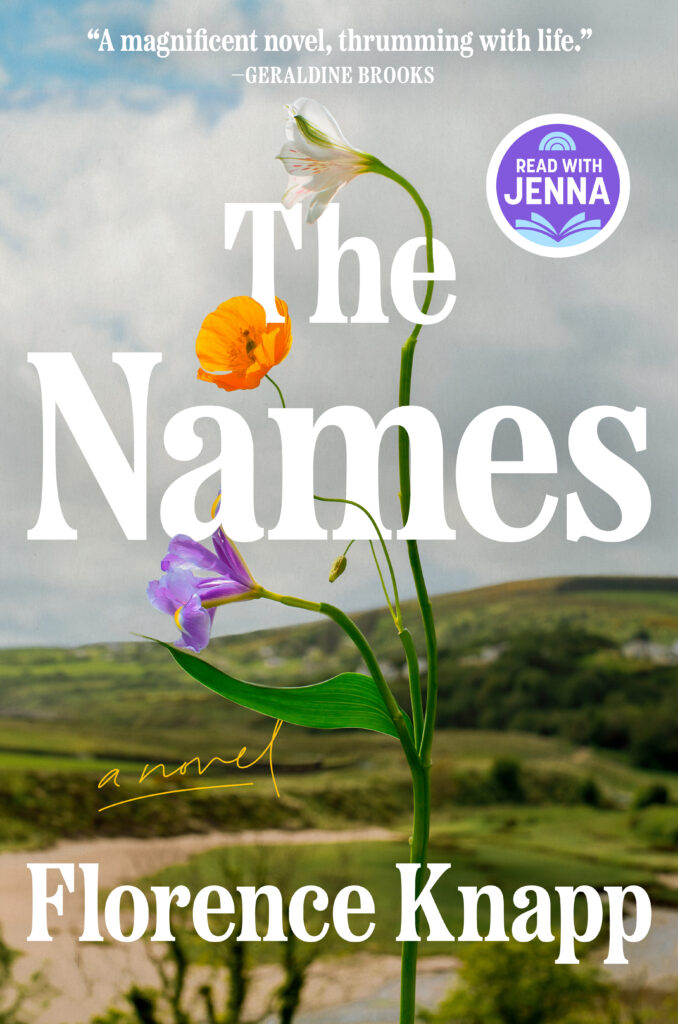
The Names (2025)
Select Sections to Print
×Book Details
The Names (2025)
Jump to Section
⚠️ Trigger Warnings
- Domestic violence
- Coercive control
- Emotional & psychological abuse
- Gaslighting
- Medical abuse
- Forced breastfeeding
- Child abuse & manipulation
- Child neglect
- Murder
- Death of a parent
- Sudden death
- Grief
- Terrorism / mass shooting
- Gun violence
- Sexual harassment
- Bullying & public humiliation
- Alcoholism
- Car accident
- Suicide (mention)
- Anaphylaxis / severe allergic reaction
⏱️ 2-Minute Spoiler Summary
The Names follows three alternate versions of Cora Atkin’s family after she chooses a different name for her newborn son in 1987. When she names him Bear, her abusive husband Gordon Sr. kills their neighbor Vihaan during a violent confrontation and goes to prison, allowing Cora to raise Bear in relative freedom. Bear grows up gentle, falls in love with Lily, and has a daughter, Pearl, but dies unexpectedly from an allergic reaction to a wasp sting in 2022.
When Cora names the baby Julian, Gordon remains free and eventually murders her when she tries to leave him. Julian and Maia are raised in Ireland by their grandmother Sílbhe. Julian becomes a successful jeweler, marries Orla, and has two daughters while gradually overcoming his fear that he might inherit his father’s violence.
When Cora obeys Gordon and names the baby Gordon Jr., she remains trapped for years. Gordon Jr. initially imitates his father’s cruelty, but after a drunk-driving accident he changes his life, reconciles with Cora and Maia, and eventually uses hidden recordings of Gordon Sr.’s abuse to force him out of Cora’s life permanently.
The novel ends with Gordon Sr. dying alone of a heart attack in 2022, followed by glimpses of still more possible versions of the family—including one in which Cora names her son Hugh.
📖 Full Spoiler Summary
Florence Knapp’s The Names begins in October 1987, when Cora Atkin walks through a storm to register the birth of her newborn son. Her husband, Gordon Atkin Sr., a respected local GP, expects the baby to be named Gordon after him. It is not really a request. Gordon controls nearly every aspect of Cora’s life, and she knows there will be consequences if she defies him.
But Cora’s nine-year-old daughter, Maia, has another idea: Bear.
From this single decision, the novel splits into three versions of the Atkin family’s future. In one, Cora chooses Bear. In another, she chooses Julian. In the third, she gives her husband exactly what he wants and names their son Gordon Jr. The timelines return to the family every seven years, showing how one choice can alter the course of their lives without necessarily changing who they are at their core.
1987: Bear, Julian, or Gordon
In the Bear timeline, Cora takes the greatest act of defiance and registers her son as Bear. Gordon is furious when she comes home. His rage becomes so violent that their neighbor, Vihaan, hears Cora screaming and rushes over to help her. During the confrontation, Gordon shoves Vihaan through the glass patio doors, killing him.
Gordon is arrested and eventually imprisoned for murder. His violence has resulted in a death, but it has also abruptly removed him from Cora and the children’s daily lives.
In the Julian timeline, Cora chooses Julian, a name connected to the meaning “sky father.” Gordon again sees her choice as an act of rebellion. His punishment is immediate and degrading: he forces Cora’s face into a plate of lasagne.
This time, however, there is no Vihaan to intervene and no murder that removes Gordon from the home. Cora remains trapped long enough to eventually attempt an escape. Gordon refuses to allow it. He murders Cora while Maia and Julian are nearby, leaving both children to grow up with the knowledge that their father killed their mother.
The Gordon timeline begins with surrender. Cora registers her son as Gordon Jr., exactly as her husband demanded. Gordon Sr. remains in the home, and his control only becomes more sophisticated. Because he is a doctor, he has access to another weapon: Cora’s medical records. He falsely portrays her as mentally unstable and “psychotic,” knowing that if she ever tries to leave, he can use those records to argue that she is unfit to take the children.
Cora understands that escaping him could mean losing Maia and Gordon Jr., so she stays.
1994: Three Very Different Childhoods
Seven years later, Bear is growing up without his father in the house. Cora, Maia, and Bear live in a flat and have built a small but supportive family around themselves, particularly through their close friends Mehri and Fern. Cora begins working as a gardener and slowly develops an identity that belongs to her rather than Gordon.
Bear grows into a gentle, sensitive boy. Gordon is still part of their lives through his absence—his imprisonment does not erase the fear of what he did—but Bear gets to spend his childhood surrounded largely by people who love and protect him.
Julian’s childhood looks completely different. After Cora’s murder, he and Maia move to Ireland to live with their grandmother, Sílbhe. Maia, now sixteen, continues ballet partly because it connects her to the mother she lost. Julian finds his own refuge working with beads for their neighbor Eileen, beginning the fascination with craftsmanship that will eventually shape his career.
Sílbhe also reconnects with Cian Brennan, an old love. Although the possibility of romance reenters her life, her first priority is Maia and Julian. She gives the children the stable home their parents could not.
Back in the Gordon timeline, seven-year-old Gordon Jr. is being molded by his father. Gordon Sr. encourages him to watch Cora and report anything she does that might be considered disobedient. Instead of simply witnessing the abuse, the boy is gradually recruited into it.
Maia sees exactly what is happening. One of the most degrading moments comes when Gordon Sr. forces Cora to eat from a bowl on the floor like an animal. With no outside intervention and Gordon’s medical manipulation making escape increasingly difficult, the entire household revolves around his control.
2001: Growing Up Under Gordon’s Shadow
At fourteen, Bear meets Lily at school. Their awkward first encounter develops into a relationship that will remain important for the rest of Bear’s life. Yet even as he begins discovering love, the family is preparing for Gordon Sr.’s eventual release from prison. The man who has been physically absent throughout Bear’s childhood may soon return.
Cora attempts to move forward as well and goes on a date with a kind veterinarian named Felix. Gordon’s abuse, however, has made ordinary kindness difficult for her to trust. Freedom has removed the immediate danger, but it has not erased what living with Gordon did to her.
In Ireland, fourteen-year-old Julian continues developing his artistic abilities and becomes a silversmithing apprentice under Cian. His future begins taking shape around creating beautiful objects with his hands. Maia, now twenty-three, is still carrying the truth about Cora’s death and finally tells Cian what Gordon did to her mother.
The teenage Gordon Jr., however, is becoming disturbingly similar to his father. Desperate for Gordon Sr.’s approval and having spent his childhood learning that cruelty equals power, he assaults his classmate Lily and then humiliates her publicly to impress other boys.
Maia has become a doctor and secretly begins a relationship with another physician, Kate. Even as an adult with a career of her own, she remains terrified of Gordon Sr.’s reaction if he discovers she is gay. His control continues to shape what everyone in the family believes they are allowed to reveal about themselves.
2008: The Children Begin Choosing Their Own Lives
At twenty-one, Bear prepares to leave England for an archaeological dig in Jordan. But as he learns more about the night Vihaan died, he begins wondering whether his own name somehow caused the tragedy. Had Cora simply called him Gordon, would Vihaan still be alive?
The question forces Bear to confront the uncomfortable reality that his name became connected to the moment his mother finally defied his father, even though Gordon—not Cora or Bear—was responsible for the violence that followed.
Maia has built a life in Brighton with her partner, Charlotte, but her father still terrifies her. Merely spotting Gordon in a traffic jam is enough to bring that fear rushing back.
In the Julian timeline, Julian opens his own jewelry studio and falls in love with an artist named Orla. Yet Gordon’s legacy follows him too. Knowing that his father murdered his mother, Julian worries that violence might somehow be inside him as well. He fears what he calls his “murderer genes” and struggles to believe he can safely build a family of his own.
Maia, now thirty, decides to study homeopathy, while Sílbhe and Cian have settled into a happy partnership. The children miss Cora horribly, but Ireland has nevertheless given them a loving family life after her death.
The most dramatic shift occurs in the Gordon timeline. Gordon Jr. is now a wealthy, reckless young banker, but Cora is still living under Gordon Sr.’s control. When Sílbhe dies, Gordon deliberately hides the news from his wife.
Discovering what he has done finally pushes Cora beyond her limit. She runs from the house and encounters Felix, the veterinarian who appeared in another form in Bear’s timeline. He helps her reach a women’s refuge.
For the first time, Cora truly breaks away.
2015: Love, Recovery, and Reconciliation
Bear has spent years pursuing his career abroad, but his priorities change when Lily is shot during a terrorist attack in Paris. She survives, but nearly losing her makes Bear reconsider the life he has built. He returns to England and chooses a permanent future with her.
Julian and Orla are expecting a child, forcing Julian to confront the fears he has carried about becoming a father. He finally tells Orla the full truth about Gordon murdering Cora. Rather than driving her away, the confession allows Julian to stop treating his father’s violence as something he must inevitably inherit.
During the Irish marriage referendum, Maia also finally comes out publicly and begins a relationship with Meg, allowing herself a happiness she had denied for years.
In the Gordon timeline, Gordon Jr.’s reckless lifestyle ends in a severe drunk-driving accident. During his recovery, he works with a sponsor named Rob, and for the first time he seriously examines the person he has become.
He recognizes how thoroughly his father shaped his childhood behavior, but he does not use that upbringing to excuse what he did. Gordon Jr. reaches out to Cora and Maia, expresses remorse, and begins repairing relationships that once seemed impossible to salvage. Maia, seeing that her brother genuinely wants to change, finally introduces him to Kate.
2022: What Becomes of Each Son
By 2022, Bear and Lily have built the family he once chose to return home for. They have a six-year-old daughter, Pearl, and Bear has become a loving husband and father.
Then his life ends suddenly. Bear is stung by a wasp and suffers a fatal anaphylactic reaction.
His death has nothing to do with Gordon, Vihaan, or the name Cora chose decades earlier. After years spent worrying about the consequences attached to his existence, Bear dies because of a random accident. Cora and Maia gather around Lily and Pearl, helping them survive the devastating loss.
Julian’s life reaches a much happier place. He is a successful jeweler, married to Orla, and they have two daughters, Aoife and Niamh. He even agrees to sell his work in England, finally loosening the hatred he has carried toward the country he associates with his father.
Sílbhe dies naturally at eighty-eight after spending decades surrounded by the family she helped rebuild. Her second chance with Cian and her years raising Maia and Julian gave her a rich life long after tragedy first brought the children to Ireland.
Gordon Jr., meanwhile, completes the transformation that seemed almost impossible when he was a teenager. He helps Cora finally sever Gordon Sr.’s remaining hold over her by secretly recording his father’s abusive behavior with hidden cameras. Armed with the footage, Gordon Jr. blackmails Gordon Sr. into signing over the house and leaving permanently.
The boy once trained to spy on his mother ultimately uses the same kind of surveillance against the man who taught him to do it.
With Gordon Sr. finally gone, Cora has complete possession of her home and her life. Gordon Jr. settles into a quieter existence with Comfort and her daughter Ida, becoming part of a family defined very differently from the one in which he grew up.
Epilogue: The End of Gordon Atkin
On July 29, 2022, Gordon Atkin Sr. dies alone from a heart attack on his kitchen floor.
As he dies, his thoughts turn to the people whose lives he damaged: Cora, Maia, and his son. He imagines another possible life beginning much earlier than the three timelines the novel has followed—a version in which, on the first day he met Cora, he simply allowed her to walk away.
The novel then briefly opens the door to still more lives that might have existed. Bear, Julian, and Gordon were never the only possibilities. There are countless other choices and countless other names, including a reality in which Cora walks into the registry office and names her son Hugh.
The three stories end in radically different places. Bear grows up without his father but dies young. Julian loses his mother but creates a loving family of his own. Gordon Jr. spends the longest time directly under his father’s influence and initially repeats some of his cruelty, yet eventually rejects him and helps Cora escape him for good.
All three lives began with the same baby, the same mother, and the same family. The only thing that changed at the beginning was the name Cora chose to write down.
🔚 Ending Explained
How The Names Ends
The Names ends by bringing its three versions of the Atkin family to very different places. There is no single “best” timeline. Each life contains loss, damage, love, and possibility, but together they make the same larger point: Gordon Sr.’s violence does not get to determine who his children become.
The Bear Timeline
Bear’s timeline has perhaps the cruelest ending because, in many ways, he has built the happiest life. He has Lily, their daughter Pearl, a close relationship with Cora and Maia, and the warm, openhearted personality that has defined him since childhood.
Then Bear dies suddenly from anaphylaxis after a wasp sting.
His death leaves the family stunned by a grief that feels almost impossible to absorb. Cora’s response is especially moving. She cuts perfect peonies from her former workplace for Bear’s funeral, one final act of mothering for the son whose life was characterized by wholeheartedness and affection.
Yet Florence Knapp does not leave Cora entirely alone. Near the end of this timeline, she reconnects with Felix, the veterinarian, and their tentative conversation suggests that companionship—and perhaps love—is still possible for her.
Even Pearl’s decision to get a cat matters. The recurring game of “animal, vegetable, mineral” has represented a kind of balance throughout the novel. Bringing an animal into the grieving household becomes a tiny gesture toward restoring life to a place overwhelmed by death.
Bear’s ending is devastating precisely because escaping abuse does not guarantee protection from ordinary tragedy. Gordon does not destroy Bear’s life. Chance does.
The Julian Timeline
Julian’s ending is quieter but deeply significant.
For years, he has carried a complicated relationship with England because it is inseparable from the father who murdered his mother. Eventually, Julian agrees to sell his jewelry there, allowing himself to reclaim something he had mentally surrendered to Gordon.
His relationship with Orla undergoes a similar transformation. After their pandemic separation, Julian finally confronts one of his deepest fears: that some part of his father lives inside him and that intimacy might eventually turn him cruel.
Instead, he realizes something enormously important:
He is not Gordon.
Julian can love without possessing. He can be a husband and father without becoming controlling. He can experience joy—even “euphoria”—without waiting for it to become violence.
That makes the meaning of his name particularly beautiful. Julian was associated with “sky father,” but by the end, fatherhood no longer belongs symbolically to Gordon. Julian gets to redefine it for himself.
The Gordon Timeline
Gordon Jr.’s resolution most directly confronts the abusive father.
Using footage captured by hidden cameras, Gordon Jr. finally gains enough leverage to force Gordon Sr. out of the family home and make him sign the house over to Cora.
It is a wonderfully appropriate reversal. Gordon Sr. has spent decades using surveillance, fear, manipulation, money, and authority to control other people. Now evidence of his own behavior becomes the means of destroying that control.
For the first time, Cora truly belongs to herself.
Her freedom isn’t presented through some enormous romantic or dramatic transformation. Instead, it appears in ordinary pleasures: books, podcasts, the ballet, and the experience of simply inhabiting an “unencumbered body.” After a lifetime of having her choices monitored, even normal existence becomes luxurious.
Gordon Jr. also finally understands his childhood.
He had spent years believing there was something fundamentally wrong with him. Eventually, he recognizes that much of the behavior he hated in himself was cultivated by his father. He was manipulated into becoming Gordon Sr.’s ally and extension.
His peaceful life with Comfort and Ida therefore represents more than domestic happiness. It proves that Gordon Jr. can choose what kind of man he becomes.
Gordon Sr.’s Death
The novel ultimately ends with Gordon Atkin Sr. himself on July 29, 2022.
He suffers a sudden heart attack.
But Knapp refuses to give him an easy or comforting death. As Gordon dies, the people he has harmed return to him: Cora, Maia, and his son. They are the people he was supposed to love, and instead they became the primary victims of his need for control.
His final thoughts produce perhaps the most important alternate timeline in the entire novel.
Gordon imagines returning to Embankment Gardens, where he first met Cora.
Only this time, he lets her walk away.
It is an extraordinary final choice because it is the one choice Gordon can no longer make. After spending his life trying to possess Cora, his dying mind finally imagines the greatest kindness he could ever have offered her:
not entering her life at all.
What the Ending Means
At first, The Names appears to ask a fairly straightforward question: How much can one decision change a life?
Bear, Julian, or Gordon.
Three names. Three futures.
But by the ending, the novel has complicated that idea considerably.
The name matters enormously because Cora’s decision represents her relationship to Gordon’s control. Yet the children aren’t simply programmed by whichever name appears on the birth certificate. Each develops within a different combination of personality, circumstance, trauma, relationships, and chance.
That is why none of the timelines becomes a perfect alternate universe.
Bear escapes his father’s direct influence but dies young. Julian loses his mother but eventually builds a loving family. Gordon suffers the longest exposure to his father’s manipulation but ultimately becomes the person who frees Cora.
There is no magical choice that produces a painless life.
What matters is what people eventually do with the lives they have.
“Unspent possibilities”
This is where the novel’s idea of “unspent possibilities” becomes so important.
Every choice eliminates countless other lives.
Cora can wonder about the sons she might have raised. Gordon can imagine the woman Cora might have become without him. The reader, uniquely, has been allowed to see several of those possibilities simultaneously.
And then Knapp gives us Hugh.
The brief glimpse of yet another possible name reminds us that Bear, Julian, and Gordon were never the only possibilities. There could have been Hugh—and presumably thousands of other versions branching from thousands of decisions.
The three stories we’ve read are merely three paths through an almost infinite maze.
Saturn Devouring His Son
The reference to Goya’s Saturn Devouring His Son is particularly fitting for Gordon Sr.
Saturn consumes his children because he fears that one of them will overthrow him. Gordon’s abuse operates on a similar principle: he tries to dominate his children so completely that they cannot develop identities independent of his own.
Gordon Jr. is especially vulnerable because his father has literally given him his own name.
Yet Jupiter escapes Saturn.
And Gordon Jr. escapes Gordon.
The son Gordon Sr. attempts most aggressively to shape into his own image ultimately becomes the son who removes him from the family.
Why Gordon’s Final Fantasy Matters
Gordon’s final imagined encounter with Cora does not redeem him.
He doesn’t undo anything.
Instead, it reveals the tragedy underneath the entire novel. Somewhere, perhaps far too late, Gordon understands that love without freedom isn’t love.
His imagined act of letting Cora walk away is therefore the exact opposite of everything he did while alive.
And there is something deliberately cruel about the timing: Gordon finally imagines giving Cora freedom when he has no time left to actually give it.
The Real Meaning of the Ending
Ultimately, The Names isn’t arguing that one name determines a person’s destiny.
It argues almost the opposite.
Names carry expectations. Parents shape children. Trauma leaves marks. A single decision can redirect an entire family.
But none of those things completely determines who someone must become.
Bear is not Gordon.
Julian is not Gordon.
And, most importantly, Gordon Jr. is not Gordon Sr.
Across every version of the story, the children eventually recognize the difference between what they inherited and what they choose to carry forward.
That’s what makes the ending bittersweet rather than bleak. Some damage cannot be repaired. Cora cannot retrieve the years Gordon took from her. Julian cannot get his mother back. Bear’s family cannot undo his senseless death. Somewhere beyond all three stories are countless other lives that might have been.
But the surviving characters can stop Gordon’s cruelty from becoming their inheritance.
The novel begins with Cora choosing what to call her son. It ends with her children, in different ways, choosing who they will be.
And Gordon’s final vision delivers the book’s saddest truth: sometimes the most loving possibility is the life you allow another person to live without you.
👤 Characters & Fates
🔶 Main Characters
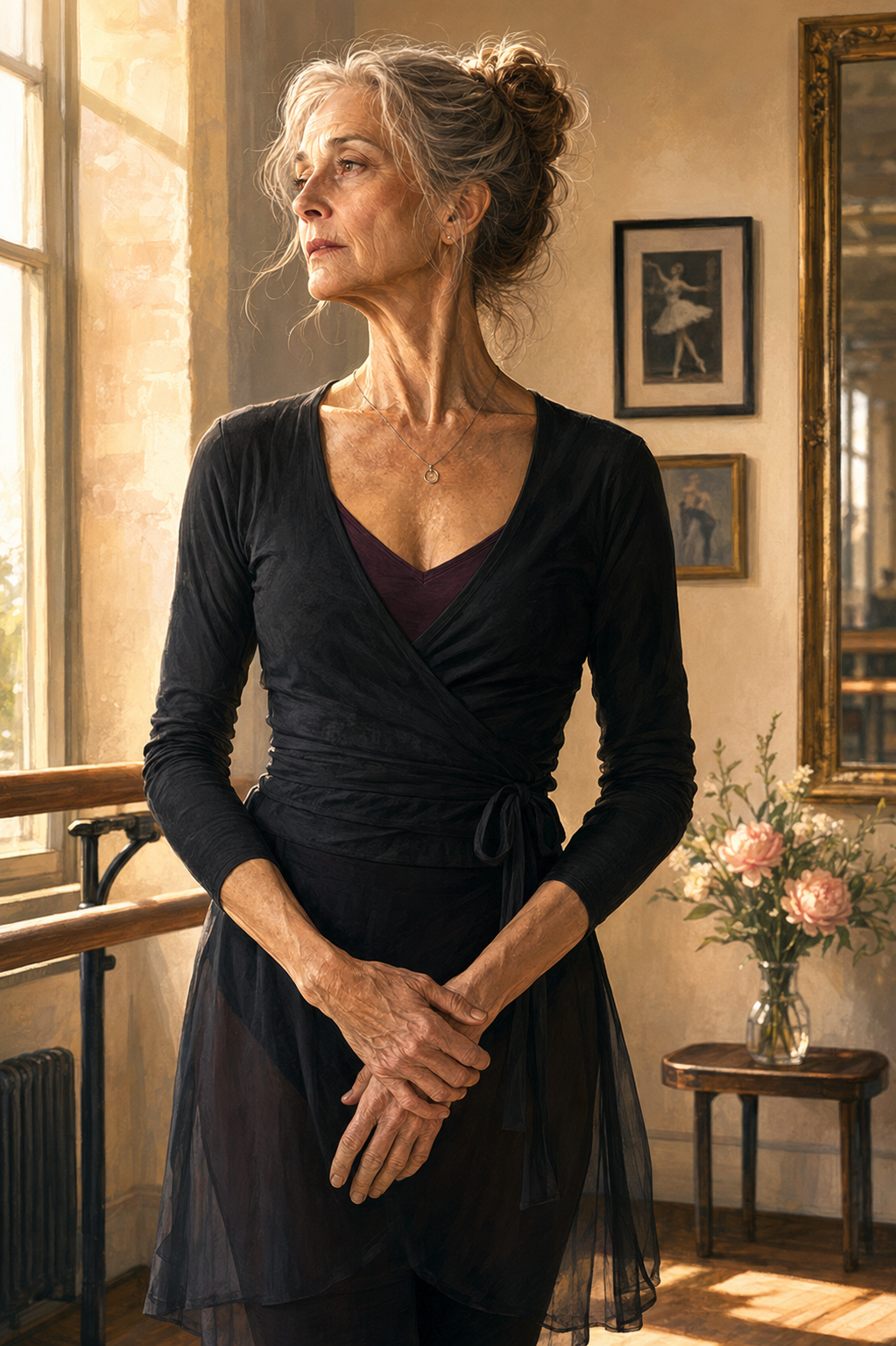
Bear timeline: builds a successful gardening career and reconnects with Felix after Bear’s death. Julian timeline: Gordon Sr. murders her when she tries to escape. Gordon timeline: Gordon Jr. blackmails his father into leaving, finally freeing Cora and securing the family home for her.

His fate varies by timeline, but he ultimately dies of a heart attack in 2022; in his final moments, he is haunted by his victims and imagines the life Cora might have had if he had simply let her walk away when they met.

Bear timeline: becomes a Brighton homeopath and lives with Charlotte. Julian timeline: becomes a homeopath and finds love with Meg. Gordon timeline: becomes a doctor, eventually openly embraces her relationship with Kate, reconciles with her brother, and rejects her father by drowning his apology letter in the sea.

Becomes an archaeologist, marries Lily, and has Pearl, but dies suddenly in 2022 from anaphylaxis after a wasp sting—an emergency Gordon Sr. successfully treats in another timeline.

Becomes a successful jeweler, has daughters Aoife and Niamh with Orla, and eventually reconciles with Orla after their pandemic separation, finally accepting that he is not destined to become his father.
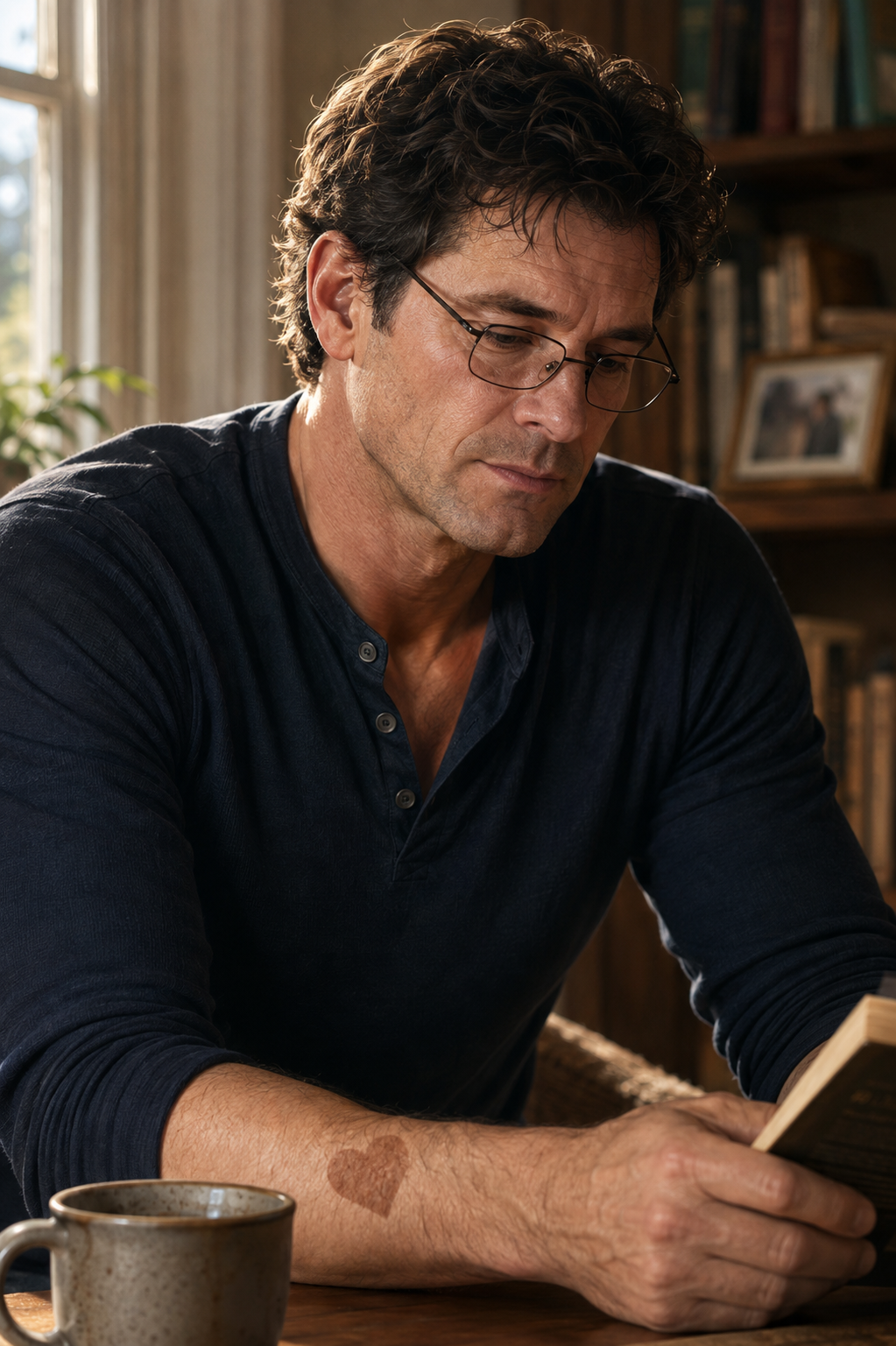
After alcoholism and a near-fatal crash, he becomes sober, secretly records his father abusing Cora, and blackmails Gordon Sr. into surrendering the family home and leaving. He eventually builds a peaceful life with Comfort and her daughter Ida.
🔷 Supporting Characters
Rekindles her relationship with her old love Cian and enjoys a “second youth” before dying naturally at eighty-eight from a hole in her heart; Gordon Sr. conceals her death from Cora in the Gordon timeline.
Lives with Sílbhe until her death and remains close to the family afterward; in the Bear timeline, he even makes Bear’s engagement ring.
Bear timeline: survives being shot during the 2015 Paris attacks, has Pearl with Bear, and later survives Bear’s sudden death. Gordon timeline: after suffering Gordon Jr.’s childhood cruelty, she becomes a prominent human-rights lawyer focused on justice for women.
Helps Cora escape Gordon Sr. in the Gordon timeline; in the Bear timeline, he and Cora reconnect in 2022 after both have lost their spouses, suggesting they may build a new life together.
Remains Cora’s loyal confidante for more than thirty-five years.
Grows into an independent woman who “flits around like a dragonfly” rather than settling permanently with one partner.
Gordon Sr. pushes him through the glass patio doors during the 1987 confrontation, killing him and consequently being sent to prison.
Witnesses Bear’s fatal allergic reaction in 2022 and later helps bring life back into the grieving family home by getting a kitten.
Separates from Julian during the pandemic but eventually reconciles with him, and they continue raising their daughters together.
Supports Gordon Jr.’s sobriety and helps him find work at an art gallery, contributing to his eventual stable life with Comfort and Ida.
After being kept secret for seven years, Kate is finally introduced to Gordon Jr. and openly becomes part of Maia’s family.
Remains Maia’s loving partner and a stable presence within the extended Atkin family.
She and Maia build a peaceful life together in Brighton.
They become Gordon Jr.’s “ark,” supporting him through the pandemic and his sobriety as he finally creates a peaceful life.
They remain with Julian and Orla after their reconciliation, raised in a loving home far removed from their grandfather’s abuse.
She remains a comforting figure from Julian’s childhood rather than experiencing a major later plot development.
🕳️ Potential Plot Holes
In the Julian timeline, Maia escapes her abusive home at fourteen and moves to Ireland with her loving grandmother after Cora’s death. Despite having excellent grades and considerable potential, she is still working in a sandwich shop at twenty-three, with her grandmother believing she could have done much more with her life. Yet in the Gordon timeline, Maia remains exposed to her father’s abuse and coercive control for years and becomes a successful doctor in London by roughly the same age. The novel never really explains why Maia thrives professionally in the timeline where she remains trapped in the abusive family environment but struggles so much more after being removed from it.
📚 Book Club Q&A's
⭐ Final Rating & Thoughts
The premise of The Names is fantastic: one child, three possible names, and three versions of his life unfolding over 35 years. I loved the seven-year jumps and the way Florence Knapp uses the timelines to explore nature versus nurture, generational trauma, and whether we can choose to become someone different from the people who raised us.
Where the book lost me was in its ultimate message. I expected the different timelines to draw a clearer connection between growing up around abuse and the person a child becomes. Instead, the novel offers a much more complicated—and hopeful—argument about our ability to recognize harmful patterns and eventually reject them. I believe that's possible, but I couldn't stop thinking about how much damage can happen before someone reaches that realization.
Still, the fact that I'm wrestling with these questions after finishing says something. The Names didn't completely work for me, but it definitely made me think.
✨ Adaptation description
As of August 2026, there is no official screen adaptation information of The Names.
✨ Books Like The Names (2025)
See an error on this page?