

The God of the Woods (2024)
Select Sections to Print
×Book Details
The God of the Woods (2024)
Jump to Section
⚠️ Trigger Warnings
- Child disappearance
- Child death
- Death of a sibling
- Grief and bereavement
- Domestic violence
- Physical abuse
- Child abuse
- Alcohol abuse
- Underage drinking
- Drug use
- Prescription drug dependency
- Mental illness
- Hallucinations
- Psychiatric institutionalization
- Serial killers
- Murder
- Stabbing
- Sexual violence
- Statutory rape
- Classism
- Abuse of power
- Wrongful accusation / framing
- Animal death and cruelty
- Graphic animal butchering
- Accidental self-injury
- Blood and injury
⏱️ 2-Minute Spoiler Summary
In 1975, thirteen-year-old Barbara Van Laar disappears from Camp Emerson, the same Adirondack property where her eight-year-old brother Bear vanished fourteen years earlier. Investigators Judy Luptack and Denny Hayes initially have several frightening possibilities to consider, including escaped serial killer Jacob Sluiter and Camp Counselor Louise’s abusive fiancé, John Paul McLellan Jr.
As Judy investigates, she uncovers the truth about Bear: he was never abducted. In 1961, his mother Alice took him onto Lake Joan during a storm while struggling with pills and alcohol, and Bear died when their boat capsized. His grandfather Peter Van Laar II and groundskeeper Vic Hewitt covered up the death to protect the Van Laar family, secretly burying Bear and framing innocent gardener Carl Stoddard. Vic’s daughter T.J. witnessed the cover-up as a child and finally confesses in 1975, clearing Carl’s name.
Barbara’s disappearance turns out to be completely different. She made up a secret boyfriend as part of her plan to escape her neglectful family, and T.J. helped her disappear. Judy finds and follows a map to a remote island and discovers Barbara alive and safely living in a hidden Hewitt cabin. Rather than return her to the family she deliberately fled, Judy leaves Barbara there and allows her to remain officially missing.
📖 Full Spoiler Summary
Barbara Van Laar Disappears from Camp Emerson
In August 1975, thirteen-year-old Barbara Van Laar disappears from Camp Emerson, the summer camp located on her wealthy family’s Adirondack preserve. Her counselor, Louise Donnadieu, realizes Barbara is missing when she checks the girls’ bunk and finds her bed empty. Camp director T.J. Hewitt immediately organizes a search, hoping to find Barbara before the situation reaches her parents, Alice and Peter Van Laar III, who are staying nearby at the family estate known as Self-Reliance.
But Barbara is not just another missing camper. Fourteen years earlier, her older brother Bear Van Laar disappeared from this exact same property when he was eight years old. He was never found, and his disappearance has haunted both the Van Laar family and the surrounding community ever since.
Barbara’s disappearance therefore reopens a mystery that many people would prefer to leave buried.
Complicating matters even further, convicted serial killer Jacob Sluiter has recently escaped from prison and is believed to be somewhere in the region. With a missing girl, an escaped murderer, and the history of another Van Laar child vanishing from the same woods, it initially seems possible that Barbara has become the victim of something terrible.
What Really Happened to Bear Van Laar
The story of Barbara’s disappearance is inseparable from what happened to Bear in July 1961.
According to the version the Van Laar family told authorities, Bear disappeared during the annual Blackfly Good-by party. His grandfather, Peter Van Laar II, claimed that Bear had been out hiking and turned back toward the house because he had forgotten his pocketknife. He never returned.
The disappearance prompted an enormous search. Local volunteers combed the woods, including the homes of grocer Dick Shattuck and the Van Laars’ nervous gardener, Carl Stoddard. Searchers eventually discovered a small wooden bear carving, but there was no sign of the child himself.
Rather than admit that they had no idea what had happened, the powerful Van Laar family allowed suspicion to settle on Carl. Their attorney, John Paul McLellan Sr., and investigator LaRochelle helped build a case suggesting that the gardener might have abducted Bear. Carl was an easy target: he lacked the Van Laars’ money, status, and connections, and once suspicion attached itself to him, he had little ability to fight back.
Carl was never responsible for Bear’s disappearance. Nevertheless, the accusations destroyed his reputation, and he eventually died of a heart attack while still under suspicion. His daughter, Jeannie Clute, would spend years knowing that her father had been blamed for something he did not do.
The truth was hidden by the Van Laars because Bear had never disappeared in the woods at all.
His mother, Alice Van Laar, had been struggling with alcohol and pills when she took Bear onto Lake Joan during a storm. Their boat capsized, and Bear died. Faced with the death of his grandson and the possibility of a scandal that could damage the Van Laar name and the family bank, Peter Van Laar II decided to conceal what had happened.
He enlisted Vic Hewitt, the family groundskeeper, to help him.
Together, they manufactured the story that Bear had vanished after turning back during a hike. Vic secretly took Bear’s body across the lake and buried him, ensuring that the search parties would never find what they were looking for.
There was, however, a witness.
Vic’s young daughter, Tessie Jo Hewitt—the girl who would grow up to become T.J. Hewitt—saw enough to know what her father had done. She was forced to carry the secret for years, understanding that exposing the Van Laars could cost her family its livelihood and threaten the future of Camp Emerson.
The Investigation into Barbara’s Disappearance
Fourteen years later, investigators Judyta “Judy” Luptack and Denny Hayes arrive to investigate Barbara’s disappearance. Judy is relatively inexperienced, but she refuses to simply accept the explanations offered by the powerful people surrounding the case.
At Self-Reliance, the investigation brings her into contact with members of the Van Laars’ privileged social circle, including Marnie McLellan and her brother John Paul McLellan Jr. John Paul is also Louise’s fiancé, and their relationship is abusive. As the investigation continues, Louise becomes increasingly vulnerable to being blamed for events she did not cause.
Barbara’s bunkmate, Tracy Jewell, provides one of the investigation’s most important clues. Tracy explains that Barbara had secretly been leaving the bunk at night and claimed she was meeting a boyfriend at an observer’s cabin. The revelation suggests that Barbara had been maintaining a hidden life that neither the counselors nor her parents knew about.
Suspicion soon falls heavily on John Paul Jr. Police discover a bag containing Barbara’s bloody clothing in his car. At first, the evidence looks horrifying: the missing girl’s blood is sitting inside the vehicle of a violent man with connections to the people involved in the case.
But the blood has an innocent explanation. During a survival excursion, Barbara had cut her leg while skinning a squirrel. The clothes had been stained during that accident. Their presence in John Paul’s car is suspicious, but they are not proof that he murdered Barbara.
As Judy keeps digging, she begins to realize that the most obvious explanations for Barbara’s disappearance are not necessarily the correct ones. Jacob Sluiter’s escape has terrified everyone, and John Paul is clearly dangerous, but neither fact automatically explains what happened to Barbara.
The investigation instead keeps circling back to the Van Laar family’s past.
Judy Uncovers the Lie About Bear
Judy begins looking more closely at Bear’s supposedly unsolved disappearance and discovers that the official story contains serious problems.
Her investigation leads her to local history teacher Bob Alcott and eventually to Jeannie Clute, Carl Stoddard’s daughter. Jeannie has never accepted what was done to her father. She knows that the Van Laars used their power to turn him into a convenient suspect and that he died with his name stained by accusations he did not deserve.
The two disappearances increasingly seem connected—not necessarily because the same person abducted both children, but because the truth about Barbara cannot be separated from the secrets the Van Laars have been protecting since 1961.
Eventually, T.J. Hewitt and her elderly father Vic are located at an abandoned slaughterhouse. Vic is now frail and suffering from serious memory problems, leaving T.J. as the person capable of finally explaining what happened fourteen years earlier.
When it appears that Louise may be framed for Barbara’s disappearance, T.J. can no longer remain silent.
She tells the truth.
Bear was never kidnapped by Carl Stoddard. He died in the boating accident while with Alice, and Peter Van Laar II orchestrated the cover-up. Vic helped dispose of Bear’s body and participated in creating the false disappearance, while T.J., still a child herself, was pressured into keeping the secret.
Her confession finally clears Carl Stoddard’s name. It also exposes how far the Van Laars were willing to go to protect themselves, even when doing so meant allowing an innocent man to be destroyed.
But solving Bear’s disappearance still leaves one enormous question unanswered:
Where is Barbara?
Barbara Planned Her Own Disappearance
As Judy pieces together the remaining clues, she realizes that Barbara’s supposed boyfriend never existed.
The story had been a cover.
Barbara had not been secretly meeting a romantic interest in the woods. She had been preparing to get away from the life her family had created for her.
Unlike Bear, Barbara has not been killed. Her disappearance is deliberate, and T.J. has helped her carry it out.
Barbara has grown up inside a family defined by emotional distance, secrecy, and the enormous weight of what happened to her brother. Her parents provide wealth and privilege, but not the kind of care or attention she needs. T.J., who knows better than almost anyone what the Van Laar family is capable of demanding from children, understands Barbara’s desire to escape.
A map from the Director’s Cabin gives Judy the final piece she needs. Following it, she swims across the lake to a remote island containing a hidden Hewitt family cabin.
There, she finds Barbara Van Laar.
Barbara is alive.
More importantly, she is not being held captive, injured, or waiting desperately to be rescued. She is safe and appears to be thriving away from her family. Her disappearance has succeeded in giving her something she could never find at Self-Reliance: control over her own life.
Judy now faces a decision that goes beyond simply solving a missing-person case. She can reveal Barbara’s location and return her to the family she deliberately fled, or she can recognize that Barbara does not want to be found.
She chooses the latter.
Barbara Remains “Lost”
The two Van Laar disappearances ultimately have very different endings.
Bear Van Laar truly died in 1961, but his family transformed his death into a disappearance because acknowledging the truth would have threatened their reputation. Their lie allowed an innocent man, Carl Stoddard, to carry the blame for years.
Barbara Van Laar, on the other hand, is alive. Her disappearance is not something her family manufactured—it is something she chose for herself, with T.J.’s help.
After finding Barbara at the hidden cabin, Judy Luptack does not force her to return. She leaves her where she is, allowing Barbara to remain officially missing and protecting the freedom she has managed to create.
The investigation therefore ends with one Van Laar child finally being found after fourteen years and another deliberately remaining lost. The truth about Bear is brought into the open, Carl Stoddard’s name is cleared, and the secret T.J. has carried since childhood is finally exposed.
But Barbara’s secret is preserved.
For the first time, the decision about what happens to a Van Laar child belongs not to the powerful adults surrounding her, but to Barbara herself.
🔚 Ending Explained
How Does The God of the Woods End?
The ending of The God of the Woods solves both of the novel’s central mysteries: what happened to Barbara Van Laar in 1975, and what really happened to her brother Bear fourteen years earlier. But the two disappearances have very different answers. Bear was a victim of the Van Laar family’s obsession with protecting itself. Barbara, by contrast, deliberately disappears in order to escape it.
Barbara Van Laar Is Alive
In September 1975, investigator Judyta “Judy” Luptack follows a clue she found in the Director’s Cabin: a map with a single pin marking property belonging to the Hewitt family. The location leads her fifty miles north of the Van Laar Preserve, where she swims half a mile across a lake to a secluded island.
There, Judy finally finds Barbara alive and well.
Barbara has been living in a cabin stocked with supplies by T.J. Hewitt, the director of Camp Emerson. Her disappearance was not an abduction, murder, or accident. It was an escape.
Throughout the summer, T.J. had secretly been teaching Barbara the survival skills she would need to live independently. Barbara knew that her parents planned to send her to a disciplinary school in the fall, and she was desperate to avoid returning to a life in which other people controlled virtually every decision she made. The camp’s Survival Trip became a rehearsal for something much bigger.
During the chaos surrounding the Preserve’s 100th-anniversary celebration, Barbara and T.J. put their plan into motion. Barbara vanished and made her way to the island, where she could finally live beyond the reach of the Van Laars.
The bloody camp uniform discovered in John Paul McLellan Jr.’s car turns out to be another piece of the plan. The blood came from an accidental injury Barbara suffered while skinning a squirrel. T.J. planted the clothing in John Paul’s car, knowing suspicion would fall on him.
It is partly revenge and partly protection. John Paul had brutally abused Louise Donnadieu, and his powerful family was prepared to let Louise take the blame for Barbara’s disappearance. T.J. makes sure that doesn’t happen.
When Judy reaches the island, she is faced with the most important decision of her career. Finding Barbara could make her reputation. Instead, she asks Barbara whether she wants to be left alone.
Barbara answers simply and decisively: yes.
And Judy leaves her there.
Barbara therefore remains officially “missing,” but the reader knows the truth: for perhaps the first time in her life, she is exactly where she wants to be.
What Really Happened to Bear Van Laar?
Barbara’s disappearance also forces the truth about Bear Van Laar’s 1961 disappearance into the open.
T.J. finally reveals that Bear was never kidnapped by Carl Stoddard, nor was he the victim of escaped murderer Jacob Sluiter.
Bear died in a boating accident.
His mother, Alice Van Laar, had taken him onto the water while intoxicated during a storm. Bear died, and the adults surrounding Alice immediately transformed the tragedy into a secret that had to be managed.
T.J.’s father, Vic Hewitt, and Bear’s grandfather, Peter Van Laar II, covered up the death. Bear’s body was buried across the lake beneath a cairn, while the Van Laars allowed suspicion to fall on Carl Stoddard.
For fourteen years, T.J. has known where Bear was buried.
Her decision to finally reveal the truth destroys the story the Van Laars worked so hard to preserve. Peter Van Laar II, Peter Van Laar III, and John Paul McLellan Sr. face criminal conspiracy charges, while Carl Stoddard’s name is finally cleared.
Alice receives something far more complicated than justice. After years of grief, medication, confusion, and being told what version of reality she should accept, she finally knows what happened to her son. The truth cannot restore Bear or undo what was done to her, but at least the uncertainty that has haunted her for fourteen years is over.
What Does the Ending Mean?
The crucial contrast is between the two missing Van Laar children.
Bear disappears because the adults around him erase the truth. Barbara disappears because she takes control of it.
Bear’s story is one of powerlessness. After his death, powerful men decide what everyone else will believe. They conceal his body, manipulate Alice, destroy Carl Stoddard’s reputation, and preserve the Van Laar name at the expense of almost everyone beneath them.
Barbara refuses to become another person whose life is dictated by that system.
Her disappearance initially appears to repeat the family tragedy. Instead, it reverses it.
The Meaning of “Self-Reliance”
One of the ending’s sharpest ironies involves the Van Laar estate itself, named Self-Reliance.
The name represents everything the Van Laars believe about themselves: that their wealth and position are evidence of strength, competence, and superiority.
But the novel gradually exposes that idea as a lie.
The Van Laars are only able to maintain their world because other people continually protect them, work for them, clean up after them, lie for them, and absorb the consequences of their mistakes.
Barbara’s little cabin in the wilderness becomes the novel’s truer version of self-reliance. She has learned to survive without servants, money, status, or even her family name. The mansion called Self-Reliance is built on dependence. The isolated cabin actually represents independence.
Why Judy Leaves Barbara Behind
Judy’s decision is especially important because she has every professional reason to bring Barbara home.
Finding the missing Van Laar girl would be a spectacular career achievement. But Judy recognizes something the other investigators repeatedly fail to understand: solving a case and doing the right thing are not necessarily the same thing.
Barbara is not being held captive. She isn’t injured or helpless. She has escaped from people who intended to control her future, and returning her would simply restore the very system she fled.
So Judy chooses Barbara over the case.
That decision also completes Judy’s own arc. Throughout the novel, she has had to fight against assumptions about who deserves authority and whose judgment matters. By the end, she trusts her own moral instincts rather than blindly obeying the institutions around her.
T.J.’s Redemption
T.J.’s role in Barbara’s disappearance is also tied directly to her guilt over Bear.
As a child, she became trapped inside the secret created by the adults around her. For fourteen years, she carried knowledge of Bear’s fate while an innocent man remained blamed for his disappearance.
With Barbara, she finally acts differently.
She helps one Van Laar child escape instead of helping the Van Laar family bury what happened to another. And when Louise is in danger of becoming another convenient scapegoat, T.J. finally tells the truth.
Her confession cannot undo the past, but it breaks the cycle.
The Woods as Sanctuary
Throughout much of the novel, the woods appear threatening. They are enormous, confusing, and capable of swallowing people whole. A missing child in the wilderness naturally suggests vulnerability and death.
By the ending, that meaning has been inverted.
Civilization—particularly the wealthy world of the Van Laars—is where the real danger lies. The mansion contains secrets, manipulation, abuse, addiction, and generations of people protecting power at the expense of the vulnerable.
The wilderness becomes the place where Barbara is safest.
That is why the novel’s description of Barbara as something “more god than child” is so fitting. The girl everyone assumes must be helpless in the woods has learned to belong to them. She is no longer simply the missing daughter of the Van Laar family. She has become something beyond their control.
The Ending’s Larger Message
Ultimately, The God of the Woods is deeply concerned with class, power, and who gets to control a story.
For years, the Van Laars have possessed enough money and influence to determine what counts as truth. Carl can be sacrificed. Alice can be medicated and dismissed. Louise can be blamed. Bear can effectively disappear twice—first physically, then beneath the false story created around his death.
The ending dismantles that power.
Carl gets his name back. Louise escapes becoming another scapegoat. T.J. refuses to keep protecting the family. Judy refuses to value professional glory over Barbara’s freedom. And Barbara herself rejects the future her parents selected for her.
There is a beautiful symmetry to the two disappearances. Bear disappears because his death is hidden from the world; Barbara disappears because she is finally ready to live beyond her family’s control.
That is why the ending feels quietly triumphant despite everything that came before it. Barbara is still technically a missing child, so the mystery is never resolved for the outside world in the conventional sense. But for Barbara, being “found” would actually be the unhappy ending.
Her family spent generations using its power to decide where everyone belonged.
Barbara’s final act is deciding for herself.
👤 Characters & Fates
🔶 Main Characters

She secretly stages her disappearance with T.J.’s help to escape her neglectful family and is found alive by Judy on a remote island; Judy deliberately leaves her there so she can remain free.

Bear dies in the boating accident, and Alice spends years medicated, drinking, grieving, and psychologically shattered; even after the truth emerges, she remains isolated and emotionally broken.

She helps Barbara fake her disappearance, then confesses the truth about Bear’s burial to Judy to save Louise from being framed; she may lose the camp but finally breaks the Hewitts’ dependence on the Van Laars.

She finds Barbara alive on a remote island but sacrifices a career-making discovery by letting her remain hidden, then asserts her own independence by moving out of her parents’ home.

T.J.’s confession clears her of kidnapping, and Louise finally leaves John Paul and pursues aggravated-assault charges against him for abusing her.
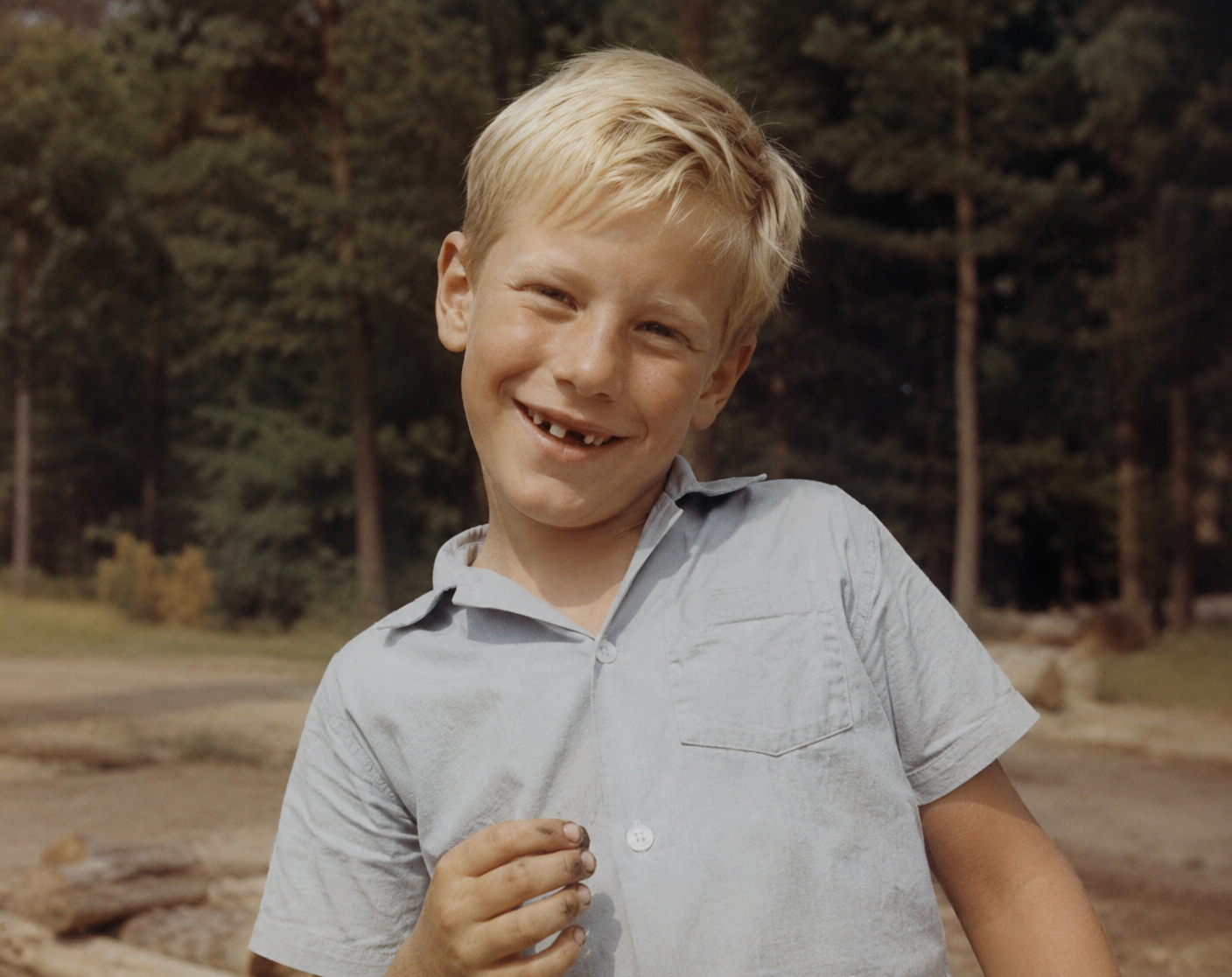
He actually dies in a boating accident while alone with an intoxicated Alice; Peter III, Peter II, and Vic conceal his death, but Jacob Sluiter eventually leads investigators to his buried remains in 1975.

The truth finally comes out in 1975, and he is indicted for criminal conspiracy for his role in covering up Bear’s death.
🔷 Supporting Characters

Judy finds him suffering severe memory loss in a locked room above an abandoned slaughterhouse; although implicated in the conspiracy, his condition makes significant punishment unlikely.
His secret affair with Annabel gives him an alibi for Barbara’s disappearance, but he faces consequences for DUI and drugs and is ultimately pursued by Louise for physically assaulting her.
She returns safely home still believing Barbara is alive somewhere—and she is right.
He dies of a heart attack while under suspicion and never sees justice, but the discovery of Bear’s remains and the conspiracy finally clears his name posthumously.
After his recapture, he trades his information for a trip into the woods and leads authorities to Bear’s remains before being returned to prison.
She eventually admits to institutionalized Alice that she and Peter had been intimate for years—even before Alice and Peter married.
The fourteen-year deception finally collapses in 1975, and he is indicted for criminal conspiracy.
His role is exposed after Bear’s remains are found, and he is indicted for criminal conspiracy.
Her cooperation contributes to exposing the cover-up and finally restoring Carl’s reputation fourteen years after his death.
He remains a respected investigator and successfully oversees the broader investigation as Judy uncovers the crucial truths.
She admits she was with John Paul when Barbara disappeared, giving him an alibi for kidnapping while simultaneously exposing his betrayal of Louise.
Because his previous statutory-rape conviction makes him vulnerable to suspicion in Barbara’s case, he flees to Colorado before investigators can question him.
He remains in Shattuck, having helped provide information that contributes to exposing the truth and clearing Carl Stoddard’s name.
He safely returns home with his parents after helping investigators realize Barbara’s bloody uniform did not prove she had been murdered.
He survives the tumultuous summer and returns home safely when the camp session ends.
He returns home safely after Camp Emerson closes.
Bear’s remains finally prove Carl was framed, allowing Maryanne to stop searching and find peace after fourteen years of grief.
🕳️ Potential Plot Holes
Barbara waits until roughly 2:00 or 3:00 a.m. before T.J. drives her an hour north, transports a canoe and supplies half a mile through the woods, rows her out to the island, unloads everything, and then makes the entire trip back. T.J. is nevertheless back at Camp Emerson in time to play reveille at 6:30 a.m. The novel also requires her to plant Barbara’s bloody uniform and other evidence in John Paul’s car during this same window. There simply doesn’t appear to be enough time for T.J. to complete everything the ending says she did before morning.
Bear’s body remained undiscovered for fourteen years even though his burial site was relatively close to the Preserve and marked by a rock cairn. The search included experienced searchers and Ron Shattuck’s tracking dog, which was capable of locating Bear’s tiny wooden carving off the trail. While the Van Laars deliberately misdirected the search, it is difficult to explain why neither the dog nor any of the extensive search parties detected the burial site, disturbed ground, or Bear’s scent.
📚 Book Club Q&A's
⭐ Final Rating & Thoughts
Liz Moore’s writing is beautiful, the atmosphere is haunting, and the mystery is tightly layered—I didn’t predict the twists, which is always a huge plus for me. I also loved how much depth she gave the women in the story and how effectively she explored wealth, power, family dysfunction, and the damage caused by generations of secrets.
But this book made my brain work. There are a lot of characters, multiple timelines, and constant shifts in perspective, and I actually needed a character chart to keep everyone straight. That definitely took me out of the story at times. For such a complicated mystery, I also expected the eventual payoff to hit me harder emotionally.
Still, I can appreciate how carefully constructed and beautifully written this novel is. It’s not a fast, twisty thriller—it’s a dense literary mystery that asks for your full attention. Very good, occasionally exhausting, and absolutely deserving of 3.5 stars.
✨ Adaptation description
The God of the Woods — Netflix TV Adaptation
Liz Moore’s bestselling 2024 novel The God of the Woods is being adapted as a dramatic television series for Netflix. The adaptation is co-created by Liz Moore and Liz Hannah, who also serve as showrunners and executive producers.
Netflix has confirmed the adaptation as one of its upcoming book-to-screen projects, although it has not yet announced a premiere date. (Netflix)
Production Details
- Based on: The God of the Woods (2024) by Liz Moore
- Format: Hour-long television drama
- Platform/Production: Netflix
- Creators/Showrunners: Liz Moore and Liz Hannah
- Filming: Upstate New York
- Production status: Filming in 2026
- Release: TBA
The series retains the novel’s central mystery: 13-year-old Barbara Van Laar disappears from a summer camp in the Adirondacks in 1975, reopening questions surrounding the disappearance of her older brother Bear from the same family property fourteen years earlier.
Cast
Maya Hawke — Judy Luptack
Hawke plays the young investigator who becomes increasingly central to Barbara’s disappearance and the secrets surrounding the Van Laar family.
Kerry Condon — Alice Van Laar
Condon plays Barbara and Bear’s mother, whose life has been shaped by grief following her son’s disappearance.
The announced ensemble also includes Damon Gupton, Ella Rubin, Susannah Perkins, Benjamin Walker, Nell Fisher, and Autumn Molina.
✨ Books Like The God of the Woods (2024)
See an error on this page?