

The Briar Club (2024)
Select Sections to Print
×Book Details
The Briar Club (2024)
Jump to Section
⚠️ Trigger Warnings
- Domestic abuse & intimate partner violence
- Graphic physical violence & murder
- Gun violence
- Suicide
- Famine & starvation
- Implied cannibalism
- Death of family members, including a child
- Reproductive coercion & forced miscarriage
- Sexual violence & rape (mentioned)
- War crimes & wartime violence
- Racism & racial violence
- Segregation
- Antisemitism
- Xenophobia
- Homophobia & anti-LGBTQ+ discrimination
- McCarthyism, blacklisting & political persecution
⏱️ 2-Minute Spoiler Summary
In 1950 Washington, D.C., mysterious widow Grace March moves into Briarwood House and gradually transforms its isolated female boarders into a close-knit group known as the Briar Club. Over the next four years, the women help one another escape abusive relationships, reclaim stolen lives, confront family trauma, pursue careers, and find love.
Their individual stories eventually converge around Sydney Sutherland, who escapes her vicious husband Barrett with her lover Claire, and Grace, who is revealed to be former Soviet spy Galina Stepanova, hiding from her murderous former partner Kirill Lensky.
On Thanksgiving 1954, Kirill tracks Grace to Briarwood and slashes another resident, Fliss’s throat before attacking Grace. Bea stops him with a baseball bat, allowing Grace to kill him with his own sickle. At the same time, Barrett storms into the house looking for Sydney, and a traumatized Arlene kills him with Bea’s bat.
Rather than expose Grace, Sydney, or Arlene, the Briar Club invents a story that turns Kirill into a random attacker and Barrett into a hero. The police believe them. The women eventually scatter into new lives, while Grace leaves Washington with Arlene, having turned a lonely boardinghouse into a fiercely loyal chosen family.
📖 Full Spoiler Summary
Grace March Brings Briarwood House to Life
The Briar Club opens on Thanksgiving night in 1954, when two people have been killed inside Briarwood House, a slightly shabby Washington, D.C., boardinghouse. Police swarm the building while the house itself narrates what it sees, hinting that its residents know far more about the deaths than they are admitting. From there, the story jumps back to 1950 and gradually reveals how the women of Briarwood became close enough to protect one another—even from murder charges.
The change begins when Grace March, an elegant and mysterious widow, moves into the top-floor room in June 1950. Briarwood is run by the miserly Mrs. Nilsson, nicknamed “Doilies,” who lives there with her children, thirteen-year-old Pete and nine-year-old Lina. The boarders mostly keep to themselves until Grace starts drawing them together.
When the Korean War begins, Grace invites everyone upstairs to watch President Truman on her television. Soon afterward, she organizes a dinner built around Pete’s absent father’s Swedish meatball recipe. Cooking on little more than a hot plate, Grace somehow turns the evening into a success. The gathering becomes a weekly Thursday tradition known as the Briar Club, giving women who had previously lived parallel lives a genuine community.
Grace also becomes romantically involved with Claude Cormier, a Black drummer and decorated Tuskegee Airman who plays at the nearby Amber Club. Their relationship has to remain discreet, but it is one of many secrets Grace is keeping.
Nora Chooses Herself Over Her Family and Xavier
One of Grace’s first friends is Nora Walsh, a young National Archives employee who has worked hard to distance herself from her poor Irish-Catholic upbringing. Her family refuses to let her escape completely, particularly her corrupt police-officer brother Timmy, who regularly steals money from her.
Nora also falls for Xavier Warring Byrne, the wealthy, intimidating owner of the Amber Club. Xavier is involved in gambling and his family’s numbers racket, but he treats Nora with a tenderness she has rarely experienced.
Their relationship becomes dangerous because of Nora’s abusive former boyfriend, George “Mad Dog” Harding. After George cheats at Xavier’s card tables, Xavier beats him and shoots off his pinky finger. George retaliates by invading Xavier’s home with armed men, tying up Nora and Xavier and stealing $25,000.
George is later shot dead at an after-hours club. Xavier claims self-defense but receives a year in prison for carrying a deadly weapon. Nora’s job is threatened because of her association with a convicted criminal, and she reluctantly returns Xavier’s engagement ring.
But Nora no longer intends to let everyone else dictate her life. With the Briar Club behind her, she finally confronts her family and threatens to expose Timmy’s corruption to the Washington Post if they ever steal from or harass her again.
Reka Reclaims What Was Stolen From Her
By 1951, the political paranoia surrounding Communism is intensifying, and it reaches directly into Briarwood. Reka Muller, an elderly Hungarian immigrant and former Berlin art professor, loses her library job after conservative boarder Arlene Hupp reports her past connections to German Communist circles.
Reka has already lost nearly everything. After escaping the Nazis with her husband, she was exploited by the powerful Sutherland family, who took three valuable Gustav Klimt sketches belonging to her.
Determined to reclaim them, Reka visits the Sutherland home and meets Sydney Sutherland, the beautiful wife of political hopeful Barrett Sutherland. Sydney initially appears to live an enviable life, but when Reka returns on Christmas Eve, she finds her badly beaten, with a black eye and cracked ribs.
Sydney’s husband is responsible.
Rather than stopping Reka from taking the Klimts hanging in the house, Sydney encourages her. Reka gets the drawings safely into a bank vault with help from New York gallery owner Betty Parsons. Recovering them gives her something she has been missing for years: a sense that her life still belongs to her. She begins painting again.
Fliss Stops Pretending Everything Is Fine
In 1952, Fliss Orton appears to be Briarwood’s happiest resident. In reality, she is suffering from severe postpartum depression while raising her toddler, Angela, alone because her Army-surgeon husband Dan is stationed in Tokyo.
Fliss is also quietly helping Sydney avoid another pregnancy by obtaining contraceptive supplies for her. Barrett controls Sydney financially and physically, leaving her few ways to protect herself.
Grace eventually takes Fliss to the integrated Chickland Club in Maryland with Claude. A race riot erupts, and Claude is attacked. Fliss is stunned to see Grace respond like a trained fighter, stabbing an attacker with a tiny steel spike concealed inside what looks like a lipstick tube.
Once they escape, Fliss finally admits how miserable she has been and confesses that she never wanted to become a mother. Grace refuses to let her equate that feeling with being a bad parent. Fliss finally tells Dan the truth, and instead of condemning her, he promises they will not have another child.
She then helps Sydney travel secretly to Boston, where Fliss’s uncle, Dr. John Rock, fits her with a contraceptive diaphragm under the guise of a fertility study.
Bea Finds a Life Beyond Baseball
Former professional baseball player Bea Verretti has been struggling since a knee injury ended her career in the All-American Girls Professional Baseball League. By 1953, she is teaching PE and home economics and hates feeling that the most important part of her life is already behind her.
She unexpectedly begins an affair with Harland Adams, an FBI agent who previously dated Arlene. Their relationship becomes serious, but Bea’s bigger breakthrough comes during a Briar Club picnic and sandlot baseball game. Watching Bea assess players and strategy, Grace realizes that Bea’s real gift isn’t simply playing baseball—it’s recognizing talent.
Grace helps Bea secure an interview with Washington Senators owner Clark Griffith. Bea quits her miserable teaching job, tells off her handsy principal, and begins pursuing work as a professional scout. When Harland proposes marriage, she turns him down. She loves him, but she refuses to surrender her newly reclaimed career to become someone’s wife. They remain together anyway.
Claire and Sydney Plan Their Escape
The Briar Club’s most dangerous romance begins between Claire Hallett and Sydney.
Claire works for Senator Margaret Chase Smith, but secretly earns extra money posing as an atomic-themed pin-up model. Haunted by the poverty that contributed to her mother’s suicide during the Depression, Claire has saved $8,000 toward buying a home and creating permanent security for herself.
While running an errand for Sydney, Claire unexpectedly kisses her. The attraction is mutual, and the women begin a secret affair.
Sydney eventually tells Claire just how dangerous Barrett is. During the war, he executed unarmed German prisoners and raped French women. At home, his violence continues. When Sydney once attempted to leave him, Barrett beat her in front of their young son, Bear.
After another assault leaves Sydney badly injured, she arrives at Briarwood, where Grace and Claire care for her. Claire decides that the money she has spent years saving can buy something more important than a house: freedom. She offers Sydney the entire $8,000 so they can escape together.
On Halloween 1953, Sydney takes Bear trick-or-treating, slips away, and meets Claire at Union Station. Their disappearance infuriates Barrett, who remains determined to get his wife back.
Grace’s Real Identity Finally Comes Out
By 1954, the mystery surrounding Grace finally becomes clear. Grace March is actually Galina Pavlovna Stepanova, a Soviet deep-cover operative who came to the United States with fellow agent Kirill Lensky, who lived under the name Bob McDowell.
Grace eventually rejected both the Soviet cause and Kirill. Before disappearing, she stole secret Lockheed supersonic-aircraft plans. She has spent years hiding from her former partner, knowing he will kill her if he finds her.
Her carefully constructed anonymity is endangered because of Mrs. Nilsson’s daughter, Lina.
Grace teaches Lina to bake a Russian honey cake from her childhood, and Lina enters it in the Pillsbury Bake-Off. When the recipe makes the national competition at New York’s Waldorf-Astoria, Grace makes sure Mrs. Nilsson cannot interfere by secretly dosing her orange juice with a compound that makes her sick.
The Briar Club accompanies Lina to New York, where the girl attracts newspaper attention. Grace also contacts John Nilsson, Pete and Lina’s estranged father, urging him to stop abandoning his children.
Unfortunately, the newspaper coverage gives Kirill exactly what he needs. He recognizes Grace and finally discovers where she has been hiding.
Thanksgiving Ends With Two Bodies
Everything converges at Briarwood on Thanksgiving Day 1954.
Grace hosts an enormous dinner, and John Nilsson arrives to reconnect with Pete and Lina. But Kirill has followed Grace home. Armed with a garden sickle, he appears at the kitchen door. Fliss answers, and Kirill slashes her throat.
Grace immediately fights back with her concealed steel spike, stabbing and raking Kirill’s face before fleeing upstairs. He follows her into the attic. Grace tries to shoot him, but her hidden gun misfires.
Before Kirill can kill her, Bea charges in and clubs him with her baseball bat. Grace grabs the fallen sickle and slashes Kirill’s throat, killing the man who has hunted her for years.
At nearly the same time, another confrontation explodes downstairs.
A drunken Barrett Sutherland storms into Briarwood searching for Sydney, who has secretly returned from Virginia to see Claire. Barrett punches Harland and attacks Arlene before charging toward Sydney and Claire. Xavier tries to restrain him, but Barrett breaks free.
The normally rigid, fiercely anti-Communist Arlene Hupp suddenly snaps. The attack triggers memories of a traumatic military war-game exercise in Texas, and in her disoriented state she sees Barrett as an enemy attacker. She grabs Bea’s baseball bat and smashes Barrett in the head, killing him.
Briarwood now contains two dead men—and several women whose lives could be destroyed if the truth comes out.
The Briar Club Protects Its Own
The women quickly agree on a story.
They identify Kirill only as “Bob McDowell” and claim he was a crazed robber who attacked the house and cut Fliss’s throat. Barrett, rather than being exposed as an abusive husband, supposedly died heroically trying to protect Fliss. Harland takes responsibility for killing Bob in self-defense.
The women deliberately perform the roles the police expect from them, acting confused and hysterical rather than revealing how carefully they have coordinated their accounts. The deception works.
With Barrett dead, Sydney uses what she knows about his wartime crimes to blackmail her powerful father-in-law into leaving her and Bear alone. She later sends Grace a purse filled with money.
Claire moves to Bermuda and officially becomes Sydney’s “social secretary,” allowing the two women to build a life together with Bear. Fliss survives the attack and returns to Boston with Dan, where she begins working on Dr. Rock’s birth-control trials. Bea continues pursuing her new baseball career while remaining with Harland.
Nora stays at Briarwood and eventually resumes her relationship with Xavier, but this time on her own terms. She wears his diamond on her right hand rather than allowing an engagement ring to determine her future.
Reka dies of a heart attack, but her renewed artistic career outlives her. Her painting of the Briarwood women at the Statue of Liberty is selected for a prestigious CIA-funded European exhibition.
John Nilsson finally returns to his children’s lives and prevents Mrs. Nilsson from selling Briarwood House. Pete goes back to school, while Lina prepares for another baking competition.
Grace cannot remain in Washington after Kirill’s death. She disappears with her cat, Red—but she doesn’t leave alone. Recognizing how shattered Arlene has become, Grace takes her to New York, determined to help the woman who once reported Reka for Communist ties start over and perhaps learn to see the world with more compassion.
Briarwood’s residents scatter, but the friendships Grace created have permanently changed them. What began as a collection of lonely women renting rooms from the same unpleasant landlady became the Briar Club—a family willing, when it mattered most, to lie to the police and protect one another.
🔚 Ending Explained
How The Briar Club Ends
The ending of The Briar Club brings the murder mystery from the opening pages full circle, revealing not only who dies on Thanksgiving night in 1954, but how the women of Briarwood House protect one another afterward.
The Thanksgiving Murders
Thanksgiving dinner at Briarwood House is interrupted when Kirill Lensky, Grace March’s former Soviet partner and supposed husband, finally tracks her down. Grace—whose real name is Galina Pavlovna Stepanova—has spent years hiding from both the Soviets and the American government, but a newspaper photograph connected to Lina’s baking success gives Kirill the clue he needs to find her.
Unfortunately, Fliss Orton is the one who opens the back door when he arrives. Kirill immediately slashes her throat and goes after Grace.
Grace fights back with the tiny steel spike hidden inside her lipstick tube, then races upstairs to her attic apartment. She tries to use the pistol she has kept hidden there, but it misfires. Kirill corners her with a curved garden sickle and is about to kill her when Bea Verretti comes charging in with her baseball bat and smashes him hard enough to break his ribs.
That gives Grace her opening. She grabs Kirill’s fallen sickle and cuts his throat, killing the man who has represented the greatest threat from her old life.
At almost the same time, another violent confrontation is unfolding downstairs.
Barrett Sutherland, Sydney’s wealthy and viciously abusive husband, arrives drunk and furious, demanding to know where his wife is. Sydney has slipped away to be with Claire Hallett, with whom she has been secretly having a relationship.
Barrett attacks Harland Adams, then turns on Arlene Hupp when she tries to interfere. As he chokes her, Arlene flashes back to a traumatic military war exercise in which she was attacked by soldiers. In her panic, Barrett becomes an enemy combatant in her mind. She grabs Bea’s abandoned baseball bat and strikes him in the head, killing him.
So the two bodies teased at the beginning of the novel belong to Kirill Lensky and Barrett Sutherland—two very different men who nevertheless represent the same thing: violent systems of control finally crashing into the women they have spent years terrorizing.
The Women Cover Up What Really Happened
Once the immediate danger is over, everyone at Briarwood House realizes they have another problem.
The truth would be disastrous.
If Grace’s real identity became public, she could be exposed as a former Soviet operative in the middle of the Red Scare. Arlene could face prosecution for Barrett’s death. Sydney’s private life could be dragged into the open. The newspapers would descend on the house, and the government institutions that have already harmed so many of these people would suddenly have enormous power over them.
So they lie.
And they do it together.
Harland, with his former FBI credentials and respectable G-man image, claims responsibility for killing Kirill in self-defense. The women deliberately lean into the stereotypes the police already have about them, becoming tearful and overwhelmed whenever the questioning gets too uncomfortable. Meanwhile, Barrett is transformed into a convenient hero who supposedly died trying to protect the household.
It works. No one is charged.
There is something wonderfully subversive about this part of the ending. Throughout the novel, these women have repeatedly been underestimated because of assumptions about femininity. On Thanksgiving night, they weaponize those assumptions. The police see exactly what they expect to see—and the Briar Club lets them.
Where Everyone Ends Up
The epilogue jumps ahead to May 1956, and for the most part, the women have escaped the lives that once trapped them.
Grace and Arlene leave Washington together. Grace recognizes that Arlene is far more damaged than anyone realized and that living with what happened to Barrett could destroy her. With money Sydney provides, Grace takes her to New York and gives both of them another chance. A postcard later reveals that Grace has become a children’s book illustrator, while Arlene is preparing to marry a pleasantly boring man.
It is an unexpectedly gentle future for both women. Grace, who once used her artistic talents in service of espionage, now creates pictures for children. Arlene, who spent years living through anger, suspicion, and fear, gets something gloriously ordinary.
Sydney finally frees herself from the Sutherland family. She uses what she knows about Barrett’s wartime execution of prisoners to blackmail her father-in-law into giving her financial independence and custody of Bear. She then leaves for Bermuda with Claire, who gives up both her congressional secretarial job and her atomic pin-up work. Officially, Claire can be called Sydney’s “social secretary.” In reality, they have created a life together at a pale green house by the sea.
Nora Walsh remains in Washington and continues advancing at the National Archives. Xavier Byrne, meanwhile, gets out of the numbers racket and turns the Amber Club into a legitimate jazz club. They are still together, but Nora refuses to surrender the independence she fought so hard to gain. She wears Xavier’s enormous diamond on her right hand, not her left.
Fliss, who survives Kirill’s attack, returns to Boston with Dan and resumes nursing. Even better, she becomes involved with Dr. John Rock’s early clinical trials of the birth control pill. After spending much of the novel overwhelmed by motherhood and ashamed of not finding domestic life completely fulfilling, Fliss ends up participating in work that will eventually give millions of women greater control over whether and when they become mothers.
Reka Muller dies peacefully of a heart attack, but her art outlives her. Her painting of the Briar Club women looking toward the Statue of Liberty is chosen for a prestigious cultural exhibition in Europe. The perpetually grouchy immigrant who never quite stopped wrestling with what America meant to her ends up representing American culture abroad.
And Briarwood House itself survives. John Nilsson prevents Mrs. Nilsson from selling it off to become a showroom and returns to Washington to help raise Pete and Lina. Lina keeps baking and preparing for another shot at the Pillsbury Bake-Off, while Pete becomes something of a guardian of the house.
The Briar Club as we knew it may be dispersing, but the house remains.
What the Ending Really Means
At its heart, The Briar Club ends with the idea that family can be something you build rather than something you inherit.
Grace begins the novel believing survival requires secrecy. She keeps people at a distance because attachment creates vulnerability. Yet the dinners in her tiny apartment slowly undermine that belief. Food leads to conversation; conversation leads to friendship; friendship becomes loyalty. By Thanksgiving 1954, the women who once happened to rent rooms in the same building are willing to risk themselves for one another.
That is why their decision to cover up the murders matters so much.
Nora believes deeply in American institutions. Harland once believed deeply in the FBI. Arlene has spent years defining patriotism in rigid terms. Yet all of them have seen how easily institutions can be corrupted by fear, prejudice, ambition, and McCarthyism. When the law and basic human decency finally come into conflict, they choose the people sitting around Grace’s table.
The novel isn’t arguing that truth is meaningless. It is asking a more uncomfortable question: What happens when the institutions supposedly responsible for justice cannot be trusted to deliver it?
Grace’s Vine
The painted vine winding through Briarwood House becomes the perfect image for what Grace created there.
It begins inside her ugly green attic apartment and gradually spreads beyond it, curling down the staircase and covering the house’s cracks. Grace cannot repair everything that has happened to these women. She cannot erase Sydney’s abuse, Fliss’s exhaustion, Nora’s losses, Arlene’s trauma, or her own past.
But she can make something grow over the damage.
And importantly, the vine remains after Grace leaves.
So does the community she created.
The Sickle
Kirill’s sickle carries much darker symbolism. It unmistakably evokes the Soviet world Grace fled and the political system that once controlled her life. Kirill brings that weapon into the home where she has finally built an identity of her own.
Grace ultimately kills him with it.
She doesn’t merely escape her past; she turns its weapon against the man trying to drag her back into it. Kirill’s death closes the door on Galina Stepanova’s old life and allows Grace March, however invented that name originally was, to become the person she has chosen to be.
Nora’s Ring
Nora’s enormous diamond on her right hand delivers the same idea in a much quieter way.
She loves Xavier. She doesn’t need to deny that love to prove she is independent. But she also refuses to let marriage—or a man’s money, protection, or expectations—define her future.
The ring therefore becomes less a symbol of engagement than a symbol of choice: I love you, but I still belong to myself.
Why Grace Takes Arlene With Her
One of the more surprising choices in the ending is Grace’s decision to help Arlene, arguably the most difficult and judgmental woman in the house.
But it fits Grace perfectly.
Grace has spent the entire novel feeding people who are hungry, noticing people who are lonely, and quietly repairing things other people overlook. Eventually she realizes that beneath Arlene’s bitterness and rigid politics is a deeply traumatized woman who has never learned how to process what happened to her.
Grace doesn’t excuse Arlene. She simply refuses to believe Arlene is beyond saving.
That may be the clearest expression of the novel’s belief in second chances.
The Meaning of the Ending
The final tone is hopeful without pretending that everything has magically become easy. These women still live in 1950s America. Sydney and Claire cannot openly call themselves a couple. Nora’s independence remains unusual. Fliss’s reproductive choices are constrained by the era. Grace can never safely tell the world who she really is.
But each woman has carved out more freedom than she possessed when she first entered Briarwood House.
That is what makes the final image of the house so important. Briarwood began as a collection of rented rooms filled with isolated women. Grace transformed it into a place where people ate together, protected one another, fought, forgave, and changed.
By the end, most of the original Briar Club has moved on. But the house is still standing, Grace’s vine is still climbing its walls, and another young woman can walk through the door and find the possibility of belonging there.
The women leave.
What they built doesn’t.
👤 Characters & Fates
🔶 Main Characters

On Thanksgiving 1954, Bea saves her from Kirill and Grace kills him with his own sickle. The women cover up the death, and Grace leaves for New York with Arlene; by 1956, she is illustrating children's books and helping plan Arlene's wedding.

She helps cover up the Thanksgiving deaths and remains at Briarwood, apparently on track to become the Archives' first female chief of Building and Grounds. She is still with Xavier in 1956 but wears his enormous five-carat diamond on her right hand, refusing to become a conventional wife.

After helping with the Thanksgiving cover-up, Claire quits both jobs and moves to Bermuda as Sydney's supposed "social secretary." In reality, she, Sydney, and Bear live together openly as a loving family in a beachside estate.

Reka helps cover up the Thanksgiving deaths but dies suddenly of a heart attack in spring 1955. After her death, one of her paintings is selected for a prestigious CIA-funded modern-art exhibition touring Europe.

During the Thanksgiving chaos, Arlene suffers a PTSD flashback and smashes Barrett Sutherland's skull with Bea's baseball bat, killing him. Grace takes the shattered Arlene to New York afterward, and by 1956 Arlene is engaged to a boring man whom she happily bosses around.

Kirill slashes her throat when she opens the door on Thanksgiving, but Dan's medical intervention saves her. She later moves to Boston and becomes a nurse assisting Dr. Rock in the early clinical trials of the birth-control pill.
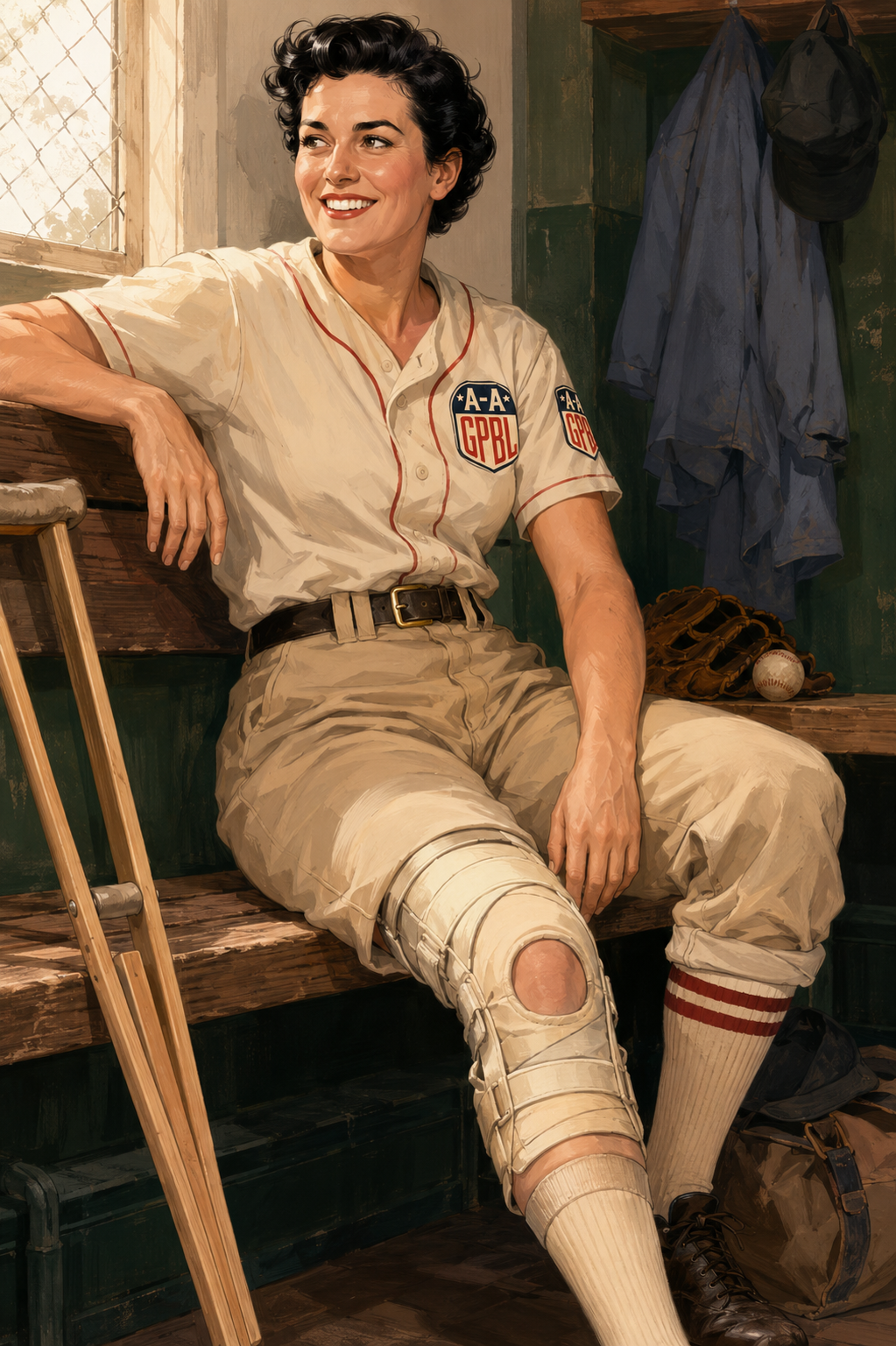
Bea quits teaching after telling off her sexually inappropriate principal and becomes the first female baseball scout for the Washington Senators. She also remains happily involved with former FBI agent Harland Adams.

Pete helps cover up both Thanksgiving deaths and finally stands up to his mother. By 1956, nineteen-year-old Pete is catching up on school and welcomes beautiful new tenant Linda Graves into Grace's old room, hinting at a new chapter for him and the house.

She competes in the Pillsbury Bake-Off with Grace's Russian Eight-Layer Honey Cloud Cake and becomes the youngest contestant featured in the newspaper. By 1956, her father plans surgery for her eye and Lina is already preparing for another Bake-Off.

Arlene kills Barrett on Thanksgiving, freeing Sydney from him. Sydney then blackmails her powerful father-in-law with proof of Barrett's war crimes, securing money and sole custody of Bear before moving to Bermuda to live with Claire as a family.
🔷 Supporting Characters

She attempts to sell Briarwood after the Thanksgiving murders, but her estranged husband John returns and blocks the sale. By 1956, she has effectively lost control of both the house and her children to Pete and John.
She survives the Thanksgiving violence unharmed and later moves to Boston with Fliss and Dan.
Joe helps defend Briarwood during the Thanksgiving attack. His romance with Grace ends, but they remain friends and he continues playing jazz at the Amber Club.
Xavier helps restrain Barrett during the Thanksgiving chaos, then abandons organized crime and turns the Amber Club legitimate. He remains with Nora, accepting that she will love him entirely on her own terms.
George is subsequently shot and killed in an after-hours club, with Xavier becoming the prime suspect and serving prison time.
Harland falsely confesses to killing Kirill in self-defense to protect Grace and the Briar Club. He later leaves the FBI for the CIA, where he helps organize cultural and modern-art tours of Europe, and stays with Bea.
Realizing that remaining with Grace in Washington is too dangerous, Claude leaves for New York and joins Harlem's thriving jazz scene.
She survives the McCarthy era politically and continues her long Senate career after McCarthy's power collapses.
During Thanksgiving dinner, Barrett attacks the Briar Club and chokes Arlene, triggering her trauma; Arlene kills him by smashing his skull with Bea's baseball bat. The group then rewrites the story so Barrett is remembered publicly as a hero who died defending Fliss.
Dan returns before Thanksgiving and saves Fliss after Kirill slashes her throat. He later moves with his family to Boston and works at a women's clinic while Fliss assists the birth-control trials.
Kirill slashes Fliss's throat and nearly kills Grace before Bea hits him with a baseball bat. Grace then takes Kirill's own sickle and slashes his throat to the bone, and the Briar Club covers up his death.
Grace secretly summons John back on Thanksgiving. He reconnects with Pete and Lina, prevents Mrs. Nilsson from selling Briarwood, and moves back to Washington to help raise his children.
Nora finally snaps her purse shut on his fingers and threatens to expose his corruption to the Washington Post, effectively ending his control over her.
Nora finally rejects her mother's control and effectively cuts her out of her life after threatening to expose Timmy's corruption.
She remains married to Timmy and overwhelmed by their household; the novel gives her no larger resolution.
Nora successfully stands her ground and keeps both her job and Xavier, eventually advancing toward a leadership position at the Archives.
She remains stuck in the file room while Nora continues advancing professionally.
He continues his historic barrier-breaking career in the federal government.
Before leaving Washington, Claire threatens Huckstop and warns him to stay away from Pete.
Betty continues running her influential gallery and helps preserve Reka's artistic legacy.
He continues on to become an influential figure in the modern-art world.
His relationship with Grace ends when he relocates to join the Dodgers' pitching staff.
Grace's defection leaves him behind in the Soviet Union and likely destroys his political career, though his exact fate is not revealed.
Kitty starves to death on March 1, 1942, during the Siege of Leningrad. Her cherished family recipe later becomes the cake Lina enters in the Pillsbury Bake-Off.
She continues playing during the women's league's final declining years while Bea finds a new baseball career as a scout.
Bea finally gets her baseball opportunity, calls Royce a "tool" to his face, and quits, leaving him stunned in his office.
His research succeeds, and Fliss later joins him in Boston as a nurse assisting with the early clinical trials of the Pill.
She survives the family's collapse, and Sydney's eventual blackmail of the Sutherlands secures enough control that Trudy is no longer endangered by Barrett's whims.
Sydney discovers evidence of Barrett's executions and sexual violence during the war and uses it to blackmail the senator into giving her money and surrendering any claim to Bear.
Bear escapes his father's control and ultimately moves to Bermuda, where he is raised safely by Sydney and Claire together.
Linda settles into Grace's old room in May 1956 and immediately catches nineteen-year-old Pete's attention, suggesting Briarwood's story—and perhaps Pete's romantic life—is beginning again.
Xavier quietly uses his criminal connections to stop the neighborhood harassment, allowing Rosenberg to continue running his deli.
Louise survives the attack, and Xavier gives her a large roll of cash and a week off to recover.
🕳️ Potential Plot Holes
The residents claim that Kirill killed Barrett with Bea’s baseball bat before fleeing upstairs, where he was later killed. But the physical evidence doesn’t fit that story particularly well. Barrett is killed with a single blow in the first-floor parlor, and the bloody bat is then deliberately hidden beneath the couch. Meanwhile, Kirill attacks Fliss with a sickle and ultimately dies with that same weapon upstairs. There’s no convincing reason for an intruder in the middle of a violent rampage to switch to a baseball bat, kill Barrett, carefully conceal the bat, retrieve or return to his sickle, and then flee all the way to a dead-end attic. The police themselves notice that the crime scenes don’t seem consistent with the same killer. Senator Sutherland’s intervention explains why the investigation is ultimately buried, but it doesn’t resolve the contradictions in the residents’ story or explain why the physical evidence doesn’t expose the cover-up before that happens.
After Grace steals extraordinarily sensitive Lockheed material, Harland solves the problem by wiping the documents clean of fingerprints and anonymously mailing them back. But returning the documents wouldn’t erase the security breach. Lockheed and federal authorities would know that someone had successfully removed highly classified material and possessed it outside the facility for an unknown amount of time, potentially allowing it to be copied or passed to a foreign government. An anonymous return should therefore create an enormous counterintelligence investigation rather than neatly eliminate the danger surrounding the stolen files.
📚 Book Club Q&A's
⭐ Final Rating & Thoughts
The Briar Club had so much going for it: a fascinating 1950s Washington, D.C. setting, a boardinghouse full of women with wildly different backgrounds, plenty of secrets, and a murder mystery hanging over everything. I especially loved the historical details and the recipes scattered throughout the book—they gave each character’s story a little extra personality.
My biggest issue was the pacing. Each character essentially gets her own very long section, and while I enjoyed getting to know them, some of those chapters felt like they went on forever. There were definitely stretches where I was ready to get back to the central mystery instead of spending quite so much time in another backstory.
Thankfully, the payoff was worth sticking around for. The final portion of the book was easily my favorite, and I loved seeing all of these separate storylines finally come together.
Overall, this was a good historical mystery with memorable characters and a great premise—it just needed a tighter edit. I still think it would make an absolutely fantastic miniseries.
✨ Adaptation description
The Briar Club TV Adaptation
Kate Quinn’s 2024 bestselling historical novel The Briar Club has been optioned for a television limited series. As of August 2026, the project is currently in very early development. Quinn has publicly shared the option news, and subsequent reporting/reviews continue to describe it as an option for a limited TV series. (Fairy Tales and Tea)
✨ Books Like The Briar Club (2024)
See an error on this page?