Book Details
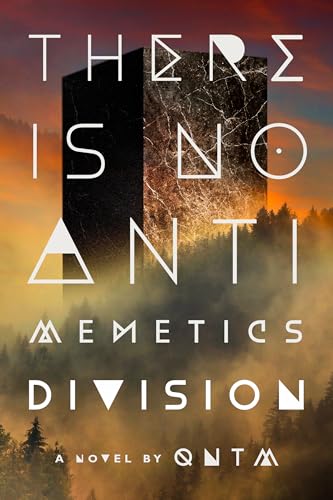
There Is No Antimemetics Division (2020)
Jump to Section
⚠️ Trigger Warnings
- Suicide
- Self-harm
- Compelled self-harm
- Graphic violence
- Gun violence
- Blood and gore
- Dismemberment
- Mutilation
- Body horror
- Physical mutation
- Ocular trauma
- Parasites
- Corpse manipulation
- Psychological horror
- Forced interrogation
- Sleep deprivation
- Memory loss
- Loss of identity
- Loss of loved ones
- Drug overdose
- Brain damage
- Vegetative state
- Terminal illness / cancer
- Species extinction
- Apocalyptic themes
⏱️ 2-Minute Spoiler Summary
The Foundation, a secret global organization that contains supernatural anomalies, operates an Antimemetics Division devoted to threats that erase knowledge and memories of themselves. Its director, Marie Quinn, relies on memory-enhancing drugs called mnestics to fight enemies that humans literally cannot remember.
Marie eventually discovers that the greatest threat is U-3125, a colossal five-dimensional entity made of hostile ideas. Understanding U-3125 allows it to detect you, and it can follow conceptual connections between people to attack others associated with that knowledge. The entity has secretly been exterminating antimemetics researchers for years, reducing Marie’s once-thousands-strong division to fewer than ninety people while continually erasing evidence that its victims ever existed.
Marie has also been married for seventeen years to Adam Quinn, a classical violinist. To protect Adam from U-3125, a domesticated memory-eating antimeme called Sunshine begins consuming Marie’s memories and emotional connection to him. Once Marie discovers what has happened, she deliberately completes the process: Adam is relocated, her staff erase their memories of him, all physical evidence of their marriage is destroyed, and Sunshine removes Marie’s remaining memories. Forgetting the man she loves is the only way Marie can prevent U-3125 from following her connection to him.
When U-3125 finally attacks the Antimemetics Division openly, Marie takes Class Y mnestics, permanently destroying her ability to forget and making her resistant to antimemetic erasure. Because her brain can no longer discard any information or sensation, however, the resulting overload leaves her only minutes of useful consciousness. She reaches DRY ERASE, an antimemetic doomsday weapon beneath the division’s Wyeleigh headquarters, and activates it. The weapon wipes Wyeleigh and everyone inside it from humanity’s memory.
It still cannot stop U-3125.
With the Antimemetics Division gone, U-3125—now manifesting openly as వ—remakes Earth. The sky turns red beneath a black sun, enormous shadow creatures roam the planet, and billions of humans become mutilated, mindless “non-people.”
Adam survives because his natural resistance and long exposure to Sunshine give him some protection. Sunshine guides him through the ruined world to Wyeleigh, where he finds Marie’s skeletal remains and an unused Class Z mnestic. When Red, U-3125’s human host and physical mouthpiece, confronts him, Sunshine sacrifices itself by throwing its stored memories of Marie and Adam at U-3125 as a distraction. Adam uses the opportunity to destroy Red with an anomalous matter-erasing weapon.
Adam then travels to Stanmoor, the forgotten former headquarters of the Antimemetics Division, where supposedly dead researcher Ed Hix has secretly survived for twelve years. After being shot by a U-3125-controlled colleague years earlier, Hix’s consciousness was preserved by a symbiotic organism and transferred into a shallow clone. He has spent the intervening years constructing an irreality amplifier, a conceptual weapon capable of fighting U-3125.
Hix injects Adam with Class Z, which reverses the causal relationship of memory and drags Adam backward through his memories until he reaches the morning Marie left for Wyeleigh. The machine uses Adam’s connection to Marie to reconstruct her as an abstract ideal.
Marie becomes WILD LIGHT, an immensely powerful countermeme embodying the Foundation’s conviction that people should be able to live without fear. WILD LIGHT enters the conceptual realm where U-3125 exists and destroys it, finally freeing humanity.
Reality immediately returns to normal. The red sky disappears, the sun becomes yellow again, and the apocalypse ends. Almost nobody remembers that any of it happened. More than a year of history is missing, millions of people have vanished, parts of cities have effectively disappeared, and a mysterious new great star shines in the sky.
Marie cannot return because she now exists as the enormously powerful conceptual entity WILD LIGHT, so she travels deeper into ideatic space. Meanwhile, gigantic creatures called Cryptomorpha gigantes, including one named Cela, hunt down the remaining metaspiders.
Humanity survives—and then, fittingly, forgets almost everything about the people and the Antimemetics Division that saved it.
📖 Full Spoiler Summary
The Forgotten History of the Antimemetics Division
In the world of There Is No Antimemetics Division, the Unknown Organisation, commonly called the Foundation, secretly protects humanity from anomalous threats. Some of the most dangerous are antimemes: entities, ideas, and phenomena that actively prevent people from remembering or even perceiving them. Fighting something you cannot remember exists creates an obvious problem, which is why the Foundation eventually creates an entire department devoted to doing exactly that.
Its origins stretch back to World War II, when Dr. Andrew Hilton leads a British Army research group called the Unthinkables. The team develops an “unthinkable bomb,” a conceptual weapon capable of destroying ideas rather than physical objects. Their first successful test in Skye works so well that it erases all memory of its own design, leaving the researchers trapped in a loop of repeatedly trying to reconstruct what they have forgotten.
In 1951, the team gets another chance when a dangerously contagious cult begins spreading from Ojai, California. The Unthinkables erase both the cult and humanity’s memory of it, preventing what could have become a global mental pandemic. The Foundation absorbs Hilton’s group, and it eventually becomes the Antimemetics Division.
Then, in 1976, the division encounters something it cannot contain: a colossal antimemetic creature resembling a skyscraper-sized pillar of invisible spiders controlled by a scrawny humanlike rider. Simply knowing about the creature allows it to target people. Hilton ultimately detonates another memory weapon against his own division, erasing knowledge of the threat and the department itself. Even Hilton forgets his real career and retires believing he worked for MI5.
Marie Quinn Rebuilds What Everyone Forgot
Decades later, the Antimemetics Division has been rebuilt at Wyeleigh, a Foundation facility in England. Its director, Marie Quinn, relies on drugs called mnestics, which strengthen memory and allow people to perceive information that antimemes would otherwise erase.
The difficulty of Marie’s job becomes obvious when her superior, UKI Director Mahlo, forgets that her entire division exists after missing his mnestic medication. His supposed assistant, Levene, pulls a gun on Marie because Mahlo believes she may be an intruder. Once Marie gets Mahlo to take his medication, his memories begin returning—and Marie promptly shoots Levene.
That is because Levene was never his assistant at all. He was a hostile humanoid antimemetic anomaly hiding inside Mahlo’s office, suppressing everyone’s ability to recognize that something was wrong and displacing Mahlo’s real receptionist, Rowland.
The same problem nearly destroys researcher Simon Lee. Simon believes he is a new employee experiencing his first day at Wyeleigh when a sharply dressed man named Adrian Gage approaches him. Gage is actually U-7175, a predatory antimemetic entity that makes its victims imperceptible to everyone else while gradually devouring their memories.
Simon discovers records left by previous victims and realizes physical weapons cannot hurt Gage. Instead, he turns information itself into a weapon. He braids network cables into a sling and uses a heavy data drive packed with enormous amounts of mathematical information as a projectile. The concentrated data overwhelms Gage and neutralizes him.
Only afterward does Marie tell Simon the horrifying truth: he has worked for the division for more than a decade as an instructor. Gage ate almost his entire career, leaving Simon with only the memory of his first day.
The Monster That Has Been Hunting Them for Decades
Marie eventually tracks down the elderly Andrew Hilton, hoping he remembers what happened before the 1976 memory wipe. She injects him with an experimental Class X mnestic, which temporarily reverses his physical and mental aging and restores his lost memories.
Hilton remembers the colossal spider-like entity—and immediately realizes that remembering it has allowed it to find them.
A huge spider pedipalp erupts from Hilton’s eye, followed by legs forcing their way through his trachea and abdomen. Marie shoots the mutated Hilton and fires at the enormous invisible entity lifting their sailboat, but she realizes she cannot defeat it. Her only escape is to inject herself with a fast-acting Class L amnestic and dive into the freezing lake. By deliberately wiping her memory of what is hunting her, she severs its connection to her and survives.
Later, Marie takes promising trainee Oli Morgan into the forest surrounding Wyeleigh to see U-9429, a 147-meter basalt monolith hidden by antimemetic effects. Unfortunately, the powerful mnestics allowing Oli to perceive the monolith also allow her to see the enormous spider-pillar and its twenty-four-year-old human rider, Red.
Once Red notices Oli looking at him, the cognitive pressure becomes overwhelming. Marie tries to pull the paralyzed trainee down the monolith’s steps, but Oli’s heart stops before she can escape.
Marie crosses back beyond the stone’s perimeter, allowing the antimemetic clouding to erase her memory of Oli’s death.
U-3125 Begins Devouring the World
The spider entity is only part of a much greater threat.
In Ojai, Foundation memetics operative James Bess investigates Red, who has begun spreading an infectious mental phenomenon called Green through livestreams. Bess administers a complex visual cognitopoison intended to destroy Green without killing its host.
Instead, he discovers that Green is merely a shadow cast by something vastly larger: U-3125, an enormous five-dimensional mass of corrosive, hostile ideas existing partly outside ordinary reality.
Understanding U-3125 is itself dangerous. Once someone recognizes its structure, the entity can follow conceptual connections between people and attack or mentally destroy those linked to that knowledge. Red awakens fully possessed by U-3125 and makes eye contact with Bess, disintegrating his mind. The infection then travels outward along conceptual lines, neutralizing the memetics engineers monitoring the encounter and their division chief, Czerny.
Marie has already lost more to U-3125 than she realizes.
She has been married for seventeen years to Adam Quinn, a gifted classical violinist. At home, Marie keeps a domesticated memory-eating antimeme called Sunshine, or U-4987, which she normally feeds useless information so it does not consume anything important.
One night, Adam is detained by Geoff Ives and Marie’s security team after triggering an alarm at their house. When Marie encounters him, she realizes she no longer knows who he is. Sunshine has already eaten her memories and emotional connection to Adam in an effort to protect him.
Remembering Adam would create a conceptual connection U-3125 could exploit.
Marie therefore makes the devastating decision to finish what Sunshine started. She orders her staff to surgically erase their own memories of Adam, relocate him somewhere safe, and burn every physical trace of their seventeen-year marriage. Then she allows Sunshine to remove the remaining memories from her own mind.
As far as Marie is concerned, her husband is dead.
Marie Discovers They Already Lost the War
Simon Lee brings Marie a nearly empty classified file concerning U-3125, and the two enter Vault 601, a specially constructed chamber designed by the late Ed Hix. Unlike an ordinary containment chamber meant to keep something trapped inside, Vault 601 works in reverse. Because U-3125 effectively pervades reality, the vault is a protected space designed to keep the entity out.
Inside, Marie watches a recording made by an earlier version of herself and learns how catastrophic the situation has become.
The Antimemetics Division once employed more than 4,000 people and operated a massive headquarters at Stanmoor. Now fewer than ninety employees remain. Stanmoor has disappeared from collective memory, and antimemetics research groups around the world have been wiped out.
Humanity is not preparing to fight U-3125. It has already been losing to it for years and repeatedly forgetting the casualties.
Simon has also been compromised. After Marie leaves the vault, he attacks her with a multi-tool blade as Wyeleigh begins physically collapsing around them.
Marie knows she has one last option.
She takes Class Y mnestics, which permanently destroy her brain’s biological ability to forget. This gives her perfect resistance to antimemetic erasure, but it also means her mind can no longer discard any sensation, memory, or information. The resulting sensory overload will eventually destroy her ability to function, leaving her only a brief window in which to act.
Marie fights her way thirty floors beneath Wyeleigh. Even her longtime physical combat instructor Geoff Ives has been compromised, forcing her to kill him with U-7381, an anomalous weapon that silently erases matter.
At the bottom of the facility, she reaches DRY ERASE, a contingency weapon that functions as the antimemetic equivalent of a hydrogen bomb. Simon and the other compromised personnel break into the bunker as Marie’s Class Y-enhanced mind approaches catastrophic overload.
She activates the weapon.
There is no conventional explosion. Instead, DRY ERASE flattens the minds of everyone at Wyeleigh while erasing the facility and its personnel from the collective memory of the outside world.
Marie and her division disappear from history.
U-3125 Remakes the Earth
Marie’s sacrifice does not defeat U-3125. It only denies the entity some of its prey.
With the Antimemetics Division gone, the world crosses into U-3125’s “radioactive core.” The entity now operates openly under the character వ, remaking physical reality around itself.
The sky becomes permanently dark red beneath a motionless black sun. Enormous, slender shadow entities as tall as skyscrapers roam the planet. Billions of people become corrupted “non-people,” mindless remnants of themselves who mutilate their own bodies and communicate in distorted, vowel-swapped language. Cities become dominated by gigantic windowless structures called sarcophagi, which broadcast unbearable antimemetic interference.
Yet one person remains relatively sane: Adam Quinn.
Although Adam no longer consciously remembers his life with Marie, his natural resistance and long exposure to Sunshine have given him some immunity to the transformed world. He awakens in an abandoned school library to discover that the non-people have hacked off two of his fingers.
Sunshine remains with him as a gold-white presence in his eye, guiding him across the ruined landscape and away from the sarcophagi.
Eventually, Sunshine leads him back to the forgotten ruins of Wyeleigh.
Thirty floors underground, Adam discovers the skeletal remains of Marie and her staff. Among the ruins, he finds Marie’s red-and-orange security pass and an unused injector containing an even stranger drug: Class Z mnestic.
When Adam leaves the facility, Red confronts him as the physical mouthpiece of U-3125. Sunshine sacrifices itself by hurling the human memories it has preserved—including memories of Marie and Adam—at the entity, briefly distracting it.
U-3125 destroys Sunshine almost effortlessly.
But the distraction gives Adam enough time to raise U-7381 and fire, erasing Red’s head, throat, and shoulder.
Ed Hix’s Last Weapon
The final plan began twelve years earlier at Stanmoor, the Antimemetics Division’s forgotten former headquarters.
At a secret meeting held inside STM-00-1006, a secure Foundation facility built inside the 45-meter skull of a stillborn Cryptomorpha gigantes, Ed Hix, Marie, Mahlo, Director Devlin, and Stanmoor chief Jason Lo discuss the existential threat posed by U-3125.
Lo has already been compromised.
He suddenly opens fire, killing Hix and Devlin. Marie lunges at Lo and tears open his throat with an uncapped fountain pen. She and Mahlo escape before triggering DRY ERASE to purge Stanmoor.
But Hix does not entirely die.
A symbiotic organism called U-2256-E, or Hix’s “germ,” preserves his consciousness. It crawls through the facility and attaches itself to the brain stem of a freshly created shallow clone of Hix stored underground. The new body allows Hix to survive, hidden beneath Stanmoor for more than a decade while he completes a weapon capable of attacking U-3125 on its own conceptual territory.
Adam eventually reaches Stanmoor and finds Hix waiting beside an enormous machine called the irreality amplifier.
Despite its appearance, the machine is less a conventional device than a conceptual anchor. Hix places Adam in its junction chair and injects him with the Class Z mnestic recovered from Wyeleigh.
Class Z reverses the normal causal relationship of memory. Instead of the past producing memories in the present, Adam is dragged backward through his memories—from the apocalypse, through his journey across the ruined world, all the way to the morning Marie originally left for Wyeleigh.
Through Adam’s memories, Hix reaches Marie.
Marie Quinn Becomes WILD LIGHT
The irreality amplifier uses Adam’s connection to reconstruct Marie Quinn not as a physical person, but as an animate, abstract ideal.
That idea becomes something vastly greater.
Marie absorbs the Foundation’s core conviction: “People shouldn’t have to be afraid… Freedom means no fear.” The machine transforms her remembered identity and those values into an immensely powerful countermeme designated WILD LIGHT.
WILD LIGHT enters ideatic space, where U-3125 truly exists.
There, the battle is not fought with guns or physical weapons. U-3125 exists as an enormous structure of hostile thought, while WILD LIGHT represents a stronger conceptual and mathematical framework built around safety, courage, freedom, and human connection.
WILD LIGHT tears through U-3125’s outer layers and reaches its core, exposing the entity as an incorrect idea that cannot survive within the framework she represents.
U-3125 collapses.
Its hold over humanity breaks completely.
Marie survives only as WILD LIGHT. She cannot return to ordinary physical reality because her conceptual presence has become so immense that it would distort the human world. Instead, she sets a course deeper into ideatic space.
The World Forgets the End of the World
On Earth, the transformation is immediate.
The red sky disappears. The motionless black sun becomes yellow again. Normal daylight returns.
Yet humanity does not remember being saved.
UKI Director Mahlo visits the vault containing U-0055 and realizes that more than a year of history is simply missing. Millions of people have vanished, and enormous pieces of physical space have effectively been stolen from cities even though people can no longer properly perceive the gaps. A mysterious new great star also shines in the sky.
Something catastrophic clearly happened, but humanity has simply walked away and forgotten it.
Far beyond ordinary human awareness, kilometer-tall creatures known as Cryptomorpha gigantes begin hunting the remaining metaspiders. One of them, Cela, strides through the ocean, devouring the remnants of the invading conceptual ecosystem and helping restore Earth’s natural balance.
Humanity has survived an apocalypse almost nobody can remember—and the Antimemetics Division that saved it has once again disappeared from history.
🔚 Ending Explained
How the Book Ends
The ending of There Is No Antimemetics Division brings Adam Quinn to UO Stanmoor, where the strange gaps in his memory finally lead him back to Marie—and give humanity one last chance to defeat U-3125.
Adam Reaches Stanmoor
After a grueling journey north, Adam Quinn arrives at UO Stanmoor, a massive industrial complex that feels more like a hostile wasteland than a functioning facility.
Using Marie Quinn’s orange-and-red security pass, Adam makes his way underground, through concrete corridors and heavy bulkheads, until he reaches Vault STM-V00-6183, an almost exact copy of Wyeleigh’s Vault 601.
He swipes Marie’s pass at the airlock. The console responds:
AWAITING MANUAL ACTIVATION.
Before Adam can figure out what he is supposed to activate, an experimental electronic system hidden in the ceiling fires. A blinding pulse of radiation knocks him unconscious.
When he wakes, Stanmoor is gone.
Instead, Adam finds himself at a peaceful garden barbecue.
Adam Meets Edward Hix
The barbecue isn’t real. It is a simulated memory, and waiting inside it is Dr. Edward Hix.
Hix appears as a thin, twitching figure, but he has been preparing for this moment for years. He faked his own death and disappeared into extreme isolation so he could continue developing a weapon against U-3125 without attracting the entity’s attention.
That weapon is supposedly the irreality amplifier.
Except Hix reveals that the machine isn’t really a machine at all.
The enormous collection of pistons, pipes, cables, and other impressive-looking equipment inside the vault is essentially useless. The irreality amplifier is a carefully constructed sham designed to make whoever encounters it believe they are standing before an extraordinary piece of technology.
And that belief is precisely what makes it work.
The real battle against U-3125 takes place in ideatic space, where ideas themselves possess structure and power. Physical machinery cannot reach it. The fake machine instead acts as a psychological stepping stone, placing the observer in the necessary state of belief to bridge the gap between physical reality and the world of ideas.
But Hix still needs something the machine cannot manufacture.
A seed.
He needs an idea powerful enough to oppose U-3125.
Adam doesn’t have it.
Marie did.
Adam Uses the Class Z Mnestic
The only way to recover Marie is buried inside Adam’s own damaged memory.
To reach her, he must use his Class Z mnestic autoinjector.
Hix warns him what this means. Class Z does not simply improve memory. It throws the normal causal relationship of memory into reverse, forcing the mind backward through everything that has been forgotten, suppressed, damaged, or erased.
Adam injects himself anyway.
His mind begins to unravel.
He is dragged backward through the nightmare of the post-apocalyptic world, through his empty existence as an amnesiac, and finally through the cold, painful remnants of his life with Marie.
The process is not simply recollection. Adam’s mind is being excavated.
His memories, identity, musical ability, and sanity are all expendable if destroying them allows him to reach the one person buried beneath them.
And eventually, he does.
Marie Quinn returns.
Marie Becomes WILD LIGHT
Adam’s recovered memory of Marie becomes the seed loaded into the irreality amplifier.
Before she leaves, Adam asks her the question at the center of Hix’s entire plan:
What is the big idea?
Marie’s answer is remarkably simple.
People shouldn’t have to be afraid. Freedom means no fear.
That principle—the foundational ideal behind the Organisation—becomes the core of the countermeme.
The amplifier activates, and Marie crosses into ideatic space.
As she does, the complicated, flawed human woman Adam knew falls away. What remains is the pure conceptual form of the idea she represents.
Marie becomes WILD LIGHT.
WILD LIGHT Confronts U-3125
In ideatic space, WILD LIGHT finally encounters U-3125, the colossal conceptual predator that has been consuming human thought and warping reality.
But this isn’t a battle in any conventional sense.
There are no guns, explosions, or physical attacks.
It is a confrontation between ideas expressed through absolute mathematics.
U-3125 has seemed virtually omnipotent because humanity has been forced to operate within the conceptual framework it dominates. Fear gives it enormous power over human headspace.
WILD LIGHT introduces something stronger.
Fearless human connection.
Within that new framework, U-3125 is exposed not as an unstoppable god but as an ancient irrelevance—a conceptual structure whose underlying logic can no longer sustain itself.
WILD LIGHT tears through its outer layers and collapses its core, forcing U-3125 to release its hold on humanity.
But Marie cannot simply return home afterward.
WILD LIGHT has become so conceptually massive that remaining close to humanity would distort human thought in much the same way U-3125 did.
So Marie leaves.
She sets a course for the deepest and most distant reaches of ideatic space, removing herself from the world she has just saved.
The World Returns
The effect in physical reality is immediate.
The unnatural dark red sky and black sun disappear, replaced by an ordinary yellow dawn.
The nightmare is over.
But the world has been permanently changed.
UKI Director Mahlo visits Vault 3011A, home of the self-keeping secret U-0055, and begins confronting the scale of what has happened.
More than a year of history is simply missing.
Millions of people have disappeared.
Huge sections of major cities have become conceptual wounds—spaces that people cannot properly perceive, navigate, or remember.
Humanity has survived, but it cannot fully comprehend what it survived.
And so people do what humans have always been extraordinarily good at doing.
They forget.
Civilization walks away from the catastrophe and begins returning to normal.
Meanwhile, something remarkable is happening beyond ordinary human perception.
The enormous Cryptomorpha gigantes, including Cela, are still alive.
These kilometer-tall creatures were once nearly destroyed because direct human observation was itself traumatic to them. But they have adapted, developing stronger antimemetic protection.
Now they move through the oceans, hunting and devouring the remaining metaspiders.
While humanity forgets the war ever happened, the planet’s hidden conceptual ecosystem quietly begins repairing itself.
Ending Explained
The ending of There Is No Antimemetics Division resolves its enormous cosmic conflict with a surprisingly intimate idea:
Human connection is stronger than fear.
The book spends much of its story making memory seem like humanity’s greatest weapon. The Antimemetics Division survives by remembering things that reality itself seems determined to erase.
But the ending complicates that idea.
Memory can save people.
Forgetting can save them too.
Marie protects Adam by erasing him from her mind. Adam ultimately saves humanity by remembering Marie.
Neither remembering nor forgetting is inherently heroic.
What matters is what survives underneath both.
And for Adam and Marie, that is their connection to each other.
The Meaning of the Irreality Amplifier
One of the ending’s cleverest revelations is that the irreality amplifier is essentially fake.
The imposing machinery—its pistons, pipes, cables, and comfortable chair—doesn’t possess the technological ability to defeat U-3125.
It doesn’t need to.
The machine exists to create belief.
Someone standing before an enormous secret device built by a brilliant scientist naturally assumes that it must do something extraordinary. That psychological reaction places the observer in a “suitably awed frame of mind.”
And in a universe where ideas possess literal power, that belief becomes functional.
The amplifier therefore represents the power of narrative over material reality.
Human beings create meaning by believing in structures, symbols, stories, institutions, and each other. Against an enemy that exists primarily as an idea, the most powerful machine humanity can build is ultimately a convincing story about a machine.
Why Marie Becomes WILD LIGHT
Marie’s transformation into WILD LIGHT strips away the distinction between a person and the idea that person represents.
Human Marie is complicated.
She is frightened, brilliant, damaged, loving, ruthless, and capable of making terrible sacrifices.
WILD LIGHT is different.
It is Marie reduced to her most fundamental principle:
People should be free from fear.
That simplicity is precisely what gives the countermeme its power.
U-3125 thrives by occupying human headspace and making fear the framework through which reality is understood. WILD LIGHT doesn’t defeat that framework by becoming more frightening.
It makes the framework itself irrelevant.
That is why the final confrontation is mathematical rather than physical. The question isn’t which entity can hit harder.
It is which idea makes more sense.
Why Marie Has to Leave
Marie’s victory comes with one final sacrifice.
She cannot stay.
By becoming WILD LIGHT, Marie has accumulated enormous conceptual gravity. Remaining near humanity would mean exerting influence over human thought simply through her existence.
In other words, Marie could eventually become another version of the very thing she destroyed.
Her departure therefore completes her transformation from protector into sacrifice.
She saves humanity from U-3125 and then protects humanity from herself.
The new star becomes the symbol of that sacrifice: a distant beacon marking the existence of something humanity cannot properly understand.
People can see its light.
They simply don’t know what it means.
It becomes a monument to a victory no one remembers winning.
Marie’s Decision to Forget Adam
Long before becoming WILD LIGHT, Marie makes the choice that ultimately makes the ending possible.
She erases Adam from her own memory.
Her reasoning is brutally simple. Remembering Adam places him within her conceptual network. As long as Marie carries him in her head, U-3125 can potentially follow that connection back to him.
So she destroys the evidence of their marriage and deliberately removes the man she loves from her own mind.
What remains is only an inexplicable sense of loss—a cold emptiness associated with a husband she can no longer consciously remember.
It is the novel’s purest example of clinical sacrifice.
Marie doesn’t die for Adam.
She does something arguably stranger and crueler.
She gives up the part of herself that knows she loves him.
And that decision ultimately allows Adam to survive long enough to bring her back.
Adam’s Sacrifice
Adam’s use of Class Z creates a perfect mirror of Marie’s earlier decision.
Marie destroys her memories to save Adam.
Adam destroys himself to recover Marie.
He knows the drug may permanently damage his identity, sanity, memories, and musical ability. None of those things matter compared with what lies buried inside his head.
Adam therefore becomes the bridge between physical and conceptual reality.
What ultimately defeats U-3125 isn’t simply Marie or Adam.
It is the connection between them.
U-3125 can erase memories.
It can destroy records.
It can hollow out people and create enormous gaps in reality.
But something about Adam and Marie’s shared existence survives deeply enough that Adam can still find his way back to her.
The Bicyclecycle and the Endless Loop of Forgetting
The strange story of the Bicyclecycle reduces the novel’s enormous philosophical problem to something almost absurdly mundane.
Humanity invents the bicycle.
Humanity forgets the bicycle.
Humanity invents it again.
The cycle repeats.
It is funny, but it also mirrors the Antimemetics Division itself.
Knowledge is discovered, erased, reconstructed, and forgotten again. Vaults are built that resemble earlier vaults because people unknowingly keep solving problems their predecessors already solved.
Progress therefore isn’t necessarily a straight line.
Sometimes humanity survives by repeatedly rediscovering the same truths.
The tragedy is that nobody remembers how much was sacrificed to discover them the first time.
Why the Cryptomorpha Matter
The survival of the Cryptomorpha gigantes gives the ending an unexpectedly hopeful ecological dimension.
Humanity once nearly destroyed these enormous creatures simply by observing them. Human attention itself became invasive.
But the Cryptomorpha adapted.
They developed stronger defenses against observation, survived beyond human perception, and eventually returned to their place in the conceptual ecosystem.
Now they hunt the remaining metaspiders.
Their survival suggests that reality possesses forms of resilience completely independent of human beings.
Humanity isn’t necessarily the center of this universe.
Nor is humanity responsible for repairing everything it breaks.
While people return to their ordinary lives, a hidden natural system is already healing itself beyond their perception.
Memory and Identity
The ending also raises one of the novel’s most unsettling questions:
If you lose your memories, are you still you?
Characters throughout the story repeatedly lose pieces of themselves. They rely on notes, recordings, drugs, and messages from previous versions of themselves just to understand their own lives.
Yet certain instincts persist.
Adam loses Marie but continues moving toward the absence she left behind.
Marie loses Adam but retains the emotional wound created by his removal.
Their identities therefore appear to exist somewhere deeper than simple autobiographical memory.
The novel suggests that a person may be partly defined by the connections, instincts, and values that remain after the factual story of their life has disappeared.
The Meaning of Humanity’s Amnesia
Mahlo’s observation that humans can walk away from, and forget, anything captures the disturbing ambiguity of the ending.
Humanity’s capacity to forget is why civilization survives.
Millions are gone. More than a year of history is missing. Entire pieces of cities have become incomprehensible conceptual voids.
Yet people adapt.
They build around the holes.
They stop asking questions.
They return to normal.
That is both comforting and horrifying.
Amnesia protects humanity from being permanently paralyzed by trauma. But it also prevents people from learning from what happened.
The world survives the war without understanding the war.
That means the mechanisms that saved humanity may also guarantee that humanity eventually repeats the same mistakes.
What the Ending Really Means
The ending of There Is No Antimemetics Division is ultimately about everything that can matter even when nobody remembers it.
Marie and Adam’s marriage matters after their memories of it are destroyed.
The Division matters after its existence disappears from history.
The Cryptomorpha matter despite humanity being unable to perceive them.
WILD LIGHT matters even though people looking at its new star have no idea what they are seeing.
The world is therefore filled with absences that aren’t truly empty.
Behind them are forgotten people, forgotten relationships, forgotten wars, and forgotten sacrifices.
That is what makes the ending simultaneously hopeful and melancholy.
Humanity survives.
The sky becomes ordinary again.
People go home.
The hidden ecosystem begins repairing itself.
But almost no one will ever understand what it cost to make that ordinary morning possible.
Marie Quinn’s greatest victory is also her final erasure: she saves a world that will never know she saved it.
And Adam’s final act proves the idea that U-3125 could never completely destroy:
Even when memory fails, human connection can leave something behind.
👤 Characters & Fates
🔶 Main Characters

She dies physically at Wyeleigh after taking Class Y mnestics and triggering DRY ERASE, but Adam later resurrects her memory through Hix’s irreality amplifier. She transforms into WILD LIGHT, a powerful countermeme representing safety and freedom from fear, destroys U-3125, and departs permanently into deep ideatic space.

After U-3125’s forces mutilate his left hand and end his musical career, Adam journeys through the devastated world to Wyeleigh and Stanmoor. He destroys Red, takes Class Z mnestic, and uses his memories to summon Marie into the irreality amplifier, enabling her transformation into WILD LIGHT; Hix then saves Adam from fatal memory regression with an antiserum.
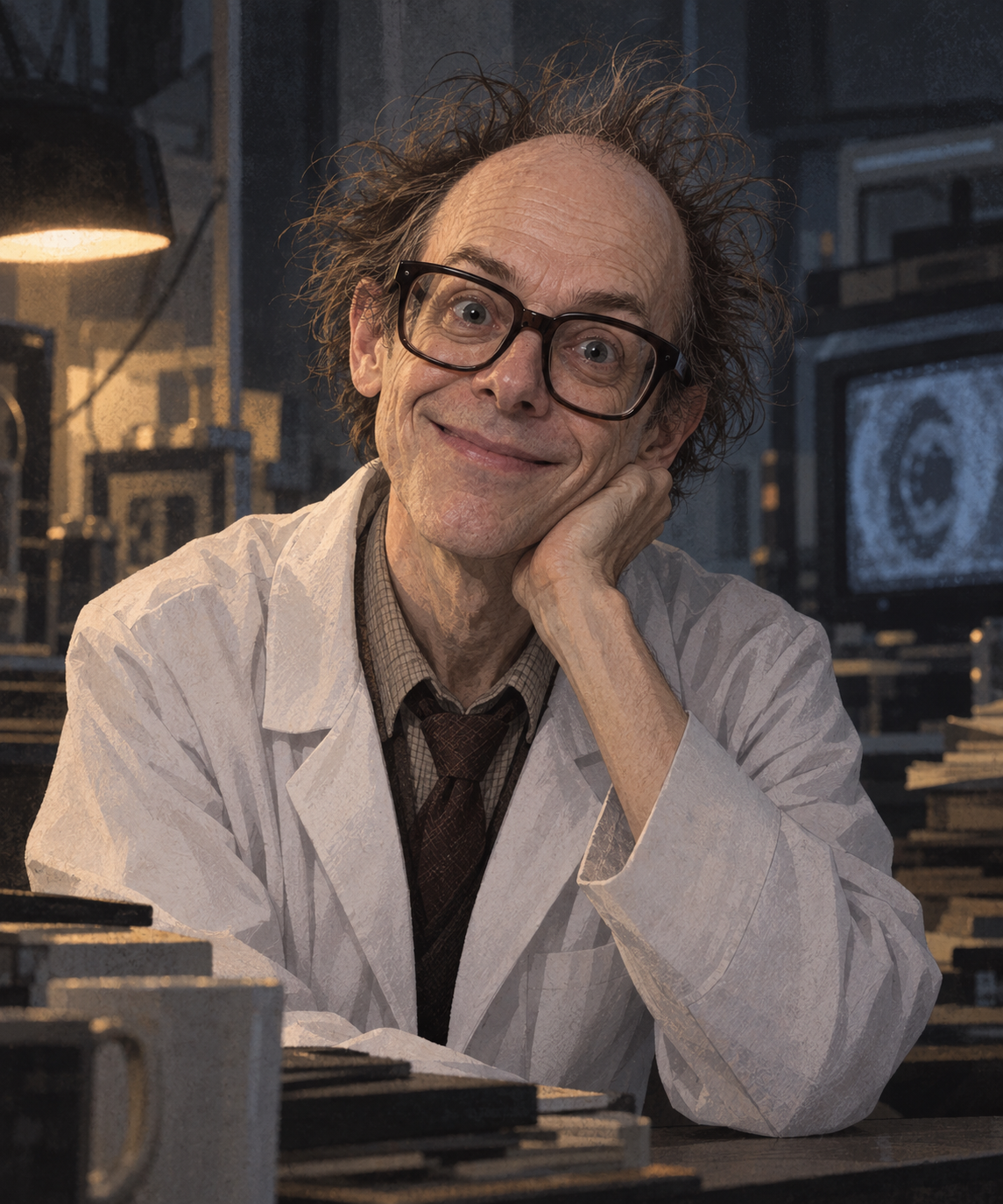
Jason Lo shoots and apparently kills him years earlier, but Hix’s symbiotic U-2256-E germ transfers his consciousness into a shallow clone. He secretly survives beneath Stanmoor, eventually uses Adam and Marie’s memories to launch WILD LIGHT, and saves Adam from the Class Z mnestic’s fatal regression.
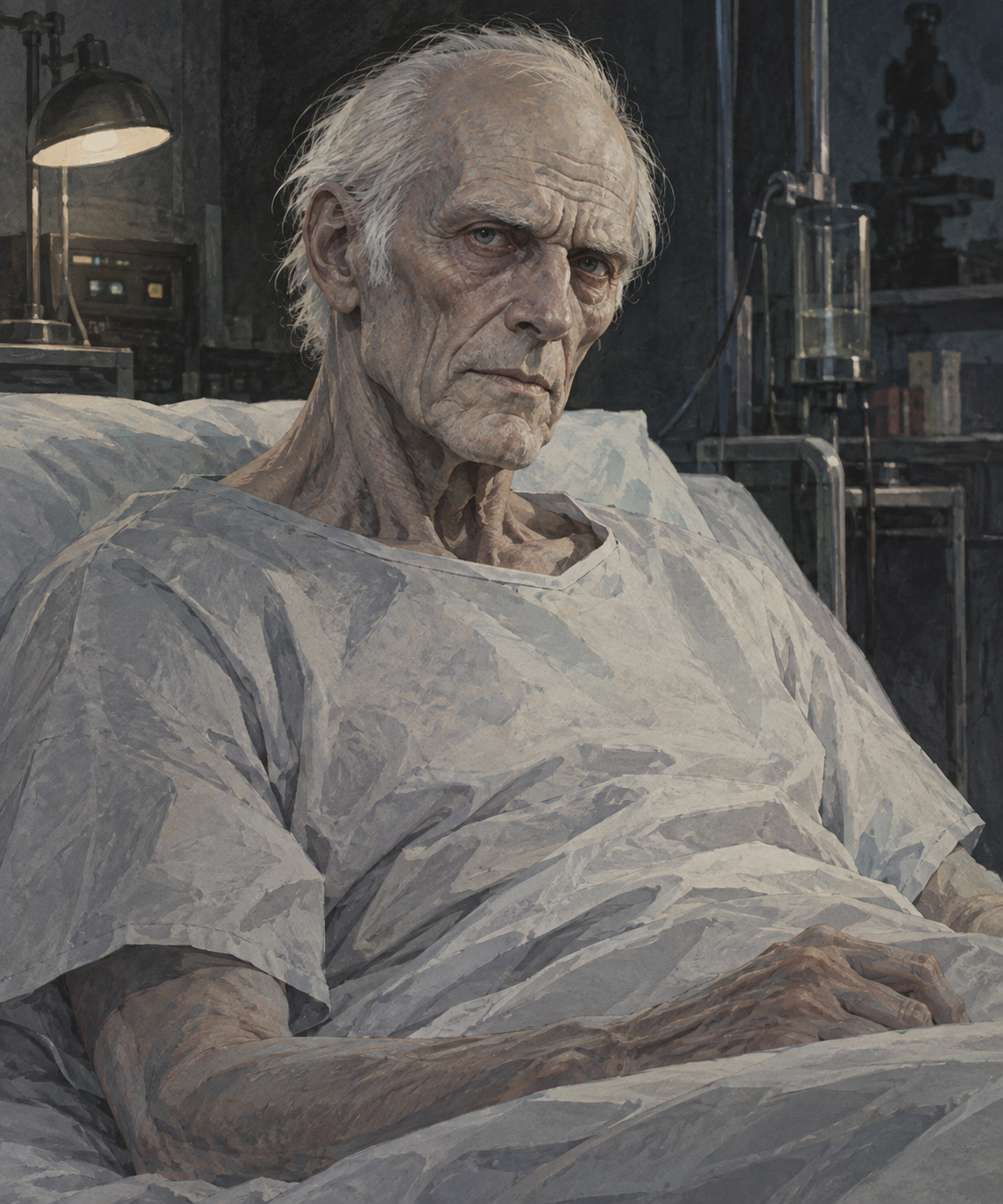
Marie restores his suppressed memories with Class X mnestics, inadvertently exposing him to the enormous spider-pillar entity hunting those memories. It erupts through his eye, throat, and abdomen and turns him into a grotesque puppet, forcing Marie to shoot him in the head.
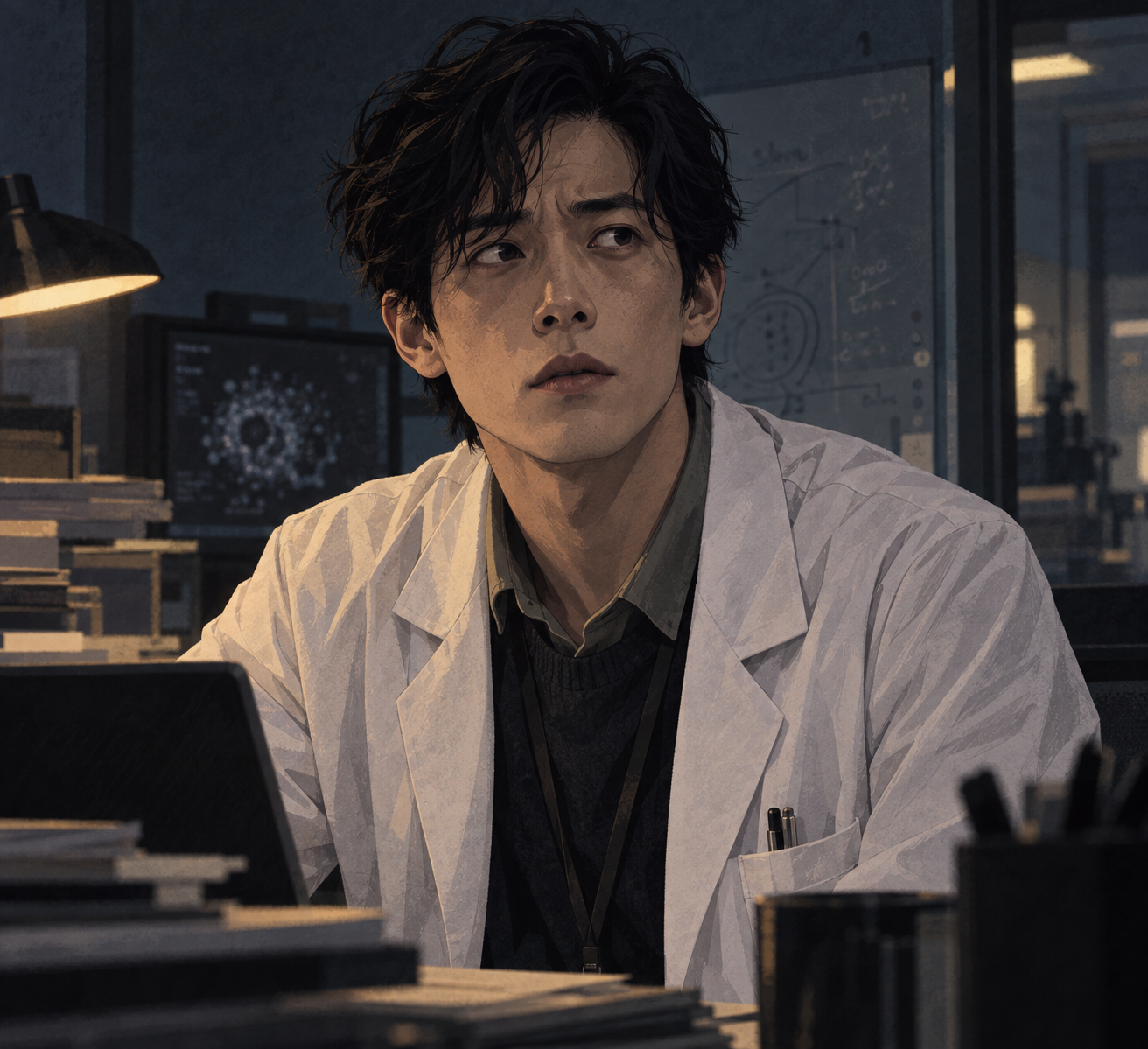
U-3125 eventually turns him into a “non-person” who attacks Marie and helps corner her during Wyeleigh’s collapse. Marie activates DRY ERASE, flattening his mind along with the other compromised personnel and erasing Wyeleigh from human memory.
🔷 Supporting Characters
Mnestics allow her to perceive the enormous spider-pillar and Red, but the entity notices her in return; its cognitive pressure paralyzes her, stops her breathing and heart, and kills her on the monolith steps.
U-3125 compromises him during the final siege, causing him to attack Marie. She kills him with U-7381, which vaporizes much of his body and leaves him in pieces.
He subdues Red and administers cognitopoison, but direct exposure to U-3125 annihilates his mind, effectively destroying him while allowing the entity to follow his mental connections deeper into the Organisation.
Sunshine sacrifices itself by bombarding U-3125 with memories of Marie and Adam, distracting Red long enough for Adam to blast away his head, throat, and shoulder with U-7381 before erasing the rest of his body.
He survives the crisis and appears in the epilogue, realizing that more than a year of history and enormous pieces of physical reality have effectively disappeared while humanity has simply forgotten the catastrophe and returned to normal.
Once Marie exposes him and Mahlo realizes Levene is not actually his employee, Marie shoots Levene twice in the heart and once in the head; his corpse is sent for research.
She survives Levene’s infiltration and returns to screening calls after he is killed.
She survives Simon’s encounter with Gage and continues working at Wyeleigh; no separate definitive later fate is established before the site-wide catastrophe.
Simon realizes information itself can function as a weapon and smashes Gage with a cable-bound terabit data array, overwhelming him with pure data and reducing him to an inert heap.
After U-3125 searches Bess’s mind, it follows the connection to Czerny; he becomes restless during a meeting, leaves, and is mentally hollowed out by the entity.
During the Stanmoor meeting, the compromised Jason Lo suddenly opens fire and shoots Devlin dead.
Lo suddenly shoots Hix and Devlin during the Stanmoor meeting. Marie tackles him, tears open his throat with an uncapped fountain pen, and then shoots him through the head.
Gua remains contained in Vault 4J and apparently survives the catastrophe; when Adam later visits the ruined Wyeleigh, the entity remains silent.
Cela survives her species’ near-extinction and appears in the epilogue devouring a gigantic metaspider before triumphantly returning to her mate and children.
He is transformed into a grotesque pinkish-brown pillar of flesh and takes Adam’s violin, casually crushing its neck underfoot and helping drive Adam to flee.
U-3125 compromises her during the breach; she takes a gun and confronts Marie near the airlock, forcing Marie to shoot her dead.
He enters the infected house first and becomes trapped, screaming in agony while Bess is cognitively prevented from properly perceiving his plight; Gaines ultimately dies in the outbreak.
🕳️ Potential Plot Holes
Andrew Hilton claims that the British Army’s secret Unthinkables unit was building and deploying antimemetic weapons decades before the modern Antimemetics Division. Marie Quinn immediately notices the problem, saying the timeline is off by almost sixty years and questioning how researchers in the 1940s and 1950s could have created technology that seems far beyond the capabilities of the era. This is a deliberate mystery rather than an accidental plot hole. The Unthinkables operated according to an earlier, largely forgotten understanding of antimemetics, and the repeated destruction of institutional knowledge makes technological progress in this field nonlinear. Quinn’s disbelief is therefore exactly the reaction the story intends readers to have.
Vault 601 requires senior staff to periodically enter and investigate U-3125, only for the airlock to erase their memories when they leave. Simon Lee correctly realizes that this appears absurd: researchers repeatedly discover information they are immediately forced to forget. However, this is the point of “asynchronous research.” The researchers are not expected to carry ordinary memories of their discoveries outside the vault. Instead, information is preserved indirectly through controlled records, procedures, mnestics, and messages left for future iterations of themselves. The seemingly irrational protocol illustrates how antimemetic research must function when simply knowing the subject can be dangerous.
DRY ERASE can save the Organisation from a catastrophic antimemetic outbreak by destroying memories on an enormous scale, but every activation also erases knowledge of the contingency itself. Eventually, personnel may forget where the warheads are located, how they work, or even that they exist. This is not really a plot hole because the story explicitly recognizes the flaw. DRY ERASE is intentionally portrayed as a desperate last resort whose effectiveness deteriorates every time it is used. The Organisation survives the immediate catastrophe by sacrificing some of its ability to survive the next one, reinforcing the novel’s central idea that forgetting can protect humanity while simultaneously making it more vulnerable.
📚 Book Club Q&A's
⭐ Final Rating & Thoughts
This book scared me in a way traditional horror almost never does. Ghosts and monsters are one thing, but the idea of slowly losing your memories, your identity, and eventually your entire sense of reality? That got to me. There were moments when I genuinely felt unsettled just thinking about the concepts qntm was playing with.
What impressed me most was how incredibly clever it all was. The idea of fighting something you can’t remember, using memory itself as a weapon, and having entire pieces of history disappear from human consciousness could have easily become confusing or gimmicky. Instead, it completely sucked me in. And underneath all of the wild sci-fi concepts, there’s also a surprisingly emotional story that gave everything real weight.
This was weird, terrifying, philosophical, and completely unlike anything I’ve read before. It made my hands shake while I was reading, which pretty much says it all. I absolutely loved it—and I’m not sure I’ll ever think about memory quite the same way again.
✨ Adaptation description
Adaptation Overview
There Is No Antimemetics Division is a 16–17 minute American science-fiction short film, written and directed by Adria Lang and completed in 2024. It stars Jasika Nicole as Marion Wheeler, Neil Napier as Brent/O5-8, Mateus Ward as Clay, and Syd Kilroy as the receptionist. Producers are Eva Papadakou and Stephanie Paris, with cinematography by Elle Schneider. The film played festivals in 2024–25, including the Chattanooga Film Festival, before receiving its online release through DUST on February 2, 2026.
It adapts qntm’s “We Need to Talk About Fifty-Five,” the opening story of the Antimemetics Division narrative. qntm originally published the story on the SCP Wiki in January 2015; it was subsequently incorporated into There Is No Antimemetics Division.
Key Differences
This isn’t a condensation of the whole novel. It doesn’t attempt to adapt the later war with SCP-3125, the Starfish, or the book’s sprawling chronology and then remove those elements. Instead, Lang essentially takes one self-contained opening episode and turns that episode into a short film.
Tone Changes
Lang pushes the material more overtly toward sci-fi noir and psychological thriller. Her stated goal was essentially a science-fiction-noir Twilight Zone filtered through David Lynch and Philip K. Dick, with Severance also cited as an inspiration.
Visually, the predominantly black-and-white retrofuturist setting makes the Foundation feel especially institutional and oppressive. ScreenAnarchy describes the story as taking place entirely within a retrofuturist building and singles out the film’s atmosphere and uncertainty.
The source story, by comparison, has more of qntm’s characteristic mixture of bureaucratic absurdity, dry humor, conceptual science fiction and creeping horror. The film retains some of that humor but makes the encounter feel more immediately ominous.
Structural Changes
The adaptation turns something written largely as dialogue and conceptual exposition into a highly visual contained-room thriller. The physical environment, performances, cinematography and threat of Clay’s weapon make the scene feel more like an interrogation even though its basic structure already exists in qntm’s story.
Character Changes
Marion Wheeler: Jasika Nicole’s Marion remains recognizably qntm’s character: intelligent, experienced, impatient and considerably more knowledgeable than the men questioning her. The film emphasizes her isolation and vulnerability because viewers can physically see her trapped in a room with people who regard her as a possible enemy.
What the Adaptation Emphasizes
The film particularly emphasizes Marion’s impossible position: she must convince someone that she heads an organization whose very nature explains why he cannot remember that organization exists.
That gives the adaptation a wonderfully self-contained central paradox:
Marion faces an impossible problem: she has to convince Brent that the Antimemetics Division is real even though an antimemetic force has erased his memory of it.
It also emphasizes Marion’s loneliness. Lang has specifically connected the film to Weltschmerz and the experience of being the only person in the room who can perceive the monsters.
The visual presentation further emphasizes institutional paranoia. The Foundation becomes a place where credentials, security systems and organizational records cannot necessarily establish reality because information itself can be compromised.
✨ Books Like There Is No Antimemetics Division (2020)
See an error on this page?