
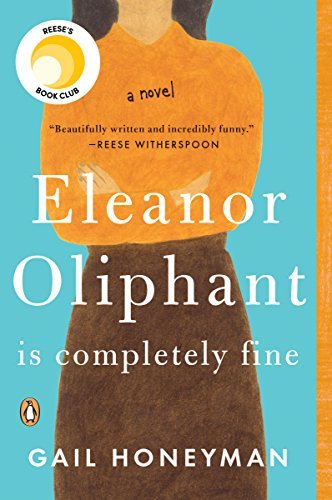
Eleanor Oliphant Is Completely Fine (2017)
Select Sections to Print
×Book Details
Eleanor Oliphant Is Completely Fine (2017)
Jump to Section
⚠️ Trigger Warnings
- Child abuse and severe neglect
- Emotional and verbal abuse
- Childhood trauma
- Death of a child/sibling
- Arson and house fire
- Attempted murder
- Burn injuries and facial scarring
- Foster care and residential care
- Domestic abuse and intimate partner violence
- Severe physical assault
- Rape and sexual assault
- Sexual coercion
- Pregnancy/conception resulting from rape
- Depression
- Suicidal ideation
- Suicide attempt
- Self-harm ideation
- Alcohol misuse/alcoholism
- Animal cruelty
- Animal burning
- Medical emergencies
- Sudden death
- Heart attack
- Terminal illness/cancer
- Grief and bereavement
⏱️ 2-Minute Spoiler Summary
Eleanor Oliphant is a lonely 29-year-old finance clerk in Glasgow whose entire life is built around rigid routines and isolation. She spends her workweeks avoiding other people and her weekends drinking vodka alone, while enduring weekly phone calls from her viciously abusive mother, “Mummy” (Sharon Smyth). Eleanor also bears severe facial scars from a childhood fire, although she avoids thinking about what really happened.
Her carefully controlled existence begins changing after she becomes obsessed with Johnnie Lomond, a local musician she sees at a charity concert. Convinced that Johnnie is destined to become her husband—and that marrying him will finally earn Mummy’s approval—Eleanor gives herself a makeover and researches him obsessively online.
At the same time, she unexpectedly befriends Raymond Gibbons, the scruffy but kind new IT technician at her office. While walking together, Eleanor and Raymond help Sammy Thom, an elderly stranger who collapses in the street. Visiting Sammy in the hospital draws Eleanor into his warm extended family, while Raymond introduces her to his equally welcoming mother, Betty. For perhaps the first time in her adult life, Eleanor begins experiencing genuine friendship and affection.
Her fantasy about Johnnie finally collapses when she attends one of his concerts and discovers that he is vulgar, unimpressive, and completely unaware of her existence. Devastated, Eleanor retreats to her flat, drinks heavily, gathers painkillers and other possible means of killing herself, and stops going to work. Raymond realizes something is wrong, finds her barely functioning at home, and takes care of her. He later brings her Glen, an abused black cat in need of a home, giving Eleanor another emotional connection and someone who depends on her.
Eleanor begins therapy with Dr. Maria Temple, gradually confronting the childhood memories she has spent years suppressing. After Sammy dies from a heart attack, Eleanor finally tells Raymond that her scars came from a house fire when she was ten.
The biggest revelation follows: Mummy has actually been dead for decades. Eleanor’s weekly conversations with her were hallucinations created by her traumatized mind. Raymond finds old newspaper reports showing what really happened in 1997. Eleanor’s abusive mother, Sharon Smyth, drugged and restrained Eleanor and her four-year-old sister, Marianne, then deliberately set their London home on fire. Eleanor escaped but went back inside in an attempt to rescue Marianne from a locked wardrobe. Eleanor survived with severe burns, while Marianne and Sharon died.
Once Eleanor finally accepts the truth, she imagines one last conversation with Mummy and tells her goodbye, ending the hold her mother has maintained over her life. She returns to work, continues therapy, begins dealing with her survivor’s guilt, and requests her complete social-services records so she can understand her past.
The novel ends with Eleanor meeting Raymond at a café. Raymond invites her to dinner and a classical music concert, and Eleanor embraces him and kisses his cheek. Their relationship is not neatly defined as a romance, but Eleanor is finally allowing herself to accept friendship, affection, and the possibility of a life connected to other people.
📖 Full Spoiler Summary
Eleanor’s Carefully Controlled Life
Eleanor Oliphant is 29 years old, nearly 30, and has spent nine years working as a finance clerk at a graphic design company in Glasgow. Her life is almost completely defined by routine. During the week, she works, eats the same kinds of meals, does the Daily Telegraph cryptic crossword, and goes home to pasta with pesto and The Archers. Every Friday she buys two large bottles of Glen’s vodka and a margherita pizza, then drinks her way through the weekend until it is time to return to work.
Eleanor has almost no meaningful relationships. Her coworkers find her strange and socially awkward, and she generally considers their attempts at conversation pointless. The one consistent personal contact in her life is a mandatory 15-minute Wednesday telephone conversation with her mother, “Mummy” (Sharon Smyth), who belittles and manipulates her. Eleanor also bears severe scars down the right side of her face, remnants of a childhood event she refuses to discuss.
Her lonely routine is disrupted when she wins tickets to a charity concert and takes her coworker Billy. There she sees Johnnie Lomond, lead singer of Johnnie Lomond and the Pilgrim Pioneers, and immediately becomes obsessed with him. Eleanor decides that Johnnie is exactly the sort of sophisticated, successful man she should marry. More importantly, she imagines that becoming his wife might finally make Mummy proud of her.
Rather than actually meeting Johnnie, Eleanor constructs an elaborate fantasy around him. She buys a laptop and mobile internet so she can follow him on social media, learning about his life through Twitter, Facebook, and Instagram. She also decides that she must transform herself into the sort of woman Johnnie would want.
That leads to a series of unfamiliar experiences: a painful bikini wax, a manicure, new clothes, professional makeup, and eventually a dramatic haircut. Although Eleanor undertakes all of this for Johnnie, these encounters also begin forcing her out of the tiny world she has built around herself.
Raymond and the Thoms Enter Eleanor’s Life
At work, Eleanor meets Raymond Gibbons, the company’s new IT technician. He initially seems like everything she dislikes: messy, casually dressed, cigarette-smoking, and lacking the refinement she imagines Johnnie possesses. Yet Raymond is consistently kind to her without expecting anything in return.
Their lives become connected when they are walking together and see an elderly man, Sammy Thom, collapse on the pavement. Raymond calls an ambulance while Eleanor holds Sammy’s hand and talks to him until help arrives.
They later visit Sammy in the hospital, where he is recovering from a concussion and broken hip. Through him, Eleanor is gradually welcomed into the Thom family, including Sammy’s daughter Laura Marston-Smith and his sons Keith and Gary. The family treats Eleanor with an easy warmth that she has rarely experienced.
Raymond also takes Eleanor to meet his widowed mother, Betty Gibbons, who lives with severe arthritis and several cats. Betty simply welcomes Eleanor into her home, gives her homemade soup and tea, and treats her with maternal kindness. Eleanor is so overwhelmed by the experience that she bursts into tears in Betty’s kitchen.
Pieces of Eleanor’s past begin surfacing as these relationships deepen. During a social worker’s visit, a document accidentally falls from Eleanor’s case file. It reveals that, as a child, Eleanor once lived with foster parents Mr. and Mrs. Reed and their children before being removed because of night terrors, violent outbursts, and other behavioral problems. She was subsequently placed in residential care.
At Sammy’s welcome-home party, Eleanor also tells Raymond about Declan, a boyfriend she had at university. Declan violently abused her for two years, ultimately fracturing twelve of her bones before Eleanor finally contacted the police and changed the locks.
Yet Eleanor’s life is genuinely improving. Laura cuts her extremely long hair into a shoulder-length highlighted bob. At work, Bob, the owner who originally hired Eleanor, offers her greater responsibility when office manager Loretta takes leave to care for her husband during his cancer treatment. Eleanor even begins attending social events, including Keith’s 40th birthday party, where she dances with the other guests.
Without quite realizing it, Eleanor is beginning to build the real human connections she has spent years telling herself she does not need.
Eleanor’s Fantasy About Johnnie Collapses
Despite these changes, Eleanor remains convinced that Johnnie Lomond is the solution to her life. She attempts to attend one of his performances but discovers that the show is sold out. She later goes with Raymond to another concert at the same venue, enduring a deafening heavy-metal performance so she can familiarize herself with the surroundings.
Eventually, Eleanor gets tickets to Johnnie’s final performance with the Pilgrim Pioneers. She arrives transformed by her new clothes, hair, and makeup, expecting the fantasy she has constructed to finally become reality.
Instead, she sees Johnnie clearly for the first time.
He does not notice her. His performance is poor, and rather than being the sophisticated man Eleanor imagined, he behaves crudely onstage, even dropping his trousers to mock the audience. Eleanor suddenly understands that she never actually knew him. She invented an idealized version of Johnnie because she desperately wanted someone to rescue her and provide the life she thought would finally make her acceptable.
The collapse of that fantasy also destroys the emotional structure holding Eleanor together.
Eleanor Hits Rock Bottom
Eleanor retreats to her flat and stops going to work. She strips naked, lies beneath her kitchen table, and drinks continuously. She collects twelve boxes of painkillers, a bread knife, and drain cleaner while contemplating suicide. When she ventures out to buy three liters of vodka, even her local shopkeeper, Mr. Dewan, is frightened by how ill she looks.
After Eleanor misses work for three days, Raymond gets her address from Bob and goes to check on her. He finds her incapacitated in the filthy flat and simply begins taking care of her. He cleans up the vomit and broken bottles, washes her clothes and bedding, makes her tomato soup, and stays with her. He also brings yellow tulips, After Eight mints, and a SpongeBob SquarePants balloon.
Raymond then introduces another unexpected source of companionship. His flatmate Desi has rescued a black cat that someone put inside a metal dustbin and set on fire. Because Desi is allergic, Raymond brings the injured animal to Eleanor.
Eleanor names her Glen.
Caring for Glen gives Eleanor something she has never really had before: another living creature who needs her and offers companionship without judgment. Raymond also persuades Eleanor to see her doctor, which leads to therapy with clinical counselor Dr. Maria Temple.
Eleanor initially resists discussing her childhood, particularly anything involving Mummy. During an empty-chair exercise, however, Dr. Temple asks Eleanor to imagine her mother sitting opposite her. Eleanor finally breaks down and pleads, “Please don’t hurt us.”
The plural pronoun hints at a truth Eleanor has buried for years.
The Truth About Mummy and Marianne
While Eleanor is beginning to recover, Sammy Thom dies from a heart attack while watching television at Laura’s house. Eleanor and Raymond attend his funeral together, but at the wake Eleanor drinks heavily while Raymond comforts Laura, whom he briefly dates before realizing they are incompatible.
Raymond takes the intoxicated Eleanor back to his flat, wraps her in a blanket, feeds her, and watches Sons of the Desert with her. Eleanor finally tells him that the scars covering her face came from a house fire when she was ten.
As her therapy continues, the memories become clearer, leading to the central revelation of Eleanor’s life: Mummy is dead and has been dead since Eleanor was a child.
The abusive Wednesday telephone calls Eleanor believes she has been receiving are not real. They are hallucinated conversations through which her traumatized mind has kept her mother alive and allowed Sharon’s cruel voice to continue controlling her.
Raymond searches old newspaper archives and finds reports from 1997 that reveal what actually happened.
Eleanor’s mother, Sharon Smyth, was profoundly abusive to Eleanor and her younger sister, Marianne. When Eleanor was ten and Marianne was four, Sharon drugged and restrained her daughters and deliberately set their home in Maida Vale, London, on fire.
Eleanor managed to escape. But instead of simply running to safety, she went back into the burning house because Marianne was still trapped inside a wardrobe and Eleanor desperately tried to save her.
She could not.
Eleanor survived with severe burns that left the scars on her face. Marianne died of smoke inhalation, as did Sharon.
The memories Eleanor has spent her adult life avoiding are finally complete. She was not merely the survivor of an accidental childhood fire. Her mother tried to murder her and her little sister, and Eleanor has lived ever since with both the trauma of her mother’s abuse and the guilt of surviving when Marianne did not.
Eleanor finally has one last imaginary telephone conversation with Mummy. This time, rather than submitting to her mother’s cruelty, she rejects it. She says goodbye and ends the conversation permanently.
Better Days
Recovery does not instantly transform Eleanor into a different person, but she begins rebuilding her life deliberately. She returns to work gradually and discovers that her coworkers have decorated her desk with flowers and left a card welcoming her back. The people she once regarded mostly as irritating strangers have noticed her absence and are genuinely happy to see her.
Keith Thom later visits Eleanor and gives her Sammy’s favorite red wool sweater, allowing her to keep something belonging to the man whose collapse unexpectedly brought her and Raymond into each other’s lives.
Eleanor continues seeing Dr. Temple, now confronting her grief over Marianne and the survivor’s guilt she has carried since childhood. Rather than continuing to hide from her history, she submits a formal request for her complete social-services records so she can learn what happened during the years after the fire.
The novel ends with Eleanor meeting Raymond at a café. Their friendship has become one of the central relationships in her life, and Raymond invites her to dinner and a classical music concert.
Eleanor embraces him and kisses him on the cheek.
There is no grand declaration that Raymond has become the romantic savior Eleanor once imagined Johnnie would be. Instead, Eleanor ends the story capable of something that once seemed almost impossible for her: accepting genuine affection and allowing another person into her life. After years of insisting that she was “completely fine” while surviving almost entirely alone, Eleanor is finally beginning to build a life in which she does not have to be alone at all.
🔚 Ending Explained
How Eleanor Oliphant Is Completely Fine Ends
The ending of Eleanor Oliphant Is Completely Fine finally dismantles the story Eleanor has constructed around herself for most of her adult life. Her recovery is not simply about becoming less lonely. It requires her to confront what actually happened to her as a child, recognize the ways that trauma has continued to control her, and begin building a life based on reality rather than survival.
The Truth About “Mummy”
During therapy with clinical counselor Dr. Maria Temple, Eleanor gradually begins recovering memories she has spent years suppressing. The most important revelation is that the weekly conversations she has been having with her mother, Sharon Smyth, have never been real.
Sharon has been dead for twenty years.
The cruel Wednesday-night phone calls are auditory hallucinations—a psychological coping mechanism through which Eleanor has kept her abusive mother alive in her mind. Even decades after Sharon’s death, Eleanor continues hearing the same criticism, contempt, and manipulation that shaped her childhood.
In Chapter 40, Eleanor finally recognizes what is happening. Rather than continuing to submit to the voice, she consciously rejects it. She tells her mother, “Good-bye, Mummy,” and ends the imagined relationship.
It is one of the novel’s most important moments because Sharon’s physical death did not free Eleanor from her. Eleanor has to choose to free herself.
What Really Happened in the Fire
The full truth arrives in the final chapter.
Eleanor meets Raymond Gibbons at a café and brings along a sealed envelope containing newspaper articles from 1997 that she requested from The Sun and the London Evening Standard. Raymond stays with her while she finally reads what happened.
The reports confirm that Eleanor’s mother deliberately tried to kill herself and both of her daughters.
Sharon sedated the girls, physically restrained them, and set fire to their flat in Maida Vale, London. Ten-year-old Eleanor managed to free herself and escape the burning building. But instead of simply running to safety, she went back inside.
Her four-year-old sister, Marianne, was trapped in a wardrobe, and Eleanor tried to save her.
She could not.
Sharon and Marianne both died from smoke inhalation. Eleanor survived with severe third-degree burns, permanent facial scarring, and damage to her vocal cords.
The revelation radically changes Eleanor’s understanding of herself. For years, she has carried the guilt of being the child who lived. The truth shows that she was not responsible for Marianne’s death. She was a ten-year-old girl placed in an impossible situation by an abusive parent—and she actually risked her own life trying to save her sister.
Eleanor Begins Building a Real Life
Her recovery is deliberately gradual.
Eleanor returns to her finance job in stages rather than instantly resuming her old routine. Her coworkers Bob, Janey, Billy, and Bernadette welcome her with a card and a bright bouquet of sea holly, agapanthus, and irises. Their kindness demonstrates how dramatically Eleanor’s world has changed: the woman who once believed herself essentially invisible now has people who notice when she is gone and are genuinely happy when she returns.
After Sammy Thom’s death, his son Keith gives Eleanor Sammy’s favorite oversized red woolen sweater. It becomes another tangible reminder that Eleanor has formed real connections with other people.
Most importantly, Eleanor does not decide that therapy has “fixed” her. She submits a Freedom of Information Act request for her complete social services record—the “Bumper Book of Eleanor”—and intends to work through it with Dr. Temple.
Instead of avoiding her past, she is finally choosing to know it.
The Final Scene with Raymond
The novel ends quietly.
Over coffee, Raymond reminds Eleanor about an electronic invitation he sent her for a classical music concert in two weeks, followed by dinner. Eleanor accepts.
When they leave the café, Eleanor hugs Raymond and kisses him on the cheek. As she walks home, she feels genuine affection expanding within what she describes as the unscarred part of her heart.
There is no dramatic declaration of love and no conventional romantic ending. That restraint matters. Raymond is not presented as the man who rescues Eleanor. He is someone who helps create the conditions in which Eleanor learns that she can rescue herself—and that she can safely allow other people into her life.
What the Ending Means
The central transformation of the novel is contained in one deceptively simple word: fine.
At the beginning, Eleanor’s insistence that she is “completely fine” is defensive. Her life is rigidly controlled and profoundly lonely. She drinks heavily, has virtually no meaningful relationships, lives according to repetitive routines, and remains psychologically dominated by a mother who has been dead for decades.
Being “fine” means surviving.
By the ending, Eleanor can finally say that she is “fine now” and mean something entirely different. Fine no longer means I don’t need anyone. It means she knows what happened to her, recognizes that she needs help, and understands that accepting affection does not make her weak.
She has moved from merely surviving to participating in her own life.
The Scar and the “Unscarred Heart”
Eleanor’s facial scar is the most visible physical remnant of the fire. It represents something that cannot simply be erased by recovery. Healing does not restore Eleanor to the person she might have been if the fire had never happened.
That is why the image of the “unscarred piece of my heart” is so important.
Her body bears permanent evidence of what Sharon did to her, but Sharon did not destroy Eleanor’s capacity to love. Eleanor can still feel tenderness toward Raymond, affection for Glen, gratitude toward her coworkers, and grief and love for Marianne.
The ending therefore does not equate healing with becoming unscarred. Eleanor’s victory is discovering that being scarred and being capable of happiness are not opposites.
Polly and Glen: Surviving Versus Living
The contrast between Polly the plant and Glen the cat quietly mirrors Eleanor’s transformation.
Polly exists in Eleanor’s carefully controlled apartment for years. The plant requires relatively little emotional engagement and fits comfortably within her isolated routine. During Eleanor’s breakdown, Polly dies.
Then Raymond brings her Glen, the partially bald rescue cat.
Glen requires something entirely different from Eleanor: active, continuing care. She must feed another creature, respond to its needs, touch it, worry about it, and receive affection in return.
Polly belongs to Eleanor’s old world of static survival. Glen belongs to the new one—a messy, reciprocal relationship with another living being.
Sammy’s Red Sweater
The oversized red sweater Keith gives Eleanor after Sammy’s death carries a similar meaning.
Throughout the novel, Eleanor’s emotional world has been defined by coldness: isolation, discipline, restraint, and her mother’s cruelty. Sammy’s sweater represents the opposite—warmth, comfort, memory, and uncomplicated human affection.
Sammy’s death is painful, but the relationship still leaves something valuable behind. That is another lesson Eleanor must learn. Loving people exposes her to grief, but avoiding love in order to avoid loss is not really living.
Why Eleanor Has to Say Goodbye to Mummy
Discovering that the phone calls are hallucinations is only part of Eleanor’s breakthrough. She also has to make the decision to stop listening.
Sharon has been dead for twenty years, yet Eleanor has internalized her mother’s voice so completely that Sharon continues abusing her from inside Eleanor’s own mind.
When Eleanor says “Good-bye, Mummy,” she symbolically ends that inheritance.
Her mother may have shaped her childhood, but she does not get to determine Eleanor’s adulthood.
That moment also explains why obtaining the social services records matters. Eleanor is replacing the distorted history created by Sharon—and by her own traumatized memory—with the truth. She is choosing knowledge over repression.
Letting Go of Johnnie Lomond
Eleanor’s earlier obsession with musician Johnnie Lomond is another form of escape.
She imagines him as the perfect man who will transform her life without Eleanor ever having to risk genuine intimacy. Once she actually encounters him and realizes that he is vulgar, unimpressive, and an “arse,” the fantasy collapses.
Raymond is the opposite.
He is imperfect, ordinary, sometimes irritating, and completely real.
Eleanor’s movement from Johnnie to Raymond therefore represents something larger than a change in romantic interest. She stops fantasizing about being magically rescued and begins participating in actual relationships, where affection develops slowly through repeated acts of kindness and trust.
Survivor’s Guilt and Marianne
The truth about Marianne provides the emotional key to Eleanor’s childhood trauma.
Eleanor has spent decades carrying responsibility for surviving when her younger sister did not. Dr. Temple helps her recognize the fundamental injustice of that belief: Eleanor was ten years old.
The newspaper reports make the truth unavoidable. Sharon created the situation. Eleanor did not abandon Marianne; she escaped and then went back into a burning building to try to save her.
Eleanor’s recovery therefore requires more than forgiving other people. She has to forgive the frightened ten-year-old version of herself.
Why the Ending Is Ultimately Hopeful
The novel does not end by declaring Eleanor cured.
She still has trauma to process. She intends to read her social services records. She will continue therapy. Her relationship with Raymond remains undefined. Her scars remain.
That incompleteness is precisely why the optimism feels earned.
The book rejects the idea that one romantic relationship, one revelation, or one therapy session can undo twenty years of trauma. Eleanor’s life improves through accumulated acts of human connection: Raymond visiting her, coworkers welcoming her back, Sammy befriending her, Keith giving her a sweater, Dr. Temple listening to her, and Glen simply needing her.
The novel’s answer to loneliness is surprisingly modest: people need people, and kindness matters.
Eleanor begins the story believing independence means needing absolutely no one. She ends it understanding that accepting help does not erase her autonomy.
And that leads directly to the open-ended relationship with Raymond. The concert and dinner may eventually become romantic, or they may not. What matters at this point is that Eleanor wants to go. She can anticipate spending time with another person rather than dreading it or retreating into fantasy.
She accepts the invitation.
She hugs Raymond.
She kisses his cheek.
And then she walks home by herself.
That combination captures the entire ending: Eleanor is capable of loving someone else without disappearing into them. She is connected, but still autonomous. Scarred, but not destroyed. Alone for the moment, but no longer isolated.
For perhaps the first time in her life, when Eleanor says she is fine, she really is.
👤 Characters & Fates
🔶 Main Characters

Therapy reveals that “Mummy” has been an auditory hallucination: Eleanor’s mother died in the 1997 fire she deliberately set, which also killed Eleanor’s four-year-old sister Marianne. Eleanor finally says goodbye to her mother, confronts her survivor’s guilt, continues therapy, adopts Glen, becomes Office Manager, and develops a close, potentially romantic relationship with Raymond.
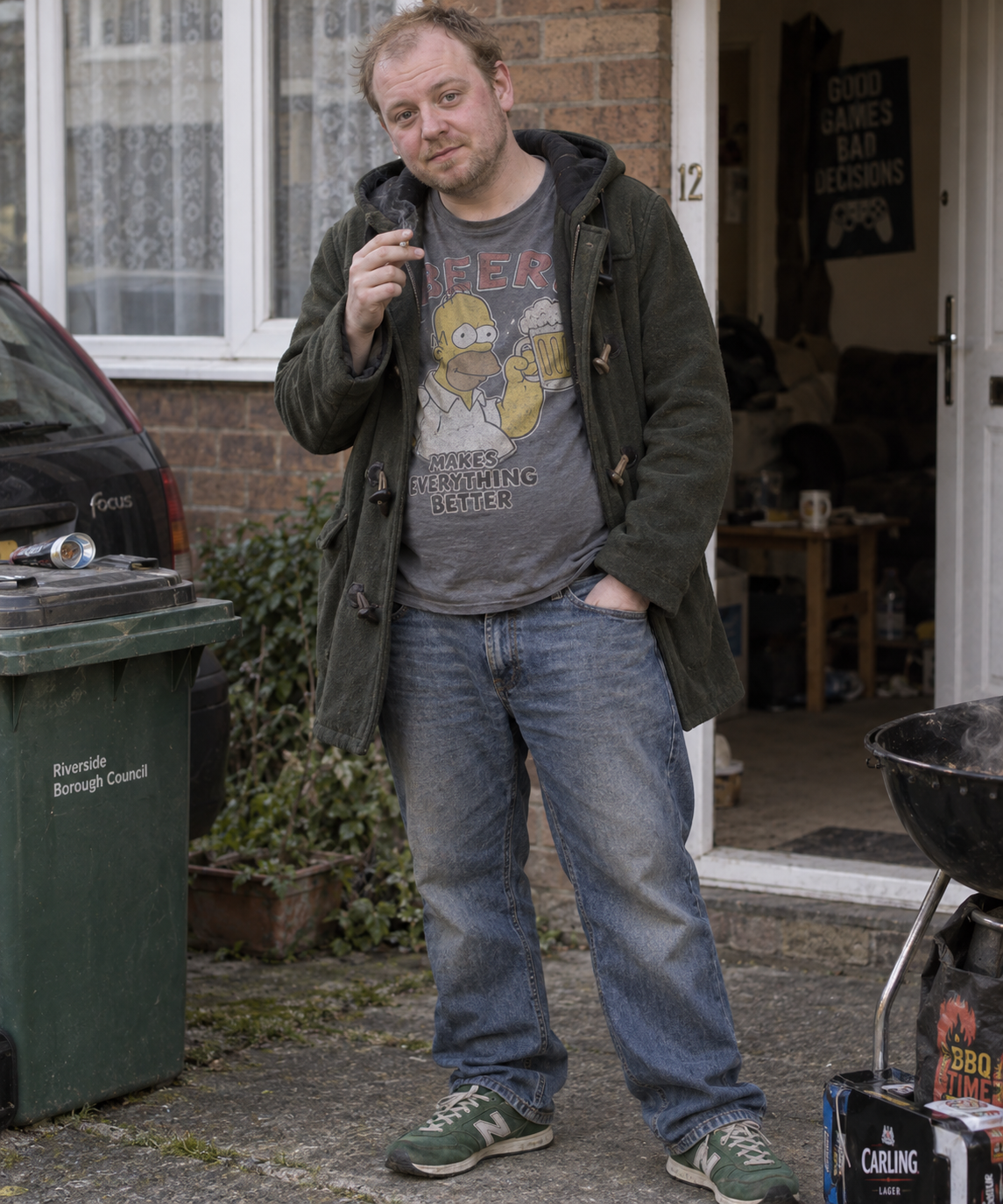
Raymond finds Eleanor dangerously ill and isolated in her flat, nurses her back toward recovery, and gives her Glen. He briefly dates Laura but ends the relationship, then remains closely connected to Eleanor; at the end he helps her confront the newspaper accounts of the fire and invites her to dinner and a classical concert.

Sharon actually died twenty years earlier: in August 1997 she sedated Eleanor and Marianne, locked Marianne in a wardrobe, and deliberately set their flat on fire in an attempt to kill them both. Marianne and Sharon died of smoke inhalation, while Eleanor escaped; Eleanor eventually realizes the phone calls were hallucinations and permanently silences her mother’s voice.

Sammy recovers from his broken hip and concussion and returns home, but later dies suddenly of a heart attack while watching television at Laura’s house. His family gives Eleanor his beloved tomato-red sweater as a keepsake.

Dr. Temple guides Eleanor toward remembering Marianne, accepting that surviving the fire was not her fault, and recognizing that “Mummy” is dead. Eleanor chooses to continue therapy with her while processing her newly obtained social-services records.

Eleanor finally sees him perform and realizes he is an “arse” after his crude behavior onstage. Johnnie abandons his band for a solo career that goes nowhere, while his former bandmates subsequently score a Top 5 American hit.
🔷 Supporting Characters

Sharon sedates Marianne and locks her inside a wardrobe before setting the flat on fire; Marianne dies of smoke inhalation despite ten-year-old Eleanor trying to return to the burning building to save her.
She continues welcoming Eleanor as part of Raymond’s circle, even kissing Eleanor directly on her scarred cheek without judgment.
Laura briefly dates Raymond after Sammy’s death, but Raymond ends the relationship because they have little in common; she remains friendly with Eleanor.
After Sammy dies, Keith personally brings Eleanor Sammy’s favorite tomato-red sweater as a memorial gift.
They dance with Eleanor to “YMCA” at Keith’s birthday party and remain part of Sammy’s close family.
After Loretta takes leave, Bob promotes Eleanor to Office Manager, gives her a raise, and puts her in charge of organizing the company Christmas outing.
Loretta takes indefinite leave to care for her husband after he develops testicular cancer, creating the vacancy that leads to Eleanor’s promotion.
Janey gets engaged and later helps welcome Eleanor back from sick leave with flowers and a card.
He warmly compliments Eleanor’s transformed appearance when she returns to work after her breakdown.
She signs Eleanor’s welcome-back card and continues working with her after Eleanor’s recovery.
Eleanor eventually calls the police and changes the locks after Declan fractures her arm, permanently removing him from her life before the novel begins.
Glen recovers from having been deliberately set on fire in a dustbin, regrows her thick black coat, and becomes Eleanor’s beloved permanent companion.
June unknowingly drops a yellowed 1999 case-file document beneath Eleanor’s coffee table, allowing Eleanor to discover details of her traumatic foster-care years.
She is absent because of illness during the relevant visit, with June Mullen filling in for her.
They recommend removing Eleanor from her foster placement and transferring her into residential care because of her night terrors and behavioral distress.
They request Eleanor’s removal because of her violent night terrors and inability to integrate with their children, and she is subsequently placed in residential care.
He refuses to illegally sell her vodka before 10 a.m. and later worries when she appears gravely unwell; after her recovery, he warmly welcomes her back when she shops for tea, lemons, and a newspaper.
Desi saves Glen after someone sets her on fire in a dustbin but cannot keep her because of allergies, so Raymond gives her to Eleanor; Desi and Andy otherwise continue living with Raymond.
He survives Eleanor’s relentless questioning and successfully sells her the computer and mobile internet setup.
Eleanor horrifies Kayla by accusing her of making women resemble children for pedophiles and leaves without tipping her.
He gives her frog-green nails and nearly gags over the sulfurous egg sandwich in her handbag; Eleanor concludes she could do the manicure herself for free.
Claire selects Eleanor’s skinny jeans, faux-silk top, and kitten-heel boots and sends her to the Bobbi Brown counter for makeup.
Irene gives Eleanor a smoky-eye makeover, after which Eleanor buys the products needed to reproduce it herself.
Mikey leaves his job to spend his remaining time with his young girlfriend Hazel, whose cancer has spread to her lymph nodes and liver, and their baby daughter Lois.
She continues living locally with her children while Mark works offshore.
Paul has long since drifted apart from Johnnie and is now married with children.
Polly dies from neglect during Eleanor’s depressive collapse, symbolically ending Eleanor’s old mode of merely surviving before she begins genuinely healing.
🕳️ Potential Plot Holes
During a home visit, social worker June Mullen has access to Eleanor’s case history and therefore presumably knows that Eleanor’s mother died in the 1997 fire. Yet when Eleanor says she still speaks to her mother every Wednesday, June merely responds, “Really? After all this time, that’s still happening? Interesting...” This is difficult to reconcile with June’s professional role. A client claiming to have weekly conversations with a mother who has been dead for twenty years would seemingly warrant immediate concern or at least follow-up questions. June’s deliberately vague response appears designed primarily to preserve the novel’s final twist for the reader.
The revelation that Eleanor’s weekly conversations with Mummy are hallucinations explains the conversations themselves, but the novel sometimes describes the telephone actually ringing before Eleanor answers it. More problematically, Mummy appears to initiate calls when Eleanor deviates from their normal Wednesday schedule, such as after Eleanor misses a call. An auditory hallucination could include the perceived sound of a ringing telephone, so this is not technically impossible. However, the narration presents the ringing and answering of the phone so objectively that it can feel like a physical event rather than something Eleanor is hallucinating. This is best understood as deliberate misdirection created by Eleanor’s unreliable narration rather than a true plot hole.
📚 Book Club Q&A's
⭐ Final Rating & Thoughts
What made Eleanor Oliphant Is Completely Fine such a standout for me was how effortlessly it balanced darkness with humor. Eleanor is unlike almost any protagonist I’ve encountered—awkward, blunt, judgmental, unintentionally hilarious, and yet incredibly vulnerable. Her distinctive voice made this book feel fresh from the very beginning.
I especially loved watching Eleanor slowly emerge from the rigid little world she has built around herself. Her friendship with Raymond is one of the book’s greatest strengths because it develops naturally, without feeling forced or overly sentimental. The kindness woven throughout the story gives the heavier subject matter some much-needed warmth.
The book goes to some genuinely painful places, and Eleanor’s past adds an emotional weight I wasn’t necessarily expecting from something that can also be so funny. That combination is difficult to pull off, but Gail Honeyman does it beautifully.
The ending was somewhat predictable, which is really the only thing keeping this from a full five stars for me. But honestly? I didn’t care much. I was completely invested in Eleanor and genuinely wanted to see her find some happiness. Funny, heartbreaking, quirky, and ultimately hopeful, this was a wonderfully unique read.
✨ Adaptation description
Gail Honeyman’s Eleanor Oliphant Is Completely Fine is in development as a feature film, although as of September 2026, the project has yet to receive a release date.
Production Overview
- Title: Eleanor Oliphant Is Completely Fine
- Format: Feature film
- Production Companies: Hello Sunshine and Amazon MGM Studios
- Director: Harry Bradbeer, best known for directing Fleabag and the Enola Holmes films
- Screenwriter: Georgia Pritchett, whose credits include Succession and Veep
- Producers: Reese Witherspoon and Lauren Neustadter for Hello Sunshine
- Executive Producer: Emily Ferenbach
- Status: In development
- Release Date: Not announced
- Cast: No cast has been officially confirmed in the major industry announcement
Hello Sunshine first acquired the screen rights to Gail Honeyman’s novel in 2017. MGM joined the project, and an earlier version of the screenplay was developed by Liz Hannah. In January 2022, the project took another step forward when Harry Bradbeer signed on to direct and Georgia Pritchett was announced as the new screenwriter.
Despite those developments, the film has remained in development for several years. As of 2026, there has been no announced filming date or release date.
✨ Books Like Eleanor Oliphant Is Completely Fine (2017)
See an error on this page?