
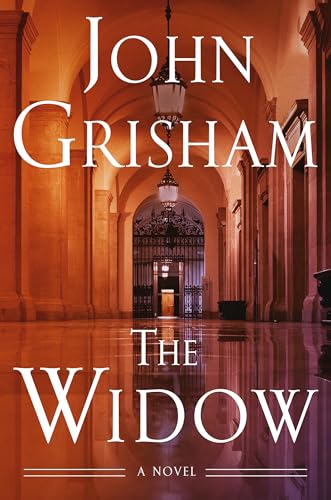
The Widow (2025)
Select Sections to Print
×Book Details
The Widow (2025)
Jump to Section
⚠️ Trigger Warnings
- Poisoning & serial murder
- Death of an elderly person
- Suicidal ideation
- Physical assault & severe beatings
- Gun violence & firearm threats
- Scalding/burn injury
- Drunk driving
- Severe car accidents & injuries
- Medical trauma & hospitalization
- Respiratory failure
- Withdrawal of life support
- Graphic autopsy & forensic procedures
- Wrongful arrest & conviction
- Incarceration
- Cocaine & illicit drug use
- Alcohol misuse
- Illegal gambling & gambling addiction
- Financial debt
- Marital breakdown & divorce
- Family strain involving children
⏱️ 2-Minute Spoiler Summary
Simon Latch is a struggling small-town Virginia lawyer whose marriage is collapsing, finances are a mess, and gambling habit has only made things worse. His fortunes appear to change when eighty-five-year-old widow Eleanor “Netty” Barnett walks into his office claiming she secretly owns more than $20 million in Coca-Cola and Wal-Mart stock. She wants a new will that will keep the money away from her late husband’s stepsons, Clyde and Jerry Korsak.
Simon discovers that Eleanor’s previous lawyer, Wally Thackerman, wrote himself an outrageous $485,000 gift into her old will. Simon replaces it with a new will benefiting charities, while positioning himself to earn substantial fees as executor and trustee. He keeps the arrangement secret even from his secretary, Matilda “Tillie” Clark, believing Eleanor’s fortune could finally solve his financial problems.
Months later, Eleanor causes a serious drunk-driving accident and lands in Blue Ridge Memorial Hospital. Simon obtains a temporary power of attorney and living will for her and, while searching her house for financial records, finds a handwritten notebook that appears to confirm her enormous fortune. He also buys her favorite Saigon ginger cookies and brings them to the hospital.
Eleanor suddenly becomes critically ill and dies on December 30, 2015. Just 24 minutes later, an anonymous caller reports her death as suspicious. Her planned cremation is stopped, and an autopsy reveals that she was murdered with thallium. Investigators quickly focus on Simon: he bought the cookies containing the poison, secretly drafted Eleanor’s will, stood to earn money from her estate, obtained her living will, and arranged for a quick cremation.
Simon is charged with first-degree murder. Then another shock arrives: Eleanor never had the fortune she claimed. Her husband really had accumulated roughly $20 million, but he invested almost all of it in a Caribbean resort project on Montrouge. A volcanic eruption destroyed the island in 1999, wiping out his investment. Eleanor had apparently spent years maintaining imaginary financial records. Her actual estate is worth only about $630,000.
At Simon’s trial in Virginia Beach, prosecutor Cora Cook portrays him as a desperate, debt-ridden lawyer who murdered a wealthy client for money. His attorney, Raymond Lassiter, points out that no evidence shows Simon ever possessed thallium and that dozens of hospital employees could access Eleanor’s room. It isn’t enough. The jury finds Simon guilty of first-degree murder.
Allowed to remain free on bond until sentencing, Simon desperately investigates the case himself. A hospital nurse, Loretta Goodwin, directs his attention to X-ray technician Oscar Kofie, who had behaved strangely and once bragged about thallium. With help from Simon’s former girlfriend and FBI agent Yolanda “Landy”, investigator Spade, hacker Zander, and her imprisoned boyfriend Cooley, Simon traces Kofie through several hospitals where suspicious patient deaths occurred.
In Scranton, former attorney Alan Teel reveals the horrifying truth: Kofie had already been exposed as a serial poisoner years earlier. Investigators had found thallium, cyanide, and arsenic in his apartment, but a hospital company buried the scandal by settling a $50 million lawsuit and allowing Kofie to leave quietly.
The FBI raids Kofie’s Virginia apartment and discovers another cache of poisons, including newly purchased thallium. Kofie is arrested. At an emergency hearing, the evidence establishes that Simon was wrongfully convicted. Judge Padma Shyam vacates his guilty verdict and dismisses every charge against him with prejudice.
After months of believing he might spend the rest of his life in prison, Simon finally walks out of the courthouse a free man. He heads toward the Outer Banks, planning to call his children and begin rebuilding his life.
📖 Full Spoiler Summary
A Desperate Lawyer Meets a Very Rich Widow
When Simon F. Latch meets eighty-five-year-old Eleanor “Netty” Barnett in March 2015, he badly needs something to go right. After eighteen years as a solo attorney in Braxton, Virginia, he is burned out on routine legal work and drowning financially. His marriage to Paula is falling apart, she wants an open marriage and eventually a divorce, and Simon has effectively moved into “The Closet,” a tiny makeshift living space above his office.
Then Eleanor arrives with an extraordinary story. Her late second husband, Harry Korsak, had supposedly accumulated a fortune in Coca-Cola and Wal-Mart stock. According to Eleanor, she now has more than $16 million in stock and another $4 million in cash hidden in Atlanta. She is determined to keep it away from Harry’s stepsons, Clyde and Jerry Korsak, and wants Simon to look at her existing will.
What he finds shocks him. Rival attorney Wally Thackerman drafted a will making himself executor and sole trustee while also giving himself an outright $485,000 gift. Simon sees an opportunity to protect Eleanor while securing an extremely lucrative client. He drafts a new will benefiting charities, with himself positioned to earn substantial future fees as executor and trustee.
He is so determined to keep Eleanor secret that he hides the matter from his longtime secretary, Matilda “Tillie” Clark, typing the will himself and arranging for neighbors Tony and Mary Beth Larson to witness it while Tillie is away. His law school friend Dirk Wheeler also tells him about an extraordinary quirk in the law: because of a congressional oversight, estates of people dying in 2015 will owe no federal estate tax.
Suddenly, Simon has every reason to believe Eleanor’s fortune could transform his life.
Simon’s Life Falls Apart as Eleanor Becomes More Vulnerable
Outside the office, Simon continues making terrible financial decisions. Paula needs money for their children and divorce expenses, while Simon borrows against his credit line and loses thousands gambling through bookie Hubert “Chub” Nelson. He eventually owes Chub $7,900.
Simon also hires shady investigator Spade to verify Eleanor’s fortune, but the paper trail is difficult to follow. Although Simon cannot independently locate the money, Eleanor remains completely confident that it exists.
The Korsak family creates another problem. Clyde discovers correspondence from Wally while searching Eleanor’s house and confronts him about the will. When Wally refuses to reveal confidential information, Clyde throws scalding coffee at him and brutally attacks him. Wally’s secretary, Fran, finally stops the assault by firing Clyde’s gun into the ceiling. Yet Wally does not want his unethical $485,000 inheritance exposed, so he ultimately agrees to drop the felony charges if Clyde leaves town.
Simon temporarily hides Eleanor at Robin’s Retreat, a Blue Ridge lake resort, to keep her away from the chaos.
His own gambling problem finally scares him straight when he reconnects with former law school girlfriend Yolanda “Landy”, now an undercover FBI agent. She warns him that federal agents are watching Chub’s illegal gambling operation. Simon pays his debt and quits betting.
But Eleanor’s problems are only beginning.
The Accident, the Hospital, and Eleanor’s Death
By autumn, Eleanor’s driving has become dangerously erratic. After receiving five traffic tickets, she drinks sherry at a card gathering with her friend Doris Platt, gets behind the wheel, runs a red light, and T-bones another vehicle. Several people are badly injured, and Eleanor suffers a shattered leg and broken ribs. Police discover that her blood alcohol level is 0.09 and that her auto insurance has been canceled.
Eleanor is hospitalized at Blue Ridge Memorial. Because she has no close family managing her affairs, Simon produces a temporary power of attorney and an advance directive stating that she does not want artificial life-prolonging treatment.
Meanwhile, Simon searches Eleanor’s home for evidence of the fortune because her bills are mounting and he still cannot find conventional financial statements. Eventually, he discovers a beige onionskin notebook tucked into her check binder. Inside are handwritten quarterly tallies recording millions of dollars in stocks and bank accounts. To Simon, it finally looks like proof that Eleanor has been telling the truth.
During her hospitalization, he buys her favorite Saigon ginger cookies from Tan Lu’s Vietnamese restaurant. Tillie also visits Eleanor several times, bringing food and some of the cookies.
What nobody realizes is that an X-ray technician named Oscar Kofie has secretly contaminated the ginger cookies with thallium, an odorless and tasteless poison.
After eating them, Eleanor deteriorates dramatically. She develops fever and respiratory problems, her lungs fill with fluid, and she eventually requires a ventilator. By December 30, monitors show no brain activity. Dr. Samuel Lilly recommends withdrawing life support. Simon makes clear that the medical decision belongs to the doctors rather than him, and Eleanor dies at 10:02 that morning.
Only twenty-four minutes later, someone using a burner phone calls 911 and insists that Eleanor’s supposedly natural death is suspicious.
That call changes Simon’s life.
Simon Becomes the Perfect Murder Suspect
Detective Roger Barr intercepts Eleanor’s body before it can be cremated. Clyde and Jerry, now represented by aggressive attorney Teddy Hammer, obtain an order forcing an autopsy.
The results are devastating for Simon. Medical examiner Dr. Dendra Brock and toxicologist Dr. Henry Roster discover lethal concentrations of thallium in Eleanor’s organs—and in the remaining ginger cookies.
From the police perspective, the pieces fit together almost too neatly. Simon bought the poisoned cookies. He secretly prepared a new will for a woman he believed had more than $20 million. He expected substantial executor and trustee fees. He obtained her living will while she was hospitalized. He participated in discussions surrounding the withdrawal of life support. Then he tried to have her cremated quickly.
Anonymous tips to journalist Iris Kane turn the case into a media sensation.
Simon hires veteran criminal defense attorney Raymond Lassiter, assisted by Casey Noland, but Commonwealth’s Attorney Cora Cook moves quickly. A grand jury indicts Simon for first-degree murder.
He spends seven nights in jail before scraping together enough money for bail. To do it, he sells his office building to Chub and accepts $10,000 from his mother, who has recently left her controlling husband.
Then Simon learns something that destroys the supposed financial foundation beneath the entire case.
The $20 Million Fortune Never Existed
Court-appointed estate administrator Clement Gelly travels to Atlanta with Teddy Hammer and meets wealth adviser Buddy Brown. The truth about Harry Korsak’s money finally emerges.
Harry really had accumulated roughly $20 million. But in 1990, he poured almost all of it into a luxury resort development on the Caribbean island of Montrouge. In 1999, a volcano that had been dormant for 240 years erupted and devastated the island. Harry’s uninsured investment vanished.
Eleanor was never secretly sitting on a $20 million fortune.
Her estate is worth only about $630,000, consisting largely of her house, modest accounts, and 6,775 Coca-Cola shares. The handwritten notebook Simon found was not proof of hidden wealth. Eleanor had apparently spent fifteen years maintaining imaginary records of money that no longer existed.
That revelation destroys Simon’s expected financial windfall, but it does not stop his prosecution.
The Jury Convicts Simon
Because publicity in Braxton has poisoned the local jury pool, the case is moved to Virginia Beach, where Judge Padma Shyam presides.
At the May 2016 trial, Cora Cook gives the jury a simple story: Simon was a financially desperate lawyer who believed his elderly client was enormously wealthy. He secretly wrote her will, bought the poisoned cookies, secured an advance directive, benefited from her death, and tried to cremate her body before anyone could discover the poison.
Raymond Lassiter attacks the prosecution’s case from every direction. Simon never possessed thallium. Nobody saw him poison the cookies. He never collected the enormous fees the prosecution says motivated him. More than thirty hospital employees had access to Eleanor’s room.
But the circumstantial evidence is overwhelming enough for the jury.
On May 27, Simon is found guilty of first-degree murder.
He faces the possibility of spending the rest of his life in prison. In an unexpected reprieve, Judge Shyam allows him to remain free on bond until his August sentencing.
That gives Simon one last chance to find the person who actually killed Eleanor.
The Trail Leads to Oscar Kofie
Simon keeps investigating with help from Landy, Spade, and Spade’s hacker stepdaughter Zander, who works with her incarcerated boyfriend Cooley. They first uncover evidence that Tillie lied about moving to Florida and is actually living with Jerry Korsak in Fredericksburg.
Then a much more important lead appears.
Hospital charge nurse Loretta Goodwin tells Simon and Raymond about Oscar Kofie, an X-ray technician who behaved strangely around Eleanor and once bragged while drunk about thallium. Zander digs into hospital personnel records and discovers that Kofie previously worked at hospitals in Baltimore and Scranton, where suspicious patient deaths had occurred.
Simon travels to Scranton and finds former trial lawyer Alan Teel, who reveals an astonishing cover-up.
Years earlier, Teel’s firm had investigated suspicious hospital deaths and identified Kofie as a serial poisoner. A search of Kofie’s apartment uncovered toolboxes containing thallium, cyanide, arsenic, and other poisons. Yet Kofie was never exposed publicly. Senior attorney Victor Mulrooney negotiated a confidential $50 million settlement with hospital owner Fendamar Health. The scandal was buried, and Kofie was allowed to leave with his professional future intact.
He simply moved on—and continued working around vulnerable patients.
Simon Is Finally Cleared
Simon takes Teel’s evidence to Landy and federal authorities. The FBI raids Kofie’s Braxton apartment and finds exactly what Simon desperately needs them to find: another collection of poisons, including a fresh twenty-five-gram shipment of thallium from South Africa.
On August 15, 2016, Oscar Kofie is arrested.
The following day, Judge Shyam convenes a closed evidentiary hearing. Alan Teel testifies under the name “John Doe III” and provides evidence of Kofie’s previous poison stash and the Scranton cover-up. Federal agents confirm the new investigation and Kofie’s arrest.
Cora Cook attempts to defend the conviction her office obtained, but Judge Shyam refuses to let a demonstrably wrongful verdict stand. She vacates Simon’s first-degree murder conviction and dismisses all charges against him with prejudice.
After months of being portrayed as a greedy murderer—and after coming terrifyingly close to spending his life behind bars—Simon Latch walks out of the courthouse a free man.
With the case finally behind him, he heads toward the Outer Banks. His first priority is to call his children. After everything he has lost and endured, Simon can finally begin figuring out what comes next.
🔚 Ending Explained
How The Widow Ends
The climax of The Widow finally clears Simon Latch of Eleanor Barnett’s murder and reveals that the real killer is Oscar Kofie, an X-ray technician at Blue Ridge Memorial—and a serial poisoner whose crimes had been covered up years earlier.
Determined to prove his innocence after being convicted of first-degree murder, Simon follows investigative leads uncovered by FBI Agent Yolanda “Landy” and hacker Zander. Those leads take him to Scranton, Pennsylvania, where he meets former trial attorney Alan Teel.
Teel reveals the crucial piece of the puzzle: eight years earlier, his former law firm discovered that Kofie had been poisoning patients. Rather than report him to law enforcement, however, the firm negotiated a confidential $50 million settlement with hospital owner Fendamar Health. Kofie was quietly allowed to resign, keeping his medical license and leaving him free to continue working around vulnerable patients.
Teel has kept the evidence from that case, including files and video footage documenting Kofie’s collection of poisons. He gives Simon a thumb drive containing everything.
Simon takes the evidence to Landy, Assistant U.S. Attorney Carmen Riddle, and FBI Supervisor Shelia Wycoff. The FBI raids Kofie’s apartment in Braxton and discovers toolboxes filled with lethal substances—including a newly arrived 25-gram shipment of thallium from South Africa. Kofie is arrested as he leaves the hospital.
The discovery proves that Simon’s conviction rested on a completely false understanding of Eleanor’s death. The ginger cookies Simon brought Eleanor were indeed the vehicle for the poison—but Simon was not the person who poisoned them. Kofie secretly added the thallium.
On August 16, Judge Padma Shyam convenes a closed evidentiary hearing in Virginia Beach. Alan Teel testifies under the name “John Doe III” and presents the evidence of Kofie’s poison inventory. Agent Wycoff confirms Kofie’s arrest and the discovery of the thallium.
Prosecutor Cora Cook attempts to defend the original conviction by pointing out that a jury unanimously found Simon guilty. Judge Shyam refuses to accept that argument. She reminds Cook that Virginia has a long history of unanimous juries convicting innocent defendants and makes clear that preserving a verdict cannot take precedence over correcting an injustice.
Judge Shyam then formally apologizes to Simon on behalf of the Commonwealth. She vacates his conviction and dismisses every murder charge against him with prejudice, meaning he cannot be prosecuted again for Eleanor’s murder.
Simon breaks down in tears.
The novel does not end with another courtroom battle or dramatic confrontation. Instead, Landy drives Simon south toward the Outer Banks of North Carolina. Near Currituck, they stop at an outdoor picnic table. There, finally free, Simon prepares to call Buck, Danny, and Janie and tell his children that their father has been completely exonerated.
What the Ending Means
The ending is ultimately about freedom—but not restoration. Simon gets his name back, but he does not magically get his former life back with it. His marriage is over, his office building has been sold, his Virginia law license has been revoked, and the career he spent years building has effectively disappeared. His victory is therefore deliberately bittersweet: the justice system can correct the verdict, but it cannot return the life that the wrongful conviction destroyed.
That makes Simon’s final decision especially important. He does not immediately begin plotting lawsuits, revenge, or a return to practicing law. His first meaningful act as a free man is to call his children. After a novel dominated by money, professional reputation, legal maneuvering, and suspicion, the ending strips everything down to the relationship that actually matters.
The Ginger Cookies: Kindness Turned Into Evidence
The Saigon ginger cookies are one of the novel’s sharpest symbols because their meaning is completely inverted.
For Simon, bringing Eleanor the cookies is an ordinary gesture of kindness. But Kofie’s thallium is odorless and colorless, allowing something harmless and comforting to become lethal without visibly changing at all.
That transformation mirrors the entire murder case. Simon’s innocent action becomes the very thing that makes him look guilty. The prosecution sees the cookies as a direct line connecting Simon to Eleanor’s death, when in reality they demonstrate how easily appearances can conceal the truth.
The cookies therefore embody one of the novel’s central ideas: what looks incriminating is not necessarily true, and what looks harmless may conceal something deadly.
Hawksbill Mountain and the Outer Banks
The geographical contrast between Hawksbill Mountain and the Outer Banks gives Simon’s journey a visual beginning and ending.
After his conviction, Simon climbs Hawksbill Mountain and considers jumping to his death. The height offers no sense of freedom; instead, it represents entrapment. He sees only two possible futures—prison or death.
The novel ends in almost the opposite landscape. Instead of standing above the world contemplating an ending, Simon travels toward the coast and open water contemplating what comes next.
The Outer Banks therefore represent space, possibility, and release. Simon still has no clear plan for his future, but that uncertainty is no longer terrifying. For the first time, uncertainty means that he actually has a future.
“The Closet” and Confinement
Simon spends much of the novel living in spaces that reflect how trapped his life has become.
Even before his arrest, he is secretly living in “The Closet” above his office, hiding the collapse of his marriage and finances while pretending to maintain a respectable professional life. Later, metaphorical confinement becomes literal when he is jailed and faces the possibility of spending the rest of his life imprisoned.
His exoneration therefore represents more than release from criminal charges. Simon has finally been forced out of the cramped existence he had been clinging to long before Eleanor died.
Ironically, losing almost everything may give him the opportunity to build something more honest.
Why Simon’s Choices Matter
Simon’s defining decision is his refusal to surrender.
He could have accepted the 15-year plea agreement, guaranteeing eventual freedom but requiring him to confess to a murder he did not commit. Instead, he continues investigating even after a jury has declared him guilty.
That choice transforms Simon over the course of the novel. He begins the story as a burned-out attorney largely reacting to whatever crisis lands on his desk. By the end, he becomes the primary force behind his own exoneration.
Alan Teel makes a parallel moral choice. His former firm accepted money and secrecy when confronted with evidence that Kofie was killing patients. Teel eventually rejects that bargain. By giving Simon the files, he places an innocent man’s freedom—and the truth about Kofie—above the confidentiality surrounding the settlement.
Judge Shyam, meanwhile, represents the possibility of integrity within an imperfect system. She does not pretend that the jury verdict becomes sacred simply because the correct procedures were followed. Her willingness to acknowledge that unanimous juries can be catastrophically wrong is crucial to the ending.
The Real Villain Is Bigger Than Kofie
Kofie is the murderer, but the ending makes clear that he is not the only source of culpability.
Fendamar Health and the attorneys involved in the earlier case already possessed evidence that Kofie was dangerous. Instead of exposing him, they negotiated a $50 million settlement, protected themselves, and allowed him to leave quietly with his professional credentials intact.
That decision has devastating consequences. Kofie remains free to move through medical institutions and continue poisoning patients.
The novel therefore expands its indictment beyond one serial killer. Kofie commits the murders, but institutional greed gives him the opportunity to keep committing them.
The same pattern appears in Simon’s prosecution. Once investigators and prosecutors settle on Simon as their suspect, his behavior is interpreted through the assumption that he must be guilty. His financial problems, questionable professional decisions, and connection to Eleanor become pieces of a compelling narrative—even though that narrative is wrong.
The novel repeatedly asks what happens when institutions become more invested in protecting money, reputation, or a successful case than in discovering the truth.
The Irony of Eleanor’s Fortune
The cruelest irony is that nearly everything begins with money that never existed.
Eleanor believes she possesses roughly $20 million in Coca-Cola and Wal-Mart stock. That imaginary fortune immediately begins influencing the people around her. Attorneys maneuver over her estate. The Korsaks pursue the inheritance. Simon becomes entangled in increasingly questionable circumstances.
Everyone behaves as though the money is real because they desperately want it to be real.
But the fortune is ultimately a fiction.
That makes Eleanor’s imaginary wealth another version of the poisoned cookies: something that appears enormously significant but is fundamentally different from what everyone assumes it to be.
The illusion of wealth exposes very real greed.
The Tone of the Final Scene
After so much legal maneuvering, paranoia, humiliation, imprisonment, and fear, the novel ends remarkably quietly.
There is no triumphant press conference. Simon does not walk dramatically back into his law office. He does not immediately confront everyone who doubted him.
He sits outside at a picnic table and prepares to call his children.
That restraint gives the ending its emotional weight. Simon’s exoneration is enormous, but his reaction is deeply personal rather than victorious. The nightmare is over, yet he understands that freedom does not erase what happened.
The dominant emotion is therefore not triumph so much as relief.
What Happens Next?
Simon is free, but his future is intentionally left open. His Virginia law license was revoked after his conviction, his office building now belongs to Chub Nelson, and his marriage to Paula is finished. Returning to exactly the life he had before Eleanor entered his office is impossible.
But that may be the point.
Simon’s old life was already collapsing. “The Closet,” his financial problems, his deteriorating marriage, and his professional dissatisfaction all existed before the murder charge. Exoneration does not restore that life—it gives him the chance to decide whether he even wants it back.
His immediate priority appears to be repairing his relationship with Buck, Danny, and Janie. The phone call at Currituck suggests that rebuilding his identity as a father may matter more than rebuilding his identity as a lawyer.
Kofie, meanwhile, faces a federal first-degree murder prosecution, bringing his long poisoning spree toward an end. His arrest also exposes the devastating consequences of the earlier cover-up, leaving Fendamar Health and Blue Ridge Memorial Hospital facing potentially enormous civil repercussions.
Final Takeaway
The ending of The Widow is satisfying because Simon ultimately receives justice, but it refuses to pretend that justice and restoration are the same thing.
Simon loses his marriage, career, reputation, property, and nearly his life because people repeatedly mistake a convincing story for the truth. Eleanor’s imaginary fortune looks real enough to inspire greed. Simon’s cookies look like murder evidence. A unanimous verdict looks like certainty. A confidential corporate settlement looks like a problem successfully resolved.
None of those appearances reflects reality.
The final image overturns all of them. Simon has lost nearly every external marker of the life he once valued, yet sitting outside near the Outer Banks, preparing to call his children, he is finally more genuinely free than he has been at any other point in the novel.
The ending ultimately suggests that truth can arrive painfully late—and cannot repair every consequence of injustice—but it can still give someone the one thing Simon had almost stopped believing he possessed:
a future.
👤 Characters & Fates
🔶 Main Characters

He is convicted of first-degree murder but discovers Oscar Kofie is the real killer; Judge Shyam vacates the verdict and dismisses all charges with prejudice, and Simon leaves for the Outer Banks with Landy, finally free.

Oscar Kofie poisons her Saigon ginger cookies with thallium, killing her on December 30, 2015; afterward, her supposedly enormous estate is revealed to be worth only about $630,000.

Simon, Landy, Zander, and Alan Teel expose his previous poisonings; the FBI finds a cache of poisons including newly delivered thallium in his apartment, arrests him, and prepares federal first-degree murder charges.
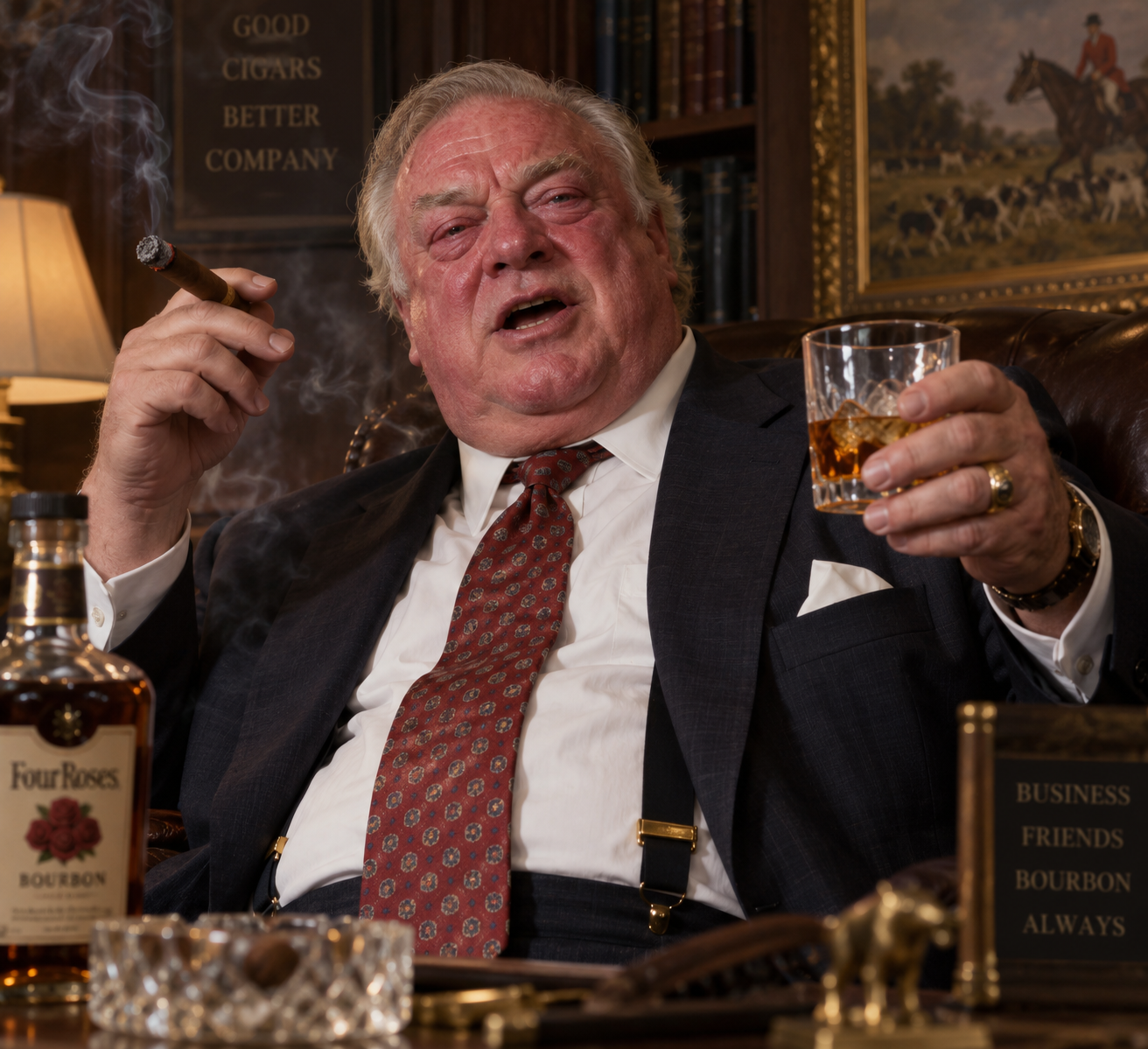
Although Simon is initially convicted, Raymond wins the post-trial motion that vacates the verdict and dismisses every charge, giving him one of the greatest victories of his career.

She finalizes her divorce from Curt, helps bring down Kofie, rekindles her relationship with Simon, and drives him toward the Outer Banks after his exoneration.

She settles the divorce, sells their house for a $28,000 profit, and moves with their three children to Danville for a new job while Simon is eventually exonerated.

She quits Simon’s failing practice, secretly becomes involved with Jerry Korsak, moves to Fredericksburg under the name “Maddie,” testifies truthfully, and is cleared of any involvement in Eleanor’s death.
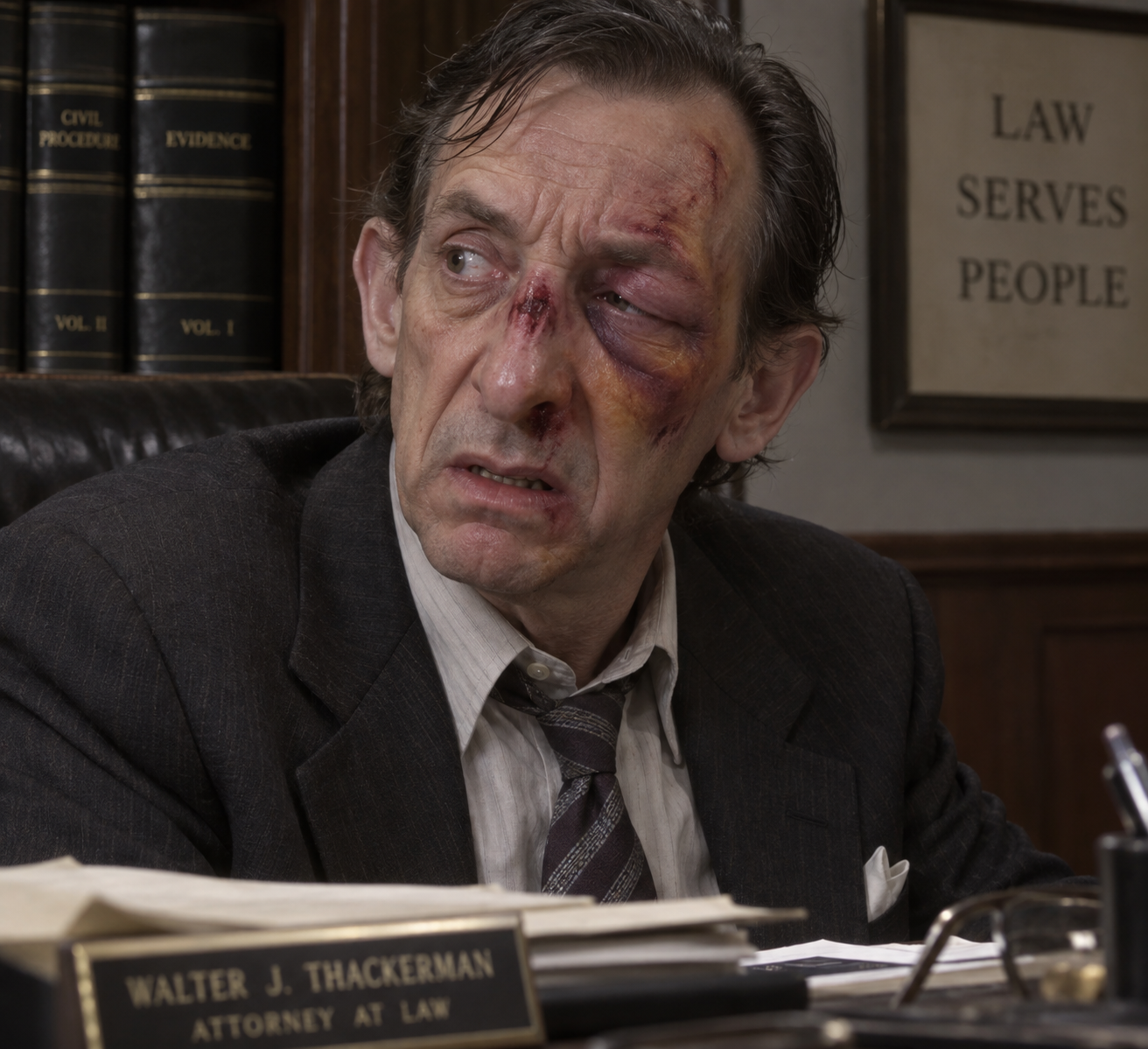
Clyde Korsak brutally beats him over the will; Wally later drops the charges, abandons his challenge to Eleanor’s estate, and retreats after Simon threatens to report his unethical self-gift to the state bar.

He spends 18 days jailed for assault before Wally drops the charges on condition that he leave town; his later multimillion-dollar claims collapse once Kofie is exposed as Eleanor’s killer.

He lives with Tillie in Fredericksburg and seeks control of Eleanor’s estate, but the revelation that Eleanor was nearly broke and Kofie was her killer destroys his hoped-for windfall.
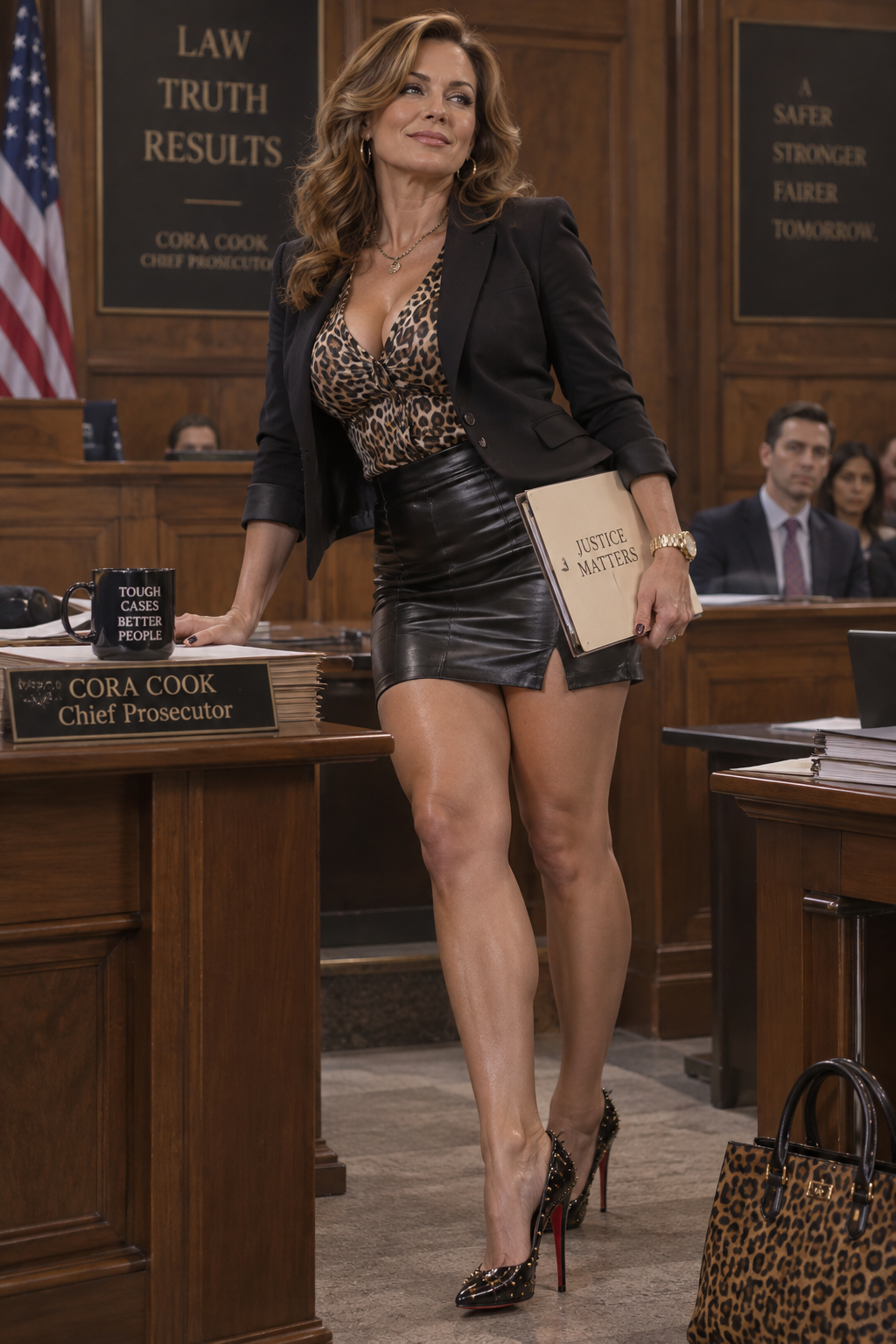
Her victory spectacularly collapses after Kofie’s arrest; Judge Shyam vacates Simon’s conviction, dismisses the charges with prejudice, and publicly underscores the injustice of the prosecution.

After hearing the new evidence, she apologizes to Simon on behalf of the Commonwealth, vacates his guilty verdict, dismisses every charge with prejudice, and orders the prosecution to close the case.

He gives Simon the incriminating files and testifies anonymously as “John Doe III,” providing the evidence that exposes Kofie and ultimately frees Simon.
🔷 Supporting Characters

He actually lost the fortune in a disastrous 1999 Montrouge volcanic-eruption investment and later died of a stroke at 69, leaving Eleanor far less wealthy than everyone believes.
He dies suddenly at age 40, devastating Eleanor.
She moves to Danville with Paula and struggles with the publicity surrounding Simon’s trial, but finally receives a call from her exonerated father.
He moves to Danville with Paula and his siblings and continues supporting Simon through the murder case.
He quits competitive swimming and moves to Danville with Paula before Simon is ultimately cleared.
The FBI gambling investigation fizzles, and Chub buys Simon’s building for $41,000 above its mortgages while allowing Simon to remain there rent-free for six months.
He helps facilitate the hacking operation that ultimately leads to Kofie while avoiding any charges himself.
Her discoveries lead Simon and the FBI to Kofie’s earlier poisonings and ultimately help expose him as Eleanor’s murderer.
He completes his federal sentence with plans for release in September after helping uncover the evidence that brings down Kofie.
She eventually recuses herself from Simon’s murder trial because of medical concerns and her involvement in the related probate proceedings.
His lucrative case collapses when Eleanor’s estate proves to be worth only $630,000 and Kofie is identified as the actual murderer.
He testifies against Simon but watches the case collapse when federal investigators arrest Oscar Kofie.
He testifies that Simon never pressured doctors to remove Eleanor from life support, helping the defense, then returns to his medical practice.
He testifies at Simon’s trial and remains at the hospital.
She secretly meets Simon and Raymond, setting in motion the investigation that exposes Kofie and frees Simon.
She testifies for the prosecution at Simon’s trial.
Raymond undermines part of his impact on cross-examination when Roster admits he does not know how an ordinary person could obtain thallium.
Although called by the prosecution, he helps Simon by explaining that their conversation was ordinary and Simon’s proposed $500 hourly fee was entirely reasonable.
He testifies at probate that Eleanor appeared mentally competent.
She testifies at probate that Eleanor was competent when she signed it.
She fires a warning shot into the ceiling, stops the beating, and briefly becomes a local celebrity for standing up to Clyde.
She survives with injuries and later attends Eleanor’s funeral using a walker.
She testifies under subpoena and then leaves for Virginia Tech on a full scholarship.
He fully cooperates with the police investigation.
She tearfully welcomes him back after his release and exoneration.
He discovers her estate is worth only about $630,000 and later testifies truthfully about it at Simon’s trial.
He confidentially cooperates with Clement Gelly and confirms that Eleanor was never remotely as wealthy as she claimed.
He remains protected by the settlement and NDA but must live with the knowledge that his firm’s cover-up allowed Kofie to continue killing.
She remains at the firm after giving Simon the lead that ultimately exposes Kofie.
She publishes the front-page exposé about Simon and his murder trial.
His footage becomes part of the evidence gathered around Eleanor’s history.
Simon forces him to back off by threatening to involve the police chief.
He leaves after Simon invokes his right to counsel.
He leaves his card and departs when Simon refuses to speak without an attorney.
She prepares the federal first-degree murder case against Kofie after his arrest.
She later testifies that Kofie has been arrested and confessed, providing decisive evidence for Simon’s exoneration.
He remains incarcerated when Simon makes bail.
Simon’s mother leaves him after 27 years when he refuses to let her use their money to help her son.
She is left a $25,000 bequest.
She remains in Africa studying giraffes, apparently unaware of Eleanor’s death and estate drama.
She died approximately 15 years before the novel begins.
She continues treating Paula.
She helps finalize their financial separation.
He remains employed at Blue Ridge Memorial.
He remains on the defense team through the proceedings that culminate in Simon’s complete exoneration.
🕳️ Potential Plot Holes
Eleanor is pronounced dead at 10:02 A.M., and Matilda places the anonymous 911 call reporting her suspicious death only 24 minutes later at Jerry Korsak’s urging. Neither Matilda nor Jerry is present at the hospital or identified as someone hospital staff would immediately notify. The novel never explains how they learn of Eleanor’s death so quickly—or how they already know enough about Simon’s handling of her remains to make the accusation. This is a genuine timeline/knowledge gap.
Kofie poisons Eleanor by putting thallium into the Saigon ginger cookies Simon purchased and Matilda brought to the hospital. As a hospital X-ray technician, Kofie could plausibly enter patient areas and target vulnerable patients, but the novel does not clearly establish how he knows the privately purchased cookies belong to Eleanor, gets unsupervised access to both boxes, and contaminates eleven cookies without detection. This is more a logistical stretch than a true plot hole, since his hospital access could explain the opportunity.
Eleanor genuinely believes she still possesses Harry Korsak’s enormous fortune even though most of it disappeared after the 1999 Montrouge disaster. Her delusion itself is not a plot hole, but the precision of her notebook is harder to explain: she records quarterly stock values and account figures attributed to Buddy Brown and Albert as though she is receiving current financial information. She could have updated imaginary holdings using publicly available stock prices or fabricated the figures herself, but the novel never explains how she maintained such detailed records for more than fifteen years. This is an unexplained oddity rather than a definite contradiction.
📚 Book Club Q&A's
⭐ Final Rating & Thoughts
I had a lot of fun with The Widow, especially considering this was somehow my first John Grisham novel. His writing is sharp, funny, and incredibly readable, and I was surprised by how quickly I got sucked into Simon’s increasingly disastrous situation. The legal maneuvering felt authentic without becoming tedious, and the dry humor gave the story a personality I wasn’t expecting from a legal thriller.
For most of the book, I was completely invested. The pacing stayed strong, the stakes kept escalating, and there were several developments I genuinely didn’t see coming. Unfortunately, the ultimate reveal knocked this down for me.
My biggest problem is that I want a mystery to give me at least some chance of solving it. I love looking back and realizing the clues were there all along—even if I completely missed them. Here, the answer felt too disconnected from the characters and suspects I’d spent the book analyzing, so instead of feeling outsmarted, I felt tricked.
Still, the journey was entertaining enough that I’ll absolutely read more Grisham. I just wish the payoff had been as satisfying as the ride.
✨ Adaptation description
As of September 2026, there is no official announcement of any screen adaptation of The Widow.
✨ Books Like The Widow (2025)
See an error on this page?