
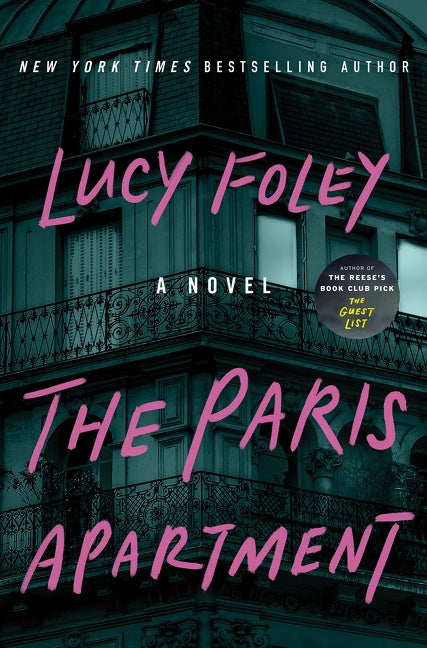
The Paris Apartment (2022)
Select Sections to Print
×Book Details
The Paris Apartment (2022)
Jump to Section
⚠️ Trigger Warnings
- Physical violence, assault & murder
- Domestic abuse & intimate partner violence
- Knife & weapon violence
- Sex trafficking & forced prostitution
- Sexual exploitation
- Sexual harassment & indecent exposure
- Drink spiking / non-consensual drugging
- Implied child sexual abuse
- Suicide & attempted suicide
- Self-harm
- Drug overdose
- Maternal death / death during childbirth
- Alcoholism & alcohol abuse
- Recreational drug use
- Prescription drug abuse
- Child neglect & parental abandonment
- Emotional & verbal abuse
- Foster care trauma
- Wartime imprisonment & torture
⏱️ 2-Minute Spoiler Summary
Jess Hadley arrives in Paris expecting to stay with her half-brother Ben Daniels, but when she reaches his luxurious apartment at No. 12 Rue des Amants, he has vanished. His wallet and keys are still there, his Vespa is in the basement, his beloved St. Christopher necklace is broken, and there are traces of blood and bleach inside the apartment. Even more unsettling, nearly everyone in the building seems to be hiding something.
Jess starts questioning the residents and learns that they aren’t ordinary neighbors at all. Sophie, Nick, Antoine, and Mimi Meunier are members of the same wealthy family, and the building belongs to patriarch Jacques Meunier. Nick, who invited Ben to live there, even concealed his real surname by calling himself Nick Miller. Jess also finds notes showing that Ben had been investigating something called La Petite Mort.
With help from Theo Mendelson, Ben’s editor, Jess discovers that La Petite Mort is a secret sex-trafficking operation owned through Jacques’s wine company. Wealthy clients use wine “vintages” as code to purchase access to undocumented women whose passports have been taken from them. Commissaire Blanchot, the police official who dismisses Jess’s concerns about Ben, is both a client and a protector of the operation. One of the women, Irina, had been helping Ben expose it and gives Jess photographic evidence.
The investigation also reveals how deeply the building’s residents are connected to the club. Sophie, originally an undocumented dancer named Sofiya Volkova, met Jacques through La Petite Mort. Nineteen years earlier, another dancer, Elira, died giving birth there. Her baby became Mimi, whom Jacques and Sophie secretly adopted, while Elira’s mother became the building’s Concierge so she could remain close to her granddaughter.
Eventually, the truth about Ben’s disappearance comes out. Jacques discovered that Ben was preparing an exposé and attacked him with a wine bottle. Mimi, who was obsessed with Ben and had secretly read his investigation, witnessed the attack and stabbed Jacques with an art knife to save Ben. Jacques died, but Ben survived.
To protect Mimi, Sophie created an elaborate cover-up. She secretly hid the badly injured Ben in the attic while convincing Nick and Antoine that Ben had died and Jacques had fled. The brothers then buried a wrapped body in the courtyard, never realizing they were actually burying their own father.
Jess finally reaches the attic after a violent confrontation with Antoine and discovers Ben alive. Nick then learns the horrifying truth about the body he helped bury. Jess bargains with Sophie: she will keep Mimi’s role in Jacques’s death secret if Sophie gets Ben medical treatment and helps destroy La Petite Mort. Sophie agrees.
Ben recovers while claiming he was injured in a moped accident. He and Theo publish the investigation, exposing the trafficking operation, its clients, and Blanchot. Jess forces Sophie to liquidate family assets and compensate the women exploited by the club. Antoine later dies by suicide, Nick leaves Paris, Mimi goes to the South of France, and the Concierge quietly departs for Nice.
With Ben safe and the Meunier family’s secrets finally exposed, Jess takes a small finder’s fee from the payouts and boards a night train toward Rome, ready to begin a new life of her own.
📖 Full Spoiler Summary
Jess Arrives in Paris and Finds Ben Missing
The story begins before Jess Hadley even reaches Paris. Her half-brother, Ben Daniels, is alone in his luxurious apartment at No. 12 Rue des Amants, working on an important article when he hears someone unlock his door. He recognizes the intruder, but the encounter turns violent. Ben is brutally attacked, leaving a bloody handprint on the window before collapsing.
Three hours later, 28-year-old Jess arrives from England. She’s fleeing Brighton after locking her sexually abusive boss in a toilet, stealing money from the bar till, and deciding that staying with Ben in Paris is her best option. But Ben doesn’t answer his phone or the building’s buzzer.
Jess manages to enter the building after watching Antoine Meunier, an aggressive, drunken resident, punch in the gate code. Once inside, she witnesses Antoine throwing a suitcase of clothes at his estranged wife, Dominique, as Dominique leaves him.
Using bent hoop earrings to pick Ben’s lock, Jess gets into his apartment. Ben is gone, but almost everything he would need to leave Paris is still there. His wallet contains cash, his keys remain behind, and his Vespa is parked in the basement. More disturbing are a bleach stain on the floor, a cat with blood on its paws and fur, and Ben’s broken gold St. Christopher necklace. The necklace belonged to their late mother, and Jess knows Ben would never willingly abandon it.
Something has clearly happened to him.
The Strange Residents of No. 12 Rue des Amants
Jess begins questioning the people in the building, but nobody seems eager to help. On the fourth floor she meets 19-year-old art student Mimi, who nervously claims she hasn’t seen Ben, although Mimi’s roommate Camille says she saw him on the stairs the previous morning. In the penthouse, Jess encounters the immaculate and intimidating Sophie Meunier.
The friendliest resident is Nick, a polished English-speaking man on the second floor. He tells Jess that he and Ben were friends at Cambridge and traveled together years earlier. Nick says he arranged Ben’s unusually cheap apartment and presents himself as an investor who simply happens to live in the same building.
Jess soon discovers that the building itself is full of secrets. Behind silk wallpaper in Ben’s apartment is an old servant staircase connecting the floors and leading into the basement. There she finds Ben’s Vespa with its tire deliberately shredded and a locked cellar filled with extremely expensive wine. The elderly Concierge, who lives in a courtyard cabin and seems to see everything that happens in the building, warns Jess that there is nothing for her there.
Ben has also left clues behind. Jess finds the business card of Theo Mendelson, his editor at The Guardian, and meets him at a café. Together they examine a voicemail Ben sent shortly before Jess arrived. With the background noise isolated, they hear Ben’s door opening, followed by Ben asking someone what they’re doing there and then making a heavy groaning sound.
Even more revealing is a notebook Jess discovers hidden behind Ben’s desk. Inside are references to something called La Petite Mort, along with notes asking what Sophie, Mimi, and the Concierge know. Before Jess can make sense of everything, someone enters Ben’s apartment while she sleeps and steals the notebook.
Jess still has another clue: an accounting sheet bearing a gold exploding-firework logo, covered with wine vintages and Ben’s handwritten observation that the numbers don’t make sense. Beside it, he has written one name: Irina.
Jess Discovers They’re All One Family
As Jess searches Paris for answers, she notices a young woman with a sharp fringe following her. The woman turns out to be Irina, although Jess doesn’t yet understand why she’s interested in Ben.
Nick accompanies Jess to the police station and translates while she speaks with Commissaire Blanchot. Even after hearing the disturbing voicemail, Blanchot refuses to treat Ben’s disappearance seriously. He suggests Ben may simply have chosen to vanish.
Then Sophie invites Jess to the penthouse for drinks with Mimi, Antoine, and Nick. While wandering through the apartment, Jess finds a formal family photograph.
Suddenly, the entire building makes sense.
Sophie, Antoine, Nick, and Mimi aren’t unrelated neighbors. They’re all Meuniers. Jacques Meunier, Sophie’s wealthy husband, owns the building. Antoine and Nick are Jacques’s sons, while Mimi is Jacques and Sophie’s adopted daughter. Even Nick has been concealing his identity: “Miller” is simply the English translation of Meunier.
Ben hasn’t disappeared from an apartment building full of strangers. He has disappeared inside a building controlled by one powerful family.
Ben’s Investigation into La Petite Mort
Theo eventually identifies the mysterious gold-firework card as belonging to La Petite Mort, an exclusive underground club hidden near the Louvre. What appears to be an elite wine establishment is actually a sex-trafficking operation connected to Jacques’s company, Meunier Wines SARL.
Undocumented immigrant women are brought into the club and have their passports confiscated. Wealthy male clients then order particular wine “vintages,” which serve as coded requests for sexual access to the women. The operation has survived because its customers include powerful men—including Commissaire Blanchot himself.
Jess and Theo finally meet Irina, a Serbian dancer trapped in the club. She explains that Ben had been preparing an exposé and that she had secretly supplied him with evidence, including photographs proving Blanchot’s involvement. Irina gives Jess the memory card containing the photographs.
The deeper Jess digs, the more she realizes that La Petite Mort connects nearly everyone at Rue des Amants.
Sophie was once Sofiya Volkova, an undocumented dancer at the club. Jacques eventually married her, transforming her into the elegant wife of a wealthy businessman. Sophie had recently been receiving anonymous blackmail notes and mistakenly believed Ben was responsible. Her anger and attraction toward him led to the two sleeping together. The actual blackmailer, however, was Antoine, who had discovered incriminating records in his father’s study.
The Concierge has an even more painful connection. Nineteen years earlier, her daughter Elira was another undocumented dancer at La Petite Mort. Elira died while giving birth there, and her death was covered up. Her baby was Mimi, whom Jacques and Sophie illegally adopted. The Concierge took her job at Rue des Amants so she could remain close to the granddaughter who didn’t know her true identity.
What Really Happened to Ben
Piece by piece, the truth about Friday night emerges.
Ben had uncovered enough evidence to expose Jacques and La Petite Mort. Jacques went to Ben’s apartment to stop him and attacked him with a heavy magnum wine bottle, striking him over the head and leaving him bleeding.
But they weren’t alone.
Mimi had become obsessed with Ben and secretly read the investigation on his laptop. From outside, she saw Jacques attacking him. Desperate to save Ben, she grabbed the sharp knife she used for cutting canvases, rushed downstairs, and stabbed Jacques.
Jacques died from his wounds.
Ben, however, was still alive.
Sophie and the Concierge discovered the aftermath and immediately understood what Mimi had done. Sophie decided to protect her daughter at any cost. She secretly moved the unconscious, severely injured Ben into the abandoned maids’ quarters in the attic, where she kept him hidden and gave him enough food and water to survive.
Then she deceived Jacques’s sons.
Sophie told Nick and Antoine that Ben was dead and that Jacques had fled. The brothers were given a shrouded body to dispose of. They carried it into the courtyard garden and buried it in a shallow grave, believing they were helping conceal Ben’s death.
The body was actually Jacques.
Without realizing it, Nick and Antoine had buried their own father.
Jess Finds Ben Alive
As Jess closes in on the truth, Blanchot uses his influence to have Theo arrested. Jess escapes and returns to Rue des Amants, where the situation rapidly becomes violent.
She finds the Concierge injured at the bottom of the stairs after Antoine has shoved her. Nick and Antoine then corner Jess. Armed with a Japanese kitchen knife, Jess lashes out at Antoine and sends him tumbling down the staircase before racing toward the top of the building.
She reaches the locked attic rooms and picks the padlock.
Inside, she finally finds what she has been searching for since arriving in Paris: Ben is alive.
He’s badly beaten and bloody, lying on a mattress after days in captivity, but he survived Jacques’s attack.
Sophie and Nick arrive, and Nick finally realizes what Sophie has done. If Ben is alive, then the body he and Antoine buried in the courtyard couldn’t have been Ben.
It was Jacques.
Jess now has enough information to destroy the entire Meunier family, but her immediate priority is getting Ben to safety. Holding the knife, she makes Sophie an offer. Jess will never tell the police that Mimi killed Jacques if Sophie allows Ben to receive medical treatment and helps dismantle La Petite Mort.
For Sophie, protecting Mimi matters more than anything else. She agrees.
The Meunier Empire Falls Apart
Ben is taken to a hospital, where the family claims his injuries came from a moped accident. Once he’s safe, Jess makes sure Sophie’s agreement extends beyond simply closing the club.
She sends Sophie a letter demanding that the Meuniers sell their art, jewelry, valuable wines, and other assets and use the money to compensate every woman exploited through La Petite Mort. The women are to receive enough money to escape and begin new lives.
Ben and Theo then publish the investigation Ben nearly died for. The exposé reveals the truth about La Petite Mort, publishes its client ledger, and includes Irina’s photographic evidence. Blanchot’s connection to the club is exposed, forcing him to resign in disgrace.
The Meunier family scatters. Antoine, facing investigation and public disgrace, dies by suicide using an antique firearm at the family’s property. Nick leaves Rue des Amants and Paris, determined to build a life separate from his father’s legacy. Sophie sends Mimi to the South of France, where she can recover and concentrate on her art.
The Concierge also leaves the building where she spent years secretly watching over her granddaughter. She takes a Matisse painting, Sophie’s whippet Benoit, and her memories with her as she boards a train for Nice.
Jess, meanwhile, has accomplished what she came to Paris to do: Ben is alive and free.
But she doesn’t simply return to the life she fled in Brighton. After taking a small finder’s fee from the money distributed through the club’s liquidation, Jess goes to Gare de l’Est and boards a night train toward Rome. She plans to rent a tiny studio in the old maids’ quarters of an apartment building there.
After arriving in Paris with nowhere else to go and depending on Ben to rescue her from her old life, Jess leaves on her own terms, heading toward a new city and a new beginning.
🔚 Ending Explained
How The Paris Apartment Ends
The climax begins when Jess Hadley escapes a police trap set by the corrupt Commissaire Blanchot and races back to No. 12 Rue des Amants. Inside the darkened building, she finds the elderly Concierge gravely injured at the bottom of the stairs after being shoved by Antoine Meunier. When Antoine and Nick Meunier confront her, Jess slashes at Antoine with a kitchen knife in self-defense, sending him tumbling down the stairs, then flees toward the top floor.
Jess picks the padlock securing the hidden chambres de bonne—the old maids’ quarters in the attic—and finally discovers what happened to her missing half-brother, Benjamin “Ben” Daniels. He has been badly beaten, starved, and held prisoner, but Ben is alive.
When Sophie Meunier and Nick enter the attic, another shocking truth emerges. Nick realizes that the shroud-wrapped corpse he and Antoine buried in the courtyard garden three nights earlier was never Ben.
They buried their own father, Jacques Meunier.
The events of Friday night are finally revealed. Jacques discovered that Ben was preparing an investigative exposé on La Petite Mort, the underground sex-trafficking operation concealed behind the Meuniers’ luxurious world of rare wines and wealthy clientele. Jacques attacked Ben with a wine bottle, leaving him severely injured.
Mimi Meunier, who was obsessed with Ben and witnessed the assault, rushed downstairs with her canvas-cutting knife and fatally stabbed Jacques while trying to save Ben.
When Sophie discovered what had happened, she immediately focused on protecting Mimi from prosecution. She convinced Nick and Antoine that the body wrapped in the shroud was Ben’s. While the brothers unknowingly buried Jacques in the courtyard, Sophie and the Concierge secretly dragged the unconscious but still-living Ben into the attic and hid him there.
Now holding the secret that could destroy Mimi’s life, Jess turns it into leverage. She promises Sophie that she will remain silent about Mimi killing Jacques—but only if Ben receives medical treatment, La Petite Mort is permanently dismantled, and its victims receive substantial financial restitution.
Sophie agrees.
The Aftermath
Ben recovers in a French hospital, publicly claiming that his injuries resulted from a moped accident. With journalist Theo Mendelson, he eventually publishes his investigation into La Petite Mort, supported by the club’s ledger and Irina’s photographic evidence exposing the powerful officials involved.
Jess also forces Sophie to liquidate much of the Meunier family fortune. Fine wines, jewelry, artwork, and other valuables are sold, with the proceeds distributed among the women exploited by the club. The wealth accumulated through abuse is therefore redirected toward the people who suffered because of it.
The Meunier family itself disintegrates. Commissaire Blanchot resigns after his involvement is exposed. Antoine, facing disgrace and investigation, dies by suicide at the family estate. Nick leaves Paris and attempts to build a life separate from his father’s legacy, while Sophie sends Mimi to the South of France to recover and paint.
The Concierge also disappears from Rue des Amants. She quietly takes a small Matisse painting and Sophie’s whippet, Benoit, and boards a train for Nice.
Jess ultimately leaves Paris as well. After accepting a small finder’s fee from the money recovered from the club, she boards a night train from Gare de l’Est and heads south.
She eventually rents a tiny studio in Rome—ironically, another converted chambre de bonne—overlooking St. Peter’s.
For the first time, Jess is not fleeing from someone or something.
She is simply choosing where she wants to go.
What the Ending Means
The ending of The Paris Apartment is ultimately about taking spaces, identities, and power structures associated with exploitation and reclaiming them.
The most striking example is the chambre de bonne. In Paris, the attic rooms represent invisibility: they were historically occupied by servants, and Ben is imprisoned in one because the Meuniers assume that what happens in those forgotten spaces can remain hidden. Yet Jess ends the novel living voluntarily in a similar room in Rome. What was once a prison becomes a home. The symbolism mirrors Jess herself: she begins the novel trapped by circumstance and constantly running from danger, but ends it independently choosing her own destination.
The courtyard garden represents the opposite idea. No. 12 Rue des Amants projects elegance, history, and enormous wealth, yet Jacques’s corpse lies buried beneath its beautiful surface. The image captures one of the novel’s central ideas: privilege can conceal extraordinary ugliness. The deeper Jess digs into the apartment building, both literally and figuratively, the more corruption she discovers beneath its polished façade.
The matching St. Christopher necklaces worn by Jess and Ben symbolize their complicated sibling bond and the survival instincts created by their unstable childhood. Ben and Jess have spent much of their adult lives separated by the very different paths their childhoods took. His disappearance forces both of them to confront how deeply connected they remain. Finding Ben alive therefore resolves more than the central mystery—it gives the siblings an opportunity to repair a relationship damaged long before either arrived in Paris.
The ending also deliberately complicates the idea of justice. Jess does not simply turn everyone over to the authorities, because the authorities themselves have been compromised. Blanchot represents a system in which wealth and influence can purchase protection. Instead, Jess creates her own imperfect form of justice: Mimi is protected, Ben survives, the trafficking operation is exposed, and the women exploited by it receive money that can materially change their lives.
That decision is morally messy. Mimi did kill Jacques, even if she did so while trying to protect Ben, and Sophie spent years benefiting from and enabling the world Jacques created. Neither woman receives conventional punishment. The novel instead emphasizes restitution and the destruction of the system that allowed the abuse to continue.
Sophie’s final choices are especially important. Almost everything she does throughout the novel is motivated by maternal devotion to Mimi. Initially that love leads her deeper into deception, but by the end she sacrifices the things that once represented Meunier power—money, art, wine, status, and the apartment itself—to protect her daughter and compensate Jacques’s victims. Her loyalty shifts decisively from preserving the family dynasty to destroying the machinery that sustained it.
Jess undergoes the clearest transformation. At the beginning, she arrives in Paris because she is running away. Her independence is largely defensive: she survives because she expects nobody else to save her. By the end, that same resourcefulness has become something more constructive. She negotiates with Sophie, protects Ben, forces restitution for the trafficked women, and then chooses a future for herself.
That is why the final journey matters so much.
The novel begins with Jess arriving at an imposing building filled with locked doors, hidden staircases, watching eyes, and buried secrets. It ends with her traveling through an open landscape toward somewhere new. The claustrophobic Gothic atmosphere gives way to something quieter and more hopeful.
Jess is still alone—but being alone no longer means being abandoned.
It means being free.
What the Ending Suggests for the Characters
The destruction of La Petite Mort has consequences far beyond the Meunier family. Ben and Theo’s exposé reveals how deeply the operation was connected to powerful members of Parisian society, while the payouts give the trafficked women something the club deliberately denied them: the financial ability to make choices about their own lives.
The surviving Meuniers are scattered. Mimi can attempt to build an identity outside her father’s shadow. Nick can finally separate himself from the family whose approval and secrets controlled much of his life. Sophie loses the symbols of status she spent years maintaining, but protecting Mimi matters more to her than preserving the Meunier name.
Even the Concierge gets her own small act of liberation. After spending years occupying the most invisible position in the building, she simply takes something beautiful, takes the dog, and leaves.
And Jess’s ending is the most hopeful of all. Her relationship with Ben has survived, she has enough money to begin again, and she no longer needs another person to give her a destination.
The mystery begins with Jess searching for Ben, but it ends with Jess finally finding herself.
👤 Characters & Fates
🔶 Main Characters

Rescues Ben, ensures the trafficked women receive payouts from the Meunier assets, takes a small finder's fee, and leaves Paris by night train to begin a new life in Rome.

Survives Jacques beating him with a wine bottle because Sophie secretly keeps him alive in the attic; Jess rescues him, and he later publishes his exposé with Theo.

Accepts Jess's deal to protect Mimi, liquidates the family's luxury assets to compensate the trafficked women, and remains in the penthouse while Jacques's body stays secretly buried in the courtyard.

Discovers that the corpse he helped bury was actually his father Jacques, breaks from his family's toxic legacy, and leaves Paris to build an independent life.
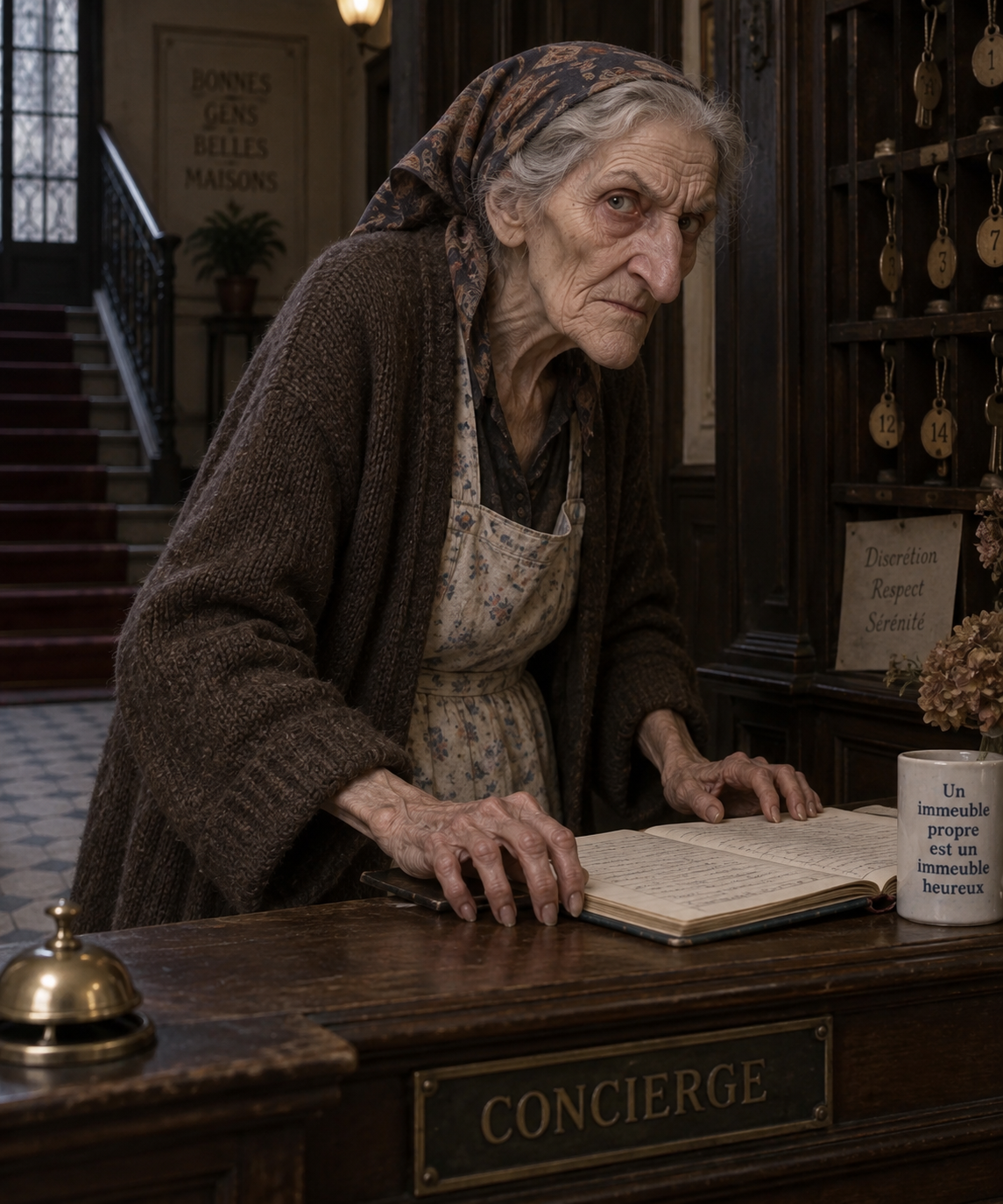
Survives Antoine pushing her down the stairs, steals Sophie's valuable Matisse and her whippet Benoit, and escapes Paris by train for a new life in Nice.

Smashes Ben with a wine bottle but is stabbed to death by Mimi; Nick and Antoine unknowingly bury Jacques's shrouded corpse in the courtyard believing it is Ben.

Falls down the stairs during his confrontation with Jess and, after the trafficking scandal exposes the family, dies by suicide with an antique firearm at the family estate.

Stabs Jacques to death while protecting Ben; Jess and Sophie arrange to keep her from prosecution, and she is sent to the South of France to recover and paint.
🔷 Supporting Characters

Leaves Antoine and ultimately divorces him, escaping their abusive marriage.
Moves out after fighting with Mimi and eventually enters a serious relationship with Dominique.
Is arrested through Blanchot's setup but is released and later co-publishes the La Petite Mort exposé with Ben.
Receives money from the liquidation of the Meunier assets, giving her the means to escape and begin a new life.
Is publicly exposed through Irina's photographic evidence and forced to resign in disgrace.
Dies during an unassisted childbirth at the club nineteen years earlier, after which Jacques covers up her death and Sophie raises Mimi.
Is taken by the Concierge when she steals Sophie's Matisse and flees Paris for Nice.
Jess locks him inside a toilet, takes money from the till, and leaves him trapped while she escapes to France.
Later helps carry Jess back to Ben's apartment after she collapses from ketamine.
Return to Britain after university and play no major role in the later events.
Files a formal complaint after Mimi sends chopped-up portraits to his wife and eventually moves abroad to teach.
Remain in England after raising Ben and are not directly involved in the Paris events.
Remains part of Jess's traumatic childhood history and does not reappear in her adult life.
🕳️ Potential Plot Holes
After Jacques dies, Sophie says she unlocks his iPhone using his face and then impersonates him through text messages. Face ID normally uses attention detection, which is intended to verify that the user's eyes are open and looking at the device, although that feature can be disabled. That makes the trick possible under certain settings rather than an outright technological impossibility. The larger convenience is that Nick and Antoine apparently accept their father's texts without insisting on speaking to him during an escalating family crisis.
After being badly injured in a fall down the stairs, the elderly Concierge manages to leave Paris with Benoit and a valuable Matisse taken from the Meuniers. Nothing makes this literally impossible—the painting could potentially be wrapped or concealed, and strangers at a train station would have no reason to know it was stolen. Still, her ability to pull off the escape so soon after suffering serious injuries is an unusually convenient ending for her character.
Jess repeatedly opens locked doors using bent hoop earrings, including the padlock securing the attic where Ben is imprisoned. The novel establishes that Ben taught Jess lock-picking when they were younger, so the skill itself does not come out of nowhere. The questionable part is the tool: ordinary earrings are generally poorly suited to functioning as both a tension wrench and lock pick, making Jess's ability to open multiple locks so quickly more of a thriller-style plausibility stretch than a true contradiction.
Jacques strikes Ben in the head with a heavy wine bottle, leaving him unconscious and bleeding so badly that his apartment floor later has to be scrubbed with bleach. Yet Ben survives for several days hidden in the unheated attic without medical attention, receiving little more than water and scraps of food from Sophie. Head wounds can bleed dramatically without necessarily being fatal, so the amount of blood alone does not prove Ben should have died. Still, his prolonged unconsciousness and condition when Jess finds him make his survival without treatment remarkably fortunate.
📚 Book Club Q&A's
⭐ Final Rating & Thoughts
The Paris Apartment was exactly the kind of mystery I love: atmospheric, twisty, and packed with characters who all seem suspicious enough to have done something terrible. Lucy Foley made the apartment building itself feel claustrophobic and sinister, and the rotating perspectives worked especially well here, constantly giving me just enough information to change my theory without revealing too much.
What really earned this one five stars for me was how successfully it kept me guessing. I thought I had things figured out more than once, only for another secret or connection to completely change what I thought was happening. The mystery surrounding Ben hooked me immediately, but it was the increasingly complicated relationships among the residents that kept me turning pages.
I also loved the dark Paris setting and the sense that practically everyone Jess encountered was hiding something. The pacing stayed strong, the red herrings actually worked on me, and the reveals were genuinely satisfying. This was tense, addictive, and ridiculously fun—the kind of thriller that had me staying up way too late because I absolutely needed to know what happened next.
✨ Adaptation description
Screen Adaptation
Lucy Foley’s The Paris Apartment is being developed for a television adaptation, after originally being announced as a feature film.
In March 2022, Sony Pictures’ 3000 Pictures acquired the film rights to the novel shortly after its publication and #1 New York Times bestseller debut. Pete Czernin and Graham Broadbent of Blueprint Pictures were announced as producers.
The project has since changed format. In a 2025 interview with The Hollywood Reporter, Lucy Foley revealed that The Paris Apartment had been shifted from a movie to television, a change she said “makes a lot of sense.”
As of September 2026, further details remain limited. No cast, director, showrunner, network or streaming platform, production schedule, or release date has been publicly announced.
✨ Books Like The Paris Apartment (2022)
See an error on this page?