
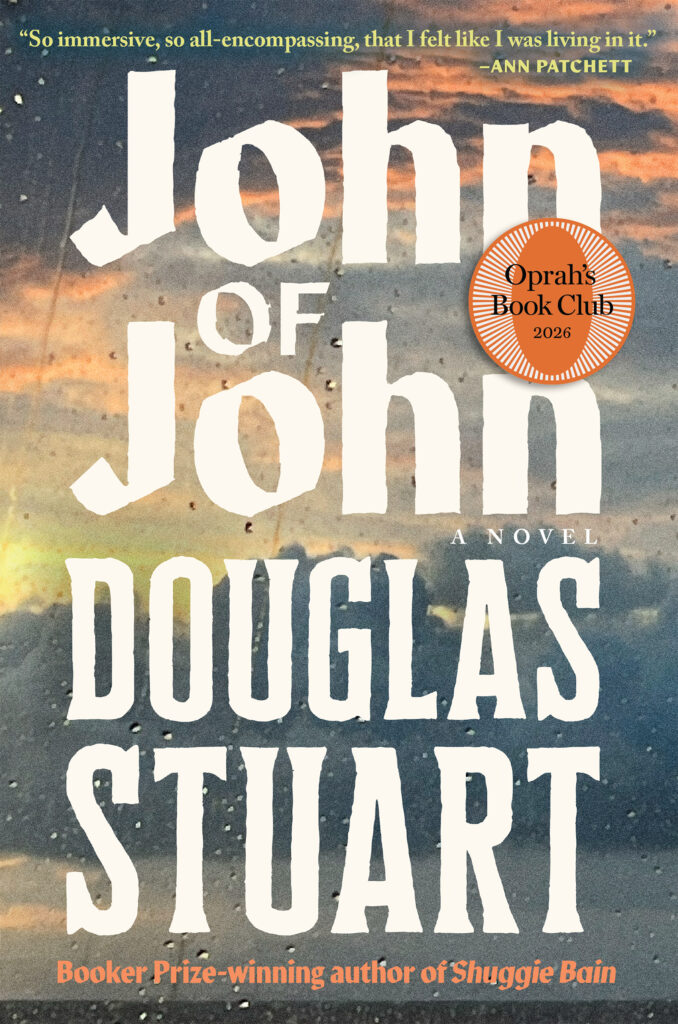
John of John (2026)
Select Sections to Print
×Book Details
John of John (2026)
Jump to Section
⚠️ Trigger Warnings
- Homophobia and anti-LGBTQ+ religious doctrine
- Internalized homophobia and closeted sexuality
- Religious repression and fear of damnation
- Alcoholism and binge drinking
- Prescription drug misuse
- Recreational drug use and drug trafficking
- Death by drowning
- Death of a young person
- Grief and bereavement
- Car accidents and fatal injuries
- Amputation and head trauma
- Extreme poverty and food insecurity
- Homelessness and exposure to freezing conditions
- Labor exploitation
- Infidelity and marital breakdown
- Family estrangement and verbal hostility
- Unwed pregnancy and social ostracization
- Misogyny and slut-shaming
- Pressure/coercion to marry
- Animal injury and death
- Miscarried/stillborn lambs
- Animal castration and tail docking
- Incestuous undertones
⏱️ 2-Minute Spoiler Summary
Cal Macleod, 21, returns to the Isle of Harris after studying art in Glasgow, stepping back into the isolated crofting community where he grew up. Home means weaving Harris Tweed alongside his stern, deeply religious father, John Macleod, and living with his sharp-tongued grandmother, Ella Morrison. Cal loves the island but feels trapped by its gossip, religious expectations, and the unresolved hostility within his family.
What Cal doesn’t know is that his father’s entire adult life has been built around a secret. John, a respected Presbyterian deacon, has spent decades hiding that he is gay and has long been in love with his closest friend and neighbor, Innes MacInnes. John married Grace Morrison, Cal’s mother, largely because marriage was expected of him. After Grace discovered John and Innes together, she agreed to keep their relationship secret if John ended it and sought religious redemption. Eventually, however, Grace left him and went to live near John’s estranged older brother, Uilleam. Ella stayed behind to help raise Cal.
Cal’s return coincides with another local scandal. Isla MacDonald has had a baby outside marriage and refuses to name the father, leading to rumors that Cal might be responsible. He firmly denies it, and evidence instead points toward a visiting mainland fisherman. John is less concerned with romance than with the lost opportunity: if Cal had married Isla, their families’ valuable crofts could have been joined.
At the same time, John is losing his grip on the people closest to him. Ella decides to leave his house and live with Grace, transferring her croft tenancy directly to Cal rather than John. During their argument, she also reveals that Cal gave the money she’d saved to help him escape Harris to Isla so she could support herself and her baby.
More devastatingly, Innes has finally had enough of being John’s secret. After decades of hiding, he tells John that their relationship has become a “one-man wrestling match” against John’s own shame. When Innes’s brother Sorley buys out his share of their family croft before marrying Anna-Marie, Innes no longer even has a home tying him to Harris.
Then Sorley gives John a postcard Innes left behind. It contains only a destination and time: Portree, Thursday July 16th, 8pm. Innes has gone to Skye, but he is giving John one last chance to follow him.
John falls to his knees and sobs uncontrollably. Seeing his father’s reaction, Cal suddenly understands everything: John and Innes have loved each other for years, and that hidden relationship explains much of the bitterness and secrecy surrounding their family.
Cal doesn’t force John to confess. Instead, he gives his father a socially acceptable excuse to leave, suggesting that as Innes’s lifelong friend and a church deacon, John should go to Skye to check on him. John accepts the opening Cal gives him and prepares to go.
For the first time, father and son understand each other without needing to say the truth aloud. Innes is waiting in Portree, John finally has the opportunity to choose him, and Cal has helped open the door for both of them to pursue lives beyond the secrets that have kept their family trapped for years.
📖 Full Spoiler Summary
Cal Comes Home to Harris
At 21, Cal Macleod returns to the Isle of Harris after attending art school in Glasgow. Coming home brings a powerful sense of cianalas—a longing for the island and the life connected to it—but Cal also knows exactly what he is returning to: an isolated crofting community where everyone knows everyone else’s business and religion governs much of daily life.
On the ferry, Cal encounters Innes MacInnes, his father’s lifelong friend and neighboring crofter. Happy to see him, Cal embraces Innes warmly. It seems innocent enough, but when Cal later mentions the hug to his father, John Macleod, John reacts with visible discomfort.
Cal doesn’t yet understand why.
John is a Harris Tweed weaver, crofter, and respected deacon in the local Presbyterian church. He is rigidly religious and emotionally restrained, and Cal has spent much of his life struggling to connect with him. Back at the family croft, Cal resumes working beside his father at the handloom. John clearly recognizes his son’s intelligence and artistic ability, but affection doesn’t come easily to him. Instead, he imposes discipline: Bible readings, religious expectations, and constant scrutiny.
The warmer presence in Cal’s life is his grandmother, Ella Morrison, who has lived with John and helped raise Cal since the collapse of John and Grace Morrison’s marriage. Ella and John tolerate each other rather than truly get along, and decades of resentment sit beneath even their ordinary exchanges.
Cal has returned to a family full of secrets whose origins stretch back long before he was old enough to understand them.
The Secret Behind John and Grace’s Marriage
John’s marriage to Cal’s mother, Grace, was never what it appeared to be.
For most of his life, John has been secretly in love with Innes. He is also deeply embedded in a religious community that condemns the relationship he wants. Rather than live openly as a gay man, John tries to conform to what is expected of him. He marries Grace, despite being repelled by sexual intimacy with women, treating marriage partly as a duty that will preserve his social standing and allow him to produce an heir.
But his feelings for Innes never disappear.
Eventually, Grace discovers John and Innes’s romantic relationship. Terrified of what exposure would mean within the church and their small community, John begs her to keep his secret. Grace agrees, but only if he ends the relationship with Innes and seeks religious redemption.
The arrangement cannot repair their marriage. Grace eventually leaves John and moves to Pàrras, where she lives near John’s estranged older brother, Uilleam Macleod. Uilleam taking Grace in only deepens the existing hostility between the brothers.
Cal remains with his father. Ella, Grace’s mother, moves into John’s croft house and becomes a steady parental presence in her grandson’s life. As Cal grows older, he becomes close to Ella while remaining emotionally distant from John.
What Cal doesn’t know is that the strange configuration of his family—his mother’s departure, his grandmother raising him, his father’s feud with Uilleam, and John’s complicated relationship with Innes—all leads back to the same hidden truth.
Scandal in Falabay
Cal returns just as Falabay is consumed by another family’s secret.
Isla MacDonald, a young local woman, has had a baby outside marriage and refuses to identify the father. In the deeply Presbyterian community, her pregnancy becomes a public moral issue rather than a private matter. Gossip spreads quickly, and eventually Cal’s name becomes attached to it.
Cal and John are drawn into discussions involving Reverend Rose and local church elders, including Isla’s father, Dòmhnall MacDonald, along with Flash and Shockie. Cal vehemently denies being the baby’s father. Information that Isla had been seen with a visiting mainland fisherman helps redirect suspicion away from him.
John’s reaction reveals how differently father and son see the situation. Rather than simply being relieved that Cal isn’t responsible, John regrets that Cal didn’t marry Isla. Such a marriage could have joined the Macleod and MacDonald crofts, increasing the family’s land.
Cal, however, has already quietly chosen to help Isla in another way.
Ella had been saving money for him so that he would have the means to leave Harris and build a life elsewhere. Instead, Cal gives that money to Isla to help her support herself and her baby.
He doesn’t initially tell his father what he has done.
Innes Refuses to Keep Hiding
While Cal faces the island’s gossip, the relationship between John and Innes is reaching its breaking point.
Innes has spent decades accepting whatever fragments of a life John has been willing to give him. Their love has survived John’s marriage, religious guilt, secrecy, and repeated attempts to deny what exists between them. But Innes is increasingly unwilling to spend the rest of his life hidden.
At the sheep fank, he finally confronts John. He describes their relationship as a “one-man wrestling match,” because John has spent so many years fighting against himself. Innes wants something tangible from his life and from their relationship. He no longer wants to exist as the person John loves privately but refuses to choose publicly.
John remains trapped between his feelings for Innes and the religious identity he has spent a lifetime constructing.
Then circumstances force the issue.
Innes’s younger brother, Sorley MacInnes, plans to marry the district nurse, Anna-Marie. Sorley buys Innes’s share of their family croft and house. The transaction gives Sorley the future he wants, but it leaves Innes without the property that has anchored him to Harris.
With no home of his own and no expectation that John will finally build a life with him, Innes decides to leave.
Ella Takes Away John’s Control
John is also losing another member of his household.
After years of living under the same roof despite their mutual resentment, Ella prepares to leave John’s croft and go to Pàrras to live with Grace. Her departure threatens the household structure John has maintained for years, but she has another surprise for him as well.
Ella intends to transfer her croft tenancy directly to Cal.
John sees the decision as another attempt to undermine him. While Ella’s belongings are being loaded for her departure, their long-standing hostility erupts into a confrontation, and John accuses her of trying to destroy him.
Ella responds by revealing something John doesn’t know: the money she saved so Cal could leave Harris is gone.
Cal gave it to Isla.
The revelation makes clear that Cal is already making choices independent of his father. John has spent years trying to preserve his family, land, religion, and reputation through control, but one by one the people around him are choosing their own paths.
Ella is leaving. Cal is becoming independent. And Innes has finally decided that he will no longer wait indefinitely for John.
Innes Leaves John One Last Chance
The final break comes while John and Cal are working outside.
Sorley approaches them and confirms that he has secured the MacInnes croft. Innes is gone. But before leaving, he gave Sorley something to pass along to John.
It is a postcard showing Skye.
In Innes’s handwriting is a simple message: Portree, Thursday July 16th, 8pm.
Innes has left Harris, but he hasn’t completely closed the door. He has gone to Portree and given John a specific place and time to meet him. After decades in which Innes has waited for John to acknowledge their relationship, John now has to decide whether he is finally willing to follow.
The effect on John is immediate. He collapses to his knees and begins sobbing uncontrollably.
Cal watches his father break down, and suddenly the secrets of his childhood rearrange themselves into something he can finally understand.
His father loves Innes.
Cal Finally Understands His Father
The realization explains things that Cal has never been able to make sense of: John’s strange reaction whenever Innes is mentioned, the bitterness surrounding Grace’s departure, the tensions between the adults who raised him, and the emotional repression that has defined his father’s life.
Cal doesn’t demand an explanation. He doesn’t force John to say that he is gay or admit that Innes is the person he loves. He understands that his father may not be capable of speaking those truths openly.
Instead, Cal gives him an excuse.
He suggests that John should go to Skye and check on Innes. After all, Innes is his lifelong friend, and John is a church deacon. Looking after him can be presented as an act of friendship and Christian responsibility. If John needs a respectable explanation for following Innes, Cal has just provided one.
John understands exactly what his son is doing.
Slowly, he pulls himself together and prepares to make the journey.
Nothing is formally confessed between father and son. John never needs to explain his entire hidden life, and Cal doesn’t require him to. The truth is finally understood between them even if it remains largely unspoken.
Innes is waiting in Portree, having given John one last opportunity to choose a life with him. John now has a way to follow. And Cal, rather than exposing his father’s secret or condemning him for the damage that secrecy has caused, quietly opens the door.
After a lifetime governed by duty, religion, family expectations, and fear of what other people might say, both John and Cal finally have the possibility of choosing what comes next for themselves.
🔚 Ending Explained
How the Book Ends
The ending begins when Sorley MacInnes approaches John and Cal on the hillside with startling news: his brother Innes has left Harris for good. He has sold Sorley his croft tenancy, house, and share of the livestock, obtained a passport, and departed the island. Sorley shows them Innes’s passport photograph, in which he looks pale and lost.
Before leaving, however, Innes left something specifically for John: a mint-green QSL radio card. On the back, in Innes’s neat handwriting, is a simple message:
Portree, Thursday July 16th, 8pm.
The date is that very evening.
The message destroys John’s remaining defenses. He drops to his knees on the hillside, still clutching a pair of old hoof clippers, and begins sobbing uncontrollably. Watching his normally rigid, deeply religious father collapse over Innes’s departure, Cal finally understands the truth that has shaped his family for decades: John and Innes have loved each other all along.
Their hidden relationship suddenly explains so much—the hostility between them, their broken marriages, John’s emotional remoteness, Innes’s bitterness, and the strange intensity that has always existed whenever the two men were together.
Sorley watches John’s breakdown with obvious curiosity, but Cal instinctively steps between them, shielding his father from his gaze. He also understands that John is not yet capable of openly admitting why he needs to follow Innes. So Cal gives him what he privately thinks of as a “Christian excuse.”
Invoking the biblical parable of the lost sheep from Matthew 18:12, Cal tells John that, as a church deacon, he has a duty to go after a neighbor who has wandered away. The explanation allows John to act on his love without first having to put that love into words.
Cal persuades local crofter Dòmhnall MacDonald to take John across the Minch to Skye in his boat.
But the sea is rough, and Cal realizes there is no possibility that John will reach Portree by Innes’s appointed time of eight o’clock.
Desperate to prevent Innes from leaving before John arrives, Cal searches through his grandmother Ella’s telephone-book scribblings and finds the number of a grocer’s shop in Portree. He calls and describes Innes to the young woman who answers, begging her to search the town for him.
Then Cal finally says aloud what his father cannot:
“Tell him to wait. Tell him John will follow wherever he leads…. Just tell him that John loves him. And tell him the other John does, too.”
The woman gasps but promises to try.
The novel ends with Cal slumped beside the telephone, not knowing whether she will find Innes or whether John and Innes will actually reunite.
What the Ending Means
The ending deliberately stops short of giving John and Innes a conventional romantic reunion. What matters is not whether John reaches Portree at exactly eight o’clock. What matters is that he finally goes.
For most of his life, John has allowed religion, family expectations, masculinity, community judgment, and his own shame to dictate what he can admit about himself. Innes has spent those same decades waiting for something John has never been able to give him openly.
By leaving Harris, Innes finally refuses to wait indefinitely. His departure forces John to choose.
And John chooses to follow him.
The QSL Card: Innes’s Final Signal
The QSL card beautifully brings Innes’s amateur-radio hobby into the emotional resolution of the novel.
Throughout the story, radio represents his desire to reach beyond the isolation of Harris—to send a signal into the darkness and receive confirmation that somebody, somewhere, has heard him.
His final card is therefore more than an appointment.
It is one last transmission to John.
Innes does not beg John to come. He simply gives him a place and a time. After decades of uncertainty, he sends the signal and leaves John responsible for answering it.
For once, John does.
The Lost Sheep—and Cal’s Act of Mercy
Cal’s use of Matthew 18:12 is especially poignant because he takes the religious language that has helped imprison his father and transforms it into a means of escape.
He understands that simply telling John, You love Innes, so go after him, might overwhelm John with shame. Instead, Cal gives his father a story he can psychologically survive: Innes is the lost sheep, and John is the Christian obligated to seek him.
But beneath that explanation lies the truth.
John is searching for the person he loves.
There is also an irony in the imagery of the lost sheep. Innes may appear to be the one who has “strayed,” but John is arguably the person who has truly been lost—trapped for decades inside a life constructed around denial.
Following Innes may therefore be the first step toward finding himself.
The Mended Shirt
John’s decision to wear Innes’s old checked shirt, which he once tore in anger and later painstakingly repaired with tiny cross-stitches, quietly reinforces the possibility of reconciliation.
The shirt carries the physical history of their relationship: something intimate was damaged in anger, but the damage was not discarded or hidden. It was carefully stitched back together.
John cannot undo the years he and Innes have lost. Their relationship will always carry its scars.
But something torn can still be repaired.
Why “The Other John” Matters
The final words also bring the title, John of John, into focus.
Throughout the novel, identity is tied to lineage—to sloinntireachd, ancestry, fathers, sons, inherited names, and inherited expectations. Cal is another John in that chain.
But the ending changes what that inheritance means.
Cal does not simply inherit his father’s silence. He interrupts it.
When he tells the woman in Portree that “the other John” loves Innes too, he gives Innes something John himself has struggled to offer: acknowledgment. Cal is effectively telling him that he sees what happened, understands what the two men meant to each other, and does not condemn them for it.
That makes the ending about more than romantic love. It becomes an act of intergenerational grace.
Cal cannot give his father back the decades he lost, but he can refuse to perpetuate the shame that caused those losses.
Freedom, or Saorsa
The physical geography of the ending reinforces this idea.
Harris has represented home, ancestry, obligation, religion, crofting tradition, and belonging—but also confinement. Innes must physically leave the island before John becomes capable of following him.
Crossing the Minch therefore becomes symbolic.
John is not simply traveling from Harris to Skye. He is crossing from the life that has been prescribed for him toward one whose shape he does not yet know.
That is why the rough sea matters. Freedom is not presented as easy or safe. John cannot simply erase decades of repression because he gets into a boat.
But he finally moves.
Why the Ending Is Hopeful but Unresolved
The novel never confirms that the shopgirl finds Innes. We do not see John reach Portree. We do not know whether the two men reunite, become lovers openly, leave Scotland together, or simply have the conversation they should have had decades earlier.
That uncertainty is essential to the ending.
The resolution is emotional rather than logistical.
Innes has stopped waiting passively. John has stopped refusing to follow. And Cal has finally spoken the truth that neither man could say aloud.
The novel therefore moves from repression and secrecy toward a fragile possibility of freedom. John and Innes may have lost much of their lives to fear, religion, convention, and shame, but the ending refuses to declare them beyond redemption.
And Cal becomes the person who breaks the cycle.
His final phone call transforms everything the family has spent decades refusing to say into the simplest possible truth:
John loves Innes. Cal knows it. Cal accepts it. And, finally, someone has said it aloud.
👤 Characters & Fates
🔶 Main Characters
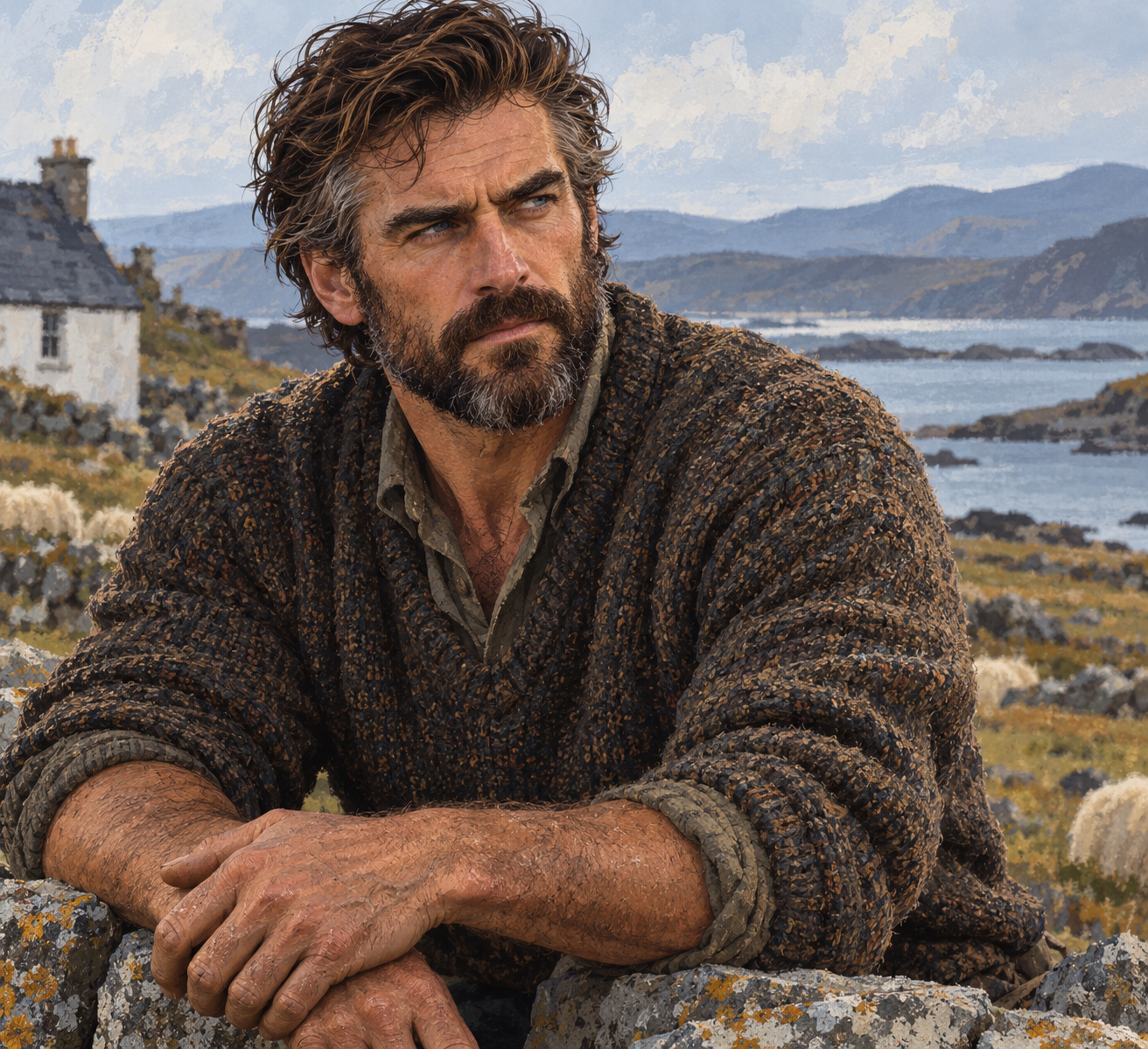
When Innes sells his croft and leaves Harris, John finally breaks down; with Cal protecting his dignity and giving him a biblical excuse to pursue his "lost sheep," John boards Dòmhnall's boat across the Minch to find Innes in Portree.

After realizing John and Innes have always loved each other, Cal protects his father from humiliation, arranges his passage to Skye, and calls a Portree shop to tell Innes that John is coming—and that "the other John" loves him too.
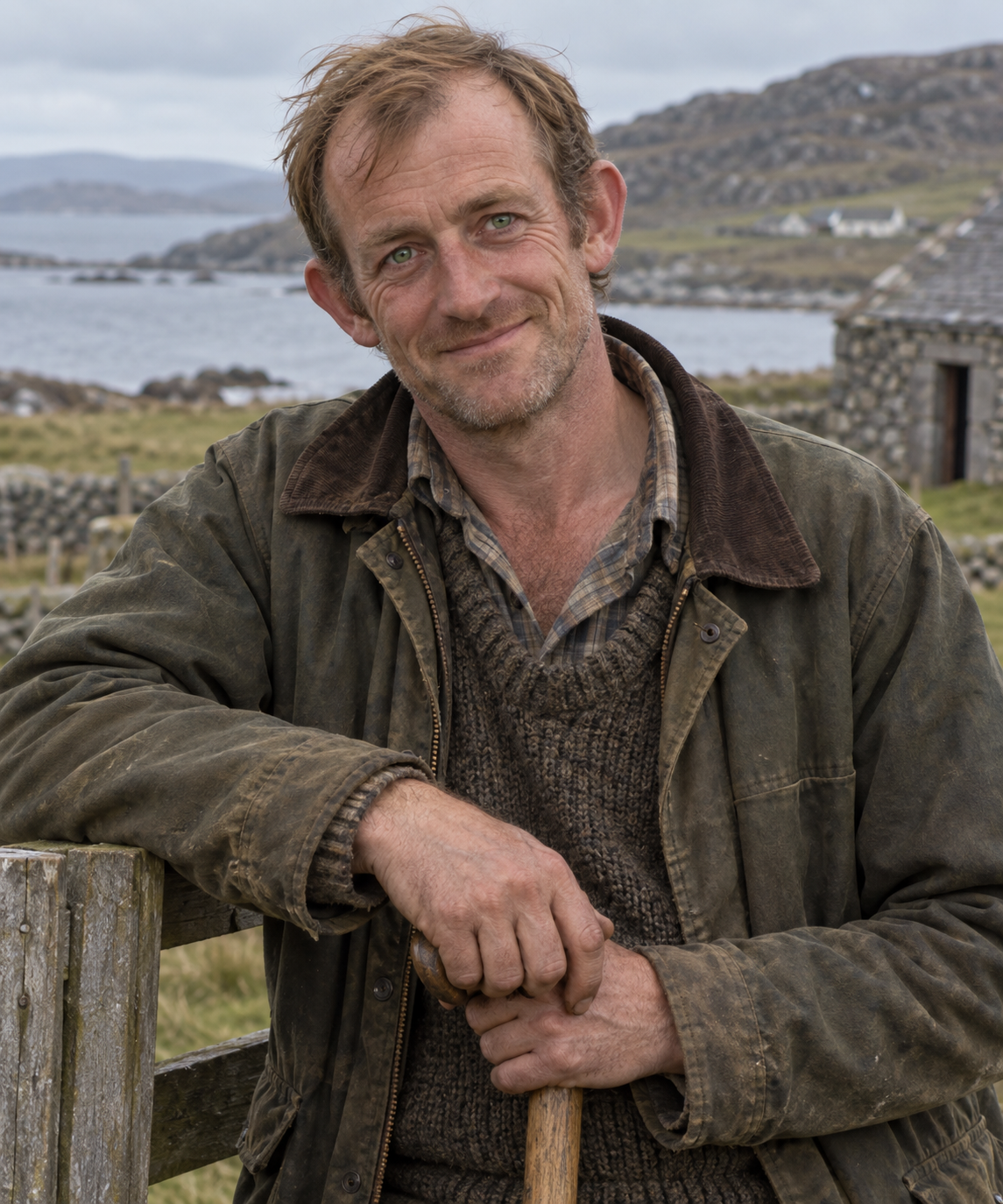
Innes sells his croft, house, and livestock to Sorley and leaves Harris, leaving John a QSL card directing him to Portree at 8 p.m.; the novel ends with John crossing to Skye to pursue him while Cal sends word that John is coming.
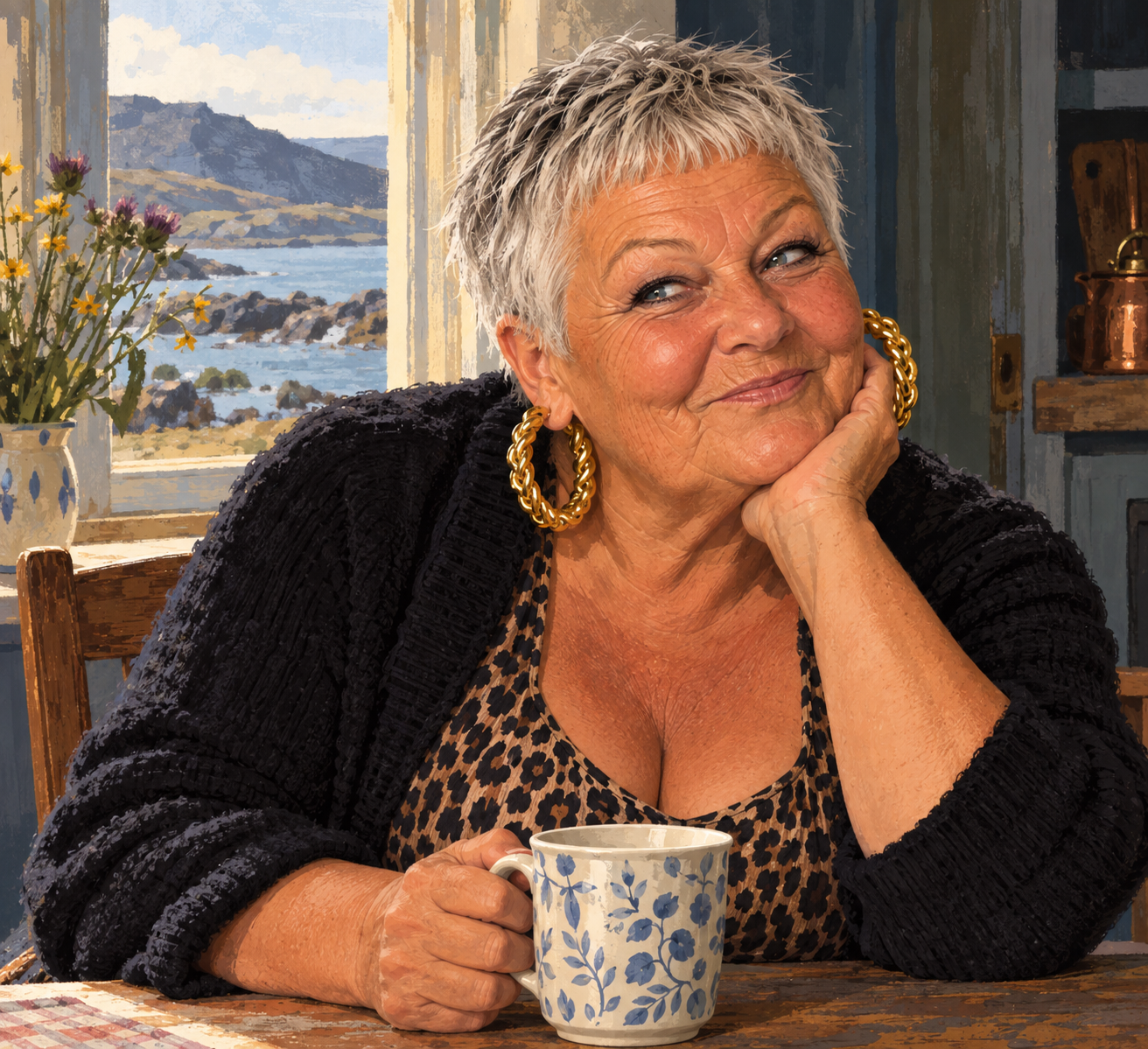
Ella eventually moves to Pàrras with Grace and Uilleam, transfers her croft tenancy directly to Cal rather than John, and reveals that Cal secretly gave his savings to Isla to help her and her baby.
Grace builds a new life in Pàrras with John's estranged brother Uilleam and later welcomes Ella into their home, permanently separating herself from John's life of secrecy.
🔷 Supporting Characters

He remains estranged from John and lives with Grace in Pàrras, where Ella eventually joins them.
Sorley gains Innes's croft, house, and livestock and smugly watches John break down until Cal intervenes and forces him to back off.
She refuses to identify the mainland fisherman who fathered her baby, receives Cal's savings, and is ultimately sent to Uist to avoid excommunication while her infant remains behind with her family.
After Doll's death and Isla's scandal, he unsuccessfully pressures Cal to marry Isla; in the finale, he agrees to take John across the stormy Minch to Skye to find Innes.
He interrogates Cal over Isla's pregnancy and oversees the church judgment threatening Isla with excommunication if she remains unrepentant.
After becoming severely intoxicated, Doll passes out and drowns in shallow water; his cold, blue body is discovered on the shoreline, devastating his family.
She successfully persuades Sorley to marry her, effectively securing her future on the MacInnes croft.
He unsuccessfully attempts to locate the mainland fisherman who impregnated Isla and remains part of Falabay's church establishment.
He leads public prayers surrounding Doll's death and burial and continues serving as a pillar of the congregation.
He briefly questions John but ultimately releases him, allowing John to return to Falabay.
He remains part of Innes's past, surviving only through memories, letters, and radio records.
He remains in Tolsta, continuing his ordinary life as a crofter and precentor.
After Doll drowns, Sarah is devastated but takes responsibility for raising Isla's newborn when Isla is sent away to Uist.
During Doll's funeral she takes control of the household, ordering Isla, Cal, and others around to ensure proper family decorum.
She remains at home with the MacDonald family after Doll's death and Isla's departure.
She promises to search Portree for Innes and deliver Cal's message that John is coming, that John loves him, and that "the other John" loves him too.
🕳️ Potential Plot Holes
During his trips to Stornoway, John introduces himself to police detective Donald-Iain as “Gregor,” and Donald-Iain apparently accepts the identity despite having seen him several times. This is difficult to reconcile with the novel’s repeated emphasis on how interconnected the Outer Hebrides are and how readily islanders identify one another through family and community connections. John is also a Harris Tweed weaver, crofter, and church deacon who regularly conducts business in Stornoway. It seems surprisingly easy for such an established local man to repeatedly visit a local police officer under a false first name without being recognized.
Most of the novel associates Cal’s mainland life with Glasgow, where he attends art school and establishes his friendships and independent life. Yet when he returns to Harris at the beginning of the novel, his journey starts in Edinburgh, where he has apparently been working cleaning jobs. This is not necessarily a contradiction—Cal could simply have moved to Edinburgh or been working there temporarily—but the novel does not clearly explain when or why he went from Glasgow to Edinburgh, making his mainland living situation initially confusing.
📚 Book Club Q&A's
⭐ Final Rating & Thoughts
Douglas Stuart can write. Especially when he’s describing the stark Hebridean landscape, Harris Tweed weaving, and the complicated relationships within this isolated community. The emotional core is equally strong: the father-son relationship is painful, layered, and ultimately heartbreaking, and there are moments that hit incredibly hard.
But getting to those moments was a struggle. At 416 pages, this somehow felt twice as long. The beginning dragged badly, with too much repetitive introspection and description that didn’t move the story forward. The heavy use of Gaelic and dialect added authenticity, but also made portions surprisingly difficult to read. I also found some of the attractions between characters unnecessarily uncomfortable and never felt it added much to the larger story.
So I’m torn. This is a beautifully written, emotionally powerful novel that I’m glad I finished—but I was also very glad when I finished it. With tighter editing, this could have been extraordinary.
✨ Adaptation description
As of September 2026, no film or television adaptation of Douglas Stuart’s John of John has been officially announced.
Stuart does, however, already have screen adaptations of his earlier novels in development. His Booker Prize-winning debut, Shuggie Bain, has been developed as a television series with A24 and the BBC, with Stuart adapting his own novel for the screen. His second novel, Young Mungo, has also been acquired for television development by A24.
John of John, Stuart’s third novel, was published by Picador on May 5, 2026. It received further attention when it was longlisted for the 2026 Booker Prize.
✨ Books Like John of John (2026)
See an error on this page?