
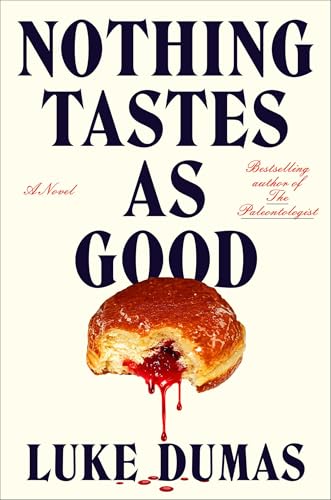
Nothing Tastes as Good (2026)
Select Sections to Print
×Book Details
Nothing Tastes as Good (2026)
Jump to Section
⚠️ Trigger Warnings
- Cannibalism
- Graphic gore
- Dismemberment & mutilation
- Murder & graphic violence
- Child abuse
- Forced feeding & vomiting
- Domestic violence
- Eating disorders & disordered eating
- Bulimia & purging
- Extreme dieting & calorie restriction
- Fatphobia & body shaming
- Body dysmorphia
- Medical trauma
- Unethical human experimentation
- Medical gaslighting & misconduct
- Drug misuse & overdose
⏱️ 2-Minute Spoiler Summary
Emmett Truesdale is 28, weighs 323 pounds, and has spent most of his life hating his body. When biotech company Monstera BioSciences recruits him for a clinical trial of Obexity, an experimental gene therapy activated by weekly EmaC-8 injections, he sees a chance to finally become thin. His best friend and roommate, Lizette Castillo, distrusts the company, but Emmett joins anyway.
The treatment works almost impossibly well. Emmett rapidly loses more than a hundred pounds, gains thousands of Instagram followers, and starts dating his old grad-school crush, Aaron Wolfe. But he also develops strange cravings and terrifying memory blackouts. After Georgina Hodge, a woman who humiliated him during a job interview, disappears and is found mutilated, Emmett begins to suspect the trial is doing something far more dangerous than causing weight loss. Another blackout follows an encounter with an elderly Target customer named Myra, who also disappears.
Emmett eventually discovers that a Phase I participant, Tanya Swygert, murdered and ate her ex-husband. Soon afterward, he wakes covered in blood and finds the corpse of Justin Matthews, a hookup who insulted his body, in his car trunk. Horrified, Emmett confesses to Lizette and destroys his remaining EmaC-8. But the thought of regaining the weight terrifies him so much that he secretly buys more of the drug on the black market.
His violence escalates. He kills another hookup, Marco Jiménez, while Monstera executives decide Emmett’s dramatic transformation and growing social-media following make him the perfect national spokesperson for Obexity. They offer him millions and a lifetime supply of EmaC-8. He accepts.
After the campaign launches, Emmett is publicly attacked for taking the supposedly “easy” route to weight loss. His relationship with Aaron also collapses. During a confrontation, Emmett bites off Aaron’s tongue, murders him, and dismembers his body.
That’s when Dr. Jennifer Saito, one of Obexity’s developers, reveals that Monstera has known about everything. The drug can trigger cannibalistic violence, and corrupt police officer Darryl Bautista, himself a former trial participant, has been destroying evidence. Monstera has even genetically modified local coyotes to eat human flesh so participant murders can be blamed on animal attacks. Saito doesn’t want to eliminate the side effect: she sees Obexity as revenge against a society that has tormented fat people.
Emmett then discovers an even more personal truth. Monstera’s founder, Dr. Cecil H. Smith, is actually Hank Stauder, Emmett’s brutally abusive former stepfather. Hank deliberately selected Emmett for the trial, giving him another way to control his body. Furious, Emmett overdoses on EmaC-8 until he weighs only 132 pounds.
He posts a massive public confession exposing Monstera, the murders, the cover-ups, Hank’s identity, and the horrific abuse Hank inflicted on him as a child. Police surround the Museum of Us, where Emmett flees up California Tower.
As he climbs, the drug suddenly reverses course. His body expands uncontrollably until he weighs nearly 800 pounds. Hank and Bautista confront him at the top, but Emmett charges them while shouting, “This is the true me!” Bautista shoots him three times, and Emmett grabs Hank as the balcony railing collapses. Both fall nearly 200 feet.
Emmett hits the ground and dies, his body exploding on impact. Hank survives after striking a palm tree.
In the aftermath, Monstera successfully rewrites the story. Its investigators portray Emmett as inherently depraved rather than a victim of the drug, while the company establishes a charitable endowment in his name. Hank, now serving as a director at the FDA, ultimately congratulates Monstera when Obexity receives full FDA approval.
📖 Full Spoiler Summary
Emmett Truesdale Wants to Become Someone Else
At 28, Emmett Truesdale weighs 323 pounds and has spent much of his life feeling ashamed of his body. He works as a Target fulfillment associate in San Diego while hoping to eventually work in education. His closest relationship is with his roommate and best friend, Lizette Castillo, an outspoken fashion designer who runs the extended-size clothing company GORDITA.
When Emmett sees an advertisement for a clinical trial from Monstera BioSciences, he immediately sees the possibility of becoming the person he has always wanted to be. The company is testing Obexity, an experimental gene therapy that supposedly rewrites the body’s energy-conversion DNA. Once activated by weekly injections of a drug called EmaC-8, patients can lose weight without dieting or exercising.
Lizette distrusts Monstera immediately, but Emmett attends the information session anyway. The $1,500 monthly stipend makes the trial even more appealing.
His desperation intensifies after two humiliating experiences. During an interview for his dream job at Future Makers, director Georgina Hodge gives him unsolicited weight-loss advice. Then, at his niece Harper’s birthday party, his sister Abby catches him bingeing in the kitchen. Emmett flees in shame.
So when Monstera accepts him into Phase II of the Obexity trial, he eagerly agrees.
During his medical screening, Dr. Gavin Halleck treats him condescendingly and diagnoses him with Type 2 diabetes. Emmett signs the trial’s paperwork despite references to potentially serious psychological side effects, including Intermittent Explosive Disorder.
The actual procedure is even more disturbing. Under anesthesia, Emmett believes he sees other patients screaming and attacking nurses before surgeons drill into his bones and force-feed him vector serum. When he wakes, he is assured that everything he remembers was simply an anesthesia-induced nightmare.
Then the weight starts disappearing.
The Miracle Treatment Comes With Blackouts
With weekly EmaC-8 injections, Emmett’s weight plummets from more than 320 pounds to 252, then below 200. His transformation attracts attention online, where his Instagram account, The True Me, begins gaining thousands of followers.
His personal life improves too. He reconnects with Aaron Wolfe, his old grad-school crush, who now works at the Museum of Us in Balboa Park. Emmett and Lizette visit the museum’s Savage Hunger: A History of Cannibalism exhibit, and before long, Emmett and Aaron begin dating.
But something is seriously wrong.
Emmett starts losing chunks of time. He wakes from blackouts with blood on his clothing and no idea what happened. Around the same time, Georgina Hodge disappears. Her mutilated body is eventually discovered, with authorities blaming coyotes.
Then an elderly Target customer named Myra insults Emmett during his shift. After she accidentally leaves behind a bottle of cocktail sauce, Emmett follows her toward her apartment. Two hours disappear from his memory. When he returns to work, he is covered in a sticky red substance that he claims is cocktail sauce.
Increasingly suspicious of Obexity, Emmett researches earlier trial participants and discovers Tanya Swygert, a Phase I patient who shot and killed her abusive ex-husband, Ken Holmes. Her lawyer blamed experimental medication for her behavior. Emmett learns the truth is even worse: Tanya ate parts of Ken’s body.
Emmett crashes a Monstera board meeting and sees autopsy photographs of Georgina showing human bite marks. Dr. Jennifer “Jenni” Saito, one of Obexity’s developers, catches him but brushes the evidence aside with an absurd explanation involving research into coyote saliva.
Saito also reveals that she grew up as an obese Asian girl and devoted herself to finding a solution to the fatphobia she experienced. Emmett leaves without fully understanding what she is really telling him.
Soon, however, he can no longer deny what Obexity is doing to him.
Emmett Discovers What He Has Become
Emmett’s appetite changes. Ordinary food becomes less satisfying as he develops an overwhelming craving for human flesh.
After another blackout, he awakens covered in blood. His relationship with Aaron is also deteriorating because Emmett remains deeply ashamed of the loose skin left behind by his massive weight loss. When Aaron sees his body in the shower and reacts badly, Emmett is devastated.
Outside, he opens the trunk of his car and discovers something horrifying: a severed human arm and the corpse of Justin Matthews, a gym acquaintance Emmett had hooked up with. Justin had insulted his body, and Emmett apparently beat him to death with a metal baseball bat stolen from Lizette’s boyfriend, Mando.
Emmett finally understands that the murders are his.
Terrified, he confesses everything to Lizette. She helps him destroy his remaining EmaC-8 injections.
For a moment, it seems Emmett might escape the cycle. Then Dr. Halleck threatens to remove him from the clinical trial because he has stopped taking his doses.
The possibility of becoming fat again terrifies Emmett more than what the drug is turning him into.
He secretly obtains black-market EmaC-8 from Niño, a drug dealer and friend of his half-brother Chris. After taking too much, Emmett’s body briefly balloons before his weight begins falling again. His murderous compulsions continue, and he kills another hookup, Marco Jiménez, eventually storing Marco’s corpse alongside Justin’s.
Rather than stopping Emmett, Monstera sees an opportunity.
His transformation has made him an online celebrity with roughly 40,000 followers. Company executives offer him millions of dollars, national fame, and—most importantly to Emmett—a lifetime supply of EmaC-8 if he becomes the public face of Obexity.
He accepts.
Monstera Has Been Covering Up the Murders
The national Obexity campaign launches on January 2, but the response is vicious. Instead of celebrating Emmett’s transformation, people attack him for supposedly cheating at weight loss. He is called lazy and fraudulent for using medication rather than losing weight through diet and exercise.
Then Aaron arrives at Emmett’s apartment and confronts him. Their argument escalates until Aaron calls him a “fucking monster.”
This time, Emmett doesn’t black out before the violence begins.
He bites off Aaron’s tongue, kills him, and dismembers his body in the living room.
Almost immediately, Dr. Saito calls. She already knows.
Monstera sends a hazardous crime-scene cleanup crew called Bio-Clean to erase the evidence from Emmett’s apartment. Saito then explains just how extensive the conspiracy is. Assistant Chief Darryl Bautista, a senior San Diego police officer and former Phase I Obexity participant, has been sabotaging murder investigations to protect the company and ensure his own continued access to EmaC-8.
Even the coyotes are part of the cover-up. Monstera genetically modified local coyotes to consume human flesh, allowing participant murders to be disguised as animal attacks.
Saito isn’t interested in fixing Obexity’s cannibalistic side effect. She views what is happening as revenge against the fatphobic society that tormented people like her and Emmett. Now she expects Emmett to become the public scapegoat. Monstera will fund his defense and arrange for him to be portrayed as temporarily insane, but he must take responsibility for the killings.
Then Emmett discovers that the conspiracy began much earlier than he realized.
Cecil Smith Is Hank Stauder
Saito leaves Emmett at the vacant luxury home of Monstera founder Dr. Cecil H. Smith. While searching Smith’s office, Emmett finds a book containing an inscription addressed to “Hank.”
The name unlocks the truth.
Cecil Smith is actually Henry “Hank” Stauder, Emmett’s former stepfather and childhood abuser. Hank changed his name after being fired from the Torrey Pines Medical Discovery Institute for conducting illegal human experiments and eventually built Monstera BioSciences.
Worse, Hank personally selected Emmett for the Obexity trial.
The man who controlled and abused Emmett’s body when he was a child has found a new way to control it as an adult.
Furious, Emmett takes twelve EmaC-8 pens. His weight crashes to an emaciated 132 pounds. In his final health-journal submission, he addresses Hank directly and promises to eat him alive.
But first, Emmett decides to expose everything.
“This Is the True Me”
Lizette picks up the barely recognizable Emmett, who goes to the Museum of Us. There he stands before Portrait of a Man-eater, a 17th-century painting donated by Cecil Smith depicting Sir Percival Blount, a man supposedly transformed into a cannibal after taking a weight-loss tonic.
Emmett then publishes an enormous confession on Instagram.
He admits murdering Aaron, Justin, Marco, Georgina, and Myra. He exposes Obexity’s cannibalistic effects, Monstera’s cover-ups, the genetically modified coyotes, and Hank’s true identity. He also reveals the childhood abuse that shaped his relationship with food and his body, including an incident in which Hank tied 11-year-old Emmett to a chair, force-fed him until he vomited, and then forced the vomit back down his throat.
Police converge on the museum.
Emmett runs up the 125 steps of California Tower, but the extreme exertion triggers a horrifying reaction to the massive amount of EmaC-8 in his system. Instead of continuing to lose weight, his body begins expanding.
Fat accumulates in violent waves as he climbs. By the time he reaches the public observation deck, Emmett weighs nearly 800 pounds, and his clothing has been torn apart by his rapidly expanding body.
Hank and Assistant Chief Bautista corner him at the top.
Hank still tries to control the situation, demanding that Emmett delete his confession and accept Monstera’s version of events. Instead, Emmett finally rejects him.
“This is the true me!” he screams before charging.
His enormous body sends officers flying, and he snaps Bautista’s arm. Bautista fires three bullets into Emmett’s chest, but Emmett grabs Hank by the shirt. Their combined weight destroys the balcony railing.
Both men plunge 198 feet toward the courtyard.
Emmett hits the ground with such force that witnesses describe his body as detonating, sending blood and tissue outward in every direction. Lizette, Emmett’s mother, the museum entrance, and even passing cars are splattered with the aftermath.
Emmett dies instantly.
Hank survives.
He strikes a palm tree during the fall and escapes with broken ankles and a concussion.
Monstera Gets Exactly What It Wants
After Emmett’s death, the story is filtered through the official investigative report prepared for Monstera by Frank Darrow and his law firm.
Rather than acknowledging Obexity as the cause of Emmett’s transformation, the report characterizes him as an unrepentant murderer whose crimes resulted from mental instability and “inherent depravity.” The corporation that experimented on him, covered up his killings, and manipulated him into becoming its spokesperson successfully distances its product from the carnage.
Monstera even creates a charitable endowment in Emmett’s name.
And Hank doesn’t merely survive the fall.
Operating again as Dr. Cecil H. Smith, he becomes a director at the FDA’s Center for Drug Evaluation and Research. From that position, he formally congratulates Monstera BioSciences on its greatest victory:
Obexity receives full FDA approval.
🔚 Ending Explained
Ending Explained
Nothing Tastes as Good ends with Emmett Truesdale finally exposing the truth about Obexity—and discovering that the man behind the drug is intimately connected to the abuse that shaped his entire life.
After learning that Monstera BioSciences’ Chief Science Officer, Dr. Cecil H. Smith, is actually Hank Stauder, his abusive former stepfather who changed his name from C. Henry Stauder, Emmett makes everything public. In a detailed Instagram confession, he reveals Obexity’s cannibalistic side effects, Monstera’s attempts to conceal the deaths by blaming genetically modified coyotes, and his own responsibility for the murders of Aaron, Justin, Marco, Georgina, and Myra. He also exposes Hank’s childhood abuse.
With police closing in at the Museum of Us in Balboa Park, Emmett races up the 125 steps of California Tower. But the physical and emotional strain triggers a catastrophic reaction from the EmaC-8 still in his bloodstream. As he climbs, his body begins rapidly expanding. The weight Obexity stripped from him returns in agonizing waves until, by the time he reaches the observation deck, his clothes have torn apart and he weighs nearly 800 pounds.
There, Emmett is cornered by police, Assistant Chief Darryl Bautista, and Hank. Even now, Hank believes Emmett can be controlled. He offers him money, expensive lawyers, lifetime access to Obexity, and a way out—provided Emmett deletes his confession and allows the murders to be blamed on a mental breakdown.
Emmett refuses.
Instead, he declares, “This is the true me!” and charges. He throws officers aside and breaks Bautista’s arm before Bautista shoots him three times in the chest. Emmett staggers into the damaged balcony railing and grabs Hank by the shirt. The railing gives way, sending both men plunging 198 feet toward the courtyard.
At somewhere between 750 and 800 pounds, Emmett strikes the ground with such force that witnesses describe the impact as a “detonation.” His body explodes across the courtyard, splattering the museum, nearby cars, his mother, and his best friend Lizette.
Hank, however, survives. A palm tree breaks his fall, leaving him with broken ankles, fractured ribs, and a concussion.
And the novel saves its bleakest twist for afterward.
The Prentice & Darrow investigation clears Monstera BioSciences of responsibility, blaming the deaths on Emmett’s supposed “inherent depravity and mental fragility” rather than EmaC-8. Monstera uses the report to successfully appeal the rejection of Obexity, and the drug receives full FDA approval. The company even creates a charitable endowment in Emmett’s name benefiting the California Childhood Obesity Coalition.
So Emmett tells the truth, dies exposing it—and the system simply absorbs his story, rewrites it, and sells the drug anyway.
What the Ending Means
The most important image in the climax is Emmett becoming fat again while climbing the tower. Throughout the story, his body has been treated as something unacceptable that must be corrected, controlled, or erased. Obexity seemingly gives him the transformation he has been taught to desire, but it never removes the trauma underneath it. His spectacular return to nearly 800 pounds turns that idea inside out: the identity and history he has spent his life trying to escape cannot simply be chemically deleted.
That makes his declaration—“This is the true me!”—both triumphant and tragic. Emmett is not denying what he has done. His confession openly acknowledges his murders. But for perhaps the first time, he refuses to allow Hank or Monstera to define him for their own purposes. Hank offers him another version of the same bargain Emmett has been offered his entire life: let someone else decide what is wrong with you, accept their solution, and become what they need you to be. Emmett finally says no.
His horrific “detonation” literalizes that refusal to disappear. Emmett has spent his life in a culture demanding that his body become smaller and less visible. In death, he becomes impossibly, grotesquely visible. His body cannot be ignored, contained, sanitized, or politely hidden away.
Hank’s survival makes the scene even crueler. Emmett falls and is physically obliterated; Hank hits a palm tree and lives. The man who abused him and later exploited him survives the catastrophe he helped create. The palm tree therefore becomes an almost absurd symbol of how power protects itself: even when Hank falls alongside his victim, something is there to cushion him.
The final corporate documents extend that symbolism from Hank to Monstera itself. Emmett’s individual rebellion may expose the truth, but the institution possesses the resources to redefine what that truth means. The company converts a drug-induced horror story into evidence of one disturbed man’s personal depravity. Even more grotesquely, it appropriates Emmett’s identity after his death by putting his name on a childhood-obesity charity. The person who spent his life being treated as a problem to be fixed becomes corporate branding for the very ideology that helped destroy him.
That shift from the bloody spectacle of Emmett’s death to the sterile language of legal reports and FDA approval is also crucial to the ending’s tone. The body horror is horrifying, but the bureaucracy that follows may be even darker. Gore eventually stops; institutional machinery simply continues.
And that is what makes the FDA approval of Obexity such an ominous final development. Emmett’s death does not end the experiment. Instead, the drug responsible for metabolic instability, violent blackouts, and cannibalistic Hunger is now positioned for widespread use. What happened to Emmett therefore may not have been the conclusion of an isolated nightmare—it may have been the beginning of a much larger one.
The ending ultimately turns Emmett’s personal tragedy into a vicious satire about body shame, abuse, pharmaceutical greed, and who gets to define monstrosity. Emmett unquestionably commits monstrous acts, but the novel refuses to let his crimes conveniently absolve the people and institutions that created, manipulated, and profited from his suffering. The final irony is devastating: Emmett finally makes himself impossible to ignore, yet the system still finds a way to erase his truth.
👤 Characters & Fates
🔶 Main Characters
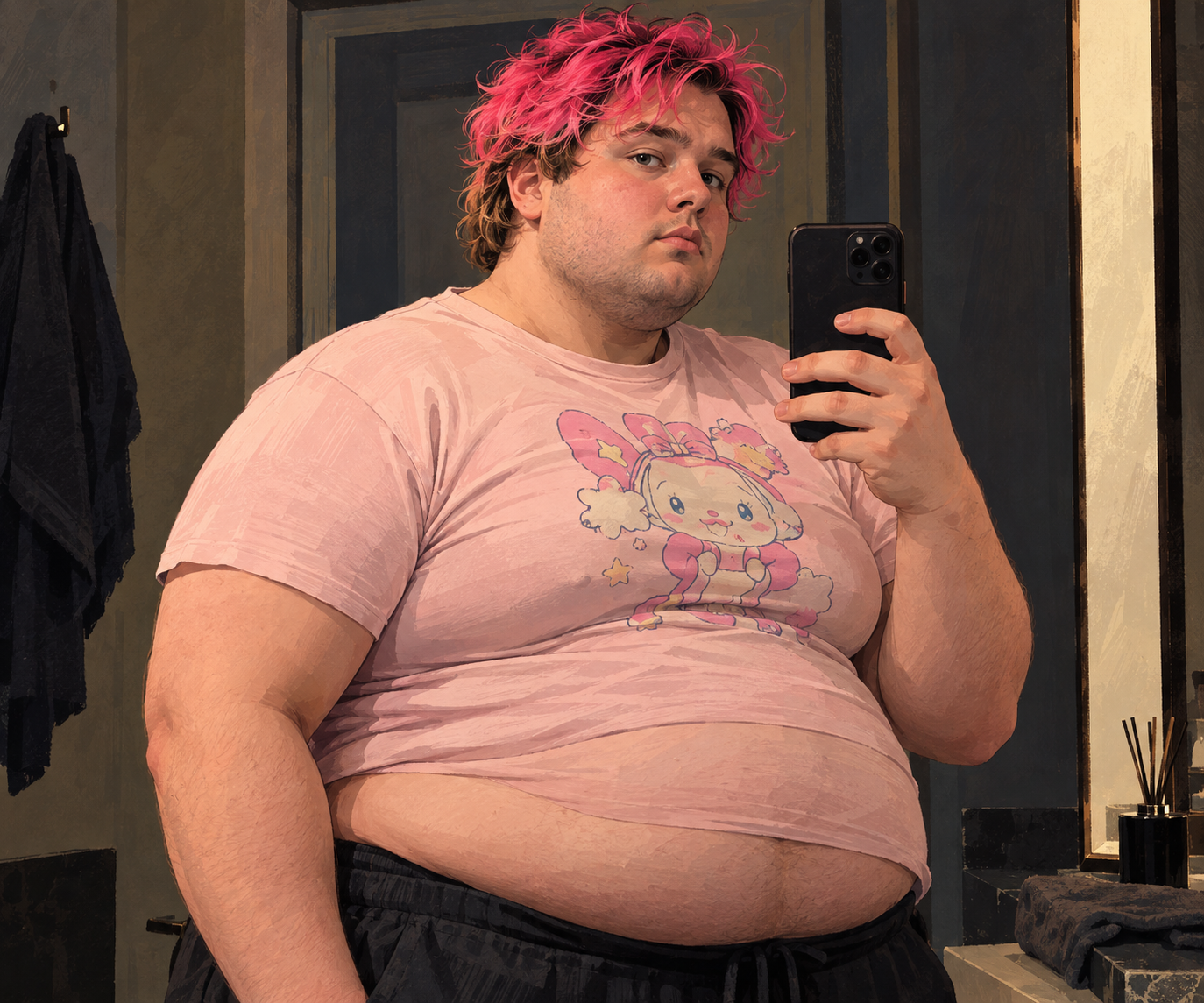
After murdering and cannibalizing multiple people, Emmett exposes Obexity, Hank, and Monstera online. At California Tower, his body rapidly swells to nearly 800 pounds; Bautista shoots him three times before Emmett and Hank plunge 198 feet from the observation deck. Hank survives, but Emmett hits the ground and his body violently “detonates,” splattering the courtyard, his mother, and Lizette with blood and tissue.

Emmett drags Hank over the California Tower railing during their final confrontation. Hank survives the 198-foot fall after striking a palm tree, suffering broken ankles, fractured ribs, and a concussion; he later resigns from Monstera but becomes Director of the FDA’s CDER and ultimately approves Obexity.

She covers up Aaron’s murder with Monstera’s Bio-Clean crew and helps protect the company from police scrutiny. After Hank leaves, she becomes Chief Science Officer, and Obexity receives full FDA approval in April 2025.

After firing Emmett and calling him a “fucking monster,” Aaron triggers one of Emmett’s violent transformations. Emmett bites off his tongue, crushes his windpipe, murders and dismembers him with a meat cleaver, and stuffs his remains into a duffel bag; Bio-Clean later disposes of his body by feeding it to genetically modified coyotes.

She helps destroy his EmaC-8 doses and initially covers for him, but Aaron’s murder forces her out of their home. She witnesses Emmett fall from California Tower and is splattered with his remains; afterward, she tells investigators that Emmett spent his life chasing societal approval instead of recognizing the genuine love around him.
🔷 Supporting Characters

He survives and later gives testimony blaming Emmett’s downfall on poor discipline and his refusal to follow trial protocols.
At California Tower, Emmett snaps his arm and throws him down the stairs; Bautista then fires three bullets into Emmett’s chest moments before Emmett falls to his death.
She becomes Emmett’s first blackout murder victim; her mutilated, bitten remains are found at Lake Murray Park, and Monstera falsely attributes the injuries to coyotes.
She shoots, kills, and partially eats her abusive ex-husband Ken Holmes, is arrested covered in blood, and is prosecuted while Monstera conceals Obexity’s role.
Emmett beats him to death with Armando’s metal baseball bat and stores his remains in his car before burning the vehicle; Justin’s decomposing remains are later identified through dental records.
Emmett murders him with Armando’s baseball bat, stores his corpse in the Taurus alongside Justin, and later burns the car on Fiesta Island.
After she calls him “butterfingers,” Emmett follows her outside, blacks out for two hours, and murders and eats her before returning to work covered in blood and tissue that he claims is cocktail sauce.
She fights with Emmett after confronting him about becoming dangerously skeletal; following his death, she breaks down during her investigative interview and blames herself for not protecting him from Hank.
After Emmett’s death, Chris tells investigators that Emmett always lacked impulse control and possessed an “animal rage,” largely dismissing his brother’s trauma.
He retires aboard his yacht Jamaica Me Crazy in Cabo San Lucas and, when interviewed after Emmett’s death, drinks beer, blames Joanna’s cooking for Emmett’s obesity, and accepts little responsibility.
She celebrates Emmett’s dramatic weight loss before learning the truth. She witnesses his fatal fall from California Tower and is splattered with her son’s blood and tissue when his body hits the ground.
Emmett steals his metal bat to kill Justin and Marco; Armando survives and remains with Lizette.
He trades black-market injector pens to Emmett for money and sex and survives without meaningful consequences.
Lizette rescues both animals before Bio-Clean sterilizes the apartment, and both survive.
He completes the report largely exonerating Monstera, helping clear the path for the company to secure FDA approval for Obexity.
She survives and remains employed as a Monstera intern.
Their “Becoming the true you” campaign succeeds, and they escape meaningful legal consequences after the Prentice & Darrow investigation.
Tanya shoots him to death and partially cannibalizes his body.
All survive and are left shocked by Emmett’s public confession, crimes, and gruesome death.
They survive and continue covering the San Diego news cycle.
🕳️ Potential Plot Holes
Emmett’s transformation from roughly 132 pounds to nearly 800 pounds in minutes appears impossible because his body gains more than 650 pounds of new physical mass without consuming anything. EmaC-8 can explain an altered metabolism within the novel’s speculative science, but metabolism cannot create matter from nothing. This is best understood as deliberate body-horror exaggeration rather than scientifically plausible gene therapy.
After Emmett murders and dismembers Aaron in his apartment, Dr. Saito’s Bio-Clean crew removes the remains and sanitizes the scene without attracting meaningful attention. Even a professional cleanup would have difficulty eliminating the forensic evidence created by a bloody dismemberment, while carrying human remains through an occupied apartment complex creates an additional risk of witnesses, cameras, neighbors, or building staff noticing something suspicious. The ease with which the entire operation disappears stretches plausibility.
Hank Stauder manages to rebuild his professional identity as Cecil H. Smith despite his earlier involvement in unauthorized human experimentation and eventually reaches an influential FDA position. A legal name change would not normally erase employment history, education, licensing records, fingerprints, government records, or a documented professional scandal. Unless powerful people actively helped conceal his past, his ability to survive serious federal vetting under a slightly altered identity is difficult to accept.
Evidence accumulates that should make Emmett an increasingly obvious suspect, including forensic evidence, property connected to him, bloodstained clothing, and other links between him and victims or crime scenes. Bautista’s interference helps explain some investigative failures, but one compromised official cannot easily suppress every forensic result, detective, laboratory record, and piece of physical evidence. The length of time Emmett remains free therefore requires unusually broad investigative failure.
Obexity is projected to cost hundreds of thousands of dollars initially, followed by extremely expensive continuing EmaC-8 treatment, yet Monstera recruits people such as Emmett who could never independently afford the finished therapy. This is not necessarily a plot hole: clinical trials do not have to recruit people capable of purchasing the eventual commercial treatment, and participants are commonly provided investigational treatment without paying its future market price. The more relevant unanswered issue is what Monstera intends to do with participants who require lifelong EmaC-8 once the trial ends.
📚 Book Club Q&A's
⭐ Final Rating & Thoughts
Nothing Tastes As Good grabbed me from the description blurb and never loosened its grip. I checked it out of the library immediately after reading the premise, and somehow the actual book was even more disturbing—and more addictive—than I expected.
Yes, this is graphic, grotesque horror, and the body horror definitely isn’t for the squeamish. But what made it work so well for me was that the gore actually had something behind it. The book’s exploration of weight, shame, fatphobia, and how people are treated differently after losing weight is genuinely uncomfortable. Emmett’s desperation for acceptance made him surprisingly sympathetic, even as his choices became increasingly horrifying.
I especially loved how the story kept escalating without losing sight of its central themes. Every time I thought it had reached peak insanity, it somehow found another level. And that ending? Completely unhinged, horrifying, and yet somehow exactly right.
Disturbing, fast-paced, thought-provoking, and impossible to put down. This is horror that entertained me while also giving me plenty to think about afterward.
✨ Adaptation description
🎬 Screen Adaptation
As of September 2026, no film or television adaptation of Nothing Tastes as Good has been publicly announced.
Author Luke Dumas has had work optioned for film and television, but neither Dumas nor his literary representation has publicly identified Nothing Tastes as Good as one of those projects. At present, there is no announced studio, production company, director, cast, or release date attached to the novel.
The book was published by Atria Books on March 31, 2026 and follows Emmett Truesdale, a 28-year-old man who enrolls in a clinical trial for an experimental weight-loss treatment called Obexity. The treatment produces dramatic results but also causes blackouts, violent cravings, and increasingly horrifying consequences.
The novel combines body horror, psychological thriller, and social satire, using Emmett’s transformation to examine weight stigma, body image, the weight-loss industry, and the desire for social acceptance. Its body-horror premise has drawn comparisons to The Substance, while the publisher describes the novel as combining that film’s body horror and social commentary with elements reminiscent of Stephen King.
✨ Books Like Nothing Tastes as Good (2026)
See an error on this page?