
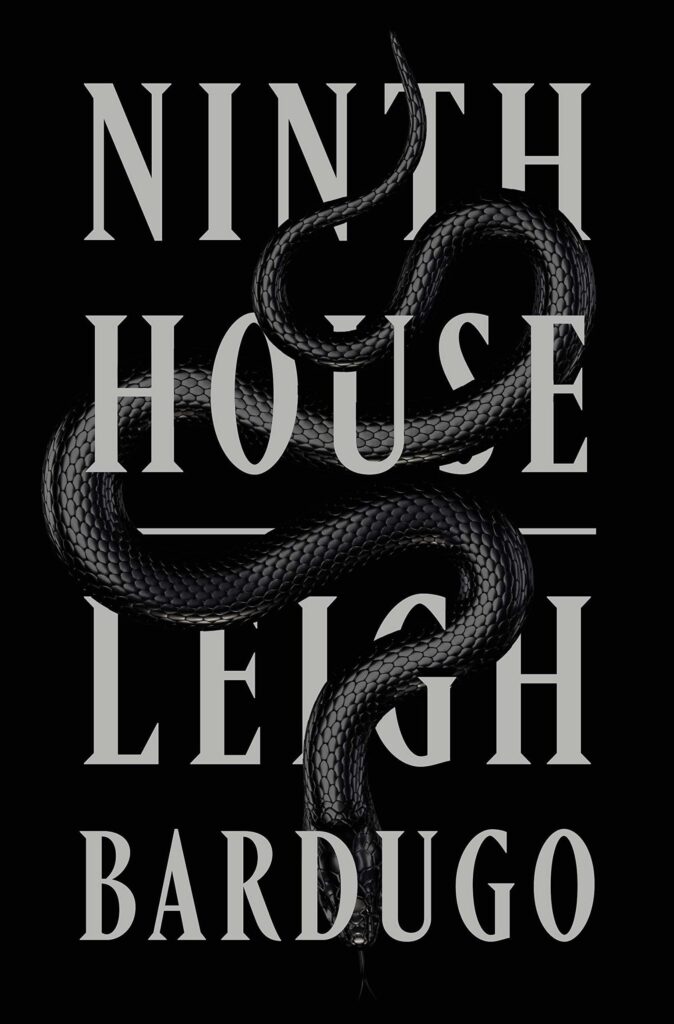
Ninth House (2019)
Series
Select Sections to Print
×Book Details
Ninth House (2019)
Series
Jump to Section
⚠️ Trigger Warnings
- Sexual assault and attempted sexual assault
- Drug-facilitated sexual assault
- Non-consensual filming / sexual exploitation
- Involuntary drugging
- Substance abuse and addiction
- Drug overdose and fentanyl
- Death from overdose
- Graphic violence and gore
- Murder and serial murder
- Stabbing
- Bludgeoning / severe beatings
- Broken bones and serious injuries
- Blood and blood magic
- Ritualistic violence and human experimentation
- Surgical mutilation
- Body horror
- Vomiting blood
- Insects / beetles inside the body
- Death and corpses
- Violence against women
- Soul stealing / soul consumption
- Supernatural possession
- Loss of bodily autonomy / mind control
- Ghosts and supernatural horror
- Childhood sexual trauma
- Grief and traumatic loss
- Exploitation and abuse of power
⏱️ 2-Minute Spoiler Summary
Galaxy “Alex” Stern arrives at Yale under highly unusual circumstances. She never finished high school and has a traumatic past involving drugs and violence, but she possesses an ability Yale desperately wants: Alex can naturally see Grays, or ghosts. Dean Elliot Sandow recruits her into Lethe House, the secret organization responsible for monitoring the dangerous magic practiced by Yale’s eight occult secret societies.
Alex becomes Lethe’s freshman Dante, apprenticed to senior student Daniel “Darlington” Arlington, the Virgil. Darlington initially resents having an unqualified freshman assigned to him, but he gradually becomes protective of Alex as he trains her in Yale’s hidden magical world. Their partnership ends abruptly in December when they investigate suspicious activity beneath Rosenfeld Hall. A monstrous entity reaches through what appears to be a portal and drags Darlington inside. Yale covers up his disappearance by claiming he is studying abroad.
Months later, with Darlington still missing, Alex is overseeing a Skull and Bones prognostication ritual when a local twenty-year-old woman named Tara Hutchins is murdered near campus. Tara’s drug-dealing boyfriend, Lance Gressang, is arrested, but Alex suspects there is more to the crime. Her investigation reveals that Tara had connections to Yale students and had been producing concentrated tabs of a magical drug called Merity for Scroll and Key, allowing users to open portals and move through physical barriers.
Alex also begins working with Bertram Boyce North, better known as the Bridegroom, a famous New Haven ghost supposedly responsible for murdering his fiancée, Daisy Fanning Whitlock, before killing himself in 1854. North insists he was innocent. Alex agrees to investigate Daisy’s death if he helps her locate Tara’s spirit.
As Alex digs deeper, someone repeatedly tries to stop her. She is nearly killed by a magical assassin called a gluma, while Dean Sandow continually pressures her to abandon Tara’s case. Alex also discovers that Darlington had secretly been investigating a series of murdered women stretching back more than a century.
Flashbacks eventually reveal Alex’s own darkest secret. Before Yale, her best friend Hellie overdosed while Alex was living among violent drug dealers in Los Angeles. When the men refused to call for help and planned to dump Hellie’s body, Alex allowed Hellie’s ghost to possess her. Using Hellie’s supernatural strength, she beat five men to death with a baseball bat. Darlington figured out the truth shortly before he disappeared.
Lethe eventually attempts to retrieve Darlington by performing a ritual at his family home, Black Elm. Instead, they summon a hellbeast that speaks with Darlington’s voice. Alex finally understands his unfinished warning from the night he vanished: what swallowed him wasn’t a portal. It was a mouth.
Soon afterward, Alex is attacked at Lethe headquarters by Blake Keely, a Yale student who appears to be using magical compulsion. Blake orders Sandow to stab Alex, but Lethe’s spirit jackals intervene and Pamela Dawes, Lethe’s graduate research assistant, kills Blake to save them.
Alex later finds the compulsion coin Blake supposedly used and realizes the attack was staged backward: Sandow had been controlling Blake.
Darlington’s hidden research provides the rest of the answer. For generations, murdered women have created magical nexuses around New Haven, and Yale’s secret societies built their tombs over those sites. Sandow murdered Tara specifically to create a new nexus that he could sell to St. Elmo’s and use the money to solve his financial problems. Darlington discovered the pattern, so Sandow deliberately sent him to the creature beneath Rosenfeld Hall.
Alex confronts Sandow, and he confesses. But before the confrontation can end, English professor Marguerite Belbalm arrives and reveals an even bigger secret: she is actually Daisy Fanning Whitlock.
Daisy is a rare Wheelwalker, capable of moving between worlds and consuming spirits. In 1854, a dangerous spirit entered Daisy, and she transferred it into North, forcing him to shoot her. Daisy survived by possessing and consuming the soul of her maid, Gladys O’Donaghue. For more than 160 years, she has maintained her youth by murdering and consuming other female Wheelwalkers—and Alex is intended to be her next victim.
Belbalm kills Sandow by consuming his soul and attacks Alex. Instead of fighting her alone, Alex calls out the names of Daisy’s previous victims. Their ghosts appear and overwhelm Daisy, consuming her soul and leaving her body as ancient dust.
Officially, Sandow dies of a heart attack, Belbalm disappears, and Blake remains blamed for Tara’s murder. But Alex has one final realization. The creatures she encountered beyond the Veil had been whispering about a “Gentleman demon.” Darlington wasn’t destroyed when the hellbeast swallowed him. He survived and has somehow become a demon in hell.
Alex, Dawes, and former Lethe member Michelle Alameddine decide they are going to bring him back.
📖 Full Spoiler Summary
Alex Stern Enters Yale’s Secret World
At Yale University, the famous secret societies are hiding far more than elite memberships and strange traditions. Eight societies known as the Houses of the Veil practice real magic, using occult rituals to gain wealth, power, influence, and glimpses of the future. Lethe House, the Ninth House, exists to supervise them and prevent their magic from harming innocent people.
That hidden world is how Galaxy “Alex” Stern, a twenty-year-old freshman with no high school diploma and a traumatic past in Los Angeles, ends up at Yale.
Alex has been able to see ghosts, known as Grays, since childhood. Most Lethe members can only see them after drinking a toxic potion called Orozcerio, but Alex sees them naturally and in full physical detail. After she is discovered in a California hospital following a horrific crime scene, Dean Elliot Sandow, Lethe’s faculty advisor, offers her a full scholarship in exchange for joining the organization.
Alex becomes Lethe’s freshman apprentice, or Dante, under senior student Daniel “Darlington” Arlington, the Virgil. Darlington comes from a wealthy New Haven family and is deeply devoted to magic and Lethe’s mission. He initially resents Sandow for assigning him an inexperienced freshman who never went through the usual selection process, but his attitude changes as he trains Alex.
Working alongside them is Pamela “Dawes” Dawes, Lethe’s quiet graduate research assistant, who maintains their headquarters at Il Bastone and handles much of the organization’s magical research.
By winter, however, Darlington is gone. Yale claims he is studying abroad in Spain, but Alex knows the truth: something supernatural took him.
Tara Hutchins Is Murdered
While Darlington remains missing, Alex attends a Skull and Bones prognostication ritual in which society members cut open a living, paralyzed man named Michael Reyes and examine his organs to predict future market trends. During the ritual, the surrounding Grays behave unusually aggressively, nearly breaking through the protective circle.
Soon afterward, Dawes tells Alex that a young woman has been murdered near Payne Whitney Gymnasium.
The victim is Tara Hutchins, a twenty-year-old New Haven local who dealt drugs and hoped to become a jewelry maker. She has been stabbed repeatedly over the heart. Her boyfriend and fellow drug dealer, Lance Gressang, is quickly arrested.
At the crime scene, Alex meets Detective Abel Turner, the New Haven police officer who serves as Lethe’s liaison. Turner wants Alex to stay out of the investigation, and Sandow similarly tells her to leave the murder to the police.
Alex refuses.
Using a magical coin of compulsion, she gets access to Tara’s body and later convinces Dawes to drive her to the state morgue. There, Alex uses magical techniques to reconstruct Tara’s injuries and receives a vision of Lance standing over Tara with a knife and apologizing as he stabs her.
The evidence seems conclusive, except Turner accidentally reveals that Tara’s phone records include calls to Tripp Helmuth, a Skull and Bones member. Alex begins to suspect Tara’s death is connected to Yale’s secret societies.
Her suspicions become more urgent when she is attacked by a gluma, a reanimated magical creature associated with Book and Snake. The gluma nearly kills her by filling her lungs with toxic smoke and corpse beetles. Alex survives only because a famous New Haven ghost called the Bridegroom attacks the creature and Dawes later administers a gruesome magical cure.
Instead of taking the attack seriously, Sandow suggests Alex may have brought it upon herself. Dawes angrily defends her.
Then Alex notices something important about Tara’s murder site. Its location corresponds to the center of New Haven’s original nine-square colonial layout, suggesting Tara’s body was deliberately placed at the center of a new magical “Eden.”
Alex Makes a Deal With the Bridegroom
The Bridegroom is actually Bertram Boyce North, who died in 1854 alongside his fiancée, Daisy Fanning Whitlock. History remembers North as Daisy’s murderer, but his ghost insists he did not kill her.
Alex decides they can help each other.
After forcing Wolf’s Head society to give her access to a ritual that allows her to enter the borderland between life and death, Alex meets North properly. He agrees to find Tara’s ghost if Alex investigates Daisy’s murder and discovers what really happened in 1854.
North also points Alex toward another clue. Tara had the words “Rather die than doubt” tattooed on her body, a quotation associated with Scroll and Key.
As Alex pursues Tara’s murder, the novel gradually reveals what happened during her first semester with Darlington.
What Happened to Darlington
When Alex first arrived at Yale, Darlington taught her how to survive around both Grays and the societies’ magic. During an Aurelian ritual, Alex accidentally damaged a protective circle and allowed ghosts to flood the room. She instinctively drove them back by singing a Sephardic song she had learned from her family.
The incident also exposed the enormous difference between Alex and Darlington’s experiences with magic. Darlington regarded ghosts as fascinating and largely harmless. Alex had spent her childhood terrified by them. When she learned Lethe had observed her abilities years earlier without helping her, she was furious that the organization had treated a frightened child like a research subject.
Their relationship nevertheless deepened, and Darlington became increasingly protective of her.
In December, they investigated a strange electrical disturbance beneath Rosenfeld Hall, once associated with St. Elmo society. Darlington discovered what appeared to be an unauthorized magical portal.
During the investigation, he also confronted Alex about the bloody crime scene where Sandow had found her in California. Darlington had noticed that Alex was left-handed and realized the killer who wielded the baseball bat there had also been left-handed.
“You killed them,” he told her.
Alex admitted it, with one qualification: she had not killed Hellie.
Before they could discuss it further, a monstrous entity reached through the apparent portal and dragged Darlington inside. His final warning was cut short: “It’s not a portal. It’s a mu—”
The Truth About Alex’s Past
The full story of the California massacre explains why Alex carries so much guilt and anger.
Before Yale, Alex lived among drug dealers and users in Los Angeles. Her boyfriend Len and his friend Betcha were involved in dealing dangerous drug mixtures. Alex’s closest friend, Hellie, overdosed.
Instead of calling an ambulance, Len and the others intended to dump Hellie’s body in an alley.
Desperate to save her friend—or at least keep her with her—Alex invited Hellie’s ghost into her body. Hellie possessed her, giving Alex extraordinary physical strength. Alex then picked up Len’s baseball bat and killed Len, Betcha, and three other men.
That massacre became the “Ground Zero” crime scene where Yale eventually found Alex.
Tara’s Murder Leads Back to Yale
Back in the present, Alex’s investigation becomes even more dangerous.
At Tara’s apartment, she finds Tara’s dental retainer and uses it to help North locate her spirit. Then a huge man who looks exactly like the imprisoned Lance Gressang walks straight through the wall and attacks her.
Alex allows North to possess her and uses his strength to fight back. Turner arrives in time to witness the attacker disappear through the building itself—and knows the real Lance is still locked in jail.
While Dawes heals Alex’s injuries in a magical bath, Alex allows North into
🔚 Ending Explained
How Ninth House Ends
The ending of Ninth House brings the mystery of Tara Hutchins’s murder together with the disappearance of Darlington and the much older history of Yale’s magical nexuses. What initially looks like a murder connected to one secret society turns out to involve both Dean Elliot Sandow’s corruption and a supernatural predator who has been hiding at Yale for generations.
The Truth About Sandow and Darlington
Alex discovers through Lethe’s land records that Sandow orchestrated Tara Hutchins’s murder. Crushed by debt after an expensive divorce, Sandow agreed to help St. Elmo’s create a new magical nexus near Tower Parkway in exchange for an enormous financial payoff.
Darlington had already begun uncovering the disturbing historical pattern behind the societies’ tombs: the emergence of magical nexuses repeatedly coincided with the deaths of young women. Realizing Darlington was getting too close to the truth, Sandow lured him into the basement of Rosenfeld Hall, where an unauthorized magical ritual produced what appeared to be a portal. Darlington was swallowed by it and vanished.
Alex confronts Sandow during a party at the Yale president’s house and secretly records his confession, finally obtaining proof of what he has done.
Belbalm Is the Real Monster
The confrontation takes a much stranger turn when Professor Marguerite Belbalm enters and reveals that Sandow’s magic cannot harm her.
Belbalm is actually Daisy Fanning Whitlock, a woman who supposedly died in 1854. Daisy was a rare Wheelwalker, someone capable of moving between the worlds of the living and the dead. After a disastrous Skull and Bones ritual, Daisy was shot by her fiancé, Bertram Boyce North. Instead of dying normally, however, her spirit entered her maid, Gladys O’Donaghue, destroying Gladys’s soul and taking possession of her body.
Daisy has survived for more than 160 years by repeating this process. She hunts other female Wheelwalkers, consumes their souls, and uses their bodies and power to prolong her own existence. The magical nexuses that Yale’s societies have exploited are essentially the residue of these killings.
Alex was never merely Belbalm’s promising student. Belbalm had been grooming her as her next victim.
Sandow tries to use death words against Belbalm, but she simply drains his soul and kills him.
Alex Defeats Belbalm
When Belbalm begins consuming Alex, she starts pulling apart Alex’s memories and identity. Alex survives not by closing herself off, but by doing the opposite.
She opens herself to the Grays.
Then she begins naming the forgotten women whose deaths created the magical landscape Yale has exploited: Sophie Mishkan, Colina Tillman, Zuzanna Mazurski, Paoletta DeLauro, Effie White, Gladys O’Donaghue, and Daisy Fanning Whitlock.
Their spirits answer her.
Instead of allowing Daisy to consume another woman, the dead women descend upon her. They tear Daisy’s stolen essence from Belbalm’s body and consume it, leaving behind nothing but ancient dust.
It is a fitting reversal: the woman who maintained her immortality by devouring other women is finally devoured by the women whose lives were erased.
Yale Covers Everything Up
Alex sends Sandow’s recorded confession to the Lethe board, but she deliberately leaves out everything involving Wheelwalkers and soul consumption. Revealing that information would expose what Alex herself is capable of doing.
The institution consequently produces a much cleaner version of events. Sandow supposedly dies of a heart attack. Belbalm becomes a missing person. Blake Keely remains publicly blamed for Tara Hutchins’s murder.
The mystery has been solved, but the truth never becomes public.
Darlington Is Alive
The final revelation concerns Darlington.
At Sandow’s funeral in Grove Street Cemetery, Alex meets with Pamela Dawes and Michelle Alameddine and explains what she has finally understood about Rosenfeld Hall.
What swallowed Darlington wasn’t a portal. It was a mouth.
The creatures Alex encountered in the borderlands were whispering about a “Gentleman demon.” Alex realizes that Darlington survived being swallowed but has been transformed into something demonic in the underworld.
Rather than accepting his loss, Alex, Dawes, and Michelle make a pact to retrieve him.
The novel ends with Alex essentially asking:
Who’s ready to go to hell?
What the Ending Means
The ending ultimately turns Ninth House from a murder mystery about Yale’s occult societies into a story about who gets sacrificed so powerful institutions can continue functioning.
The murdered women are not incidental to Yale’s magical history. They are foundational to it. The societies see nexuses as resources, but Alex discovers that those resources were created through suffering that everyone else either overlooked, misunderstood, or willingly exploited.
That is why naming the dead women becomes Alex’s decisive act.
Belbalm survives by erasing identities: she consumes women and turns their lives into fuel for her own continued existence. Alex defeats her by restoring those identities. Sophie, Colina, Zuzanna, Paoletta, Effie, Gladys, and Daisy become people again rather than forgotten casualties.
Alex’s greatest strength is therefore not simply her supernatural ability to see Grays. It is her willingness to see people whom everyone else has decided do not matter.
Alex Reclaims Herself
The return of Alex’s tattoos before her confrontation with Sandow reinforces that idea. She reverses Darlington’s address magic and allows the tattoos he had concealed to become visible again.
Throughout the novel, Yale offers Alex the possibility of transformation: clean clothes, prestigious surroundings, education, and the appearance of belonging. But belonging comes with pressure to disguise the parts of herself that do not fit.
By restoring her tattoos, Alex stops presenting a sanitized version of herself.
Her past remains ugly, violent, and painful, but she no longer treats it as something that must disappear before she can have value. She enters the final confrontation visibly carrying her history with her.
That also deepens the novel’s treatment of trauma. Alex does not become powerful because her wounds magically heal. She becomes powerful because she stops allowing other people to define those wounds solely as weaknesses.
Consumption vs. Restoration
The contrast between Hiram’s Crucible and the hellbeast’s mouth captures another important distinction in the ending.
Hiram’s Crucible represents restoration—an “undoing” that attempts to put something damaged back together. The mouth represents the opposite: appetite, exploitation, and consumption.
That imagery echoes throughout the climax. Sandow exploits people for money. Yale’s societies exploit magical nexuses for power. Belbalm literally consumes women to sustain herself.
Alex breaks that pattern.
Rather than consuming the dead, she allows the dead to speak through her.
And Belbalm’s final transformation into dust makes the apparent immortality she has spent generations protecting look suddenly pathetic. Beneath the stolen bodies, youth, knowledge, and power, there is almost nothing left.
Bertram Finally Lets Daisy Go
Bertram Boyce North also receives a quieter resolution. He has spent roughly 160 years clinging to an idealized memory of Daisy, unable to reconcile the woman he loved with what she became.
The confrontation forces him to recognize that the Daisy he loved has effectively been gone for generations.
His realization mirrors one of the ending’s larger ideas: refusing to acknowledge the truth does not preserve the past. It only allows its ghosts to control the present.
The Institutional Cover-Up Matters
The ending does not pretend Alex has fixed Yale.
Quite the opposite.
Lethe immediately converts an extraordinary web of murder, corruption, supernatural exploitation, and institutional failure into a respectable public story. Sandow gets a heart attack. Belbalm disappears. Tara’s murder remains officially pinned on Blake.
Alex therefore wins the immediate battle without dismantling the system surrounding it.
Her decision to conceal the truth about Wheelwalkers complicates matters further. She is now participating in secrecy herself—but for a different reason: revealing everything would expose her own dangerous ability.
That leaves Alex in a morally complicated position going forward. She understands Lethe better than she did at the beginning, but she is also becoming someone capable of manipulating what Lethe knows.
“THE DEAD SHALL BE RAISED.”
The inscription at Grove Street Cemetery becomes especially significant in the final scene.
“THE DEAD SHALL BE RAISED.”
Earlier, it can be read simply as a cemetery inscription. By the ending, it feels almost like a mission statement.
Alex has already metaphorically raised the forgotten women by recovering their names and giving them agency. Now she intends to do something far more literal: retrieve Darlington from hell.
His fate also reverses the central mystery of the novel. For most of the story, Alex is trying to understand why Darlington disappeared. By the end, she knows.
The question changes from “What happened to Darlington?” to “How do we get him back?”
That shift dramatically changes the tone of the conclusion.
Ninth House begins with Alex isolated, traumatized, suspicious, and struggling simply to survive inside a world she does not understand. It ends with Alex, Dawes, and Michelle choosing one another and preparing to do something spectacularly dangerous together.
The mystery is over.
The rescue mission is beginning.
And the final promise of the novel is wonderfully literal: Alex Stern is going to hell—and she intends to bring Darlington home.
👤 Characters & Fates
🔶 Main Characters

Survives Belbalm’s attempt to consume her soul and destroys her by summoning the souls of her murdered victims. She learns Darlington is alive as a “gentleman demon” in hell and vows with Dawes and Michelle to rescue him.

Sandow lures him to Rosenfeld Hall, where a hellbeast drags him into hell. He survives there as a “gentleman demon,” and Alex, Dawes, and Michelle plan to retrieve him.

Saves Alex after the gluma attack and kills Blake Keely with a marble bust when he attacks Il Bastone. She ultimately joins Alex and Michelle’s planned mission into hell to rescue Darlington.
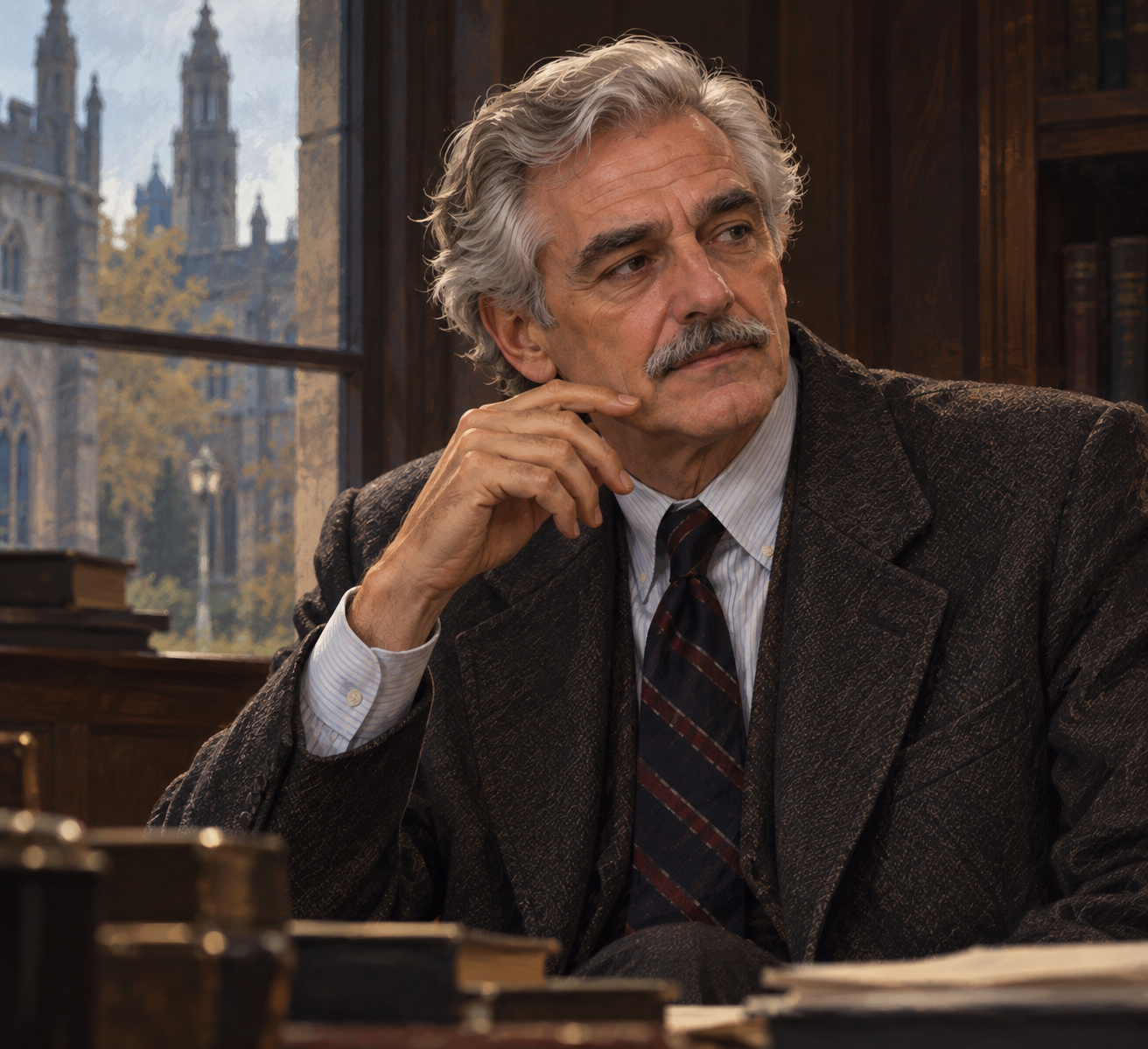
Alex secretly records his confession, but Belbalm drains his soul and kills him before he can face justice. His death is covered up as a heart attack.

Witnesses supernatural magic firsthand, helps expose the society drug operation, and ultimately cuts ties with Lethe after Sandow and Blake’s deaths are covered up.
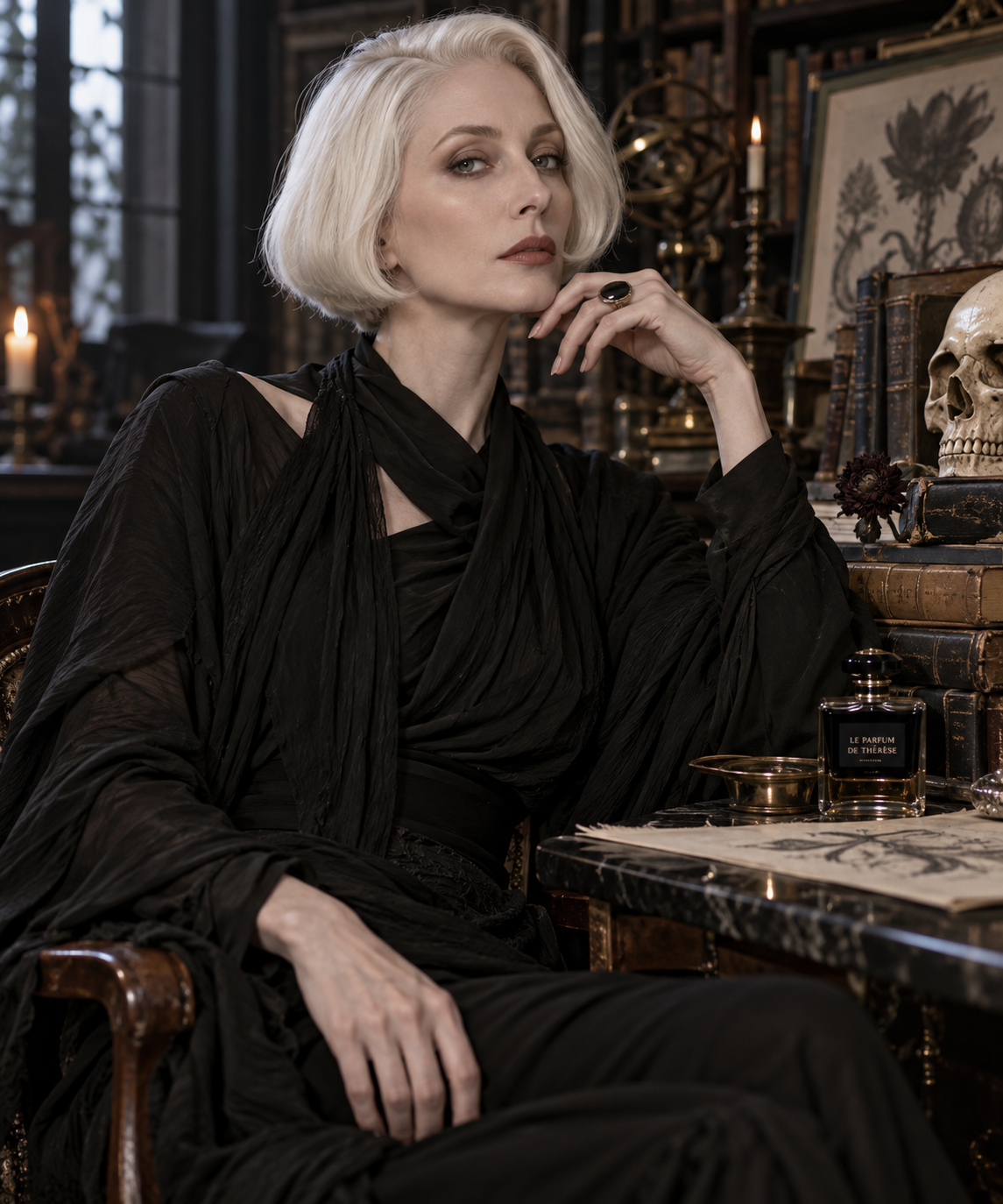
Kills Sandow and attempts to consume Alex, but Alex speaks the names of Belbalm’s previous victims, freeing their souls. They strip away Belbalm’s stolen essence until her body collapses into ancient dust.

Alex discovers North was possessed during an illicit Skull and Bones ritual and forced to shoot Daisy and himself. He learns Daisy was actually Belbalm and watches as the souls of her victims finally destroy her.

Dean Sandow stabs her through the heart at a carefully chosen intersection to create a new magical nexus for St. Elmo’s. Her soul remains missing, and Alex promises to eventually give her rest.
🔷 Supporting Characters

Survives the ritual and joins Alex and Dawes in their pact to descend into hell and rescue Darlington.
Alex humiliates Blake and forces him to delete the assault videos. Mercy later finds Alex with Mira and helps her recover.
Uses Merity to magically escape jail, fights Alex, and is later interrogated by Alex and Turner. His murder charges are dropped, though his drug charges remain.
Sandow magically compels him to attack Il Bastone and kill Alex, but Dawes smashes his head with a marble bust. He is posthumously framed as Tara’s murderer.
Turner and Alex verify his alibi and clear him of involvement in Tara’s murder. Pasted text
Is questioned about the experiments and faces major university fines and disciplinary action.
Alex physically assaults and threatens her until she hands over the key to the society’s subterranean river temple.
He is stitched back together, secretly returned to the hospital, and eventually discharged to a shelter.
Dies from a fentanyl overdose, then possesses Alex, enabling Alex to brutally beat five drug dealers to death with a baseball bat. Pasted text
Alex, while possessed by Hellie’s ghost, beats Len to death with a baseball bat at Ground Zero.
Alex/Hellie beats him to death with a baseball bat during the Ground Zero massacre.
Ariel is beaten to death during the Ground Zero massacre. Eitan survives and later demands $6,000 from Alex for the lost fentanyl.
Lauren supports Mercy after her assault, while Anna becomes convinced her roommates are witches. Both remain ordinary Yale students.
Travels to New Haven after Alex disappears for weeks and helps Mercy care for Alex and clean the Hutch during her recovery.
Dies when Alex is nine, but her teachings continue protecting Alex years later.
Dies of cancer when Darlington is fifteen; his ghost briefly appears during the Black Elm summoning ritual.
Survives and continues as an active member of Skull and Bones.
Backs down after Alex breaks the glamour by biting Darlington’s ear. Pasted text
Is questioned after the drug ring is exposed and faces university sanctions.
Is furious when Alex uses the magic to humiliate Blake but keeps quiet to avoid sanctions against Manuscript.
Daisy consumes her soul, trapping it for more than a century. Alex finally frees Gladys, whose ghost joins the other murdered women in destroying Belbalm.
Their souls remain trapped inside Belbalm until Alex speaks their true names, freeing them to swarm Belbalm and destroy her.
Survives and continues working hospital night shifts while remaining on the societies’ payroll.
🕳️ Potential Plot Holes
Lethe identifies Alex as a naturally gifted ghost-seer while she is still a child and continues tracking her through medical and public records. Yet no one approaches or assists her despite knowing that she possesses an extraordinarily rare ability and is suffering because of it. Lethe finally recruits her only after the Ground Zero murders and her near-fatal overdose. This is less a true plot hole than an unsettling reflection of how Lethe operates: the organization observes potentially useful people rather than necessarily protecting them. Still, given how valuable Alex eventually becomes, leaving her completely unsupported—and risking her death for years—is a questionable institutional decision.
📚 Book Club Q&A's
⭐ Final Rating & Thoughts
Ninth House completely pulled me into its dark, disturbing world. The combination of Yale secret societies, occult magic, ghosts, murder, and morally gray characters was exactly my kind of weird, and I loved how elaborate the world-building became. Alex is a fantastic protagonist—damaged, angry, complicated, and incredibly compelling—and Darlington was easily one of my favorite parts of the book.
That said, this definitely wasn’t a flawless reading experience. The beginning is dense and slow, and Bardugo throws an overwhelming number of names, societies, rituals, and timelines at you. I spent a good chunk of the book trying to remember who everyone was and how everything connected. The jumping timeline didn’t help, either.
But somehow, none of that mattered by the end. Once the pieces began falling into place, I was completely hooked. The mystery gets increasingly twisty, the supernatural elements become genuinely creepy, and the payoff made all that early confusion worthwhile.
It’s violent, graphic, complicated, and absolutely not for everyone—but for me, this was dark academia at its best. I’m completely invested in this world now, and I need more.
✨ Adaptation description
Screen Adaptation
Ninth House is being developed as a television series by Amazon Studios, with the project intended for Prime Video. The adaptation was first announced in October 2019, shortly after Leigh Bardugo’s novel was published. Bardugo is attached as a writer and executive producer, alongside executive producer Pouya Shahbazian.
Development has moved slowly. Bardugo revealed that a pilot script has been written, describing it as a pilot she “absolutely love[s].” She has also said that she was much more directly involved in the writing process than she was with the adaptation of Shadow and Bone, including helping break the story and working through notes. However, there is no evidence that the pilot was filmed. At the time of Bardugo’s update, the series had not yet entered announced production.
As of October 2026, the project is still described as being developed for television by Amazon Studios. No official cast, director, showrunner, production start date, episode count, or release date has been announced.
✨ Books Like Ninth House (2019)
See an error on this page?