
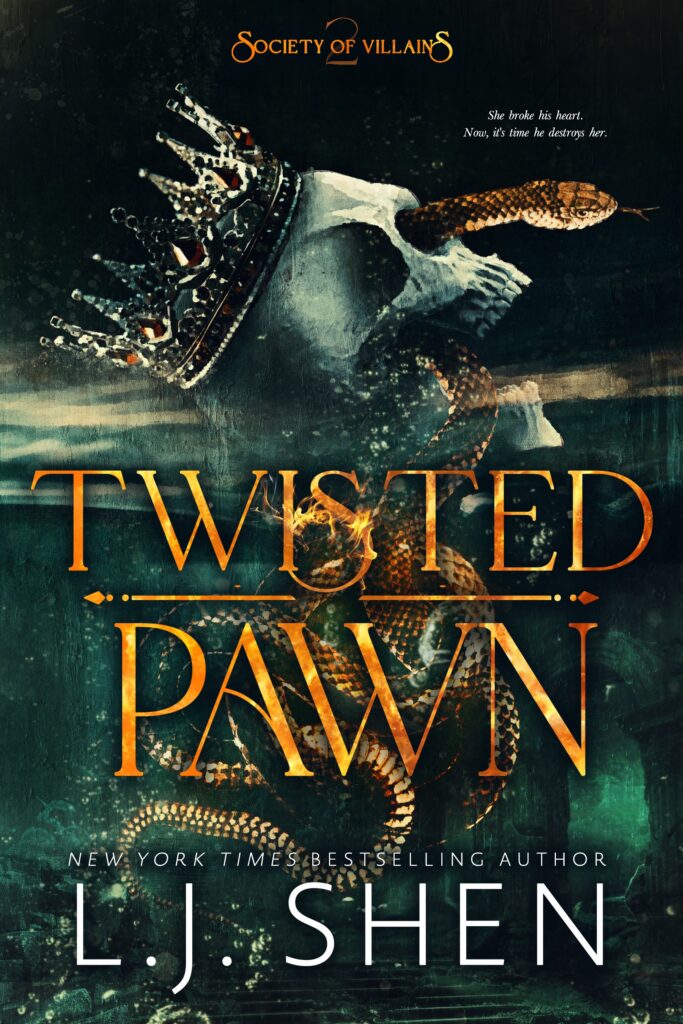
Twisted Pawn (2026)
Series
Select Sections to Print
×Book Details
Twisted Pawn (2026)
Series
Jump to Section
⚠️ Trigger Warnings
- Childhood sexual abuse
- Child rape / gang rape
- Sexual assault
- Sexual violence
- Dubious consent (dubcon)
- Consensual non-consent (CNC)
- Sexual coercion
- Choking / breath play
- Verbal sexual degradation
- Group sex / MMF sexual content
- Graphic sexual content
- Infertility
- Forced / emergency hysterectomy
- Medical trauma
- Graphic violence and gore
- Murder and execution
- Gun violence
- Throat cutting
- Decapitation
- Torture
- Mutilation / finger amputation
- Acid / chemical torture
- Waterboarding
- Venomous snake attack / death
- Explosions and terrorism
- Church violence / mass shooting
- Corpse mutilation and desecration
- Child abuse
- Child imprisonment
- Child labor
- Starvation
- Parental betrayal
- Suicide attempt
- Suicidal ideation
- Self-harm
- PTSD and severe trauma
- Panic attacks
- Night terrors
- Dissociation / memory suppression
- Stalking
- Breaking and entering
- Hidden surveillance / invasion of privacy
- Hacking and tracking
- Alcohol abuse
- Drug use / substance abuse
- Cocaine, morphine, and cannabis use
- Heavy smoking
⏱️ 2-Minute Spoiler Summary
Tierney Callaghan and Achilles Ferrante have been obsessed with each other since they were fourteen, when Tierney arrived in New York after escaping a Siberian prison camp. Traumatized and initially mute, she found comfort in Achilles, who secretly sat beside her at night until her nightmares passed. They eventually fell in love, but their relationship was destroyed when Tierney was eighteen. After Achilles nearly died rescuing her from a fire she started, his older brother Luca Ferrante threatened to kill Tierney if Achilles chose her over the Camorra. To protect Achilles, Tierney lied that she had deliberately tried to kill him. Believing her, Achilles spent the next eleven years punishing her while still obsessively protecting her—and murdering or maiming men who touched her.
In the present, Tierney is caught between the Irish mob led by her twin brother, Tiernan, and the powerful Ferrante Camorra family. After a bloody attack during her infant nephew’s christening, rival boss Stefano Coppola demands Tierney as his bride in exchange for peace. Achilles is ordered by his father, Don Vello Ferrante, to surrender her, but instead destroys the deal. Tierney and Achilles spend a weekend together, finally beginning to break through years of resentment.
Their fragile reconciliation collapses when Tierney reveals that she cannot have children because she has no uterus. Achilles realizes this resulted from the horrific abuse she suffered in Siberia and pushes her away, believing she deserves freedom from him. Hurt and angry, Tierney gives FBI agent Tom Rothwell evidence against the Ferrantes. Her estranged father, Tyrone Callaghan, exposes her betrayal to Don Vello. When Vello demands submission, Tierney instead bites off his pinky. Vello orders Achilles to kill her, but Achilles secretly gives her twenty-four hours to escape.
Tierney flees across Europe while Achilles tracks her, partly because he wants to make sure she survives. In Prague, assassin Tristan Hale appears to shoot Tierney in the head. She survives because the bullet fractures her skull without entering her brain. Achilles then abandons his claim to succeed Vello and tells Tierney that his father ordered the assassination.
As Tierney recovers, the truth about their past finally comes out. She admits Luca forced her to reject Achilles after the fire. She also tells Achilles what happened when she was twelve: five Siberian guards gang-raped her and assaulted her with a broken bottle so brutally that emergency surgery removed her uterus. Achilles learns the names of the five men and vows revenge.
The Ferrante family begins reorganizing itself against Vello. His sons tamper with his medication, leaving him incapacitated by a stroke, while Achilles beats Luca for destroying his relationship with Tierney. When Coppola later invades New York to claim Tierney, she fights back herself, killing several of his men. Achilles ultimately snaps Coppola’s neck.
Achilles then hunts down Tierney’s five childhood abusers and kills them. Tierney also confronts her father, who admits that he betrayed both twins because he has always blamed them for their mother Deidre’s death. Achilles releases his venomous Russell’s viper into Tyrone’s cage, and Tierney watches her father die.
One mystery remains: why did Tristan Hale fail to kill Tierney in Prague? When Achilles confronts him, Tristan reveals that he deliberately spared her because he wanted Achilles focused on Tierney instead of becoming Don. He then reveals an even bigger secret—he is actually Gurgen Ferrante, Don Vello’s illegitimate son and secret favorite. Achilles, Luca, and Enzo Ferrante accept their newly discovered half-brother into the family.
Finally free of the lies that separated them, Achilles takes Tierney to Naples, gives her a villa overlooking the coast, and proposes. They marry privately at city hall, with Tierney wearing red. Two weeks later, Enzo calls with the news that Don Vello has died. Luca becomes the new Don, and Tierney and Achilles prepare to return to New York for the funeral, knowing the change in leadership is likely to unleash another violent struggle for power.
📖 Full Spoiler Summary
A Bloody Christening Reunites Tierney and Achilles
Tierney Callaghan and Achilles Ferrante have spent most of their lives trapped in a cycle of love, hatred, obsession, and revenge. At twenty-nine, Tierney is the twin sister of Tiernan Callaghan, head of New York’s Irish mob, while Achilles is the feared underboss and enforcer of the Ferrante Camorra family. Their families are already intertwined: Tiernan is married to Achilles’s nineteen-year-old sister, Lila Ferrante, and the couple have a five-month-old son, Gennaro.
The story opens in Naples at Gennaro’s christening, where Tierney comes face-to-face with Achilles. Their reunion is violent even by Ferrante standards. During the ceremony, Achilles executes rival underboss Dante, a child molester, by slicing his carotid artery over the baptismal font. Moments later, masked gunmen attack the church. Red smoke fills the building, bullets fly, and a black stallion carrying a headless corpse packed with explosives enters the nave. Achilles throws himself over Tierney to protect her before the explosion knocks her unconscious.
Their complicated connection began fifteen years earlier. Tierney arrived in New York at fourteen after escaping a Siberian prison camp with Tiernan and their father, Tyrone Callaghan. She had endured horrific abuse and was initially mute. Achilles, also fourteen, began sneaking into her bedroom at night and simply sitting with her while she slept, helping keep her nightmares away. He became one of the first people she trusted.
That childhood bond eventually became love, although something terrible clearly happened between them before adulthood. In the present, Achilles behaves as if he hates Tierney while simultaneously refusing to let anyone else have her. When she sleeps with English DJ Hamish Upton, Achilles murders him. He has done the same to nearly every man who has touched her. The exception is Angelo Bandini, whose powerful Mafia connections make killing him politically dangerous, so Achilles settles for maiming his fingers.
Tierney Becomes a Bargaining Chip
The attack at the christening was orchestrated by rival Camorra boss Stefano Coppola, who offers Don Vello peace on one condition: he wants Tierney as his wife. Achilles immediately refuses, but Don Vello and Tiernan agree to the arrangement. Vello makes the stakes especially personal by promising to name Achilles his successor if Achilles gives Tierney up and personally delivers her to Coppola.
Tierney has no intention of becoming Coppola’s wife. During the flight to Italy, she makes Achilles an offer: give her one weekend with him in exchange for canceling the marriage.
Achilles agrees, but with his own condition. After their weekend together, Tierney will take $1 million, accept a new identity, leave North America, and disappear permanently.
He proves immediately that he has chosen Tierney over his father’s plans. Upon arriving in Naples, Achilles kills Coppola’s men waiting at the airport, effectively destroying the marriage agreement and any chance of a peaceful alliance.
The weekend also begins changing the way Tierney sees him. Their encounters can be rough, but Achilles consistently respects the boundaries she sets, including her safe word, “Ford Prefect,” taken from The Hitchhiker’s Guide to the Galaxy, which he used to read to her when they were teenagers. Beneath years of anger, their old intimacy is still there.
Then Tierney reveals something Achilles never knew: she cannot become pregnant because she does not have a uterus.
He immediately understands that her infertility must be connected to what happened in Siberia. Horrified by how much she suffered and ashamed of the cruelty he has directed at her over the years, Achilles abruptly pushes her away. He believes he is giving Tierney the freedom she deserves. To Tierney, it simply feels like another rejection.
Tierney Betrays the Ferrantes—and Bites Don Vello
Angry and devastated, Tierney contacts Tom Rothwell, a senior FBI agent who has spent years pursuing the Ferrante family. She gives him a USB drive containing encrypted evidence against Don Vello, Achilles, and Luca, but demands protection and immunity for Tiernan, Lila, and Achilles’s younger brother Enzo Ferrante.
Unfortunately, Tyrone has bugged Tiernan’s home. He learns about Tierney’s meeting and reports her betrayal directly to Vello.
Tierney is brought before the Ferrante patriarch, who offers her a humiliating path to forgiveness: kneel and kiss his pinky ring. The demand triggers memories of Siberia. Instead of submitting, Tierney grabs Vello’s hand with her teeth and bites his pinky completely off, then spits his blood back at him.
Vello orders Achilles to hunt her down and kill her.
Achilles appears to obey, but secretly gives Tierney a twenty-four-hour head start.
As she runs, the story finally begins revealing why two people who once loved each other became enemies. When Tierney was seventeen, she demanded that Achilles kiss her, and he proposed marriage. On her eighteenth birthday, Achilles arrived with an engagement ring and found her bedroom burning. He rushed inside to save her and was severely burned, leaving him permanently scarred and disfigured.
What Achilles never knew was what happened afterward.
The Lie That Destroyed Their Relationship
Tierney woke in the hospital to discover what Achilles had sacrificed to save her. There, Luca Ferrante, Achilles’s older brother, confronted her. Luca knew Don Vello would never accept Tierney as Achilles’s wife and warned her that if Achilles gave up his future as Don for her, Luca would kill her himself.
Tierney decided the only way to protect Achilles was to make him hate her.
She told him she had intentionally started the fire because he was too clingy and claimed she had actually hoped he would die trying to rescue her. Achilles believed every word. Heartbroken and furious, he swore to ruin her life.
For eleven years, both of them lived with the consequences of that lie.
Now Tierney flees through Europe using the identity Louise Fisher, aided by her friend Francesca “Frankie” Rossi-Keaton, the First Lady of the United States, and fixer Sam Brennan. Achilles tracks her using Jeremie Rasputin, an elite Bratva hacker being held by the Camorra.
When Achilles catches up with Tierney in Venice, she stabs him deeply in the thigh with a Swiss army knife. Instead of retaliating, he carries her to a motel, treats her injured ankle, pulls the blade from his own leg, and gives her money, maps, and instructions for reaching Prague safely.
Tierney follows his route and establishes a new identity there. Achilles follows secretly, wanting to make sure she is safe.
Then, as he enters her apartment, a suppressed gunshot rings out. Tierney is shot in the back of the head and collapses in a pool of blood. Standing nearby is elite assassin Tristan Hale.
The Truth About Siberia Finally Comes Out
Tierney wakes in a New York hospital two weeks later. The bullet fractured her skull but did not enter her brain, allowing her to survive. Achilles tells her Don Vello hired Tristan to kill her. In response, Achilles broke his father’s jaw, refused an arranged marriage to Katya Rasputin, and surrendered his claim to become the next Don.
He takes Tierney to a secluded Maryland cabin to recover. Their years of hostility finally begin to unravel, and Tierney tells him everything.
At twelve, she was gang-raped by five guards in the Siberian camp—Dmitri, Vitali, Vlad, Bogdan, and Pavel. They also assaulted her with a broken vodka bottle, causing catastrophic internal injuries. A camp veterinarian performed emergency surgery and removed her uterus.
She also confesses that she started the fire at eighteen because she believed she was unworthy of Achilles, and that Luca later forced her to destroy their relationship.
Achilles finally understands that the woman he spent eleven years punishing had actually rejected him to save his life.
He asks for the names of the five men who abused her.
The Ferrante Family Turns Against Vello
The old Ferrante power structure now begins collapsing. Achilles confronts Luca in the woods and beats him, breaking his nose for destroying his future with Tierney. Despite their violence toward each other, the brothers remain part of the same family.
Vello’s own sons also tamper with his medication, causing a debilitating stroke. The once-powerful patriarch ends up incapacitated in a wheelchair, drooling and missing the finger Tierney bit off.
The family begins forming new alliances without him. Enzo becomes engaged to Katya Rasputin, strengthening peace between the Camorra and Bratva. Jeremie Rasputin arranges to remain in New York as bodyguard to Luca’s pregnant wife, Sofia Bandini Ferrante.
But Coppola has not forgotten Tierney.
He brings armed men to New York to claim her by force. Achilles orders Tierney to remain safely at Tiernan’s estate, but Tierney refuses to sit out the fight. She returns to Achilles’s penthouse, retrieves a suppressed pistol, and kills three of Coppola’s men.
Coppola eventually captures her and zip-ties her to a kitchen stool. Achilles arrives with a shotgun, but Tierney continues fighting even while restrained. She lunges at Coppola and tries to strangle him. Coppola shoots her, but her bulletproof vest stops the round.
Achilles tackles Coppola and snaps his neck.
The marriage bargain that began the conflict is finally dead with him.
Achilles Takes Revenge for Tierney
Achilles now turns his attention to the five men who destroyed Tierney’s childhood. He tracks down Dmitri, Vitali, Vlad, Bogdan, and Pavel and executes all of them, then burns their remains in his parents’ backyard pizza oven.
Tierney has one more piece of her past to confront: her father.
Tyrone has been imprisoned in the Ferrantes’ basement since his betrayal. He admits that he deliberately exposed Tierney to Vello because he has always hated both twins, blaming Tierney and Tiernan for the death of their mother, Deidre Callaghan.
Achilles places his venomous Russell’s viper, Zelda, inside Tyrone’s cage. The snake bites Tyrone’s foot, and Tierney watches as her father dies from the venom.
With Tyrone gone and her childhood abusers dead, the people responsible for much of Tierney’s suffering have finally been eliminated.
Tristan Hale Reveals Who He Really Is
Achilles still wants an answer about Prague. Tristan Hale is supposedly one of the best assassins alive, yet his point-blank shot somehow failed to kill Tierney.
Achilles corners him and demands the truth.
Tristan admits that he missed intentionally.
Although Vello hired him to kill Tierney, Tristan had his own agenda. He wanted Tierney alive because she was Achilles’s greatest weakness—his “pawn.” As long as Achilles was focused on protecting her, he would be less interested in fighting for control of the Ferrante empire.
Then Tristan reveals the family’s biggest secret.
His real name is Gurgen Ferrante. He is Vello’s illegitimate son, born to a Philadelphia prostitute and secretly raised in Georgia. He is also the mysterious il prediletto—Vello’s hidden favorite son.
Instead of killing him, Luca, Achilles, and Enzo recognize Gurgen as their half-brother and bring him into the family’s operations.
Tierney and Achilles Finally Marry
With the truth between them finally exposed, Achilles takes Tierney back to Naples. He gives her a villa in Posillipo overlooking the coast and proposes with an emerald-and-diamond ring once owned by Queen Maria Carolina of Austria.
Most importantly, he promises Tierney something she has rarely possessed in her life: genuine freedom.
She accepts.
After fifteen years of trauma, manipulation, separation, and obsession, Tierney and Achilles marry privately at Naples city hall. Tierney wears a red dress.
Two weeks later, they are relaxing at their villa when Enzo calls with news from New York: Don Vello has been found dead in his bed.
With Vello gone, Luca is officially crowned the new Don and head of the Ferrante empire. His rise is certain to invite challenges from rival clans eager to test the new leadership.
Tierney and Achilles pack for New York and prepare to attend Vello’s funeral. They choose red for the occasion, fully expecting that the transfer of power may bring another bloodbath.
This time, however, Tierney and Achilles are no longer fighting each other. They are heading into whatever comes next together.
🔚 Ending Explained
How the Book Ends
The ending brings Tierney and Achilles’s story full circle through a mix of brutal retribution, emotional closure, and a surprisingly domestic happily-ever-after—although the final pages make it clear that peace in their world is never going to last for long.
Achilles first fulfills his promise to avenge what happened to Tierney as a child. He tracks down the five Siberian camp guards—Dmitri, Vitali, Vlad, Bogdan, and Pavel—who abused her, executes them, and incinerates their remains in an outdoor pizza oven at his parents’ estate. It is ruthless even by the novel’s standards, but it eliminates some of the last living figures connected to Tierney’s childhood trauma.
Tierney then gets her own reckoning with her father, Tyrone Callaghan. Achilles has imprisoned Tyrone in a cage in the Ferrantes’ basement, where he finally admits the truth about his betrayal. He turned against Tierney and Tiernan because he had spent years blaming them for the death of his wife, Deidre, in Ireland. Rather than simply killing him, Achilles releases his Russell’s viper, Zelda, into the cage. The snake bites Tyrone’s foot, and Tierney remains there to watch her father die. His death gives her a definitive ending to a relationship built on resentment, abandonment, and betrayal.
The last major threat is Stefano Coppola, who comes to New York determined to take Tierney by force. Tierney proves she no longer needs to wait helplessly for someone else to save her: when Coppola’s men storm Achilles’s penthouse, she shoots three of them herself. Coppola eventually captures her and zip-ties her to a stool, but Achilles arrives with a hunting shotgun. Tierney lunges at Coppola, taking a shot that only grazes her bulletproof vest, and Achilles finishes the fight by tackling Coppola and snapping his neck.
Another mystery is resolved when Achilles confronts the assassin Tristan Hale about why he deliberately missed his opportunity to kill Tierney in Prague. Hale admits that sparing her was intentional: as long as Tierney remained Achilles’s weakness—his “pawn”—Achilles would be distracted from the struggle to become Don. Hale then reveals his real identity: he is Gurgen Ferrante, Don Vello’s illegitimate and secretly raised favorite son. Rather than treating Gurgen as an enemy, Luca, Achilles, and Enzo ultimately bring their newly revealed half-brother into the Ferrante operation.
With their enemies dealt with, Achilles takes Tierney to Posillipo, Naples, where he shows her a yellow villa overlooking the Mediterranean. He proposes with a nineteenth-century emerald-and-diamond ring once belonging to Queen Maria Carolina of Austria. More importantly, he promises Tierney something she has rarely possessed: genuine freedom. Achilles will oversee the Camorra’s Naples operation, but their life together will not be another prison for her.
Tierney accepts.
A week and a half later, they marry quietly in a civil ceremony at Naples city hall. Tierney wears red rather than traditional bridal white.
The epilogue takes place two weeks after their wedding. Achilles and Tierney have settled into their coastal villa, and their life has taken on an almost startling domestic normalcy. Tierney makes Achilles coffee in the mornings, fulfilling his long-held fantasy of what real intimacy and happiness would look like.
Then Enzo calls.
Don Vello Ferrante is dead, found in his bed in New York.
His death means Luca Ferrante becomes the new Don, inheriting the throne Achilles once desperately wanted. But a new king means vulnerability. Rival syndicates will inevitably test Luca and the Ferrantes to see whether their empire can survive the transition.
Achilles and Tierney prepare to return to New York for Vello’s funeral. Achilles tells his new wife to pack red.
They aren’t simply going home to bury the old king.
They are heading directly into the next bloodbath.
What the Ending Means
The most important image in the ending is the pawn becoming a queen. Throughout the novel, Tierney is treated as something other people can move around the board. Don Vello sees her as an isolated pawn he can manipulate against Achilles, while numerous men attempt to control, possess, exploit, or destroy her.
But a pawn that survives long enough to cross the board can be promoted.
That is Tierney’s arc. She does not escape the violent world surrounding her so much as reach the other side of it with her autonomy intact. The symbolism becomes especially pointed when Achilles gives her Queen Maria Carolina’s ring. Tierney began as someone else’s pawn and ends wearing a queen’s jewelry, choosing for herself where she lives, whom she loves, and what kind of life she wants.
That transformation also explains why Tierney’s role in the final violence matters. Achilles certainly protects her, but she is no damsel waiting for rescue. She shoots Coppola’s soldiers and physically throws herself into the final confrontation. By the time Achilles kills Coppola, Tierney has already demonstrated that she is an active participant in her own survival.
Red reinforces that transformation. Tierney marries in red and intends to attend Vello’s funeral in red. It connects to her identity as “Little Flame,” but it also rejects the conventional symbolism of both weddings and funerals. She is neither an innocent bride in white nor a submissive mourner in black. She enters both occasions unmistakably as herself.
The quieter symbol is coffee. For Achilles, morning coffee has represented the ordinary intimacy he has wanted since he was fourteen. After all the assassinations, betrayals, mafia politics, revenge, and obsession, happiness turns out not to be becoming Don. It is waking up beside Tierney and having her make him coffee. That tiny domestic ritual carries more emotional weight for him than the criminal empire he once wanted to inherit.
That is why Achilles giving up his ambition to become Don is arguably his most important decision. Earlier, power appeared to be the ultimate prize. By the end, Achilles understands that winning does not mean sitting on Vello’s throne. Luca gets the crown; Achilles gets the life he actually wants.
Tierney makes a parallel choice. Her victory isn’t forgetting what happened to her or pretending that her trauma no longer matters. She confronts the people connected to it, watches her father die, allows herself to love Achilles, and finally stops organizing her entire existence around survival and emotional self-protection. Her surrender to Achilles is therefore not meant as surrendering her autonomy—it represents finally feeling safe enough to be vulnerable.
There is also deliberate poetic justice in the fates of the villains. The Siberian guards, Tyrone, Coppola, and eventually Don Vello are all removed from the board. In the novel’s dark moral universe, people who exploit vulnerability eventually become victims of the violence they created.
The Final Twist
The ending gives Tierney and Achilles their romantic resolution without pretending their world has suddenly become safe.
Vello’s death resets the entire Ferrante hierarchy. Luca becomes Don in New York, Achilles controls the Naples branch, Enzo remains a key Ferrante operator, and Gurgen emerges from the shadows as another powerful member of the family. Instead of Achilles becoming the single dominant Ferrante, power is now distributed among the brothers.
And Luca’s reign is beginning at the worst possible moment. Vello’s death creates an opening for every rival organization waiting to challenge Ferrante supremacy.
That makes Achilles’s final instruction to “pack red” both romantic and ominous. Red has become Tierney’s color of love, identity, defiance, and bloodshed. Her marriage has given her the freedom she spent the novel fighting for, but freedom does not mean leaving this world behind.
Tierney began the story as a pawn other people believed they could sacrifice. She ends it as a queen willingly returning to the board—and this time, she knows exactly how the game is played.
👤 Characters & Fates
🔶 Main Characters

Survives Tristan Hale’s assassination attempt, learns the truth about her family’s betrayals, and confronts her past. She marries Achilles in Naples and becomes his partner in leading the Camorra’s Neapolitan branch.

Reconciles with Tierney, executes her former Siberian abusers, and helps bring down Don Vello. He gives up the New York throne, moves to Naples, buys Tierney a villa in Posillipo, marries her, and takes control of the Camorra’s Neapolitan operations.

Tierney bites off his pinky during an interrogation, after which his sons secretly tamper with his medication and cause a massive stroke that leaves him incapacitated. Two weeks after Tierney and Achilles marry, Vello is found dead in his bed.

Protects Tierney from Don Vello, punches Achilles over his treatment of her, and eventually supports their marriage. He remains head of the Irish mob and raises Gennaro with Lila.
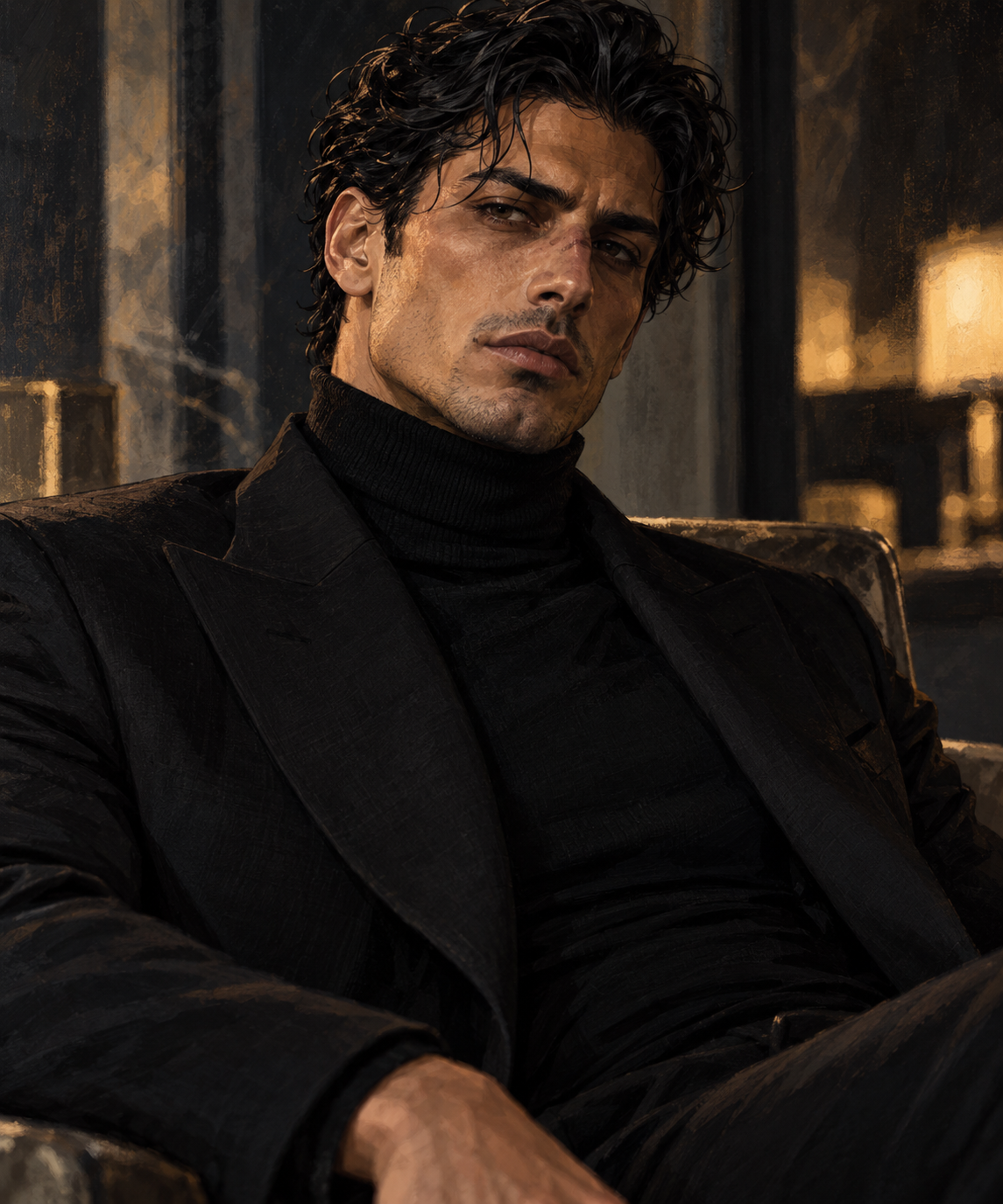
Achilles breaks Luca’s nose after learning what he did. After Don Vello dies, Luca finally achieves his lifelong ambition and becomes the new Don in New York.

Accepts a political engagement to Katya Rasputin while secretly intending to give her complete freedom. He remains in New York as Luca’s right-hand man and tells Achilles that Don Vello has died.
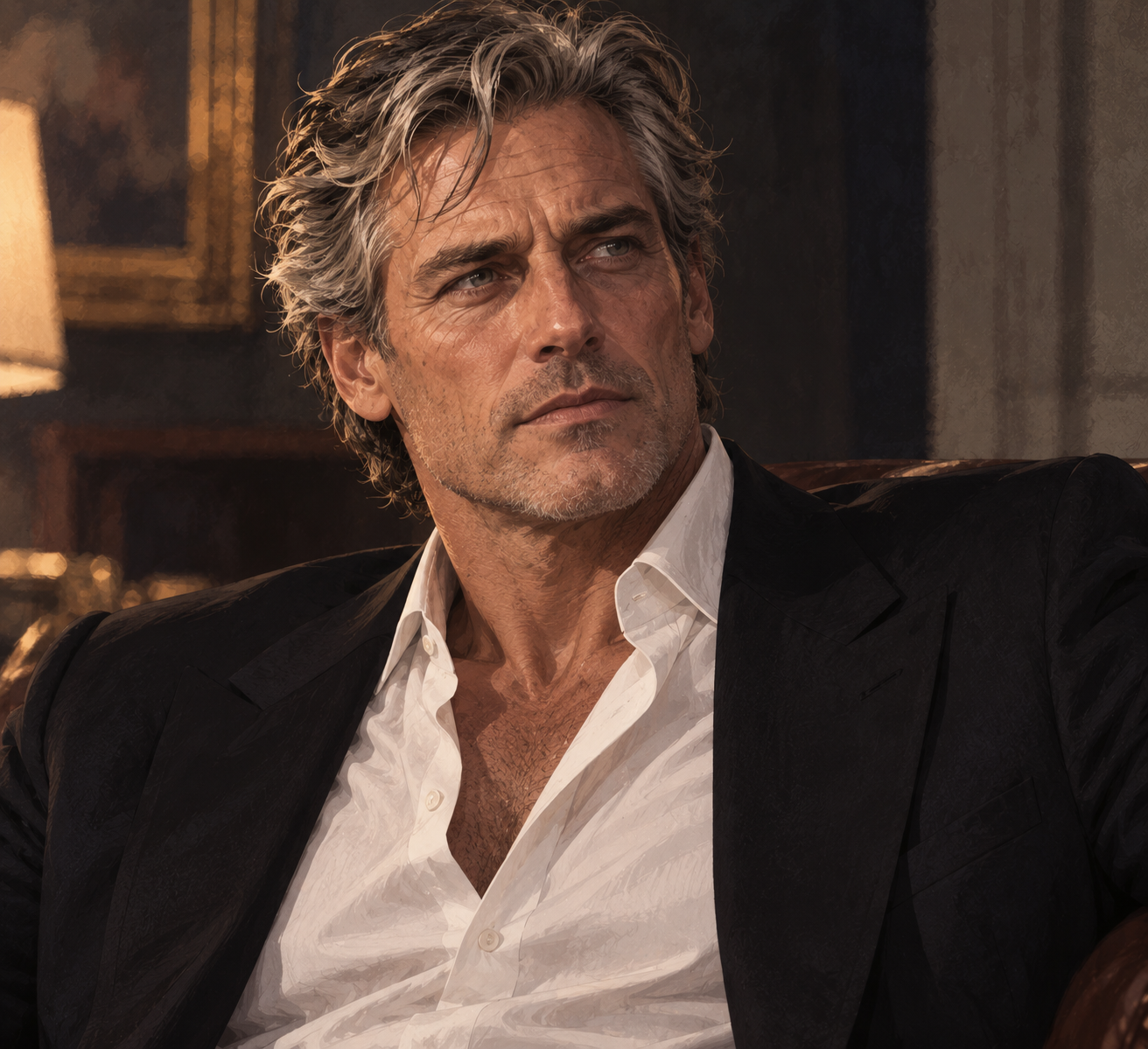
He is captured and imprisoned in a cage, where he admits he has hated his children for years. Achilles releases his venomous Russell’s viper, Zelda, into the cage, and Tierney watches her father die from the snakebite.

Achilles corners him behind Fermanagh’s pub, where Tristan unmasks himself and reveals his true identity. Luca, Achilles, and Enzo ultimately accept their secret brother into the Camorra’s upper ranks.
🔷 Supporting Characters

Nurses Tierney during her recovery in New York and remains happily married to Tiernan, raising their infant son Gennaro.
Breaks into Achilles’s penthouse and zip-ties Tierney to a stool, but Achilles attacks him during the confrontation and snaps his neck, killing him instantly.
Remains Bratva Pakhan, expands his territory east of Texas, and continues as a powerful ally of the Camorra and Irish mob.
Becomes Sofia and baby Ciro’s long-term bodyguard in New York, allowing him to remain close to the woman he loves.
Remains in Manhattan raising Ciro while Jeremie Rasputin quietly protects her and stays close to her.
Her engagement is transferred from Achilles to Enzo, preserving the political alliance while Enzo privately intends to allow her complete freedom.
Continues investigating the Camorra and maintains a tense, charged rivalry with Enzo Ferrante.
Remains First Lady and one of Tierney’s loyal friends.
Leaves consensual bruises on Tierney that trigger Achilles’s murderous jealousy.
Achilles takes him to an abandoned Brooklyn warehouse and executes him with a point-blank gunshot to the face.
Achilles spares his life but brutally maims his fingers so he can never touch Tierney again.
Years later, Achilles tracks down and executes all five men in revenge for what they did to Tierney, then incinerates their remains in an outdoor pizza oven.
🕳️ Potential Plot Holes
Luca claims Tierney fled to a country with no extradition treaty with the United States, but her escape takes her through Italy, Slovenia, Austria, and ultimately the Czech Republic. All have extradition arrangements with the U.S., so none fits Luca’s description. Unless Tierney secretly traveled somewhere else off-page, this is a genuine geographical and legal error.
Tristan later claims he deliberately spared Tierney because he wanted her alive as Achilles’s weakness. Yet his method of “sparing” her was shooting her in the back of the head at close range. Tierney survives because the bullet fractures her skull without penetrating her brain, but that outcome would be extraordinarily difficult to guarantee. For an elite assassin intentionally trying to preserve someone as a useful pawn, a headshot is an implausibly uncontrollable choice.
Tierney gives FBI Agent Tom Rothwell extensive evidence implicating the Ferrantes in serious organized crime, while Rothwell later claims to have linked Achilles to eleven homicides. Despite this apparently substantial case, the investigation effectively disappears from the plot. Rothwell continues interacting with the characters, but the FBI produces no meaningful warrants, arrests, raids, or other consequences. It is possible the Ferrantes’ influence and lack of admissible evidence could hinder prosecution, but the novel never adequately explains why such a major investigation simply fizzles out.
Achilles claims to have monitored Tierney for years using GPS tracking, constant bodyguards, and even a hidden camera inside her apartment. Yet Tierney is still able to bring men such as Hamish Upton and Tucker Reid home and sleep with them without Achilles preventing it. Achilles may not literally watch the camera feed every moment, but the combination of continuous tracking, surveillance, and multiple bodyguards makes these repeated encounters difficult to reconcile with the level of control the book says he maintains.
Tyrone Callaghan is a significant longtime figure in the Irish criminal organization, yet he can apparently disappear for an extended period while imprisoned in the Ferrantes’ basement without anyone outside the immediate family seriously investigating. Tiernan’s position as leader could allow him to provide a cover story and discourage questions, so Tyrone’s disappearance is not impossible. Still, the novel never establishes such a cover story, leaving an unexplained gap around how a prominent mob figure could vanish without attracting meaningful attention.
📚 Book Club Q&A's
⭐ Final Rating & Thoughts
Twisted Pawn is exactly the kind of dark romance I love: completely unhinged, wildly entertaining, emotional, and impossible to put down. Achilles and Tierney are both deeply damaged characters, and their relationship is toxic, obsessive, messy, and somehow incredibly compelling. I was invested in them from beginning to end.
What really elevated this for me was that underneath all the violence, revenge, and mafia insanity, there’s a surprisingly emotional story about trauma, forgiveness, and learning the difference between loving someone and controlling them. Achilles is basically a walking red flag, but I loved watching his relationship with Tierney evolve as he begins to understand that what she needs most is the freedom to make her own choices.
The banter was another huge highlight. With a story this dark, the humor could easily have felt out of place, but it worked for me and gave the book some much-needed breathing room.
It’s brutal, over-the-top, romantic, funny, and completely addictive. I laughed, I cried, and I absolutely devoured it. L.J. Shen got me again.
✨ Adaptation description
Adaptation
As of October 2026, Twisted Pawn by L.J. Shen does not have an announced film or television adaptation. No studio, production company, streaming service, director, cast, or screenwriter has been officially attached to the novel.
Published in April 2026, Twisted Pawn is the second book in Shen’s Society of Villains dark mafia romance series and centers on Tierney Callaghan and Achilles Ferrante. Although L.J. Shen’s work has attracted screen interest in the past, there has been no publicly announced option or adaptation deal specifically for Twisted Pawn.
✨ Books Like Twisted Pawn (2026)
See an error on this page?