
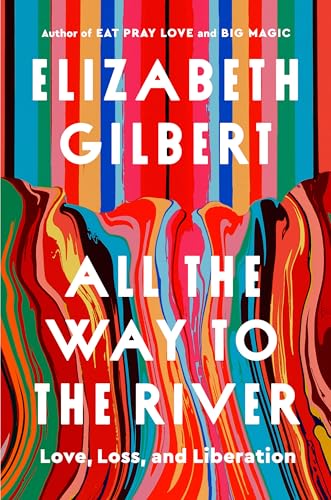
All the Way to the River (2025)
Select Sections to Print
×Book Details
All the Way to the River (2025)
Jump to Section
⚠️ Trigger Warnings
- Substance abuse and addiction
- Intravenous drug use
- Heroin and cocaine use
- Prescription opioid misuse
- Alcohol abuse
- Drug relapse
- Needles
- Terminal cancer
- Chemotherapy
- Severe illness and physical decline
- Hospice and end-of-life care
- Vomiting blood
- Homicidal ideation
- Premeditated murder
- Planned fatal overdose
- Suicidal ideation
- Self-harm
- Mental health crises
- Paranoia
- Hallucinations
- Sex and love addiction
- Codependency
- Emotional manipulation
- Toxic relationship dynamics
- Emotional and verbal abuse
- Domestic conflict
- Death and dying
- Graphic descriptions of death
- Corpse handling
- Grief and bereavement
- Abduction
- Sexual assault
- Gun violence
⏱️ 2-Minute Spoiler Summary
Elizabeth “Liz” Gilbert begins her memoir on her fifty-fourth birthday, more than five years after the death of Rayya Elias, her best friend, partner, and great love. Liz experiences what she believes is a visitation from Rayya, who tells her that their turbulent love story happened exactly as it needed to and urges her to tell the truth about what really happened between them. That means recounting not only Rayya’s cancer and death, but also her relapse into drug addiction and Liz’s own destructive codependency.
Liz first meets Rayya in 2000, when a friend recommends her as a hairdresser. Rayya is a Syrian-born punk musician, filmmaker, writer, and recovering heroin and cocaine addict who has survived homelessness, prison, and rehab. They quickly become extraordinarily close. Rayya has a system for describing friendships based on New York City geography, with an “all the way to the East River” friend being the person who knows everything about you and will never leave. Liz and Rayya become that person for each other.
After Liz becomes famous through Eat Pray Love, she buys an old church in New Jersey. When Rayya goes through a painful divorce from Gigi, Liz lets her stay there in 2008. What is supposed to be a summer arrangement turns into nearly nine years, with Liz increasingly supporting Rayya financially and emotionally. At the same time, Liz fails to recognize how dependent she has become on being Rayya’s rescuer.
Rayya has been sober for years, but she secretly begins drinking Angostura bitters, which contain a high percentage of alcohol. Later, after her family tells her they believe she can drink normally, she openly returns to alcohol. Friends from her recovery community warn her, but Liz defends her and refuses to acknowledge the seriousness of the relapse.
Everything shifts in April 2016, when Rayya is diagnosed with terminal pancreatic and liver cancer and told she may have only six months to live. Faced with losing her, Liz realizes she is romantically in love with Rayya. She leaves her second husband, Jose/Felipe, tells Rayya how she feels, and learns that Rayya loves her too. They become a couple and throw themselves into making Rayya’s remaining life as full and pleasurable as possible.
As Rayya’s cancer worsens, however, prescribed opioids reactivate her drug addiction. By 2017 she is injecting cocaine, and Liz becomes deeply involved in enabling her. She gives Rayya cash for drugs, obtains clean needles by pretending to be an intravenous drug user, and even helps Rayya inject herself. Their home deteriorates into a drug-filled, paranoid environment, while Rayya becomes increasingly abusive and Liz becomes increasingly unstable.
Liz eventually reaches such a desperate state that she plans to kill Rayya with an overdose and then considers killing herself. Instead, she finally asks for help. Friends attempt an intervention, but Rayya refuses it. Liz ultimately realizes that loving Rayya does not mean participating in her destruction. She apologizes for her own codependency, establishes a boundary against further abuse, and leaves.
Rayya then calls her former girlfriend Stacey in Detroit for help. Stacey takes her in, removes access to drugs, restores hospice care, and helps her detox from cocaine. Liz eventually visits, and she and Rayya reconcile. Rayya asks Liz to tell her exactly what she did while she was using. Liz does so without hiding anything, and they forgive each other.
As Rayya approaches death, friends and family gather around her in Michigan. On Christmas night, everyone believes she is dying, only for her to wake up the next morning and insist on going to a Lululemon sale. Her actual death comes soon afterward. On January 4, 2018, at age fifty-seven, Rayya dies with Liz beside her. Liz remains with her body for hours, keeping her promise that Rayya will not be alone.
Rayya’s death does not immediately cure Liz of her own addictive patterns. Less than a year later, she falls into another obsessive romantic relationship and is devastated when it ends. This finally forces her to acknowledge that sex and love addiction and codependency are her own problems, independent of Rayya. She commits fully to twelve-step recovery, gets a sponsor, works the steps, addresses her financial behavior, and eventually stops drinking alcohol as well.
Years later, Liz lives alone in her New Jersey chapel and no longer organizes her life around finding someone to rescue, love, or be loved by. She understands Rayya as the person who accompanied her “all the way to the river,” but surviving Rayya ultimately requires Liz to learn how to stand on her own.
📖 Full Spoiler Summary
Rayya Returns
Elizabeth “Liz” Gilbert begins her memoir on the morning of her fifty-fourth birthday, alone in her New York City apartment more than five years after the death of Rayya Elias, her best friend, partner, and great love. Liz experiences what she understands as a spiritual visitation from Rayya, who assures her that their extraordinary and often disastrous relationship happened exactly as it needed to.
Rayya also gives Liz an assignment: stay committed to twelve-step recovery and tell the truth about what happened between them. No protecting reputations, cleaning up ugly details, or pretending their relationship was simply a beautiful story about love and terminal cancer. To explain why, Liz goes back more than twenty years.
Becoming “All the Way to the River” Friends
Liz first meets Rayya in 2000 after a friend recommends her as a hairdresser who can handle Liz’s frizzy hair. Thirty-one-year-old Liz is still married to her first husband when she arrives at Rayya’s walk-up apartment on Avenue C.
Rayya immediately fascinates her. Born in Aleppo, Syria, raised in Detroit, and eventually transplanted to New York’s Lower East Side, Rayya is an androgynous punk musician, filmmaker, hairdresser, and recovering heroin and cocaine addict. She openly shows Liz the scars left by injecting speedballs and talks about her history of addiction, homelessness, prison, and rehab.
Their friendship deepens over the years. Rayya has her own New York City map for measuring intimacy: Fifth Avenue friends barely know you, First and Second Avenue friends share real history, and Alphabet City friends have seen you at your worst. Beyond all of them is the rare person who will go with you “all the way to the East River”—someone who knows your darkest secrets and will not abandon you. Liz and Rayya become that for each other.
Yet Liz eventually recognizes that their closeness is also entangled with her own addictive patterns. Her drugs of choice are not heroin or cocaine but romance, sex, love, codependency, and the feeling of being desperately needed by another person.
After the enormous success of Eat Pray Love, Liz buys an eighteenth-century chapel in rural New Jersey. In 2008, when Rayya is devastated by her divorce from her wife and real estate partner, Gigi, Liz offers her the church for the summer. Three months gradually becomes almost nine years.
Liz provides Rayya with a place to live and later a nine-month artist residency so she can write her memoir, Harley Loco. Rayya, in return, becomes Liz’s protector, confidante, social shield, and emotional anchor. She can be startlingly direct, as when she confronts their friend Tina about the denial surrounding her abusive marriage, but she can also show remarkable compassion, including toward a young meth addict she encounters at a family funeral.
Liz increasingly sees Rayya as the fearless, wise person who can handle anything. That image makes it easier for her to ignore what is happening directly in front of her.
The Relapse Liz Refuses to See
Despite her long sobriety, Rayya begins carrying bottles of Angostura bitters everywhere, supposedly to help her stomach. The explanation should raise alarms: bitters are nearly 45 percent alcohol. Instead, Liz accepts it because acknowledging Rayya’s drinking would threaten the story she wants to believe about her.
The situation becomes more obvious around 2013, when both women are enjoying professional success—Rayya with Harley Loco and Liz with The Signature of All Things. Rayya announces that her family in Detroit has essentially staged a “reverse intervention,” telling her they think she can safely drink wine.
Soon she is drinking wine and liquor regularly. Friends from her recovery community confront her and worry about what alcohol is doing both to her sobriety and to a liver already damaged by hepatitis C. Rayya pulls away from many of them. Liz sides with Rayya, defending and enabling her while remaining largely blind to the distress Rayya records privately in her journals.
Then the situation becomes far more serious.
Cancer Turns Friendship Into Romance
On April 25, 2016, Rayya is diagnosed with advanced pancreatic and liver cancer and told she may have only six months to live.
The prospect of Rayya’s death strips away Liz’s remaining denial about her own feelings. She realizes that Rayya is not merely her closest friend: she is in love with her. Liz ends her second marriage to Jose/Felipe and confesses her feelings. Rayya reciprocates, and after years of friendship, the two women become lovers.
They plunge into their new relationship with the urgency of people who believe they have almost no time. Liz abandons writing projects and public commitments, spends freely on luxury purchases and bucket-list experiences, and devotes herself to making Rayya happy. Filmmaker Marc Francis begins documenting Rayya’s final months, while family and friends—including Rayya’s nephew Sami—become part of their chaotic new life.
By late summer, Rayya’s abdominal pain becomes unbearable and she begins chemotherapy at Memorial Sloan Kettering. Liz becomes her full-time caregiver. When Rayya cannot sleep, Liz invents elaborate bedtime narratives she calls “the peoples stories,” and in exhausted late-night hours she writes to her friend Martha about what they are enduring.
Rayya eventually decides that chemotherapy is costing her too much of the freedom she has left and stops treatment in October 2016. For a while, she rallies. She and Liz travel, drink wine, take psychedelic mushrooms, and continue trying to wring as much life as possible from whatever time remains.
But the cancer is still advancing.
Addiction Takes Over
By early 2017, Rayya requires powerful prescription opioids—including morphine, methadone, and fentanyl—to control her pain. For a former heroin and cocaine addict, the consequences are disastrous. Her dormant addiction comes roaring back, and before long she is injecting cocaine.
Liz does not simply witness the relapse. Her codependency pulls her directly into it.
She withdraws large amounts of cash so Rayya can buy street drugs. She goes to a harm-reduction clinic in Chinatown and registers herself as an intravenous drug user so she can obtain clean needles. As Rayya’s usable veins disappear, Liz helps her inject cocaine into her hands, feet, and neck.
Their East Village penthouse becomes a drug den filled with smoke, paranoia, illness, and verbal abuse. Liz, exhausted from caregiving and consumed by the belief that she must somehow save Rayya, begins losing her own grip on reality.
The crisis peaks in July 2017. Liz becomes convinced that the only solution is to kill Rayya and end both of their suffering. She formulates a plan involving sleeping pills and fentanyl patches and returns to the apartment intending to carry it out.
Before she can, Rayya looks at her and warns her not to start plotting against her.
The comment breaks through Liz’s delusion. She realizes she cannot save Rayya, control Rayya, or kill Rayya. She leaves the apartment and wanders the streets thinking about suicide. Then an inner voice she identifies as God tells her to stop trying to solve everything herself and ask for help.
Liz Finally Leaves
Liz contacts people from their spiritual and recovery circles, including Barb Morrison, an old friend of Rayya’s who is also in recovery, and finally tells them how bad things have become.
Friends attempt an informal intervention, but Rayya is high and furious. She rejects their efforts and lashes out at Liz, telling her she wishes they had never become a couple. Liz retreats uptown to sleep on the couch of her friend Sheryl.
By late August, Liz understands that she has to do something she has spent much of her life avoiding: allow another person to suffer without making herself responsible for fixing it.
She meets Rayya privately, takes her hands, and apologizes for her own codependency and dishonesty. But she also draws a boundary. She will no longer accept Rayya’s abuse or participate in her addiction. Then she leaves the relationship.
Stacey Brings Rayya Back
Help ultimately comes from Stacey, Rayya’s former girlfriend in Detroit. Rayya calls her and asks to be rescued. Stacey brings her to Michigan and gives her something Liz had been unable to provide: uncompromising boundaries.
She removes the drugs, carefully manages Rayya’s medications, restores hospice care, and helps her detox from cocaine.
Later that autumn, Liz travels to Detroit and enters Stacey’s home as a guest rather than Rayya’s rescuer. Rayya is now lucid and peaceful. Lying together in bed, Rayya asks Liz to tell her exactly what she did during the drug binge.
Liz does not soften the story. She recounts what happened without condemning her. Rayya listens, accepts responsibility, and asks for forgiveness. Liz forgives her, and Rayya forgives Liz as well. Their romantic relationship may have collapsed under addiction and codependency, but their love remains.
Rayya Reaches the River
As Rayya weakens, the people who have mattered throughout her life gather in Michigan. Her sister Maha, childhood friend Anita, ex-wife Gigi, and others come to say goodbye.
Even now, Rayya remains unmistakably herself. During a pre-Christmas trip to the mall with Liz and Stacey, she casually tells her entire life story to a young green-haired Apple Store employee.
On Christmas night, death seems imminent. Rayya experiences visions of glowing purple orbs, a white tiger, and ancestral spirits. Liz, Stacey, and Gigi climb into bed beside her and tell her how much they love her, believing these are their final moments together.
The next morning, Rayya wakes up and announces that she wants to go to a Lululemon sale.
The reprieve is temporary. Soon her final decline begins. For roughly forty-eight hours, she seems to fight death itself, burning with fever while her heart races.
On January 4, 2018, at 4:13 p.m., fifty-seven-year-old Rayya Elias dies. The instant she is gone, Liz sees her face relax into an expression of profound peace and satisfaction. Liz remains beside her body for hours, fulfilling her promise that Rayya will not be left alone.
Learning to Live Without Rayya
Rayya’s death does not magically resolve Liz’s own addictions. She consults psychic medium Lori Lipten, finishes her overdue novel City of Girls, settles Rayya’s debts, and gradually returns to public life. Back at the New Jersey chapel, she even encounters a strange reminder of Rayya when a neighbor’s six-year-old daughter independently names her puppy “Rayya.”
But less than a year after Rayya’s death, Liz falls headlong into another obsessive romantic relationship. When it ends, she finally has to confront a truth she can no longer attach to Rayya’s illness or addiction: her own sex and love addiction is still running her life.
This time, she commits seriously to twelve-step recovery. She finds a sponsor, works the steps, addresses her unhealthy financial behavior, and eventually gives up alcohol completely. With help from her recovery community and friends including Martha Beck, she begins caring for the younger part of herself she calls “Lizzy” instead of continually seeking another person to make her feel secure.
By the memoir’s present day, Liz is living alone in the New Jersey chapel. Her life is quieter and no longer organized around romantic obsession, rescuing another person, or finding someone who will rescue her.
Rayya remains the person who knew her completely and went with her “all the way to the river.” But after accompanying Rayya to death, Liz has had to continue living—and learn, finally, how to do that without abandoning herself.
🔚 Ending Explained
How All the Way to the River Ends
After Rayya’s death on January 4, 2018, Liz initially tries to outrun her grief rather than fully experience it. She throws herself into finishing her overdue novel City of Girls, books extensive speaking engagements to repair her depleted finances, pays off Rayya’s remaining debts, and experiments with psychedelic drugs in hopes of communicating with Rayya’s spirit.
But Liz has also stepped away from recovery, leaving her sex and love addiction untreated. Less than a year after Rayya dies, she falls into another intense, infatuation-driven relationship. When it collapses, Liz once again finds herself emotionally destroyed and literally on the bathroom floor.
This becomes her breaking point.
Liz finally accepts that she is powerless over her addiction and fully commits to a twelve-step fellowship for sex and love addiction. This time, she stops protecting her public identity and simply takes her place in the rooms. With the help of a sponsor, she radically restructures her life. She cuts off contact with romantic “qualifiers,” deletes triggering texts, photographs, music, and other reminders, and begins a years-long period of complete celibacy. She also undergoes a “rescue detox,” refusing to continue her lifelong habit of fixing other people’s problems.
Her sobriety expands beyond romance. After hearing an inner message from God while passing a bottle of wine at dinner—“This isn’t helping you, honey”—Liz gives up alcohol and other mind-altering substances. She also begins practicing financial sobriety, recognizing that she has often used money to soothe anxiety, rescue people, or purchase closeness and affection.
Over the next three years, Liz works all twelve steps, conducts a rigorous moral inventory, and makes amends where appropriate. Most importantly, she reconnects with “Lizzy,” the frightened five-year-old version of herself she carries inside. Liz realizes that every time she disappears into another obsessive romance, she effectively abandons this child all over again. Instead of waiting for a lover, soulmate, or savior to protect Lizzy, Liz accepts that Lizzy is her responsibility.
By the end of the memoir, Liz is five years into recovery and living alone in her New Jersey chapel. Her outward appearance reflects her transformation: she buzzes off her own hair every week, taking over something Rayya once did for her, and abandons cosmetic fillers and heavy makeup. On her bookshelf, she places her own recovery chips beside Rayya’s thirteen years of sobriety chips.
The final pages are remarkably peaceful. Liz is grateful for what remains rather than consumed by what she has lost. She plans to adopt a small dog for Lizzy, continues writing, and accepts that Rayya has crossed “the river” while she has not. Liz believes they will meet there someday—but she is no longer trying to follow her.
For now, Liz chooses to stay.
What the Ending Means
The most important transformation is Liz’s movement from control to surrender. For much of her life, she tries to manufacture safety through achievement, romantic intensity, money, caretaking, and spiritual striving. Recovery requires the opposite: admitting that she cannot control addiction, other people, grief, or life itself. Her freedom comes from accepting “life on life’s terms.”
Her understanding of Rayya changes as well. Liz once treated Rayya almost as a godlike figure—a savior capable of giving her the intensity, certainty, and belonging she craved. By the end, she can love Rayya without idealizing her. Rayya becomes a deeply loved but deeply flawed human being whose relapse and death also teach Liz what untreated addiction can cost.
That makes Lizzy, Liz’s inner child, crucial to the ending. Liz realizes that her desperate pursuit of romantic love has repeatedly required abandoning herself. Caring for Lizzy reverses that pattern. Instead of asking someone else to make her feel safe, wanted, and protected, Liz becomes the person who stays.
The chapel reinforces this transformation. Once something Liz impulsively bought and repeatedly allowed other people to occupy, it ultimately becomes her own sanctuary. Its emptiness is no longer loneliness. It represents space—an existence no longer crowded by romantic obsession, rescuing, drama, or the constant need to fill herself with another person.
Her buzzed hair carries a similar meaning. Rayya had been Liz’s hairdresser, so shaving it herself becomes a small but potent act of self-stewardship. Combined with her rejection of fillers and heavy makeup, it suggests that Liz is becoming less concerned with constructing a desirable version of herself for other people.
And the sobriety chips beside Rayya’s are especially poignant. Liz no longer places Rayya above herself. Their chips sit side by side: two imperfect people with different recovery journeys, neither saint nor villain.
Above everything hangs the image of the river. Earlier, the river is entangled with addiction, death, and Liz and Rayya’s consuming attachment. By the end, it becomes the boundary between their journeys. Rayya has crossed it; Liz has not. Loving Rayya no longer means following her.
That gives the ending its quiet emotional power. This is not a story in which Liz “gets over” Rayya or replaces her with a healthier romance. Instead, she learns that love does not require possession, rescue, enmeshment, or self-destruction. She can love Rayya, miss her, and believe they will meet again while still choosing her own life.
The memoir therefore ends not with another grand love story, but with something much less dramatic and, for Liz, much harder: staying sober, staying single, staying present, and staying alive.
Her future is deliberately small and grounded—writing fiction, participating in recovery, caring for Lizzy, living in her chapel, and eventually adopting a dog. After a life dominated by enormous emotions and enormous attachments, ordinary peace becomes the victory.
In that sense, the title ultimately takes on its fullest meaning. Liz will go all the way to the river with Rayya—but she will not cross it before her time. Rayya’s journey is finished. Liz’s is not.
👤 Characters & Fates
🔶 Main Characters

She leaves Rayya during their destructive drug crisis, enters twelve-step recovery, and later reconciles with a sober Rayya before her death. After another romantic relapse, Liz fully commits to recovery, embraces celibacy and financial sobriety, heals her relationship with her inner child “Lizzy,” and ultimately lives peacefully alone in her New Jersey chapel.
After relapsing on cocaine, opioids, and alcohol during her cancer treatment, Rayya goes to Detroit, where Stacey detoxes and cares for her. She reconciles with Liz, receives final Syrian Christian rites, and dies at age 57 on January 4, 2018; Liz later experiences Rayya’s spirit telling her to write the memoir and promising they will meet again “at the river.”
🔷 Supporting Characters
Stacey confiscates Rayya’s drugs, manages her medication, helps her become sober before death, cares for her through her final days, and later gives Liz a session with psychic medium Lori Lipten.
Gigi battles through a Christmas snowstorm to reach Rayya, helps care for her through her final days, lies beside her near death, and writes the announcement informing loved ones that Rayya has died.
Liz tells him the truth and they agree to divorce; despite the painful circumstances, their separation remains relatively kind and respectful.
Liz leaves the marriage after falling in love with another man, beginning the emotional collapse and reinvention that eventually leads to Eat Pray Love.
She remains part of Liz’s supportive recovery and spiritual circle.
After Rayya dies, Maha reconciles with Liz and forgives the conflict surrounding Rayya’s care, telling her that everyone involved had simply been drowning.
She reunites with Rayya during her final weeks in Michigan, sharing stories and laughter before saying goodbye.
He administers final prayers, absolution, and sacraments in Aramaic and Arabic shortly before Rayya dies.
Liz stays on Sheryl’s couch for several weeks while enduring grief, withdrawal, anger, and the beginning of recovery.
She remains an important friend and spiritual influence as Liz builds her sober life.
He accompanies them through adventures and records Rayya’s humor, music, personality, and refusal to quietly submit to illness.
Years later, he remembers Liz and Rayya’s wild “gangster” period fondly and credits their example with encouraging others to make art and live boldly.
He grows up remembering Rayya affectionately, while his younger sister Callie eventually gets a tattoo inspired by Rayya.
Tina finally breaks down and tells the truth, and Rayya directs her toward twelve-step recovery rather than allowing her to remain trapped in denial.
She tells Liz that Rayya has become “music” and relays the message that Rayya will meet her at the river when Liz eventually dies.
At Liz’s request, Miriam books her on an extensive speaking tour around the country.
🕳️ Potential Plot Holes
Liz publicly portrayed Rayya as courageous and herself as a calm, devoted caregiver while their private life had deteriorated into addiction, paranoia, verbal abuse, enabling, and Liz’s own psychological collapse. Liz later acknowledges that these reassuring updates were deliberate “image management.” This is therefore less a factual plot hole than one of the memoir’s central revelations: the version of events outsiders were given was intentionally false.
📚 Book Club Q&A's
⭐ Final Rating & Thoughts
I genuinely could not put this book down, even while spending half of it wondering whether I actually liked Elizabeth Gilbert as a person. And weirdly, I think that tension is exactly why it worked so well for me.
Gilbert is brutally honest about love, addiction, codependency, grief, and some truly terrible choices. She doesn't try particularly hard to make herself look good, and there were plenty of moments when I found myself judging her—sometimes pretty harshly. I questioned her motives, her behavior, and even whether some of her self-awareness occasionally tipped into narcissism.
But I was completely fascinated.
This is messy, uncomfortable, compulsively readable memoir writing. I appreciated that Gilbert doesn't package her story into a neat inspirational lesson or ask the reader to approve of everything she did. Instead, she lays out an extraordinarily complicated relationship and lets us sit with the ugliness alongside the love.
I may have finished the book more conflicted about Elizabeth Gilbert than when I started, but I also finished wanting to read more of her work. For a memoir, that's about as strong a recommendation as I can give.
✨ Adaptation description
Adaptation
As of October 2026, there is currently no announced film or television adaptation of Elizabeth Gilbert’s 2025 memoir All the Way to the River: Love, Loss, and Liberation. No studio, streaming service, production company, cast, director, or screenwriter has been officially attached to the project.
The memoir chronicles Gilbert’s intense relationship with her longtime best friend Rayya Elias, which became romantic after Elias was diagnosed with terminal pancreatic and liver cancer. Their relationship—and the destructive period surrounding Elias’s relapse—forms the heart of the book, with Gilbert examining addiction, codependency, caregiving, grief, and her eventual recovery through twelve-step programs.
Gilbert’s earlier memoir Eat, Pray, Love was adapted into the 2010 Columbia Pictures feature film directed by Ryan Murphy and starring Julia Roberts, but All the Way to the River has not yet received a comparable screen deal.
✨ Books Like All the Way to the River (2025)
See an error on this page?