
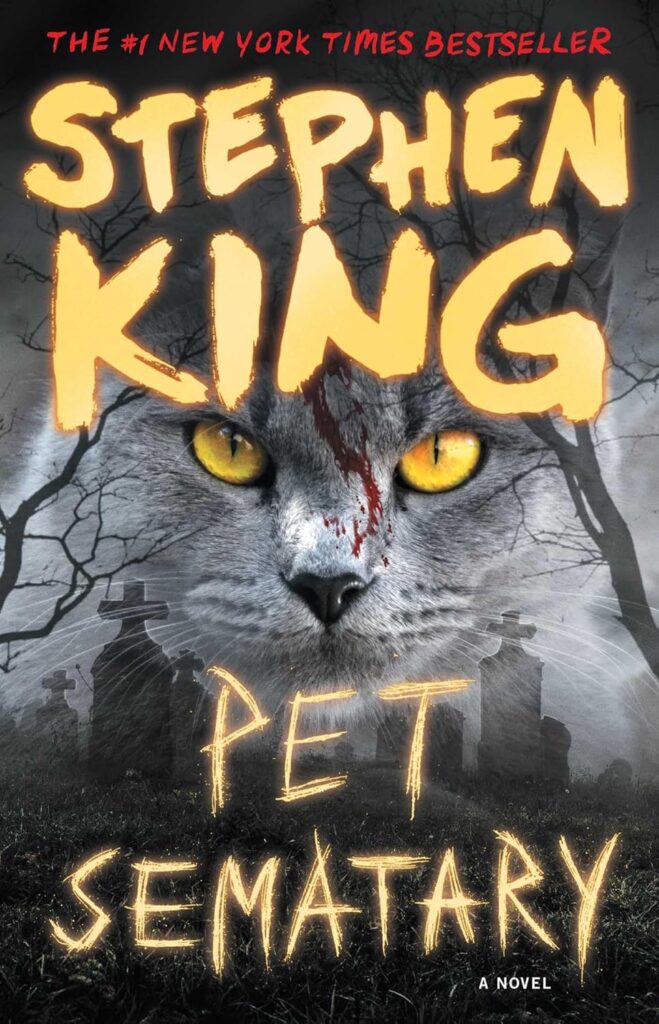
Pet Sematary (1983)
Select Sections to Print
×Book Details
Pet Sematary (1983)
Jump to Section
⚠️ Trigger Warnings
- Child death
- Fatal vehicular accidents
- Graphic child death
- Animal death
- Animal cruelty
- Graphic animal mutilation
- Animal euthanasia
- Terminal illness
- Spinal meningitis
- Graphic medical suffering
- Death of a sibling
- Childhood trauma
- Grief and bereavement
- Death of a spouse
- Murder
- Graphic violence and gore
- Stabbing and slashing
- Matricide
- Filicide
- Grave robbing
- Child corpse exhumation
- Corpse desecration
- Decomposition
- Necromancy and reanimation
- Suicide
- Suicide by firearm
- Attempted suicide by hanging
- Firearms
- Cannibalism
- Supernatural possession
- Wendigo folklore
- Morphine overdose / lethal injection
⏱️ 2-Minute Spoiler Summary
Dr. Louis Creed moves from Chicago to rural Ludlow, Maine, with his wife Rachel, five-year-old daughter Ellie, two-year-old son Gage, and Ellie’s beloved cat, Church. Their new house sits beside dangerous Route 15, where speeding tanker trucks frequently kill animals. Across the road lives elderly Jud Crandall, who quickly becomes a father figure to Louis. Jud shows the family a path behind their house leading to a children’s pet cemetery marked “PET SEMATARY.”
Soon after Louis begins working at the University of Maine infirmary, a dying student named Victor Pascow mysteriously warns him about the Pet Sematary. Pascow later appears to Louis in a vision and leads him to a barrier beyond the cemetery, warning him never to cross it.
That warning becomes important when Church is killed on Route 15 while Rachel and the children are visiting her parents. Wanting to spare Ellie from losing her pet, Jud takes Louis beyond the Pet Sematary, through Little God Swamp, to an ancient Micmac burial ground with the supernatural power to resurrect the dead. Louis buries Church there, and the cat returns—but he is no longer the same. Church smells like death, moves strangely, and becomes vicious.
Jud admits that he once buried his own dog there and got it back the same way.
Months later, the Creeds suffer a far worse tragedy. Gage runs toward Route 15 while the family is flying a kite, and Louis cannot catch him before a tanker truck strikes and kills him. Devastated, Louis begins thinking about the Micmac burial ground.
Jud realizes what Louis is considering and warns him not to do it. He tells Louis about Timmy Baterman, a soldier whose grieving father buried him there after he was killed in World War II. Timmy returned as an evil creature that tormented people by revealing their darkest secrets. His father eventually killed him again and then committed suicide. Jud now believes the burial ground deliberately draws people back and may even have manipulated him into showing Louis the place.
Louis sends Rachel and Ellie to Chicago, secretly digs Gage out of his grave, and carries his body to the Micmac burial ground. In the woods, he encounters the presence behind the place: the Wendigo, a gigantic malevolent supernatural creature whose influence has corrupted the land.
Gage returns from the dead, but what comes back is murderous. He steals a surgical scalpel from Louis’s medical bag, crosses the road, and kills Jud. Rachel, who has rushed home after Ellie begins having terrifying dreams and receiving warnings from Pascow, enters Jud’s house looking for Louis. Gage confronts her, taunts her using the voice of Rachel’s dead sister Zelda, and murders her too.
The next morning, Louis realizes what he has unleashed. He kills Church with morphine, goes to Jud’s house, and finds both Jud and Rachel dead. When Gage attacks him, Louis manages to inject his son with lethal doses of morphine, killing him for the second time.
But Louis has now completely lost his grip on reality. He convinces himself that Gage only came back evil because he waited too long to rebury him. After setting Jud’s house on fire, he carries Rachel’s body to the Micmac burial ground, believing that because she has only just died, she might return normally.
That night, Louis sits alone at home playing solitaire. He hears slow, muddy footsteps coming up behind him. A cold hand lands on his shoulder.
The resurrected Rachel whispers, “Darling.”
📖 Full Spoiler Summary
The Creeds Move to Ludlow
Dr. Louis Creed moves from Chicago to rural Ludlow, Maine, with his wife Rachel, their five-year-old daughter Ellie, two-year-old son Gage, and Ellie’s beloved tomcat, Church. Louis has accepted a position as director of the University of Maine campus infirmary, and the move is supposed to mark a fresh beginning for the family.
Their new home is picturesque, but it has one serious danger: busy Route 15 runs directly past the property, and huge commercial tanker trucks regularly roar down the road.
Across the highway live Jud Crandall and his wife Norma. Eighty-three-year-old Jud quickly forms a close friendship with Louis, becoming almost a surrogate father to him. One of the first things Jud tells the Creeds is that Route 15 “uses up a lot of animals.”
That warning takes on greater meaning when Jud leads the family down a path behind their property to a small graveyard created by generations of local children. A misspelled sign identifies it as the Pet Sematary, and the graves belong mostly to pets killed on the highway.
The visit forces Ellie to confront the idea that Church will eventually die. Louis suggests having the cat neutered so he will wander less, but the conversation about death sparks an argument between Louis and Rachel. Rachel has an intense fear of death rooted in her childhood. When she was eight, she was left alone with her older sister Zelda, who was dying painfully from spinal meningitis. Zelda’s illness deformed her body, and witnessing her death left Rachel traumatized and burdened with guilt.
Victor Pascow’s Warning
Louis begins his new job at the university infirmary, working alongside head nurse Joan Charlton, physician’s assistant Steve Masterton, and Dr. Surrendra Hardu.
On Louis’s first day, twenty-year-old student Victor Pascow is rushed into the infirmary after being struck by a car while jogging. His injuries are catastrophic, and there is nothing Louis can do to save him.
Before dying, however, Pascow somehow addresses Louis by name and gives him a cryptic warning about the Pet Sematary.
That night, Pascow appears to Louis in an extraordinarily vivid vision. He leads Louis along the path behind his house, through the Pet Sematary, and to the deadfall beyond it. Pascow warns Louis never to go any farther.
Louis wakes the next morning and tries to convince himself it was only a nightmare—until he discovers mud and pine needles covering his feet.
Around Halloween, Norma suffers a heart attack. Louis manages to save her with CPR and medication, leaving Jud deeply grateful. He tells Louis that he owes him one.
That debt will have terrible consequences.
Church Dies—and Comes Back
At Thanksgiving, Rachel takes Ellie and Gage to Chicago to visit her parents, Irwin and Dory Goldman. Louis has a particularly hostile relationship with Irwin, who once disliked him so intensely that he tried to bribe Louis into ending his relationship with Rachel.
While the rest of the family is away, Church is struck and killed by a tanker truck on Route 15.
Jud knows how devastated Ellie will be, and he decides to repay Louis for saving Norma. Instead of burying Church in the Pet Sematary, Jud takes Louis over the deadfall Pascow warned him about. They cross the treacherous Little God Swamp and climb forty-five stone steps to an ancient Micmac burial ground.
Following Jud’s instructions, Louis buries Church there and covers his grave with a stone cairn.
The next day, Church comes home.
Technically, the cat is alive, but something is horribly wrong. He smells of freshly dug earth, moves with a clumsy lurch, and seems dull and hostile. His personality changes as well. He begins brutally killing mice and crows and leaving their mutilated bodies behind.
Jud finally explains why he knew what would happen. When he was young, he buried his dog Spot in the same place after Spot died from an infected wound. Spot returned too, but he came back “a little dead.”
Louis now knows that the Micmac burial ground can resurrect the dead—and that whatever returns may not be what was buried.
Gage Is Killed
In February, Norma dies after suffering a stroke. Her funeral once again forces the Creed family to confront death, with Ellie asking questions about heaven and reincarnation while Rachel cannot even bring herself to attend because of her memories of Zelda.
Then, in May, the tragedy that destroys the Creeds occurs.
Louis, Rachel, Ellie, Gage, and Jud are outside flying a kite near the property of their elderly neighbor, Mrs. Vinton, when Gage wanders toward Route 15. Louis sees the danger and races after him.
He is too late.
A speeding Orinco tanker truck strikes and kills the two-year-old.
The family is devastated. At Gage’s wake, years of hostility between Louis and Irwin Goldman erupt into a physical fight. Irwin punches Louis, and Louis retaliates, accidentally sending his father-in-law crashing into Gage’s coffin and knocking it from its trestle.
But Louis’s grief is already moving in a far more dangerous direction. He knows of a place where the dead can come back.
Jud Tries to Stop Louis
Jud recognizes what Louis is thinking and desperately warns him not to bury Gage in the Micmac ground.
To convince him, he tells Louis about Bill Baterman and his son Timmy. Timmy was killed in Italy during World War II, and his grieving father secretly buried him in the Micmac burial ground.
Timmy returned, but he was no longer truly Timmy. He wandered around Ludlow behaving like an evil, hollow imitation of himself, tormenting people by revealing their darkest secrets. Eventually, Bill killed his resurrected son, burned down his own house, and committed suicide.
Jud has also come to believe that the burial ground itself has a malicious intelligence. He fears it manipulated him into showing Louis the place after Church died, drawing Louis deeper into its influence until something much worse could happen.
Louis listens—but grief overwhelms everything Jud tells him.
He convinces himself that Gage will be different. Timmy Baterman was older and had been dead longer. Gage is only two, and Louis plans to act quickly. If he gets his son into the ground soon enough, perhaps Gage will return as himself.
Louis Digs Up His Son
Louis persuades Rachel to take Ellie to Chicago for a few days, giving him the opportunity to carry out his plan alone.
On May 18, he buys grave-robbing equipment, including a spade, pick, flashlight, and tarpaulin, then checks into a motel under a false name. Around midnight, he sneaks into Pleasantview Cemetery in Bangor and begins digging up his son.
Louis reaches Gage’s concrete grave liner, breaks into the coffin, removes his son’s body, and wraps it in the tarpaulin.
Back in Chicago, Ellie begins having terrifying dreams. Pascow appears to her as “Paxcow,” warning that her father is about to do something terrible and mentioning “Oz the Gweat and Tewwible.” Rachel becomes frightened enough to leave Ellie with her parents and immediately head back to Maine.
Jud also suspects what Louis is doing and waits on his porch, hoping to stop him. But the supernatural force surrounding the burial ground causes Jud to fall into an unnaturally deep sleep.
Louis carries Gage through Little God Swamp toward the Micmac ground. In the fog, he encounters the terrifying supernatural presence connected to the place: the Wendigo, a gigantic malevolent creature with burning yellow eyes. Its influence has corrupted the burial ground and is associated with madness and cannibalism.
Louis continues anyway.
He reaches the plateau, buries Gage beneath a cairn of stones, and returns home to wait.
Gage Comes Home
During the night, Gage digs himself out of his grave.
Whatever now inhabits the toddler possesses both supernatural strength and terrible malevolence. Gage enters the Creed house, opens Louis’s medical bag, and takes a surgical scalpel.
He then crosses Route 15 to Jud’s house.
Using Church to trip the elderly man at the top of the stairs, Gage attacks Jud with the scalpel. He brutally murders the man who tried to prevent his resurrection, mocking him as he dies.
Rachel arrives in Ludlow soon afterward. Looking for Louis, she goes into Jud’s house and encounters what appears to be her dead son.
Gage uses Rachel’s deepest childhood trauma against her. He taunts her in the voice of Zelda before stabbing Rachel to death.
Louis Realizes What He Has Done
Louis awakens the next morning and notices muddy toddler footprints in his kitchen.
He finally understands.
Knowing Church was the first thing he resurrected, Louis gives the cat a lethal injection of morphine. He then loads more morphine into syringes and goes across the road to Jud’s house.
Inside, he discovers Jud’s mutilated body and Rachel’s corpse.
Gage attacks his father with the scalpel, but Louis manages to overpower him. He injects the resurrected child with two fatal doses of morphine, killing his son for the second time.
By now, however, Louis has been destroyed by grief and the burial ground’s influence. Rather than accepting that resurrecting Gage was a catastrophic mistake, he decides he simply waited too long.
Rachel has only just died.
That, Louis convinces himself, will make all the difference.
Rachel Returns
Louis sets Jud’s house on fire and carries Rachel’s body toward the Pet Sematary.
His colleague Steve Masterton arrives on his motorcycle and follows him into the woods. When Steve catches up, he sees a horrifyingly transformed Louis carrying Rachel’s sheet-wrapped corpse. Louis’s hair has turned white, and his face appears dramatically aged.
Louis explains his new reasoning: he waited too long with Gage. Rachel is fresh. If he buries her immediately, she might come back normally.
Steve briefly feels the supernatural force of the place pulling at his own mind. Terrified, he manages to resist and flees.
Louis continues alone, carrying his wife beyond the Pet Sematary, through the swamp, and up to the Micmac burial ground. There, he buries Rachel.
Later that night, Louis sits alone in his darkened kitchen, dealing cards for a game of solitaire.
Then he hears footsteps.
They are slow, dragging, and muddy, moving up the back stairs and into the house. They come closer until they stop directly behind Louis’s chair.
A cold, wet hand settles onto his shoulder.
And in a rough voice caked with dirt, Rachel says one word:
“Darling.”
🔚 Ending Explained
How Pet Sematary Ends
The ending of Pet Sematary is a brutal final cycle of death, resurrection, and denial. After the reanimated Gage Creed murders Jud Crandall and Rachel Creed, Louis returns to discover what has happened. He first euthanizes Church, Ellie’s resurrected cat, with a massive dose of morphine. At Jud’s house, he finds Jud’s mutilated body and Rachel stabbed to death with the surgical scalpel Gage stole from Louis’s medical bag.
Gage then attacks Louis with the scalpel. During their struggle, the thing inhabiting Gage reveals its supernatural nature: his face seems to shift through grotesque images of Jud, Victor Pascow, Louis himself, and the Wendigo. Louis manages to inject Gage twice with lethal doses of morphine.
In one of the ending’s most devastating moments, the evil briefly seems to leave Gage. He becomes a frightened little boy again, crying “Daddy!” before dying in Louis’s arms for the second time.
But instead of finally accepting the lesson that the dead must remain dead, Louis completely loses his grip on reality. He burns Jud’s house and carries Rachel’s body toward the Micmac burial ground.
When Steve Masterton encounters him, Louis has been physically transformed by what he has endured: his hair has turned completely white, his face appears decades older, and his hands are torn and bloody. Yet Louis insists he now understands what went wrong. His new theory is that he simply waited too long to bury Gage. If he buries Rachel quickly enough, he convinces himself, she will come back normally.
Steve briefly feels the supernatural pull of the burial ground himself, but unlike Louis, he recognizes the danger and flees.
Louis carries Rachel over the deadfall and buries her in the Micmac ground with his bare hands. Later, after speaking with police investigating the fire, he returns home and waits.
That night, Louis sits alone in his dark kitchen playing solitaire. He turns over the Queen of Spades.
Then he hears footsteps.
Slow, dragging, muddy footsteps climb the back stairs and approach him. A cold, wet hand settles on Louis’s shoulder.
Rachel’s dirt-choked voice whispers:
“Darling.”
And the novel ends.
What the Ending Means
The horror of the ending isn’t simply that Rachel comes back. It’s that Louis has been given overwhelming proof that resurrection cannot restore the person he loves—and he does it again anyway.
Gage should have been the final lesson. Louis sees firsthand that the resurrected child is no longer truly his son. Yet when Gage dies again, Louis immediately creates another explanation that allows him to keep denying reality: Gage wasn’t buried quickly enough.
That rationalization is the final stage of Louis’s destruction. The rational doctor who once dealt professionally with injury and death has become a man capable of twisting any evidence into justification for what he desperately wants to believe.
This makes “sometimes, dead is better” the central truth Louis repeatedly refuses to accept. Death is horrifying, particularly the death of a child, but attempting to erase it produces something infinitely worse. Louis’s love for his family does not save them because his inability to accept losing them ultimately transforms that love into obsession.
The Micmac burial ground’s spiral reinforces that idea. Louis is not progressing toward understanding; he is spiraling inward, repeating the same act while becoming increasingly detached from reason. Church leads to Gage. Gage leads to Rachel. Each resurrection should convince Louis to stop, yet each instead pulls him deeper.
His white hair and destroyed hands make that internal transformation visible. By the time he carries Rachel into the woods, he barely resembles the rational physician and family man who arrived in Ludlow. He has been psychologically aged and physically marked by his encounter with the burial ground.
The final game of solitaire is equally fitting. Louis has lost everyone. He is literally playing alone, and the appearance of the Queen of Spades immediately before Rachel returns turns the card into an omen of the corrupted wife and mother approaching from the darkness.
Most disturbing of all is the novel’s treatment of grief itself. The burial ground does not simply overpower people. It exploits something already inside them—the desperate human wish that loss could somehow be undone. That connects directly to the idea that “the soil of a man’s heart is stonier.” The supernatural evil succeeds because it finds fertile ground in very human emotions: love, guilt, grief, hope, and denial.
Jud demonstrates how the cycle perpetuates itself. He originally tells Louis about the burial ground because he wants to spare Ellie the pain of losing Church. That compassionate decision eventually contributes to the destruction of the entire Creed family. Evil therefore spreads not merely through cruelty, but through good intentions corrupted by an unwillingness to accept death.
Steve provides the final contrast. He also feels the burial ground pulling at him, proving that Louis is confronting a genuine supernatural force rather than simply experiencing madness. But Steve runs. Louis stays. The distinction matters: the evil may tempt people, but surrendering to it still involves human choices.
The final “Darling” is therefore almost unbearably cruel. It gives Louis exactly what he has been pursuing throughout the novel: Rachel has returned to him.
But the reader already knows what Louis refuses to understand.
Whatever has come home is not Rachel.
The novel deliberately stops before revealing what she does next. Louis may be murdered by the resurrected Rachel, or he may simply continue descending into the burial ground’s cycle of madness and violence. Either way, his life as he knew it is already destroyed.
And Ellie is the only Creed left outside that cycle. Her nightmares and psychic warnings have come true, leaving her in Chicago without her parents or brother and with the trauma of a catastrophe she sensed but could not prevent.
That is what makes the ending so bleak. There is no last-minute victory over evil and no healing revelation. Louis is offered the same lesson again and again and cannot accept it. His tragedy comes from trying to defeat the one thing no amount of love, medicine, or supernatural power can safely reverse:
death itself.
👤 Characters & Fates
🔶 Main Characters

After Gage murders Jud and Rachel, Louis kills Gage and Church with morphine, burns Jud’s house, then buries Rachel in the Micmac ground. The novel ends with the resurrected Rachel returning, placing a cold hand on Louis’s shoulder, and saying, “Darling.”

Gage ambushes and murders her with a scalpel in Jud’s house. Louis buries her in the Micmac ground, and she returns as a dirt-covered resurrected corpse at the novel’s end.

The resurrected Gage attacks Jud in his home, trips him on the stairs, and brutally kills him with Louis’s surgical scalpel.

A tanker truck kills him on Route 15; Louis exhumes and resurrects him, but Gage returns as a murderous creature that kills Jud and Rachel. Louis finally kills him again with lethal morphine injections.

She survives because she is staying with her grandparents in Chicago, but by the ending she has lost Gage and Rachel, Louis has descended into madness, and Church is dead.
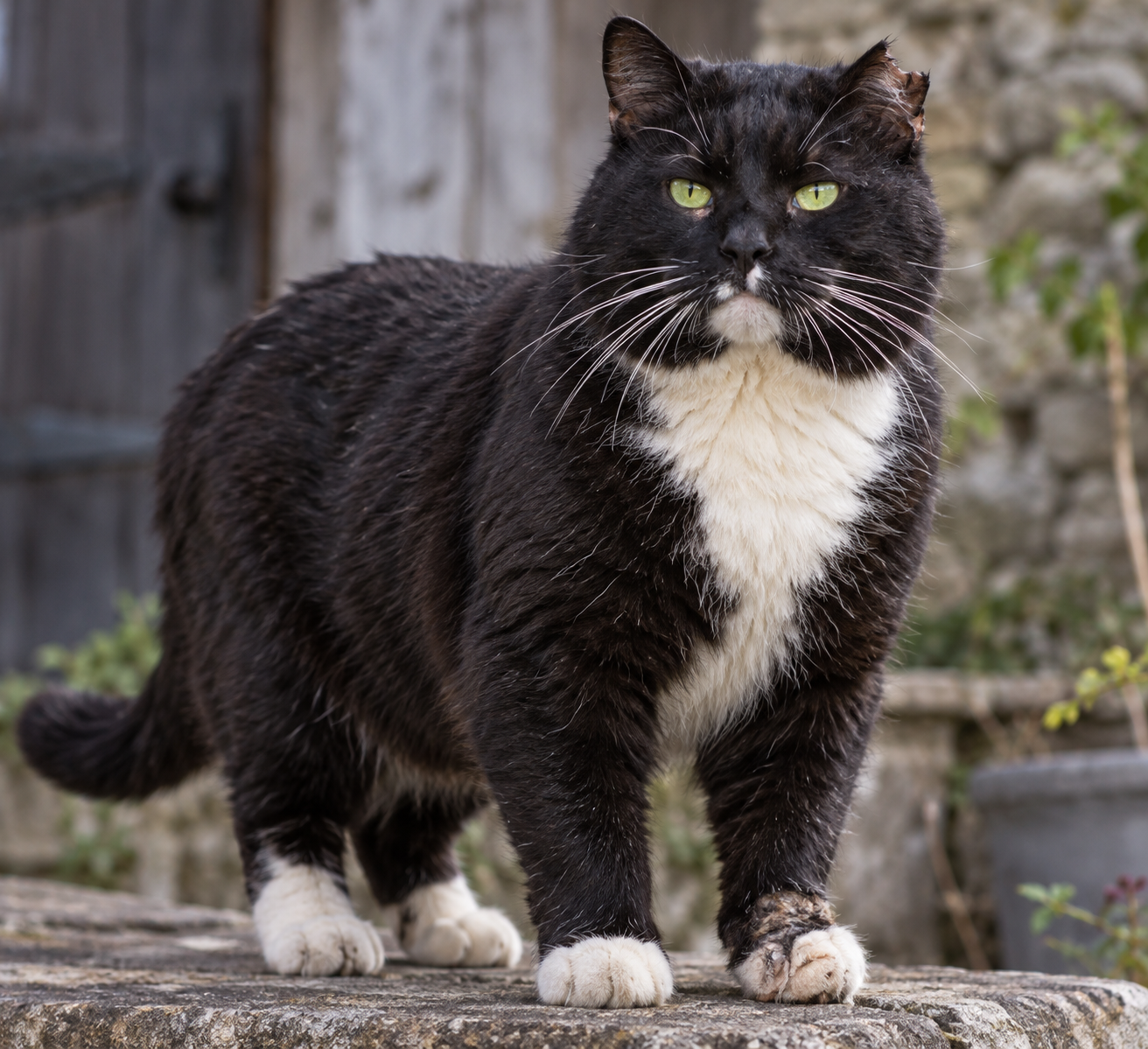
After being killed by a truck and resurrected, Church becomes increasingly sinister. Louis eventually euthanizes him with morphine after discovering Jud’s murder.
🔷 Supporting Characters

She recovers from the heart attack but later dies from a stroke and is buried in Mount Hope Cemetery.
He dies from catastrophic injuries after being struck by a car, then remains as a guardian spirit whose warnings ultimately fail to stop Louis.
She dies from spinal meningitis after choking on her tongue, and the resurrected Gage later uses Zelda’s appearance and voice to torment Rachel before murdering her.
After drunkenly provoking Louis and being punched into Gage’s coffin, he later apologizes and reconciles somewhat with Louis; he survives and cares for Ellie in Chicago.
She survives and remains in Chicago caring for Ellie as the catastrophe unfolds in Ludlow.
After terrorizing townspeople and revealing their darkest secrets, Timmy is shot by his father, who then burns their house down.
Horrified by what Timmy becomes, Bill shoots his resurrected son, burns down their house, and commits suicide by shooting himself in the mouth.
He follows Louis into the woods and sees him carrying Rachel’s corpse toward the burial ground, but the supernatural atmosphere terrifies him into fleeing and repressing what he witnessed.
She survives and continues working at the infirmary, later taking Rachel’s desperate phone call while Rachel searches for Louis.
He survives and continues working at the university infirmary while covering for Louis during Gage’s funeral.
She survives and remains quietly in her nearby brick house.
She dies during Louis’s childhood when a stolen payloader crushes her father’s car.
🕳️ Potential Plot Holes
Jud gives two conflicting versions of his childhood dog Spot’s death. He initially says Spot died of old age in 1914, but later says Spot died when Jud was ten—around 1910—after becoming infected from barbed wire. Louis himself notices that the dates and circumstances do not match. This may simply reflect Jud’s imperfect memory of events roughly seventy years earlier, but because the novel deliberately calls attention to the discrepancy, it can also be read as evidence that Jud is not entirely reliable when recounting the burial ground’s history.
Pascow tells Ellie that he was sent to warn the Creeds but cannot interfere directly. Yet his ghost previously appears to Louis, opens his bedroom door, and leads him through the woods to the deadfall. Louis awakens with mud and pine needles on his feet, suggesting the journey physically occurred. This looks contradictory, although “cannot interfere” may mean Pascow cannot actually prevent the Creeds from making their choices; he can warn and guide them but cannot directly stop what happens.
After Louis burns Jud’s house, the police question him but apparently become satisfied without much investigation. Yet Rachel’s rental car is still at Jud’s house, Jud and Rachel are both missing, and the fire was deliberately started with gasoline. Louis is also visibly behaving strangely and concealing his damaged hands with gloves. Even if the fire destroyed evidence of the murders, Rachel’s abandoned car and the simultaneous disappearance of two people should have prompted a much more serious investigation. This is one of the novel’s stronger real-world plausibility gaps.
Jud correctly suspects that Louis plans to resurrect Gage and deliberately stays awake to watch Louis’s house so he can intervene. Nevertheless, he falls into an unnaturally deep sleep at exactly the time Louis needs him out of the way. The novel does provide an explanation: the supernatural force associated with the burial ground manipulates Jud and helps Louis carry out the resurrection. So this is less a true plot hole than an extremely convenient use of the burial ground’s vaguely defined powers.
Gage suffers catastrophic injuries when the tanker truck kills him, and his corpse remains badly damaged even after the funeral home repairs it. Once resurrected, however, the two-year-old can travel considerable distances, ambush Jud, murder two adults, and fight Louis despite his tiny and severely injured body. The supernatural force possessing Gage presumably gives him abilities beyond those of his physical body, so this is not strictly a contradiction. Still, because the novel never establishes clear limits on what resurrection can physically repair or empower, Gage’s sudden strength can feel inconsistent with the gruesome condition of his corpse.
📚 Book Club Q&A's
⭐ Final Rating & Thoughts
Pet Sematary is Stephen King at his absolute best: terrifying not because of monsters or gore, but because the horror feels so painfully human. At its core, this is a story about grief—about what happens when love becomes so desperate that accepting loss feels impossible.
The pacing is a slow, relentless descent into dread. You can see disaster coming long before it arrives, yet King somehow makes that inevitability even more horrifying. I became completely invested in the Creed family, and the emotional weight of their story made the supernatural elements hit so much harder. Jud was especially memorable, and the friendship at the heart of the novel gives the darkness an unexpected warmth.
What impressed me most was how convincingly King portrays grief overpowering reason. Characters make choices you know are terrible, but emotionally, you understand exactly why they make them. That makes the horror incredibly effective.
Dark, heartbreaking, disturbing, and genuinely haunting, Pet Sematary is a masterpiece of psychological horror—and easily one of my favorite Stephen King novels.
✨ Adaptation description
🎬 Film Adaptations
Stephen King’s 1983 horror novel Pet Sematary has received two major feature-film adaptations: Pet Sematary (1989) and Pet Sematary (2019). Both explore grief, death, and the terrifying consequences of resurrection, but they take different approaches to the novel’s characters, atmosphere, and ending.
Pet Sematary (1989)
- Release Date: April 21, 1989
- Director: Mary Lambert
- Production: Laurel Productions
- Distributor: Paramount Pictures
- Screenplay: Stephen King
- Starring: Dale Midkiff (Louis Creed), Denise Crosby (Rachel Creed), Fred Gwynne (Jud Crandall), and Miko Hughes (Gage Creed)
The 1989 adaptation follows the novel’s central storyline closely, preserving Gage Creed’s tragic death, Louis’s desperate attempt to resurrect him, and the horrifying consequences that follow.
Key Differences from the Book:
- Jud’s Wife Is Removed: Norma Crandall, an important supporting character in the novel, is eliminated. Instead, the film gives the housekeeper, Missy Dandridge, a larger role and a suicide storyline absent from the book.
- Louis’s Psychological Deterioration Is Condensed: The novel spends considerable time exploring Louis’s grief, denial, and increasingly irrational decisions. The film communicates his breakdown primarily through actions, dialogue, and supernatural encounters.
- Zelda’s Appearance Is More Grotesque: Rachel’s deceased sister Zelda is portrayed by adult male actor Andrew Hubatsek, emphasizing her disturbing physical appearance and Rachel’s traumatic memories.
- Victor Pascow Becomes a More Visible Guide: Pascow’s ghost appears repeatedly to warn Louis and provides occasional moments of dark humor.
- The Wendigo Is Minimized: The novel’s supernatural mythology, particularly the malevolent force associated with the burial ground, receives considerably less attention.
Ending Changes:
Like the novel, the film depicts Gage returning from the dead and murdering Jud and Rachel. Louis subsequently kills his resurrected son and buries Rachel in the ancient burial ground.
However, the film makes the final horror more explicit. Rachel returns visibly disfigured, embraces Louis, and prepares to attack him with a knife. The novel ends more ambiguously, with Rachel placing a cold hand on Louis’s shoulder and speaking a single word.
Tone and Emphasis:
The 1989 film emphasizes supernatural horror, grotesque imagery, and the shocking spectacle of a murderous toddler. Its practical effects and occasionally darkly humorous moments give it a distinctly late-1980s horror atmosphere.
While the novel is deeply introspective, the film focuses more heavily on the physical consequences of resurrection and the immediate terror experienced by the Creed family.
Pet Sematary (2019)
- Release Date: April 5, 2019
- Directors: Kevin Kölsch and Dennis Widmyer
- Production: Di Bonaventura Pictures and Room 101
- Distributor: Paramount Pictures
- Screenplay: Jeff Buhler
- Starring: Jason Clarke (Louis Creed), Amy Seimetz (Rachel Creed), John Lithgow (Jud Crandall), and Jeté Laurence (Ellie Creed)
The 2019 adaptation retains the novel’s premise but substantially changes its central tragedy, character dynamics, and conclusion.
Key Differences from the Book:
- Ellie Dies Instead of Gage: The most significant alteration involves the Creed children. In the novel, two-year-old Gage is killed by a truck. In the 2019 film, his older sister Ellie becomes the victim, while Gage survives the initial tragedy.
- Ellie’s Resurrection Changes the Horror: Unlike toddler Gage, the resurrected Ellie can speak, manipulate her parents, and express disturbing thoughts about death. Her awareness creates a different psychological dynamic.
- Zelda’s Death Is Reimagined: Rather than dying from spinal meningitis in her bedroom, Zelda falls down a dumbwaiter shaft. The film expands Rachel’s guilt surrounding the accident.
- Jud’s Backstory Is Simplified: Norma is already deceased, and Jud’s personal history receives less attention than in the novel.
- The Pet Cemetery Rituals Are Expanded: Children wearing animal masks participate in eerie funeral processions, introducing a stronger folk-horror atmosphere.
- Secondary Characters Are Removed: Missy Dandridge and several supporting storylines are eliminated, concentrating the narrative on the Creed family.
Ending Changes:
The 2019 film dramatically rewrites the novel’s conclusion.
After being resurrected, Ellie murders Jud and attacks Rachel. Rachel is subsequently killed and buried in the supernatural burial ground.
The resurrected Rachel then kills Louis, and Ellie helps bury him so that he also returns from the dead.
In the final scene, the undead members of the Creed family approach the family car, where Gage remains locked inside. Louis retrieves the keys and unlocks the door, leaving the toddler’s fate ominously unresolved.
This differs substantially from the novel, in which Louis kills the resurrected Gage, burns Jud’s house, and ultimately resurrects Rachel before the story ends.
Tone and Emphasis:
The 2019 adaptation emphasizes psychological manipulation, family corruption, and folk-horror imagery.
By making Ellie the resurrected child, the film explores the unsettling possibility of a deceased loved one returning with recognizable memories and intelligence but a fundamentally altered personality.
Its ending also expands the consequences of resurrection from one grieving father’s catastrophic choices into the destruction of an entire family.
📖 Book vs. Movies: The Biggest Differences
The Novel (1983): Focuses on the psychological devastation of grief, Louis Creed’s increasingly obsessive denial of death, and the ancient supernatural evil influencing his decisions. Its horror develops gradually through internal conflict, family tragedy, and an overwhelming sense of inevitability.
The 1989 Film: Preserves the novel’s major plot developments, including Gage’s death and resurrection, while emphasizing physical horror, supernatural encounters, and a visually explicit conclusion.
The 2019 Film: Reimagines the central tragedy by killing Ellie instead of Gage, introduces stronger folk-horror elements, and replaces the novel’s intimate, ambiguous ending with a broader vision of supernatural family destruction.
All three versions share the same central warning: the refusal to accept death can transform love and grief into something monstrous.
✨ Books Like Pet Sematary (1983)
See an error on this page?