

A Head Full of Ghosts (2015)
Select Sections to Print
×Book Details
A Head Full of Ghosts (2015)
Jump to Section
⚠️ Trigger Warnings
- Mental illness, psychosis, and hallucinations
- Poisoning and familial homicide
- Child death
- Self-harm
- Suicide and suicide attempts
- Graphic physical violence and injury
- Religious trauma and coercion
- Exorcism
- Child exploitation and media abuse
- Sexualization of a minor
- Graphic vomiting and bodily functions
- Blood and bleeding
- Animal death
- Hate speech and slurs
- Paranoia and psychological distress
⏱️ 2-Minute Spoiler Summary
Fifteen years after her family became the subject of a notorious reality show, Meredith “Merry” Barrett, now 23, agrees to tell true-crime writer Rachel Neville what she remembers. When Merry was eight, her 14-year-old sister, Marjorie, began behaving frighteningly—telling disturbing stories, speaking in strange voices, hurting herself, vomiting at dinner, and predicting that everyone in the house would die. Their mother, Sarah, believed Marjorie needed psychiatric treatment, but their unemployed father, John, became convinced she was possessed.
With the family facing foreclosure, John agreed to let a production company film their lives for a six-episode reality series called The Possession. The cameras only made the situation worse. In private, Marjorie told Merry that she was faking the possession, borrowing ideas from horror fiction, internet research, and music. She claimed she was trying to save the family financially and avoid being drugged by doctors. But because some of her behavior remained genuinely disturbing and unpredictable, Merry never knew how much of that confession to believe.
Eventually, the Catholic Church approved an exorcism, which the TV crew filmed. Marjorie’s mother secretly left her restraints loose, allowing her to break free. During the ritual, Marjorie bit Father Gavin badly enough to tear open his arm. Merry, terrified and furious, screamed that she hated her sister and wished she were dead. Marjorie then ran into the hallway, climbed onto the second-floor railing, and jumped into the foyer. She survived with a concussion and fractured ankle, but the production ended.
Two weeks later, The Possession aired to huge ratings. Back home, the Barrett family deteriorated further, especially John, who became increasingly obsessed with extreme religious ideas.
Six days before Christmas, Marjorie showed Merry articles about fathers who murdered their families and claimed John was planning to do the same. She said he had obtained potassium cyanide and intended to poison them. Marjorie persuaded Merry to steal the cyanide and secretly mix it into their mother’s spaghetti sauce, promising it would merely make their parents sick long enough for the girls to escape and go to the police. Merry believed her because she always ate her own pasta without red sauce.
At dinner, however, Marjorie deliberately covered her pasta in the poisoned sauce, winked at Merry, and ate it. John and Sarah ate the sauce as well. All three died at the kitchen table while Merry survived. She remained alone with their bodies for three days before police found her.
As an adult, Merry still cannot know exactly what happened. John’s partial fingerprint was found on the cyanide jar, suggesting Marjorie may have been telling the truth about him possessing it—but that does not prove he intended to murder the family. Merry cannot determine whether Marjorie genuinely believed they were in danger or manipulated her little sister into carrying out a murder-suicide.
Merry also reveals that she is Karen Brissette, the anonymous blogger whose posts dissect The Possession throughout the novel. Fifteen years later, she is still trying to understand a tragedy in which mental illness, possible deception, reality television, religious obsession, and her own unreliable childhood memories have become impossible to separate.
📖 Full Spoiler Summary
Merry Returns to the Story Fifteen Years Later
Fifteen years after the Barrett family became infamous, Meredith “Merry” Barrett is the only surviving member of her immediate family. Now 23, she agrees to speak with bestselling true-crime writer Rachel Neville, who is writing a book about what happened inside Merry’s childhood home in Beverly, Massachusetts.
Merry’s account is complicated by the fact that she was only eight when everything happened. Her memories have become tangled with television footage, stories about the case, and the mythology that grew around her family. Interspersed with her recollections are posts from The Last Final Girl, a horror blog written by the anonymous Karen Brissette, who dissects the reality show that made the Barretts famous.
The story Merry remembers begins when her 14-year-old sister, Marjorie Barrett, starts behaving strangely.
Marjorie Begins to Frighten the Family
The Barretts are already under enormous pressure. Their father, John, has been unemployed for more than a year after losing his longtime job at a toy factory, and the family is struggling to keep their house. Their mother, Sarah, works as a bank teller and has become the family’s only reliable source of income.
Against this backdrop, Marjorie’s behavior becomes increasingly disturbing. She tells Merry elaborate and frightening stories, including one about the 1919 Boston Molasses Flood and another about mysterious “growing things” that emerge from the earth and overwhelm humanity. She leaves cryptic notes for Merry and covers Merry’s cardboard playhouse with drawings of green vines.
Soon her behavior goes far beyond creepy stories. Marjorie suffers violent nighttime episodes, screams and speaks in altered voices, punches holes in her bedroom walls, and behaves as though she is losing control of herself. At dinner one night, she vomits green bile onto her plate and begins speaking in a strange voice, predicting that everyone in the house will die. Merry later witnesses an even more disturbing episode in which Marjorie injures herself and behaves sexually on their parents’ bed, leaving blood and bodily fluids behind.
Sarah responds by taking Marjorie to Dr. Hamilton, a psychiatrist who prescribes antipsychotic medication. John, however, increasingly distrusts the medical explanation. He has turned toward fundamentalist Catholicism during his unemployment and begins taking Marjorie to Father David Wanderly without Sarah’s support.
Father Wanderly encourages John’s belief that something supernatural may be happening. Instead of seeing Marjorie simply as a teenager suffering from severe psychiatric problems, John becomes convinced that his daughter may actually be possessed.
The Barretts Turn Their Crisis Into Reality Television
The Barretts are also running out of money, and their financial desperation creates an opportunity that changes everything. John agrees to let a production company film the family for a six-episode reality television series called The Possession.
Soon their home is filled with cameras, lights, crew members, and production equipment. Cameras are mounted throughout the house, and the sunroom becomes a confessional set. The producers even film dramatic reenactments to shape the family’s story into compelling television.
Eight-year-old Merry forms a bond with crew member Ken Fletcher, who treats her kindly, plays soccer with her, and gives her a handheld “Merry-cam” so she can record footage herself.
Away from the adults and cameras, however, Marjorie tells Merry something astonishing: she says the possession is fake.
According to Marjorie, she has deliberately constructed much of her frightening behavior from things she has researched. She borrows ideas from horror fiction, the internet, and the song “Gloomy Sunday,” and even takes the name of her supposed demon, Yidhra, from H.P. Lovecraft. She tells Merry she has been trying to force their parents to confront the family’s problems, resist the medications she hates taking, and bring in enough television money to save their home.
Yet Marjorie’s confession does not solve anything for Merry. Her sister’s behavior remains so extreme and unpredictable that Merry cannot tell where the performance ends. Marjorie may be faking possession, but that does not necessarily mean she is mentally well.
Outside the Barrett house, the spectacle grows. Reporters, religious protesters, and hate groups gather around the property while the family’s private crisis becomes public entertainment.
The Exorcism Turns Violent
Marjorie is eventually evaluated by Dr. Navidson, a Catholic-affiliated psychiatrist. Rather than acting like a helpless possessed child, she challenges and taunts the adults around her. She demonstrates detailed knowledge of Church rules, technology, and the mechanics of exorcisms while displaying deep scratches across her stomach.
Eventually, the regional bishop authorizes an official exorcism.
The production crew prepares Marjorie’s bedroom for maximum effect, cooling it to 39 degrees and surrounding her with candles, crucifixes, cameras, and religious objects. Marjorie is supposed to be restrained on the bed, but Sarah quietly refuses to participate fully in what is being done to her daughter. She only pretends to secure the leather restraints around Marjorie’s wrist and ankle, meaning Marjorie can escape whenever she wants.
Father Wanderly begins the ritual with Father Gavin, a younger priest assisting him. As prayers are recited, apparently supernatural events occur around them. A desk drawer opens and slams on its own, while strange thumping sounds shake the room.
Then Marjorie attacks.
When Father Gavin approaches the bed, she lunges forward and bites deeply into his forearm, tearing his flesh. The room erupts into chaos.
Terrified and overwhelmed, Merry screams at her sister that she hates her and wishes she were dead before running into the hallway. Marjorie breaks free and follows. She climbs onto the railing above the foyer as everyone watches, then throws herself into the open space below.
She survives the fall, but suffers a concussion and fractures her ankle.
The production crew packs up and leaves. The exorcism is over, but the damage to the Barrett family is not.
The Show Airs and John Spirals Further
Only two weeks later, The Possession begins airing and becomes a ratings sensation. The Barretts are now nationally famous, with their most painful experiences transformed into entertainment.
After Marjorie returns from the hospital, the family withdraws further into itself. John’s religious obsession intensifies. He spends long periods alone in the basement and communicates with the leader of an extremist Kansas Baptist church. Three days before the tragedy that will destroy the family, the pastor sends John a chilling final message telling him that he knows what he has to do.
Then, six days before Christmas, Marjorie summons Merry to her bedroom.
She shows her little sister news stories about family annihilators—desperate fathers who murdered their wives and children. Marjorie tells Merry that John has become one of them. According to her, their father has obtained a jar of potassium cyanide and intends to poison the entire family.
Marjorie says they have to stop him before he can carry out his plan.
Merry Poisons the Spaghetti Sauce
Marjorie proposes a plan that sounds frightening but survivable to an eight-year-old. Merry will take the jar of white powder and pour it into the red spaghetti sauce while Sarah is preparing dinner. Marjorie assures her that it will not kill their parents. It will only make them sick or unconscious long enough for the sisters to escape, take the jar to the police, and prove what John was planning.
Merry also believes she personally cannot be poisoned because she never eats red sauce. She always has her pasta plain with butter.
Trusting her older sister, Merry puts the potassium cyanide into the green saucepan and stirs it into the sauce.
At dinner, however, Marjorie does something Merry does not expect. Instead of avoiding the poisoned food, she deliberately takes a large amount of the red sauce and spreads it across her pasta.
Then she looks at Merry and winks.
Marjorie eats.
John and Sarah eat the sauce too.
Within minutes, all three begin dying from cyanide poisoning. Merry watches helplessly as her mother, father, and sister suffer fatal respiratory failure at the kitchen table. Whatever Marjorie intended, the escape she promised Merry is never going to happen.
Merry is now the only surviving member of the Barrett family.
Merry Spends Three Days With Her Dead Family
After the poisoning, eight-year-old Merry is left completely alone in the house.
She ventures into the basement, partly expecting to discover evidence of the terrifying world Marjorie had described to her. Instead of supernatural “growing things,” however, she finds only a dirty pewter cross.
Eventually, Merry retreats beneath the kitchen table. Surrounded by the bodies of her family, she stays there for three days, leaning against her mother’s dead legs until police finally enter the house and discover her.
Merry is later raised by John’s younger sister, Auntie Erin, but the story of what happened to the Barrett family never disappears. The Possession becomes a notorious piece of reality television, and the distinction between what actually happened and what audiences saw on television becomes increasingly difficult to untangle.
The Truth Remains Uncertain
Fifteen years later, Merry tells Rachel what she remembers, but even she cannot provide a definitive explanation for everything that happened.
The police investigation produced one particularly troubling piece of evidence: the only identifiable partial fingerprint on the cyanide jar belonged to John.
That means Marjorie did not necessarily invent the story about their father possessing cyanide. John may indeed have obtained the poison. Combined with his increasingly unstable behavior and his disturbing communications before the deaths, the fingerprint leaves open the possibility that Marjorie genuinely believed their father intended to kill them.
But it does not prove that John planned to poison his family.
Marjorie could have discovered the cyanide and misunderstood what John intended to do with it. She could also have deliberately manipulated Merry. By convincing an eight-year-old to put the poison into the sauce, Marjorie ensured that Merry—not Marjorie herself—physically carried out the act. Her decision to knowingly eat the poisoned sauce and wink at Merry before doing so makes her intentions even more disturbing.
Merry is therefore left with a question she can never answer: was Marjorie desperately trying to save them from their father, or did she engineer the deaths of herself and her parents while using her little sister as the instrument?
Even Marjorie’s supposed possession remains tangled in uncertainty. She admitted to fabricating supernatural details and borrowing material from horror stories, music, and internet research, but that confession does not explain whether her underlying behavior came from mental illness, deliberate manipulation, or something Merry still cannot understand.
Finally, Merry gives Rachel one more revelation about how she has dealt with everything that happened.
Karen Brissette, the anonymous writer behind The Last Final Girl, is Merry herself.
All along, the blog posts dissecting The Possession have been Merry’s own attempt to examine the television series and the horror conventions surrounding her family’s story from a distance. As an adult, she can analyze the footage, criticize the way it was constructed, and expose the techniques used to turn her family into entertainment.
But she still cannot reconstruct one objective version of the past.
The only thing Merry knows for certain is what she herself did as an eight-year-old: believing her sister was saving their lives, she poured potassium cyanide into the family’s spaghetti sauce. Her parents and Marjorie ate it and died, leaving Merry alone to survive a tragedy whose full truth remains unresolved fifteen years later.
🔚 Ending Explained
How A Head Full of Ghosts Ends
The ending reveals that the Barrett family tragedy was not caused by anything supernatural. Instead, eight-year-old Merry Barrett poisoned the spaghetti sauce that killed her parents and her fourteen-year-old sister, Marjorie—but she did so believing she was saving them.
Six days before Christmas, Marjorie calls Merry into her bedroom and shows her articles about family annihilators, particularly unemployed or desperate fathers who murder their wives and children. She convinces Merry that their father, John, has become dangerous. According to Marjorie, John has built an altar in the basement and acquired a jar of potassium cyanide, which he intends to use to poison the entire family.
Marjorie proposes a plan to stop him. Merry must steal the jar and secretly mix the white powder into the red spaghetti sauce their mother is preparing for dinner. Marjorie assures her that the poison will merely make their parents sick or unconscious, giving the sisters time to escape and take the empty jar to the police as evidence. Because Merry always refuses red sauce and eats her pasta with butter, she will remain unharmed.
Trusting her sister completely, Merry pours the cyanide into the sauce.
At dinner, however, Marjorie does something Merry never expected: she asks for the red sauce herself. She heaps it onto her pasta, winks at Merry, and eats it. John and Sarah eat the sauce as well. Within minutes, all three begin suffering the effects of cyanide poisoning and die at the dinner table.
Merry realizes too late that Marjorie knew exactly what would happen.
Now alone in the house with her dead family, Merry goes into the basement looking for the frightening altar and mysterious “growing things” Marjorie had described. Instead, she finds virtually nothing—only a tarnished pewter cross hidden beneath a dirty rag. The discovery suggests that at least some of Marjorie’s story about their father was fabricated.
Completely traumatized, Merry retreats beneath the kitchen table. She remains there for three days, leaning against her dead mother’s legs and sucking her thumb, until police finally enter the house and find her.
Fifteen years later, twenty-three-year-old Merry finishes recounting the tragedy to true-crime writer Rachel Neville. Rachel then reveals one last piece of evidence from the police report: the only identifiable partial fingerprint on the cyanide jar belonged to John Barrett.
That detail prevents the novel from giving us a clean answer.
John may really have obtained the cyanide with the intention of murdering his family, meaning Marjorie discovered his plan and devised her own horrifying way of stopping him. Or Marjorie may have obtained or manipulated the poison herself and constructed the entire story about John to persuade Merry to participate in the murders.
Either way, Marjorie deliberately eats the poisoned sauce, making her own death part of the plan. Merry survives because Marjorie designed the scheme around the one person in the family she knew would not eat the sauce.
What the Ending Means
The final twist transforms the novel’s central question. For most of the story, the mystery is whether Marjorie was possessed by a demon or suffering from mental illness. By the end, that question almost becomes beside the point. The truly frightening uncertainty is whether anyone—including Merry—can ever know exactly what was happening inside Marjorie’s mind.
Marjorie’s wink at Merry is especially disturbing because it confirms intentionality without explaining motive. She knows the sauce is lethal. She knows Merry will survive. And she knows Merry does not understand what she has actually done. Whether Marjorie believes she is saving Merry from their father, escaping an unbearable family situation, ending the spectacle surrounding The Possession, or acting from severe mental illness remains unresolved. Her final act is simultaneously protective toward Merry and monstrously exploitative of her.
The red sauce and Merry’s buttered pasta turn an ordinary childhood preference into the mechanism of survival. Merry’s refusal to eat sauce saves her, but it also makes her the perfect person for Marjorie’s plan: she can administer the poison without consuming it herself. Her survival therefore becomes inseparable from her guilt.
The empty basement delivers another brutal reversal. Merry expects to find physical proof that Marjorie told the truth—the sinister altar and the “growing things.” Instead, she finds only the neglected pewter cross. The image strips John’s religious obsession of its supposed power. Religion has not protected the family, healed Marjorie, or restored order; it has become another failed object abandoned in the wreckage.
The recurring “growing things” work similarly. They can be read as an image of destructive ideas spreading beyond anyone’s ability to contain them: mental illness, religious fanaticism, horror narratives, internet culture, and the stories people tell themselves to explain frightening things. By the end, the Barrett family has been consumed not by a clearly identifiable demon but by competing stories about what is happening to them.
That connects directly to one of the novel’s biggest themes: who controls a story controls how reality is understood. John interprets Marjorie through religion. Doctors interpret her through psychiatry. The television producers turn her into entertainment. Audiences turn her into a horror character. Adult Merry, writing as Karen Brissette, analyzes the television show through horror criticism. And Marjorie herself proves to be perhaps the most powerful storyteller of all: she tells eight-year-old Merry a story frightening and convincing enough to make her poison her own family.
Even Merry’s present-day account cannot provide objective truth. Her memories come from childhood trauma and have spent fifteen years mixing with nightmares, television footage, news coverage, and other people’s interpretations. The book therefore refuses to give the reader the certainty that reality television and true crime promise.
The revelation that John’s fingerprint was on the cyanide jar is the perfect final complication. Just when the ending seems to establish Marjorie as the architect of everything, that single piece of evidence makes John’s guilt plausible again. The novel deliberately leaves the door open rather than solving its mystery.
Merry’s identity as Karen Brissette, meanwhile, reveals how she has survived psychologically. Her horror blog allows her to examine her own trauma indirectly, pretending to be an outside observer while repeatedly returning to the story that shaped her life. She has essentially spent adulthood trying to understand what happened by turning it into criticism.
That makes Merry the novel’s real “final girl.” She survives the massacre, but survival does not provide closure. There is no definitive answer about possession, Marjorie’s intentions, or John’s plans. Merry has to continue living while knowing both that she physically caused her family’s deaths and that, as an eight-year-old manipulated by someone she trusted, she could not have understood what she was doing.
The ending is therefore less about revealing whether Marjorie was possessed than about denying us the comfort of ever knowing. The supernatural explanation, psychiatric explanation, family-annihilator explanation, and media-manipulation explanation overlap without one completely defeating the others.
And that is the novel’s final horror: the Barrett family’s story can be endlessly interpreted, edited, televised, blogged about, and turned into a book—but the one person left alive may never know the full truth herself.
👤 Characters & Fates
🔶 Main Characters

At eight, Merry unknowingly poisons the spaghetti sauce with cyanide at Marjorie’s urging but survives because she eats plain pasta; after spending three days in the house with her family’s corpses, she is raised by Auntie Erin and later secretly becomes horror blogger Karen Brissette.

After surviving a staircase jump during the exorcism, Marjorie convinces Merry to put cyanide in the family’s spaghetti sauce, claiming it will only make their parents sick; she deliberately eats the poisoned meal herself and dies alongside them.
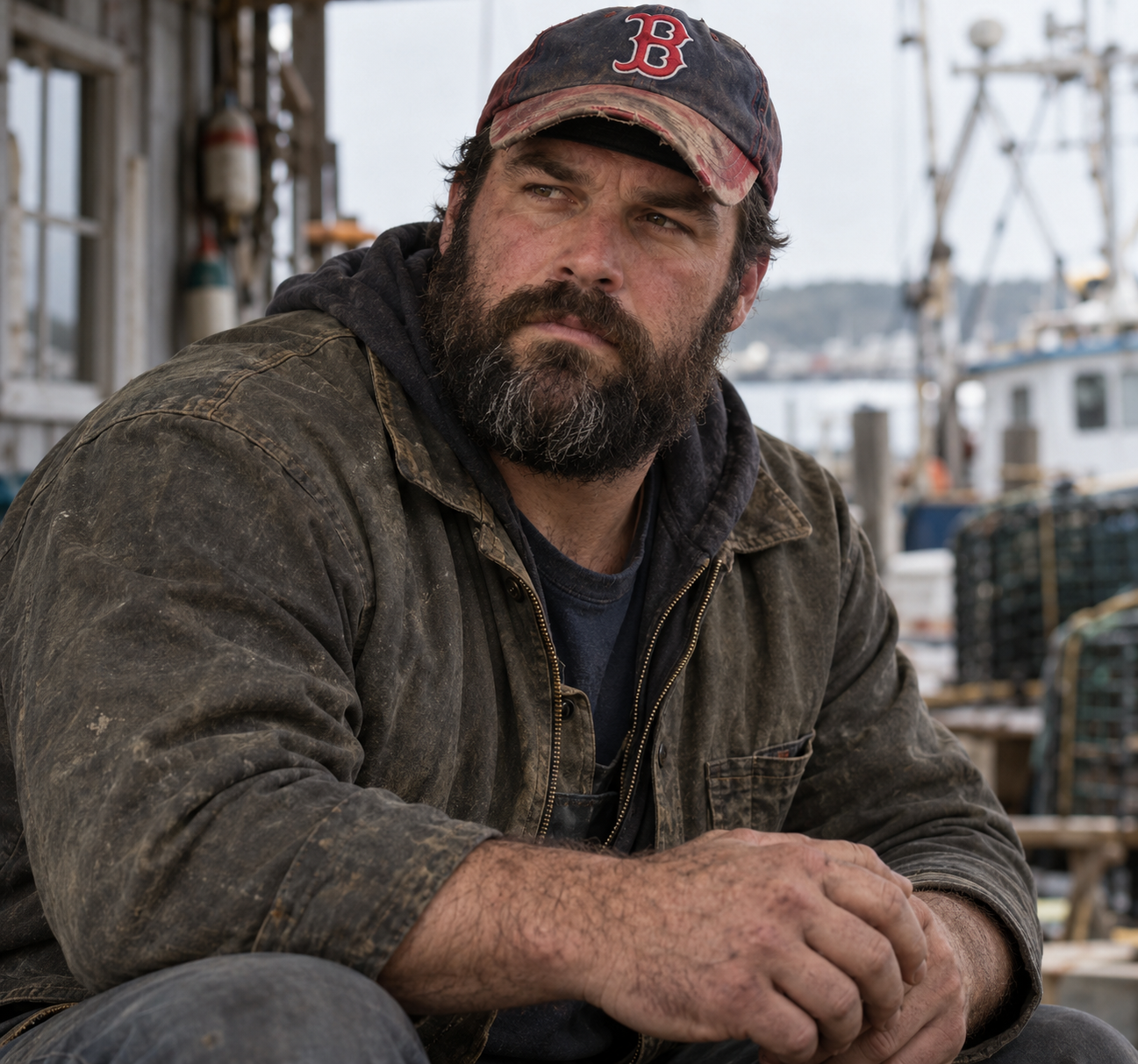
John dies from Merry’s cyanide-laced spaghetti sauce; his fingerprint is found on the poison jar, leaving it ambiguous whether he originally intended to murder his family or whether Marjorie deliberately framed him.
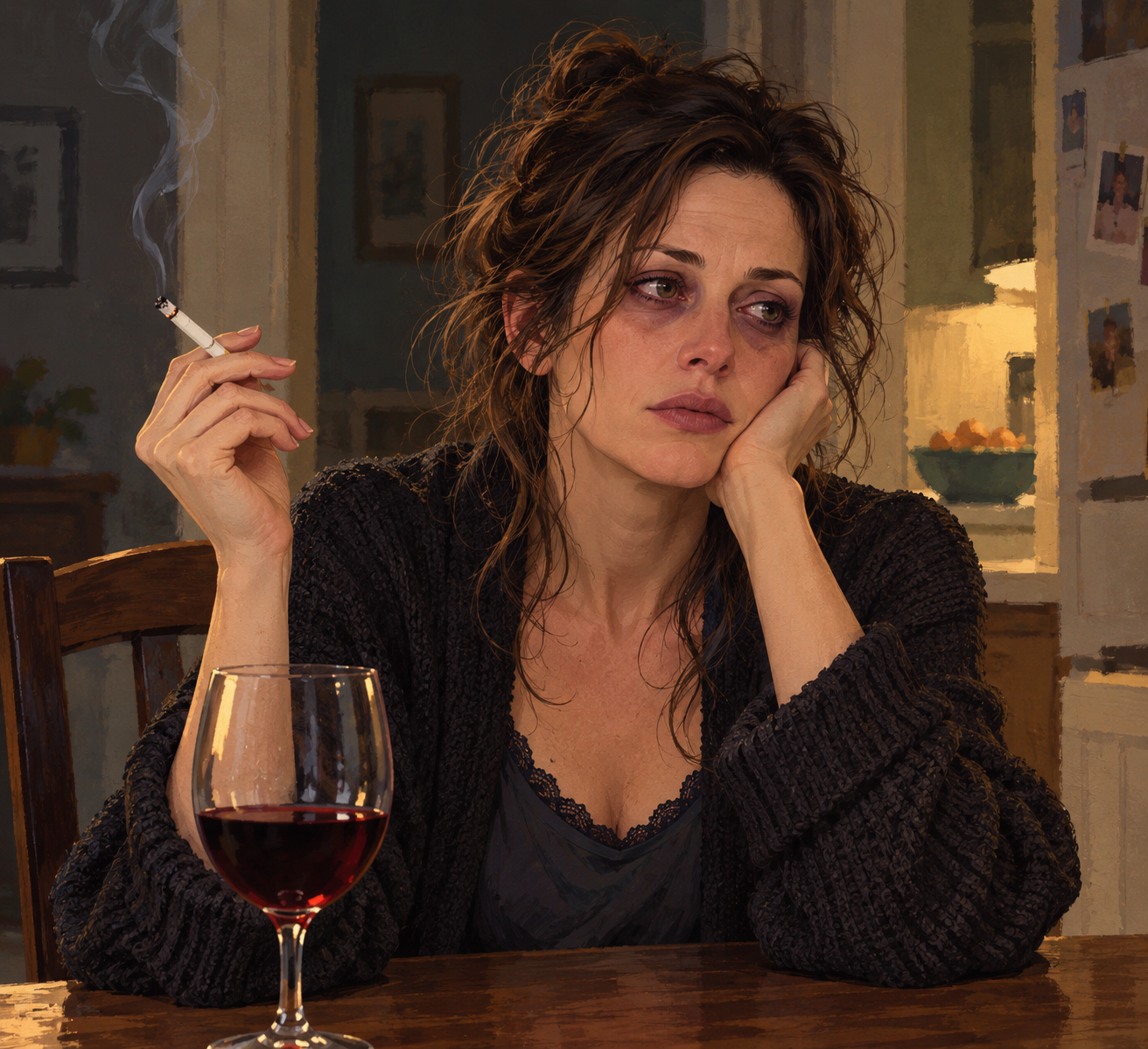
Sarah eats the cyanide-laced spaghetti sauce and dies at the kitchen table with John and Marjorie.

Rachel learns disturbing details including John’s fingerprint on the cyanide jar and Merry’s three days alone with the bodies, but the full truth remains filtered through Merry’s deliberately unreliable account.
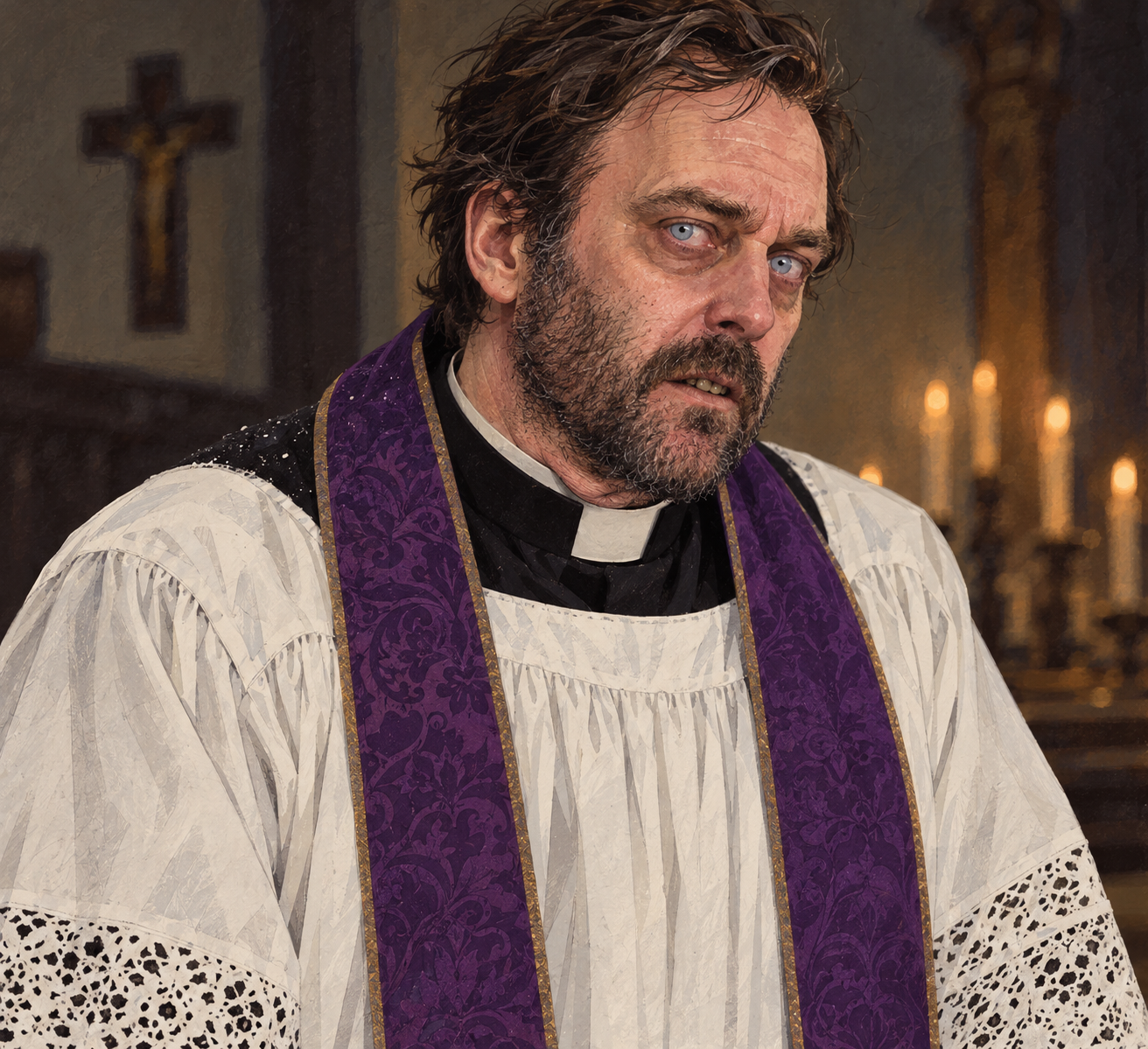
He conducts the disastrous exorcism that ends with Father Gavin badly bitten and Marjorie jumping from the staircase; after the Barrett family deaths and resulting scandal, he cuts off contact.
🔷 Supporting Characters

Karen is ultimately revealed to be adult Merry herself; the blog earns her a paid Fangoria column while allowing her to publicly dissect her own trauma without revealing her identity.
Marjorie attacks him during the exorcism and bites deeply into his forearm, ripping away flesh and leaving him screaming and bleeding on the bedroom floor.
John effectively sidelines him as the family embraces the exorcism; after the deaths, toxicology reveals Marjorie was not actually taking the antipsychotics prescribed to her.
He reports Marjorie’s case as apparently “beyond science” and recommends an exorcism to Bishop Ford, then disappears from the family’s story before the fatal poisoning.
After Marjorie’s staircase jump during the failed exorcism, Barry immediately packs up the production and abandons the Barrett family while avoiding John’s later attempts to contact him.
Ken leaves with the production crew after Marjorie’s staircase jump and never contacts Merry again, despite the letters she sends him afterward.
Jenn abandons filming to help Father Gavin after Marjorie bites him; both leave permanently when the production shuts down following the failed exorcism.
After the cyanide poisoning, Erin takes in the orphaned Merry and raises her through adolescence into adulthood.
He tutors Merry only briefly before John, Sarah, and Marjorie’s deaths abruptly end his employment.
🕳️ Potential Plot Holes
Merry remembers handling the cyanide jar repeatedly—carrying it into the kitchen, opening it, pouring the poison into the sauce, and later trying to place it in Marjorie’s hand. Yet the only identifiable partial fingerprint recovered from the jar belonged to John. This casts doubt on Merry’s account of the poisoning. Her prints may simply have been among the smudged, unusable prints, but the discrepancy also leaves open the disturbing possibility that Merry’s memory of what happened is incomplete or inaccurate.
📚 Book Club Q&A's
⭐ Final Rating & Thoughts
What an absolutely fantastic horror novel. A Head Full of Ghosts worked so well for me because it never gives you the comfort of knowing exactly what happened—or even who you should believe. Paul Tremblay constantly shifts the ground beneath you, blurring mental illness, manipulation, memory, religious fanaticism, and the possibility of something genuinely supernatural.
I especially loved the way the story is filtered through Merry. Her perspective makes everything feel just slightly off, and the uncertainty only grows as the novel progresses. Rather than relying on straightforward scares, Tremblay creates dread by making you question every explanation he offers. Even after finishing, I found myself replaying scenes and reconsidering what I thought I understood.
The reality-TV angle was another highlight for me. Watching a struggling family’s crisis become entertainment adds an uncomfortable layer of exploitation that makes the story even darker.
And that ending? Perfect. Creepy, ambiguous, and exactly the kind of conclusion that makes me want to immediately discuss theories with someone else. This was disturbing, clever, unsettling, and completely unforgettable—exactly what I want from psychological horror.
✨ Adaptation description
Adaptation
A Head Full of Ghosts is being adapted into a psychological horror feature film directed by Veronika Franz and Severin Fiala, the filmmaking duo behind Goodnight Mommy and The Lodge. Lionsgate is distributing the film, with Team Downey and The Allegiance Theater producing. Production began in Vancouver in March 2026.
The cast includes David Harbour as John Barrett, along with Rebecca Hall, Esmé Creed-Miles, Bodhi Rae Breathnach as Marjorie Barrett, Fiona Dourif, and Hollie Hill-Pearson as Merry Barrett. Robert Downey Jr., Susan Downey, David Gambino, Daniel Dubiecki, and Lara Alameddine are among the producers.
The film is expected to retain the novel’s central premise: the Barrett family begins to unravel when 14-year-old Marjorie exhibits disturbing behavior that may be caused by severe mental illness—or demonic possession. As the family’s financial problems worsen, they allow their lives and Marjorie’s apparent possession to be filmed for the reality television series The Possession. Years later, Marjorie’s younger sister Merry revisits what happened and the discrepancies between the televised story and her own memories.
✨ Books Like A Head Full of Ghosts (2015)
See an error on this page?