
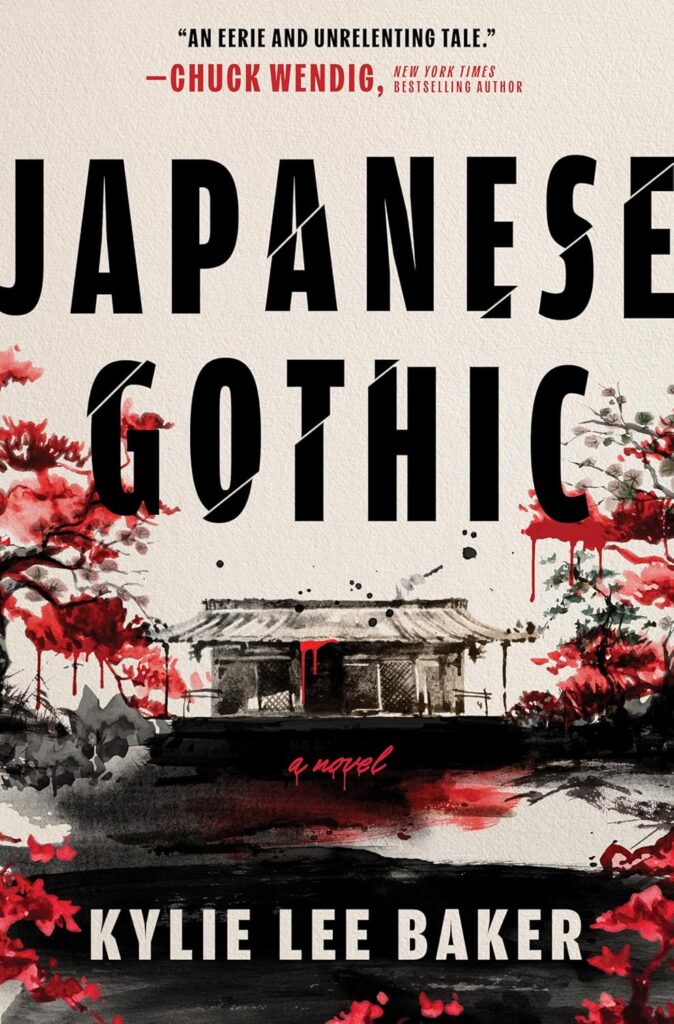
Japanese Gothic (2026)
Select Sections to Print
×Book Details
Japanese Gothic (2026)
Jump to Section
⚠️ Trigger Warnings
- Child abuse
- Child neglect
- Child starvation/death
- Child psychological torture
- Being buried alive
- Forced confinement
- Graphic violence
- Graphic gore
- Body horror
- Decapitation
- Dismemberment
- Graphic wounds/internal organs
- Eye/facial trauma
- Rotting corpses/decomposition
- Maggots
- Suicide
- Graphic ritual suicide/seppuku
- Self-harm
- Murder
- Familicide
- Filicide
- Patricide
- Domestic violence
- Physical assault
- Substance abuse/dependence
- Prescription drug misuse
- Drug withdrawal
- Trauma/PTSD
- Dissociation
- Amnesia/memory loss
- Hallucinations
- Claustrophobia/confinement
- Human trafficking (references)
- Organ harvesting (references)
- War/historical violence
- Massacres
- Animal cruelty
- Animal death/injury
⏱️ 2-Minute Spoiler Summary
In October 2026, 19-year-old Lee Turner moves with his father, Jim, into a 200-year-old samurai house in Chiran, Japan. Lee is heavily dependent on sedatives and haunted by missing memories. He believes he murdered his NYU roommate, hears his long-missing mother calling to him from inside suitcases, and cannot remember exactly what happened to her when she disappeared during a family trip to Cambodia seven years earlier.
Then Lee discovers something impossible. A closet door in his bedroom, which should open onto a solid wall, instead connects him to the same house in 1877.
On the other side is Iwasaki Sen, a 16-year-old girl being raised as a samurai by her abusive father, Iwasaki Itaro, after the failed Satsuma Rebellion. Itaro is obsessed with samurai honor and death, brutally training Sen while his family starves. After Lee correctly predicts a fire in Sen’s time, she accepts that he really comes from the future.
Lee brings Sen through the closet into 2026, where she learns that the samurai era is over. Even worse, the family registry says Sen and her entire family will die on October 27, 1877—only three days away. Lee desperately wants to prevent her death, but Itaro refuses to flee and insists that a samurai should embrace death.
As the two timelines increasingly overlap, Lee and Sen begin uncovering truths about both their lives. Sen discovers that her father’s devotion to honor is really fanaticism and cruelty. When imperial forces close in, Itaro kills his wife and young sons rather than allow them to be captured, then prepares to commit seppuku and orders Sen to assist him. Sen finally rejects everything he taught her, tells him she has chosen herself, and refuses.
At the same time, Lee’s suppressed memories return. He never murdered his college roommate. His roommate was Matt, not “James Baldridge,” and survived Lee’s drug-fueled episode. The person Lee actually killed was his father. Seven years earlier, Lee witnessed Jim murder Lee’s mother in Cambodia, stuff her body into a suitcase, and bury her. Lee repressed the memory. When he finally began remembering the truth in Japan, Jim tried to have him institutionalized. During their confrontation, Lee stabbed Jim to death and dumped his body into the well outside the house.
The final revelation explains the supernatural mystery. Jim’s girlfriend Hina and Sen’s maid Youna are actually the same being: Otohime, the immortal daughter of the Dragon God from the legend of Urashima Tarō. Otohime had created separate pocket worlds around the house to protect both Sen and Lee from the deaths awaiting them. Sen was supposed to die in 1877, while Lee was supposed to die after his trauma and drug use in 2026. Because Otohime’s power weakens at low tide, the barriers separating their worlds periodically break down, allowing Lee and Sen to meet through the closet.
With police surrounding the house in Lee’s time and imperial soldiers attacking it in Sen’s, the two hide beneath the same porch 149 years apart. They dig into the earth and uncover Otohime’s jeweled tamatebako, the magical box from the Urashima Tarō legend.
They open it together, releasing all the time Otohime has unnaturally held back. Her pocket worlds collapse. Lee dies from his wounds after finally accepting the truth about his parents, while Sen accepts her own death free from her father’s control. They die holding hands across time.
The novel ends with Sen’s final letter to Lee, written before the attack. She tells him that knowing him taught her not to fear endings because she now believes time is circular and they may find each other again.
She signs it: “Iwasaki Sen, The Last Samurai.”
📖 Full Spoiler Summary
Lee and Sen, 149 Years Apart
In October 2026, 19-year-old Lee Turner arrives in Chiran, Japan, with his father, Jim Turner, an East Asian Studies professor specializing in Japanese history. They move into a secluded 200-year-old samurai house hidden behind thick sword ferns, but Lee is in no condition to appreciate his new surroundings.
His memories are badly fractured, and he relies heavily on Ativan, Benadryl, Xanax, and other sedatives to quiet his mind. He has lost his sense of smell, sees strange distortions in the world around him, and is haunted by what he thinks happened at NYU. Lee remembers attacking his roommate, whom he calls James Baldridge, and believes he may have killed him and concealed the body.
Even worse is the voice of Lee’s mother, who disappeared seven years earlier during a family trip to Cambodia. He hears her calling to him from inside suitcases, begging him to let her out.
The house itself gives Lee more reasons to question his sanity. There is an old bloodstain high on a kitchen doorframe, and a dead raccoon lies decomposing at the bottom of the property’s well. Jim’s Japanese girlfriend, Hina, spends time at the house cooking for them and tells Lee the story of Okiku, the murdered servant girl whose ghost supposedly haunts a well.
Nearly 150 years earlier, in October 1877, 16-year-old Iwasaki Sen is living in that exact same house.
Her father, Iwasaki Itaro, survived the failed Satsuma Rebellion and remains fanatically devoted to the samurai way of life. While hiding from imperial forces, he trains Sen to become a warrior, forcing her to spar with him and memorize teachings from the Hagakure, especially its insistence that the way of the samurai is found in death.
The rest of the family—including Sen’s mother, her 13-year-old brother Seijiro, and two-year-old Kotaro—lives in fear of Itaro. Their maid, Youna, provides one of the few gentle presences in the household. Food is scarce, yet Itaro clings to his pride and fantasies of restoring the samurai order. Sen has already seen what his obsession can cost: her younger sister Kura starved to death during a famine after Itaro withheld food from her.
The Door Between Their Worlds
Determined to clear his mind, Lee finally flushes his sedatives down the toilet. Soon afterward, he notices yellow light shining through the paper closet door in his bedroom—even though there is nothing behind it but a solid cement wall.
In 1877, Sen sees something equally impossible: a shadow moving behind her own closet door.
Lee writes a message backward in Japanese on the paper: “How did you die?”
Sen answers: “I will tell you tonight.”
When the door finally opens, Lee and Sen find themselves staring at each other. Sen immediately draws her katana, believing Lee may be a demon or spirit, but it becomes clear that both of them are physically real. Gradually, they understand the impossible situation: they occupy the same bedroom in the same house, but 149 years apart.
Lee proves that he knows Sen’s future by warning her that a fire will break out in Chiran the next day and kill the mayor. When it happens exactly as he predicted, Sen can no longer dismiss his claims.
Her own world, meanwhile, is becoming increasingly dangerous. Hunger and paranoia are pushing Itaro further into madness. During an argument over food, he orders Sen to punish her mother by cutting off two of her fingers with a dagger. Sen obeys. Her mother’s blood splashes high onto the kitchen doorframe, creating the stain that will still be there when Lee moves into the house in 2026.
Lee is uncovering disturbing secrets of his own. After breaking into Jim’s locked study, he discovers newspaper clippings about a dismantled human-trafficking and black-market organ ring in Japan. He concludes that his father brought him to Japan because Jim believes Lee’s missing mother may somehow have ended up there—or that pieces of her body might be found.
Sen Discovers When She Dies
As Lee and Sen become more comfortable with each other, the portal allows Sen to enter modern Chiran. Her arrival immediately creates practical problems: Hina has to stop her from walking outside carrying a katana because swords are illegal in modern Japan.
The modern world also destroys everything Sen has been taught to believe. She learns that the samurai class did not rise again after the Satsuma Rebellion. Her father’s dream of another rebellion is futile.
Then Lee takes her to the town hall.
Using Sen’s antique wooden identity passport, they locate her family in the official koseki registry. The record reveals something far worse than the end of the samurai.
Sen, her parents, and her siblings are all recorded as dying on October 27, 1877.
That date is only three days away.
Outside the archive, Lee grabs Sen’s arm, and modern Chiran suddenly seems to disappear. For a moment, they stand on white sand beneath a black sky as an enormous wave rushes toward them. Then the vision vanishes.
Lee becomes determined to change Sen’s fate. He begs her to convince her family to leave Chiran, but Itaro refuses. To him, fleeing death would be shameful.
When an imperial spy is discovered near the house, Itaro captures him and orders Sen to execute him. She decapitates the man on the back porch. Unknown to her, Lee is hiding beneath the porch in his own time, and the dead man’s blood drips through the floorboards onto him.
Their Worlds Begin to Collapse
Lee soon notices one of Sen’s watercolor paintings and is stunned by what he sees.
She has painted Lee’s mother, standing on a shore while the ocean closes around her.
When Lee and Sen hold hands and cross the closet threshold together, they enter an eerie shared space: a white beach beneath a dark sky. An empty, unzipped suitcase sits on the sand. As the suitcase begins filling with white sand, Lee and Sen themselves start turning to ash. They barely escape back into their own worlds.
Lee begins tracking when the closet opens and finally recognizes the pattern. The connection appears only during low tide.
In 1877, Itaro buys Sen a magnificent new katana and declares her the true “soul of the samurai.” But his grand gesture comes just as imperial troops close in on Chiran.
Knowing capture is imminent, Itaro decides his family must die rather than fall into enemy hands. He murders his wife and young sons while they sleep, then prepares to commit seppuku. He orders Sen to serve as his kaishakunin and complete his ritual death.
For the first time, Sen fully rejects him.
She realizes that the man who taught her to worship honor and death has used those ideas to justify cruelty, starvation, mutilation, and murder. She refuses to help him die and tells him, “I’ve chosen myself, and you are not my father.”
Enraged, Itaro attacks her just as imperial soldiers storm the property. Gunfire tears through the house, and Sen flees beneath the porch.
Lee Finally Remembers What Happened
In 2026, Lee’s own version of reality is collapsing.
His memories of NYU finally become clear. He did not murder his roommate. The young man was actually named Matt, not James Baldridge, and although Lee attacked him during a drug-fogged episode in a stairwell, Matt survived.
The name James belongs to someone else.
James is Lee’s father.
That realization unlocks the memory Lee has spent seven years suppressing. When Lee was twelve, he witnessed Jim murder Lee’s mother during their trip to Cambodia. Jim stuffed her body into a suitcase and buried her.
That is why Lee hears his mother calling from suitcases. That is the truth his mind has been trying to keep buried.
After Lee began remembering what happened, Jim realized his son might expose him and called the police to have Lee institutionalized. Father and son fought in the kitchen. Lee stabbed Jim to death with a kitchen knife, dragged his body outside, and dumped him into the well.
The corpse in the well is not simply another grotesque feature of the strange house. Lee has been living beside the place where he disposed of his father.
Otohime and the Truth About the House
As police close in on the house in 2026 and imperial soldiers attack it in 1877, the final supernatural mystery is revealed.
Hina and Youna are the same being.
She is Otohime, the immortal sea princess and daughter of the Dragon God from the legend of Urashima Tarō.
Long before the events in the house, Otohime encountered Sen when Sen’s mother tried to sacrifice her to the ocean. Otohime became attached to the lonely girl and eventually used her divine power to protect her from the death awaiting her in 1877. She created a pocket world around the house, holding Sen and her family inside an unnatural extension of time.
Generations later, Otohime encountered Lee after the murder of his mother. Lee, too, was heading toward death, this time through drugs and a fall during his breakdown. Otohime created another protected reality for him in 2026.
The two worlds were never supposed to meet.
But Otohime is a creature of the sea, and her power weakens when the ocean retreats. At low tide, the barriers surrounding her pocket worlds become thin enough for 1877 and 2026 to bleed together. That is why Lee and Sen can see each other through the closet—and why their connection disappears when the tide changes.
Otohime has not truly erased either of their deaths. She has only delayed them.
Lee and Sen Open the Box
Bleeding and trying to escape the police, Lee crawls beneath the porch in 2026. In 1877, Sen is hiding beneath that same porch while her home burns and imperial soldiers close in.
Separated by 149 years but occupying the same physical space, they begin digging into the earth.
Their hands uncover a small jeweled box decorated with turtles: Otohime’s tamatebako, the magical box from the legend of Urashima Tarō.
They understand that opening it will end the worlds Otohime created for them.
Together, Lee and Sen open the box.
All the time Otohime has borrowed and trapped is released at once. The artificial realities surrounding the house collapse, and neither Lee nor Sen can remain protected from the fate that has been waiting for them.
In 2026, Lee finally stops running from his memories. He accepts that his mother was murdered by his father, that he killed Jim, and that the horrors haunting him were distorted pieces of truths he could not face. Bleeding beneath the house, he finally becomes peaceful and dies.
In 1877, Sen also accepts death—but on her own terms rather than her father’s. She has rejected Itaro’s belief that dying obediently for the samurai cause is the only honorable way to live. As the pocket world disappears, Sen and Lee die holding hands across 149 years of time.
The novel closes with “The Last Letter of Iwasaki Sen,” a letter Sen wrote before the final attack and hid in Lee’s drawer.
Sen tells Lee that meeting him changed the way she thinks about endings. She no longer fears death because she believes time may be a circle rather than a straight line. If that is true, their deaths do not have to be the end of their connection. Somewhere, in another time or another life, perhaps they will find each other again.
She signs the letter with the identity she has finally chosen for herself:
“Iwasaki Sen, The Last Samurai.”
🔚 Ending Explained
How the Book Ends
The ending of Japanese Gothic reveals that the strange version of the house in Chiran where Lee Turner and Iwasaki Sen have been able to communicate is not reality at all. It is a supernatural pocket outside ordinary time, created by Otohime to protect two doomed young people. When Lee and Sen finally open the tamatebako, that protection collapses, and both are forced to remember what actually happened to them.
Lee Finally Remembers the Truth
In 2026, police surround the house while, 149 years earlier, imperial soldiers close in on Sen’s family. During an unusually prolonged low tide, Lee and Sen dig beneath the porch from their respective timelines. Their hands meet in the earth around a small wooden box carved with turtles: the tamatebako from the legend of Urashima Tarō.
They open it together.
The trapped time inside is released, destroying Otohime’s temporal illusion and restoring Lee’s memories. The truth is very different from the version he has spent the novel believing.
Seven years earlier in Cambodia, Lee’s father, Jim Turner, murdered Lee’s mother after she suffered a mental breakdown. Jim stuffed her body into a suitcase and disposed of it in a well. Lee witnessed what happened, but the trauma—combined with his heavy use of prescription sedatives—fractured and buried the memory.
Lee also realizes that he did not murder his NYU roommate. His roommate was Matt Baldridge, not “James Baldridge,” as Lee had remembered. Lee suffered a manic episode after soy sauce stains triggered memories of his mother’s murder, but Matt survived. Lee fled to Japan believing himself responsible for a killing that never happened.
The real death occurred after Lee reached Japan and confronted his father.
Jim attacked Lee with a kitchen knife and stabbed him in the stomach. Lee fought back and stabbed his father to death, then dragged Jim’s body outside and dumped it into the well—the same method Jim had used to dispose of Lee’s mother.
But Lee himself was already dying.
Bleeding heavily, he crawled beneath the house and reached the closet floor. There, across the divide between 2026 and 1877, he found Sen’s hand.
Sen Rejects Her Father’s Legacy
The collapse of Otohime’s illusion also reveals the truth of Sen’s final night.
Knowing that the imperial army is approaching, Sen’s father, Iwasaki Itaro, murders his wife and his young sons, Kotaro and Seijiro, while they sleep rather than allow them to fall into enemy hands.
Itaro then performs seppuku and orders Sen to serve as his kaishakunin by decapitating him.
Watching her father beg for a quick death changes Sen’s understanding of him. The supposedly fearless samurai who has brutalized his family in the name of honor is terrified of suffering and terrified of dying.
Sen gives him the death he asks for, severing his head with a single strike. But she refuses his final command: that she survive as “the last samurai of Satsuma” and carry his legacy forward.
She will not become another instrument of his violence.
Instead, Sen turns her dagger on herself. As she dies beneath the house, she reaches across time and takes Lee’s hand. Lee and Sen die together, separated by 149 years but no longer alone.
Otohime’s Role Is Finally Revealed
The final chapters reveal that Hina/Youna is actually Otohime, the immortal daughter of the Dragon God.
Otohime first intervened in Sen’s life when Sen was a child, saving her after her mother attempted to sacrifice her to the ocean. When Sen faced death again in 1877, Otohime created a supernatural pocket around the house, attempting to preserve her outside normal time.
She later did something similar for Lee, creating another protected version of the house so that he would not have to experience his final moments alone.
But Otohime’s power weakens at low tide. As the ocean recedes, the boundaries between the two artificial worlds become thinner, allowing Lee and Sen to see, hear, touch, and eventually reach one another.
Opening the tamatebako finally destroys those boundaries altogether.
Otohime ultimately accepts what she has resisted for so long: saving someone cannot mean preventing their life from ever reaching its ending. She allows the false paradise to disappear and lets Lee and Sen die.
Sen’s Final Letter
The novel ends with a letter Sen wrote in 1877 and left in Lee’s bedside drawer.
In it, Sen explains that she is no longer afraid of endings. She has come to believe that time is not simply a straight line carrying people toward disappearance. It can be circular—something capable of returning people, memories, and connections to one another.
She leaves the house and her memories to Lee.
And she signs the letter:
“Iwasaki Sen, The Last Samurai.”
What the Ending Means
The ending transforms Japanese Gothic from a haunted-house mystery into a story about what happens when people try to escape unbearable truth.
The tamatebako is the clearest symbol of that idea. Like the forbidden box in the Urashima Tarō legend, it contains borrowed time. Otohime has effectively given Lee and Sen what both desperately wanted: a place where the worst thing that happened to them does not have to be completely real yet.
But borrowed time cannot become permanent life.
Opening the box therefore isn’t simply an act that kills them. It ends the illusion that has prevented them from understanding their own deaths. Lee must remember that his father murdered his mother, that he did not murder Matt, and that he killed Jim while defending himself. Sen must confront the reality that her father’s supposedly noble devotion to samurai honor culminated in him slaughtering his own family.
Both finally see their fathers without the stories surrounding them.
That parallel is crucial. Jim hides brutality beneath intellectual respectability, while Itaro hides brutality beneath bushido and honor. Both fathers commit horrific acts and leave their children carrying the psychological consequences.
And both children ultimately refuse the inheritance.
For Lee, that rejection comes through truth. He has spent much of the novel drugging himself and constructing a version of events in which he is the monster. Recovering his memories allows him to understand that the guilt he has been carrying is built partly on false memories and misplaced responsibility.
For Sen, rejection is more deliberate and defiant. Her father wants her to survive specifically so that his worldview can survive through her. When she refuses to become “the last samurai” on his terms, she breaks the chain. Her final act belongs to her rather than him.
That makes the title she uses in her letter especially meaningful. Sen ultimately calls herself “The Last Samurai,” but only after rejecting everything her father believed that title required. She takes the identity away from him and defines it for herself.
The house works similarly. For most of the novel, it appears to be a haunted place filled with blood, corpses, stains, hidden rooms, and buried violence. But it is also a sanctuary. It contains the horrors both families tried to conceal while simultaneously becoming the one place where Lee and Sen can truly know another person.
The closet door is therefore more than a supernatural portal. It connects two people trapped inside different versions of the same loneliness.
Even the low tide participates in that symbolism. High water conceals; low water exposes. As the tide recedes, Otohime’s protection weakens, buried bodies and buried memories become harder to hide, and reality begins intruding upon the fantasy.
The ending’s greatest reversal, however, belongs to Otohime.
She genuinely loves Lee and Sen and wants to save them. Yet her version of salvation is ultimately another form of imprisonment. She freezes them at the edge of death because she cannot bear to let them go. Her final act of love is therefore not rescuing them.
It is allowing them to die.
That is why the ending feels strangely peaceful despite being devastating. Lee and Sen do not survive, and the novel does not undo the violence committed against them. What changes is their relationship to it. They finally understand what happened, reject the identities their fathers imposed upon them, and face death while holding the hand of the one person who understands.
Most importantly, neither dies alone.
Sen’s letter then changes the meaning of that death one final time. Her belief that time is circular suggests that an ending does not necessarily erase what existed before it. Lee and Sen’s lives are separated by 149 years, yet they still manage to touch, remember, and alter one another.
So the final image isn’t really about two teenagers dying beneath a haunted house.
It is about two people who were trapped by the past finally becoming free of it.
Their bodies remain in their respective moments in history, but the connection between them has already broken the rules of linear time. Sen’s letter surviving from 1877 into Lee’s world becomes physical proof of that idea: something created in one life can cross an impossible distance and reach another.
That gives the otherwise tragic ending its small note of hope. Lee and Sen cannot change what their families did to them, and they cannot escape death. But they can choose what those final moments mean.
For the first time, the ending belongs to them.
👤 Characters & Fates
🔶 Main Characters

Learns Jim murdered his mother in Cambodia; after Jim stabs him, Lee bites off his ear, stabs him through the heart, and dumps his body down the well. Mortally wounded, Lee opens the tamatebako with Sen, collapsing Otohime’s temporal bubble, and dies beneath the porch holding Sen’s hand across time.

After Itaro murders her mother and brothers, Sen rejects his demand that she preserve his legacy. She beheads him during his seppuku, kills herself, then opens the tamatebako with Lee and dies holding his hand across 149 years; she leaves behind a letter signed “Iwasaki Sen, The Last Samurai.”
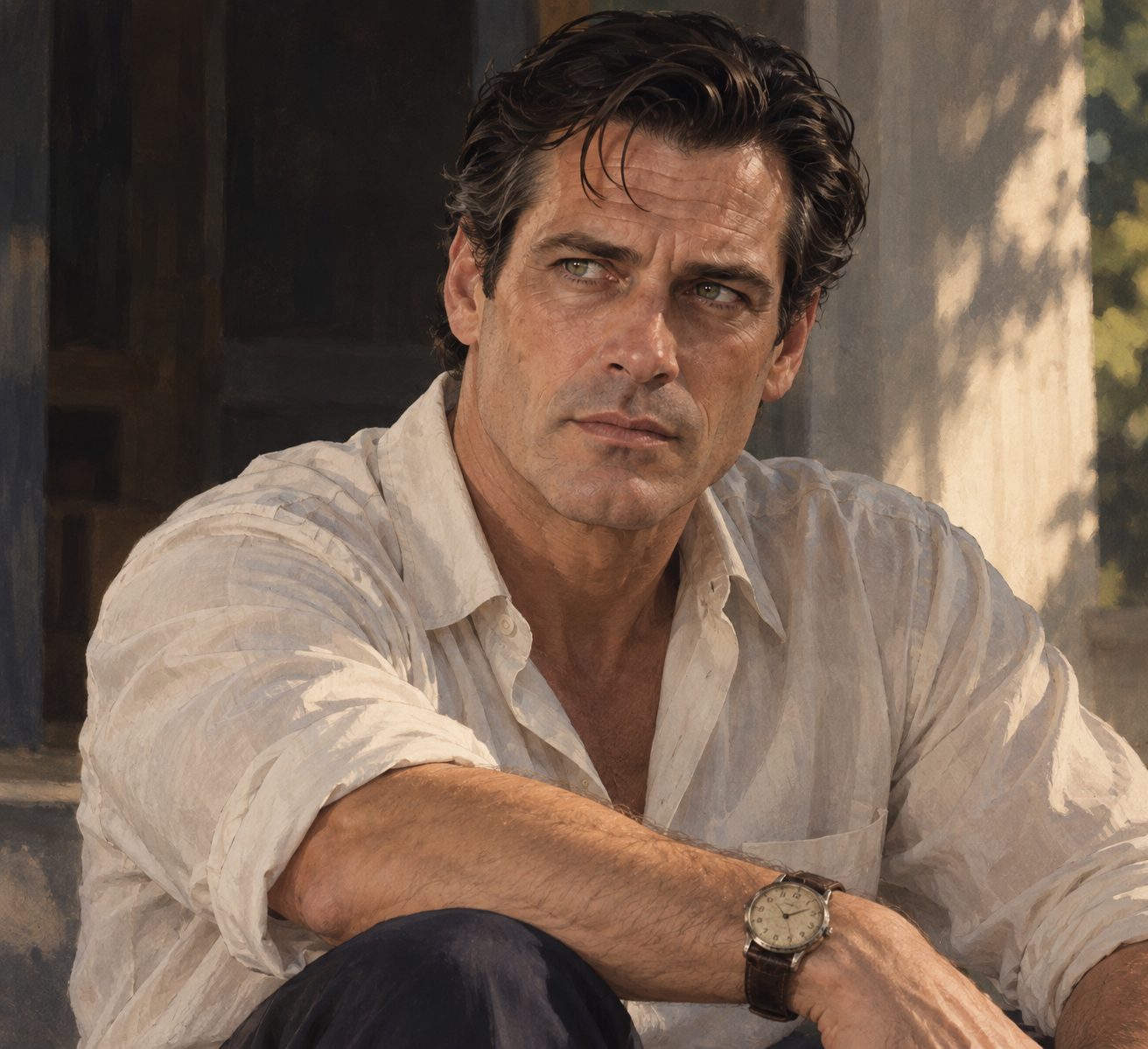
He murdered his wife in Cambodia seven years earlier and hid her body in a suitcase. When Lee recovers the truth, Jim stabs him in the stomach; Lee bites off Jim’s ear, stabs him through the heart, and dumps his corpse down the backyard well.

Jim murdered her during a mental health crisis in Cambodia, stuffed her body into a large black suitcase, and disposed of it; Lee witnessed enough to be profoundly traumatized but repressed the truth.

When Lee and Sen choose mortality and open the tamatebako, Otohime accepts their decision and allows her artificial paradise to collapse. She survives and returns to her solitary existence beneath the ocean.
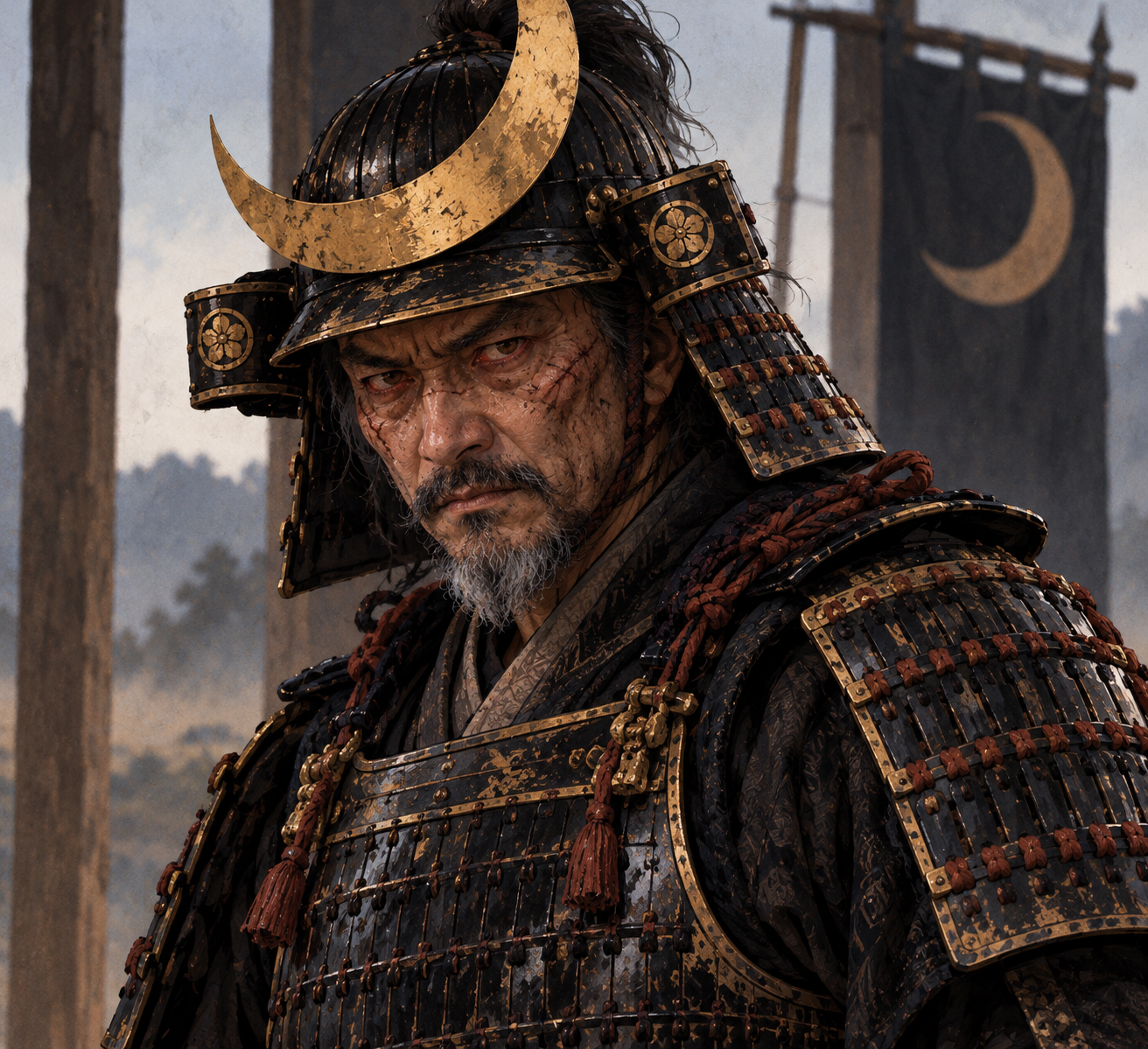
As imperial soldiers close in, Itaro murders his wife and young sons in their sleep, then performs seppuku. He begs Sen to serve as his kaishakunin, and she finally decapitates him with a single strike.
🔷 Supporting Characters

She once sacrifices Sen to the sea during Seijiro’s illness and later has two fingers cut off as punishment for complaining about hunger. Itaro ultimately murders her in her sleep during his final family massacre.
Itaro murders Seijiro in his sleep alongside his mother and baby brother before committing seppuku.
Itaro murders the toddler in his sleep along with Seijiro and their mother during his final massacre.
Itaro deliberately starves Kura to death inside a closet because she is a girl he considers useless; Sen must bury her, and Kura’s decaying ghost later appears during Sen’s burial-alive training.
Matt was never murdered at all and survives Lee’s stairwell episode unharmed; his later text asking whether Lee is okay helps reveal how badly Lee’s memories have become distorted.
Torazo attempts to execute Sen on Itaro’s orders, but she fights back and accidentally impales him on his katana. Itaro then slits Torazo’s throat and falsely claims he attacked Sen.
After witnessing Itaro murder Fujita Torazo, Kono flees the forest in horror and abandons Sen to her father.
He disappears after being captured or interrogated by imperial police, apparently giving them information that leads soldiers toward Itaro’s hideout.
Her samurai master Aoyama murders her and throws her into a well; her ghost remains there, endlessly counting the missing plates.
After spending three days in the Dragon Palace, he returns to discover 300 years have passed. He opens the forbidden tamatebako, releasing the centuries held inside and turning himself to ash.
🕳️ Potential Plot Holes
The 2026 family registry records Sen and the rest of the Iwasaki family as dying on October 27, 1877, even though Otohime supposedly intervened before their deaths and trapped them in a hidden temporal pocket around the Chiran house. If the family was removed from normal time before those deaths occurred, it is difficult to explain how an official government registry could already contain their exact names and shared death date. The book never clearly establishes whether history somehow “knows” the eventual outcome of Otohime’s loop or whether the records were created after the loop collapsed, leaving the chronology unresolved.
The temporal rules for physical objects are difficult to reconcile. Sen’s hair turns to ash when Lee carries it beyond the property and becomes hair again when returned, suggesting that objects originating inside Otohime’s altered timeline cannot exist normally outside its boundaries. Yet Sen’s sword guard survives beneath the floorboards for 149 years, and Lee’s modern silver fork can exist in Sen’s 1877 world. Meanwhile, the imperial spy Sen buries leaves no skeleton for Lee to discover in 2026. Some of this may reflect Otohime’s magic preserving or rejecting objects according to their relationship to the temporal bubble, but the novel never establishes rules explaining why metal objects persist while biological remains sometimes disappear.
Jim tells Lee that police contacted him because Lee’s supposedly dead roommate was found at the bottom of the well, even though Matt Baldridge is actually alive in New York and Jim himself later becomes the person Lee puts in the well. This is less a literal plot hole than a deliberate symptom of Lee’s collapsing perception of reality. The scene mixes false memories, hallucination, guilt, and events that have not yet happened from Lee’s perspective. The surreal dialogue therefore foreshadows Jim’s fate rather than describing an objectively real police investigation, although the intentionally fractured presentation can initially make the chronology seem impossible.
📚 Book Club Q&A's
⭐ Final Rating & Thoughts
Japanese Gothic worked best for me when it leaned into its psychological horror, historical trauma, and mystery. Kylie Lee Baker’s writing is gorgeous and deeply atmospheric, and the decaying house in Chiran becomes genuinely claustrophobic and unsettling. I was especially invested in Lee’s fractured memories and the gradual unraveling of what really happened before he arrived in Japan. Sen’s storyline was just as compelling, particularly the way Baker dismantles the romanticized idea of samurai honor and shows the cruelty that can hide behind tradition.
What kept this from being a five-star read was the fantasy. I’m already a tough sell when it comes to magical realism, and the mystical beach, sea goddess, magical boxes, and larger mythology eventually became a little too much for me. I actually found the human horrors far more disturbing—and far more interesting—than the supernatural ones.
Still, I was completely invested in the mystery, loved the dual timelines, and thought Natalie Naudus’s audiobook narration was phenomenal. This was ambitious, haunting, and memorable, even when its more fantastical elements weren’t entirely for me.
✨ Adaptation description
Adaptation
There is currently no officially announced film or television adaptation of Japanese Gothic by Kylie Lee Baker.
✨ Books Like Japanese Gothic (2026)
See an error on this page?