
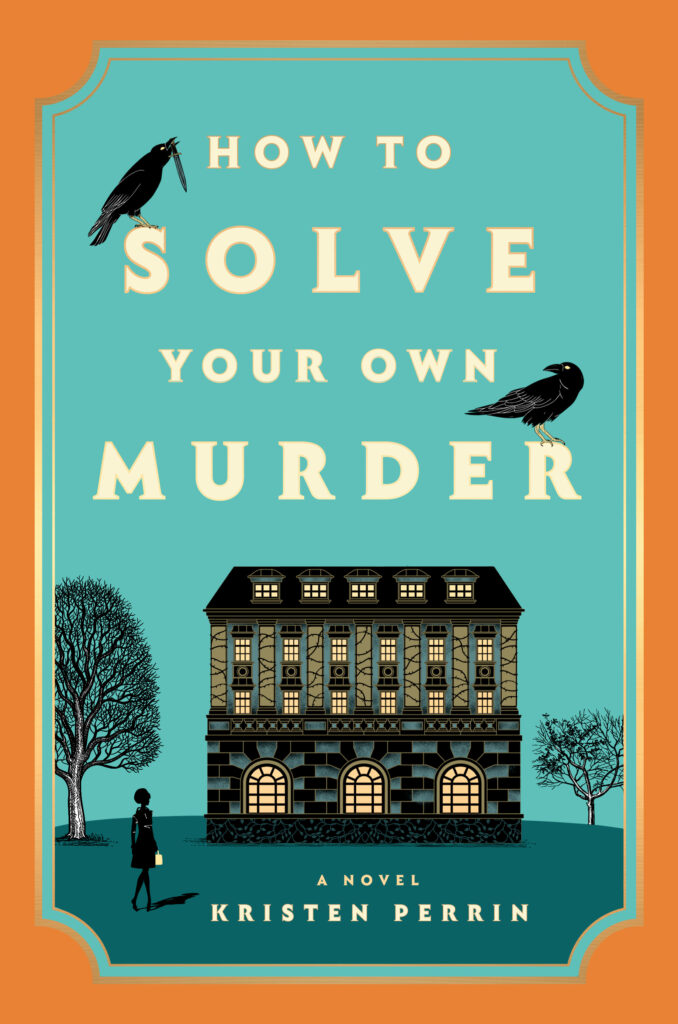
How to Solve Your Own Murder (2024)
Series
Select Sections to Print
×Book Details
How to Solve Your Own Murder (2024)
Series
Jump to Section
⚠️ Trigger Warnings
- Murder
- Death
- Lethal poisoning
- Gun violence
- Gunshot death
- Human remains
- Concealment of a body
- Physical assault
- Choking / strangulation
- Drug trafficking
- Prescription drug misuse
- Forced drugging / attempted overdose
- Poisonous plants / chemical injury
- Blood / injuries
- Stalking
- Harassment
- Death threats
- Infidelity
- Teenage pregnancy
- Adoption pressure
- Parental death
- Fatal car accident
- Orphaning
- Panic attacks
- Fainting
- Vomiting
- Needle / blood phobia
⏱️ 2-Minute Spoiler Summary
How to Solve Your Own Murder is a dual-timeline mystery told through 25-year-old Annie Adams in the present day and the teenage journals of her wealthy great aunt, Frances Adams, beginning in 1965.
When Frances is sixteen, a fortune-teller predicts that she will eventually be murdered, warning her about “dry bones,” betrayal by a bird, and a daughter who will bring justice. Frances becomes obsessed with the prophecy, especially after her glamorous friend Emily Sparrow mysteriously disappears the following year.
Decades later, Frances summons Annie to her estate, Gravesdown Hall, apparently intending to make her an heir. Annie arrives with Frances’s longtime solicitor, Walter Gordon, Walter’s grandson Oliver, and Frances’s relative Elva Gravesdown, only to discover Frances dead in her library. She is clutching white roses whose thorns have been fitted with needles and contaminated with hemlock. An autopsy reveals the real cause of death: someone injected Frances with a lethal dose of iron, causing a fatal heart attack.
Frances’s will turns her murder into a competition. Annie and Frances’s nephew, Saxon Gravesdown, have one week to solve the crime. Whoever succeeds inherits Frances’s £40 million estate. If neither does, property developer Jessop Fields gets the land.
Annie begins investigating using Frances’s enormous collection of files on Castle Knoll’s residents and Frances’s old journal, which reveals what happened around Emily’s disappearance. Emily had slept with Frances’s boyfriend, John Oxley, and became pregnant with his child. That baby was Laura, Annie’s mother. Frances’s brother Peter Adams and his wife Tansy adopted Laura after Peter paid Emily to give her up.
Then Annie discovers the “dry bones” from Frances’s prophecy: Emily’s skeleton has been hidden for nearly sixty years inside a leather trunk stored in Laura’s Chelsea basement. Emily was shot in the head and is wearing Frances’s old black coat, with Frances’s revolver still in the pocket.
Piecing together Frances’s journal, Annie realizes that Frances’s other teenage best friend, Rose Forrester, killed Emily in 1966. Rose had been intensely jealous of Emily’s hold over Frances. Wearing Frances’s borrowed coat, which contained the revolver, Rose traveled to Chelsea and shot Emily, then concealed her body in the trunk.
Finding Emily’s remains shortly before her own death finally allowed Frances to solve the mystery that had haunted her for decades. Frances confronted Rose about the murder, causing Rose’s mental health to collapse.
But Rose did not murder Frances.
The present-day killer is Rose’s son, Joe Leroy, a paramedic. Desperate to protect his mother, Joe arranged Frances’s murder after learning that Frances had uncovered Rose’s crime. He manipulated Elva into delivering the booby-trapped bouquet, disconnected Frances’s Rolls Royce battery so she could not leave the estate, and then secretly injected her with the fatal dose of iron.
Joe later ambushes Annie inside an ambulance and tries to kill her with an overdose that will look drug-related. Walter and Beth Foyle, the granddaughter of Frances’s gardener Archie Foyle, arrive in time to save her, and Joe and his accomplice Magda are arrested.
Annie wins Frances’s £40 million inheritance. She guarantees that Laura can remain in the Chelsea townhouse, protects Gravesdown and the Foyle farm from redevelopment, and gives Frances’s Rolls Royce to Archie and Beth.
Annie later visits Rose in a psychiatric facility, but Rose shows no remorse for killing Emily, insisting that Emily “had to be stopped.” Oliver also admits that he planted threatening notes in Annie’s room—not because he wanted her dead, but because he wanted to frighten her into solving Frances’s murder and destroying the development deal so he could escape his job with Jessop Fields.
At Frances’s memorial wake, Annie opens the blank leather notebook Frances left behind and begins writing her own story.
📖 Full Spoiler Summary
The Fortune That Controls Frances’s Life
How to Solve Your Own Murder unfolds across two first-person timelines. In the present day, Annie Adams is a twenty-five-year-old aspiring mystery writer who has recently lost her London office job. Interspersed throughout Annie’s story are entries from The Castle Knoll Files, journals written by her great aunt, Frances Adams, as a teenager in 1965 and 1966.
Frances’s story begins when she is sixteen and attends the Castle Knoll Country Fair with her two best friends: glamorous, manipulative Emily Sparrow and loyal but jealous Rose Forrester. The three visit a young fortune-teller named Madame Peony Lane, who tells Frances that her future contains “dry bones,” that a bird will betray her, that daughters will be the key to justice, and, most frighteningly, that all signs point toward Frances’s murder.
Emily and Rose laugh it off. Emily even buys the girls matching silver bird necklaces because her surname is Sparrow. Frances, however, takes the prophecy completely seriously. She records every word in her notebook and spends the rest of her life looking for signs that the prediction is coming true.
Her fear becomes far more understandable when Emily disappears less than a year later. All that remains is a missing-person report and Emily’s silver bird necklace.
Annie Is Summoned to Gravesdown Hall
Nearly sixty years later, Annie has moved back into the enormous Chelsea townhouse belonging to Frances, where Annie’s mother, Laura Adams, lives. Laura is an eccentric modern artist, while Annie is trying to figure out what to do after being made redundant from her job.
Then Annie receives an unexpected letter from Walter Gordon, Frances’s longtime solicitor and one of her teenage friends from 1966. Walter asks Annie to come immediately to Castle Knoll because she may become the sole beneficiary of Frances’s estate.
Laura is furious. She believes Frances has decided Annie must be the “right daughter” mentioned in the old prophecy and intends to replace Laura as her heir.
When Annie reaches Castle Knoll, Walter explains that their meeting has been moved to Frances’s estate, Gravesdown Hall. Annie meets Walter’s grandson, Oliver Gordon, a handsome property developer working for Jessop Fields, and Elva Gravesdown, the snobbish wife of Frances’s nephew.
At the estate, gardener Archie Foyle cannot get them inside because he lacks the necessary keys. Walter eventually opens the house, and the group enters the library.
Frances is lying dead on the floor.
She is clutching long-stemmed white roses, and blood is dripping from punctures in her palms. Elva wants to believe Frances simply suffered a heart attack, but Annie examines the bouquet and discovers tiny metal needles inserted among the thorns.
Someone has murdered the woman who spent almost her entire life expecting to be murdered.
Before leaving the library, Annie secretly takes Frances’s green leather teenage journal.
Frances Turns Her Own Murder Into a Competition
Local detective Rowan Crane begins investigating. When blisters appear on Annie’s hands after she touched the roses, she is treated by Dr. Esi Owusu, Castle Knoll’s GP. The flowers had been contaminated with wild hemlock, although that turns out not to be what killed Frances.
Frances had secretly arranged for Dr. Owusu to perform her autopsy whenever she died because she did not trust her nephew, Saxon Gravesdown, the local coroner, to handle it impartially.
The autopsy reveals the real murder weapon: Frances received a massive injection of iron directly into her bloodstream, triggering a fatal heart attack.
Frances has also prepared one last puzzle. At the reading of her will, Walter announces that Annie and Saxon have one week to solve Frances’s murder. Whoever succeeds inherits Frances’s £40 million estate. If neither identifies the killer, Gravesdown will pass to Jessop Fields, which intends to redevelop the land.
Annie therefore begins investigating both Frances’s murder and the decades-old mystery Frances never stopped trying to solve.
Emily Sparrow’s Disappearance
Frances left behind an extraordinary secret file room filled with information about the people of Castle Knoll, organized according to their suspected crimes and secrets.
Some discoveries hit close to home. There is a file concerning Annie’s absent father, Sam Arlington, and another involving Detective Crane’s father, Reggie Crane, who once dated Laura. Crane admits that he sent Frances a cease-and-desist letter because Frances had been investigating Reggie for supposed infidelity. The truth was that Reggie was secretly gay, and Crane wanted to protect his father from being publicly outed.
Other files concern the complicated Gravesdown family, including Rutherford “Ford” Gravesdown, the late lord of Gravesdown Hall whom Frances married in 1968, and Ford’s first wife, Olivia Gravesdown, whose disappearance had generated rumors that she had been murdered.
The most important information, however, comes from Frances’s teenage journals.
In 1966, Emily had slept with Frances’s boyfriend, John Oxley, who eventually became Castle Knoll’s vicar. Emily became pregnant. She considered using the pregnancy to blackmail Ford Gravesdown or arranging for Frances’s childless brother, Peter Adams, and Peter’s wife, Tansy, to take the baby.
The situation among the teenagers became increasingly volatile. During an argument at an abandoned farmhouse, Walter struck Emily in the face. Frances panicked and fired a revolver into a wall.
Soon afterward, Emily disappeared.
The Dry Bones Finally Appear
Annie eventually examines a damaged leather trunk that had recently been sent to Frances from the basement of Laura’s Chelsea townhouse.
Hidden inside it are human remains.
The skeleton belongs to Emily Sparrow.
Emily was shot in the head, and her body has been concealed inside that trunk since 1966. She is also wearing Frances’s old black wool coat, and Frances’s revolver remains in its pocket.
Suddenly, the timing of Frances’s behavior before her murder makes sense. When the old trunks arrived from Chelsea, Frances finally discovered Emily’s body. The “dry bones” from Madame Peony Lane’s prophecy had literally appeared.
Frances changed her will after receiving the trunk because Annie had inadvertently helped deliver the discovery Frances had been waiting almost sixty years to make.
The historical mystery and Frances’s present-day murder are clearly connected.
Annie Solves Emily’s Murder
As Annie gets closer to the truth, someone leaves a threatening note beneath her pillow promising to put her bones in a box.
Saxon unexpectedly proposes that they work together. He believes Walter may have been financially exploiting Frances through excessive legal fees, although Annie soon discovers Saxon has secrets of his own.
Using numbers connected to Frances’s 1965 fortune, Annie opens a locked private file drawer with the combination 01-37-38. Inside are photographs showing Saxon supplying illicit medical opiates to Magda, a local paramedic. Police also confirm that a break-in at veterinarian Miyuki Takaga-Foyle’s clinic really occurred, and Saxon had been involved in distributing stolen drugs.
Yet that does not explain Frances’s murder.
Annie then visits Vicar John Oxley, who reveals another major family secret. A private paternity test arranged by Ford Gravesdown proved decades earlier that John is Laura’s biological father. Emily gave birth to Laura, and Peter Adams paid Emily in Chelsea so that he and Tansy could adopt the baby.
That information helps Annie reconstruct Emily’s final day.
Frances’s journal records that Bill Leroy, the Gravesdown family driver, took Rose to Chelsea on the day Emily disappeared. John and Walter had also intended to go but never arrived because of car trouble. Crucially, Rose was wearing Frances’s borrowed black coat—the same coat containing Frances’s revolver that was eventually found on Emily’s skeleton.
Rose had also been deeply attached to Frances and bitterly jealous of Emily’s power over her.
The answer becomes clear: Rose Forrester, later Rose Leroy, murdered Emily Sparrow.
Rose traveled to Chelsea wearing Frances’s coat, shot Emily with Frances’s revolver, and hid her body inside the leather trunk. Emily then remained in the Adams family basement for nearly sixty years.
Frances’s Killer Makes His Move
Solving Emily’s murder still leaves Annie with the more immediate question: who killed Frances?
Annie arranges to meet Magda behind the village off-licence and sends her evidence away with Beth Foyle, Archie’s granddaughter, who runs Crumbwell’s Deli.
But when Annie enters the waiting ambulance, Magda is not there.
Instead, she is attacked by Joe Leroy, Rose’s son and a local paramedic.
Joe overpowers Annie and prepares to inject her with horse tranquilizers and other drugs, intending to make her death look like an overdose. With Annie trapped, he finally explains what happened.
Frances had solved Emily’s murder after the trunk arrived and confronted Rose with the truth. The confrontation devastated Rose, whose mental health deteriorated.
Joe decided Frances had to die to protect his mother.
He manipulated Elva into unknowingly delivering the bouquet containing needles and hemlock, ensuring that Frances would believe the prophecy was closing in around her. He disconnected the battery in Frances’s Rolls Royce so she could not leave Gravesdown Hall. Then he injected Frances with the lethal dose of iron that caused her heart attack.
The elaborate bouquet was essentially misdirection. The injection was the real murder weapon.
Annie manages to fight back, and Walter and Beth break into the ambulance before Joe can kill her. Police arrive, and both Joe and Magda are arrested.
Annie Inherits Frances’s Legacy
With Frances’s murder solved, Walter declares Annie the winner of the inheritance competition.
Annie now controls Frances’s £40 million estate, but rather than allowing Jessop Fields to destroy Gravesdown, she uses the inheritance to protect the people and places Frances left behind. Laura is guaranteed the right to remain in the Chelsea townhouse, Gravesdown and the Foyle farm are protected from development, and Annie gives Frances’s antique Rolls Royce to Archie and Beth.
She also visits Rose at a psychiatric facility. Rose does not express remorse for murdering Emily. Even after all these decades, she simply insists that Emily “had to be stopped.”
One final mystery is cleared up when Oliver admits that he was responsible for the threatening messages Annie found in her room. He had used old threats from 1966 to frighten Annie and push her harder toward solving Frances’s murder. His motive was surprisingly practical: he wanted Annie to prevent Jessop Fields from acquiring Gravesdown so that the development project would collapse and he could escape the job he hated.
In October, everyone gathers on the Gravesdown lawns for Frances’s memorial wake.
Frances spent nearly sixty years recording crimes, secrets, suspicions, and clues because she believed the fortune-teller had predicted her murder. In the end, her obsessive records allow Annie to solve not only Frances’s death but the disappearance that started everything.
Among the things Frances leaves behind is a blank leather notebook.
Annie opens it and begins writing her own story.
🔚 Ending Explained
How Does How to Solve Your Own Murder End?
The ending solves both mysteries at the heart of the novel: who murdered Frances Adams in the present day, and what really happened to Emily Sparrow when she disappeared in 1966. The two crimes turn out to be directly connected—and both trace back to Rose Forrester Leroy and her son, Joe.
Joe Leroy Murdered Frances
Annie Adams finally gets too close to the truth when she arranges a meeting in the car park behind the village off-licence to investigate the illegal medical opiates and horse drugs circulating around Castle Knoll.
Instead, she walks into a trap.
Inside a parked ambulance, Joe Leroy, Rose’s paramedic son, attacks Annie. He pins her to a gurney and prepares to inject her with a lethal overdose, intending to make her death look accidental.
While restraining her, Joe finally confesses that he murdered Great Aunt Frances.
Frances had recently discovered something extraordinary inside one of the old leather storage trunks Annie sent from the Chelsea townhouse: Emily Sparrow’s skeletal remains. From the evidence inside the trunk, Frances realized that her old friend Rose had murdered Emily nearly sixty years earlier.
Frances confronted Rose.
The revelation shattered Rose, who had spent almost her entire adult life hiding what she’d done. Joe became convinced that Frances was destroying his mother’s already fragile mental state. Believing he was protecting Rose, he decided Frances had to die.
And he constructed an elaborate murder designed specifically around Frances’s lifelong obsession with the fortune predicting her death.
Joe arranged for Elva Gravesdown to deliver Frances a bouquet containing hidden metal needles and hemlock. Knowing how paranoid Frances was about being murdered, Joe correctly predicted that she would panic, tear apart the bouquet and summon paramedics.
He also disconnected the battery of Frances’s vintage Rolls Royce, ensuring she couldn’t simply leave Gravesdown Hall.
Then Joe responded to the emergency call himself.
Once inside the house, he secretly injected Frances with a lethal concentration of iron obtained from the veterinary clinic, causing the heart attack that killed her.
Frances had spent sixty years preparing for her own murder—and Joe ultimately used that very fear to create the circumstances in which he could kill her.
What Really Happened to Emily Sparrow
Joe’s confession also leads to the complete solution of the mystery that haunted Frances for most of her life.
Rose Forrester killed Emily Sparrow in 1966.
Bill Leroy, who was then Lord Gravesdown’s driver and would later become Rose’s husband, drove Rose to the Chelsea townhouse. Rose confronted Emily in the basement while wearing Frances’s borrowed black wool coat.
Inside the coat was a revolver.
Years of jealousy, resentment and anger toward Emily finally erupted. Rose hated Emily’s manipulative behavior and particularly resented the hold Emily seemed to have over Frances.
Rose shot Emily in the head.
She then concealed Emily’s body, Frances’s coat and the murder weapon inside a leather storage trunk in the basement.
And there they remained for decades.
Ironically, Annie is the person who unknowingly brings Emily home. When she sends the old Chelsea trunks to Dorset, the deteriorating leather eventually splits open, exposing the skeletal remains to Frances.
The discovery also fulfills another part of the fortune Frances received as a teenager: the warning about “dry bones.”
It is this discovery that finally gives Frances the answer she has spent almost sixty years seeking—and helps explain why she chooses Annie as her heir.
Annie Survives—and Wins Frances’s Inheritance
Joe nearly succeeds in killing Annie, but she fights back, kicking him off balance over the ambulance gurney.
Walter “Walt” Gordon, Beth Foyle and Detective Rowan Crane break into the ambulance and overpower him as police arrive.
Joe and his accomplice Magda are arrested.
Because Annie has successfully solved Frances’s murder within the one-week deadline established in the will, Walt officially declares her the winner of the inheritance competition.
Annie inherits Frances’s £40 million estate and assets.
But what Annie does with the money matters more than simply winning it.
She refuses to sell Frances’s land to Jessop Fields for development, protecting Gravesdown, the surrounding woods and Archie Foyle’s farm. She makes sure her mother, Laura, keeps the Chelsea townhouse and gives Frances’s antique Rolls Royce to Archie and Beth.
Annie effectively chooses to preserve the community Frances left behind rather than cash out the inheritance.
The Remaining Secrets Come Out
One final mystery has a much less sinister explanation.
Oliver Gordon admits that he was responsible for placing the old typewritten threats from 1966 beneath Annie’s pillow.
He had discovered them in Frances’s office and deliberately used them to frighten Annie into investigating faster. His bizarre motivation was largely selfish: he desperately wanted Annie to win so that the entire inheritance competition would end and he could finally escape his miserable job at Jessop Fields.
Walt’s suspicious financial activity also turns out not to be theft. He had secretly been using legal funds to send maintenance payments to Laura, partly out of guilt over past failures and as a way of helping support Emily’s child.
Rose, meanwhile, is found mentally unfit to stand trial and is committed to a psychiatric facility.
When Annie and Detective Crane visit her, Rose offers no meaningful repentance. In Rose’s mind, killing Emily was justified.
Emily, she insists, had to be stopped.
Frances’s Final Farewell
By October, Castle Knoll gathers on the lawn of Gravesdown Hall for a large memorial wake honoring Frances.
Later, Annie discovers a cedar chest in Frances’s bedroom containing blank leather-bound journals.
Throughout the investigation, Annie has relied on Frances’s old journal to reconstruct the past. Now Frances has left behind empty books instead.
Annie picks one up and begins writing.
The woman who spent the novel reading Frances’s story is finally ready to write her own.
What the Ending Really Means
The cleverest part of the ending is that Frances technically succeeds in solving her own murder—but she can only do it through Annie.
Frances has spent almost her entire life preparing for the prophecy she received at sixteen. She collects evidence, studies suspicious deaths, records everything and constructs an inheritance contest designed to force people to investigate if she is ever murdered.
Her obsession looks eccentric for most of the novel.
Then she actually is murdered.
But there is an irony to Frances’s victory. Her determination to prevent the prophecy from coming true also helps create the circumstances Joe exploits to kill her. He knows exactly how Frances will react to the threatening bouquet because everyone knows about her obsession with the prediction.
So the novel never gives a simple answer about whether the fortune was genuinely prophetic. What matters more is how much power Frances gave it.
Frances and Annie Take Opposite Paths
Frances allows the prediction to shape virtually her entire adult life. Annie inherits the same mystery but approaches it differently.
She acts.
She investigates, questions people, follows evidence and ultimately makes choices based on what she discovers rather than allowing fear to dictate her future.
That contrast gives the ending its central theme: fate may establish the circumstances of your life, but it doesn’t have to write the story for you.
That idea becomes literal in the final scene.
Frances leaves behind journals filled with the past. Annie receives blank journals.
Frances recorded the mystery.
Annie gets to decide what happens next.
The Queen Changes Meaning
The fortune’s image of the queen also takes on a different significance by the end.
Frances was warned that her slow demise would begin when she held “the queen in the palm of one hand.” She spends decades interpreting the image as another sign of approaching death.
At the end, Annie handles both the queen chess piece and currency bearing the Queen’s image.
For Frances, the queen represented doom.
For Annie, it represents power, strategy and control.
A queen is the most powerful piece on a chessboard. Annie’s willingness to hold it suggests that she will not spend her life fearing symbols the way Frances did. She accepts the power she has inherited and intends to decide how to use it.
Rose and Joe Repeat the Same Tragedy
Rose and Joe provide the darkest parallel in the ending.
Rose convinces herself that Emily has to die because she is protecting Frances and freeing them from Emily’s destructive influence.
Almost sixty years later, Joe convinces himself that Frances has to die because he is protecting Rose.
Mother and son therefore make essentially the same catastrophic decision.
Both commit murder in the name of protecting someone they love.
The repetition shows how buried guilt and trauma don’t simply disappear with time. Rose never truly confronts what she did, and that secrecy ultimately passes the consequences of her crime to the next generation.
Joe doesn’t save his mother.
He repeats her mistake.
The Sparrow Necklace Represents the Buried Past
Emily’s silver sparrow necklace becomes another physical reminder of everything the three girls never resolved.
Like Emily’s body hidden inside the trunk, the necklace represents a past that has been physically concealed but never truly erased.
Once these objects are recovered, the secrets surrounding Emily can finally be brought into the open. Frances’s lifelong mystery is solved, Rose’s lie collapses and Emily is no longer simply the girl who disappeared.
The truth of what happened to her can finally be acknowledged.
Annie’s Inheritance Is Really Frances’s Second Chance
The £40 million makes Annie wealthy, but the novel treats her inheritance as something much larger than money.
Annie inherits Frances’s unfinished responsibilities.
She protects Archie and Beth’s farm. She prevents Jessop Fields from destroying the countryside around Castle Knoll. She secures her mother’s home. She reconnects with her biological grandfather, Vicar John Oxley. And she begins building a permanent life in the village.
In that sense, Annie doesn’t simply inherit Frances’s estate.
She gets the opportunity to do what Frances struggled to do: turn the past into something constructive instead of allowing it to become a prison.
Why the Final Journals Matter
The blank journals are the perfect final image because Annie begins the novel as an insecure aspiring mystery writer—and ends it having actually lived through and solved a murder mystery.
For most of the story, she is reading someone else’s narrative: Frances’s diary, Frances’s clues, Frances’s fears and Frances’s unfinished investigation.
The empty journal changes that relationship.
There is nothing left for Frances to tell her.
Now Annie has to write what comes next.
That makes the ending ultimately much warmer than the murders at its center. Frances spent sixty years looking backward, trying to understand one terrible moment from her youth. Annie uncovers that truth, honors it, and then chooses to look forward.
The mystery ends with the past finally solved—but Annie’s story is just beginning.
👤 Characters & Fates
🔶 Main Characters

Proves Joe Leroy murdered Frances and Rose Leroy murdered Emily. Annie inherits the £40 million estate, saves Gravesdown Hall and Foyle Farms from development, and settles in Castle Knoll to write.
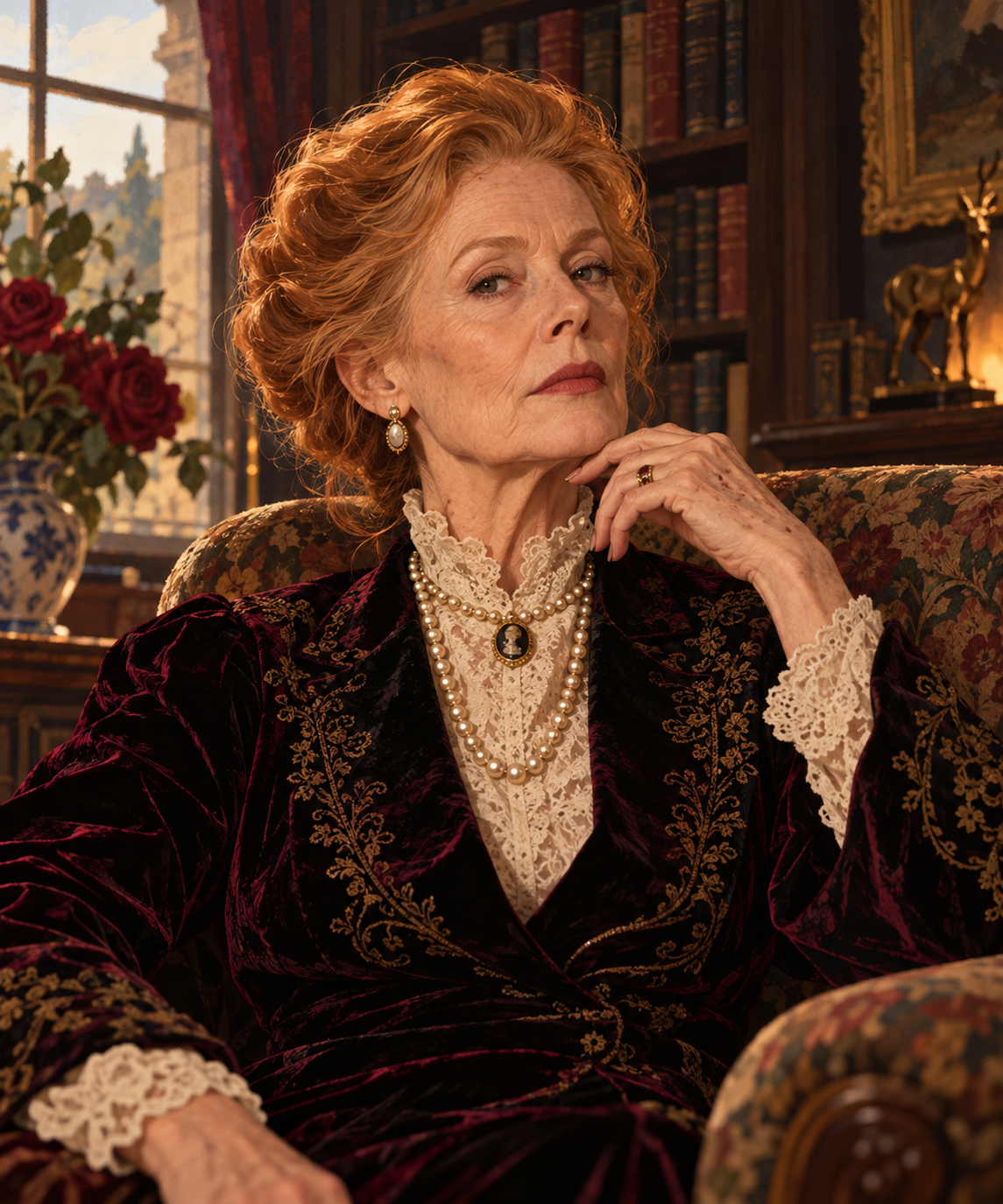
Joe Leroy murders Frances with a lethal iron injection after she discovers Emily’s remains and realizes Rose killed her. Frances leaves her £40 million estate to whoever solves her murder within seven days, and Annie wins.

Rose shoots Emily in the head in a Chelsea basement out of jealousy, then hides her body in a leather trunk. Her remains stay concealed for decades until Annie accidentally sends the trunk to Castle Knoll, allowing Frances to finally discover the truth.
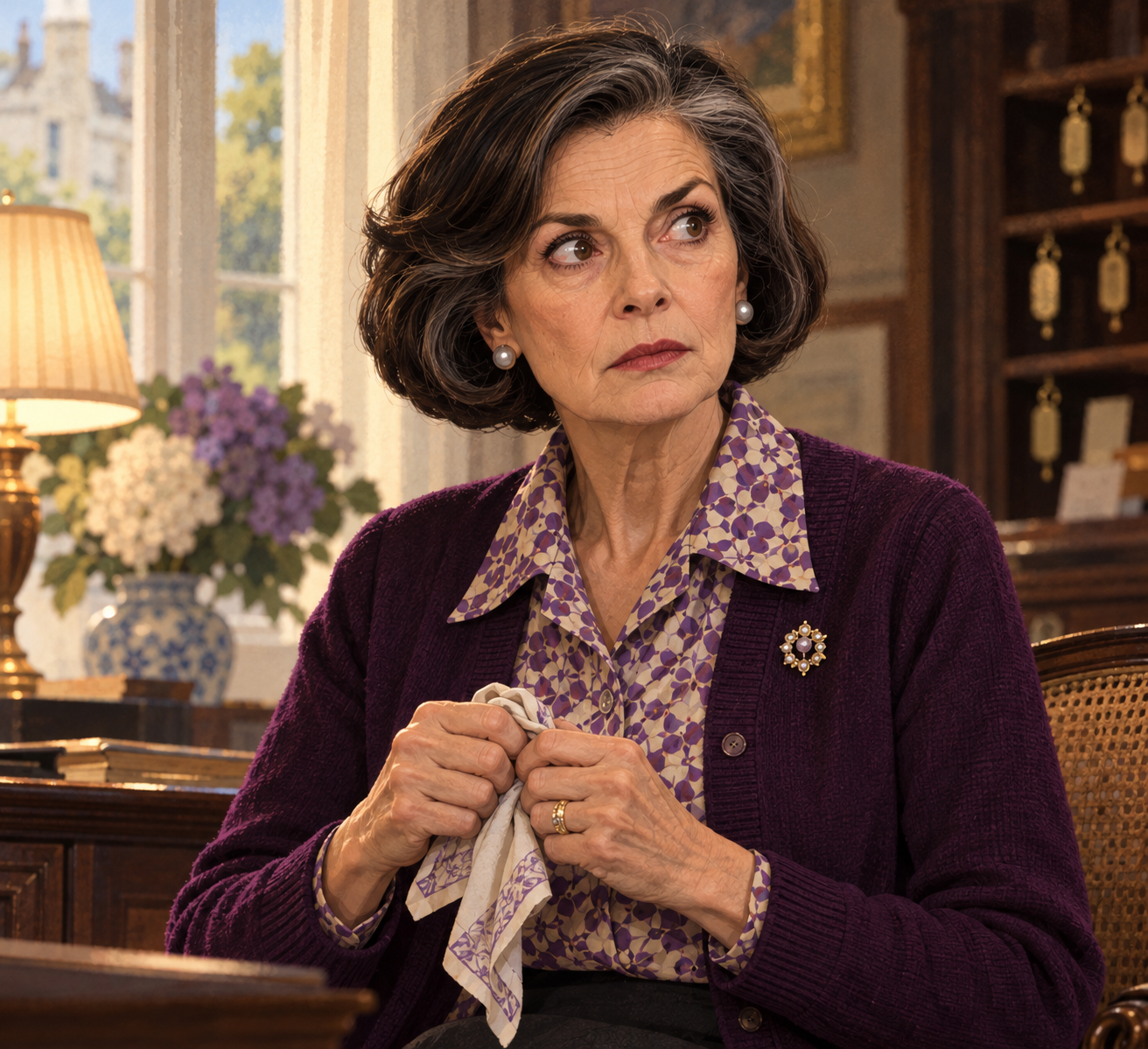
After Frances discovers Emily’s bones and confronts her, Rose mentally collapses. Following Joe’s arrest, she is declared unfit to stand trial and committed to a psychiatric facility, still insisting that “Emily had to be stopped.”

Joe traps Annie in an ambulance and attempts to inject her with a fatal overdose while confessing. Walter, Beth, and Rowan rescue Annie, and Joe is arrested for murder and attempted murder.
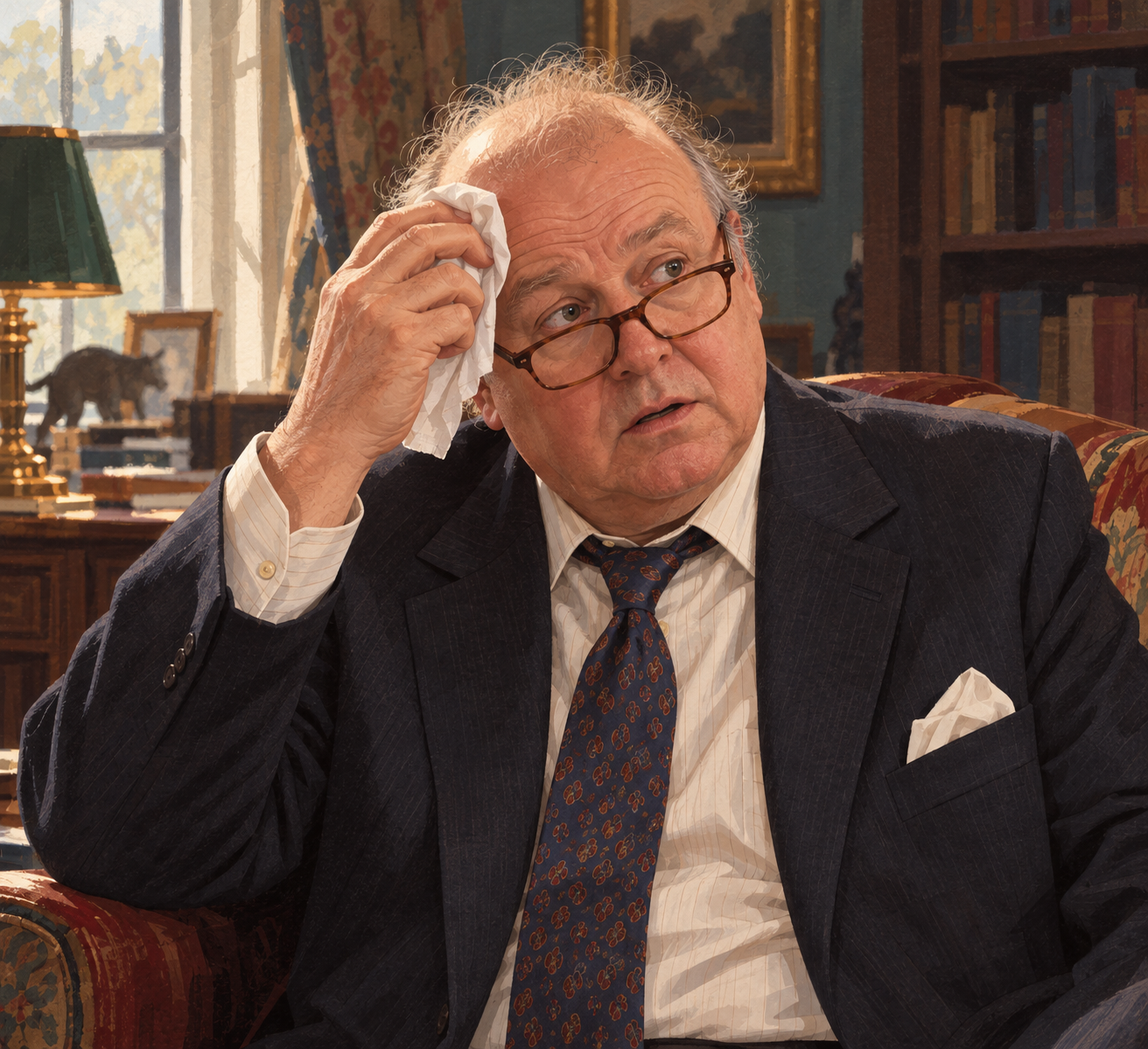
Walter helps rescue Annie from Joe and officially confirms Annie as the winner of Frances’s £40 million estate, later reconciling with Annie and Laura.

Saxon tries to frame Annie with drugs so she will be disqualified from the inheritance contest, but his scheme is exposed. He loses the estate to Annie and is released on bail while awaiting trial.

Oliver admits he planted the notes because he wanted Annie to solve the murder so Jessop Fields would fail and he could escape his hated job. Annie wins the estate, ruining the development deal.

Rowan helps rescue Annie, verifies her solution, and arrests Joe and Magda. He develops a warm personal and professional relationship with Annie.

Laura learns the truth about her biological parents, has a successful Tate exhibition, and keeps ownership of her Chelsea townhouse after Annie inherits Frances’s estate.
🔷 Supporting Characters

She is cleared of murder after it is established that she did not know the bouquet was part of Joe’s plan, but she gains nothing from Frances’s estate.
John reveals the truth about Laura’s parentage, delivers Frances’s memorial eulogy, and reconnects with Laura and Annie as their biological father and grandfather.
Annie saves Foyle Farms, helps Archie open a vintage-car restoration workshop, and gives Archie and Beth Frances’s Rolls Royce.
Beth helps rescue Annie from Joe, and Annie preserves her family’s farm and gives Beth and Archie Frances’s vintage Rolls Royce.
She is innocent of the schemes and continues operating her veterinary practice after the thefts are exposed.
He dies before the novel begins, leaving Frances in control of the Gravesdown fortune and property.
Bill dies before the present-day story begins.
Her involvement is uncovered during the investigation, and she is arrested for her role in the drug scheme.
She provides her findings to Rowan and continues practicing medicine in Castle Knoll.
She disappears from the story after the 1965 fair, and her later fate is unknown.
Reggie remains in Castle Knoll, continues driving his taxi, and maintains a loving relationship with Rowan.
He dies before the present-day events without the adoption secret becoming widely known.
She dies before the present-day storyline.
He never appears in the novel, although Laura warns Annie that her enormous inheritance may tempt him to return.
Jenny designs the memorial display for Frances and flirts with Oliver Gordon at the wake.
She remains working at the Castle Knoll police station.
She disappears from Castle Knoll in the 1960s, and her ultimate fate remains unknown.
She dies before the present-day storyline.
He survives into the present-day timeline and continues working as an elderly accountant.
She returns to Castle Knoll for Frances and Emily’s memorial and embraces Annie, thanking her for finally bringing closure to Emily’s disappearance.
🕳️ Potential Plot Holes
Emily’s body is hidden inside a leather storage trunk in the basement of the Chelsea townhouse in 1966, yet the trunk remains undiscovered for decades—even while Annie and Laura live in the house and Annie regularly plays in the basement as a child. It becomes even harder to believe when removal workers later haul the unusually heavy trunk from London to Dorset without opening it, only for it to conveniently split open after arriving at Gravesdown Hall. The long-term concealment is possible, but the chain of circumstances required to keep the body undiscovered strains credibility.
Oliver admits that he planted old threatening notes under Annie’s pillow because he wanted to push her into solving Frances’s murder and thereby prevent Jessop Fields from acquiring the estate. The problem is that anonymous death threats during an active murder investigation could just as easily have frightened Annie into leaving Castle Knoll or caused Oliver to become a criminal suspect. His actions therefore work directly against his stated goal and depend on Annie reacting exactly as he hopes.
Dr. Owusu performs an expedited autopsy because the normal official process is complicated by Saxon’s family connections. This is difficult to reconcile with normal homicide procedure. A suspicious death would ordinarily fall under the appropriate coroner or medical-examiner system, and a private physician could not simply bypass that authority and conduct an independent forensic autopsy because the family wanted faster results. This is best viewed as procedural license used to keep the seven-day mystery moving.
Rose shoots Emily in the basement of the Chelsea townhouse, cleans up the blood, hides Emily’s body and the murder weapon in a trunk, and leaves without anyone discovering what happened. Yet other people are in or around the house, including Mrs. Blanchard, Peter, Tansy, and baby Laura. A gunshot inside a London townhouse followed by an extended cleanup would create considerable risk of someone hearing or seeing something. It is technically possible that Rose caught an unusually lucky window of privacy, but the novel depends heavily on that luck.
📚 Book Club Q&A's
⭐ Final Rating & Thoughts
How to Solve Your Own Murder has one of those irresistible premises that immediately made me want to read it. The title alone is brilliant, and I loved the idea of a woman spending her life preparing to solve the murder she believes will eventually happen. There’s no question that Kristin Perrin created an incredibly clever mystery, and I can absolutely understand why readers who love intricate puzzles and complicated whodunits would adore this.
Unfortunately, it was just a little too much for me. There are so many characters, relationships, family connections, secrets, and timelines to keep straight that I spent far too much of the book trying to remember who everyone was instead of simply enjoying the mystery. At times, reading felt like I needed a character chart beside me just to keep up.
I still appreciated how ambitious and carefully constructed the story was, and there were plenty of twists to keep things interesting. This wasn’t a bad book at all—it simply required more mental bookkeeping than I enjoy. Clever, creative, and impressively plotted, but ultimately a bit too complicated for my personal taste.
✨ Adaptation description
🎬 Film & TV Adaptation
Adaptation Status: No confirmed film or television adaptation as of October 2026.
Kristen Perrin’s 2024 bestselling cozy mystery How to Solve Your Own Murder, the first book in the Castle Knoll Murder Mysteries series, has not yet been adapted for the screen.
Although reports suggest that screen rights have been optioned through Emily Hayward Whitlock at The Artists Partnership, no production company, director, cast, filming schedule, or release date has been publicly confirmed.
⚠️ Important: There Is an Unrelated Film With the Same Title
A 2024 science-fiction thriller titled How to Solve Your Own Murder, also known as Dimension Slip, was directed by Barbara Toschi and written by Jason Fite.
Starring Sophie Craig and Derek Nelson, the film follows Kate, a troubled woman who awakens in a parallel dimension and becomes entangled in a murder mystery involving her doppelgänger, Hannah.
This film is entirely unrelated to Kristen Perrin’s novel. It does not feature Frances Adams, Annie Adams, Castle Knoll, or the decades-old murder prophecy central to the book.
As of October 2026, readers are still awaiting an official screen adaptation of Perrin’s mystery.
✨ Books Like How to Solve Your Own Murder (2024)
See an error on this page?