
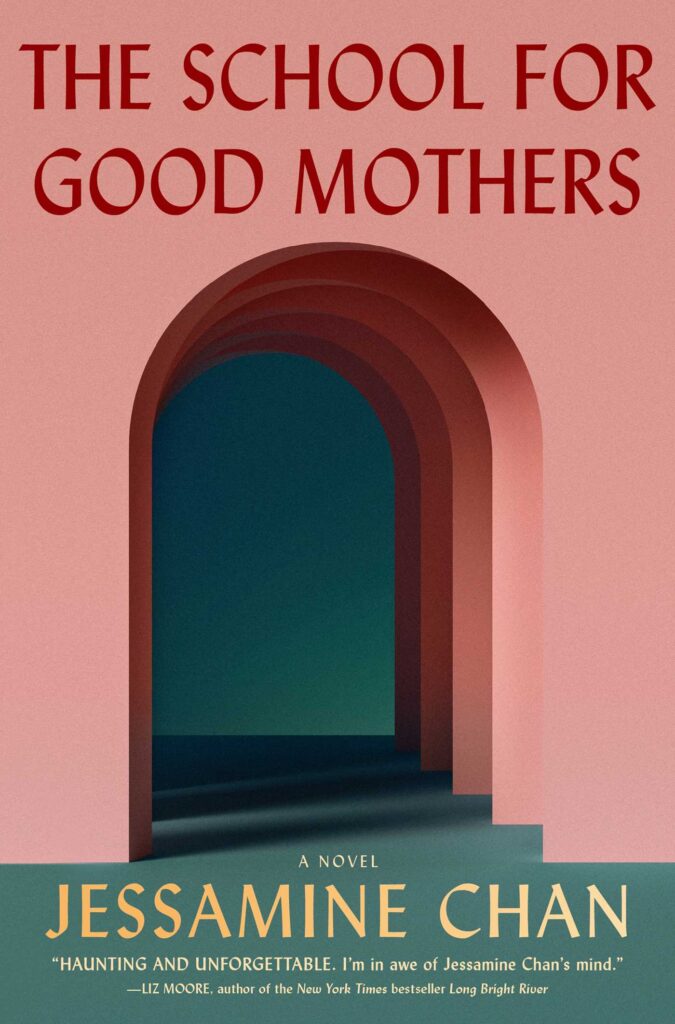
The School for Good Mothers (2022)
Select Sections to Print
×Book Details
The School for Good Mothers (2022)
Jump to Section
⚠️ Trigger Warnings
- Child neglect and abandonment
- Child endangerment
- Child separation / forced removal from parents
- Termination of parental rights
- Child illness and medical emergencies
- Toddler weight loss / restrictive dieting
- Parental abduction
- Government surveillance
- Institutional abuse
- Psychological abuse and humiliation
- Forced indoctrination
- Solitary confinement
- Suicide
- Suicidal ideation
- Self-harm / cutting
- Violence against lifelike child dolls
- Child abuse
- Physical violence and assault
- Postpartum depression and anxiety
- Depression and panic attacks
- Severe sleep deprivation
- Substance abuse and addiction
- Traumatic childbirth
- Emergency C-section
- Medical trauma
- Infidelity
- Divorce and marital conflict
- Hostile co-parenting / parental alienation
⏱️ 2-Minute Spoiler Summary
Frida Liu, a 39-year-old divorced mother in Philadelphia, is exhausted, sleep-deprived, and overwhelmed while caring for her sick 18-month-old daughter, Harriet. One disastrous day, Frida leaves Harriet alone in an ExerSaucer while she drives to her office to retrieve a work file. She gets distracted answering emails and is gone for more than two hours. Neighbors hear Harriet crying and call the police, turning what Frida sees as one terrible mistake into the beginning of a nightmare.
Harriet is placed with Frida’s ex-husband, Gust, and his younger girlfriend, Susanna. CPS treats Frida as a dangerous parent, installs surveillance cameras throughout her home, and subjects her to supervised visits that repeatedly go badly. Eventually, Judge Sheila Rogers orders Frida into a mandatory year-long residential rehabilitation program for “bad mothers.” If she fails, she will permanently lose Harriet.
At the facility, Frida joins dozens of women being punished for everything from serious abuse to questionable parenting decisions. The mothers live under constant surveillance, wear uniforms, endure humiliating chants about being bad mothers, and are taught that nearly every emotion or mistake can be evidence of narcissism or danger.
Their parenting skills are tested using eerily realistic AI robot children. Frida is assigned a Eurasian toddler doll she names Emmanuelle. The dolls cry, speak, respond emotionally, monitor their mothers, and even simulate physical injury. Every interaction becomes part of the women’s evaluations. Frida desperately tries to follow the rules, but after she loses her temper and pinches Emmanuelle, she is sent to a punitive “Talk Circle.” Other women fare even worse. Lucretia, one of Frida’s closest classmates, accidentally allows her robot child to freeze during an outdoor exercise and is expelled, permanently losing her real daughter.
As the year continues, Frida becomes increasingly terrified that Harriet is replacing her. Harriet begins calling Susanna “Mommy Sue-Sue,” while Gust and Susanna marry and have a baby boy, Henry Joseph. Frida also secretly becomes romantically involved with Tucker, a father enrolled in the men’s version of the program. Other parents crack under the pressure: Margaret dies by suicide, while Meryl, Roxanne, and Colin attempt to escape.
Frida nevertheless performs extremely well during her final parenting evaluation. It isn’t enough. Authorities use her feelings for Tucker, resentment toward Susanna, and failure to report the escape plan as proof that she still suffers from “residual narcissism.” Her prognosis is rated “fair to poor.”
The court permanently terminates Frida’s parental rights, allowing Gust and Susanna to adopt Harriet. During their final supervised goodbye, Harriet tells Frida she loves her, and Frida gives her family heirlooms and calligraphy bearing Harriet’s Chinese name, Liu Tong Yun.
Frida is supposed to move to Chicago with her parents and accept that Harriet is gone. Instead, when Gust and Susanna are at the hospital with Henry and Will is babysitting, Frida convinces Will to let her into Gust’s apartment to see Harriet one last time.
Once inside, Frida makes a different choice. She packs Harriet’s belongings, takes her sleeping daughter from her crib, puts her in the car, and drives north.
Frida knows an Amber Alert will soon be issued. She knows she will probably be caught and sent to prison. But after spending a year being taught how to become a “good mother” only to lose Harriet anyway, she chooses to take whatever time she can get with her daughter. As she drives into the night with Harriet asleep behind her, Frida resolves to love her, tell her the truth about everything that happened, and leave Harriet something by which to remember her when they are inevitably separated again.
📖 Full Spoiler Summary
Frida’s One Very Bad Day
The School for Good Mothers follows a single chronological timeline over roughly fifteen months and is told entirely in third-person limited point of view through Frida Liu, a 39-year-old divorced Chinese American mother living in Philadelphia.
Frida is already struggling when she makes the mistake that destroys her life. Her 18-month-old daughter, Harriet, has an ear infection, and Frida is severely sleep-deprived and overwhelmed. Harriet’s father, Gust, left Frida when their daughter was only three months old and is now with Susanna, a 28-year-old former dancer and nutritionist.
One day, desperate to retrieve a work file, Frida leaves Harriet alone in an ExerSaucer with animal crackers and drives to her office. What she intends as a short trip stretches past two hours when she begins answering emails and loses track of time.
Harriet’s crying alerts the neighbors, who call the police.
Officers Brunner and Harris interrogate Frida, while CPS social worker Ms. Torres documents everything that can be used against her: Harriet is dehydrated, Frida looks unwashed and exhausted, and she deliberately left a toddler alone. Harriet is placed with Gust and Susanna.
Frida knows she made a terrible mistake, but she expects to prove that one awful day does not define her entire relationship with her daughter. Instead, she discovers she has entered a child-welfare system determined to assess every aspect of her motherhood.
CPS installs cameras throughout her house, placing her under 24-hour surveillance. Even ordinary behavior can now be interpreted as evidence of her fitness or unfitness as a parent.
Her lawyer, Renee, explains that authorities have become exceptionally aggressive following highly publicized child deaths. Frida’s retired parents, Davis and Lillian Liu, send her $10,000 for legal expenses. Their involvement also brings back Frida’s memories of growing up in a Chinese immigrant family and of her grandmothers, Popo and Ahma, particularly Ahma’s survival during the Cultural Revolution.
Frida is permitted supervised visits with Harriet, but those visits become further evidence against her. Harriet has a meltdown during one and bites Ms. Torres. During another, the exhausted toddler develops a severe nosebleed. Court-appointed psychologist Ms. Goldberg also evaluates Harriet through play therapy.
Ultimately, Judge Sheila Rogers decides that Frida committed serious neglect and abandonment. Rather than immediately terminating her parental rights, however, the judge gives Frida one chance: she must complete a year-long residential parenting rehabilitation program. Failure means losing Harriet permanently.
The School for Bad Mothers
Frida is transported with eighty-six other women to a former Quaker college campus converted into a state-run rehabilitation facility. One of the first women she meets is April, who was sent there after spanking her child in a grocery store.
The institution is controlled by Ms. Knight, its intimidating executive director, and Ms. Gibson, the seemingly cheerful assistant director. The women wear navy jumpsuits, undergo constant surveillance, and are required to repeat humiliating chants declaring, “I am a bad mother, but I am learning to be good.”
The range of supposed bad mothers is enormous. Carolyn was reported after complaining about her daughter on Twitter. Frida’s first roommate, Helen, has been accused of coddling her 17-year-old son, Alexander. Helen quickly decides she cannot tolerate the program and quits, even though doing so means placement on the public Negligent Parent Registry.
Frida stays because leaving would mean losing Harriet.
Her training cohort is supervised by Ms. Russo and Ms. Khoury. Among Frida’s classmates are Lucretia “Lu,” a former teacher blamed after her daughter Brynn broke her arm on a playground slide; Linda, accused of locking her six children in a basement hole; Beth, who sought psychiatric treatment for depression; and 19-year-old Meryl, whose toddler daughter, Ocean, was removed following concerns about bruises and drugs.
Then Frida learns what they will actually be parenting.
Each mother receives a hyper-realistic AI-powered robot child. The dolls have realistic weight and body temperature, speak, cry, respond emotionally, and record their mothers through internal cameras and biometric sensors. Frida receives a Eurasian toddler doll and names her Emmanuelle.
The robots are disturbingly lifelike but unmistakably artificial. They run on bright blue coolant that eventually spoils and has to be scooped out through openings in their backs.
Everything the mothers do with them is evaluated.
Learning to Be a “Good” Mother
The curriculum reduces parenting to rigidly prescribed behaviors. Mothers practice exaggerated “motherese,” timed affection, and mechanical “1-2-3 release” hugs. During trauma exercises, instructors actually slap the dolls across the face to make them cry so the women can demonstrate the correct soothing response.
Weekly reviews with counselor Jacinda Thompson force Frida to examine every failure. Her second roommate, Roxanne, is a Temple student whose infant son, Isaac, entered foster care after Roxanne allowed her 12-year-old niece to babysit him.
Frida eventually cracks during a stressful naptime exercise and pinches Emmanuelle’s arm hard enough to leave a permanent dent.
That sends her to Talk Circle, a mandatory group for supposedly aggressive or resistant mothers. There she meets women including Maura, an alcoholic mother of five accused of burning her daughter Kylie, and Evie, the daughter of Ethiopian immigrants who was punished for allowing her nine-year-old daughter Harper to walk home from the library alone. The women must confess their shortcomings and repeat declarations such as, “I am a narcissist. I am a danger to my child.”
The institution’s cruelty becomes even clearer during a winter exercise. Lu allows her robot daughter, Gabby, to remove her hat and mittens outside. Gabby’s coolant freezes, effectively “killing” the doll. After Lu subsequently fights with Linda, she is expelled from the program.
That means she permanently loses Brynn.
Frida understands exactly what is at stake.
At the same time, her connection to Harriet is weakening. During monitored calls, she learns that Harriet has begun calling Susanna “Mommy Sue-Sue.” Frida is also alarmed that Harriet is losing weight while following Susanna’s gluten-free diet. When Frida’s evaluations deteriorate, even her phone privileges are taken away.
Romance, Escape, and Mothers Who Break
During the socialization portion of the program, the mothers begin interacting with fathers from a nearby men’s facility. Frida meets Tucker, a father in his forties whose three-year-old son, Silas, fell from a tree while Tucker was distracted by his phone. Tucker’s assigned robot son is Jeremy.
Their connection gradually becomes a secret romance, even though Frida knows any emotional complication could jeopardize her evaluation.
Other fathers include George, Colin, and Eric, each being rehabilitated for his own parenting violation. Colin, only 21, accidentally broke his toddler son’s wrist while co-sleeping.
The institution continues taking a devastating psychological toll. Margaret, a mother sent there after leaving her son in a car during a job interview, dies by suicide after jumping from the campus bell tower. Frida later learns Margaret had been secretly involved with another mother, Alicia.
Eventually Meryl, Roxanne, and Colin attempt to escape. Meryl goes straight to her mother’s apartment because she desperately wants to see Ocean, but her own mother reports her to CPS. After being captured, Meryl is secretly confined in a dark basement cell at Morris Hall until another student, Charisse, discovers her. She is eventually returned to class.
Frida knew about the escape plan but did not report it—a decision that will later become crucial.
Outside the institution, Harriet’s new family continues moving forward without her. Gust and Susanna marry, Susanna becomes pregnant, and Harriet begins preschool. Their son, Henry Joseph, arrives prematurely at 35 weeks and later develops pyloric stenosis requiring surgery.
Every milestone reinforces Frida’s fear that she is being erased from Harriet’s life.
Frida Passes—and Still Loses Harriet
By the final unit, Frida has become extremely good at giving the institution exactly what it wants. During her final practical evaluation, she guides Emmanuelle through altruistic tasks and finishes first in her class.
After everything she has endured, it appears she has succeeded.
But parenting performance is only part of her final judgment.
Officials review Frida’s brain scans, behavior, and psychological file. Her romantic feelings for Tucker count against her. So does her resentment toward Susanna. Most damagingly, her decision not to report Meryl and Roxanne’s escape is treated as proof of continuing poor judgment and “residual narcissism.”
Her final prognosis is rated “fair to poor.”
When Frida returns to family court, her year of obedience and training does not save her. Her parental rights are permanently terminated. Gust and Susanna are permitted to adopt Harriet.
Frida gets one final 30-minute supervised goodbye.
Harriet is now more than two and a half years old. Frida gives her a box containing family heirlooms and calligraphy of Harriet’s Chinese name, Liu Tong Yun, trying to leave her daughter some connection to the family and identity she will grow up largely without.
Most painfully, Harriet tells Frida that she loves her.
Then they are separated.
Frida Takes Harriet Back
With no legal path left, Frida prepares to leave Philadelphia and move to Chicago with her parents. She temporarily stays with Gust’s best friend and Harriet’s godfather, Will, seemingly beginning the process of accepting that her life as Harriet’s mother is over.
Then an opportunity appears.
Henry requires surgery for pyloric stenosis, forcing Gust and Susanna to remain at the hospital overnight. Will agrees to babysit Harriet at their apartment.
Frida persuades Will to let her come inside late at night, supposedly because she only wants one final chance to see Harriet sleeping.
Once she is inside, however, she cannot walk away.
Frida packs Harriet’s belongings, lifts her sleeping daughter from the crib, carries her outside, puts her into the car, and drives away.
She has kidnapped her own daughter.
As Frida heads north into the night, she understands exactly what she has done. An Amber Alert will be issued. The police will search for them. She expects to be caught, and she knows she may go to prison.
But for the moment, Harriet is with her.
Frida decides she will use whatever time they have to love her daughter and tell Harriet the truth about her life and what happened to them. She plans to leave Harriet a Polaroid photograph of herself with Emmanuelle—the artificial child she was forced to mother for a year while being kept away from her real one.
The novel ends with Frida continuing to drive into the darkness with Harriet asleep in the back seat, fully aware that their escape cannot last but choosing to take her daughter anyway.
🔚 Ending Explained
How Does The School for Good Mothers End?
The School for Good Mothers ends with Frida Liu losing custody of Harriet permanently—and then kidnapping her daughter rather than accepting a future in which she is no longer allowed to be Harriet’s mother.
Frida Fails the State’s Final Test
After completing all nine units of the state rehabilitation program, Frida appears to have done everything required of her. She even finishes first in her class during the final morality drills with her assigned AI toddler, Emmanuelle.
But none of it is enough.
During Frida’s final brain scan and review, officials scrutinize not just her performance but her thoughts, relationships, and loyalties. Her attachment to Tucker, resentment toward Susanna, and failure to report Meryl and Roxanne’s escape attempt are treated as evidence of “residual narcissism” and misplaced emotional priorities.
Her prognosis for reunification is ultimately rated “fair to poor.”
At her final hearing, Judge Sheila Rogers permanently terminates Frida’s parental rights. Harriet will remain with Gust and Susanna, who are given full legal custody and can adopt her.
After a year spent trying to prove she can become a “good mother,” Frida is legally erased as Harriet’s mother instead.
Frida Says Goodbye to Harriet
Before leaving Philadelphia to move back to Evanston with her parents, Frida is allowed one final 30-minute supervised visit with Harriet.
Harriet is now more than two and a half years old. At first, she seems uncertain about Frida’s newly cut and dyed hair, but the distance quickly disappears. Harriet embraces her mother, tells her she loves her, and says, “I love you galaxies.” They hook pinkies.
Frida gives Harriet a wooden box filled with pieces of her maternal history: her grandmother’s jade bracelet and pearl earrings, family photographs, hair lockets, and calligraphy showing Harriet’s Chinese name, Liu Tong Yun—“Red clouds before snowfall.”
Frida may have lost her legal status as Harriet’s mother, but she refuses to allow Harriet’s connection to her maternal family, Chinese heritage, and history to disappear with it.
When the visit ends, Ms. Torres has to physically separate them. Harriet screams and clings to Frida’s collar.
It is supposed to be their final goodbye.
Frida decides it will not be.
Frida Kidnaps Harriet
Soon afterward, Gust and Susanna’s premature newborn son, Henry Joseph, develops pyloric stenosis and needs emergency surgery. Because Gust and Susanna must remain at the hospital, Will is asked to babysit Harriet.
Frida recognizes her opportunity.
She has already withdrawn $8,000 in cash, bought a new car seat and supplies, and packed her belongings. Late at night, she convinces Will to let her into Gust’s apartment, claiming she only wants five minutes alone with her sleeping daughter.
Once Will leaves to wait at a nearby bar, Frida moves quickly.
She packs Harriet’s winter clothing, toys, toothbrush, and Baby Betty. She takes the sleeping Harriet from her crib, carries her downstairs, straps her into the new car seat, and drives north.
Frida has kidnapped her own daughter.
When Harriet wakes frightened on the highway, Frida pulls over and climbs into the back seat. She comforts her in the gentle “motherese” the institution spent a year teaching and measuring. She promises cuddles and reassures Harriet that her mother has returned.
Frida knows exactly what will happen next. An Amber Alert will be issued. The police will search for her. She will almost certainly be caught, arrested, and imprisoned.
She does it anyway.
Before continuing into the night, Frida slips a Polaroid photograph of herself with Emmanuelle into Harriet’s coat pocket. Eventually Gust and Susanna will find it. Frida wants there to be proof of what happened to her—and proof of the strange artificial motherhood the state forced her to perform before deciding she was unworthy of the real thing.
She drives on, determined to use whatever time remains to love Harriet and tell her the truth.
What Does the Ending Mean?
The ending is deliberately uncomfortable because Frida does something both legally indefensible and emotionally understandable.
For most of the novel, Frida tries to survive by submitting. She repeats the institution’s chants, performs the required maternal behaviors, allows herself to be constantly watched, and tries to reshape even her emotional responses into whatever the authorities define as acceptable motherhood.
But the final evaluation reveals the fundamental impossibility of her task.
The state is not simply judging what Frida does. It is judging what she thinks, whom she loves, whom she resents, and whether her emotions conform closely enough to its model of the perfect mother. Even after completing the program successfully, Frida can still fail because the definition of “good” is effectively unreachable.
Kidnapping Harriet therefore becomes Frida’s ultimate rejection of that definition.
She stops asking the state for permission to be Harriet’s mother.
Emmanuelle Represents the Absurdity of Measured Motherhood
Emmanuelle is one of the ending’s most important symbols.
The state gives Frida an artificial child and then attempts to determine whether she deserves her real child based on how successfully she mothers the simulation. Maternal instinct becomes something supposedly measurable through cameras, biometric monitoring, brain scans, drills, and data.
Yet Frida develops genuine feelings for Emmanuelle anyway.
That creates the central irony: even within an artificial system, Frida produces something real.
The Polaroid Frida places inside Harriet’s coat becomes evidence of that contradiction. The institution tried to turn motherhood into measurable performance, but the photograph preserves the humanity that its measurements could never fully capture.
The House With the Sideways Light
Frida repeatedly escapes into the fantasy of a house where the light comes in sideways—a peaceful imagined home where she, Harriet, Tucker, and their children can exist together outside the institution’s judgment.
But she doesn’t get that house.
Instead, the ending gives her a dark highway.
That contrast matters. The imaginary house represents safety, forgiveness, and a perfect future that Frida can only fantasize about. The highway is dangerous, temporary, and almost certainly ends in disaster.
But the highway is real.
For the first time in a year, Frida chooses an uncertain reality with Harriet over an idealized future she will never be permitted to have.
Harriet’s Chinese Name Is About What Cannot Be Erased
The inheritance Frida leaves Harriet is also significant.
Liu Tong Yun—“Red clouds before snowfall” connects Harriet to Frida’s family and cultural history. The jade bracelet, pearls, photographs, hair, and calligraphy all serve the same purpose.
The court can terminate Frida’s parental rights.
It cannot retroactively erase Harriet’s lineage.
Frida understands that she may not be physically present while Harriet grows up, so she leaves behind objects that can someday tell Harriet: you came from somewhere, and your mother wanted you to know it.
“I Am a Bad Mother, but I Have Learned to Be Good”
The final reversal of the institution’s mantra captures the novel’s central argument.
Throughout the program, Frida is forced to internalize the declaration that she is a bad mother who must be taught how to become good. By the ending, those words mean something entirely different.
According to the state, kidnapping Harriet confirms that Frida is a “bad mother.” She has broken the law, violated the custody order, and endangered any possibility of rebuilding her life.
But according to Frida’s understanding of motherhood, refusing to disappear from Harriet’s life is the most loving thing she can do.
So when Frida embraces the contradiction—“I am a bad mother… But I have learned to be good”—she takes the institution’s language away from it.
“Bad” and “good” no longer mean obedient and disobedient.
They mean something Frida gets to define for herself.
Why the Ending Is So Bittersweet
There is no realistic happy ending waiting at the end of Frida’s drive. She knows she cannot disappear forever with Harriet. An Amber Alert will go out, authorities will pursue them, and she expects to be arrested and imprisoned.
Her victory is therefore not really escape.
It is refusing erasure.
Frida cannot guarantee that she will raise Harriet. What she can do is make sure Harriet has evidence that her mother loved her, fought for her, preserved her history, and did not willingly walk away.
That is why the ending feels simultaneously tragic and strangely triumphant. Frida loses almost everything in practical terms, but she finally reclaims the one thing the institution has spent the entire novel trying to control: her right to decide for herself what being Harriet’s mother means.
And that makes the ending less about whether Frida is actually a “good mother” than about the terrifying question underneath the entire novel:
Who gets to decide what a good mother is?
👤 Characters & Fates
🔶 Main Characters

Despite completing the program, Frida receives a “fair to poor” prognosis and permanently loses her parental rights. After Gust and Susanna adopt Harriet, Frida sneaks into their condo while they are at the hospital, kidnaps Harriet, and drives away with her, knowing she will likely be arrested and imprisoned.
Gust and Susanna receive custody and eventually adopt her after Frida’s rights are terminated. Frida then abducts Harriet from her crib and drives north with her into the night.

He marries Susanna, has a son named Henry, and adopts Harriet after Frida loses her rights. While he and Susanna are at the hospital for Henry’s emergency surgery, Frida kidnaps Harriet from their condo.

She marries Gust, legally adopts Harriet, and gives birth prematurely to Henry. She is at the hospital with Henry when Frida abducts Harriet.

She helps Frida finish first in the Unit 9 morality drills and tells her, “Love you, Mommy! Take care!” when they separate. Emmanuelle is left behind to have her memory erased and be reused for another cohort.

Tucker receives a “fair” prognosis and regains custody of Silas. He repeatedly tries to contact Frida after their release, but she avoids seeing him as she focuses entirely on Harriet.
She suffers no consequences and remains in charge as the rehabilitation program expands nationwide.
She remains at Pierce Hall and continues administering the program to future cohorts.
🔷 Supporting Characters

She supervises Frida’s devastating final 30-minute goodbye with Harriet and remains a CPS worker.
She permanently terminates Frida’s parental rights and approves Gust and Susanna’s adoption of Harriet.
She represents Frida through the termination of her parental rights and advises her to return to Chicago afterward.
He sends $10,000 for her legal expenses and prepares for Frida to move home to Evanston, unaware she will instead abduct Harriet.
She supports Frida financially, buys clothes for Harriet, and expects Frida to return home before Frida instead kidnaps Harriet.
While babysitting Harriet, Will is manipulated into leaving for a nearby bar, allowing Frida to enter Gust’s condo and abduct her daughter.
Her AI doll Gabby “dies” after freezing during a snow drill; Lu fights Linda, is expelled, permanently loses Brynn, and is placed on the Negligent Parent Registry.
Despite a hunger strike and her son Gabriel running away and later being arrested, Linda completes the program with surprisingly high evaluation scores.
She completes the program but remains deeply traumatized and covered in self-harm scars, especially after Meryl’s suicide.
She escapes with Roxanne and Colin but is turned in by her own mother and imprisoned in a dark basement cell for three weeks. After receiving a poor prognosis, she dies by suicide by jumping from the campus bell tower.
She escapes the facility with Meryl and Colin during the end-of-summer dance and successfully disappears, never being recaptured.
She flags Frida for “residual narcissism” and remains at the facility after Frida leaves.
He escapes with Meryl and Roxanne; unlike Meryl, his later whereabouts remain unknown.
After learning Robbie’s foster parents intend to adopt him, Margaret dies by suicide by jumping from the bell tower; Robbie is subsequently adopted.
After Margaret’s suicide, Alicia remains at the facility on a watch list, devastated and grieving.
Henry develops pyloric stenosis and undergoes successful emergency surgery; while Gust and Susanna remain with him at the hospital, Frida abducts Harriet.
🕳️ Potential Plot Holes
The school uses remarkably advanced technology, including AI children with internal cameras, biometric sensors, emotion tracking, and brain scans. Yet its basic physical security seems surprisingly weak. Meryl, Roxanne, and Colin are able to escape during the dance, and after Meryl is recaptured, she is kept in a basement room where Charisse can discover her while cleaning. For a facility capable of monitoring minute physiological responses, the lack of reliable cameras, motion sensors, alarms, or controlled exits is difficult to reconcile with the technology established elsewhere in the novel.
Earlier, CPS demonstrates that it can monitor Frida extraordinarily closely, including placing cameras throughout her home and tracking her communications and behavior. Yet after Frida's parental rights are permanently terminated, she is able to enter Gust and Susanna's building, spend significant time inside their condo, pack Harriet's belongings, take Harriet from her crib, and drive away without triggering any immediate alarm. The state may no longer be actively monitoring Frida after her case ends, and Gust and Susanna are not necessarily required to maintain CPS surveillance in their private home, so this is not a strict contradiction. Still, given how aggressively the state previously protected Harriet from unauthorized contact with Frida, the sudden absence of safeguards makes the climax unusually convenient.
Frida successfully completes the school's demanding nine-unit curriculum and performs exceptionally well in the final morality exercises, yet her reunification prospects are ultimately undermined by a brain scan and psychological assessment identifying supposedly unacceptable thoughts and emotions. This raises a major worldbuilding question: if the state can determine parental fitness from neurological patterns and subjective psychological judgments, why require an entire year of elaborate parenting exercises? One possible explanation is that the curriculum is intended to change those underlying patterns rather than simply test practical parenting ability. Even so, the novel never fully reconciles the enormous emphasis placed on measurable performance with a final system capable of disregarding that performance.
📚 Book Club Q&A's
⭐ Final Rating & Thoughts
What made The School for Good Mothers so powerful for me was how frighteningly recognizable Frida’s feelings were, even when her circumstances became dystopian. The exhaustion, isolation, guilt, and constant fear that you’re somehow failing at motherhood felt painfully real. The AI children took those everyday pressures and turned them into something genuinely chilling: motherhood reduced to a test where every sigh, moment of frustration, and imperfect reaction can be measured and held against you.
I also loved how the novel exposes the impossible standards placed on mothers, particularly when compared with what is expected of fathers. Frida is flawed and makes a terrible mistake, but the punishment becomes so wildly disproportionate that I found myself furious on her behalf.
My biggest issue was the pacing. The middle became repetitive and dragged in places, especially as the school’s lessons continued, which kept this from being a five-star read for me. Still, I couldn't put it down. It was disturbing, thought-provoking, and deeply personal for me as a mother who remembers just how dark and difficult those early days can be. This one will stay with me.
✨ Adaptation description
Adaptation
The School for Good Mothers is being developed as a television series by Freckle Films, the production company founded by Jessica Chastain. Freckle Films optioned the television rights to Jessamine Chan’s 2022 novel shortly before its publication, with Jude Weng (Finding ‘Ohana, Fresh Off the Boat) attached to adapt and direct the series.
Jessica Chastain, Kelly Carmichael, Jude Weng, and Jessamine Chan are attached as executive producers. The project was originally announced in partnership with Endeavor Content.
The adaptation was first announced in January 2022 and remains in development. As of 2026, no cast, network or streaming platform, filming dates, trailer, or release date have been publicly announced.
Because the series has not yet been produced or released, there are no confirmed changes from the novel to report. Chan has said that the creative team has discussed ways to expand the world of the book for television and that she is particularly excited about telling the story of American society through an Asian American perspective with an Asian American woman at its center.
The television adaptation is expected to retain the novel’s central premise: Frida Liu, a Chinese American mother, loses custody of her young daughter after leaving her home alone during a moment of desperation. Frida is ordered into a government-run rehabilitation program where mothers are intensely monitored, evaluated, and trained to meet the state’s definition of acceptable motherhood—all while Frida attempts to prove that she deserves to regain custody of her daughter.
✨ Books Like The School for Good Mothers (2022)
See an error on this page?