
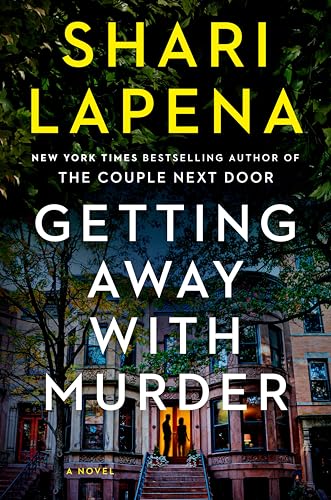
Getting Away with Murder (2026)
Select Sections to Print
×Book Details
Getting Away with Murder (2026)
Jump to Section
⚠️ Trigger Warnings
- Murder
- Drowning
- Fatal falls
- Home invasion
- Physical assault
- Torture and cutting with a knife
- Threats with a weapon
- Violence against a pregnant woman
- Pregnancy-related trauma
- Covert surveillance
- Invasion of privacy
- Stalking and harassment
- Blackmail and extortion
- Terminal illness
- Cancer
- Death of a spouse
- Grief and bereavement
- Financial distress and bankruptcy
- Gambling-related financial losses
- Loan sharks / predatory lending
⏱️ 2-Minute Spoiler Summary
Ted Westcott and his wife Jill are wealthy New Yorkers whose glamorous lifestyle is secretly collapsing. Ted has made disastrous investments, accumulated debt, and is nearly broke. His older brother Greg, worth about $45 million, refuses to lend them $1.5 million—even though Ted is Greg’s primary heir. Furious and desperate, Ted and Jill decide Greg would be more useful to them dead.
During a sailing trip twelve miles off Manhattan, Ted deliberately pushes Greg overboard while Jill watches. They let him drown, then call the Coast Guard and claim he accidentally fell into the rough Atlantic. With no body and no witnesses, their story initially holds. Ted learns he will inherit $30 million, although half is locked in a trust until he turns sixty-five.
CGIS Special Agent Paul Ramirez immediately suspects them. Greg’s ex-wife Min confirms that the brothers hated each other, Ted knew about the inheritance, and Ted had recently begged Greg for money. But Ramirez has no evidence, and the investigation is dropped.
Then Ted and Jill begin receiving anonymous messages: “I KNOW WHAT YOU DID.” They discover hidden cameras inside their brownstone and realize someone has recorded their private conversations about Greg’s murder. Ted initially suspects shady acquaintance John Burnley, who claims to possess the recordings and demands $4 million. But Burnley is bluffing—he knows someone else has the footage and hopes to steal it.
Burnley eventually decides Jill’s best friend Lara Donleavy and her husband Ben might have the files. He breaks into their home, ties them up, assaults Lara, and searches their computers. When Ben fights back, Burnley throws him over a railing, killing him. Lara later confronts Ted and Jill, assumes they sent the intruder, and demands $5 million to keep quiet about what she knows.
Ted and Jill’s paranoia spirals. They even suspect Greg’s ex-wife Min and her boyfriend, but Min reveals something worse: Greg had terminal pancreatic cancer and only months to live. They murdered him for an inheritance they would have received soon anyway.
The real surveillance operation was arranged by Konstantin, a friend of Peter, the troubled son of Ted and Jill’s cleaning woman, Nadya Sokolov. Peter secretly copied his mother’s house key so Konstantin could plant cameras. Once Nadya discovers the scheme, she doesn’t turn them in. Instead, she demands a share of the blackmail money and secretly keeps the cameras running.
Eleven months after Greg’s death, Ted finally receives $15 million outright. Konstantin demands an initial $1 million payment in Bitcoin, but Ted refuses because a defense attorney has told him the recordings were illegally made inside his home and cannot be used against him in court.
Furious, Konstantin sends copies to newspapers and the police anyway. The footage becomes public and clearly shows Ted and Jill discussing Greg’s murder. Ramirez finally has proof that he was right—but because the recordings were obtained illegally, the authorities still cannot use them to convict the couple. Ted and Jill refuse to answer questions and are released.
They technically get away with murder, but their lives are destroyed. Jill loses her job and friends, Lara cuts them off, and they become publicly known as killers. Ted doesn’t care much because they still have their millions.
Then Jill receives one last anonymous message: “YOU’LL NEVER KNOW. AND I’M STILL WATCHING. NICE PYJAMAS BY THE WAY.” As Ted and Jill frantically search their bedroom, the story reveals that Nadya is watching them through one final hidden camera, enjoying their panic as its battery slowly dies.
📖 Full Spoiler Summary
Ted and Jill Decide Greg Is Worth More Dead
Getting Away With Murder opens with Ted Westcott deliberately pushing his wealthy older brother Greg Westcott off the Fortune Seeker, Greg’s thirty-six-foot sailboat, twelve miles off Manhattan. Ted’s wife, Jill, watches as Greg struggles in the rough Atlantic. Neither attempts to save him. Only after Greg disappears beneath the waves do they call the Coast Guard and report a tragic sailing accident.
The story then jumps back two months to explain how an affluent Brooklyn Heights couple ended up committing murder.
Ted and Jill appear rich, but Ted has secretly destroyed their finances through bad investments and overspending. Things are so bad that he even owes money to a loan shark. Jill discovers the truth after Greg humiliates Ted over dinner by revealing his financial problems.
Their obvious solution is to ask Greg for help. He is worth roughly $45 million, Ted is his sole heir, and they only need a $1.5 million loan. Greg refuses, smugly telling his younger brother that he needs to learn from his mistakes.
Back home, Jill drunkenly remarks that it would serve Greg right if he had an accident. Ted has already been thinking the same thing. If Greg dies, Ted inherits his fortune and all their problems disappear.
So they arrange the sailing trip.
After Ted pushes Greg overboard, the couple carefully follows their rehearsed story. They claim Greg slipped while handing over the wheel and vanished beneath the waves. The Coast Guard searches unsuccessfully for his body, and Ted and Jill return home to toast their success.
Agent Ramirez Knows Something Is Wrong
The Coast Guard does not immediately accept Greg’s death as an accident. Because Greg was extremely wealthy and Ted is his only surviving heir, Special Agent Paul Ramirez, a thirty-three-year-old investigator with the Coast Guard Investigative Service, is assigned to look into the case.
Ramirez quickly becomes suspicious. During an unannounced visit to the Westcotts’ brownstone, he casually claims there may have been security cameras aboard the Fortune Seeker. He is bluffing, but Ted and Jill’s obvious alarm tells him he has hit a nerve.
No cameras are found on the boat, however, and Greg’s body remains missing. Ted soon learns that Greg’s will leaves one-third of his estate to Mount Sinai Hospital and the other two-thirds—about $30 million—to him. Half of Ted’s share is held in trust until he turns sixty-five, but he will eventually receive $15 million immediately.
Ramirez keeps digging. Greg’s ex-wife, Minerva “Min” Westcott, tells him the brothers hated each other, Ted knew he was Greg’s heir, and Ted had recently asked Greg for money. Ramirez also questions Jill’s best friend Lara Donleavy, Lara’s husband Ben, and Ted and Jill’s cleaning woman, Nadya Sokolov.
Lara begins wondering whether her friends actually murdered Greg. Ramirez is convinced they did, but without physical evidence or a witness, his boss orders him to drop the investigation.
Ted and Jill appear to have committed the perfect crime.
Someone Knows What They Did
Weeks later, Ted receives an anonymous text:
I KNOW WHAT YOU DID.
Another follows:
YOU’RE NOT GOING TO GET AWAY WITH IT.
Then Jill receives one word on the morning of Greg’s memorial:
MURDERERS.
Their confidence collapses. At first they suspect John Burnley, a shady acquaintance from Ted’s past who once served prison time for white-collar fraud. But the situation becomes much worse when Jill notices a tiny lens hidden among the books in their living room.
Someone has planted a camera inside their home.
Ted searches the brownstone and discovers another hidden camera in a kitchen light fixture. Almost immediately, the anonymous texter confirms that they know the cameras have been discovered. Ted and Jill realize their private conversations—including discussions about murdering Greg—may have been recorded.
Ted arranges a meeting with Burnley. Burnley claims he has the recordings and demands $4 million. Ted pretends he will pay once Greg’s estate settles, while privately planning to kill Burnley instead.
But there is another problem: an undiscovered third camera is still transmitting live video of Ted and Jill discussing exactly what they intend to do.
Burnley’s Bluff Turns Deadly
Ted and Jill flee to Venice, hoping some distance will calm them down. Instead, another blackmail message arrives saying the real demand is coming soon.
Ted realizes Burnley was lying. If Burnley were actually behind the messages, he would already know what he planned to demand. Someone else has the recordings.
Their paranoia becomes extreme. When they unexpectedly encounter Lara and Ben in Venice, Ted even steals a steak knife and briefly considers murdering them and dumping their bodies in a canal. He stops only because he realizes a waiter could identify them.
Burnley, meanwhile, is trying to discover who really possesses the recordings so he can steal them. He becomes suspicious of Lara and Ben and breaks into their Brooklyn Heights brownstone after they return from Venice.
Wearing a mask and carrying a hunting knife, Burnley ties them up and demands the camera files. They genuinely have no idea what he is talking about. Burnley assaults Lara and cuts her arm while searching their computers. Ben manages to free himself and attacks Burnley, but Burnley flips him over an interior railing. Ben plunges two stories and dies.
Terrified that Burnley might return, Lara tells police about the home invasion but deliberately leaves out his demand for the camera recordings.
Then she confronts Ted and Jill.
Lara assumes they sent Burnley to recover the evidence. Jill insists they did not, but Lara doesn’t trust her anymore. Because Lara withheld information from police, she now demands $5 million from the Westcotts in exchange for staying quiet.
Ted and Jill are suddenly facing two crimes, multiple potential blackmailers, and no idea who is actually watching them.
The Murder Was Completely Unnecessary
Desperate for answers, Ted and Jill visit Min and her boyfriend Robert Carrera, wondering whether they planted the cameras.
Instead, Min delivers a devastating revelation.
Greg had terminal pancreatic cancer.
He only had months to live.
Ted and Jill murdered Greg for an inheritance Ted would have received soon anyway. Their supposedly brilliant solution to their financial problems has created an enormous nightmare for absolutely no reason.
The true blackmail scheme, however, has nothing to do with Min.
Nadya discovers that her troubled twenty-two-year-old son, Peter, secretly had her Westcott house key copied. Peter finally admits that he gave the duplicate to his friend Konstantin, a gym owner. Konstantin used the key to enter Ted and Jill’s home and install the hidden cameras. He has been watching the live feed and saving evidence of their conversations.
Nadya is horrified by what Ted and Jill have done—but she sees an opportunity too. Rather than expose Konstantin, she demands $1 million for herself and another $1 million for Peter from whatever Konstantin eventually extracts from the Westcotts.
Konstantin agrees.
Nadya continues cleaning Ted and Jill’s house as if nothing has happened, even secretly replacing the camera batteries so the surveillance can continue.
Ted and Jill Get Away With Murder
Eleven months after Greg’s death, his estate is finally settled. Ted receives $15 million outright.
Four days later, Konstantin makes his move. He demands an initial $1 million payment in Bitcoin.
Ted refuses.
Months earlier, Ted secretly consulted prominent defense attorney Alan Siegle. According to Siegle, recordings secretly made inside Ted and Jill’s private home without their consent are illegally obtained and inadmissible in court. Even if the footage clearly shows them discussing Greg’s murder, it cannot legally prove their guilt.
Ted decides they will keep every dollar and simply endure the scandal if Konstantin releases the footage.
Enraged, Konstantin copies the most incriminating recordings onto thumb drives and sends them to major New York newspapers and the NYPD.
The footage reaches the police, and Agent Ramirez is called in to watch it. After nearly a year of suspecting Ted and Jill, he finally sees exactly what he knew existed: clear recordings of the couple talking about Greg’s murder.
But the police face the same problem Ted anticipated. The recordings were illegally obtained. Unless Ted or Jill confesses, prosecutors cannot use them to convict the couple.
The video leaks to the press anyway, and Ted and Jill are brought in for questioning as reporters swarm their home. With Siegle beside him, Ted answers every question with “no comment.” Jill is interrogated separately and briefly considers cooperating, especially because she has grown to despise Ted, but she ultimately stays silent too.
Police also question Lara because the hidden cameras recorded her demanding $5 million. Now heavily pregnant and worried about protecting herself and her unborn child, Lara refuses to cooperate as well.
With no admissible evidence and no confession, Ted and Jill are released.
They have gotten away with murder.
Someone Is Still Watching
Legally, Ted and Jill are free. Socially, their lives are ruined.
Everyone has seen the leaked recordings. Jill loses her job at the art gallery, her friends abandon her, Nadya quits working for them, and Lara gives birth to a daughter and cuts off all contact. Ted and Jill become notorious as the wealthy couple everyone believes murdered Greg but could not be convicted.
Ted barely cares. They still have their $15 million, and he assumes eventually the public will lose interest.
Jill is far less comfortable with their new life.
Then, weeks later, she receives one final anonymous message:
YOU’LL NEVER KNOW. AND I’M STILL WATCHING. NICE PYJAMAS BY THE WAY.
Ted and Jill panic. If the sender knows what Jill is wearing in their bedroom, there must still be another camera somewhere inside the house.
They begin frantically searching.
The final reveal shifts to Nadya’s home in Queens. Despite supposedly walking away from the Westcotts, Nadya still has access to a live camera feed from their bedroom. She sits watching Ted and Jill tear the room apart, desperately trying to find the hidden device.
Nadya smiles.
The camera battery is slowly dying, so her surveillance will not last forever. But Ted and Jill don’t know that.
They may have escaped prison and kept Greg’s millions, but they are left with the knowledge that someone can still see them—and no idea when the watching will finally stop.
🔚 Ending Explained
How Getting Away With Murder Ends
Eleven months after Greg Westcott’s supposedly accidental drowning at sea, his estate is finally settled. Ted Westcott receives $15 million outright, with another $15 million held in trust until he turns sixty-five. Just four days later, Ted and Jill’s anonymous blackmailer resurfaces, demanding $1 million in Bitcoin.
This time, Ted refuses to pay.
His confidence comes from a private consultation with prominent defense attorney Alan Siegle, who tells him that the secretly recorded audio and video from inside the Westcotts’ home cannot be admitted as evidence because neither Ted nor Jill consented to being recorded. Ted realizes that even if the footage becomes public, it cannot be used to convict them or take away his inheritance. He decides that keeping the money is worth enduring the scandal.
The blackmailer, Konstantin, is furious. Working with Nadya Sokolov’s delinquent son, Peter, he copies the most incriminating recordings onto four thumb drives. Three go to major New York newspapers; the fourth goes directly to the NYPD.
The footage quickly leaks online, and Ted and Jill are brought in for questioning. CGIS Special Agent Paul Ramirez and NYPD Detective Charlie Cousins confront them with video in which the couple essentially admits that they pushed Greg overboard and left him to die.
But Ted and Jill have excellent lawyers. They simply say “no comment” to everything.
The investigators then turn to Lara Donleavy, who is heavily pregnant. Unfortunately, the surveillance footage also captured Lara attempting to extort $5 million from the Westcotts after her husband Ben was murdered during the home invasion. Facing possible prosecution herself—and terrified of what that would mean for her unborn child—Lara also refuses to cooperate.
Without usable evidence or a confession, Ramirez has no choice but to release them.
And so the title becomes literal: Ted and Jill actually get away with murder.
The Final Twist
Legally, Ted and Jill have won. Personally, their lives are destroyed.
They still have their $15 million, but everyone knows what they did. Jill loses her job at Clives art gallery. Her wealthy friends abandon her. Nadya quits. Ted and Jill become social outcasts, isolated inside the Brooklyn Heights brownstone they were willing to kill to keep.
Their marriage is also effectively dead. Instead of enjoying their fortune, they live together in an atmosphere of resentment, suspicion, and fear.
Then Jill receives one final anonymous message:
“YOU’LL NEVER KNOW. AND I’M STILL WATCHING. NICE PYJAMAS BY THE WAY.”
Ted and Jill panic and begin tearing apart their bedroom, desperately searching for another hidden camera.
The novel then reveals the delicious final twist: Nadya is watching them.
Miles away in Queens, their former cleaning lady lies in bed with a smartphone, smiling as she watches the live feed from the hidden camera. Its battery is slowly running out, meaning Nadya’s surveillance will eventually end—but Ted and Jill will never know exactly when.
That uncertainty is their real punishment.
What the Ending Means
The ending turns the idea of “getting away with murder” into a dark joke. Ted and Jill escape the punishment that matters legally, but they do not escape consequences. They have exactly what they committed murder to obtain—the brownstone and millions of dollars—and virtually nothing else.
The $15 million inheritance therefore becomes deeply ironic. Throughout the story, money represents security and control. Ted and Jill believe that if they can preserve their lifestyle, everything will be all right. In the end, money does protect them in one important sense: they can afford elite legal representation and exploit the weaknesses of the justice system. But their fortune cannot purchase privacy, friendship, love, reputation, or peace of mind.
Their beloved brownstone undergoes a similar transformation. It began as the ultimate symbol of their privileged life, something valuable enough that they were willing to kill to preserve it. By the final pages, it has become a luxurious prison. They cannot even feel safe in their own bedroom because they no longer know whether someone is watching.
That makes the hidden camera the perfect final symbol. Ted and Jill avoided the external prison Ramirez wanted to put them in, only to create an internal one for themselves. From now on, every wall can contain a camera. Every stranger might know what they did. Every text notification might signal another threat.
And the cruelest part is that Nadya barely has to do anything.
Nadya’s Final Reversal of Power
Nadya’s role in the final scene also completes the novel’s reversal of class power. For most of the story, she is effectively invisible to Ted and Jill: the cleaning woman who enters their home, handles their possessions, and exists on the margins of their wealthy world.
By the end, she has the power to terrify them from miles away.
Konstantin’s attempt to turn surveillance into money may have failed, but Nadya discovers another form of satisfaction. She can watch the people who once employed her unravel inside the home they valued above everything else.
The “nice pyjamas” message is especially effective because it proves that the threat is happening right now. Ted and Jill cannot dismiss the surveillance as something from the past. Someone can still see them.
Ted and Jill’s Real Sentence
The ending ultimately argues that legal innocence and actual innocence are completely different things.
Ramirez knows what Ted and Jill did. The public knows. Ted and Jill know. Yet the justice system cannot successfully punish them. That gives the conclusion its cynical edge: wealth, expensive lawyers, and evidentiary technicalities allow guilty people to walk free.
But the novel substitutes psychological punishment for legal punishment.
Jill has gone from helping Ted commit murder to being terrified inside her own home. Ted has gone from believing money will solve their problems to discovering that his fortune has purchased an existence defined by isolation. Their marriage, already poisoned by guilt and resentment, becomes another kind of confinement.
Even Lara chooses self-preservation rather than justice. Her attempt to profit from what happened to Ben compromises her so thoroughly that when she finally has an opportunity to help expose Ted and Jill, doing so could endanger her own freedom and her unborn child’s future.
Nearly everyone who tried to manipulate the situation for personal gain becomes trapped by it.
Why the Final Scene Works
The last image is wonderfully nasty because Nadya’s camera doesn’t need to keep working forever.
The battery is dying.
But Ted and Jill don’t know that.
Once the camera finally goes dark, their fear doesn’t necessarily disappear. In some ways, it becomes worse. They cannot know whether Nadya stopped watching, whether another camera exists, whether someone has entered their home again, or whether another message will arrive tomorrow.
That uncertainty can last far longer than the surveillance itself.
So Ted and Jill receive perhaps the most fitting punishment possible: they get everything they wanted and discover that they can no longer enjoy any of it.
They kept the house.
They kept the money.
They kept their freedom.
But they lost their marriage, their reputations, their friendships, their sense of security, and—most importantly—the ability to ever feel truly alone again.
They got away with murder. They just didn’t get away.
👤 Characters & Fates
🔶 Main Characters

Inherits $15 million outright with another $15 million held in trust until age 65. He refuses Konstantin’s $1 million blackmail demand after learning the recordings are inadmissible, escapes prosecution, but becomes a public pariah trapped in a miserable marriage while Nadya secretly continues watching him through the hidden cameras.

Avoids prosecution by refusing to answer police questions, but loses her gallery job, Lara’s friendship, and her social standing. She remains unhappily married to Ted and ends the novel terrified when Nadya texts “NICE PYJAMAS BY THE WAY,” proving someone is still watching them.

Ted pushes him overboard without a life jacket during a storm twelve miles offshore, and Greg drowns with his body never recovered. One-third of his estate goes to Mount Sinai Hospital and two-thirds to Ted, half of Ted’s portion being held in trust.
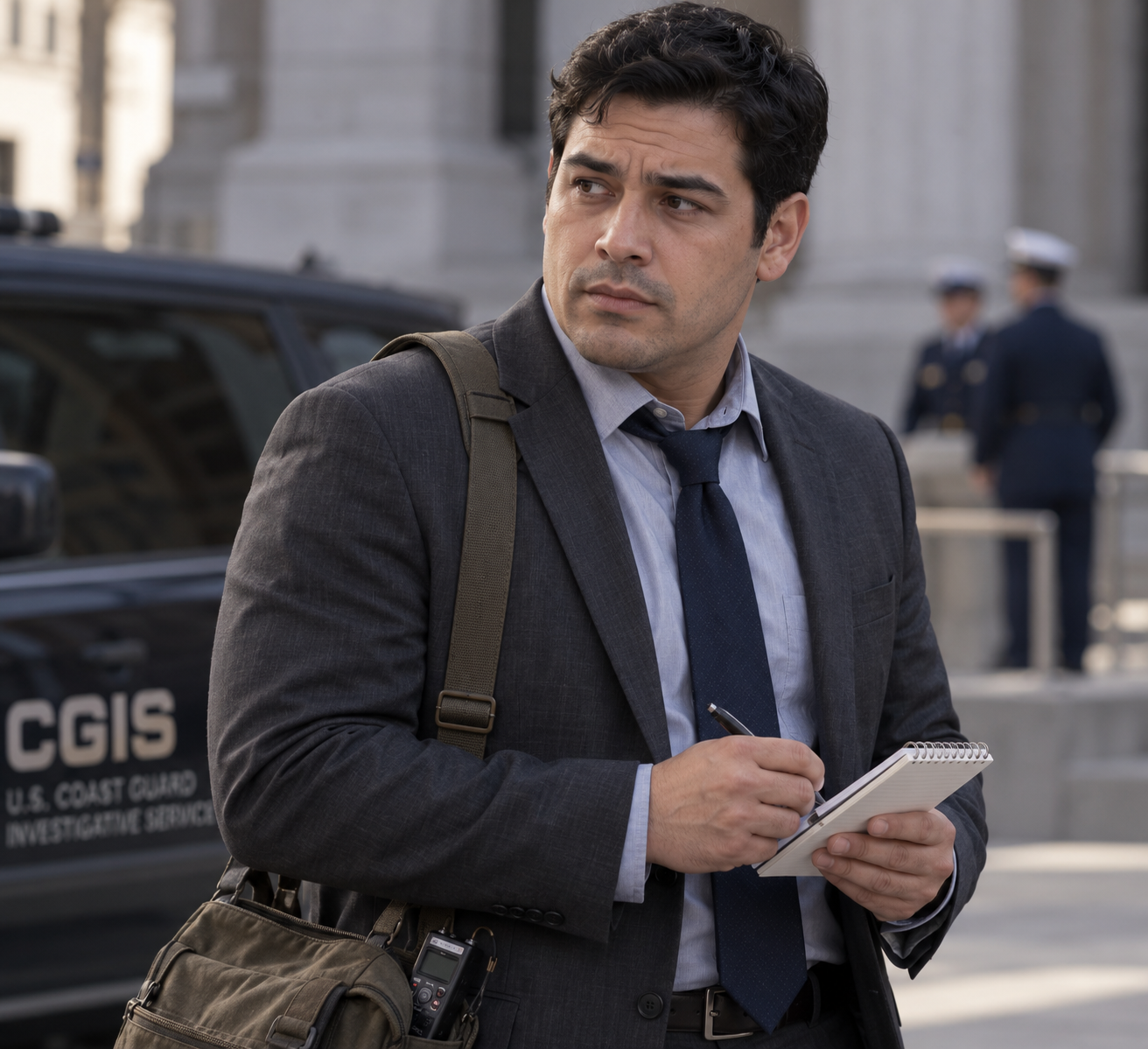
Eventually receives the hidden-camera footage proving Ted and Jill confessed to Greg’s murder, but the illegally obtained recordings are inadmissible. He is forced to watch Ted, Jill, and Lara walk free despite knowing what they did.

Pregnant with a baby conceived with Ben in Venice shortly before his murder, Lara refuses to answer police questions and escapes extortion charges. She gives birth to their daughter, cuts Jill out of her life, and moves to the Upper West Side with financial support from Ben’s parents.

After freeing himself from his restraints with nail clippers, Ben attacks Burnley to protect Lara. Burnley flips him over a two-story balcony railing, killing him in the fall.

Murders Ben by throwing him over the balcony but never obtains the camera files or any money from Ted. Once Ted refuses to pay anyone, Burnley abandons the scheme and escapes arrest.

Quits working for Ted and Jill after the scandal and ultimately winds up with access to the cameras’ live feed. In the final twist, she watches the Westcotts in bed and sends “NICE PYJAMAS BY THE WAY,” leaving them terrified that their surveillance nightmare is not over.

Burnley steals Peter’s laptop while searching for the recordings, but Peter avoids police detection. After Nadya intervenes, he considers abandoning crime for an honest trade apprenticeship.

When Ted refuses to pay, Konstantin copies the recordings onto thumb drives and anonymously sends them to three major New York newspapers and the NYPD. He abandons the extortion attempt without being identified or arrested.
🔷 Supporting Characters

Lives at the Apthorp with boyfriend Robert and later calls Jill after the recordings become public to gloat that she was right about Greg’s murder, while denying any involvement with the cameras.
Shrugs off the investment disaster and continues working at the firm, apparently oblivious to the catastrophic chain of events his tip helped trigger.
Successfully helps complete the estate proceedings that result in Ted receiving $15 million immediately.
Successfully obtains a declaration of death and oversees distribution of Greg’s $45 million estate, including Ted’s inheritance and the Mount Sinai bequest.
Is effectively cleared when Min reveals they were together in Africa when the recordings were leaked.
Completes his assignment and avoids being implicated in Burnley’s later home invasion and Ben’s murder.
Despite knowing what the recordings reveal, he must release Ted, Jill, and Lara because the surveillance footage is legally inadmissible and none of them confesses.
Authorizes their interrogation but ultimately ends the police hold when investigators cannot obtain usable evidence or a confession.
Accompanies Ted during interrogation and enforces a strict “no comment” strategy, helping ensure Ted walks out without charges.
Eventually orders Ramirez to drop the investigation and reassigns him to a human-trafficking case.
🕳️ Potential Plot Holes
Ted’s attorney tells him that the secretly recorded footage from inside his home is inadmissible because it was obtained illegally. The novel then treats this as if it makes the recordings essentially useless to law enforcement. Even if prosecutors could not introduce the recordings themselves at trial, however, investigators could potentially use the information they reveal to pursue independent evidence. The footage identifies people involved in the blackmail scheme and contains information about Greg’s murder and the Donleavy home invasion. Police could investigate phone records, financial transactions, witnesses, and other evidence without relying on the recordings at trial. Ted and Jill saying “no comment” would not necessarily bring such a serious investigation to a halt.
John Burnley breaks into the Donleavy home, restrains Ben and Lara, tortures Lara, destroys computer equipment, and throws Ben over a balcony to his death. Later, police receive recordings connecting the attack to the larger blackmail scheme surrounding Ted and Jill. Even if Lara refuses to cooperate, Ben’s death is still a homicide with an independent crime scene and physical evidence. Investigators would not need Lara’s permission to continue pursuing the killer, making Burnley’s apparent disappearance from the investigation difficult to explain.
After Ben’s death, Lara demands $5 million from Ted and Jill in exchange for keeping quiet about what she knows or suspects. The recordings later expose this demand to police, along with evidence that Lara previously gave investigators a misleading version of the home invasion. Yet when questioned, Lara simply refuses to answer and apparently faces no further consequences. Her silence protects her from incriminating herself, but it would not automatically prevent police or prosecutors from investigating whether her actions constituted extortion, obstruction, or another offense.
📚 Book Club Q&A's
⭐ Final Rating & Thoughts
What made Getting Away with Murder work so well for me was how relentlessly it kept the tension going. From the moment Ted and Jill make their terrible decision, I was completely hooked. The pacing never dragged, and the growing paranoia surrounding the hidden cameras and anonymous threats made this an absolute pageturner.
I especially loved the foreshadowing. Lapena plants little details throughout the story that seem insignificant at first, only for them to become much more important later. I kept thinking I knew where the story was headed, but I was never quite right—and I love when a thriller can genuinely keep me guessing.
The characters certainly aren't people I was rooting for, but that actually made the story more entertaining. Watching their carefully constructed lives unravel because of their own greed and terrible choices was incredibly satisfying. And the ending was exactly the kind I want from a psychological thriller: clever, unsettling, and memorable without feeling too neat.
This was tense, twisty, fast-paced, and ridiculously hard to put down. Shari Lapena absolutely delivered.
✨ Adaptation description
Screen Adaptation
As of October 2026, there is no officially announced film or television adaptation of Shari Lapena’s Getting Away with Murder. No production company, studio, streamer, director, cast, or screenwriter has been publicly attached to the novel, so there are no adaptation changes to compare with the book yet.
Lapena’s official site and publisher describe Getting Away with Murder as her tenth thriller, released on July 16, 2026 in the UK and July 28, 2026 in the U.S. and Canada. The story follows Jill and Ted, a wealthy New York couple whose finances collapse after Ted makes a disastrous investment. Desperate to preserve their expensive brownstone and privileged lifestyle, they decide that murdering a wealthy family member—and collecting the inheritance—could solve their problems. Shari Lapena
Lapena is certainly no stranger to Hollywood interest: her official biography states that her books have been optioned for film and television. However, there is currently no reliable announcement identifying Getting Away with Murder itself as one of those projects. Shari Lapena
✨ Books Like Getting Away with Murder (2026)
See an error on this page?