
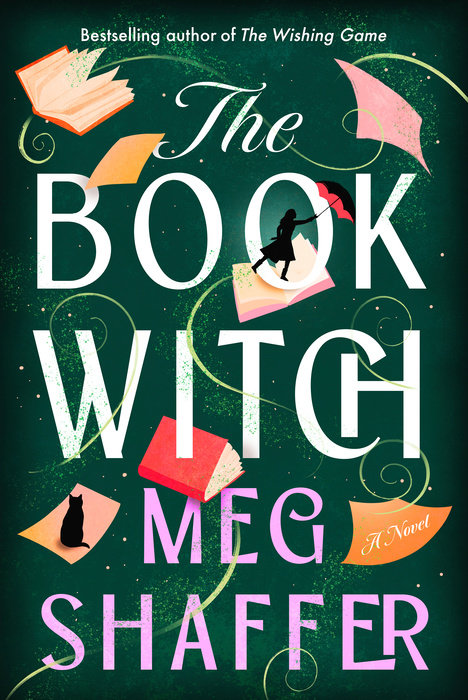
The Book Witch (2026)
Select Sections to Print
×Book Details
The Book Witch (2026)
Jump to Section
⚠️ Trigger Warnings
- Domestic abuse & intimate partner violence
- Terminal illness & heart failure
- Maternal death & childbirth complications
- Death of a parent
- Grief & bereavement
- Orphanhood
- Fire & arson
- Burn injuries
- Book burning
- War & wartime death
- Shell shock / PTSD
- Suicide
- Death of a child
- Serious childhood illness
- Quarantine & contagious disease
- Gun violence
- Kidnapping / staged abduction
- Criminal threats & violence
⏱️ 2-Minute Spoiler Summary
Rainy March is a 27-year-old Book Witch who can use her enchanted black umbrella to enter fictional worlds and repair stories that have gone wrong. Two years earlier, while investigating a damaged Duke of Chicago detective novel, she met its fictional hero, Nick Duke, and fell in love with him. Their relationship violated one of the Coven’s strictest rules, so Coven leader Dr. Regina Fanshawe confiscated Rainy’s Duke books and permanently separated them.
In the present day, Rainy returns Elizabeth Bennet to Pride and Prejudice after a rogue “Burner” pulls her out of her story. On her way home, Rainy uses magical book dust on a Little Free Library—then accidentally gets some on herself. Because the magic summons the book a person most needs or desires, it later pulls Duke out of one of his novellas and into Rainy’s world.
His arrival coincides with two mysteries. Rainy’s grandfather, Pops, has disappeared, and someone has stolen her late mother Ellery March’s childhood copy of The Secret of the Old Clock. Pops leaves behind clues saying Ellery left Rainy an inheritance that could make Rainy and Duke “star-crossed no more,” then cryptically tells her to “find the March Hare.”
Rainy and Duke chase the clue through multiple fictional worlds, including The Great Gatsby and Alice in Wonderland, but eventually discover the mystery is much bigger than they imagined. Rainy falls through a mirror and meets Maxine Blake, who reveals that Rainy herself is fictional. Maxine is the real-world author of the Rainy March, Book Witch series, while mystery writer Medda Baker is Maxine’s fictional version of herself. Maxine is dying in the real world and has left Rainy’s final adventure, The March Hare Mystery, unfinished.
Rainy crosses into the real world and attends Maxine’s funeral in Santa Barbara. There she convinces Jessa Charming, the writer Maxine chose as her successor, to finish Rainy’s story. Jessa realizes the answer to Rainy’s mystery lies in Ellery’s supposedly missing year.
Back in her own world, Rainy finally realizes that cheerful apprentice Penny Nichols, who has been wearing rabbit ears, is the “March Hare.” Penny is actually Nancy Drew.
Rainy travels into Nancy’s world and learns the truth: Ellery accidentally entered The Secret of the Old Clock years earlier and fell in love with Nancy’s father, Carson Drew. They married, and Ellery became pregnant with Rainy. That makes Nancy Rainy’s half-sister—and Carson her biological father.
Because Rainy has a real Book Witch mother and a fictional father, she is half-fictional. Unlike ordinary Book Witches, she can safely live inside books, change stories, and be with Duke. Dr. Fanshawe knew this all along and magically erased Carson’s memories of Ellery.
After Rainy defeats the Burner X by sending him into Dante’s Inferno, she chooses not to restore Carson’s memories and cause him fresh grief. Duke declares himself Rainy’s fiancé.
Six months later, Pops runs the Coven, its rules have been changed to allow relationships with fictional characters, and Rainy can finally share a life with Duke. Maxine and Jessa’s completed The March Hare Mystery reaches readers in the real world, where Rainy briefly appears to a Nevada barista named Frankie and inspires her to pursue her dream of opening a bookstore.
📖 Full Spoiler Summary
Rainy March and the Forbidden Duke
The Book Witch is told in the first person by Rainy March, a Book Witch who records the story in her official case notebook and frequently addresses the reader directly. The novel plays with genre and reality itself, moving from Rainy’s world into famous fictional stories and eventually revealing that Rainy’s own reality is also a book.
Book Witches protect literature using enchanted black umbrellas that allow them to enter stories. Their Ink and Paper Coven follows strict rules known as the Eight Black and Whites, including prohibitions against living inside books, bringing weapons into them, and falling in love with fictional characters.
Rainy broke that last rule two years earlier.
When page 87 of Empty Graves, the second Duke of Chicago noir mystery, mysteriously went blank, Rainy entered the book with her magical cat familiar, Koshka. There she encountered Nick Duke, the series’ fictional 1930s private detective, bound inside a speakeasy by a rogue Burner known as X. Burners destroy books from within, and X was attempting to incinerate Duke’s story using gasoline.
Rainy helped Duke complete the novel’s intended plot, which involved helping Edith King, an abused socialite, escape her violent husband. But Duke was unusually self-aware for a fictional character, and Rainy fell in love with him. She secretly returned to his books repeatedly until she accidentally changed the actual text of one novel to include herself.
Coven leader Dr. Regina Fanshawe discovered what Rainy had done. She confiscated Rainy’s Duke novels and forbade her from seeing him again.
Duke Comes Out of His Story
In the present day, Rainy is sent after another displaced fictional character: Elizabeth Bennet, who has been pulled out of Pride and Prejudice shortly before her wedding to Mr. Darcy. Rainy finds Elizabeth in Oregon and convinces her to return.
During the mission, Rainy repairs a vandalized Little Free Library and sprinkles it with magical blue dust that attracts whatever book a reader most needs in their heart. Some of the powder accidentally gets onto Rainy herself.
When she returns to the Coven’s bookstore, Words, Words, Words, Dr. Fanshawe punishes her for bringing Elizabeth back two minutes after sunset and confiscates Rainy’s umbrella.
Rainy walks home to Pilcrow House with bubbly apprentice Book Witch Penny Nichols, who happens to be wearing brown rabbit ears. There, housekeeper Mrs. Turner—who originally came from Sherlock Holmes’s 221B Baker Street—reveals that someone has burglarized the house. Only one object was taken: the childhood copy of The Secret of the Old Clock that belonged to Rainy’s late mother, Ellery March.
Even more troubling, Rainy’s grandfather and mentor, Sullivan “Pops” March, has been missing for a week.
Then the impossible happens: Duke suddenly appears in Pilcrow House.
Rainy realizes the magical library dust worked on her. What her heart wanted most was Duke, and a copy of his novella The Velvet Coffin in her possession pulled him straight out of his fictional Chicago.
Finding the March Hare
Rainy gives Duke 24 hours to help her investigate. Inside Pops’s desk, Duke finds a hidden key and opens an enchanted compartment containing Pops’s secret notebook. Pops had discovered a message inside Ellery’s copy of The Secret of the Old Clock suggesting that Ellery left Rainy an inheritance capable of changing everything the Coven believed about stories—and, crucially, making Rainy and Duke “star-crossed no more.”
Pops briefly contacts Rainy and assures her that he is safe, but instead of explaining anything, he tells her to “find the March Hare.”
Rainy needs her umbrella back, so she, Duke, and Koshka break into Words, Words, Words. When police arrive, they escape into The Legends of King Arthur, where they briefly encounter Burner X.
Rainy assumes Pops’s clue points toward Alice in Wonderland, but that book is under heavy Coven surveillance. She finds a wonderfully convoluted loophole: they enter The Great Gatsby, find a fictional copy of Alice in Wonderland in Gatsby’s library, and enter Wonderland through the book inside the book.
At the Mad Tea Party, however, the table is deserted. Only a place card bearing Rainy’s name awaits them. A whispering teapot tells her that she has the wrong March Hare and that the answer is staring her in the face.
Medda Baker and Another Dead End
Rainy and Duke next consult Medda Baker, an elderly mystery novelist who owns Words, Words, Words. Medda examines the case like the experienced storyteller she is.
A copy of The Secret of the Old Clock that Duke has shoplifted turns out to contain Ellery’s name written inside in peacock-blue ink. Rainy realizes it is actually her supposedly stolen copy. The thief hid it in plain sight.
Medda tells Rainy that things are not always what they appear to be and suggests that the mystery is really leading Rainy toward a discovery about herself. Duke also notices evidence that Medda is seriously ill and appears to be preparing for her death.
Another clue leads Rainy and Duke to the Enchanted Forest Park. There they meet security guard Adam Nguyen, whose life was unexpectedly changed by Duke’s fictional adventures. During the isolation of the 2021 COVID lockdown, Duke’s catchphrase, “No, thank you,” inspired Adam to leave a corporate job he hated and pursue teaching.
For Duke, discovering that his fictional life can meaningfully affect real people changes how he understands his own existence. But the park’s March Hare display provides no solution to their mystery.
Rainy Learns That She Is Fictional
Back at Pilcrow House, Rainy falls through a fireplace mirror and enters an endless Hall of Mirrors, where she meets an elderly woman named Maxine Blake.
Maxine reveals a staggering truth: Rainy herself is fictional.
In the “Real Real World,” Maxine created The Book Case Files of Rainy March, Book Witch in 1975. Rainy, Pops, Koshka, Pilcrow House, Fort Meriwether, and the entire Ink and Paper Coven exist inside Maxine’s fictional universe. Maxine even wrote herself into Rainy’s world as Medda Baker.
She also created the Duke of Chicago series specifically to give Rainy a love interest.
Now Maxine is dying of heart failure in Santa Barbara. She has written 36 Rainy March books but cannot finish the 37th, The March Hare Mystery—the very adventure Rainy is currently experiencing.
Maxine has chosen real-world mystery novelist Jessa Charming as her “March Heir.” Rainy must cross into reality, attend Maxine’s funeral, find Jessa, and persuade her to complete the unfinished book. Maxine then says her favorite words, “Pencils down,” and walks through a bright mirror into death.
Rainy Enters the Real World
Rainy emerges in the Santa Barbara Public Library and finds herself surrounded by an exhibit celebrating Maxine Blake’s hugely successful career. At Maxine’s memorial, she hears from Jessa and Maxine’s widower, Anthony Blake, whose English charm and voice inspired Duke.
Anthony tells the story of Maxine’s childhood as an orphan. When another orphan named Rosa was dying of scarlet fever, young Maxine stayed up reading Nancy Drew to her. After the orphanage later burned Maxine’s books, she had a vision of Nancy Drew bringing her another book—an experience that helped inspire her future as a writer.
Rainy approaches Jessa, who fears she cannot possibly finish Maxine’s beloved series. Rainy encourages her, and Jessa suddenly sees the key to completing the story: everyone has misunderstood what happened during Ellery March’s mysterious missing year.
Jessa begins writing, and Rainy is pulled back into her fictional world.
The Real March Hare
Once home, Rainy finally understands the clue that has been sitting in front of her.
The March Hare is Penny Nichols.
Rainy and Duke travel to 1930s River Heights and discover that Penny is actually Nancy Drew herself. Nancy reveals what happened to Ellery 26 years earlier.
Ellery accidentally entered The Secret of the Old Clock and suffered a head injury. Nancy and her father, famous attorney Carson Drew, cared for her while she recovered. Ellery and Carson fell in love and married, and Ellery became pregnant.
When Ellery eventually remembered that she was a Book Witch, she returned to Oregon. She gave birth to Rainy but died soon afterward from complications.
Carson Drew is therefore Rainy’s biological father, making Nancy her half-sister.
More importantly, Rainy is something unprecedented: her mother was a Book Witch, but her father is fictional. Rainy is half-fictional and half-real. The ordinary Coven restrictions do not apply to her. She can enter and live inside books, alter stories, and move between realities without destroying them.
Dr. Fanshawe knew the truth all along. She placed a spell on Carson that erased his memories of Ellery and concealed Rainy’s parentage to keep Rainy under Coven control.
Nancy also admits that she and Pops constructed the entire March Hare mystery so Rainy would uncover the truth herself. Pops has been safely hiding in River Heights with Carson.
Before Rainy can fully absorb her new family, Burner X attacks. Now understanding her powers, Rainy materializes Dante’s Inferno and sends X into the Seventh Circle of Hell.
Rainy finally meets Carson, but she faces a painful decision. She could remove Fanshawe’s spell and restore his memories of Ellery, forcing him to experience the loss of his wife all over again. Instead, Rainy leaves the spell intact. Carson simply accepts her as a beloved new family friend.
Duke then asks Carson for Rainy’s hand and announces that he is Rainy’s fiancé.
Rainy and Duke Finally Get Their Ending
Six months later, Rainy records how much has changed. Pops has become leader of the Ink and Paper Coven, while Dr. Fanshawe has been demoted and sentenced to spend ten years peeling price stickers from used books.
More importantly, the Coven changes its rules. Book Witches are now permitted to fall in love with fictional characters.
Rainy also persuades Medda Baker to write a thirteenth Duke of Chicago novella, The Last Hurrah, bribing her with a black cat named Agatha. Medda writes Rainy into Duke’s story as his undercover secretary and socialite fiancée, finally giving Rainy a legitimate place beside him inside his fictional world. Nancy continues visiting her newfound half-sister through the umbrellas.
The novel then moves one final time into the real world. In Aurora, Nevada, a barista named Frankie finishes reading the newly published The March Hare Mystery, credited to Maxine Blake and Jessa Charming.
Rainy briefly appears to Frankie in reality and encourages her to stop merely dreaming about the life she wants. Inspired by Rainy’s story, Frankie decides to pursue her own dream of opening a bookstore called Otherworld Books.
Rainy’s adventure has therefore traveled full circle: just as Duke’s fictional words once changed Adam’s real life, Rainy herself has become a fictional character capable of inspiring someone in the real world.
🔚 Ending Explained
Ending Explained
The Book Witch ends by revealing that Rainy March has spent her entire life believing she must obey rules that were never truly designed for someone like her. The final revelations about her parents completely reframe both Rainy’s identity and the mystery she has been solving.
Rainy and Nick Duke portal into 1930s River Heights, the fictional setting of Nancy Drew, where “Penny Nichols” reveals herself to be Nancy Drew. Nancy finally explains what happened during the mysterious year Rainy’s mother, Ellery March, disappeared.
Twenty-six years earlier, Ellery accidentally entered The Secret of the Old Clock and suffered a head injury. Nancy and her father, Carson Drew, cared for her while she recovered. With no memory of her real life, Ellery fell in love with Carson, married him, and became pregnant. Once her memories returned, however, she realized she had to return to reality. She gave birth to Rainy there but died five months later from peripartum cardiomyopathy.
That means Carson Drew is Rainy’s biological father—and Rainy herself is half real and half fictional. This explains why the normal rules governing Book Witches and fictional characters do not fully apply to her. Rainy can move between reality and fiction, interact with stories, and even alter them without automatically destroying their narratives.
Rainy also discovers that Dr. Regina Fanshawe knew the truth all along. Fanshawe placed a memory charm on Carson so he would forget Ellery and concealed Rainy’s unusual parentage. Meanwhile, Nancy and Pops secretly created the elaborate March Hare mystery so Rainy could gradually uncover the truth about herself.
The confrontation with Burner X provides a wonderfully literal payoff to Rainy discovering her power. When X arrives to eliminate her, Rainy summons Dante’s Inferno and sends X into the Seventh Circle of Hell with the command “Go to Hell!” Instead of merely protecting stories, Rainy finally uses literature itself as her weapon.
But the more emotional climax comes afterward, when Rainy meets Carson. She could remove the memory charm and make him remember Ellery—and therefore understand that Rainy is his daughter. Instead, she leaves the charm intact. Rainy decides that giving herself the recognition she has always wanted is not worth forcing Carson to relive the devastating loss of his wife. He knows her only as a cherished new family friend, while Rainy privately knows that she has finally found her father.
Duke then asks Carson for Rainy’s hand in marriage, making their relationship no longer something Rainy intends to hide.
Six Months Later
By April, the old Coven order has changed dramatically. Dr. Fanshawe has been removed from leadership and sentenced to the wonderfully mundane punishment of spending ten years removing price stickers from used books with Goo Gone. Pops becomes the new Coven leader and rewrites the rules so Book Witches may have relationships with fictional characters as long as they do not damage existing stories.
That change finally gives Rainy and Duke a legitimate way to build a life together.
Rainy convinces retired author Medda Baker to return to writing—helped along by the gift of a black cat named Agatha—and collaborate on a thirteenth Duke of Chicago novella called The Last Hurrah. Rainy is written into the story as a socialite working undercover as Duke’s secretary and fiancée, while Mrs. Turner becomes his housekeeper. Instead of Rainy having to choose between Duke’s fictional world and her own, they literally write themselves a future together.
Nancy also begins using her charmed umbrella to make occasional visits to Rainy in the real world, giving Rainy a continuing relationship with her fictional half-sister.
What the Epilogue Means
The final section pulls the story outward one last time.
In Aurora, Nevada, a barista named Frankie finishes reading The March Hare Mystery, the book completed by Jessa Charming after Maxine Blake’s death. The experience rekindles Frankie’s abandoned dream of opening a bookstore called Otherworld Books.
Then someone knocks on her door.
It is Rainy.
Rainy briefly appears in Frankie’s world and encourages her to open the bookstore before closing her umbrella and disappearing.
That moment deliberately erases the final boundary between fictional character, author, and reader. Rainy began the novel traveling into books. She ends it traveling outward from a book and influencing the life of the person reading it.
And that is essentially the novel’s final argument: stories do not stay inside books.
What the Ending Really Means
Rainy’s half-fictional identity is more than a clever plot twist. It makes her a literal embodiment of the novel’s central idea. She belongs simultaneously to reality and imagination, just as every story does. A book may exist as ink on a page, but what happens inside it can change the behavior, ambitions, relationships, and identity of someone living outside it.
That is why the black umbrella changes meaning by the end. Initially, it represents the Coven and its rigid system for controlling the boundary between books and reality. In Rainy’s hands, it becomes something different: freedom, imagination, and movement between worlds. The boundary still exists, but it no longer has to function as a prison.
The same transformation occurs within the Coven itself. Fanshawe believes stories survive through control. Pops ultimately recognizes that preservation does not require emotional isolation. His rewriting of the Eight Black and Whites rejects the idea that protecting literature means preventing people from forming meaningful connections with it.
Rainy and Duke are the clearest beneficiaries. Their happy ending is especially fitting because it is not achieved by escaping the rules of storytelling. They create a new story capable of containing the life they want. The Last Hurrah becomes both a fictional book and the physical space in which their future together can exist.
Rainy’s decision about Carson is quieter but arguably more important to her character arc. Finding her father could have become the fulfillment of everything she has lost. Instead, she refuses to make Carson suffer simply so she can possess the relationship she wants. She knows who he is. She knows he loved Ellery. And she decides that knowledge can be enough.
Ellery’s story also changes Rainy’s understanding of inheritance. Rainy had imagined her mother through the mythology created around her. Discovering that Ellery broke rules, fell passionately in love with a fictional man, married him, and became pregnant forces Rainy to see her mother as a complicated person rather than an idealized figure. What Rainy inherits from Ellery is therefore not obedience. It is the courage to cross boundaries.
That makes Ellery’s peacock-blue signature in The Secret of the Old Clock especially meaningful. Rainy’s true inheritance is not something tangible left behind by her mother. It is evidence that Ellery was there—that she lived, loved, made choices, and left her mark on a story.
The recurring language of “pencils down” and “pencils up” expands that idea beyond Rainy. “Pencils down” acknowledges that individual lives and individual stories end. Maxine dies. Ellery dies. A writer eventually reaches the last page. But “pencils up” answers that finality with continuation. Someone else picks up the story. Jessa continues Maxine’s work. Rainy carries Ellery’s legacy. Frankie reads what they created and begins imagining a different life for herself.
Even Rainy’s spectacular punishment of Burner X fits the larger theme. X represents destruction and the attempt to erase stories; Rainy defeats X using another work of literature. The answer to destroying books is more books.
And then the Frankie epilogue completes the circle.
Maxine creates a story. Jessa continues it. Frankie reads it. The story changes Frankie. Rainy then seemingly steps through the boundary separating Frankie’s reality from the book she has just finished.
So the ending is deliberately bigger than Rainy and Duke getting their happily-ever-after. It suggests an endless chain:
Writers create stories. Stories create readers. Readers carry those stories into their lives. And eventually, those readers create something new.
That is why the novel ultimately treats storytelling as a kind of immortality. People die and individual books end, but imagination keeps passing from one person to another.
There is always someone else ready to pick up the pencil.
👤 Characters & Fates
🔶 Main Characters

Discovers she is half-fictional: Carson Drew is her biological father, Nancy Drew is her half-sister, and Maxine Blake created her. She defeats Burner X by banishing him into Dante’s Inferno, reunites with Pops, chooses not to restore Carson’s memories of Ellery, and becomes engaged to Nick Duke. Medda Baker ultimately writes Rainy into The Last Hurrah as Nick’s undercover socialite secretary/fiancée.

Travels with Rainy through Camelot, The Great Gatsby, Wonderland, and River Heights, proposes to her at Enchanted Forest Park, and meets her biological father, Carson Drew. He and Rainy are eventually written together into Medda Baker’s The Last Hurrah, where Rainy poses as his secretary/fiancée.

Is found safely hiding in River Heights with Carson Drew. After Dr. Fanshawe is removed, Pops wins the election for leader of the Ink and Paper Coven by one vote and changes the rules so Book Witches may fall in love with fictional characters.
Survives the adventures, bonds with Nick Duke, and returns to Pilcrow House with Rainy and Pops, where he continues his comfortable life of treats and companionship.

Dying of heart failure, Maxine meets Rainy through the Hall of Mirrors and reveals that Jessa Charming must finish the story. Maxine then dies in Santa Barbara, and hundreds of fans honor her at a library funeral by opening black umbrellas; her fictional alter ego Medda remains in Rainy’s world and later writes The Last Hurrah for Rainy and Nick.

After suffering a head injury inside Nancy Drew, Ellery is cared for by Carson Drew, falls in love with and marries him, and becomes pregnant with Rainy. She returns to her own world to give birth but dies five months later from peripartum cardiomyopathy; Rainy eventually learns the truth and recovers Ellery’s embroidered handkerchief.

Reveals Rainy’s parentage in River Heights, helps reunite her with Pops, and continues visiting Rainy’s world afterward as an unofficial/official Book Witch using her charmed umbrella.

Dr. Fanshawe’s memory charm causes him to forget Ellery’s true identity and their relationship. Rainy eventually meets him but decides not to break the charm and force him to relive his grief; he accepts her as a beloved new family friend and approves of her engagement to Nick.
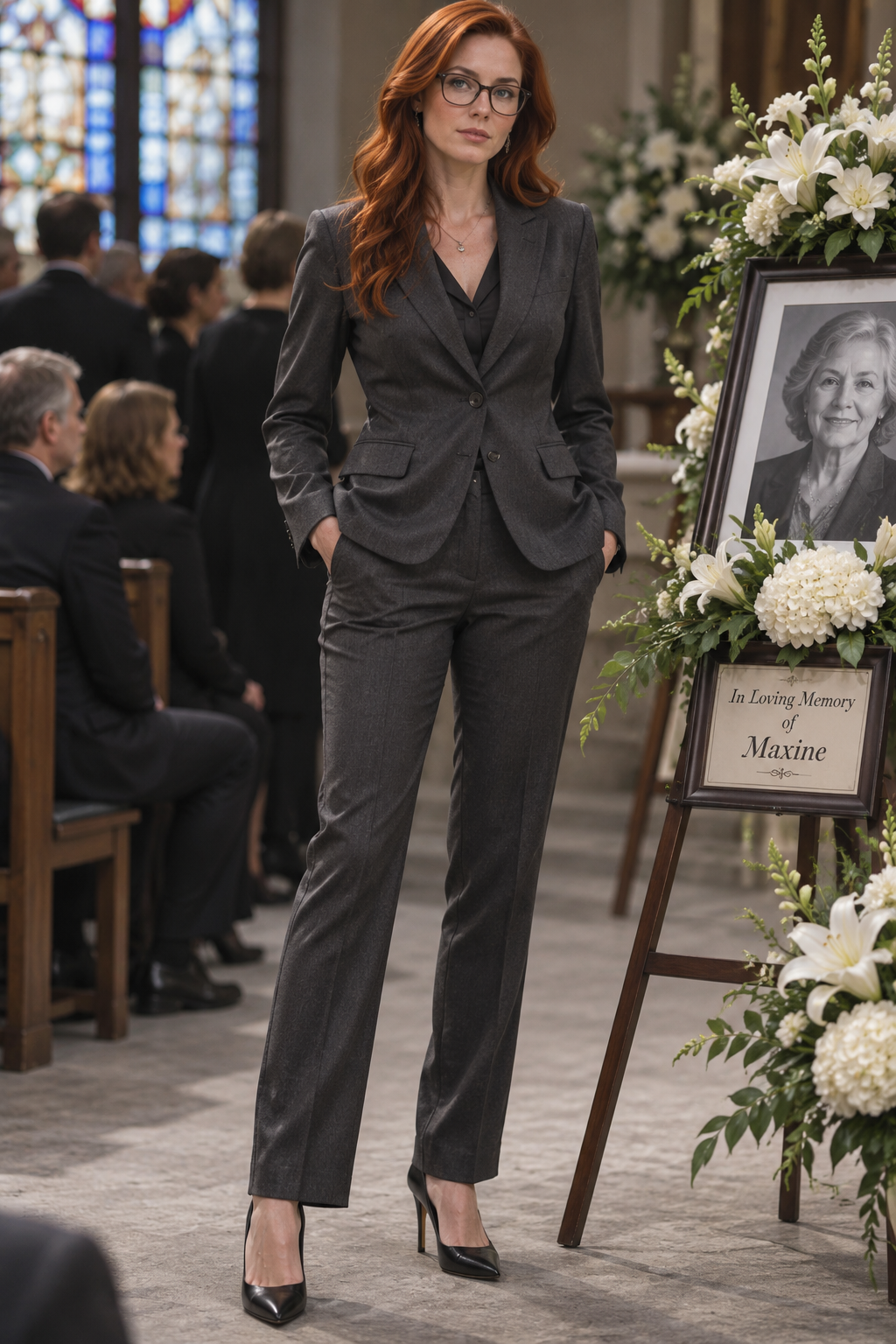
Rainy finds Jessa at Maxine’s Santa Barbara funeral and persuades her to accept the responsibility. Jessa finishes The March Hare Mystery, which is published under both her and Maxine Blake’s names to critical acclaim.

After Maxine’s death, he delivers a moving eulogy about her childhood, recognizes Rainy during the funeral procession, and invites her into his limousine. He finds comfort in knowing that Maxine’s stories and characters will continue through Rainy and Jessa.
🔷 Supporting Characters

Is stripped of leadership after the truth emerges and sentenced to ten years of grunt work removing price stickers from used books with Goo Gone.
Remains at Pilcrow House, enthusiastically caters to Nick Duke, and is eventually written into The Last Hurrah as Nick’s fictional housekeeper.
Confronts Rainy with a gun in River Heights, but her newly understood half-fictional powers transform it into a banana. Rainy then materializes Dante’s Inferno and shoves him into the Seventh Circle of Hell.
Rainy finds her sightseeing in Oregon and uses her relationship with Nick to convince Elizabeth to return to her story and marry Mr. Darcy.
Catches Rainy and Nick trespassing, witnesses Nick’s proposal to Rainy, meets his fictional hero face-to-face, and gets the chance to personally thank him.
Wears Dormouse ears for Mad Hatter Day and later runs against Pops for Coven leader, losing the election to him by a single vote.
Nick discovers the truth but allows her to escape by boat to Canada; her story later inspires the real-world “Dance, Edith, Dance” movement.
Survives as part of Duke’s fictional history; Rainy later reveals that she once dressed as Hennie at the Murder Me Con book convention.
After reading the completed March Hare Mystery and receiving a mysterious late-night visit from the real Rainy March, Frankie finally pursues her dream and opens a bookstore called Otherworld Books.
Successfully hosts Maxine’s funeral, where hundreds of readers gather to honor the author and her 40-million-copy career.
Dies peacefully of scarlet fever while Maxine reads The Moonstone Castle Mystery to her through the night. Maxine contracts scarlet fever from Rosa and suffers permanent heart damage that ultimately contributes to her death decades later.
Medda happily adopts Agatha as her new companion and agrees to write The Last Hurrah, giving Rainy and Nick a fictional world in which they can be together.
Appears in the Real Real World at Maxine Blake’s Santa Barbara funeral, where he honors her with a bouquet of roses.
🕳️ Potential Plot Holes
The Coven strictly requires escaped fictional characters to be returned to their books and punishes Rainy for bringing Nick Duke into the real world. Yet Mrs. Turner is herself an escaped fictional character—the former housekeeper of Sherlock Holmes and Dr. Watson—whom Book Witches allowed to remain permanently at Pilcrow House. The book never explains why Mrs. Turner receives an exception while Nick’s presence is considered a serious violation. This is one of the clearest inconsistencies in the Coven’s rules.
Rainy learns that she is half-fictional because her mother, Ellery March, was a real Book Witch while her father, Carson Drew, is a fictional character. This explains Rainy’s unusual ability to manipulate herself and her surroundings inside books. The later metafictional reveal complicates this explanation, however: Maxine Blake reveals that Rainy, Ellery, Pops, Pilcrow House, and the Coven are all characters in her own book series. From the “real real world” perspective, Ellery was never actually more real than Carson. This may be intentional metafiction rather than a true plot hole—the characters experience different levels of reality relative to their own world—but the novel never fully reconciles how “half-fictional” inheritance works once that larger reality is revealed.
The Coven insists that an author’s intended story must be preserved and that Book Witches should leave fictional worlds without altering them. Yet Dr. Fanshawe permanently charms Carson Drew into forgetting his marriage to Ellery and the existence of their relationship. That is a significant alteration to the history and memories of an established fictional character. It may have been done specifically to restore the Nancy Drew books to their recognizable canon, but that creates a contradiction of its own: the Coven preserves the author’s story by deliberately changing a character inside it.
Nancy admits that she tipped off Burner X to add danger and tension to Rainy’s investigation while steering her toward the truth about her parents. Burner X is not a harmless obstacle: he uses guns, gasoline, and fire and repeatedly puts Rainy, Nick, and entire fictional worlds in genuine danger. Nancy could not reasonably guarantee that Rainy would survive or that X would not permanently destroy a story. Her decision therefore feels less like clever detective manipulation and more like an extremely risky plot device designed to manufacture the novel’s antagonist-driven conflict.
📚 Book Club Q&A's
⭐ Final Rating & Thoughts
I wanted to love The Book Witch so much more than I actually did. The premise is fantastic: a witch who can enter books, beloved literary characters wandering outside their stories, and a forbidden romance with a fictional detective. There were moments when that concept completely worked for me, especially the clever literary references and cameos. Meg Shaffer clearly loves books, and that affection comes through on every page.
Unfortunately, the fantasy and magical realism elements became too much for me. As the story progressed, the rules kept expanding, the twists became increasingly outlandish, and I started losing interest rather than becoming more invested. Some of the reveals were wonderfully creative, but others felt silly, and eventually I found myself skimming just to keep things moving.
I also wish the book had spent more time playing with recognizable literature and less time explaining its increasingly complicated fantasy mechanics. There’s a genuinely charming, imaginative story buried in here, and I can absolutely see why readers who love whimsical fantasy and metafiction will adore it. For me, though, the creativity wasn’t enough to overcome how difficult it was to stay engaged.
✨ Adaptation description
As of October 2026, no official screen adaptations for The Book Witch has been announced.
✨ Books Like The Book Witch (2026)
See an error on this page?