

All the Light We Cannot See (2014)
Select Sections to Print
×Book Details
All the Light We Cannot See (2014)
Jump to Section
⚠️ Trigger Warnings
- Warfare and military combat
- Aerial bombardment and shelling
- Fire and destruction
- Graphic violence
- Physical abuse and hazing
- Execution
- Murder
- Death and mass casualties
- Graphic injuries
- Dead and decomposing bodies
- Child death
- Antisemitism
- Eugenics
- Racism and racial persecution
- Nazi ideology and propaganda
- Holocaust themes
- Deportation and forced displacement
- Sexual assault and rape
- Sexual harassment and threats
- Child abuse and exploitation
- Child indoctrination
- Child soldiers and youth militarization
- Starvation and severe hunger
- Poverty
- Terminal illness and cancer
- Pneumonia and illness
- Blindness and disability
- Claustrophobia and entrapment
- Psychological trauma
- Agoraphobia
- Nazi Germany and World War II themes
⏱️ 2-Minute Spoiler Summary
Marie-Laure LeBlanc is a blind French girl living in Paris with her father, Daniel, a locksmith at the Museum of Natural History. He teaches her to navigate by building intricate wooden models of her surroundings. The museum also houses the legendary Sea of Flames, a 133-carat diamond supposedly capable of keeping its owner alive while bringing terrible misfortune to everyone they love.
Hundreds of miles away in Germany, orphan Werner Pfennig discovers an extraordinary talent for radios and electronics. He and his younger sister, Jutta, secretly listen to science broadcasts by a mysterious Frenchman known as “the Professor.” Werner’s abilities eventually earn him admission to Schulpforta, an elite Nazi military academy, allowing him to escape the coal mines where his father died. But the school is brutally cruel. Werner watches helplessly as his gentle friend Frederick is severely beaten after refusing to participate in the abuse of a prisoner.
When Germany invades France, Daniel and Marie-Laure flee Paris for Saint-Malo, where they live with Daniel’s reclusive uncle Etienne and his housekeeper, Madame Manec. The museum has created three replicas of the Sea of Flames and distributed four stones among different couriers. Unknown to Marie-Laure, Daniel is carrying the real diamond. After Daniel is arrested while returning to Paris and eventually dies in a German labor camp, Marie-Laure remains in Saint-Malo.
Madame Manec organizes local women into a resistance network. After her death, Etienne joins the effort, using a hidden radio transmitter to send Allied intelligence supplied by Marie-Laure. The transmitter is the same one Etienne and his brother once used for the science programs Werner heard as a child.
Meanwhile, Nazi gemologist Reinhold von Rumpel, who is dying of cancer, becomes obsessed with finding the Sea of Flames because he believes it can save his life. After locating all three fake diamonds, he traces the genuine stone to Daniel and eventually to Saint-Malo.
Werner is sent into the Wehrmacht, where his radio-tracking unit hunts resistance broadcasters across Europe. He becomes increasingly horrified by the killings he helps enable. In 1944, his unit reaches Saint-Malo, and Werner hears Etienne’s broadcast. Recognizing the music from his childhood, he realizes its connection to Marie-Laure but deliberately hides the transmitter’s location from his fellow soldiers.
During the Allied bombardment of Saint-Malo, Etienne is arrested, Werner and his unit are buried beneath the Hotel of Bees, and Marie-Laure hides in Etienne’s secret attic while von Rumpel searches the house for the diamond. After five days without water, she uses the radio to read Twenty Thousand Leagues Under the Sea and call for help. Werner hears her. He and Frank Volkheimer escape the collapsed hotel, and Werner races to her house.
There, Werner shoots von Rumpel before he can reach Marie-Laure. Werner gives her water and helps her escape. Marie-Laure then leads him to a hidden sea grotto, where she places the Sea of Flames inside her father’s wooden model house and leaves it in a tidal pool, effectively returning the cursed diamond to the sea. She gives Werner the grotto key before they separate.
Their time together is tragically brief. Werner is captured and, delirious with fever, wanders from a medical tent and steps on a German landmine, dying instantly.
After the war, Marie-Laure reunites with Etienne but learns that her father died in a labor camp in 1943. She eventually becomes a marine biologist specializing in mollusks. In 1974, Werner’s sister Jutta receives his belongings from Volkheimer, including the wooden model house. She travels to France and returns it to Marie-Laure. Inside, Marie-Laure finds the grotto key and realizes Werner never went back for the diamond.
By 2014, Marie-Laure is 86 years old. Walking through Paris with her grandson, she thinks about the invisible radio waves and signals surrounding them and wonders whether the people she has lost—including her father, Etienne, Madame Manec, and Werner—might somehow continue traveling through the world like music.
📖 Full Spoiler Summary
Marie-Laure and Werner Grow Up on Opposite Sides of Europe
All the Light We Cannot See moves between two timelines, opening during the August 1944 bombardment of Saint-Malo before going back to 1934 to show how Marie-Laure LeBlanc and Werner Pfennig eventually end up in the same besieged French city.
Marie-Laure grows up in Paris with her father, Daniel LeBlanc, the chief locksmith at the Museum of Natural History. She loses her sight at six from bilateral cataracts, but Daniel is determined that blindness will not prevent her from navigating the world independently. He builds an extraordinarily detailed wooden model of their Paris neighborhood and teaches her to memorize streets, drains, buildings, and landmarks by touch. He also gives her Braille editions of Jules Verne novels.
At the museum, Marie-Laure becomes fascinated with marine life through Dr. Geffard, an elderly mollusk specialist. She also hears the story of the Sea of Flames, a legendary 133-carat grayish-blue diamond with a red center. According to the legend, whoever possesses it cannot die, but everyone that person loves will suffer terrible misfortune unless the stone is returned to the sea.
In Zollverein, Germany, Werner grows up in an orphanage with his younger sister, Jutta, under the care of Frau Elena. Their father died in the coal mines, and Werner assumes the same future awaits him. Then he discovers a broken radio and manages to repair it, revealing an exceptional talent for electronics.
Werner and Jutta spend nights listening to foreign broadcasts, especially science lectures and classical music transmitted by an unknown Frenchman they call “the Professor.” As Nazi influence grows around them, Jutta becomes increasingly horrified by what is happening in Germany. Werner is more focused on escaping the mines.
His opportunity comes when Nazi official Rudolf Siedler discovers his technical abilities and arranges for him to take the entrance examinations for Schulpforta, an elite Nazi academy. Jutta fiercely objects, but Werner accepts.
Paris Falls and Werner Enters Schulpforta
When German forces invade Paris in 1940, the Museum of Natural History takes extraordinary precautions to protect the Sea of Flames. A lapidary named Dupont creates three perfect replicas. Four stones—three fake and one genuine—are distributed to four different couriers so no one knows for certain who possesses the real diamond.
Daniel receives one of them and flees Paris with Marie-Laure. After discovering that their intended refuge in Évreux has been destroyed, they continue to Saint-Malo, where Daniel’s uncle Etienne LeBlanc lives in a six-story house at Number 4 rue Vauborel.
Etienne is a traumatized World War I veteran suffering from agoraphobia and hallucinations. He rarely leaves the house, which is managed by his formidable housekeeper, Madame Manec. Daniel once again builds Marie-Laure a scale model, this time recreating Saint-Malo so she can learn to navigate the walled city.
Marie-Laure does not know that her father’s stone is the genuine Sea of Flames.
Daniel is eventually summoned back to Paris. During the journey, German soldiers arrest him because his measurements and model-building activities make him look like a spy studying Saint-Malo’s defenses. He is imprisoned and ultimately sent to a German camp, leaving Marie-Laure behind with Etienne and Madame Manec.
Werner, meanwhile, discovers that Schulpforta offers him intellectual opportunities at a terrible moral cost. His closest friend is Frederick, a gentle boy from Berlin who loves birds and has little interest in becoming a soldier. Werner also attracts the attention of Dr. Hauptmann, who recognizes his mathematical abilities and has him develop a portable radio direction-finding system capable of locating illegal broadcasts.
The school’s brutality becomes impossible to ignore. During a winter exercise, commandant Bastian orders the boys to throw freezing water on a dying prisoner. Frederick refuses and pours his bucket onto the ground. Soon afterward, other cadets beat him so viciously that he suffers permanent brain damage and memory loss.
Werner does nothing to stop them. His failure to help Frederick follows him long after he leaves the school.
Resistance in Saint-Malo and Werner’s War
Back in Saint-Malo, Madame Manec begins organizing local women into a resistance network. They alter signs, interfere with German communications, steal mail, and sabotage occupation efforts. After Madame Manec dies of pneumonia in 1942, Etienne decides to continue the work she started.
Hidden behind a wardrobe on the sixth floor is an attic containing a powerful radio transmitter. Years earlier, Etienne and his late brother Henri used this equipment to broadcast the very science programs Werner and Jutta listened to as children.
Now the transmitter serves a different purpose. Madame Ruelle hides military coordinates inside loaves of bread, Marie-Laure carries them home, and Etienne broadcasts the numbers to the Allies, mixing the coded transmissions with music such as Debussy’s “Clair de Lune.”
At the same time, Nazi gemologist Sergeant Major Reinhold von Rumpel is searching Europe for valuable treasures. After being diagnosed with incurable lymphatic cancer, he becomes obsessed with the Sea of Flames because he believes its legendary protection from death may be real.
Von Rumpel discovers that three replicas exist and spends years tracking them down. One by one, he finds all three fakes. That leaves Daniel’s stone as the genuine diamond. His investigation eventually leads him to Saint-Malo.
Werner’s own path has become increasingly dark. Dr. Hauptmann alters his records, allowing the sixteen-year-old to be sent directly into the Wehrmacht. Werner joins a specialized radio-tracking unit commanded by Frank Volkheimer, the enormous former Schulpforta cadet who once protected him.
Their job is to locate illegal radio operators. Once Werner pinpoints a transmission, soldiers move in and kill the broadcasters. During one raid in Vienna, Neumann Two mistakenly shoots an innocent woman and her seven-year-old daughter hiding in a closet. Werner becomes physically ill and increasingly tormented by his role in the violence.
Werner Hears the Voice From His Childhood
In May 1944, Werner’s unit is transferred to Saint-Malo to locate a transmitter sending military information to the Allies.
While monitoring the radio, Werner hears “Clair de Lune.” He recognizes the broadcast from his childhood and realizes that the mysterious French voice he once listened to came from this very place. After seeing Marie-Laure walking to the bakery, he understands that she is connected to the transmitter.
Werner makes a crucial decision: he tells his unit he has found nothing.
At the same time, Nazi collaborator Claude Levitte helps von Rumpel trace Daniel to Etienne’s house. Von Rumpel confronts Marie-Laure near a coastal grotto, but she refuses to cooperate and swallows a piece of paper containing resistance information.
Then the Allied assault on Saint-Malo begins.
Etienne is arrested while gathering information about German defenses and imprisoned at Fort National. Marie-Laure discovers the secret mechanism in her father’s model of Saint-Malo and finally finds the Sea of Flames hidden inside.
As American shells rain down on the city, the Hotel of Bees collapses. Werner, Volkheimer, and Walter Bernd are buried in its cellar. Bernd eventually dies from his injuries.
Marie-Laure retreats into the hidden attic at Number 4 rue Vauborel with the diamond, her Braille copy of Twenty Thousand Leagues Under the Sea, a knife, and two cans of food. Von Rumpel enters the house and begins searching for the stone.
Werner Comes for Marie-Laure
For five days, Marie-Laure remains hidden without water while von Rumpel tears through the rooms below her. Weak, frightened, and desperate, she finally switches on Etienne’s transmitter and begins reading Twenty Thousand Leagues Under the Sea aloud. She also calls for help.
Buried beneath the Hotel of Bees, Werner repairs his damaged radio equipment and hears her voice.
The broadcast gives Werner and Volkheimer new determination to escape. Volkheimer uses a grenade to blast through the debris, and the two climb out. Werner immediately heads toward Number 4 rue Vauborel.
Inside, he encounters von Rumpel. The dying gemologist realizes Werner is also searching for something hidden in the house and points his pistol at him. A sound from the attic distracts von Rumpel long enough for Werner to grab Volkheimer’s rifle and shoot him dead.
Werner calls softly to Marie-Laure in French. She emerges from behind the wardrobe, and he gives her desperately needed water.
During a temporary cease-fire, Werner helps her leave the burning house and make her way through the devastated streets. Marie-Laure then leads him to Crazy Harold Bazin’s hidden sea grotto beneath the ramparts.
There she places the Sea of Flames inside the wooden model house her father made and leaves it in a tidal pool deep within the cave, returning the legendary stone to the sea. She gives Werner the iron key to the grotto before they part.
Marie-Laure joins the fleeing civilians. Werner does not go with her.
The War Ends, but Werner Never Comes Home
Only hours later, Werner is captured by French resistance fighters and transferred to an American disarmament center. He is extremely sick and feverish. One night, delirious, he wanders away from the prisoner medical tent and accidentally steps on a German landmine.
He dies instantly.
Marie-Laure survives. After American troops liberate Fort National, she reunites with Etienne, and the two eventually return to Paris. For months they search train stations hoping Daniel will come home. Eventually, they learn that he died from illness at a labor camp in Kassel in early 1943.
Marie-Laure continues the life her father helped make possible for her. She attends university and becomes a marine biologist at the Museum of Natural History, specializing in mollusks. She later has a daughter, Hélène, with a fellow scientist named John.
Werner’s family also survives the war, although Jutta, Frau Elena, and the remaining orphans suffer terribly during the Russian invasion of Berlin. Decades later, Jutta is living in Essen with her husband, Albert, and their young son, Max, and working as a mathematics teacher.
In 1974, Volkheimer finds her and delivers Werner’s surviving possessions. Among them are his childhood notebook and the damaged wooden model house from Saint-Malo.
Jutta wants to understand what happened to her brother, so she travels with Max to Saint-Malo and eventually meets Marie-Laure in Paris. She gives Marie-Laure the wooden house.
Marie-Laure opens its hidden mechanism.
Inside is the iron key she gave Werner.
Its presence tells her something important: Werner never returned to the grotto to retrieve the Sea of Flames. The diamond remains beneath the water where Marie-Laure left it.
The story finally moves to 2014. Marie-Laure is now 86 and walking through the Jardin des Plantes with her eleven-year-old grandson, Michel. The world around her is filled with invisible electromagnetic signals—radio transmissions, cell phone signals, and streams of information constantly passing through the air.
Marie-Laure thinks of the people who are gone: Daniel, Etienne, Madame Manec, and Werner. Surrounded by all those invisible signals, she wonders whether the dead might somehow continue traveling through the world as well, their souls moving through the air like music and reverberating across the earth.
🔚 Ending Explained
How All the Light We Cannot See Ends
The ending of All the Light We Cannot See brings Marie-Laure and Werner’s separate wartime stories together in Saint-Malo, but their meeting is heartbreakingly brief.
During the Allied bombardment in August 1944, Werner Pfennig, Frank Volkheimer, and Walter Bernd are trapped beneath the collapsed Hotel of Bees. Bernd dies from his injuries, while Werner manages to repair a damaged transceiver. Through it, he hears something extraordinary: Marie-Laure LeBlanc broadcasting from her great-uncle Etienne’s attic, reading Twenty Thousand Leagues Under the Sea and playing Debussy’s “Clair de Lune.” Then Werner hears her whisper that a German officer is inside the house.
The broadcast has special meaning for Werner because he recognizes it from his childhood. Determined to reach Marie-Laure, he convinces Volkheimer to blast their way out of the cellar with a grenade.
Werner races to 4 rue Vauborel, where Sergeant Major Reinhold von Rumpel is desperately searching for the legendary Sea of Flames diamond. Von Rumpel is dying of cancer and has become obsessed with finding the supposedly cursed jewel, believing it might somehow preserve his life. When he confronts Werner at gunpoint, Werner manages to seize Volkheimer’s rifle and shoots von Rumpel dead.
Werner then finds Marie-Laure hidden behind the wardrobe in the attic. He gives her water and leads her out of the burning house during a temporary cease-fire.
Marie-Laure takes Werner to Crazy Harold Bazin’s hidden sea grotto beneath Saint-Malo. There, she places the wooden model house containing the real Sea of Flames into a tidal pool, effectively returning the diamond to the sea. She locks the grotto and gives Werner the key. Werner then helps her reach the other fleeing civilians.
Their meeting saves Marie-Laure’s life—but Werner does not survive the war.
After they separate, Werner is captured by French resistance fighters and eventually taken to an American disarmament center. Sick, feverish, and delirious, he wanders out of the medical tent one night and steps on a German landmine. He dies instantly.
What Happens to Marie-Laure
Marie-Laure survives and is eventually reunited with Etienne, who has been imprisoned at Fort National. They return to Paris, but Marie-Laure learns that her father, Daniel LeBlanc, died from illness in a German labor camp in 1943.
Despite these enormous losses, Marie-Laure builds a meaningful life. She becomes a marine biologist at the Museum of Natural History in Paris, specializing in mollusks. She has a daughter, Hélène, with fellow scientist John, while Etienne remains part of her life until his death at age 82.
The novel then jumps forward to 1974.
Frank Volkheimer finds Werner’s sister, Jutta, and gives her a bag containing Werner’s belongings, including his childhood notebook and the wooden model of Marie-Laure’s Saint-Malo house.
Jutta eventually travels to France and meets Marie-Laure. When Marie-Laure examines the model house, she discovers something extraordinary: the key to the sea grotto is hidden inside its chimney mechanism.
That discovery tells her what Werner did after they separated.
He never went back for the Sea of Flames.
Instead, he returned the key to the model house, ensuring that the diamond would remain hidden beneath the water. Werner had been given access to an object supposedly capable of granting immortality, and he chose to leave it behind.
The Sea of Flames remains lost in the grotto.
The Final Scene
The book makes one last leap, to 2014.
Marie-Laure is now 86 years old. She walks through Paris’s Jardin des Plantes with her 12-year-old grandson, Michel, surrounded by a world radically different from the one in which she grew up.
Invisible signals are everywhere—mobile phones, satellites, messages, data.
Marie-Laure thinks about all the people she has lost: her father, Etienne, Madame Manec, Werner, and the countless others swallowed by the war. The novel ends by suggesting that, in some sense, their voices are still traveling through the world.
What the Ending Means
The ending ultimately transforms the title, “All the Light We Cannot See,” into the novel’s central metaphor.
Throughout the story, invisible radio waves connect people who should never have been able to reach one another. A blind French girl broadcasts from an attic. A German boy hears her. Years earlier, that same broadcast helped awaken Werner’s fascination with science. Years later, it leads him back to Marie-Laure and gives him the opportunity to save her.
They cannot see those waves, but the waves are real.
The novel suggests that human connection works much the same way. We rarely see the full consequences of our kindness, cowardice, cruelty, courage, or love. Yet those choices continue outward, affecting people far beyond ourselves.
Werner’s Redemption
Werner’s ending is especially tragic because his moral awakening comes just before his death.
For much of the novel, Werner allows himself to become part of the Nazi machinery. He recognizes cruelty but repeatedly fails to resist it. He watches Frederick suffer. He witnesses innocent people being killed. His extraordinary intelligence becomes a weapon used by the regime.
But Marie-Laure gives him one final opportunity to choose differently.
Werner conceals the location of Etienne’s radio, kills von Rumpel, saves Marie-Laure, and refuses to take the Sea of Flames. For once, he chooses according to his own conscience rather than obeying the system controlling him.
His death shortly afterward makes that redemption painfully incomplete. He does not get a new life as a reward for doing the right thing.
And that is precisely why his death matters.
War does not operate according to moral fairness. Werner can finally become the person he should have been and still die accidentally on a landmine planted by his own country. His death underscores the senselessness of a system that consumes the very young people it indoctrinates.
The Sea of Flames
The diamond represents the seductive fantasy that one human life can be preserved at the expense of everyone else.
Von Rumpel embodies that idea most clearly. He is dying and becomes increasingly desperate to possess something he believes might save him. His obsession reduces everything around him—including other human beings—to obstacles between himself and survival.
Marie-Laure does the opposite.
She possesses the diamond and willingly gives it up.
By dropping the model containing the Sea of Flames into the tidal pool, she symbolically rejects the entire premise of the curse. Rather than trying to control death, she allows the stone to disappear back into nature.
And Werner completes that choice by returning the key instead of retrieving the jewel.
Von Rumpel wants immortality through possession. Werner achieves a different kind of immortality through sacrifice.
The Model House and the Key
The wooden model is also deeply connected to Daniel’s love for Marie-Laure.
Daniel originally builds miniature versions of the world so his blind daughter can navigate it independently. The models represent protection, patience, knowledge, and parental devotion.
By hiding the grotto key inside that same model, Werner becomes part of that chain of protection.
Daniel once used the house to help Marie-Laure find her way through the physical world. Decades later, Werner’s hidden key helps her understand something she could never have known: what Werner chose after leaving her.
The model becomes a message passed from father to daughter, from Marie-Laure to Werner, and finally back to Marie-Laure.
Why Marie-Laure Becomes a Marine Biologist
Marie-Laure’s fascination with mollusks also fits beautifully into the ending.
Shells are small, fragile things that nevertheless provide protection against an enormous and dangerous world. Marie-Laure herself survives in much the same way—finding small spaces of safety while refusing to surrender her curiosity.
And the Sea of Flames ultimately ends up underwater, surrounded not by soldiers, museums, or treasure hunters, but by the marine world Marie-Laure loves.
The supposedly priceless human treasure becomes insignificant beside the natural world.
Etienne’s Transformation
Etienne provides another version of the novel’s central moral choice.
After being traumatized during World War I, he spends decades hiding from the world. His house becomes both sanctuary and prison.
But Marie-Laure and Madame Manec gradually draw him back into life. By using his radio equipment to aid the Resistance, Etienne finally decides that safety is not enough if achieving it requires doing nothing while others suffer.
His survival allows the novel to show what Werner never receives: a life after choosing courage.
Why the Book Ends in 2014
The final jump to 2014 expands the story beyond World War II.
Marie-Laure lives in a world saturated with invisible communication. Messages, calls, satellite signals, and data move constantly through the air around her—modern descendants of the radio transmissions that once connected her to Werner.
That image turns the entire novel into something larger than a wartime story.
People die. Buildings disappear. Governments collapse. Even firsthand witnesses eventually vanish.
But what people send into the world can survive them.
The final tone is therefore melancholic but deeply hopeful. Marie-Laure cannot undo what happened to Daniel, Werner, Madame Manec, or Etienne. Werner cannot undo everything he participated in or failed to prevent. But their lives are not reduced to their deaths.
Their actions continue through other people.
That is the deeper meaning of the title: the most important forces shaping human lives are often invisible—radio waves, memory, love, conscience, sacrifice, and the consequences of choices whose effects we may never live long enough to see.
Werner dies believing his encounter with Marie-Laure lasted only a few hours. Seventy years later, she is still carrying the memory of him.
In that sense, Werner leaves the Sea of Flames beneath the water and dies without the immortality it supposedly promises—yet his final act of goodness becomes the very thing that allows part of him to endure.
👤 Characters & Fates
🔶 Main Characters
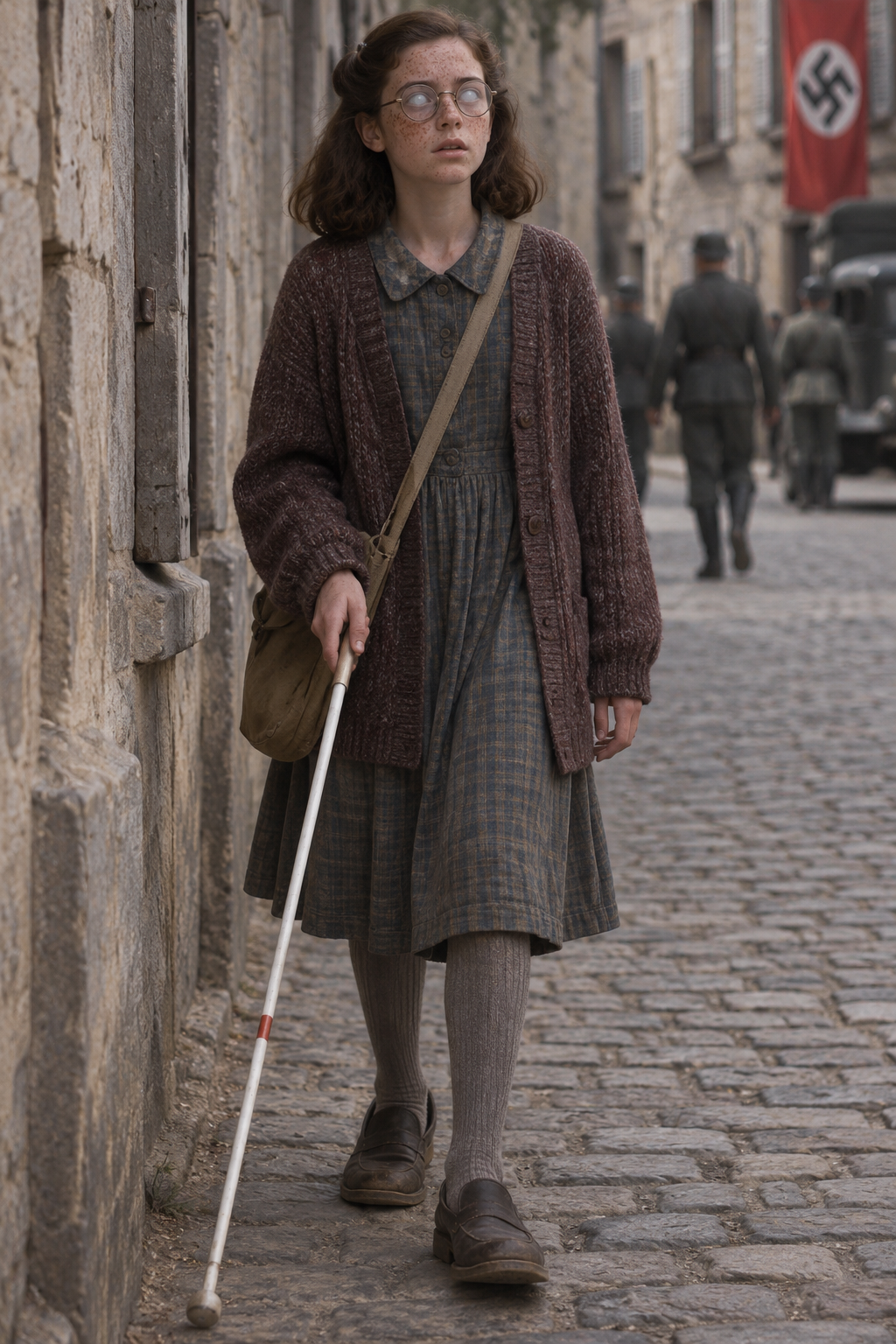
Survives Saint-Malo after Werner kills von Rumpel and rescues her. She hides the real Sea of Flames in the sea grotto, reunites with Etienne, becomes a marine biologist, has a daughter named Hélène, and is still alive in Paris in 2014.
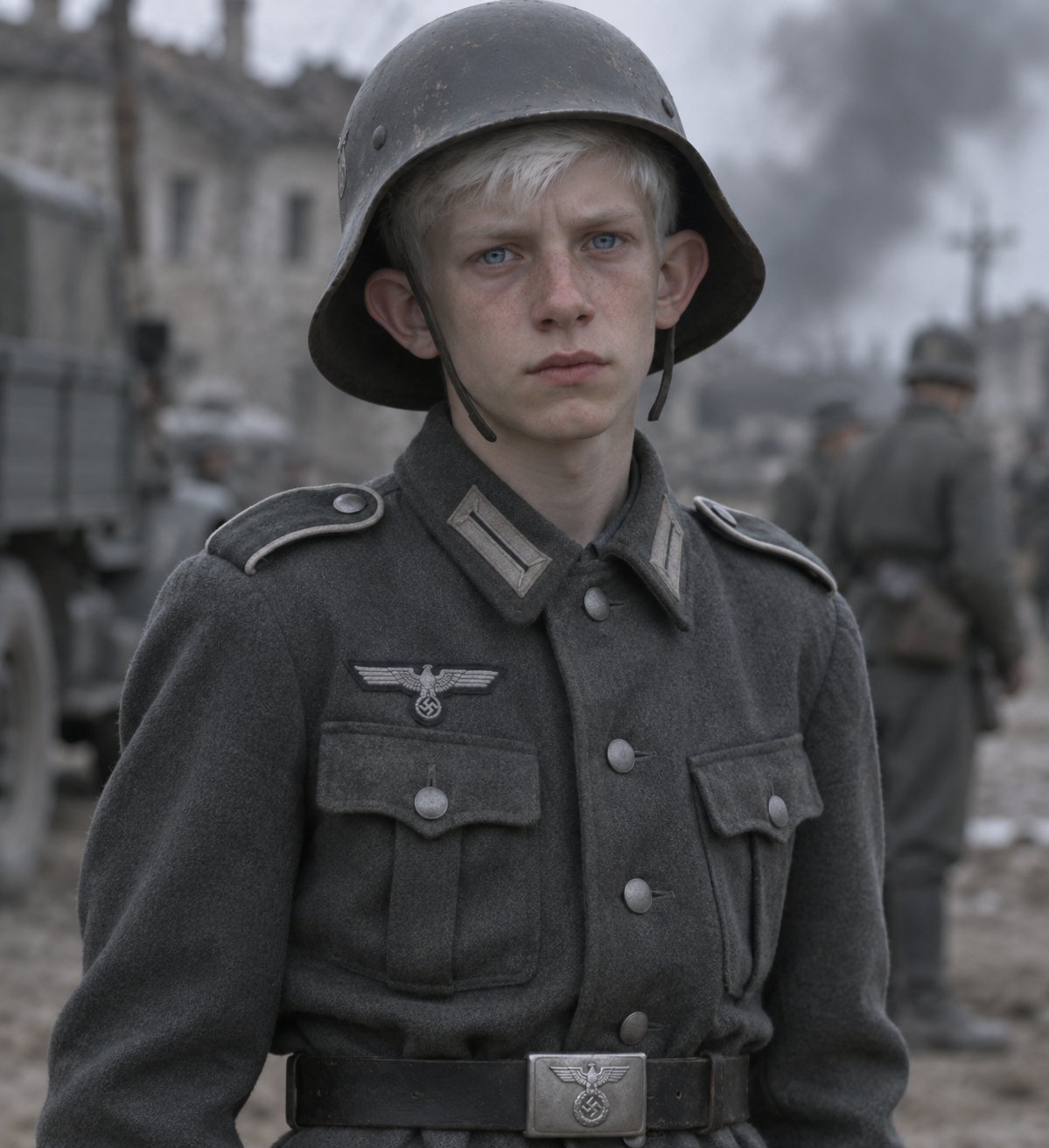
Finds Marie-Laure during the siege, kills von Rumpel, and saves her life. Soon afterward, he is captured, becomes feverishly ill at a POW camp, wanders into a mined field, and is killed by a German landmine.

Is arrested by the Germans in 1941 and imprisoned, eventually being sent to a labor camp in Germany. He dies of illness during the war and never returns to Marie-Laure.

Is arrested and imprisoned at Fort National but survives the bombardment and reunites with Marie-Laure. He later travels with her and lives to age 82, dying peacefully in his bathtub.

Tracks the diamond to Marie-Laure’s house during the siege and corners her there. Werner arrives, confronts him, and shoots him dead before he can take the stone.

Survives the war and sexual violence during the Soviet advance, becomes a mathematics teacher, marries Albert, and has a son, Max. In 1974 she visits Saint-Malo and meets Marie-Laure, finally learning how Werner saved her.

Survives Saint-Malo and the war. In 1974 he brings Werner’s recovered belongings to Jutta and befriends her young son Max.

Is savagely beaten by fellow cadets, suffering catastrophic brain damage and permanent memory loss. He returns home to Berlin and remains severely impaired and childlike.
🔷 Supporting Characters

Contracts severe pneumonia and dies in 1942, but her resistance work continues after her death.
Survives the war’s hardships and remains an important maternal figure in Jutta’s life.
Survives the war, welcomes Marie-Laure back to Paris, and continues supporting her as she waits in vain for Daniel to return.
Is arrested by the Gestapo and interrogated by von Rumpel, revealing that three replicas were created.
His château in Évreux is bombed and looted before they arrive, forcing Daniel and Marie-Laure to continue to Saint-Malo.
Leaves the orphanage for Nazi youth activities and eventually enters the mining world.
Leaves the orphanage and becomes a firedamper in the coal mines.
Survives the war and remains connected enough to send word back to Werner’s home.
Is transferred to Berlin and falsifies Werner’s age so Werner can be sent directly into military service.
Continues overseeing Schulpforta’s brutality until the Nazi system and school collapse near the end of the war.
Is transferred to infantry duty in Normandy and is killed during the fighting.
Is later transferred to infantry duty in Normandy and killed.
Is gravely wounded when the Hotel of Bees collapses during the Saint-Malo bombardment and dies trapped beneath the rubble.
Tries to lure Marie-Laure from the house shortly before the bombardment, but she refuses to let him inside.
Survives the siege and finds Marie-Laure after liberation, giving her food and chocolate.
Survives her resistance activities and the occupation.
Eventually disappears from the resistance circle, with her ultimate fate left unclear.
Survives the occupation and helps support Marie-Laure and Etienne after Madame Manec’s death.
Her ultimate fate is not clearly detailed, though she disappears from the central narrative.
Disappears during the German occupation and is presumed arrested or killed, though his exact fate is never confirmed.
Grows up in Paris and remains close to both parents after their separation.
Separates amicably from Marie-Laure but remains involved with her and Hélène through regular family lunches.
Lives with Jutta and Max in Essen, enjoying a quiet family life.
Travels with Jutta to France, meets Marie-Laure, and learns more about the uncle he never knew.
Walks safely through Paris with the elderly Marie-Laure in the novel’s final scene.
🕳️ Potential Plot Holes
Werner’s unit is specifically tasked with locating illegal Resistance radio transmissions. He detects the antenna at 4 rue Vauborel but deliberately reports that he has found nothing, protecting Marie-Laure and Etienne. The questionable part is that Etienne broadcasts repeatedly over an extended period, yet apparently no other German radio operators independently locate the transmitter. This is possible—radio direction-finding was imperfect, resources were limited, and Werner was the specialist assigned to track transmissions in the area—but the plot relies heavily on Werner remaining the only person capable of exposing the broadcasts.
📚 Book Club Q&A's
⭐ Final Rating & Thoughts
Anthony Doerr’s writing is absolutely beautiful, and that’s ultimately what pushed this book so close to five stars for me. His descriptions are vivid and lyrical without losing the humanity of the story, and I loved the way he explores hope, morality, and the invisible connections between people caught on opposite sides of a war.
The radio storyline especially resonated with me because it reminded me of stories my dad told me about his father and brother building radios from scraps to pick up distant stations. That personal connection made Werner’s fascination with radios and the science behind them even more meaningful to me.
The one thing holding the book back from a full five stars was the pacing. It is undeniably slow, and there were stretches where I felt like very little was actually happening. At more than 500 pages, it occasionally tested my patience.
Still, the gorgeous prose, memorable characters, and emotional weight more than made up for the slower sections. It’s heartbreaking, thoughtful, and ultimately the kind of historical fiction that stays with you long after you’ve finished reading.
✨ Adaptation description
📺 Screen Adaptation
All the Light We Cannot See was adapted into a four-part Netflix limited series, released on November 2, 2023. Based on Anthony Doerr’s Pulitzer Prize–winning novel, the series was directed by Shawn Levy, written by Steven Knight, and produced by Levy’s 21 Laps Entertainment for Netflix.
The miniseries stars Aria Mia Loberti as Marie-Laure LeBlanc, Louis Hofmann as Werner Pfennig, Mark Ruffalo as Daniel LeBlanc, Hugh Laurie as Etienne LeBlanc, Lars Eidinger as Reinhold von Rumpel, and Marion Bailey as Madame Manec. Nell Sutton portrays Marie-Laure as a child. Both Loberti and Sutton are blind or visually impaired performers; the production conducted a worldwide casting search specifically seeking a blind or low-vision actor for Marie-Laure.
📖 Key Differences From the Book
The miniseries preserves the central story of Marie-Laure and Werner moving toward their eventual meeting in Saint-Malo, but substantially condenses the novel’s sprawling chronology and secondary storylines into approximately four hours of television. The series spends considerably less time on their childhoods and Werner’s years at the Nazi training school. One major casualty of the compression is Frederick, Werner’s sensitive friend at Schulpforta, whose devastating storyline is removed.
Daniel LeBlanc’s fate is changed significantly. In the novel, Daniel disappears after leaving Saint-Malo and is eventually revealed to have died after imprisonment by the Germans. The series instead gives Daniel a direct confrontation with von Rumpel and explicitly shows what happens to him. The change also strengthens von Rumpel’s personal connection to Marie-Laure and the Sea of Flames.
Etienne’s story is also rewritten. In the novel, he survives the war, reunites with Marie-Laure, and eventually lives with her in Paris. The series gives him a different, more tragic conclusion and creates interactions between Etienne and Werner that never occur in the novel. The filmmakers deliberately brought the two men together to emphasize their parallel experiences of wartime trauma—Etienne from World War I and Werner from World War II.
The relationship between Marie-Laure and Werner is made more explicitly romantic. Their encounter in the novel is brief and emotionally significant but understated. The series expands their time together and gives them a dance and kiss, framing their connection much more clearly as a love story. Writer Steven Knight described the kiss as a way of sealing the connection that had developed between them before they ever met.
The adaptation also alters who kills von Rumpel. In the novel, Werner shoots and kills him while rescuing Marie-Laure. In the series, Marie-Laure herself shoots von Rumpel, giving her a more active role in resolving the immediate threat against her.
Most significantly, the miniseries does not depict Werner’s death. In the novel, Werner is captured by American forces and later accidentally steps on a German land mine and dies. The television series ends after he leaves Marie-Laure and surrenders to the Americans, deliberately stopping before the novel’s tragic aftermath. The filmmakers explained that they wanted to leave open the possibility of a more hopeful future rather than showing the novel’s final tragedies.
The book’s later epilogues are consequently removed as well. The novel follows its characters into 1945, 1974, and 2014, revealing what ultimately becomes of Jutta, Volkheimer, Marie-Laure, and the belongings Werner left behind. The miniseries instead concludes around the liberation of Saint-Malo, with Marie-Laure throwing the Sea of Flames into the ocean.
🎭 Tone Changes
The novel has a quiet, lyrical, contemplative tone, spending considerable time on sensory details, science, radio waves, nature, memory, moral ambiguity, and the gradual effects of war on ordinary people.
The miniseries shifts toward a more immediate wartime drama and emotional thriller. Von Rumpel becomes a more direct physical threat, Marie-Laure and Werner’s connection is more overtly romantic, and the story builds more conventionally toward their meeting during the siege of Saint-Malo.
The adaptation also ends on a more hopeful note. The novel continues beyond the liberation to show the lasting consequences of war, including Werner’s death. The series intentionally stops earlier, allowing the possibility that Werner’s future could unfold differently.
🧱 Structural Changes
Doerr’s novel uses an intricate nonlinear structure, repeatedly moving between Marie-Laure and Werner’s childhoods and the August 1944 siege before the timelines finally converge.
The television adaptation retains flashbacks and parallel storytelling but streamlines the chronology considerably. It begins with Marie-Laure broadcasting from Saint-Malo and Werner hearing her transmission, establishing their invisible connection immediately. The four episodes then use flashbacks to fill in their histories while steadily moving toward their meeting.
This compression reduces many of the novel’s smaller episodes, supporting characters, and long stretches devoted to Werner’s moral deterioration within the Nazi system.
👥 Character Changes
Marie-Laure is given greater direct agency during the climax, including killing von Rumpel herself. Her relationship with Werner is also more overtly romantic.
Werner retains his genius with radios, his bond with Jutta, and his discomfort with Nazi ideology, but much of the lengthy Schulpforta storyline that illustrates his gradual indoctrination and moral compromises is compressed. His friendship with Frederick is removed, and his eventual death is not shown.
Daniel receives an expanded on-screen storyline and a definitive confrontation with von Rumpel rather than simply disappearing from Marie-Laure’s life.
Etienne becomes more directly involved with Werner. Their newly created relationship allows the adaptation to draw a parallel between two men psychologically damaged by different world wars.
Von Rumpel functions as a more immediate antagonist whose pursuit of the Sea of Flames directly intersects with Daniel and Marie-Laure.
Several supporting characters and subplots are reduced or removed altogether to accommodate the four-episode format.
🔦 What the Adaptation Emphasizes
The miniseries places greater emphasis on hope, love, human connection, and the bond created through radio. Marie-Laure and Werner’s invisible connection becomes the emotional spine of the story, culminating in a more explicitly romantic meeting.
It also expands the importance of Marie-Laure and Daniel’s father-daughter relationship. Levy specifically identified their relationship as something he wanted to make an even larger part of the television series.
The adaptation additionally foregrounds the Sea of Flames as a suspense device, making von Rumpel’s pursuit of the diamond a stronger connective thread throughout the story.
✂️ What It Softens, Removes, or Expands
The adaptation softens some of the novel’s bleakest consequences, most notably by omitting Werner’s death and the melancholy decades-long aftermath of the war. It also removes or greatly reduces parts of Werner’s Nazi-school experience, Frederick’s storyline, and several secondary characters and subplots.
At the same time, it expands Daniel’s role, Etienne and Werner’s relationship, Marie-Laure’s confrontation with von Rumpel, and the romantic dimension of Marie-Laure and Werner’s connection.
The result is a more condensed adaptation centered on the characters’ convergence in Saint-Malo, ending at the moment when the novel is preparing to explore the long-term consequences of everything they have survived.
✨ Books Like All the Light We Cannot See (2014)
See an error on this page?