
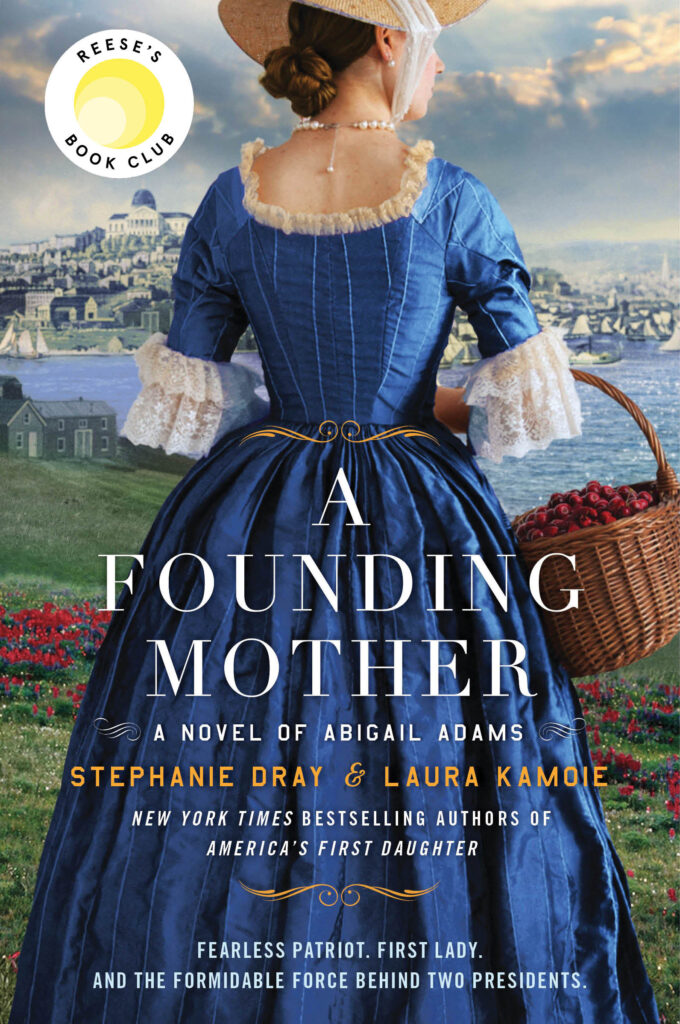
A Founding Mother: A Novel of Abigail Adams (2026)
Select Sections to Print
×Book Details
A Founding Mother: A Novel of Abigail Adams (2026)
Jump to Section
⚠️ Trigger Warnings
- Child death / infant loss
- Stillbirth
- Death of adult children
- Graphic medical procedures
- Unanesthetized surgery / mastectomy
- Smallpox inoculation / variolation
- Bloodletting and painful medical treatments
- Epidemics / infectious disease
- Terminal illness / cancer
- Graphic illness and physical deterioration
- Slavery
- Racism
- Sexual exploitation of enslaved women
- War violence
- Graphic injuries / gore
- Corpses / mass graves
- Arson / destruction
- Domestic violence / spousal abuse
- Physical assault
- Mob violence / political violence
- Alcoholism / substance abuse
- Gambling addiction
- Bankruptcy / financial ruin
⏱️ 2-Minute Spoiler Summary
The novel opens in 1814, with an elderly Abigail Adams living in Quincy with her husband, former president John Adams. Four of their six children are dead, their surviving sons are far away, and the British have just burned Washington during the War of 1812. As the country they helped create once again seems dangerously fragile, Abigail looks back over the life that brought her here.
Her story begins in 1765, when twenty-year-old Abigail is pregnant with her first child. She has married John, a country lawyer nine years older than she is, partly because he treats her as an intellectual equal. They soon have daughter Abigail Amelia (“Nabby”), followed by John Quincy (“Johnny”), Susanna (“Suky”), Charles, and Thomas. Motherhood brings devastating losses almost immediately: little Suky dies during the British occupation of Boston, and years later Abigail suffers a stillbirth while John is away.
As tensions with Britain intensify, John becomes increasingly involved in colonial politics. He controversially defends the British soldiers accused in the Boston Massacre, then becomes a delegate to the Continental Congress. Abigail is repeatedly left to manage their children and farm alone through shortages, disease, and war. During a terrible dysentery epidemic, Abigail and her children become dangerously ill, while her mother and numerous neighbors die. She watches the Battle of Bunker Hill from a distance with young Johnny and later writes John her famous plea to “remember the ladies” while new American laws are being created.
The Revolution separates the couple for years. John travels to Europe as a diplomat, taking Johnny and Charles with him for part of the journey. Abigail builds a small import business from goods John sends home and secretly invests her earnings in land through their relative Dr. Cotton Tufts, giving herself a measure of financial independence despite laws that give married women little control over property.
After the war, John repeatedly asks Abigail to join him in Europe. When Abigail’s father, Parson William Smith, dies, he gives Abigail’s longtime enslaved nurse Phoebe the choice of freedom in his will, and she accepts it. Abigail finally sails for Europe with Nabby in 1784. Reunited with John, she enters the diplomatic world of France and Britain, befriending Thomas Jefferson and witnessing John become the first American minister to Great Britain.
Nabby marries Colonel William Stephens Smith, but his disastrous financial speculation eventually leaves the family bankrupt. Abigail and John return to America, where John becomes George Washington’s vice president and then the nation’s second president. Their own family is increasingly troubled. Charles becomes reckless, loses money, develops severe alcoholism, and eventually dies of liver failure after John angrily disowns him. Nabby’s marriage remains financially disastrous, while John Quincy builds a diplomatic career of his own.
As First Lady, Abigail strongly supports John during the political turmoil of his presidency, including the controversial Alien and Sedition Acts and the conflict with France. John eventually breaks with Alexander Hamilton and other Federalists by pursuing peace with France. He loses the election of 1800 to Jefferson, and Abigail and John retire to their farm at Peacefield.
Retirement brings more grief. Abigail’s friendship with Mercy Otis Warren collapses after Mercy publishes a history Abigail believes diminishes John’s role in the Revolution. Abigail and Jefferson also exchange bitter letters after she sends condolences following the death of his daughter Polly. John, however, eventually renews his correspondence with Jefferson.
The greatest blow comes when Nabby develops breast cancer. She undergoes a brutal mastectomy without anesthesia, but the cancer returns, and she dies in 1813. By then Abigail has buried four children. The following year, as British forces burn Washington, she and John celebrate their fiftieth wedding anniversary. Abigail presents him with her will, insisting on her right to control the property she earned herself and asking him to recognize her as his equal. John promises that he will.
By 1817, Abigail is seventy-two and John is eighty-one. Their son John Quincy Adams finally returns from Russia before leaving again to become Secretary of State under President James Monroe. After decades of revolution, political battles, separations, financial disasters, and devastating family losses, Abigail gives her surviving eldest son her blessing as he prepares to continue the family’s role in the government she and John helped build.
📖 Full Spoiler Summary
Abigail Looks Back
In August 1814, nearly seventy-year-old Abigail Adams is tending family graves in Quincy, Massachusetts. Four of her six children are already dead, her two surviving sons are far away, and her elderly husband, former president John Adams, arrives with frightening news: British forces have captured Washington and burned the President’s House. President James Madison has fled, American finances are collapsing, and Massachusetts is even threatening to make a separate peace.
For Abigail, the crisis brings back memories of another time when America’s survival seemed far from certain. She begins looking back over the decades in which her marriage, family, and personal struggles became inseparable from the birth of the new nation.
Marriage, Motherhood, and Revolution
Abigail’s memories begin in April 1765, when she is twenty years old and pregnant with her first child. She has married John, a country lawyer nine years older than she is, because unlike many men around her, he welcomes her intelligence and enjoys arguing ideas with her. Their first child, Abigail Amelia, known as Nabby, is born with help from Abigail’s enslaved nurse Phoebe.
More children follow: John Quincy, called Johnny, Susanna, known as Suky, and later Charles and Thomas. Yet family life is repeatedly interrupted by the growing conflict with Britain. By 1770, the Adamses are living in Boston amid a heavy British military presence. During this period, little Suky becomes ill and dies in Abigail’s arms.
Soon afterward, John makes an unpopular but principled decision to defend the British soldiers accused in the Boston Massacre. The Adams family becomes a target of local anger, even finding a flaming bag of manure left at their doorstep. Abigail nevertheless supports John’s belief that the soldiers deserve a lawful defense. He secures acquittals for Captain Preston and most of the soldiers, although the strain leaves him exhausted and the public backlash eventually sends the family back to Braintree.
As John’s reputation recovers, his political involvement grows. Abigail also develops a close friendship with patriotic playwright Mercy Otis Warren, giving her an intellectual companion during the increasingly turbulent years ahead.
After the Boston Tea Party in 1773, Britain tightens its control over Massachusetts. John accepts a position as a delegate to the First Continental Congress in Philadelphia, despite knowing his political activities could destroy the family financially. His departure establishes a pattern that will define much of their marriage: John goes where politics requires him, while Abigail remains behind to keep their household, farm, finances, and children functioning.
When fighting breaks out at Lexington and Concord in April 1775, war is no longer theoretical. Abigail and young Johnny later watch the distant inferno of the Battle of Bunker Hill from Penn’s Hill. The battle becomes personal when close family friend Dr. Joseph Warren is killed.
Abigail Holds the Family Together
John helps nominate George Washington as commander-in-chief of the Continental Army, and Washington later visits Abigail in Braintree, praising the sacrifices colonial women are making for the Patriot cause. Abigail begins using the name “Portia” in her correspondence with John and finds small ways to generate income, including selling sewing pins.
Then disease becomes as dangerous as war. A severe dysentery epidemic sweeps through Braintree in 1775. Abigail and her children become seriously ill, while eighteen neighbors, their servant Patty Copeland, and Abigail’s mother die.
By March 1776, British troops finally evacuate Boston after Henry Knox brings cannons to Dorchester Heights. As John and the Continental Congress consider the political future of the colonies, Abigail sends him her famous request to “remember the ladies” when creating new laws. Her concern is personal as well as political: she has seen how little legal protection women possess, even when their husbands are abusive or irresponsible.
That summer, she takes the children to Boston for smallpox inoculations and witnesses a public reading of the Declaration of Independence. Yet independence does not bring her husband home. John returns only briefly in late 1777. Abigail becomes pregnant again after he promises to be present for future births, but political duties call him away once more. She suffers a traumatic stillbirth without him.
Years of Separation
After the American victory at Saratoga, Congress sends John to France as a diplomat. Abigail wants to accompany him, but John refuses because of the danger and expense of an Atlantic crossing. He leaves in February 1778 with Johnny and Charlie, giving Abigail a gold-rimmed pendant before departing.
The separation becomes one of the most difficult periods of their marriage. False reports circulate that John has been captured, while Abigail struggles to run the farm and support the family. She develops an import business using French goods John sends home, but their correspondence becomes strained. When trunks of merchandise arrive alongside letters in which John criticizes her earlier messages, Abigail is devastated.
Phoebe advises her to put aside her pride while also protecting herself financially. Abigail follows that advice in her own way. Working through their relative Dr. Cotton Tufts, she invests the money she has earned and purchases land in John’s name, quietly creating financial security for herself despite the restrictions placed on married women.
Their sons are scattered as well. John sends teenage Johnny to Saint Petersburg as secretary to diplomat Francis Dana, while Charlie is sent home aboard a frigate. Charlie disappears for months when the captain turns privateer in Spain before finally reaching America safely in January 1782.
Nabby, meanwhile, falls in love with young lawyer Royall Tyler, but John strongly opposes the relationship from overseas.
Abigail Goes to Europe
With the Revolutionary War finally over, John repeatedly asks Abigail to join him in Europe. Then Abigail’s father, Parson William Smith, dies. His will gives Phoebe the choice of remaining enslaved or taking her freedom, and she joyfully chooses freedom.
Abigail finally decides to cross the Atlantic. She leaves Charles and Thomas with her sister Elizabeth Shaw and Reverend Shaw and sails from Boston with Nabby in July 1784.
After a grueling month at sea, mother and daughter reach England. Abigail reunites first with seventeen-year-old John Quincy and then with John, arriving from The Hague. After years of separation and difficult correspondence, Abigail and John passionately reconnect.
The family moves to an enormous estate in Auteuil, France, where Abigail becomes friendly with Thomas Jefferson and his daughter Patsy. In 1785, John is appointed the first American minister to Great Britain, bringing the Adamses back to London. John formally appears before King George III, while Abigail and Nabby receive a distinctly colder reception from Queen Charlotte.
Nabby’s romantic life changes as well. John Quincy brings troubling reports that Royall Tyler has been dishonest, negligent, and unfaithful, convincing Nabby to end the engagement. She is soon courted by Colonel William Stephens Smith, John’s diplomatic secretary and a former Washington aide. They marry in 1786 and eventually give Abigail her first grandson, William.
In 1787, Jefferson’s young daughter Polly arrives in London accompanied by fourteen-year-old enslaved servant Sally Hemings. Abigail cares for Polly while also confronting yet another reminder of the contradiction between America’s rhetoric of liberty and the continued existence of slavery.
From Vice President to President
The Adamses return to America in 1788 and settle at a large Quincy estate they call Peacefield. The following year, John becomes the country’s first vice president under President George Washington.
Their children’s lives increasingly become sources of worry. Charles studies law with Alexander Hamilton but develops a reckless, pleasure-seeking lifestyle. Nabby’s husband launches disastrous land speculations that eventually bankrupt his family. John Quincy, in contrast, begins building a diplomatic career and is appointed minister to the Netherlands in 1794, taking his younger brother Thomas with him.
When Washington retires, John wins the presidential election of 1796 and becomes the second president of the United States, defeating Jefferson, who becomes vice president.
Abigail enters the presidency while dealing with chaos inside her own family. Colonel Smith has left Nabby in financial ruin, while Charles has lost both his own money and John Quincy’s savings through failed investments.
International tensions are equally severe. The XYZ Affair pushes America into the undeclared Quasi-War with France. Abigail supports the controversial Alien and Sedition Acts passed during John’s presidency. She also nearly dies from a severe fever in 1798 before slowly recovering.
John eventually breaks with Hamilton and the more aggressive Federalists by sending a peace mission to France. Then the family suffers another devastating blow. Charles’s alcoholism worsens until his wife leaves him. After Charles is discovered in a brothel, John angrily renounces his son as a “beast.”
Abigail cannot abandon him so completely. In 1800, she visits thirty-year-old Charles in New York and finds him dying from liver failure and filled with remorse.
That November, Abigail becomes the first First Lady to live in the unfinished White House in Washington, famously using the enormous East Room to dry laundry. John soon loses the election of 1800 to Jefferson after Hamilton helps fracture the Federalist vote. Charles dies shortly afterward.
Before leaving office, John completes peace with France, appoints John Marshall chief justice, and finds a government position for the financially ruined Colonel Smith. Then he and Abigail leave public life behind and return to Peacefield.
Retirement Brings More Loss
Retirement does not end the Adamses’ conflicts or tragedies. When newspaperman James Callender exposes Jefferson’s relationship with Sally Hemings, the political and personal worlds Abigail encountered in Europe collide again.
After Jefferson’s daughter Polly dies in childbirth in 1804, Abigail sends him a condolence letter. Their exchange quickly expands into old political grievances and accusations, ending their contact again. John eventually takes a different path, resuming his celebrated correspondence with Jefferson in 1812.
Abigail also loses her friendship with Mercy Otis Warren after Mercy publishes a history of the Revolution that Abigail believes unfairly minimizes John’s contributions.
The family continues scattering across the world. In 1809, President Madison appoints John Quincy minister to Russia, forcing Abigail to say goodbye to her eldest son yet again.
Then Nabby comes home.
In 1811, she returns to Quincy with a cancerous breast tumor. Surgeons perform a horrifying mastectomy without anesthesia, and Nabby endures the operation without crying out. The surgery fails to save her. Her cancer returns, and after an agonizing 300-mile journey home, she dies surrounded by her family in 1813.
Abigail has now buried four of her six children. Her grief becomes so overwhelming that she struggles even with the religious faith that has sustained her through decades of death and separation.
Fifty Years Together
The narrative returns to the crisis of 1814. British forces have burned Washington, once again making the future of the country uncertain. Yet Abigail and John have survived long enough to see the nation endure crises that once appeared impossible to overcome.
In October, they celebrate their fiftieth wedding anniversary.
Abigail marks the occasion by presenting John with her Last Will and Testament. Throughout their marriage she has earned, invested, and accumulated property of her own despite living under laws that severely restrict a married woman’s financial independence. Now she insists upon her right to determine what happens to that property.
More importantly, she asks John to acknowledge her as his equal.
After half a century of marriage—through revolution, political battles, repeated separations, parenthood, the presidency, financial disasters, and the deaths of four children—John lovingly promises that he will.
John Quincy Comes Home
By the summer of 1817, Abigail is seventy-two and John is eighty-one. Their surviving eldest son, John Quincy Adams, finally returns from Russia.
But his homecoming is temporary. President James Monroe has selected him to become Secretary of State, meaning he must leave his parents once again and return to Washington.
This departure is different from all the others Abigail has endured. The young boy she once watched beside her as the Battle of Bunker Hill burned in the distance has become a statesman in the government born from that revolution.
Abigail gives John Quincy her blessing before he leaves. Her own life has carried her from a young wife arguing ideas with a country lawyer through revolution, independence, diplomacy, the presidency, war, and unimaginable family loss. Now, with John beside her at Peacefield, she watches their surviving eldest son leave to take his own place in the nation that shaped nearly every part of their lives.
🔚 Ending Explained
How A Founding Mother Ends
The ending of A Founding Mother brings Abigail Adams’s story full circle, turning her lifelong struggle for recognition, independence, and purpose into something tangible.
In October 1814, on Abigail and John Adams’s 50th wedding anniversary, the country is finally receiving hopeful news after the destruction and uncertainty of the War of 1812. American forces have repelled British attacks at Lake Champlain and Baltimore. Against that backdrop, seventy-year-old Abigail gives eighty-year-old John an unusual anniversary present: her Last Will and Testament.
The document carries enormous significance because Abigail technically has very little legal power to make such a will. Under the laws of coverture, a married woman’s property belongs to her husband. Yet Abigail has quietly accumulated considerable wealth of her own over the years. During John’s long absences, she traded imported European goods, managed property, invested in land, and turned her so-called “pin money” into a personal fortune.
Now she wants that money to go where she believes it can do the most good.
Rather than leaving it to the men of the family, Abigail directs her wealth, possessions, and land shares primarily to women—granddaughters, daughters-in-law, nieces, female servants, and widowed neighbors. These are precisely the people who have the least financial protection under the laws governing Abigail herself.
Because Abigail cannot fully guarantee that her wishes will be legally respected, she asks John to use the authority the law gives him to make sure her wishes are carried out.
And John agrees.
His promise is more than a legal favor. After fifty years of marriage, separation, arguments, sacrifice, ambition, and loss, he acknowledges Abigail as the partner she has always understood herself to be: his intellectual, moral, and financial equal.
The anniversary also echoes an earlier moment in their marriage. When John left for France in 1778, he gave Abigail a gold-rimmed pendant bearing the words “I yield—whatever is—is right.” Now Abigail gives him a matching watch fob. What once suggested Abigail enduring and yielding to circumstances becomes something shared between them. After half a century, both have yielded, both have sacrificed, and both have sustained the other.
The Epilogue
The novel then jumps forward to summer 1817.
Abigail is seventy-two and John eighty-one, living at Peacefield in Quincy, Massachusetts. Their bodies are aging, the house itself shows the wear of time, and the stone wall remains unfinished. But their eldest son, John Quincy Adams, finally comes home after eight years abroad.
He returns having helped negotiate the Treaty of Ghent, which ended the War of 1812, and having been unanimously confirmed as Secretary of State under President James Monroe.
John Quincy spends a month at Peacefield with his wife, Louisa Catherine, and their children before leaving for Washington.
For Abigail, watching him depart becomes the final answer to the question that has haunted her life.
She has endured war, epidemics, political upheaval, long separations from her husband, and the devastating loss of four children. Again and again, public duty has demanded private sacrifice from the Adams family. Yet now she can see another generation carrying forward what she and John helped begin.
Her final reflection is therefore one of acceptance rather than regret:
“It is all for a purpose. None of it for naught. Not a single moment for naught.”
What the Ending Means
At its heart, the ending makes Abigail’s will her final political statement.
Decades earlier, she asked John to “remember the ladies.” The political system did not grant women the equality she imagined. By the end of her life, Abigail still cannot simply overturn those laws. Instead, she works within the limited power available to her and creates her own small redistribution of economic power.
That is why leaving her fortune specifically to women matters so much. She cannot change the law, but she can change what happens to the women within her reach. Her private wealth becomes a practical version of the principles she has argued for throughout her life.
John’s reaction completes the marriage arc. His willingness to honor the will effectively means using the legal authority granted to him as a husband to undermine the very inequality that gives him that authority. Symbolically, he finally “yields” to Abigail as an equal.
The matching pendant and watch fob reinforce that idea. Earlier in their marriage, yielding could look like Abigail accepting John’s absences and ambitions. Fifty years later, the concept has changed. Their marriage has become defined by mutual sacrifice rather than female submission.
Peacefield works similarly. The aging house and unfinished stone wall are not signs that Abigail and John have failed. They suggest that neither families nor nations are ever truly “finished.” The republic they helped establish remains an ongoing project, just as the wall remains incomplete.
That makes John Quincy’s departure for Washington especially important. Abigail and John are reaching the end of their lives just as their son moves toward the center of national political life. His appointment as Secretary of State points toward his eventual presidency and turns the Adams legacy into something generational.
The ending is therefore triumphant, but deliberately quiet rather than celebratory. Abigail does not receive sweeping public recognition or see women granted legal equality. Her victory is more intimate: she has created something lasting through her marriage, her children, her money, her ideas, and the women she chooses to protect.
Most importantly, the epilogue answers the novel’s larger question: Was all that sacrifice for nothing?
For Abigail, the answer is finally no. The losses cannot be undone, but she can see continuity beyond them. Her children and grandchildren remain. The republic survives. John Quincy carries the family’s public service into another generation. And Abigail herself leaves behind resources that give other women a measure of the independence the law denied her.
That is why “not a single moment for naught” is such a fitting final thought. Abigail’s life may have been constrained by the world she was born into, but the ending argues that she nevertheless found ways to shape what came after her.
👤 Characters & Fates
🔶 Main Characters
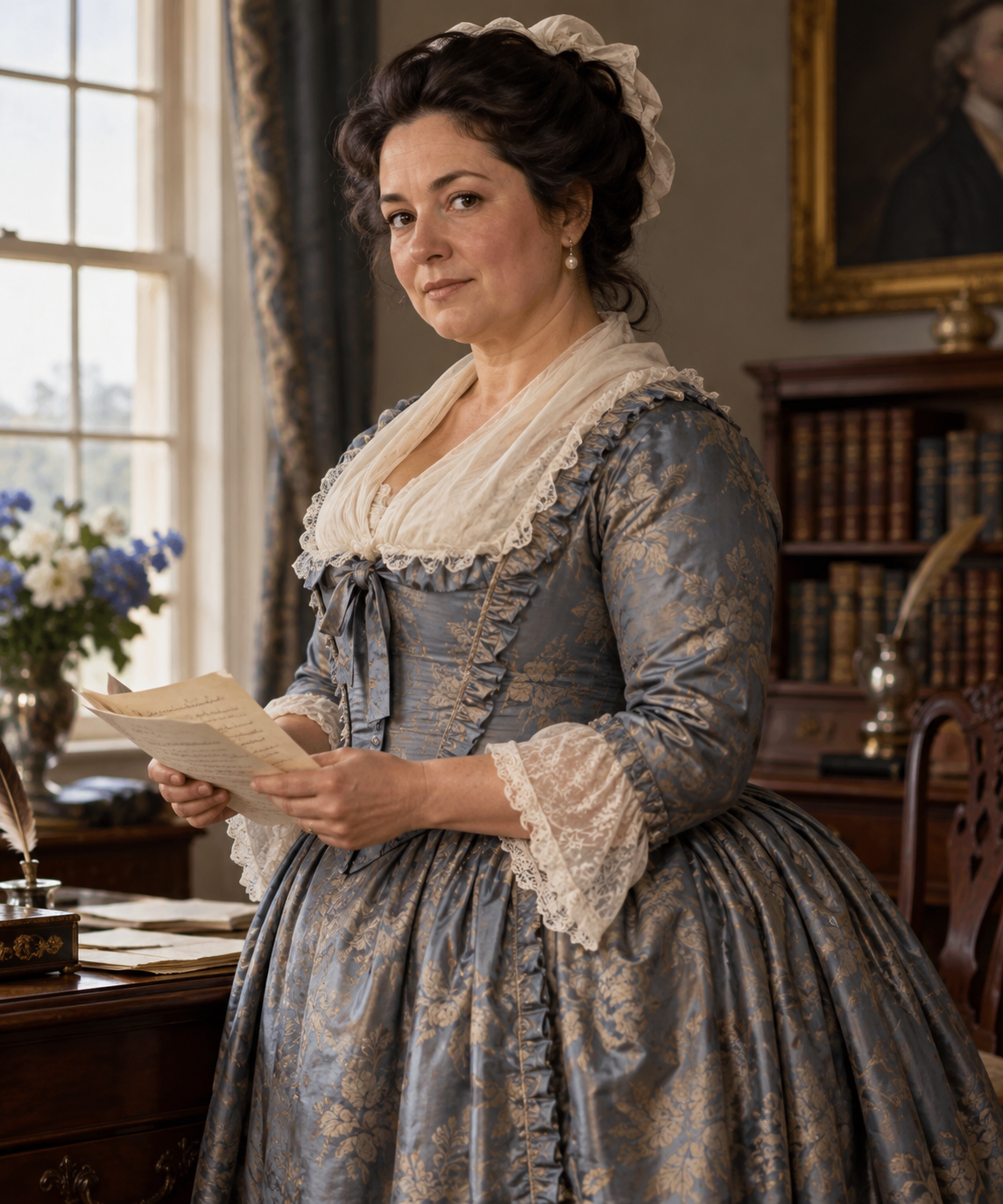
She survives the deaths of four of her six children and a near-fatal fever, forces John to recognize her independent will so her self-earned property goes to female heirs, sees John Quincy become Secretary of State, and dies of typhoid fever in 1818 surrounded by family.

After losing the 1800 election and bitterly regretting his estrangement from Charles, he retires to Peacefield, reconciles with Jefferson through correspondence, honors Abigail’s will, and dies on July 4, 1826, hours after Jefferson.

After losing an infant son and being financially ruined by her husband, she undergoes a horrific unanesthetized mastectomy in 1811; the cancer returns, and she makes a painful 300-mile journey to Peacefield before dying there on August 9, 1813.

He marries Louisa Catherine Johnson, serves as a diplomat and senator, helps negotiate the Treaty of Ghent ending the War of 1812, and returns home in 1817 to become Secretary of State, putting him on the path to the presidency.

After losing his and John Quincy’s money in Colonel Smith’s speculation, Charles descends into alcoholism, gambling, and infidelity; John renounces him after he is caught in a brothel, and Charles dies remorseful and alone of liver failure in 1800 at age 30.

He struggles with depression and alcoholism, survives a serious horse fall and nearly shoots a neighbor accidentally, becomes a judge and town officer, but temporarily abandons his wife and family after a drunken quarrel.
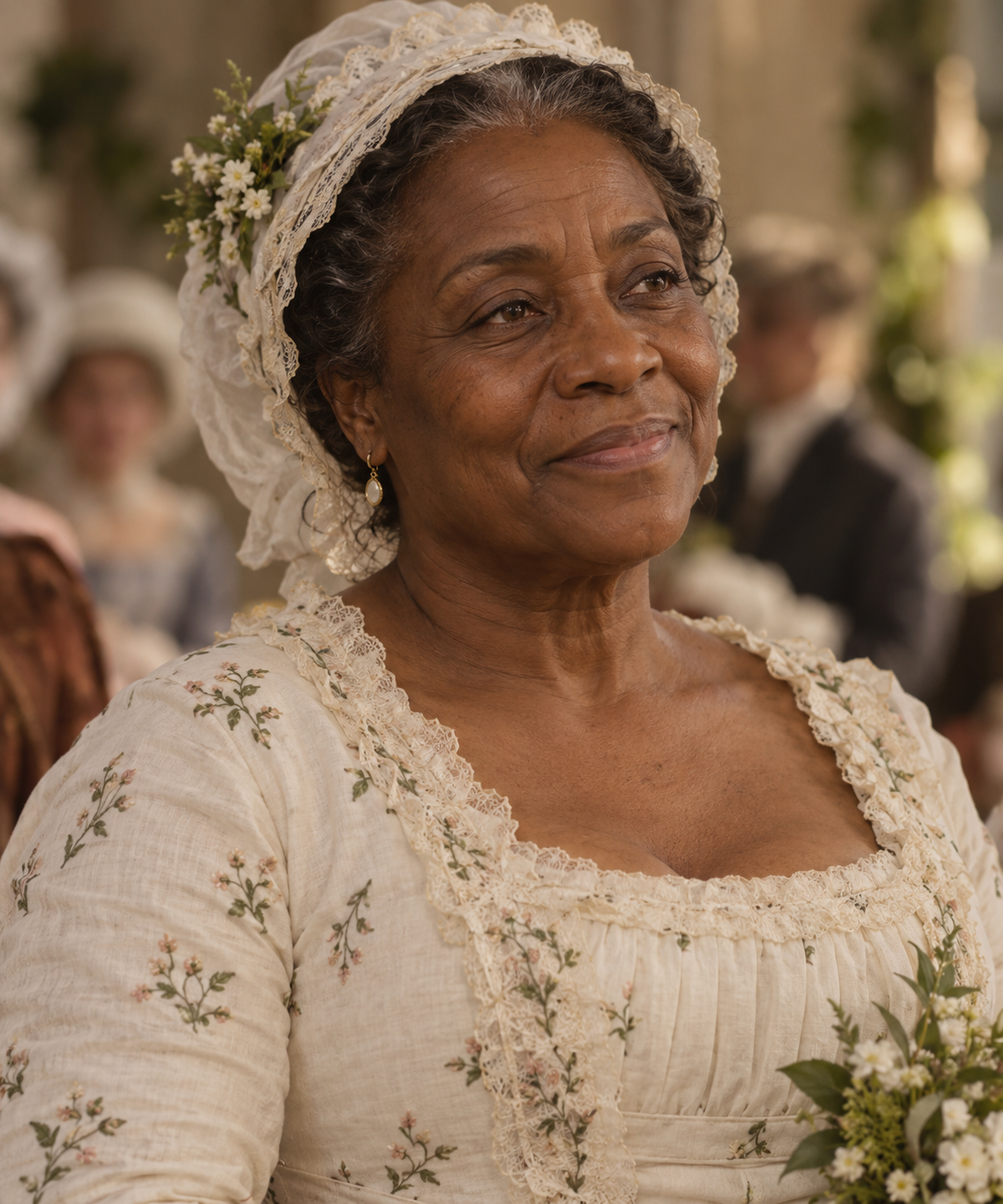
Parson Smith’s 1783 will allows her to choose freedom, which she immediately claims; she marries Black merchant Mr. Abdee, lives in the Adamses’ old Braintree home, helps the needy, and remains Abigail’s beloved friend until her peaceful death in 1812.

He secretly supports anti-Adams attacks through James Callender, later has his relationship with enslaved Sally Hemings publicly exposed, clashes with Abigail after Polly’s death, eventually resumes a famous correspondence with John, and dies on July 4, 1826, five hours before John.
🔷 Supporting Characters

He dies in late 1783, and his will gives Phoebe the legal right to choose freedom.
She endures a restrictive marriage to the abusive Reverend John Shaw; after his death, she marries the more enlightened Reverend Peabody and helps run an academy in New Hampshire.
She settles near Abigail in Braintree and dies in old age shortly before 1812.
She dies of pleurisy in Abigail’s arms in 1770 at only thirteen months old.
He retires in Quincy and dies peacefully in his late seventies around 1815.
Their friendship fractures after Mercy’s 1807 history criticizes John Adams and minimizes his contributions, though the women later exchange conciliatory notes.
He is shot in the head at Bunker Hill in 1775, his corpse is mutilated and dumped into a mass grave, and Paul Revere later identifies his remains through dental work.
After repeated financial failures, he participates in an unsuccessful attempt to liberate Venezuela, is arrested and acquitted, loses his government position, becomes a frontier farmer in western New York, and dies shortly before 1817.
He loses his mansion to creditors, fathers an illegitimate child, becomes the celebrated author of The Contrast, and eventually serves as Chief Justice of the Vermont Supreme Court.
She and her mother both die during the devastating Braintree dysentery epidemic of September 1775.
He retires to Mount Vernon in 1797 and dies suddenly from a severe throat infection in December 1799.
She frees Washington’s enslaved people earlier than required because his will tied their emancipation to her death, then dies at Mount Vernon in 1802.
After publicly admitting his affair with Maria Reynolds, he works against Adams in the 1800 election and is ultimately shot by Aaron Burr in their 1804 duel, dying from his wounds.
She leaves Charles after discovering his visit to a brothel and raises daughters Susanna and Abbe with financial and emotional support from John and Abigail.
She becomes Jefferson’s concubine and bears several of his children; James Callender publicly exposes their relationship in 1802.
She marries her cousin John Wayles Eppes and dies in childbirth in 1804, prompting Abigail to write Jefferson the condolence letter that briefly reopens their relationship.
She marries Thomas Mann Randolph Jr., remains at Monticello, and cares for Jefferson through his later years.
He narrowly avoids capture by Spanish forces, returns to Quincy, becomes a schoolteacher, marries, and has a daughter.
His abuse is revealed years later by Thomas, long after Shaw himself has died in the 1790s.
He later suffers severe bouts of mental illness and dies in 1820.
She remains queen through the beginning of the Regency period and dies in 1818.
He returns to Massachusetts, becomes Chief Justice of the state’s Supreme Judicial Court, and welcomes John Adams home in 1788.
He serves as Secretary of War and dies in Maine in 1806 after a swallowed chicken bone causes a fatal infection.
While intoxicated in 1803, he drowns in only three feet of water in the James River.
He kills Alexander Hamilton in their 1804 duel, is later tried and acquitted of treason over a Western conspiracy, and eventually dies in obscurity.
He flees Washington when the British burn the capital in 1814, completes his second term, appoints John Quincy as Minister to Russia, and retires to Montpelier.
She loses an infant daughter in Saint Petersburg, survives difficult years abroad, moves to Washington when John Quincy becomes Secretary of State, and eventually becomes First Lady when he is elected sixth President.
John successfully defends him, Preston is acquitted, and he returns to England.
He spends his life trapped in debt and alcoholism and ultimately dies penniless, jaundiced, drunk, alone, and far from his family.
He lives with Phoebe in Braintree, sometimes clashes with her over her generosity toward needy strangers, and dies sometime before 1812.
She later makes a wealthy marriage to John DeWindt, an Erie Railroad investor, and gives John and Abigail great-grandchildren. Is this conversation helpful so far?
🕳️ Potential Plot Holes
John’s 1778 trip to Europe with John Quincy is portrayed as one continuous diplomatic absence. Historically, John returned to Massachusetts in 1779, drafted the Massachusetts Constitution, and then sailed back to Europe with John Quincy and Charles. The novel deliberately combines the two trips to simplify the timeline.
The novel has Patty Copeland die before Abigail’s mother during the 1775 dysentery epidemic. Historically, Abigail’s mother died shortly before Patty. This is a minor chronological change rather than a true plot hole, apparently made to shape the sequence of Abigail’s losses.
Parson William Smith’s death is shifted later even though he actually died in September 1783. The novel postpones his death and the reading of his will, including Phoebe’s opportunity to claim her freedom, to fit the book’s narrative structure.
The novel places John’s discovery of Charles Adams’s severe alcoholism and his renunciation of his son in Philadelphia in December 1799, with Abigail present. Historically, John learned the extent of Charles’s problems while traveling separately in New York and communicated his decision to Abigail by letter. The relocation allows the novel to dramatize their reaction together.
Abigail promises to care for the children of her troubled brother William, yet Louisa Smith never appears. Historically, Louisa became an important member of Abigail’s household, remained closely connected to the Adams family, and received the largest bequest in Abigail’s will. Her absence is a deliberate simplification of the novel’s already large cast rather than an unexplained plot hole.
When eleven-year-old Charles disappears during his voyage home from Europe, Abigail personally travels to the Boston docks and questions sailors until she discovers that he was left behind in Spain. Historically, Abigail did not conduct this investigation herself; the information was brought to her by a rider sent by her uncle. The novel turns a passive historical event into a more active role for Abigail.
The novel keeps Phoebe’s husband, Mr. Abdee, alive into the 1800s. Historically, he died before 1798 and Phoebe subsequently remarried. This appears to be a deliberate simplification that avoids introducing another husband and additional secondary characters late in the story.
📚 Book Club Q&A's
⭐ Final Rating & Thoughts
This was absolutely fantastic. A Founding Mother is easily one of the best historical fiction books I’ve read.
I’ll admit that I don’t know nearly as much about American history as I probably should, so I was a little worried that all the politics and Revolutionary War history would lose me. It didn’t. Stephanie Dray and Laura Kamoie make the history incredibly accessible while keeping Abigail Adams—and her marriage, children, friendships, losses, and ambitions—at the center of the story.
And WOW, did this book make me grateful for modern medicine.
Childbirth. Smallpox inoculation. Dysentery. Cancer. And especially that mastectomy! Reading about a mastectomy performed without anesthesia is one of those things that makes you want to put the book down for a minute and appreciate every medical advancement made in the last 250 years. 😂
But what I loved most was Abigail herself. The book doesn’t turn her into some flawless historical heroine. She can be stubborn, judgmental, reckless, and difficult, but she’s also incredibly intelligent, resilient, politically engaged, and financially savvy. I had no idea how much she managed on her own while John was away—or how independently she built wealth through trading and investments.
Her relationship with John was another highlight for me. Their years-long separations, their letters, their arguments, and the enormous sacrifices they both made give the book so much emotional weight. And then there are the children. Susanna. The stillbirth. Charles. Nabby. 😭 This family goes through SO MUCH.
I also loved that the authors don’t stop with the Revolution. We follow Abigail through John’s diplomatic years in Europe, the vice presidency, his presidency, the political battles with Jefferson and Hamilton, their retirement at Peacefield, and the devastating losses that follow. It really feels like you’ve lived an entire lifetime with her.
And the ending! Abigail presenting John with her will after quietly accumulating her own fortune and wanting that money to go to the women in her life was such a satisfying culmination of everything the novel had been saying about her independence and the limitations placed on women.
This is a long book, and some of the presidential politics get a little dense, but I honestly didn’t care. I was completely invested.
I finished it feeling grateful for modern medicine, grateful for women’s rights, and VERY grateful that I was born in the 1980s instead of the 1700s. 😂
Absolutely loved it. 5 stars.
✨ Adaptation description
Screen Adaptation
As of October 2026, no film or television adaptation of A Founding Mother: A Novel of Abigail Adams has been announced.
The book was published by William Morrow on May 5, 2026, and was selected as Reese’s Book Club’s July 2026 pick.
Abigail Adams has, of course, been portrayed on screen before. Most notably, Laura Linney played Abigail opposite Paul Giamatti’s John Adams in HBO’s 2008 miniseries John Adams. Authors Stephanie Dray and Laura Kamoie have said that the existing miniseries initially made them hesitant to tackle Abigail’s story. They ultimately felt that much of Abigail’s life while John was away—including the years in which she managed the family, farm, finances, and wartime hardships largely on her own—had not been explored in depth on screen.
For now, A Founding Mother remains unadapted, with no announced screen project based specifically on the novel.
✨ Books Like A Founding Mother: A Novel of Abigail Adams (2026)
See an error on this page?