

A Little Life (2015)
Select Sections to Print
×Book Details
A Little Life (2015)
Jump to Section
⚠️ Trigger Warnings
- Child sexual abuse and exploitation
- Pedophilia
- Child sex trafficking and forced prostitution
- Rape and sexual assault
- Sexual coercion
- Physical abuse and torture
- Domestic and intimate partner violence
- Graphic self-harm and cutting
- Self-inflicted burns
- Suicide attempts
- Suicidal ideation
- Suicide
- Drug addiction and substance abuse
- Drug overdose
- Alcohol misuse
- Chronic pain and physical disability
- Medical trauma and invasive procedures
- Severe infections and hospitalization
- Limb amputation
- Disordered eating and self-starvation
- Extreme weight loss and forced feeding
- Child neglect and abandonment
- Death of a child
- Sudden death and fatal car accidents
- Grief and bereavement
- PTSD and severe psychological trauma
- Flashbacks and dissociation
- Depression and severe self-hatred
⏱️ 2-Minute Spoiler Summary
Jude St. Francis, Willem Ragnarsson, JB Marion, and Malcolm Irvine meet at Harvard and remain close friends as they build their adult lives in New York City. While all four eventually become successful—Jude as a corporate lawyer, Willem as a famous actor, JB as an artist, and Malcolm as an architect—Jude carries a horrifying past that he refuses to discuss. He lives with chronic pain, walks with a limp, and secretly cuts himself, but even Willem, his closest friend, knows very little about what happened to him.
Jude was abandoned as a baby and raised in a monastery, where Brother Luke, a monk he trusted, abducted him at eight. Luke spent years trafficking Jude through motel rooms and forcing him into prostitution before dying by suicide during a police raid. Jude was then sent to a state home, where he suffered further abuse, and was eventually abducted by Dr. Traylor, who imprisoned him in a basement. When Traylor finally released him, he deliberately ran Jude over with his car, permanently damaging Jude’s spine and legs.
Despite everything, Jude manages to build an extraordinary adult life. His former law professor Harold Stein and Harold’s wife, Julia Altman, become his surrogate family and formally adopt him when he is thirty. His career flourishes, and his friends remain devoted to him. But Jude continues to believe that his childhood abuse proves there is something fundamentally wrong with him.
His friendships are tested when JB develops a crystal meth addiction and cruelly imitates Jude’s limp. Willem punches JB, and Jude cuts JB out of his life for years. Jude later begins dating Caleb Porter, a powerful executive who becomes violently abusive. Caleb humiliates Jude for his disability, refuses to let him use his wheelchair, and eventually beats him severely.
Afterward, Willem moves in with Jude, and their lifelong friendship gradually becomes a romantic relationship. Willem gives Jude the safest and happiest years of his life, patiently accommodating his physical limitations and trauma. When Jude’s self-harm becomes increasingly dangerous, Willem finally pushes him to reveal what happened during his childhood. Jude tells him about Brother Luke and Dr. Traylor and agrees to begin therapy.
Jude’s physical condition nevertheless continues to deteriorate. Repeated infections and damage to his legs eventually require both legs to be amputated. Willem remains beside him throughout his recovery, and Jude learns to use prostheses and a wheelchair.
Then Willem is killed without warning. While driving with Malcolm and Malcolm’s wife, Sophie, a truck runs a red light and crashes into their car, killing all three. Jude loses both his partner and one of his oldest friends at once.
Without Willem, Jude struggles to find a reason to continue living. He survives for nearly three more years, surrounded by Harold, Julia, Andy, Richard, and eventually JB, but his depression deepens. He begins starving himself and hallucinating Willem. His friends intervene and bring him to Harold and Julia’s home, where he temporarily recovers physically and shares a loving moment with Harold.
It isn’t enough. Jude ultimately dies by suicide in November.
The final section is narrated by Harold, who addresses the already-dead Willem while reflecting on Jude’s life and the people they have lost. Andy later dies of a heart attack and Richard of brain cancer, leaving JB as the only surviving member of the original group of four friends. Harold finds a final letter from Jude expressing his gratitude and sorrow, and he is left mourning the son he loved but could never save.
📖 Full Spoiler Summary
Four Friends Begin Their Lives in New York
Jude St. Francis, Willem Ragnarsson, Jean-Baptiste “JB” Marion, and Malcolm Irvine become close friends at Harvard and remain inseparable as they begin their adult lives in New York City. They come from very different backgrounds and have very different ambitions, but Jude is the mystery among them.
Willem grew up on a Wyoming ranch and spent much of his childhood helping care for his older brother, Hemming, who had cerebral palsy. Now he works as a waiter while trying to become an actor. JB, raised in a loving Haitian family in Brooklyn, is an ambitious painter with a sharp tongue and enormous confidence. Malcolm comes from a wealthy biracial family and is trying to establish himself as an architect.
Jude is brilliant, intensely private, and physically disabled. He becomes a lawyer but is also a gifted mathematician, and almost no one knows anything about his childhood. He walks with a limp and suffers episodes of excruciating pain in his legs and back. He also secretly cuts himself.
Jude and Willem initially share a cheap apartment on Lispenard Street. Willem eventually discovers Jude’s self-harm but is reluctant to push him for explanations because Jude guards his privacy so fiercely. Andy Contractor, an orthopedic surgeon and Jude’s longtime doctor, knows far more about Jude’s injuries and self-destructive behavior, but even Andy cannot convince him to stop hurting himself.
As the four friends move through their twenties, their careers begin taking off. Willem becomes an increasingly successful actor, JB establishes himself as an artist, Malcolm advances as an architect, and Jude rises rapidly as a corporate lawyer.
The Childhood Jude Refuses to Talk About
The truth about Jude’s past emerges gradually through flashbacks.
Abandoned in a trash container as an infant, Jude is raised by monks at a monastery. His childhood there is harsh and lonely, but one monk, Brother Luke, treats him with apparent kindness. Jude trusts him completely.
When Jude is eight, Luke tells him they are going away together to build a new life. Instead, Luke takes him from motel to motel and forces him into child prostitution, arranging for adult men to sexually abuse him in exchange for money. Luke presents himself as Jude’s protector while simultaneously being responsible for his exploitation.
Eventually, police raid one of their motel rooms. Brother Luke hangs himself in the bathroom, leaving Jude alone.
But Jude’s ordeal does not end there. He is placed in a state home where he suffers further abuse. Later, Dr. Traylor abducts him and imprisons him in a basement. Traylor’s abuse culminates in a final act of extraordinary cruelty: after releasing Jude, he deliberately runs him over with his car.
The attack permanently damages Jude’s spine and nerves and leaves him with the chronic pain and mobility problems that follow him throughout adulthood.
After being rescued and hospitalized, Jude meets Ana, a social worker who becomes one of the first adults to show him genuine compassion. She encourages him to confront what happened rather than bury it, but she dies from illness before Jude can truly do so. He later lives with the supportive Douglass foster family before earning a scholarship and going to college.
Jude Finally Gets a Family
At Harvard, Jude forms an especially important relationship with his law professor Harold Stein. Harold and his wife, Julia Altman, lost their young son Jacob to illness, and over the years they begin treating Jude as part of their family.
They invite him to their homes in Cambridge and Truro, include him in holidays, and offer him a kind of parental love he has never experienced. When Jude is thirty, Harold and Julia formally adopt him.
For Jude, the adoption is both joyful and difficult to accept. He desperately wants a family but remains convinced that if people truly knew everything about him, they would find him disgusting or unworthy of love.
Professionally, however, he thrives. He becomes a partner at Rosen Pritchard and eventually buys a beautiful loft on Greene Street. Willem becomes internationally famous as an actor, while Malcolm and JB also achieve substantial success.
Their friendship fractures when JB develops a crystal meth addiction. During one confrontation, JB cruelly imitates Jude’s limp. Willem immediately punches him and breaks his jaw. JB eventually goes to rehab, but Jude is devastated by what he did and refuses to forgive him for years.
Caleb Abuses Jude
In his mid-thirties, Jude begins a relationship with Caleb Porter, a successful fashion executive. It is one of Jude’s first serious attempts at romantic intimacy, but Caleb quickly becomes controlling and abusive.
Caleb despises Jude’s disability and humiliates him for needing assistance. He refuses to let Jude use his wheelchair and treats his physical limitations as something shameful. The emotional abuse escalates into severe physical violence.
Eventually, Caleb brutally beats Jude, leaving him with a broken arm and other serious injuries. Harold and Andy discover how badly Jude has been hurt, but Jude refuses to report Caleb to the police.
The relationship reinforces Jude’s deepest belief about himself: that abuse is something he deserves.
Willem Becomes More Than Jude’s Best Friend
After the Caleb relationship, Willem moves in with Jude to help care for him. Their friendship has always been the most important relationship in Jude’s life, and gradually it becomes romantic.
Willem approaches Jude with extraordinary patience. He understands that physical intimacy is complicated by both Jude’s disabilities and his history of sexual trauma, even though he still does not know the full extent of what happened.
For a time, their life together gives Jude something he has rarely experienced: genuine happiness and security.
But Jude continues cutting himself, and his self-harm becomes increasingly dangerous. Willem finally reaches a point where he cannot continue pretending not to see it. Their confrontation forces Jude to reveal the secrets he has spent his entire adult life hiding.
He tells Willem about Brother Luke, the years of sexual exploitation, Dr. Traylor, and the car attack that destroyed his legs.
Willem does not reject him. Instead, he remains with him, and Jude finally agrees to begin therapy with Dr. Loehmann.
Jude Loses His Legs
Jude’s body continues paying the price for decades of trauma and self-harm. He develops recurring, dangerous bacterial infections, including osteomyelitis, and Andy repeatedly tries to manage his deteriorating condition.
Eventually, there is no longer a viable way to save Jude’s legs. Both must be amputated.
The surgery is devastating, but Willem, Harold, Julia, Andy, and Richard remain closely involved in his recovery. Jude learns to use prostheses and increasingly relies on his wheelchair.
Despite everything, Willem and Jude build a stable domestic life together. After so many years of believing himself incapable of being loved, Jude has a partner who knows his history and chooses him anyway.
Then that life disappears almost instantly.
Willem and Malcolm Are Killed
Willem is driving back from the train station in Garrison with Malcolm and Malcolm’s wife, Sophie, when a truck runs a red light and crashes into their car.
All three are killed.
For Jude, Willem’s death is catastrophic. He has lost not only his partner but the person who has been beside him since college—the person who knew his worst secrets and still made him feel safe. Malcolm, another member of their original group of four, is gone as well.
Jude tries to continue living. He maintains routines and keeps connections with the people still around him, including Harold and Julia. He visits aging figures from his professional and personal life, including the increasingly memory-impaired Lucien Voigt and Malcolm’s father, Mr. Irvine.
But surviving without Willem becomes increasingly difficult.
Nearly three years pass, and Jude’s depression deepens. He begins starving himself and hallucinating Willem. His remaining friends recognize that he is deteriorating dangerously and intervene. Harold, Julia, Andy, Richard, and JB bring him to Harold and Julia’s home and try to keep him alive.
Jude temporarily recovers physically. He and Harold share a deeply affectionate moment that makes clear how completely Harold considers Jude his son.
But Jude still cannot imagine a life he wants to continue living.
Jude’s Death and the People Left Behind
In November, Jude dies by suicide.
The final section, “Lispenard Street,” shifts to Harold’s first-person perspective. Harold addresses the dead Willem as he looks back on Jude’s life, their family, and the group of friends who once seemed destined to grow old together.
The losses continue. Andy eventually dies from a heart attack, while Richard dies from brain cancer. Of the four original college friends, JB is ultimately the only one who survives into old age.
Harold finds a final letter Jude left behind. In it, Jude expresses his sorrow and gratitude toward the people who loved him.
Harold is left with the impossible contradiction that defined his relationship with Jude: he knows how profoundly Jude was loved, yet he also knows that all the love offered by Willem, Harold, Julia, Andy, and the others could never erase what had been done to him.
Years after the young men first shared their lives on Lispenard Street, Harold continues to remember Jude as his son and Willem as the man who loved him, carrying both of them with him after they are gone.
🔚 Ending Explained
How A Little Life Ends
The ending of A Little Life is devastating because it briefly allows Jude to experience something he has spent his entire life believing is impossible—unconditional love and safety—before making clear that even this cannot undo the damage of his past.
Willem’s Death
The final collapse of Jude’s life begins with the sudden death of Willem, Malcolm, and Malcolm’s wife, Sophie. While driving back from the train station in Garrison, their car is struck by a truck that runs a red light. All three are killed instantly.
For Jude, Willem’s death is catastrophic. Willem is not simply his partner; he has become the person around whom Jude has built his sense of safety and his ability to keep living. Without him, Jude retreats almost completely from the world. He tells his colleagues not to mention Willem and begins writing nightly emails to him as though Willem were merely away filming.
While sorting through Willem’s belongings, Jude discovers four accordion files labeled “Jude I” through “Jude IV.” Willem had saved photographs, cards, reviews, and other pieces of Jude’s adult life. He had also left Jude his estate and created permanent Harvard scholarships honoring Harold and Julia.
The discovery offers Jude tangible proof of something he has never been able to believe: Willem considered Jude’s life worth preserving.
But Jude cannot internalize that message. Instead, his grief intensifies. He withdraws from the people who remain and even becomes resentful of JB, thinking bitterly that Willem and Malcolm—the two “good” members of their original group—are dead while he and JB remain.
Eventually, Jude begins deliberately starving himself. Malnutrition causes him to hallucinate Willem, giving him another reason not to eat: the weaker he becomes, the more real Willem seems.
Jude’s Intervention
When Jude reaches life-threatening malnutrition, Andy, Harold, Julia, Richard, and JB intervene and force him into medical treatment.
The emotional climax comes afterward at Harold and Julia’s house. Jude lashes out at Harold with unusual cruelty, seemingly trying to make Harold reject him. It is the old pattern of Jude’s life resurfacing: if he can force someone to abandon him, then he can prove what he has always believed—that eventually everyone will discover what he really is and leave.
But Harold does not.
Instead, Harold and Julia hold him and comfort him as their child. Jude finally allows himself to collapse into their arms and cry.
It is one of the most important moments in the novel because Jude finally experiences parental love without conditions. He does not have to be brilliant, successful, useful, quiet, or undemanding. He can be broken and furious and difficult, and they still love him.
But the moment does not save him.
Jude’s Death
Five months later, on June 12, fifty-three-year-old Jude dies by suicide, using a syringe to inject air into an artery and cause a fatal stroke.
Before his death, he leaves Harold and Julia an eight-page letter revealing the truth he has concealed for decades: the abuse he suffered as a child under Brother Luke and later Dr. Traylor.
Even in finally telling the truth, Jude treats his history as though it were something for which he must apologize. His final confession therefore becomes both an act of openness and evidence of how completely his abusers shaped his understanding of himself.
He also leaves Harold and Julia a recording of himself singing Schubert lieder, along with letters from the day they legally adopted him.
Jude dies having finally told his parents the story he could never bring himself to tell them while alive.
The Epilogue: “Lispenard Street”
The novel ends not with Jude but with Harold, now eighty-four, looking backward over everything that has happened.
More deaths follow. Andy dies of a heart attack at sixty-three, and Richard eventually dies of brain cancer.
Of the original four college friends, JB is the only one who survives into old age.
JB transforms some of his grief into art. He creates a fifteen-painting series called “Jude, Alone,” imagining scenes from Jude’s final years after Willem’s death. He remains with Tomasz and stays close to Harold and Julia.
Harold, meanwhile, is left carrying the memory of two sons: Jacob, his biological child, and Jude, the son he chose and adopted.
The novel closes with Harold remembering Jude and recognizing that death has not erased him. Jude remains present in memory, in art, in the people who loved him, and in the ordinary world Harold continues to inhabit.
What the Ending Means
The ending refuses to turn love into a cure.
That is perhaps its most painful idea. Jude is surrounded, eventually, by extraordinary amounts of love. Willem loves him. Harold and Julia adopt him. Andy cares for him for decades. Richard and JB remain part of his life. Jude becomes enormously successful and builds a life that, from the outside, appears almost impossibly accomplished.
And yet the child Jude once was never entirely escapes what was done to him.
The novel does not suggest that the love he receives is meaningless because it fails to save him. Instead, it separates being loved from being healed. Jude is deeply loved, but he remains unable to believe that love can fundamentally change what he thinks he is.
Lispenard Street and the Lost Past
The title of the final section, “Lispenard Street,” returns the novel symbolically to the beginning.
Lispenard Street represents the earliest version of the four friends’ adult lives, before success, fame, wealth, illness, and death transformed them. Malcolm’s miniature model of the old apartment makes that symbolism literal: he creates a tiny version of a world that can no longer exist.
It is a preserved moment.
Willem, Jude, Malcolm, and JB can never physically return there together, but memory can hold them there forever.
That same idea runs through the ending. People disappear; objects, memories, stories, and art preserve them.
Willem’s Files
The four folders labeled “Jude I–IV” may be the clearest expression of the tragedy at the heart of Jude’s character.
Jude spends his life believing that he is disgusting, damaged, and fundamentally unworthy of attention. Willem has quietly spent years doing exactly the opposite: documenting Jude because Jude matters to him.
The files are essentially Willem’s answer to Jude’s self-hatred.
Jude thinks his life should be erased.
Willem has been archiving it.
The tragedy is that Jude can recognize the evidence of Willem’s love without ever fully adopting Willem’s vision of him.
Why Harold’s Refusal to Abandon Jude Matters
Jude’s confrontation with Harold provides one final challenge to the worldview created by his childhood abuse.
Jude has spent his life expecting love to be conditional. So he behaves horribly and waits for Harold to prove him right.
Harold refuses.
Instead of rejecting Jude at his worst, Harold and Julia hold him and treat him exactly as they have always claimed to see him: as their son.
Jude’s breakdown in their arms therefore matters even though he later dies. For a brief moment, he stops defending himself against being loved.
He lets himself be someone’s child.
Jude’s Suicide and the Razor
Jude’s method of death also contrasts with the cutting that has followed him throughout his life.
His cutting is repetitive and compulsive—a terrible coping mechanism that nevertheless functions as a way of continuing to live. His final act is different because there is no expectation of another morning afterward.
The distinction reinforces the finality of his decision. The behavior that once helped him endure his pain is replaced by the decision that he can no longer endure it.
JB’s Paintings
JB ultimately becomes the keeper of the group’s history.
His “Jude, Alone” paintings are especially poignant because JB must imagine moments he never witnessed. He cannot restore Jude or Willem. He can only create representations of what remains inaccessible.
Art therefore becomes another form of memory.
This also gives JB’s artistic career a particularly bittersweet conclusion. The young man who once exploited Jude’s suffering in his work eventually uses his art to mourn and preserve him.
The Meaning of the Ending
A Little Life ends as an elegy rather than a story of recovery.
Its bleakest argument is that there may be forms of trauma that love cannot completely repair. Jude receives friendship, romantic love, professional success, financial security, medical care, and finally the unconditional love of parents. None of these can convince him permanently that the terrible things done to him were not evidence of something terrible within him.
But the novel does not conclude that loving Jude was pointless.
Quite the opposite.
Willem’s files, Malcolm’s model, JB’s paintings, Jude’s recordings, and Harold’s memories all become different forms of preservation. Jude spent his life fearing that he was something shameful that should remain hidden, yet the people who survive him keep finding ways to remember him.
That makes memory the final form of love in the novel.
Harold and JB cannot save the people they have lost. What they can do is carry them forward.
And that is why Harold is the appropriate final voice. The story ultimately belongs not only to the person who suffers, but also to the people left behind—the people who must somehow continue living after someone they loved could no longer do so.
The ending is therefore crushingly pessimistic about healing, but much less pessimistic about love. Love does not save Jude. It does, however, make his life larger, longer, and more meaningful than Jude himself ever understands—and after his death, it ensures that he is not erased.
👤 Characters & Fates
🔶 Main Characters

After Willem’s death and worsening physical and psychological health, Jude has both legs amputated, develops severe depression and starvation, and ultimately dies by suicide at 53 by injecting air into an artery; his final letter reveals the full truth about Brother Luke and Dr. Traylor to Harold and Julia.

Willem is killed instantly in a car crash with Malcolm and Sophie when a truck runs a red light; he leaves his estate to Jude along with four meticulously preserved archives of Jude’s life.

JB recovers from crystal meth addiction, becomes a renowned artist, creates the retrospective Jude, Alone, and is the only one of the original four friends to survive into his sixties, eventually living with his partner Tomasz.

Malcolm marries Sophie and builds a successful architectural career, but both are killed instantly alongside Willem in the Garrison car crash.
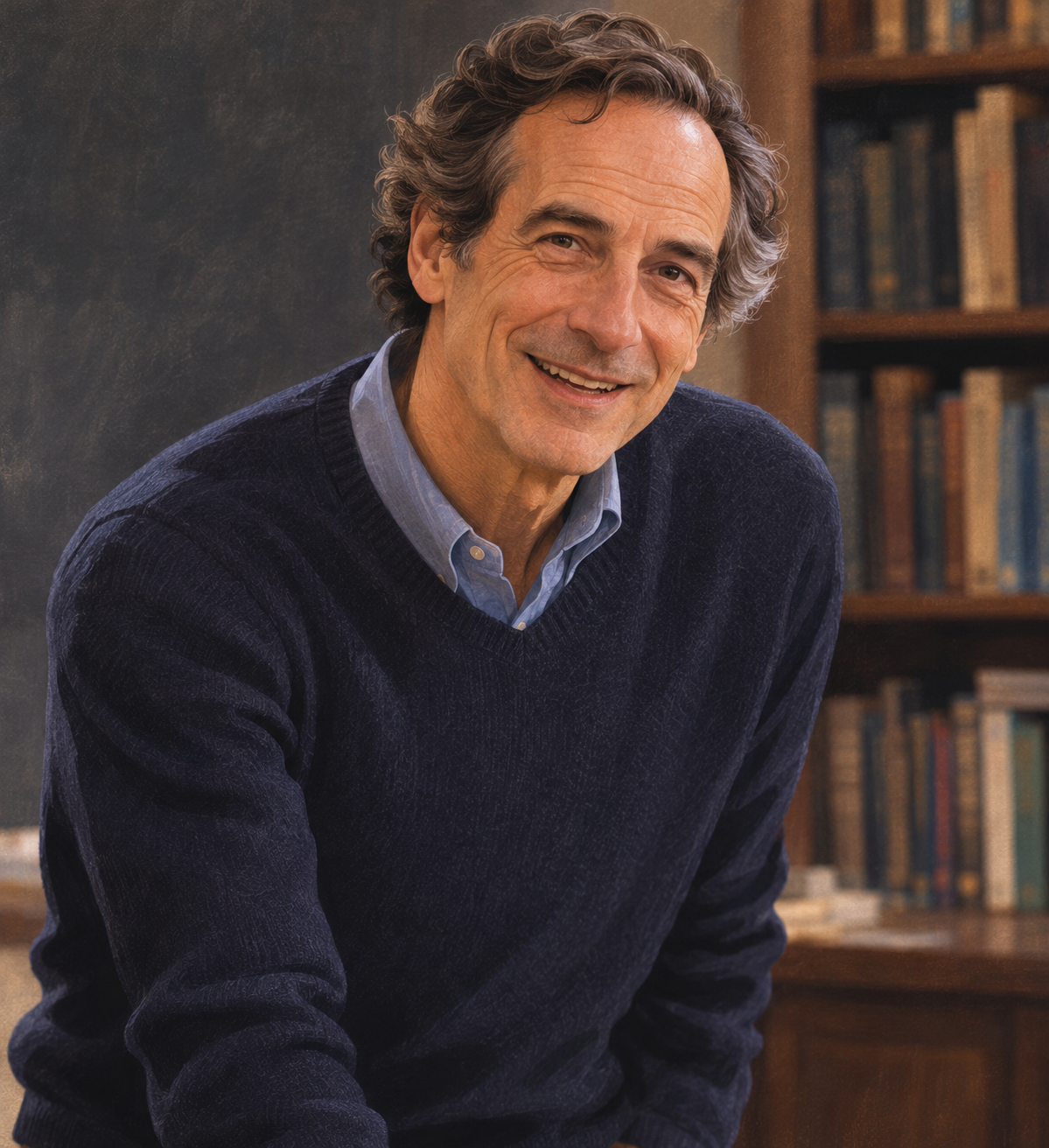
Harold outlives Jude, Andy, and Richard and narrates the final section at 84, reflecting on Jude’s suicide, devastating confession letter, and the impossibility of fully saving someone he loved as a son.
🔷 Supporting Characters

Julia survives Jude and remains with Harold in Cambridge into old age, maintaining a relationship with JB.
Andy participates in the desperate intervention during Jude’s final decline but later dies suddenly of a heart attack at 63.
Brother Luke hangs himself in a motel bathroom during a police raid, leaving Jude to face the authorities and the aftermath alone.
Traylor deliberately runs Jude over with his car before abandoning him, causing permanent spinal and nerve damage; he later dies of pancreatic cancer.
Ana dies of illness while Jude is still young, but her encouragement remains profoundly important to him throughout his life.
After brutally beating Jude and breaking his arm, Caleb is confronted by Harold and disappears from Jude’s life; he faces no prosecution because Jude refuses to press charges.
Richard later serves as executor of Jude’s estate after Jude’s suicide and eventually dies of brain cancer.
Loehmann continues seeing Jude during his final decline and remains his therapist until Jude’s suicide.
Hemming dies while on life support as Willem is taking his college final exams.
She supports JB through his addiction and recovery and lives to witness his success as a celebrated artist.
He develops severe cognitive decline in old age and tragically outlives Malcolm after Malcolm’s death in the car crash.
She survives Malcolm and continues living in the family’s Upper East Side home into old age.
Flora survives Malcolm and later gives Jude Malcolm’s remaining personal possessions after his death.
Lucien develops severe dementia, and Jude loyally visits him every Saturday until Jude’s own death.
Rhodes continues his legal career and family life in New York.
Sanjay survives Jude and continues leading the litigation department after Jude’s death.
Kit remains Willem’s agent until Willem’s sudden death and attends his memorials afterward.
Sophie is killed instantly with Malcolm and Willem when a truck runs a red light and crashes into their car.
Jacob dies at five from Nishihara syndrome, leaving Harold with grief that remains with him for the rest of his life.
They gradually disappear from Jude’s life after he leaves for college and begins building his adult life.
Tomasz remains with JB into old age in New York, and the couple maintains a warm relationship with Harold and Julia.
🕳️ Potential Plot Holes
Jude enters Harvard at just sixteen despite having almost no conventional education for much of his childhood. He spends his early years in a monastery, is trafficked by Brother Luke from roughly ages eight to twelve, later lives in a state home, and is held captive and severely injured by Dr. Traylor in his mid-teens. After being run over, he also requires extensive hospitalization, surgeries, and rehabilitation. Yet within an extremely short period, Jude manages to recover physically, catch up academically, skip multiple grades, master subjects including advanced mathematics, Latin, and Greek, and earn admission and a scholarship to Harvard. His exceptional intelligence explains some of this, but the amount of education and physical recovery compressed into the available time makes the timeline extremely difficult to reconcile realistically.
Jude rises through an exceptionally demanding legal career while experiencing medical crises that would make maintaining such a workload extraordinarily difficult. He becomes a federal prosecutor, a star corporate litigator, litigation co-chair, and eventually a candidate to lead Rosen Pritchard despite repeated hospitalizations, serious infections, major surgeries, psychiatric treatment, chronic pain, and eventually double leg amputations. He even receives IV antibiotics at his desk while continuing to work. His brilliance and reputation could plausibly earn unusual accommodations, and disability protections make the firm's support possible. Still, the combination of his extreme workload, lengthy periods of incapacitation, and uninterrupted professional ascent feels idealized and is one of the novel’s larger logistical stretches.
📚 Book Club Q&A's
⭐ Final Rating & Thoughts
A Little Life left me feeling emotionally drained, conflicted, and still thinking about it long after I finished. Yanagihara’s writing is incredibly immersive, and I appreciated how deeply the novel explores trauma, self-harm, grief, friendship, and the limits of what love can do for someone who cannot believe they deserve it.
At the same time, I struggled with Jude. I sympathized with everything he endured, but watching him repeatedly shut out the people who loved him became increasingly frustrating for me. I understand that this is largely the point—this isn’t a story about someone magically healing because enough people care about him—but emotionally, that made it difficult for me to connect with him as much as I expected to.
The sheer length also worked against the book at times. There were sections that felt unnecessarily drawn out, and I think a tighter novel could have been even more powerful.
Still, this book gave me a better understanding of the psychology and compulsive nature of self-harm, which made it particularly meaningful to me. I’m glad I read it, even though I’m also very glad it’s over. Beautiful, devastating, frustrating, and absolutely exhausting.
✨ Adaptation description
Adaptation
A Little Life has not been adapted into a traditional film or television series. The major official adaptation is Ivo van Hove’s stage production, based on Hanya Yanagihara’s 2015 novel. The play was first produced in Dutch by Internationaal Theater Amsterdam in Amsterdam in 2018, with an adaptation by Koen Tachelet, Ivo van Hove, and Yanagihara. After international performances, including New York in 2022, van Hove directed an English-language West End production in 2023, produced by Wessex Grove, Gavin Kalin Productions, and Playful Productions. Concord Theatricals
The English production starred James Norton as Jude St. Francis, Luke Thompson as Willem Ragnarsson, Omari Douglas as JB Marion, Zach Wyatt as Malcolm Irvine, Zubin Varla as Harold, Nathalie Armin as Ana, and Emilio Doorgasingh as Andy. Significantly, Elliot Cowan played Brother Luke, Dr. Traylor, and Caleb, linking three of Jude’s abusers through a single performer. The production ran approximately 3 hours and 40 minutes and was filmed during its West End run for cinema screenings. Official London Theatre
Key Differences
The stage adaptation necessarily compresses the novel’s enormous scope. Yanagihara’s book follows Jude, Willem, JB, and Malcolm across several decades and devotes extensive space to their careers, friendships, memories, and inner lives. The play retains the four friends but concentrates much more heavily on Jude and the gradual revelation of his traumatic history. Concord Theatricals
Many secondary storylines and the lengthy professional and social details of the novel are reduced so that the central relationship between Jude and Willem, Jude’s relationships with Harold and Andy, and Jude’s history of abuse can drive the stage narrative.
Tone Changes
The novel’s trauma is often filtered through memory, internal narration, and gradual revelation. Onstage, much of that material becomes immediate and physical. Jude’s self-harm, abuse, disability, sexual violence, and psychological deterioration are represented visually rather than existing primarily through recollection and narration.
As a result, the production has an especially visceral, confrontational, and physically intense tone. The West End production carried extensive content warnings for sexual violence, physical and emotional abuse, self-harm, suicide, nudity, and blood. Official London Theatre
Structural Changes
The novel uses a nonlinear structure, moving through decades of the characters’ lives while repeatedly returning to Jude’s childhood and adolescence through flashbacks. It also shifts narrative perspective and includes Harold’s retrospective first-person sections.
The stage version transforms that sprawling structure into a more concentrated theatrical narrative. Jude’s past and present effectively coexist onstage, allowing memories and traumatic figures to intrude physically into his adult life rather than relying on lengthy literary flashbacks.
This was an intentional approach to adaptation rather than an attempt to reproduce the novel scene by scene. Yanagihara described the production as an interpretation rather than a literal translation of the book into another medium. The Booker Prizes
Character Changes
Jude becomes even more clearly the central figure. Although the novel initially presents Jude, Willem, JB, and Malcolm as an ensemble, it gradually reveals itself to be predominantly Jude’s story. The stage adaptation accelerates that shift, organizing much of the production around Jude’s relationships, memories, abuse, self-harm, and attempts to accept love.
Willem remains the most important of the four friends in Jude’s adult life, while JB and Malcolm receive less space for their independent lives than they do in the novel.
One of the adaptation’s most notable theatrical choices is having the same actor portray Brother Luke, Dr. Traylor, and Caleb. Playbill Rather than presenting Jude’s abusers simply as three unrelated men from different periods of his life, the staging visually connects them, emphasizing the repetition of abuse and the way Jude’s past continues to invade his present.
What the Adaptation Emphasizes
The play places particularly strong emphasis on Jude’s body as the physical repository of his trauma. His chronic pain, disability, scars, self-harm, and memories become visible theatrical elements rather than descriptions the reader encounters internally.
It also emphasizes Jude and Willem’s relationship and the attempts of Willem, Harold, Andy, and the others to love and care for someone who cannot believe himself worthy of that love. The story consequently becomes a concentrated exploration of trauma, memory, friendship, chosen family, and the limits of what love can heal.
What It Softens, Removes, or Expands
Rather than substantially softening the novel’s darkest material, the stage production retains much of its extreme content and makes some of it more visually explicit. The compression occurs primarily elsewhere: decades of career development, social life, secondary relationships, and supporting characters have less room in the stage version.
At the same time, the theatrical medium expands the physical presence of Jude’s memories. Characters associated with his trauma can appear before the audience alongside his adult life, turning the novel’s internal flashbacks into something tangible and immediate.
The result is a much more concentrated version of A Little Life: the novel’s decades-long portrait of four friends is narrowed primarily around Jude, Willem, trauma, memory, and the question at the heart of Jude’s story—whether love can reach someone who fundamentally believes he is unworthy of receiving it. Concord Theatricals
✨ Books Like A Little Life (2015)
See an error on this page?