
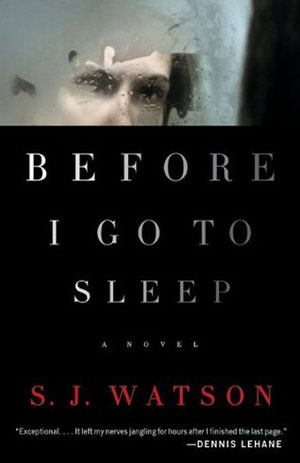
Before I Go to Sleep (2011)
Select Sections to Print
×Book Details
Before I Go to Sleep (2011)
Jump to Section
⚠️ Trigger Warnings
- Physical violence
- Domestic abuse
- Psychological abuse / gaslighting
- Kidnapping / unlawful confinement
- Sexual content (including non-consensual elements via deception)
- Infidelity
- Pregnancy loss
- Child endangerment themes
- False reports of death (loved one)
- Mental illness and memory loss
- Psychiatric institutionalization
- Suicidal ideation
- Death of parents
- Fire / arson
- Death / fatal injury
⏱️ 2-Minute Spoiler Summary
Christine Lucas is a 47-year-old woman with amnesia who wakes up every day with no memory of her life. Each morning, her husband Ben Lucas must explain who she is and what happened to her, while a neuropsychologist, Dr. Nash, secretly helps her try to recover her memories. Christine begins keeping a journal to piece together her identity and track what she learns.
As she reads her journal entries, Christine discovers inconsistencies in what Ben has told her. The journal warns her not to trust him and reveals that she has been regaining fragments of her past through visits to meaningful locations. She learns that she was once a writer, had a son named Adam Lucas, and that her amnesia was caused by a violent attack—not a simple accident as Ben claimed. Ben also hid the fact they were divorced and claimed their son had supposedly died.
With help from her friend Claire and further memories, Christine uncovers more of the truth. She realizes the man living with her is not her husband but Mike, a former lover who attacked her when she tried to end their affair. After the real Ben left her, Mike took advantage of her condition and assumed his identity.
The story culminates when Mike takes Christine back to the hotel where the attack occurred. After discovering the truth through missing journal pages, Christine confronts him. A violent struggle leads to a fire that kills Mike, while Christine survives. She is reunited with the real Ben and learns that her son is actually alive. By the end, Christine’s memory appears to return, though she remains uncertain whether it will last when she wakes again.
📖 Full Spoiler Summary
Scene 1: A Stranger in the Mirror
Christine Lucas wakes in an unfamiliar bedroom, disoriented and afraid. The man beside her is a stranger, yet he speaks to her with calm familiarity, introducing himself as her husband, Ben. As she moves through the house, the shock deepens—photographs show a life she doesn’t remember, and the mirror reveals a face far older than she expects. Ben explains that years ago she suffered a traumatic brain injury in a hit-and-run accident, leaving her unable to form new memories. Each night when she sleeps, everything resets. With no memory to contradict him, Christine is forced to accept his version of her life, even as unease lingers beneath the surface.
Scene 2: The Call and the Hidden Journal
After Ben leaves for work, Christine receives a phone call that disrupts the fragile structure of her reality. Dr. Nash, a neuropsychologist, tells her they have been working together in secret. Confused but desperate for answers, Christine follows his instructions and finds a journal hidden in her wardrobe. When she opens it, she is confronted with a message written in her own handwriting: “DON’T TRUST BEN.” The words introduce doubt where there had been none, shifting the balance of trust and forcing Christine to consider that the man she depends on may not be telling her the truth.
Scene 3: Reading a Life She Can’t Remember
Christine begins reading the journal, moving through entries written by past versions of herself. The journal becomes a bridge between her lost days, allowing her to piece together a continuity she cannot naturally maintain. Through it, she learns that she has been meeting Dr. Nash regularly, working to recover fragments of memory. The entries reveal a pattern—she has made small breakthroughs, recalling places and sensations, yet she has never independently remembered Ben. This absence becomes increasingly significant, subtly shifting control away from him as Christine begins to rely more on her own recorded voice than on his explanations.
Scene 4: Fragments of the Past
With Dr. Nash’s guidance, Christine visits locations tied to her history, hoping to trigger deeper memories. These excursions produce flashes—brief, vivid moments that feel real but remain incomplete. She recalls emotions before she recalls facts, sensing connections she cannot fully explain. One memory of intimacy with Ben stands out, grounding him briefly in something authentic. Yet even this feels uncertain, as though it belongs to someone she no longer is. The more memories surface, the clearer it becomes that her past is fractured, and that the truth may be more complicated than anything she has been told.
Scene 5: Inconsistencies and Withheld Truths
As Christine continues reading and adding to her journal, contradictions begin to accumulate. Ben has told her she worked as a secretary, but her entries suggest she was once a published novelist. He has told her they never had children, yet she begins to recall a boy named Adam with increasing clarity. When she confronts him, Ben adjusts his story, admitting that they did have a son but claiming he died in Afghanistan. Each revelation feels incomplete, as though truth is being rationed rather than shared. With every inconsistency, Christine’s trust weakens, and her dependence on Ben begins to shift into suspicion.
Scene 6: The Truth About the Injury
Dr. Nash introduces a turning point that reshapes Christine’s understanding of her past. Her condition, he reveals, was not caused by a car accident. Instead, she was the victim of a violent assault in a Brighton hotel room, found severely injured and deprived of oxygen. This revelation reframes her entire life, transforming what she believed was a tragic accident into something deliberate and personal. The question is no longer how she was hurt, but who hurt her—and why.
Scene 7: Claire and the Collapse of Ben’s Story
Driven by growing doubt, Christine reconnects with her old friend Claire, a person Ben has never mentioned. Their meeting dismantles Ben’s version of reality completely. Claire reveals that Christine and Ben are divorced, and that their son, Adam, is alive. The life Christine thought she understood dissolves in an instant, replaced by a truth that feels both unfamiliar and undeniable. This moment marks a decisive shift, as Christine’s reliance on Ben is replaced by a need to uncover what has been hidden from her.
Scene 8: The Detail That Changes Everything
As Christine processes Claire’s revelations, a small but critical detail emerges. When asked to describe Ben, she realizes the man she lives with lacks a facial scar that the real Ben has. The absence is subtle but impossible to ignore. In that moment, the final barrier between suspicion and certainty collapses. The man she has been living with is not her husband.
Scene 9: The Truth About Mike
With this realization, the fragments of Christine’s past align into a coherent and devastating truth. The man posing as Ben is Mike, a former colleague with whom she had an affair. Years earlier, she tried to end the relationship and return to her husband, but Mike lured her to a hotel in Brighton by pretending to be Ben. There, after learning she was pregnant with Ben’s child, he attacked her, causing the injury that erased her memory and ended her pregnancy. Years later, he found her in a care facility and exploited her condition, assuming Ben’s identity and taking control of her life. What Christine believed was a marriage has been a prolonged deception, maintained by the man who destroyed her past.
Scene 10: Return to Brighton
Mike brings Christine back to the Brighton hotel, framing the trip as a chance to reconnect. For him, it is an attempt to recreate and control their relationship. For Christine, it becomes a confrontation with the truth she now understands. As the weight of her memories and discoveries settles, the balance of power shifts. When Mike realizes she knows who he really is, his carefully constructed persona fractures, revealing the same volatility that led to the original attack.
Scene 11: Fire and Survival
The confrontation escalates into violence. Mike attempts to destroy Christine’s journal, the only record of her truth, and the situation spirals into chaos. A fire breaks out in the hotel room, consuming the space that holds both the beginning and end of their story. In the struggle, Christine fights back, driven by instinct and a growing sense of self. Mike is overtaken by the flames, while Christine manages to survive.
Scene 12: A Morning That Holds
Christine wakes in a hospital, uncertain at first but quickly aware that something has changed. The man beside her is the real Ben, marked by the scar she now recognizes. Their son, Adam, is there as well—alive, no longer a memory distorted by lies. For the first time, the people around her align with the truth she has uncovered. Though Dr. Nash warns that her condition may persist, Christine falls asleep with a fragile sense of continuity. When she wakes again, her memory remains. It is incomplete and delicate, but it endures, marking the first time her life has carried forward from one day to the next.
🔚 Ending Explained
Return to the Beginning — and Breaking the Cycle
The novel’s climax brings Christine back to the Brighton hotel room—the exact place where her life first unraveled. This return is not accidental; it completes a narrative loop. Years earlier, this room marked the destruction of her memory and identity. Now, it becomes the setting where she confronts the truth and fights to reclaim both. The setting itself reinforces the shift in power: what was once the site of her victimization becomes the place where she resists, remembers, and survives.
Fire as Destruction and Release
When Mike attempts to burn Christine’s journal, he is trying to eliminate the one tool that allows her to carry truth from one day to the next. The journal represents continuity—her ability to resist his manipulation. Destroying it would return her to complete dependence.
Instead, the fire escalates beyond his control. It consumes the room, the false identity he constructed, and ultimately Mike himself. In this moment, the fire functions in two directions at once: it destroys the physical record of Christine’s memory, but it also eradicates the system of lies that sustained her imprisonment. The same act meant to erase her autonomy becomes the catalyst that ends his control.
Christine’s Shift from Passive to Active
Throughout the story, Christine exists in a state of forced passivity, relying on others to define her reality. In the final confrontation, that dynamic changes. Even while physically overpowered, she chooses to resist. Her actions are not guided by certainty but by instinct and fragments of truth she has pieced together.
This moment marks a turning point in her character. Instead of reacting to the version of herself she is told to be, she acts on the version she has begun to rebuild. The decision to fight back becomes her clearest assertion of identity.
The Restoration of Truth
After the fire, Christine wakes in the hospital to a reality that finally aligns. The man beside her is the real Ben, identifiable not through explanation but through recognition. Their son, Adam, is alive and present. For the first time, the people around her match the truth she has uncovered rather than contradict it.
Ben’s return also reframes his earlier absence. His decision to leave in the past is revealed as a response to overwhelming strain rather than indifference. In the present, his choice to come back signals a renewed commitment, grounded in the possibility that Christine is no longer entirely lost to her condition.
Memory, Identity, and the First Continuity
The central idea—that memory defines identity—reaches its resolution in Christine’s final moments. For most of the novel, her sense of self depends on external records: photographs, explanations, and above all, the journal.
At the end, something shifts. Christine begins to retain small details from one day to the next without needing to read them. These are not grand revelations but ordinary observations—proof that her memory is beginning to function on its own. For the first time, her identity exists internally rather than being reconstructed from fragments each morning.
A Fragile but Real Hope
The novel does not offer a definitive cure. Dr. Nash makes it clear that Christine’s recovery could be temporary, a result of extreme stress and trauma rather than a permanent change. The uncertainty remains intact.
What changes is not the certainty of her condition, but the foundation of her life. Christine goes to sleep no longer surrounded by deception, but by truth—by people who genuinely belong to her life. When she wakes and finds that her memory has held, even partially, it signals not a complete resolution, but a meaningful shift forward.
The ending closes on that balance: not a guaranteed future, but a restored present—and the possibility that, for the first time in years, tomorrow might build on today rather than erase it.
👤 Characters & Fates
🔶 Main Characters
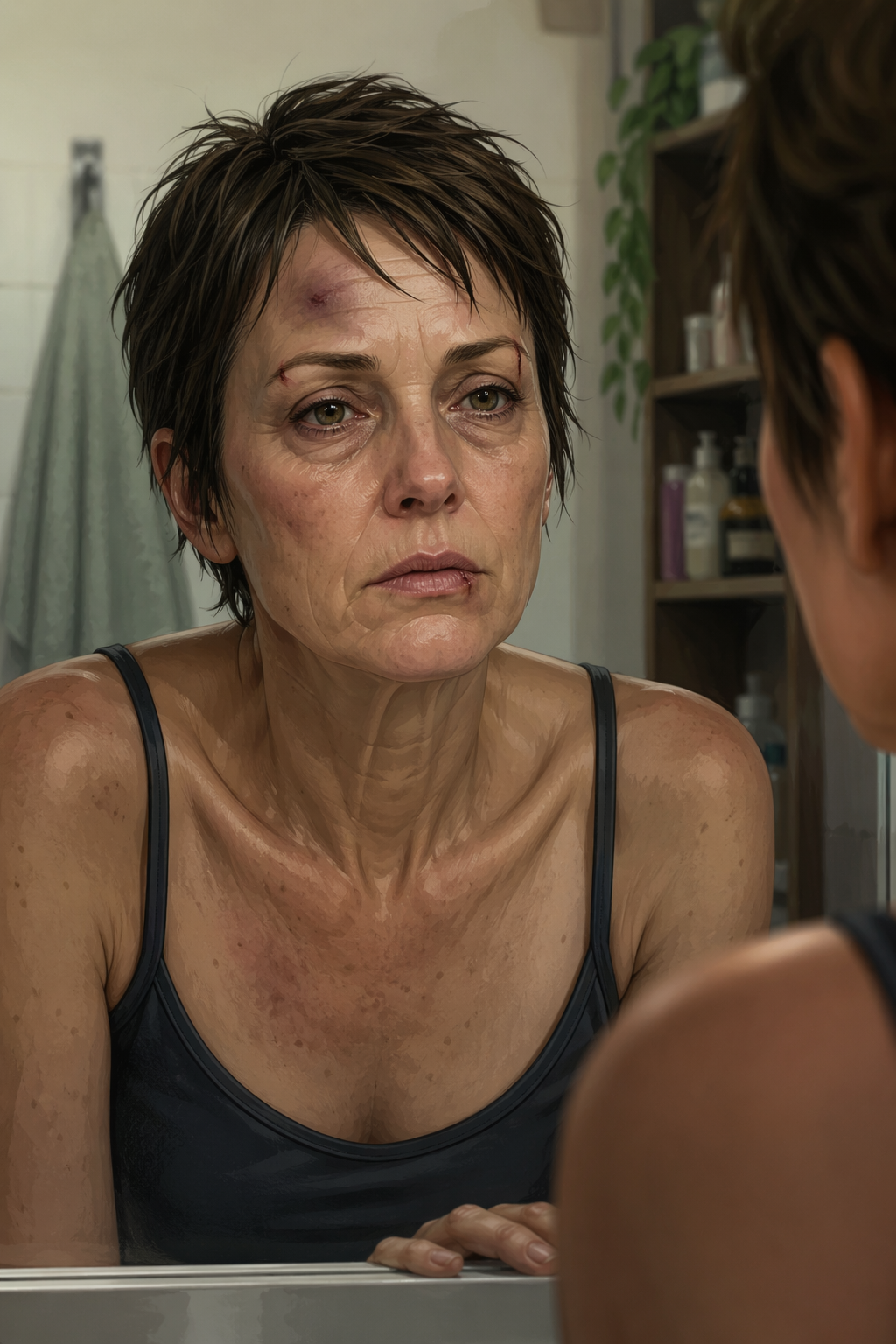
Survives the final confrontation, reunites with her real family, and begins to retain memories—suggesting a possible recovery.

Dies in a fire during a final struggle with Christine in the Brighton hotel.

Reunites with Christine at the hospital and plans to care for her moving forward.

Helps locate Christine and witnesses her recovery in the hospital.

Reunites with Christine and remains part of her life moving forward.

Reunites with Christine and reveals he is expecting a child, offering a sense of future and continuity.
🔷 Supporting Characters

Living with Adam and expecting a daughter by the novel’s end.
Continues her work at the psychiatric unit.
Continues his medical research and clinical work.
Remains with Claire as Christine recovers.
Continues working at the care facility.
Continues living in the home with her husband.
🕳️ Potential Plot Holes
Mike is able to remove Christine from a professional care facility by pretending to be her husband, Ben.
The issue isn’t just deception—it’s procedure.
Christine and Ben were legally divorced, and a patient with severe cognitive impairment would typically require verified identification, legal authorization, and next-of-kin confirmation before discharge.
The novel does not explain how Mike bypasses these safeguards so easily, especially in a medical setting where vulnerability is high.
Care home staff who had known the real Ben for years do not recognize that Mike is a completely different person.
This isn’t a minor oversight.
Even with turnover or inattentiveness, it’s difficult to accept that no one questions a different face, voice, or demeanor—especially for a patient visited regularly over time.
Once Claire realizes Christine is living with an impostor, she promises immediate action.
The issue is timing.
Several days pass before any effective intervention occurs, during which Mike is able to relocate Christine and escalate the situation.
Given the urgency and danger, the lack of immediate escalation (police involvement, direct intervention) feels inconsistent with Claire’s stated panic.
The real Ben has a distinctive facial scar, while Mike does not.
The issue is observation.
Christine studies photographs daily and relies on visual cues to understand her life, yet she never notices this discrepancy until it is pointed out to her.
Given how central these photos are to her identity, the omission feels artificially delayed.
Adam, Christine’s adult son, is alive and living independently.
The issue is awareness.
Despite being immediate family, he does not know his mother has been discharged from care and is living elsewhere for months.
This suggests a complete breakdown in communication that is never fully explained.
When Christine is discharged from the care facility, no one contacts Adam or verifies his involvement.
The issue is protocol.
In cases involving vulnerable patients, facilities typically notify next of kin or listed contacts.
The absence of any such communication enables Mike’s deception but lacks a realistic procedural explanation.
Mike works as a lab assistant yet maintains a lifestyle consistent with Ben’s former income.
The issue is sustainability.
Housing, daily expenses, and travel (including hotel stays) suggest financial stability that does not align with his job.
The novel does not clarify how he funds this lifestyle without raising suspicion
Mike successfully impersonates Ben for months without exposure.
The issue is external verification.
Neighbors, acquaintances, official records, and routine interactions never challenge his identity.
Maintaining such a deception over time, in a connected environment, would be difficult without at least some external friction.
Multiple key revelations occur in rapid succession near the end: Claire’s warning, the realization about the scar, and the discovery of missing journal pages.
The issue is pacing.
These critical insights align almost perfectly to drive the climax, creating a sense that information arrives exactly when needed rather than unfolding organically.
📚 Book Club Q&A's
⭐ Final Rating & Thoughts
This one absolutely owned me. Before I Go to Sleep by S. J. Watson is the kind of thriller that doesn’t just pull you in—it traps you there. The daily reset, the creeping doubt, that slow unraveling of “Ben”… it builds this constant, low-level panic that just keeps tightening until everything snaps.
The twist isn’t just shocking—it recontextualizes everything. Realizing who Mike is and what he’s done turns the entire story into something darker than it first appears, and that final confrontation hits hard because Christine finally isn’t just reacting—she’s fighting back. That shift from confusion to agency is what makes the ending land.
And honestly, the most satisfying part? Not just that she survives—but that she remembers. After watching her lose herself over and over again, that small, fragile continuity feels huge.
Bottom line: tense, unsettling, and completely addictive—this is one of those thrillers that lingers long after you finish.
✨ Adaptation description
The film adaptation of Before I Go to Sleep (2014), based on the novel by S. J. Watson, was directed and written by Rowan Joffe. It was produced by Scott Free Productions and StudioCanal.
The film stars Nicole Kidman as Christine, Colin Firth as Ben, and Mark Strong as Dr. Nash. It adapts the same core premise—a woman whose memory resets daily—but reshapes the storytelling for a visual, time-limited format.
Key Differences
Tone Changes
The novel leans heavily into psychological tension and paranoia, placing readers inside Christine’s confusion and fear. The tone is often claustrophobic, emphasizing her isolation and dependence.
The film maintains suspense but shifts toward a more accessible thriller tone, with clearer emotional cues and a slightly more outward-facing perspective. It relies less on internal dread and more on visible tension, performance, and atmosphere.
Structural Changes
One of the most significant changes is how Christine records her memory:
- Book: A written journal that readers experience directly, reinforcing repetition and internal narration
- Film: A video diary, allowing the audience to see and hear Christine’s past recordings
The novel’s structure is deeply repetitive by design, mirroring Christine’s daily reset and forcing the reader to relive her confusion.
The film streamlines this by using visual shortcuts—flashbacks, recordings, and quicker scene transitions—creating a more forward-moving narrative flow rather than cyclical repetition.
Character Changes
Several characters are adjusted in subtle but meaningful ways:
- Nash: His characterization shifts, including age and dynamic with Christine, altering the tone of their relationship
- Christine: In the book, her identity is shaped heavily through internal reflection and writing; in the film, her character is conveyed more through performance and visible emotion
- Supporting relationships: Some dynamics (including friendships and past connections) are simplified or adjusted to fit the film’s pacing
These changes tend to streamline motivations and reduce ambiguity in certain relationships.
What the Adaptation Emphasizes
The film places stronger emphasis on:
- Visual storytelling (flashbacks, recordings, facial expressions)
- Immediate emotional engagement rather than prolonged internal analysis
- Forward momentum, reducing repetition to maintain pacing
- Present-day tension, focusing more on what is happening now rather than slowly reconstructing the past
What It Softens, Removes, or Expands
Softened / Reduced:
- The day-to-day helplessness and repetitive psychological experience of memory loss
- The depth of Christine’s inner monologue and gradual self-reconstruction
- Some of the moral ambiguity in character motivations
Removed / Simplified:
- Certain details of Christine’s past (including aspects of her career and personal history)
- The layered buildup of clues that unfold more gradually in the book
- Some timeline complexity and sequencing of events
Expanded / Altered:
- Use of visual memory fragments and flashbacks
- A more cinematic presentation of key moments, including the climax
- A slightly more emotionally direct ending, focusing on connection and resolution
Overall, the adaptation retains the core premise and major plot points while restructuring the story to fit a visual medium, shifting emphasis from internal psychological experience to external, cinematic storytelling.
✨ Books Like Before I Go to Sleep (2011)
See an error on this page?