

Book Details
Dark Matter (2016)
Jump to Section
⚠️ Trigger Warnings
- Abduction and kidnapping
- Violence and physical assault
- Gun violence
- Murder
- Knife violence
- Blood and injuries
- Drugging
- Forced medical procedures
- Medical trauma
- Psychological distress
- Gaslighting
- Involuntary psychiatric commitment
- Death of a spouse
- Death of a child
- Terminal illness
- Pandemic/plague
- Assisted death / euthanasia
- Morphine overdose
- Starvation
- Corpses and decomposing bodies
- Grief and loss
- Existential dread
- Suicide and self-harm references
- Postpartum depression
⏱️ 2-Minute Spoiler Summary
Jason Dessen is a Chicago physics professor who once sacrificed a potentially groundbreaking scientific career for a life with his wife, Daniela, and their son, Charlie. One night, he’s abducted by Jason2, an alternate version of himself who made the opposite choice: Jason2 gave up Daniela for science, invented a device called the box that can travel through the multiverse, then regretted his decision, traveled to Jason1’s universe to steal Jason1’s family for himself.
Jason1 wakes in Jason2’s reality and escapes from his previous employer Velocity Laboratories with Amanda Lucas, Jason2’s former colleague and lover. Using a special drug, they travel through the box’s infinite corridor, where their thoughts and emotions determine which alternate worlds they enter. After surviving apocalyptic, frozen, and plague-ravaged realities—including one where Jason helps a dying alternate Daniela end her suffering—Amanda realizes Jason has a better chance of finding his exact world alone and leaves him with extra drug ampoules.
Jason finally returns home and exposes Jason2 to Daniela. He takes Daniela and Charlie and flees, only to discover that dozens of other versions of himself also made it home because his choices during his multiverse journey created multiple branching Jasons. Several pursue the family to a Wisconsin cabin, leading to violent confrontations in which Jason1 ultimately kills Jason2.
Realizing their original world will never be safe, Jason, Daniela, and Charlie return to the box. Roughly fifty other Jasons are waiting, but they respect Daniela and Charlie’s decision to remain with Jason1 and allow the family to leave. Inside the corridor, Jason lets Charlie choose their new reality. Charlie opens a door into a brilliant unknown world, and the three step through together to begin again.
📖 Full Spoiler Summary
Jason Dessen Is Taken From His Life
Jason Dessen was once a promising atomic physicist, but fifteen years ago, he made a choice that changed the direction of his life. Rather than devote himself completely to his research, he chose a future with Daniela, a talented artist who became pregnant with their son. Now Jason teaches physics at Lakemont College in Chicago while Daniela has largely set aside her artistic ambitions. They live in Logan Square with their fifteen-year-old son, Charlie, and although Jason occasionally wonders what might have happened if he had pursued his scientific career, he loves the life he chose.
One Thursday night, Jason leaves Daniela and Charlie at home to meet his former college roommate, Ryan Holder, at the Village Tap. Ryan has just won the prestigious Pavia Prize for his neuroscience work, and seeing his friend’s enormous success stirs some old feelings of professional regret in Jason. Ryan even offers him a job, but Jason ultimately heads home to his family.
He never makes it there.
A masked man abducts Jason at gunpoint, forces him into a black SUV, and drives him to an abandoned power plant. The stranger knows unsettlingly personal details about Jason’s life and asks whether he is happy before forcing him to strip, change clothes, and injects him with an unknown drug.
Jason loses consciousness believing he may be about to die.
Jason Wakes Up in the Life He Didn’t Choose
Instead, Jason wakes inside Velocity Laboratories, surrounded by people who are thrilled to see him.
The lab’s CEO, Leighton Vance, behaves as though Jason is an old friend and colleague who has been missing for more than a year. Jason insists that he has a wife named Daniela and a son named Charlie, but no one understands what he is talking about. In this reality, Jason never married Daniela and Charlie was never born.
This Jason made the opposite choice fifteen years earlier.
Rather than choosing a family, he devoted himself to physics and became the brilliant scientist Jason once imagined he might have been. His research eventually produced an enormous metal chamber known simply as the box, a device capable of exploiting quantum superposition to access alternate realities.
Desperate to prove that his memories are real, Jason seeks out Daniela. She exists in this world, but she is a successful professional artist who hasn’t seen him in years. Their reunion confirms the truth: Jason somehow entered a reality in which he chose his career instead of her.
The realization also explains his abduction. The masked man was another version of himself—Jason2, the scientist who built the box. Jason2 regretted sacrificing Daniela for his career, discovered a way to travel between realities, found a world where another Jason had the family he wanted, and decided to take it.
He kidnapped Jason1, dumped him in his own world, and went home to Daniela and Charlie in Jason1’s place.
Jason and Amanda Enter the Multiverse
Velocity desperately wants Jason to explain how the box works, but Jason1 doesn’t have the answers. He never built it.
His most important ally becomes Amanda Lucas, a psychiatrist at Velocity who was romantically involved with Jason2 and helped prepare him for his experiments. When Leighton becomes increasingly determined to extract information from Jason, Amanda helps him escape.
Together they enter the box.
Jason gradually learns what his alternate self discovered: the box doesn’t simply transport someone to a predetermined universe. After taking a drug developed from Ryan Holder’s research, a person’s mind becomes capable of perceiving and navigating superposition. Inside the box is a seemingly endless corridor lined with doors, each capable of opening onto a different version of reality.
The traveler is the navigation system.
Thoughts, expectations, fears, and emotions influence which world appears behind each door. That makes controlling the box incredibly difficult, especially for Jason, whose desperation to reach Daniela and Charlie is mixed with terror that he may never see them again.
He and Amanda wander through increasingly horrifying versions of Chicago. In one, the city has been devastated by an ash-filled catastrophe. In another, they encounter lethal cold and discover a family that has starved to death. They barely survive their repeated attempts to find somewhere safe.
One of the most devastating worlds is a Chicago ravaged by a hemorrhagic plague. There Jason finds another version of Daniela, but she is infected and dying. This Daniela has lost her Jason and Charlie to the disease and initially believes Jason is her husband returning to her. When her condition becomes unbearable, Jason stays with her and gives her enough morphine to end her suffering.
The experience leaves him even more determined to reach his own Daniela.
Amanda Leaves Jason to Find His Family
As their supply of the drug dwindles, Jason and Amanda begin to understand another problem: as long as they travel together, both of their minds influence the realities they encounter. Jason isn’t searching simply for a Chicago containing Daniela and Charlie. He needs the exact world he was stolen from.
Amanda eventually realizes that Jason has a better chance of finding it without her.
She chooses a peaceful, prosperous version of Chicago where she believes she can build a new life. Before leaving, she gives Jason half of their remaining ampoules (containing the drug to travel), sacrificing some of her own opportunities so he will have more chances to get home.
Now alone, Jason stops trying to think about his world in abstract terms. Instead, he focuses on the tiny details that made his life his own: his home, Daniela, Charlie, and the love he feels for them.
Finally, he opens the right door.
He has made it home.
But someone else is already living his life.
Jason Takes His Family Back From Jason2
During Jason1’s absence, Jason2 has been impersonating him. At first, Daniela notices only small changes. Her husband seems more confident, attentive, and spontaneous. Jason2 has the advantage of having spent considerable time observing Jason1’s world before taking his place, but he cannot perfectly reproduce fifteen years of shared memories.
Jason1 now needs to reach Daniela without Jason2 stopping him.
To make his behavior impossible for another version of himself to predict, he introduces randomness. He deliberately smokes a cigar inside a diner until the police arrest him, then arranges for Daniela to bail him out at the 14th District Precinct.
Once they are alone, Jason tells her the truth.
It sounds impossible, but he proves his identity by revealing intimate memories and details that Jason2 doesn’t know. Daniela finally understands why the man living with her has seemed subtly different.
They retrieve Charlie and flee Chicago.
But escaping Jason2 doesn’t solve their problem.
Jason discovers an online chat room called UberChat, where people claiming to be other versions of him are communicating. The horrifying truth becomes clear: Jason’s journey through the box created branching possibilities every time he made a choice. There isn’t just one Jason who survived the multiverse and found his way home.
There are many.
And they all believe Daniela and Charlie belong to them.
Dozens of Jasons Come Home
The family retreats to a remote cabin in Ice River, Wisconsin, hoping distance will buy them time. Instead, multiple Jasons begin converging on them.
Some are relatively reasonable men who endured their own variations of Jason’s journey. Others have been psychologically and physically destroyed by what happened to them. One particularly violent Jason is scarred from his experiences and willing to kill anyone standing between him and the family he believes should be his.
Even more disturbing is the realization that none of these men is technically an impostor. They all began as Jason1. They all remember being kidnapped. They all love Daniela and Charlie. Their lives diverged only after entering the box and making different choices.
But Daniela and Charlie cannot belong to fifty different versions of the same man.
During the violent confrontation at the cabin, Daniela and Charlie fight alongside Jason1. Jason1 survives the attacks, and when Jason2 arrives, the two versions finally confront each other directly.
Their struggle ends with Jason1 killing Jason2 with a knife.
Yet even Jason2’s death doesn’t make the family safe. More versions of Jason can continue arriving as long as their world remains accessible through the box.
The only solution is to leave.
Daniela and Charlie Choose Their Jason
Jason, Daniela, and Charlie return to the abandoned power plant, intending to enter the box and find a reality where the other Jasons cannot follow them.
When they arrive, approximately fifty versions of Jason are waiting.
Jason1 prepares for another fight, but it doesn’t happen. The other Jasons have gathered because they all want the same thing, yet they also understand that Daniela and Charlie have made their choice. They have chosen the Jason standing beside them.
One by one, the other versions silently allow the family to pass.
Jason, Daniela, and Charlie enter the box together. For the first time, Jason isn’t trying to recreate the life that was stolen from him. That world has become impossible to live in, and there is no way to undo everything that has happened.
Instead, the family will choose somewhere new.
Jason refuses to make that decision himself. After everything caused by his own choices—and by the choices of his alternate selves—he gives the final ampoule and the responsibility of choosing their destination to Charlie.
Charlie leads his parents through the corridor and selects a door.
When he opens it, brilliant light pours through from a world none of them recognizes.
Jason, Daniela, and Charlie step through the doorway together, leaving their old reality—and all the other versions of Jason—behind as they begin an entirely new life.
🔚 Ending Explained
The Conclusion of Dark Matter
The ending of Dark Matter brings Jason’s journey full circle: after spending the novel fighting his way back to his family, he realizes that returning home is no longer enough. The multiverse has made his old life impossible to reclaim.
At the abandoned power plant in South Chicago, Jason, Daniela, and Charlie find themselves surrounded by dozens of alternate Jasons. Every one of them branched off from Jason after he entered the box, and every one endured a different journey through the multiverse trying to reach the same destination: Daniela and Charlie.
Some are violent and desperate, while others recognize the terrible reality of the situation. They all believe Daniela is their wife and Charlie is their son—but the family cannot belong to all of them.
The deciding voice is ultimately Daniela’s. She publicly chooses the Jason who has been with her since escaping Jason2, making it clear that she and Charlie are not prizes to be won simply because every Jason remembers loving them. One of the alternate Jasons urges the others to respect what Daniela and Charlie want, and enough of them stand aside for the family to reach the box.
Jason, Daniela, and Charlie enter together and take the last doses of Ryan Holder’s compound. Once inside the endless corridor, however, Jason makes one final choice that separates this journey from all the others.
He lets Charlie choose the door.
Jason has spent the entire novel trying to control where the box takes him, desperately searching for the exact reality he lost. Now he stops trying to recreate the past. He tells Charlie to imagine where they should go and allows his son to open the door.
On the other side is an unfamiliar world filled with brilliant light, warmth, and the scent of flowers they do not recognize. It is not their old Chicago. They do not know what kind of life awaits them there.
And they step through together.
What the Ending Means
The Final Door Is About the Future, Not the Past
For most of the novel, the doors inside the box represent roads not taken. Every doorway offers another version of reality and therefore another reminder that Jason’s life could have turned out differently.
That possibility initially seems exhilarating, but the novel gradually reveals its darker side. Infinite possibilities also mean infinite regret. If another life is always available, a person can spend forever wondering whether somewhere out there exists a better career, a better marriage, a better decision, or a better version of themselves.
The final door changes that symbolism.
Jason is no longer searching for the perfect version of the life he already had. He is willing to walk into something completely unknown.
The new world becomes the blank canvas he has finally learned to accept.
Why Charlie Chooses the Door
Giving Charlie the final choice is one of the most important decisions Jason makes.
Both Jason1 and Jason2 have spent much of the novel allowing their own desires to determine what happens to their families. Jason2 crosses universes because he regrets sacrificing Daniela for his scientific career. Jason1 then spends the novel desperately trying to reverse what Jason2 has done.
Both men are trapped by the same question:
What if I had chosen differently?
Charlie represents someone who does not carry that regret.
By allowing his son to choose their destination, Jason stops letting his past dictate his family’s future. The gesture is also an act of trust. Jason doesn’t need to know exactly what waits behind the door anymore. He only needs Daniela and Charlie beside him.
Daniela’s Choice Solves the Jason Problem
The appearance of dozens of Jasons creates the novel’s final identity crisis.
From their own perspectives, every Jason is the real Jason. They share the same memories, the same marriage, the same son, and the same love for Daniela. There is no scientific test that can declare one of them more authentic than another.
So the novel gives Daniela the authority to decide.
Her choice makes an important distinction between memory and relationship. The other Jasons may remember being married to Daniela, but she has not lived the recent past with them. Her relationship with the Jason beside her has continued through shared experience, trust, suffering, and choice.
She isn’t choosing the objectively “real” Jason.
She is choosing her Jason now.
That distinction prevents Daniela from becoming merely the reward at the end of Jason’s quest. Her own agency determines which relationship continues.
The Other Jasons Show Both Sides of Love
The alternate Jasons are one of the darkest consequences of the multiverse.
They demonstrate how the same love that motivates Jason can become possessive when taken far enough. Some believe that because they love Daniela and Charlie, they are entitled to have them. Their devotion becomes indistinguishable from obsession.
But the Jasons who step aside reveal the opposite possibility.
They recognize that genuinely loving Daniela and Charlie means respecting what Daniela and Charlie want, even when that choice destroys their own hope of getting their family back.
That becomes the final test of Jason’s defining characteristic. Loving someone isn’t simply wanting them.
Sometimes it means letting them choose.
The World After the Storm
The description of the final reality is deliberately hopeful. Instead of another cold, hostile, or ruined Chicago, the family encounters warmth, brilliant light, and unfamiliar flowers.
The world feels fresh, almost like the aftermath of a storm.
That imagery suggests renewal. Jason, Daniela, and Charlie have survived the chaos created by Jason2, the box, and the multiplying versions of Jason. They cannot undo what happened, nor can they return to the innocence of their original life.
They can only begin again.
The fact that the flowers are unfamiliar matters too. Jason has finally entered a world he isn’t measuring against the one he lost. For once, the unknown is not frightening.
It is possibility.
Identity, Regret, and Choice
At the beginning of Dark Matter, Jason quietly wonders about the life he might have lived if he had chosen science instead of Daniela and Charlie.
The multiverse gives him the answer.
And it nearly destroys everything he loves.
Jason2 represents the seductive fantasy that somewhere there is a version of life in which we made all the “right” choices. But his experiment proves the flaw in that thinking. He achieves extraordinary scientific success and then discovers that he wants the family he sacrificed to obtain it. Rather than accepting the consequences of his choices, he steals another man’s life.
Jason1 eventually learns the lesson Jason2 never could:
A meaningful life isn’t the result of finding the perfect reality. It comes from choosing a life and continuing to choose it.
That is why the novel’s ending isn’t really about Jason finding his way home.
He ultimately gives up home.
The house, the neighborhood, his job, and even his original universe become expendable. What matters is the relationship among Jason, Daniela, and Charlie.
What Happens Next?
Practically speaking, their future is extremely uncertain. They are entering a reality where they may have no legitimate identities, jobs, home, money, or history. Depending on the world Charlie has chosen, versions of them may already exist there.
Crouch deliberately leaves those questions unanswered because solving the logistics would undermine the point of the final scene.
Jason began the novel looking backward, wondering whether another version of his life might have been better.
He ends it walking forward without knowing what comes next.
That is the final reversal at the heart of Dark Matter: the man obsessed with alternate possibilities finally stops searching for the perfect world.
The family steps into an unknown one instead.
And for the first time, uncertainty feels less like regret than freedom.
👤 Characters & Fates
🔶 Main Characters
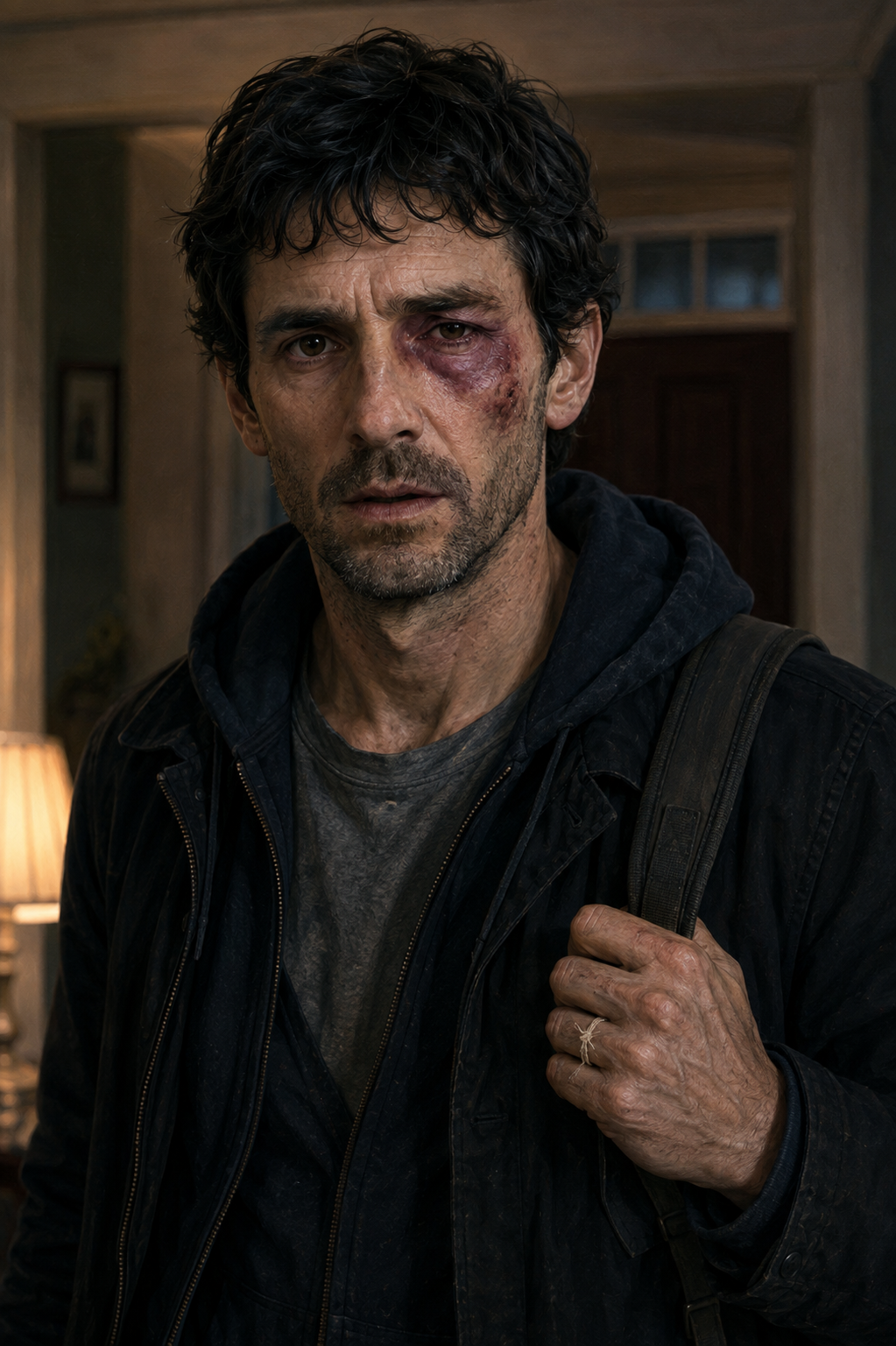
He kills Jason2, reunites with his family, and escapes the dozens of other Jasons who also returned home. He, Daniela, and Charlie enter the box permanently, with Charlie choosing the door to an unknown new reality where they can start over.

Daniela discovers he is an imposter and flees with Jason1; at the Wisconsin cabin, Jason1 ultimately kills Jason2 with a knife after a brutal fight.

She realizes Jason2 replaced her real husband, reunites with Jason1, and chooses him despite the existence of countless other Jasons. She leaves her original world forever with Jason and Charlie to begin again in another reality.
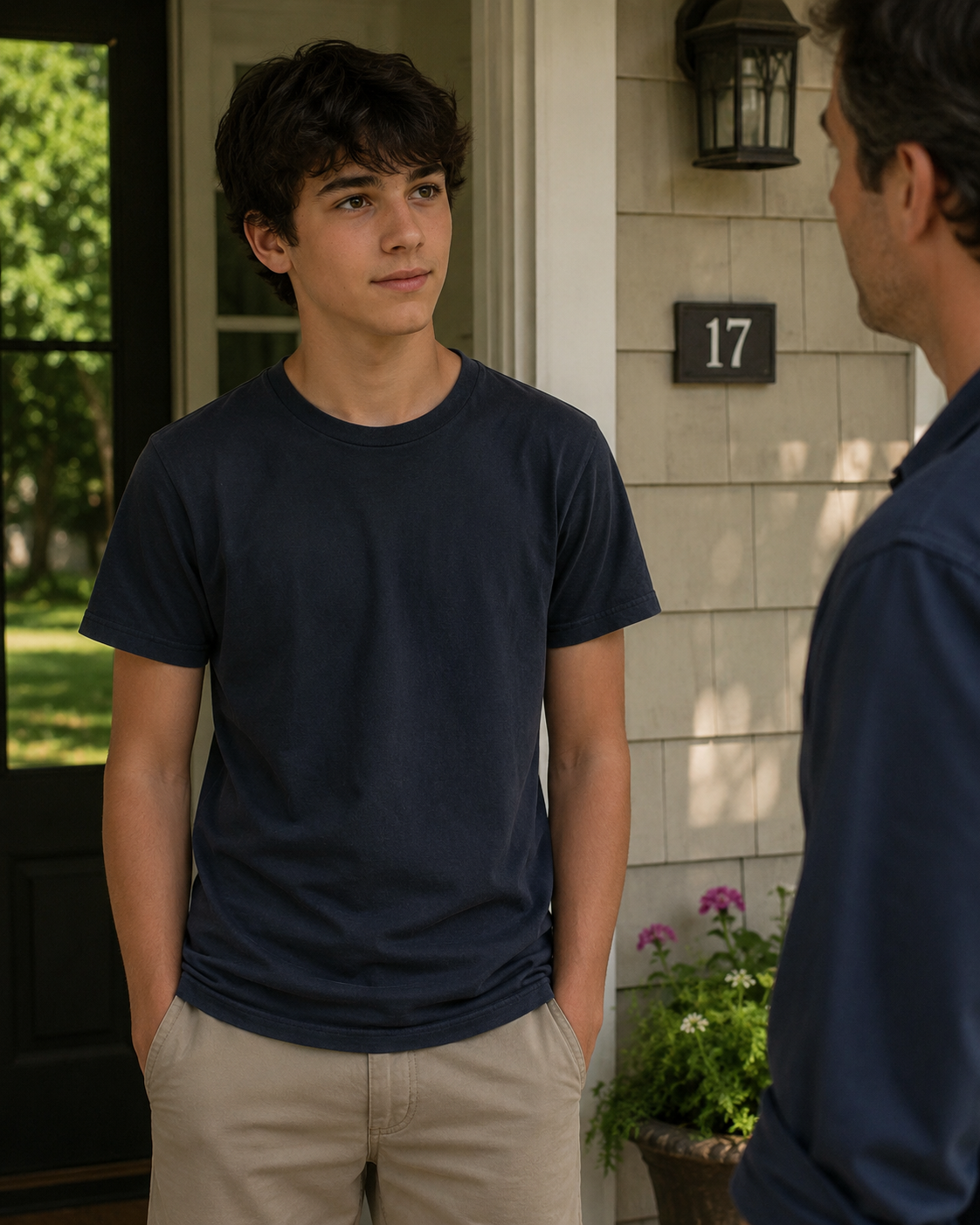
He helps save Jason1 during the confrontation with Jason2 and escapes into the box with his parents. Jason1 lets Charlie choose their destination, and he opens the door into a bright, unknown world where the family begins a new life.

Realizing her feelings and presence may be interfering with Jason’s ability to find Daniela, she leaves him in a peaceful alternate Chicago and takes half their remaining supplies to build a new life there.

Jason1 and Amanda escape Velocity despite his attempts to stop them, leaving Leighton behind with the box but without Jason2’s unique ability to navigate it successfully.
🔷 Supporting Characters
The Ryan in Jason2’s world is brutally beaten by Velocity after helping Jason1 and is ultimately killed for knowing too much.
She shelters Jason1 after his escape, but a Velocity security operative finds them and shoots her between the eyes in her apartment.
She reveals that Charlie has already died and is herself dying painfully; Jason gives her a fatal dose of morphine and holds her as she dies.
He tracks Jason1 to the Wisconsin cabin intending to kill and replace him but is shot and killed by Jason2 during the confrontation.
He allows Jason1, Daniela, and Charlie to enter the box and remains behind with the other Jasons, sacrificing his own chance to have the family life they all desperately want.
He eventually reaches Jason1’s home world but crawls through the snow to the Wisconsin cabin and dies from his injuries outside.
He processes Jason through the system, inadvertently helping Jason and Daniela reunite before Jason is released on bail.
He survives and continues running the Village Tap in the realities where Jason encounters him.
Believing Jason is suffering a psychiatric crisis, she attempts to have him committed, but Jason slips out of the hospital and disappears.
He survives and remains part of the successful Chicago art world in Jason2’s reality.
🕳️ Potential Plot Holes
Jason2 understands the box and the branching nature of the multiverse better than anyone, yet he seems completely unprepared for multiple versions of Jason1 eventually reaching the same world. Since every decision Jason1 makes after entering the box can create another version of him, Jason2 should have recognized that sending Jason1 into the multiverse could eventually produce numerous Jasons all trying to return to Daniela and Charlie. His failure to anticipate the exact problem his own invention creates is difficult to reconcile with his expertise.
The novel establishes that choices continually create branching realities, yet dozens of different versions of Jason manage to arrive in what is presented as the exact same world containing the same Daniela and Charlie. Logically, the returning Jasons should also be arriving in slightly different branches of that world rather than converging on one shared reality. The novel's idea that similar thoughts and emotional intentions can funnel them toward the same destination does not fully explain why all of those independently branching Jasons end up together in one universe.
📚 Book Club Q&A's
⭐ Final Rating & Thoughts
Dark Matter is an easy 5 out of 5 stars for me. I expected a mind-bending sci-fi thriller, but I absolutely did not expect it to be one of the most romantic books I’ve read in ages. I was so invested that I genuinely didn’t want to finish because I wasn’t ready for it to be over.
Yes, the science gets complicated, and if you examine the mechanics of the multiverse too closely, there are definitely a few places where things start to wobble. But I honestly didn’t care. The science is really just the vehicle for a much bigger story about choice, regret, ambition, and the lives we might have lived.
What hit me hardest was the idea that every choice closes the door on another version of our lives—and that we can spend forever wondering whether we chose correctly. The suspense kept me flying through the pages, but the emotional core is what made the book unforgettable.
Fast, clever, surprisingly moving, and completely addictive, Dark Matter gave me everything I want from a thriller while also making me think about my own choices. Five stars, no hesitation.
✨ Adaptation description
Dark Matter — Book vs. Apple TV Adaptation
Adaptation Overview
Blake Crouch’s 2016 science-fiction thriller Dark Matter was adapted into a nine-episode television series, premiering on Apple TV in 2024. Crouch himself created, wrote, executive-produced, and served as showrunner on the adaptation, with Sony Pictures Television producing alongside Matt Tolmach Productions. Joel Edgerton stars as both Jason Dessen and Jason2, with Jennifer Connelly as Daniela, Alice Braga as Amanda, Oakes Fegley as Charlie, Jimmi Simpson as Ryan, and Dayo Okeniyi as Leighton. (Apple)
The adaptation preserves the novel’s central story: Jason is kidnapped by an alternate version of himself who steals his family and life, forcing Jason to navigate the multiverse to get home. But television substantially opens up a story that was deliberately confined to Jason’s perspective in the novel.
Importantly, Season 1 is no longer the entirety of the adaptation. Season 2 premieres August 28, 2026, with ten episodes running through October 30. It continues beyond the original novel rather than adapting a sequel book. (Apple)
Key Differences
Expanded Perspectives
Book: The novel stays almost completely with Jason1’s first-person perspective. Once Jason is abducted, the reader leaves his original Chicago behind with him. Consequently, Jason2’s attempt to replace him is largely something Jason—and the reader—can only imagine until Jason finally returns.
Series: The story becomes multi-POV. It regularly cuts between Jason1 traveling through the multiverse and Jason2 living with Daniela and Charlie. Daniela consequently becomes a much more active participant in the mystery, gradually realizing that the man who came home isn’t quite her husband. (EW.com)
This creates a major structural difference: the novel is primarily about Jason trying to get home, while the series simultaneously asks what is happening to his family while he’s gone?
Jason1 and Daniela2
One of the more revealing morality changes involves alternate Daniela.
Book: Jason1 finds a Daniela in another universe and sleeps with her. Their brief reunion ends horrifically when Velocity tracks them down and Daniela is killed.
Series: Jason and alternate Daniela kiss but don’t have sex. Crouch explained that the change was made partly because the creative team worried that sleeping with another Daniela could damage viewers’ feelings toward Jason at a crucial point in his journey. (EW.com)
The result keeps Jason1’s emotional loyalty to his own Daniela more absolute onscreen.
Character Changes
Jason2
Jason2 receives perhaps the largest expansion.
In the novel, he functions primarily as Jason’s dark counterpart: the man who chose scientific achievement instead of Daniela and then decided he wanted Jason’s life too.
The series spends extensive time with him. We watch him try to become Daniela’s husband and Charlie’s father, and the story explores the uncomfortable fact that possessing Jason1’s life doesn’t automatically give Jason2 the emotional qualities that made that life possible.
Most significantly, Jason2 helps Jason1 and his family escape in the Season 1 finale, rather than simply ending as the novel’s colder antagonist. Joel Edgerton was involved in developing this more complicated character trajectory with Crouch. (EW.com)
Daniela Dessen
Daniela is considerably more autonomous in the adaptation.
Instead of primarily representing the life Jason desperately wants to recover, she gets her own investigation and suspicions. She notices changes in Jason2, questions his behavior, and eventually begins piecing together what has happened.
That turns Daniela from an emotional destination in Jason’s journey into another major driver of the television narrative. (EW.com)
Charlie and Max
The series introduces a major piece of Dessen family history that doesn’t exist in the novel: Charlie originally had a twin brother, Max, who died.
The loss adds another layer of grief to Jason and Daniela’s marriage and gives Jason2 another piece of a family history he cannot completely understand or replicate. The idea originated during development with Joel Edgerton. (EW.com)
Amanda Lucas
Amanda’s role becomes much larger and more emotionally developed.
The book primarily needs Amanda as Jason’s companion and guide through the Box. The television series spends more time developing her relationship with Jason and eventually gives her a more substantial resolution when she chooses to remain in an advanced, seemingly utopian alternate Chicago.
That decision transforms her departure from Jason into a genuine choice of a new life, rather than simply removing her from his journey.
Leighton Vance
Leighton also becomes a continuing storyline rather than primarily a threat Jason needs to escape.
The series follows his involvement with the Box and allows his multiverse ambitions to continue independently of Jason. That expansion is particularly important now: Apple’s official description of Season 2 confirms that Leighton’s pursuit of his vision becomes an ongoing storyline. (Apple)
Ryan Holder
Ryan receives an entirely new fate. Jason2 deliberately strands Ryan1 in another universe, something that does not occur in the novel. (EW.com)
And that isn’t merely a loose end: Apple has confirmed that Season 2 brings Ryan and Amanda together as they attempt to find their way home. (Apple)
Tone Changes
The novel is claustrophobic, frantic, and intensely subjective. Because we’re trapped inside Jason’s consciousness, the multiverse feels disorienting and unknowable. The reader understands only as much as Jason does.
The television series retains the thriller elements but becomes more of an ensemble science-fiction drama. It has room to explore marriage, grief, identity, temptation, and the consequences of the Box from several perspectives.
The series also humanizes Jason2 more. Instead of maintaining such a clean protagonist/antagonist divide, it spends time examining how two genetically identical men became radically different people because of their choices.
Structural Changes
The biggest structural transformation is straightforward:
Novel: Jason disappears → navigates alternate worlds → finds his world → confronts multiple Jasons → escapes with Daniela and Charlie.
Series: Jason’s multiverse journey unfolds in parallel with Jason2’s stolen life, Daniela’s suspicions, Charlie’s relationship with his apparent father, Ryan’s fate, Amanda’s journey, Leighton’s experiments, and Velocity’s continuing involvement.
That structure greatly expands the story’s universe while leaving the central Jason1 plot recognizable.
The Ending
The novel provides a deliberately open but final ending. Jason, Daniela, and Charlie enter the Box together. Jason allows Charlie to choose the door, and the family steps into an unknown new reality. Their old world—and the swarm of other Jasons—is left behind.
Season 1 preserves the family’s escape but turns what was the novel’s endpoint into a launching point.
Jason duplicates remain behind. Amanda has established a life elsewhere. Ryan is stranded. Leighton continues traveling. Velocity still matters. Those threads allow the series to move beyond anything contained in Crouch’s original novel.
And we now know exactly where that leads: Season 2 begins with the Dessens living in an apparently safe new world before circumstances force them to run again. Jason becomes increasingly obsessed with the Box, Daniela grows increasingly paranoid, Amanda and Ryan try to return home, and Leighton continues pursuing his vision of a perfect world. (Apple)
What the Adaptation Emphasizes
The series puts substantially more weight on marriage and family from both sides of the relationship. Daniela isn’t simply what Jason wants to recover; the adaptation asks what Daniela experiences when the person she loves suddenly seems fundamentally different.
It also expands the novel’s central question of “What if I had chosen differently?” beyond Jason. Amanda, Ryan, Leighton, Daniela, and Jason2 all become different variations on that question.
What It Softens, Removes, or Expands
The adaptation softens Jason1’s morally questionable encounter with Daniela2, expands Jason2 into a more conflicted figure, gives Daniela significantly more agency, invents the Max storyline to deepen the Dessens’ shared history, and dramatically enlarges Amanda, Ryan, and Leighton’s stories.
Most importantly, it removes the novel’s sense of finality. The book ultimately closes the door on the multiverse even though its characters continue into an unknown world. The series leaves that door very deliberately open.
Season 1 therefore isn’t so much a reinvention of Dark Matter as an expansion outward: the novel tells Jason Dessen’s story, while the television adaptation increasingly explores what happens when the Box stops being Jason’s problem and becomes an entire universe of people’s problem.
✨ Books Like Dark Matter (2016)
See an error on this page?