
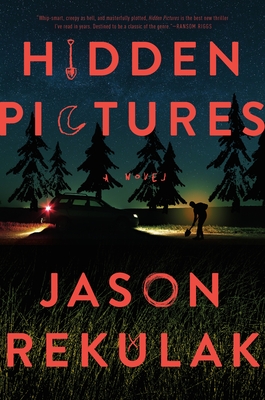
Hidden Pictures (2022)
Select Sections to Print
×Book Details
Hidden Pictures (2022)
Jump to Section
⚠️ Trigger Warnings
- Drug addiction
- Substance abuse
- Heroin use
- Opioid use
- Drug withdrawal
- Drug overdose
- Forced overdose
- Murder
- Strangulation
- Gun violence
- Stabbing
- Physical assault
- Drugging
- Restraint
- Child abduction
- Child endangerment
- Child trauma
- Forced identity change
- Death of a parent
- Death of a sibling
- Fatal car accident
- Grief
- Survivor’s guilt
- Dissociation
- Gaslighting
- Invasion of privacy
- Hidden surveillance
- Graphic violence
- Disturbing imagery
- Decomposition
- Animal death
- Racism
- Misogyny
⏱️ 2-Minute Spoiler Summary
Recovering addict Mallory Quinn takes a job as a live-in nanny for Ted and Caroline Maxwell and quickly bonds with their five-year-old son, Teddy. As Teddy begins producing disturbingly sophisticated drawings supposedly dictated by an imaginary friend named Anya, Mallory suspects the family’s guest cottage is haunted. She investigates with eccentric neighbor Mitzi while also growing close to Adrian, a Rutgers student who works as a local landscaper.
Mallory initially believes Anya is Annie Barrett, a woman rumored to have disappeared from the cottage decades earlier, but Adrian and his librarian mother discover that Annie actually ran away and lived a normal life. The real ghost is Margit Baroth, a Hungarian woman murdered three years earlier by Caroline. Caroline stole Margit’s daughter, Flora, changed her identity, and raised her as a boy named Teddy. Margit has been using Flora’s drawings to expose her murder and lead someone to the truth.
When Mallory figures everything out, Caroline tries to kill her with a staged heroin overdose, but Ted has secretly replaced the heroin with baby powder. Caroline then shoots Ted after realizing he has turned against her. Mallory escapes into the woods with Flora, where Margit’s spirit guides Flora into stabbing Caroline to death with a broken arrow. Mallory tells police that she killed Caroline herself to protect Flora.
A year later, Flora has reclaimed her real identity and is living with her biological father, József Baroth. Mallory is thirty months sober, studying at Drexel to become a teacher, and still dating Adrian. She is also writing the entire story as a memoir for Flora to read when she is older.
📖 Full Spoiler Summary
Mallory Gets a Fresh Start
At twenty-one, Mallory Quinn is trying to rebuild her life. She has been sober for eighteen months after an addiction to oxycodone and heroin that began following the death of her thirteen-year-old sister, Beth, in a car accident. Mallory carries enormous guilt over Beth’s death, and although she has made significant progress in recovery, her past still follows her everywhere.
Her sponsor, Russell, an Olympic track coach who rebuilt his own life after serving time for involuntary manslaughter, helps Mallory land an interview with Ted and Caroline Maxwell in wealthy Spring Brook, New Jersey. The Maxwells have recently returned from Barcelona with their five-year-old son, Teddy, and need a live-in nanny.
Mallory immediately likes Teddy, a quiet, affectionate little boy who loves drawing. The Maxwells hire her, and she moves into a guest cottage behind their house. The arrangement seems almost too good to be true: Mallory has a comfortable place to live, steady work, and a family willing to overlook her history with addiction.
There is only one unsettling detail. Mallory eventually learns that locals call her cottage the “Devil House” because of a decades-old story about a woman who supposedly disappeared there.
Teddy’s Drawings Become Disturbing
At first, caring for Teddy is exactly the fresh start Mallory needs. They spend their days swimming, playing outside, exploring the woods, and drawing pictures together. Teddy’s early artwork is exactly what Mallory would expect from a five-year-old.
Then the pictures change.
Teddy begins talking about an imaginary friend named Anya, who he says lives beneath his bed. According to Teddy, Anya tells him stories and sometimes tells him what to draw. His pictures become increasingly sophisticated, far beyond anything a five-year-old should realistically be capable of producing.
Even more disturbing is what they show.
A sequence of drawings appears to depict a woman being attacked by a man, dragged through the woods, and buried. Mallory also notices something physically strange while Teddy is producing them: although he is naturally left-handed, he sometimes draws these elaborate images with his right hand, almost as though someone else is controlling it.
Mallory begins hearing Teddy apparently speaking to someone when nobody else is present. She becomes convinced that Anya may be more than an imaginary friend, but the Maxwells are far less receptive. Caroline, a psychiatrist, repeatedly suggests that Mallory’s concerns may be connected to her unresolved grief over Beth.
Because of Mallory’s history with addiction and trauma, it becomes increasingly easy for the Maxwells to make her question her own judgment.
The Mystery of Annie Barrett
Searching for an explanation, Mallory turns to Mitzi, an eccentric neighbor who claims to be psychic. Mitzi knows the local history of Mallory’s cottage and tells her about Annie Barrett, an artist who lived there during the 1940s.
According to the story, Annie mysteriously disappeared after evidence of violence was discovered inside the cottage. Given Teddy’s increasingly graphic drawings of a murdered woman, Mallory begins to wonder whether Anya is actually Annie’s ghost, using Teddy to reveal what happened to her.
Mallory and Mitzi hold a séance inside the cottage. During it, an unseen force seems to take control of Mallory’s hand, guiding her into writing unfamiliar Hungarian words. Among them are ovakodik, meaning “beware,” and tolvaj, meaning “thief.”
The Hungarian messages don’t fit the Annie Barrett theory, but they convince Mallory that something supernatural is happening.
At the same time, Mallory grows close to Adrian, a handsome landscaper and Rutgers student. Embarrassed by her past, she tells him a small lie and claims she attends Penn State. Their relationship gives Mallory one connection to a normal life outside the increasingly bizarre Maxwell household.
Then Mitzi dies from what appears to be a heroin overdose.
The death is particularly disturbing because Mallory notices needle caps in Mitzi’s house that she doesn’t remember seeing before. She begins to suspect that someone deliberately killed Mitzi and staged the scene to resemble an overdose.
Mallory Realizes Anya Is Real
The supernatural activity around Teddy continues escalating. Mallory finds him entering strange trance-like states, and eventually the same force that appears to control Teddy takes control of her.
While possessed, Mallory produces elaborate drawings across the walls of the Maxwells’ den. When Ted and Caroline discover what she has done, the situation becomes impossible to explain away. Instead of believing her, they use the incident as further evidence that Mallory is unstable.
She is fired.
Before leaving, however, Mallory makes a startling discovery about Teddy: Teddy is biologically female.
At roughly the same time, Adrian and his librarian mother, Sofia, finally uncover the truth about Annie Barrett. Annie wasn’t murdered at all. She ran away to Ohio with a man named Willie, escaping her judgmental cousin, George Barrett.
That destroys Mallory’s entire explanation for the haunting.
If Annie Barrett lived, then the woman communicating through Teddy’s drawings must be someone else.
And the Hungarian words suddenly become much more important.
Teddy Is Really Flora
The Maxwells’ carefully constructed story begins collapsing.
Three years earlier, Caroline Maxwell encountered a Hungarian woman named Margit Baroth and her young daughter, Flora, at Seneca Lake. Caroline became convinced that Flora needed to be “rescued” from her mother.
So Caroline killed Margit.
She then took Flora and brought her home. Caroline and Ted changed the child’s identity, cut her hair, raised her as a boy, and began calling her Teddy. Their supposed time living in Barcelona provided a convenient cover story for how their family had suddenly acquired a child without people in Spring Brook asking too many questions.
The ghost haunting Teddy isn’t Annie Barrett.
It is Margit, Flora’s murdered mother.
The disturbing drawings have been Margit’s attempt to communicate the truth about her death and lead someone to the daughter who was stolen from her. Her messages—including “thief”—were warnings about Caroline.
Ted knows what Caroline did and has helped conceal Flora’s true identity, but his guilt has been eating away at him. He is no longer willing to let Caroline continue destroying anyone who threatens their secret.
Caroline Tries to Kill Mallory
Caroline realizes that Mallory knows too much and decides to eliminate her in a way that will exploit Mallory’s history.
She restrains Mallory and prepares to inject her with enough heroin to kill her. Given Mallory’s past addiction, an overdose would be easy for authorities to accept, especially after Mitzi’s apparent overdose.
But Ted has secretly sabotaged Caroline’s plan.
Knowing what his wife is capable of, he has replaced the heroin with baby powder. Mallory survives, and Ted finally admits the truth about his own behavior as well: he installed a hidden webcam in Mallory’s cottage and has been watching her.
Ted intends to help Mallory and Flora escape, but Caroline discovers his betrayal. She shoots him, killing the husband who helped her hide the kidnapping but ultimately couldn’t continue protecting her.
Mallory escapes with Teddy—now understood to be Flora—and runs into the woods.
Margit Protects Her Daughter
Mallory and Flora flee through the area they call the Enchanted Forest, but Caroline follows them. The chase ends near the enormous tree they have nicknamed the Giant Beanstalk.
Caroline corners them, leaving Mallory with few options.
Then Margit intervenes one final time.
Flora has a broken arrow they found earlier that summer. Margit’s spirit appears to take control of her daughter’s arm, just as she previously controlled the drawings. Flora drives the broken arrow into Caroline, killing her.
The woman who murdered Margit and stole Flora is finally dead.
Mallory immediately realizes what the truth could mean for the traumatized child. Flora has already endured kidnapping, years of living under a false identity, the revelation that the people raising her murdered her biological mother, and now Caroline’s violent death.
When Detective Briggs and the police arrive, Mallory protects her.
She claims that she killed Caroline in self-defense, taking responsibility so Flora will not have to carry the legal and psychological burden of explaining what happened.
Flora Gets Her Life Back
One year later, the Maxwells’ lies have been exposed enough for Mallory to clear her name, although the public version of events does not contain every supernatural detail.
Flora is finally living as herself again.
She has been reunited with her biological father, József Baroth, and lives with him in upstate New York. After three years of being raised as Teddy Maxwell, she has regained both her real name and her surviving family.
Mallory has also continued rebuilding her life. She is now thirty months sober and attending Drexel University, where she is studying to become a teacher. Her relationship with Adrian has survived everything that happened, giving her a future that once seemed impossible during the worst years of her addiction.
The story itself is revealed to be Mallory’s memoir. She is writing down everything that happened—the strange drawings, Margit’s ghost, Caroline’s crimes, and Flora’s rescue—so that Flora can read the complete story when she is older and ready to understand it.
Mallory began the summer believing she had been hired to take care of a little boy named Teddy Maxwell. She leaves knowing that the child was Flora Baroth, a kidnapped girl whose murdered mother had been desperately trying to lead someone to the truth.
🔚 Ending Explained
How Does Hidden Pictures End?
The ending of Hidden Pictures completely overturns what Mallory—and the reader—believed about Teddy, Anya, and the Maxwell family. What initially looks like a supernatural mystery about a ghost communicating through a little boy’s drawings is ultimately revealed to be the story of an abducted child and a murdered mother trying to lead someone to the truth.
The Truth About Teddy
Mallory finally pieces together the meaning behind Teddy’s increasingly disturbing drawings. Teddy is actually Flora Baroth, a girl who was kidnapped three years earlier.
Flora lived with her parents, Margit and József Baroth, near Seneca Lake. Caroline Maxwell became fixated on the child and convinced herself that Flora needed to be “rescued.” Caroline murdered Margit and took Flora, while Ted helped conceal the crime.
The Maxwells then completely reinvented Flora’s identity. They cut her hair, raised her as their son Teddy, and fabricated an elaborate history about having lived in Barcelona to explain why no one in Spring Brook knew them before their arrival.
The mysterious Anya haunting Teddy is actually Margit, Flora’s murdered mother. She has been using Flora’s drawings to reveal what happened to her and, ultimately, to lead someone to her daughter’s true identity.
Caroline Tries to Kill Mallory
Once Mallory knows too much, Caroline decides she has to die.
She attempts to murder Mallory by injecting her with what she believes is heroin, planning to make Mallory’s death look like a relapse after losing her nannying job. Given Mallory’s history of addiction, the story would be tragically believable.
But Caroline’s plan fails because Ted secretly replaced the heroin with baby powder. He had discovered the drugs while spying on Mallory through a hidden camera and switched them because he feared Mallory might relapse.
Ted then makes his own disturbing confession: he wants to abandon Caroline and run away with Mallory to Whidbey Island.
Caroline responds by shooting him with the handgun she stole from their neighbor, Mitzi.
The Final Confrontation in the Forest
Mallory escapes into the Enchanted Forest with Flora, but Caroline follows them.
She eventually corners them near the enormous tree they call the Giant Beanstalk. There, the supernatural element of the novel becomes undeniable.
Margit takes control of Flora’s right arm.
Using the broken arrow Mallory and Teddy found earlier that summer, Flora stabs Caroline and kills her.
When the police arrive, Mallory immediately understands what another investigation could do to a child who has already endured kidnapping, forced identity erasure, and the loss of her biological mother.
So Mallory takes the arrow and claims that she killed Caroline in self-defense.
It is the final protective act of someone who entered the Maxwell home believing she was too damaged to be trusted with a child.
What Happens to Mallory and Flora?
The epilogue jumps forward one year.
Flora is reunited with her biological father, József Baroth, and is living with him on the family farm in upstate New York. She has returned to her original identity and is once again living as Flora rather than Teddy.
She remembers relatively little about what happened in the forest, and she no longer appears to remember Mallory clearly. Painful as that is for Mallory, she accepts it because forgetting may be part of how Flora is able to move forward.
Mallory is doing remarkably well too.
She is now thirty months sober and living in a sober-living residence while attending Drexel University. She plans to become a kindergarten teacher, and she is still with Adrian.
The woman who began the novel struggling to convince everyone—including herself—that she could be trusted around a child is now building a life centered on caring for children.
There is also one final reveal:
The story we have been reading is Mallory’s written account of what happened.
She has recorded everything for Flora so that one day, when Flora is old enough and ready to know the truth, she can understand what happened to her.
What Does the Ending of Hidden Pictures Mean?
The ending turns the novel’s central question on its head. For most of the story, Mallory is trying to determine whether she can trust what she sees. Everyone around her has reasons to dismiss her: she is a recovering addict, she has a traumatic past, and the things she describes sound impossible.
But Mallory was seeing the truth all along.
That makes the title Hidden Pictures about more than Teddy’s drawings. Nearly everything in the Maxwell household is a picture hiding another picture underneath it. The perfect house hides a crime. The perfect parents are kidnappers. Teddy is actually Flora. An imaginary friend is a murdered mother. Even the Maxwells’ supposed years in Barcelona are invented.
The novel repeatedly asks the reader to look past the surface.
The Angel Drawings
The angel imagery becomes especially sinister once the truth is known.
The figure that initially resembles an angel or protector is associated with Caroline and her wing tattoo. Caroline sees herself as Flora’s rescuer—the woman who saved a child from a life she considered inadequate.
But Caroline’s idea of salvation is really possession.
She murders Flora’s mother, steals Flora from her father, erases her identity, and rebuilds the child according to her own desires. The supposedly protective angel is therefore one of the novel’s darkest inversions: the person who believes she is saving Flora is actually the person destroying her life.
Margit, meanwhile, becomes Flora’s genuine protector. Even death cannot completely separate her from her daughter.
Why Mallory Takes the Blame
Mallory claiming responsibility for Caroline’s death completes her character arc.
She begins the novel carrying enormous guilt over the death of her younger sister, Beth. Addiction followed that loss, and Mallory has spent years believing that her worst moments define who she is.
With Flora, she finally gets the chance to protect a child when it matters most.
Taking the arrow is not simply Mallory covering up a killing. She is deliberately placing herself between Flora and another potentially devastating experience. Flora has already had her childhood stolen once; Mallory refuses to let the aftermath steal what remains of it.
There is a poignant parallel here: Mallory cannot go back and save Beth, but she can save Flora.
That does not erase her past. It allows her to build something meaningful from it.
Why Flora Forgetting Mallory Matters
Flora’s inability—or unwillingness—to remember much of Mallory and the final confrontation is bittersweet rather than tragic.
Mallory does not receive the conventional reward of becoming a permanent part of Flora’s new life. She saves Flora and then has to let her go.
That makes Mallory’s love for her genuinely selfless.
Caroline’s version of love demands possession: I saved you, therefore you belong to me.
Mallory’s version is the opposite: I helped save you, therefore you are free to leave me.
That distinction is crucial to the ending.
Why Mallory Writes the Book
The final revelation that Mallory has written the story for Flora gives the novel an unexpectedly moving purpose.
Flora may need to forget in order to survive childhood, but forgetting also means losing part of her own history.
Mallory preserves that history for her.
She does not force Flora to confront it before she is ready. Instead, she leaves behind a record that Flora can choose to read someday.
In that sense, the drawings and Mallory’s book serve the same purpose. Both preserve truths that someone tried to bury.
Margit tells the truth through pictures.
Mallory tells it through words.
And both women do it for Flora.
The Meaning of the Ending
Ultimately, Hidden Pictures ends as a story about reclaiming identity and learning that the past does not have to dictate the future.
Flora gets her name, family, and life back. Mallory remains sober, returns to school, and begins imagining herself not through the lens of addiction but through the person she has become. Even Margit finally succeeds in what her haunting was trying to accomplish: bringing her daughter home.
The ending is therefore much more hopeful than the darkness leading up to it suggests. Neither Mallory nor Flora can undo what happened to them. Their victory is that the people who hurt them no longer get to decide who they are.
And the final existence of Mallory’s manuscript reinforces the novel’s central idea: the truth can be disguised, suppressed, misinterpreted, and even forgotten for a while—but eventually, the hidden picture can still be found.
👤 Characters & Fates
🔶 Main Characters

Survives Caroline’s attempt to kill her with a forced overdose and is ultimately cleared. One year later, she is thirty months sober, attending Drexel to become a kindergarten teacher, dating Adrian, and writing her memoir.
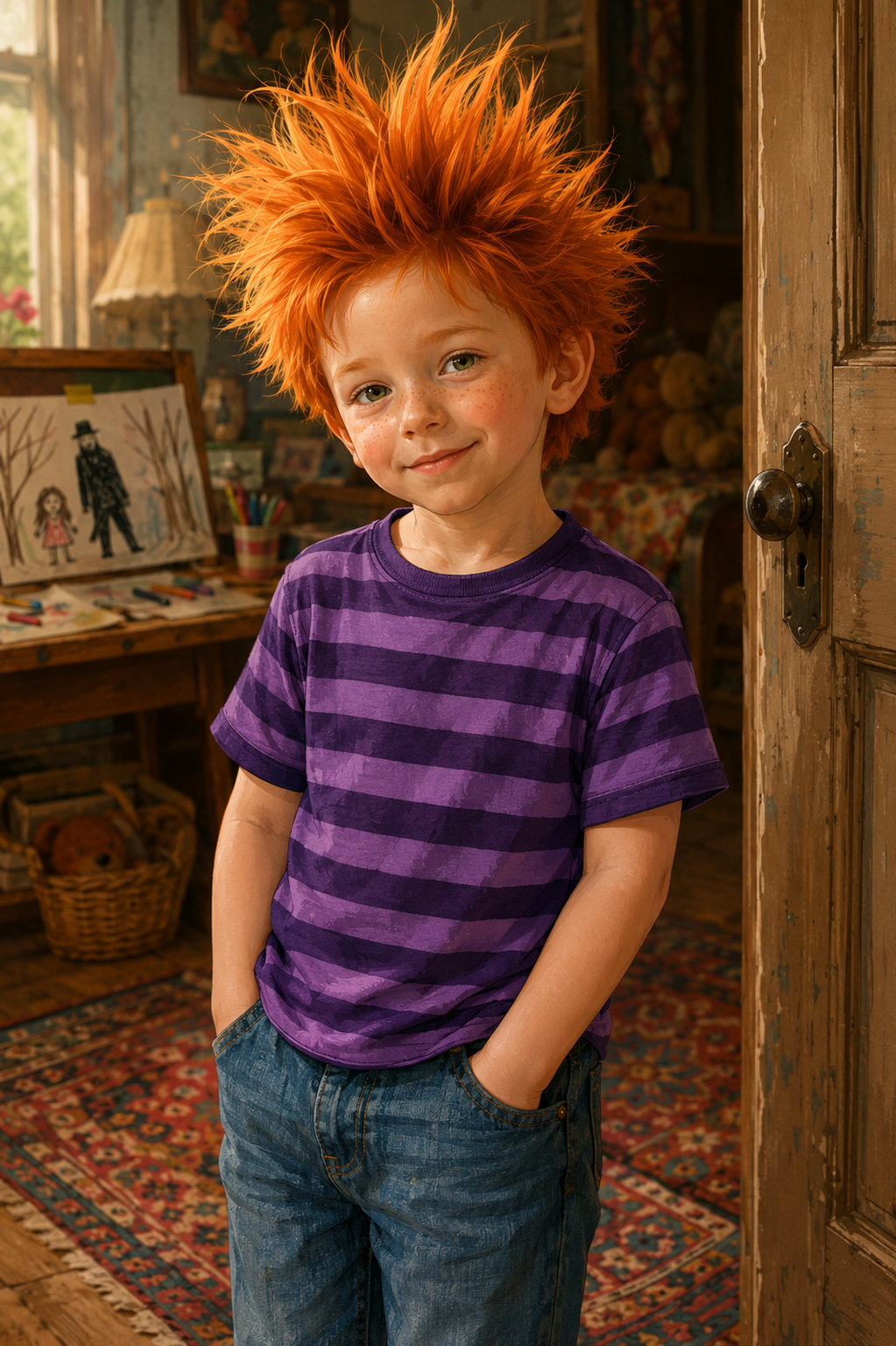
While possessed by Margit, Teddy stabs Caroline to death with a broken arrow. He is reunited with his biological father, returns to living as Flora, and is happily living on the family farm a year later.

After shooting and killing Ted, Caroline chases Mallory and Teddy into the woods. Teddy, controlled by Margit’s spirit, stabs Caroline to death with a broken arrow.

Confesses that he installed a hidden camera and wants to run away with Mallory, but Caroline shoots him multiple times and kills him.
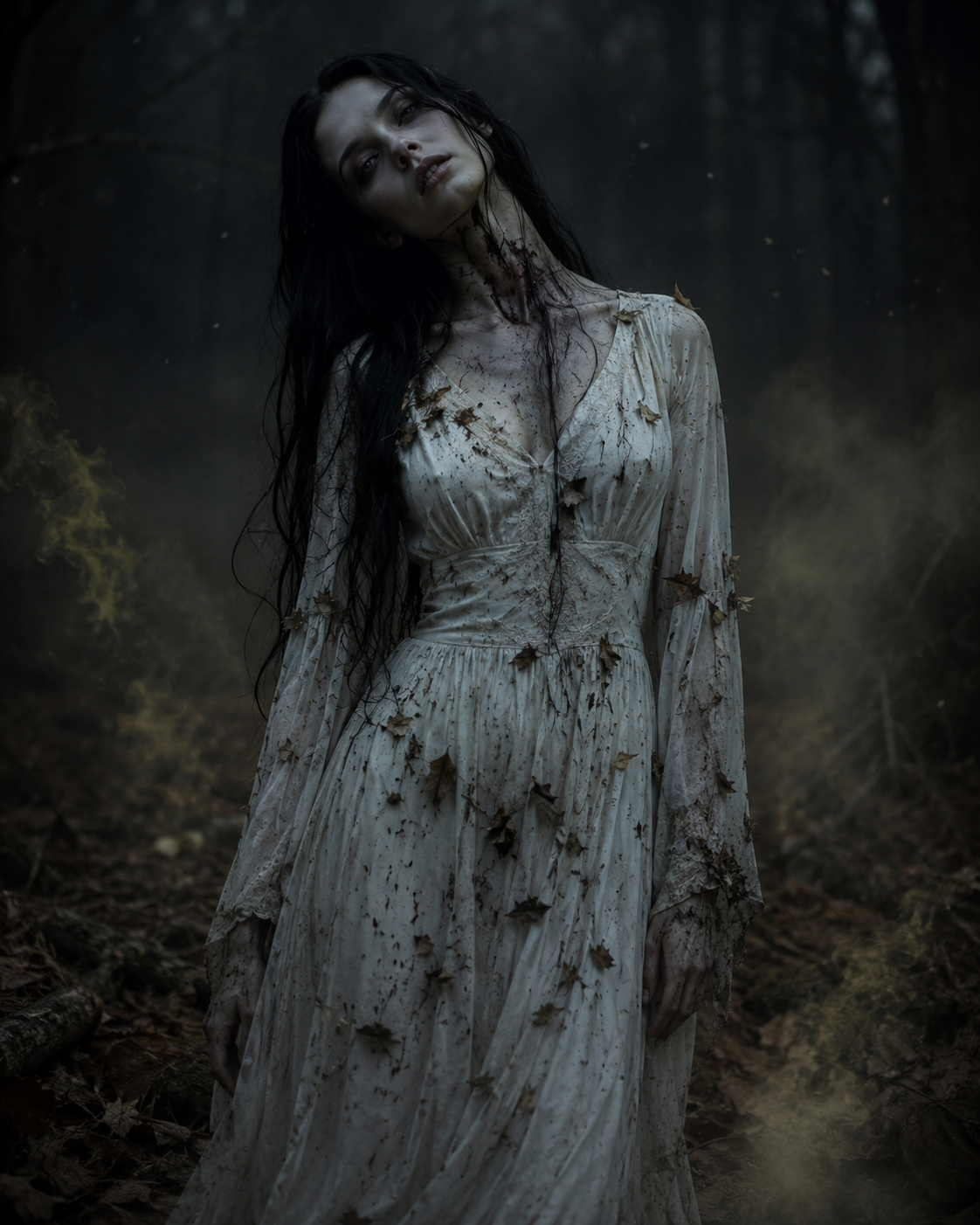
She ultimately controls Teddy’s arm to kill Caroline and disappears once Flora is safely reunited with her biological father.

Survives and remains with Mallory a year later after graduating and taking a job in Philadelphia.
🔷 Supporting Characters
The Maxwells murder her with a forced heroin overdose and hide her body after she discovers too much.
Died in a car accident while Mallory was distracted by a text, leaving Mallory convinced she was responsible.
Survives and helps Mallory rebuild her life after the Maxwell murders, including giving her a place to stay in Norristown.
She actually eloped with a Black man named Willie, moved to Ohio, had a family, and lived happily until age eighty-one.
Is finally reunited with his kidnapped daughter and raises Flora with their extended family on their farm in Deer Run, New York.
Successfully helps unravel the kidnapping case and treats Mallory fairly during the investigation.
Survives the events and later encourages Mallory to turn her experiences into a memoir.
Died in 1974 without revealing the truth, allowing the false murder story to survive for decades.
Lives in a retirement community in Akron, Ohio, although her dementia prevents her from personally explaining her mother’s story.
🕳️ Potential Plot Holes
Ted secretly replaces the heroin Caroline plans to use on Mallory with baby powder. Caroline then injects the substance directly into Mallory’s vein, yet Mallory suffers virtually no medical consequences. Injecting undissolved baby powder intravenously could cause dangerous blockages, inflammation, or other serious complications, making Mallory’s immediate recovery difficult to reconcile with what actually happens to her.
The limits of Margit’s abilities are never entirely consistent. Caroline claims the ghost has very little power and can essentially only manipulate a pencil, yet Margit appears capable of moving drawings around the property and ultimately controlling Flora’s arm strongly and precisely enough to kill Caroline with a broken arrow. The story never establishes supernatural rules that explain why Margit can suddenly exert this much physical power.
Ted secretly watches Mallory through a webcam hidden in her cottage’s smoke detector, apparently spending considerable time monitoring her. Yet some of the story’s unexplained events occur in or around the cottage, including drawings seemingly appearing without anyone putting them there. If Ted was watching closely enough to know what Caroline intended to do to Mallory, it is difficult to explain why the surveillance footage never becomes relevant to determining how the mysterious drawings were appearing.
📚 Book Club Q&A's
⭐ Final Rating & Thoughts
Hidden Pictures completely won me over. I originally rated it four stars, but the more I thought about the story—and especially those wonderfully creepy illustrations—the more I realized it deserved the full five.
The premise is fantastic. A recovering addict takes a nanny job caring for a sweet five-year-old whose innocent drawings suddenly become increasingly disturbing? I was hooked. The illustrations aren’t just a fun gimmick, either; they’re genuinely unsettling and add an extra layer to the reading experience that makes the physical book absolutely worth picking up.
What really pushed this into five-star territory for me, though, was how everything came together. The story kept me questioning what was actually happening, then delivered twists that genuinely surprised me without making me feel like I’d been tricked just for the sake of a shocking ending.
It’s creepy, clever, fast-paced, and incredibly entertaining. Most importantly, it stuck with me after I finished.
✨ Adaptation description
As of August 2026, there is no official announcement of a screen adaptation of the hugely popular book, Hidden Pictures.
✨ Books Like Hidden Pictures (2022)
See an error on this page?