
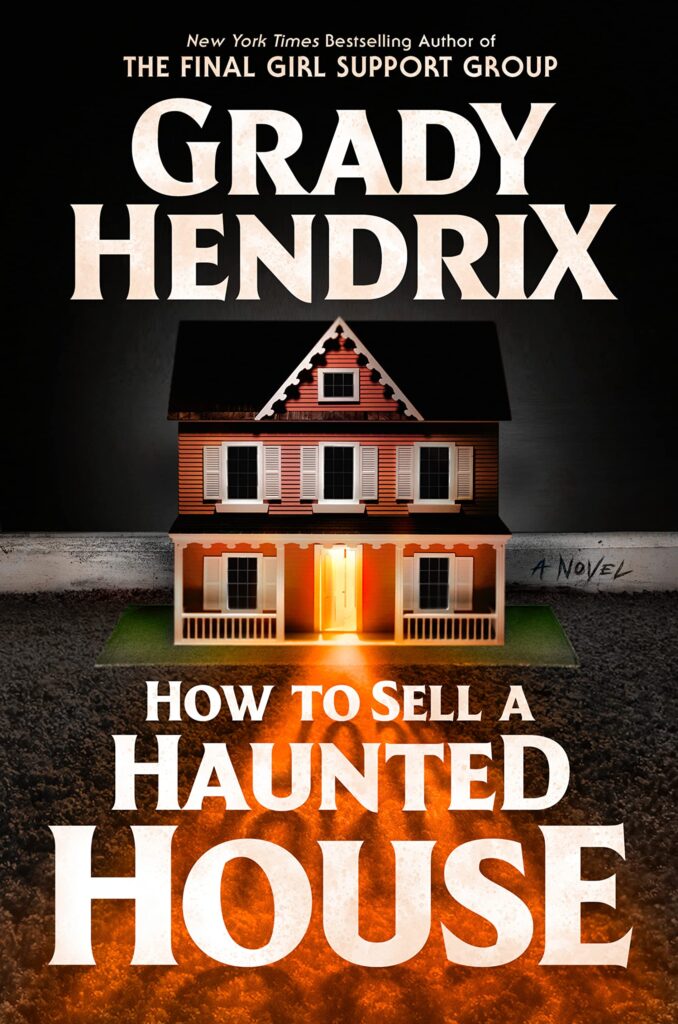
How to Sell a Haunted House (2023)
Select Sections to Print
×Book Details
How to Sell a Haunted House (2023)
Jump to Section
⚠️ Trigger Warnings
- Death of parents
- Grief and bereavement
- Severe car accident
- Graphic violence and gore
- Amputation
- Eye injury / eye trauma
- Animal death and gore
- Child death
- Drowning
- Near-drowning
- Child endangerment
- Child self-harm
- Possession
- Dolls and puppets
- Taxidermy
- Fire / arson
- Family dysfunction
- Parental neglect
- Emotional manipulation
- Sibling conflict
- Generational trauma
- Mental illness
- Hallucinations
- Psychosis / psychotic episodes
- Paranoia
⏱️ 2-Minute Spoiler Summary
Louise Joyner, a 39-year-old single mother living in San Francisco, returns to Mount Pleasant, South Carolina, after her parents, Nancy and Eric Joyner, die in a car crash. She leaves her five-year-old daughter, Poppy, with Poppy’s father, Ian, and reunites with her estranged younger brother, Mark. Their childhood home is packed with Nancy’s handmade dolls and puppets, including Pupkin, a creepy red-and-yellow glove puppet Louise has feared since childhood.
Louise and Mark immediately clash over their parents’ estate. Nancy’s will leaves the house and most of its contents to Mark, while Louise receives her mother’s “art collection.” Louise realizes that Nancy considered all her handmade puppets and crafts to be art, meaning Louise technically owns hundreds of objects filling the house. She refuses to remove them quickly, preventing Mark from selling the property.
Then the supposedly haunted-house problem becomes very real. Taxidermied squirrels move on their own, giant dolls write “MARK KOM HOM” in lipstick, and Pupkin attacks Louise by stabbing a sewing needle into her eye. Mark shoots the puppet to pieces, but he and Louise finally realize they have both been hiding terrifying experiences involving Pupkin.
Mark admits that when he went to Boston University, he joined an experimental theater group whose leader, Clark, took possession of Pupkin. Under the puppet’s influence, the group became increasingly violent, mutilating animals and destroying homes. Mark eventually burned down their house while trying to escape. Louise then reveals that when she was five, Pupkin spoke inside her head and ordered her to lead two-year-old Mark onto a frozen pond and abandon him there. Louise buried Pupkin afterward, but Nancy dug him up and returned him to her room. The siblings now believe Pupkin also attacked their father, triggering the medical emergency that caused their parents’ fatal crash.
Louise returns to San Francisco, only to discover that Pupkin’s influence has followed her. Poppy has received a duplicate Pupkin puppet handmade by Ian’s mother and is now possessed, biting people, screaming Pupkin’s catchphrase, and cutting her own arm with a knife.
Louise brings Poppy back to South Carolina. With help from their aunt Gail and Gail’s friend Barb, who specializes in cursed dolls, the family performs a ritual. Pupkin speaks through Poppy and reveals that the spirit inside him belongs to Freddie, Nancy’s younger brother, who supposedly died of lockjaw at age five.
Louise confronts her elderly Aunt Honey, who finally reveals the family’s buried secret. Freddie never died of lockjaw. When Nancy was seven, she wandered away from him at a hotel pool, and five-year-old Freddie drowned. Their traumatized parents covered up what happened and secretly buried Freddie’s body in the backyard of the Joyner home.
Louise, Mark, and Poppy return to the house during a storm to recover Freddie’s remains. Pupkin unleashes all of Nancy’s puppets, which combine into a massive puppet creature. Mark’s imaginary childhood dog, Spider, somehow becomes real and attacks it. Pupkin then takes control of Mark and forces him to attack Louise with a hammer. With no other way to stop him, Louise uses a circular saw to cut off Mark’s right forearm, separating him from Pupkin.
After Mark is taken for emergency treatment, Louise digs beneath a cypress tree and finds a tin trunk containing Freddie’s bones. She gently tells Freddie that he is dead and helps him finally accept it. Freddie and Pupkin depart into the imaginary Tickytoo Woods, and Louise burns Pupkin’s empty puppet body.
Six months later, Freddie is properly buried beside Nancy and Eric. Mark is recovering with a prosthetic arm, the house has been renovated and sold, and Louise and Mark have finally reconciled. Before leaving their childhood home for the last time, they briefly smell their father’s stollen baking in the kitchen. Then Louise, Mark, and Poppy lock the door and walk away together.
📖 Full Spoiler Summary
Louise and Mark Come Home
Louise Joyner is a 39-year-old single mother and product designer living in San Francisco when her estranged younger brother, Mark, calls with devastating news: their parents, Nancy and Eric Joyner, have died in a car crash back home in Mount Pleasant, South Carolina.
Louise leaves her five-year-old daughter, Poppy, with Poppy’s father, Ian, and flies to Charleston. Returning to her childhood home is unsettling even before anything supernatural happens. Nancy, a former actress who became deeply involved in Christian puppet ministry, filled the house with hundreds of handmade dolls, puppets, and crafts. Now they stare at Louise from practically every surface. The attic hatch has been nailed shut, a hammer and cane have been left on the floor, and two enormous dolls sit watching the Home Shopping Network.
Then Roland Agutter, who owns a junk-removal company, arrives with a truck and workers in hazmat suits. Mark has hired him to clear out the entire house.
That immediately reignites the siblings’ long-standing hostility. Mark wants their parents cremated and their belongings disposed of as quickly as possible, while Louise is horrified by his attitude. Their argument becomes physical enough that Louise spits in his face, and Roland wisely decides he wants nothing to do with the family dispute.
Louise retreats to the Isle of Palms beach house belonging to Aunt Honey, Nancy’s elderly aunt. There she reconnects with other relatives, including Nancy’s sister Aunt Gail, Gail’s daughter Constance, and Constance’s sister Mercy, a successful real-estate agent.
Pupkin Returns
When Louise goes back to the house that night, she discovers the television has somehow turned itself on again. Sitting in Eric’s chair watching it is Pupkin, Nancy’s beloved childhood puppet.
Pupkin is a red-and-yellow glove puppet with a white face, permanent smile, and pointed hood, and Louise has been terrified of him for most of her life. Disturbed by seeing him again, she stuffs him into a plastic garbage bag and throws him into the garage trash.
The family soon gathers for Nancy and Eric’s funeral at Mount Pleasant Presbyterian Church, where Nancy’s fellow Christian puppeteers arrive with puppets on their arms. Afterward, Constance’s husband, Brody, goes over the wills.
Because Nancy survived Eric by several minutes after the crash, Nancy’s will controls the estate. She left the house and virtually everything in it to Mark, while Louise received only her “art collection.” Mark is delighted—until Louise notices a loophole. Nancy considered her handmade puppets, sculptures, and crafts to be art. That means Louise legally owns the enormous collection filling the house.
Louise makes it clear she intends to take her time sorting through everything. Until her property is removed, Mark cannot simply empty and sell the house.
Their inheritance battle soon becomes the least of their problems.
The House Fights Back
As Louise begins cataloguing Nancy’s creations, bizarre events become impossible to dismiss. A taxidermied Squirrel Nativity comes alive, and Louise crushes one squirrel’s skull under her foot while trying to escape it. Later, the apparently destroyed squirrel turns up intact in the trash. Pupkin, meanwhile, has escaped the garbage bag.
When Mercy visits to evaluate the house for sale, she experiences phantom footsteps coming from the attic and mysterious noises inside the bathroom vanity. She refuses to list the property, declaring that the place is haunted.
Louise and Mark attempt one of their old family traditions, a “Pizza Chinese” dinner, hoping to calm whatever is happening. Instead, old resentments surface. Mark accuses Louise of trying to kill him when they were children by leading him onto a frozen pond when he was only two.
Then two giant dolls modeled after Mark and Louise move into the bathroom by themselves and scrawl “MARK KOM HOM” across the wall in red lipstick.
That night, the threat becomes unmistakably violent. Pupkin attacks Louise and drives a long sewing needle directly into her left eye. She manages to pull it out. Mark bursts into the room with a gun and repeatedly shoots Pupkin until the puppet is shredded.
The siblings can no longer pretend they are dealing with ordinary family baggage.
What Pupkin Did to Them
At three in the morning, Louise and Mark retreat to a Waffle House, where Mark finally explains what really happened when he attended Boston University.
As a freshman, he became involved with an experimental group called Organ Puppet Theater, led by a puppeteer named Clark and including Sadie and Richard. Clark took Pupkin and began wearing him constantly. Under Pupkin’s influence, the group became increasingly disturbed and violent. They mutilated neighborhood pets and went on destructive rampages through houses.
Mark eventually tried to escape by setting fire to the group’s papier-mâché masks in the basement. The fire spread, burning down the house, and Mark fled.
His confession pushes Louise to reveal what she has hidden since childhood. When she was five, Pupkin spoke directly inside her mind and ordered her to take two-year-old Mark onto a frozen pond and leave him there. Horrified by what she had done, Louise later buried Pupkin deep in the backyard.
But Nancy found him.
Rather than recognizing what Louise believed had happened, their mother dug Pupkin up, cleaned him, and put him right back in Louise’s room.
With both siblings finally comparing their experiences, they reach another horrifying conclusion: Pupkin attacked Eric shortly before their parents died. That attack caused the medical emergency that led to the fatal car crash.
Pupkin Takes Poppy
Louise leaves Charleston and returns to San Francisco, hoping to put the nightmare behind her. Instead, she discovers it has followed her home.
Ian’s mother has made Poppy her own duplicate Pupkin puppet, and Poppy is already falling under its control. The little girl screams Pupkin’s “Kakawewe!” catchphrase, bites adults, and uses a kitchen knife to carve deep scratches into her own arm.
Realizing her daughter is in immediate danger, Louise takes Poppy back to Charleston. She and Mark turn to Aunt Gail, who brings them to her friend Barb, an energetic woman who considers herself an expert on cursed dolls.
Barb gathers Louise, Mark, Poppy, Gail, Constance, Mercy, and Brody into a spiritual circle surrounded by her doll collection. During the ritual, Pupkin begins speaking through Poppy.
Instead of confronting him aggressively, Barb tricks Pupkin into talking about himself. What emerges completely changes the family’s understanding of the haunting.
Pupkin says he is Freddie, Nancy’s younger brother.
According to the story Louise and Mark grew up hearing, five-year-old Freddie died from lockjaw after stepping on a rusty nail. But that story was never true.
The Joyners’ Buried Secret
The family rushes to the hospital, where Aunt Honey has been admitted with breathing problems. Louise confronts her, demanding the truth about Freddie.
Aunt Honey finally breaks down.
When Nancy was seven and Freddie was five, the two children were at a hotel pool in Columbia. Nancy wandered away to count ice cream flavors, leaving her little brother unattended. Freddie drowned.
The loss devastated the family, but instead of acknowledging what happened, Nancy’s parents created a false story that Freddie had died of lockjaw. They secretly buried the boy’s body in the backyard of the family home.
That secret explains years of strange family behavior. Freddie’s remains were still on the property, which was why the family could never build a deck there or simply leave the house behind.
Louise now understands what she has to do. Freddie has never truly been laid to rest.
The Final Battle for Freddie
Louise, Mark, and Poppy drive back to the house during a storm, determined to find Freddie’s body and end the haunting.
Pupkin responds by unleashing everything in the house.
Nancy’s enormous collection of puppets joins together into a grotesque seven-foot-tall puppet golem made from hundreds of intertwined bodies. In response, something equally impossible happens: Spider, Mark’s imaginary blue six-legged dog from childhood, manifests as a real creature and tears into the puppet monster.
Pupkin then takes control of Mark himself.
Mark comes after Louise with a claw hammer, and she realizes she cannot stop him without physically separating him from the puppet. In desperation, Louise grabs Mark’s circular saw and cuts off his right forearm.
The horrific act works. Pupkin is severed from Mark, and Mark is rushed away for emergency medical treatment.
Louise stays behind to finish what they came to do. She digs beneath the cypress tree in the backyard until she finds an old tin traveling trunk. Inside are the bones of five-year-old Freddie, still dressed in a red sweater.
Instead of fighting him, Louise speaks gently to the child whose death has haunted her family for decades. She explains to Freddie that he is dead and that nothing real can last forever.
At last, Freddie accepts the truth. His spirit and Pupkin leave together for the fantasy world of Tickytoo Woods.
With Freddie finally gone, Louise burns Pupkin’s physical puppet body to ash on the backyard grill.
Louise and Mark Finally Let Go
Six months later, in October, Freddie receives the funeral he was denied as a child. His remains are properly buried beside Nancy and Eric at Stuhr’s cemetery.
Mark survives losing his arm and is adjusting well to a prosthetic. He also renovates the family house, transforming the cluttered, oppressive home into a modern open-plan property. Mercy finally finds a buyer, a software engineer from Toronto, and the house sells for a high enough price to help secure Poppy’s financial future.
More importantly, Louise and Mark are no longer the bitter, estranged siblings who returned home after their parents’ deaths. By confronting Pupkin and finally telling each other the truth about their childhoods, they have reconciled.
Before leaving the house for the final time, Louise, Mark, and Poppy stand together in the kitchen. For a moment, they smell their father’s stollen baking in the oven.
Then Louise and Mark lock the door behind them and walk away together, leaving their childhood home—and the secrets buried inside it—behind.
🔚 Ending Explained
How How to Sell a Haunted House Ends
The climax of How to Sell a Haunted House brings Louise and Mark back to the source of their family’s haunting: the secret buried beneath the cypress tree in their childhood backyard.
Decades earlier, their five-year-old uncle Freddie drowned in a hotel pool in Columbia after seven-year-old Nancy wandered away to count ice cream flavors. Rather than acknowledge what happened, Nancy’s parents concealed Freddie’s death, claimed he died of lockjaw, and secretly buried his body beneath the cypress tree. The lie becomes the foundation of the family’s supernatural problems. Freddie’s restless spirit eventually attaches itself to Pupkin, Nancy’s beloved childhood glove puppet, turning the puppet into a vessel for his loneliness, anger, jealousy, and fear of being abandoned.
During a violent storm, Louise and Mark enter the backyard to finally dig Freddie up. The house’s supernatural forces respond by creating one last monstrous defense: Nancy’s handmade puppets—including Deuteronomy the Donkey, Danny the Dragon, and Mr. Don’t—fuse into a towering, seven-foot puppet golem.
Mark counters one childhood creation with another. Using his old whistle, he summons Spider, the imaginary six-legged blue dog from his childhood. Spider becomes physically real and attacks the golem, ripping apart the mass of puppets while Louise desperately digs beneath the cypress tree.
Louise eventually uncovers an old tin traveling trunk. Inside are Freddie’s skeletal remains, still dressed in his faded red sweater.
But Louise ultimately realizes that Freddie cannot simply be fought. As Pupkin’s papier-mâché face begins dissolving in the rain, she speaks gently to the frightened child behind the monster. She tells Freddie the truth: he is dead, and nothing real can last forever.
That acknowledgment finally gives Freddie what his family denied him for decades—the truth about what happened and permission to stop hiding. Freddie accepts his death, calls for Pupkin, and the two disappear together into the imaginary Tickytoo Woods, heading toward “the End of the World.”
Louise then destroys what remains of Pupkin’s physical vessel. She puts the puppet on the backyard grill, covers it in lighter fluid, and burns it to ash.
The Epilogue: Acceptance
Six months later, in October, Freddie finally receives the burial he was denied as a child. After the family clears the legal obstacles surrounding his original empty casket, his actual remains are buried in the family plot beside Nancy and their parents. The funeral combines genuine closure with the Joyners’ usual eccentricity: Aunt Gail leads prayers, a bagpiper plays “Amazing Grace,” and the family shares drinks beside the grave.
Mark survives, although the confrontation with Pupkin has permanently changed him. Louise had been forced to sever his right forearm with a circular saw to free him from Pupkin’s control. He is adapting to life with one arm and considering a prosthetic.
He also finally takes responsibility for the house rather than simply fighting Louise over their inheritance. Mark gets a loan and renovates the property, transforming the cluttered, oppressive childhood home into a modern open-plan house. Mercy finds a buyer—a software engineer from Toronto—whose purchase leaves Louise and Mark with a substantial inheritance and helps secure Poppy’s financial future.
Before surrendering the keys, Louise, Mark, and Poppy walk through the house one final time.
Then something supernatural happens again.
In the renovated kitchen, all three suddenly smell the unmistakable aroma of their father’s homemade Christmas stollen baking in the oven.
This time, nobody is afraid.
They recognize the smell as a comforting trace of their father rather than another malevolent haunting. Louise, Mark, and Poppy lock the door and leave the house together.
What the Ending Means
The crucial twist is that How to Sell a Haunted House ultimately isn’t really about defeating a possessed puppet. It is about a family finally confronting something it buried—literally and emotionally.
Pupkin is the embodiment of unprocessed generational trauma. Freddie’s death was never openly mourned, and Nancy was never allowed to process either her grief or her guilt over what happened. Instead, everything was concealed. Freddie was hidden underground; the truth was replaced with a lie; and Nancy poured her unresolved childhood emotions into her puppets. Pupkin becomes the grotesque result of everything the family refuses to acknowledge.
That makes the cypress tree and Freddie’s buried trunk especially important. The family cannot build a deck over that part of the yard, just as they cannot truly move forward while Freddie remains hidden underneath it. The secret physically prevents them from changing the house. Digging Freddie up therefore becomes an exorcism through exposure rather than magic.
The novel repeatedly reinforces that idea. Rituals, cleansing, violence, and attempts to simply destroy Pupkin never solve the real problem. What finally defeats the haunting is truth. Aunt Honey reveals what actually happened to Freddie, Louise uncovers his body, and then Louise acknowledges him as a frightened dead child rather than treating him solely as a monster.
Her decision to speak compassionately to Freddie is also the culmination of her character arc. Louise begins the novel by coping through avoidance, distance, intellectual superiority, and control. In the climax, she stops trying to overpower the past and instead acknowledges it. Her statement that nothing real lasts forever becomes the emotional thesis of the ending: accepting loss means accepting that love cannot prevent death or preserve childhood forever.
Mark’s amputation makes the cost of breaking the cycle brutally literal. He cannot emerge from his family’s history unchanged. Losing his arm represents the permanent sacrifices sometimes required to escape destructive patterns. But Mark does not remain defined by what he loses. Renovating the house afterward shows him finally building something rather than destroying, blaming, or avoiding responsibility.
Spider provides Pupkin’s thematic opposite. Both are creations of childhood imagination, but Pupkin is childhood pain that has curdled into possessiveness and violence, while Spider represents imagination as loyalty, protection, and love. The novel therefore doesn’t portray childhood itself as something monstrous. What becomes monstrous is childhood pain that adults refuse to acknowledge.
That distinction explains the beautiful final appearance of the Christmas stollen.
The supernatural has not necessarily disappeared from the Joyners’ world. What has changed is its nature. Earlier supernatural manifestations are associated with decay, rot, dead animals, and corrupted childhood objects. The final presence smells warm, familiar, and comforting.
The family has moved from being haunted by memory to being comforted by it.
That is why the novel’s five-part structure—Denial, Anger, Bargaining, Depression, Acceptance—matters so much. The haunted-house story itself functions as a grotesque version of the grieving process. Louise and Mark cannot sell the house until they accept what happened inside their family, just as they cannot fully grieve their parents until they acknowledge that love, resentment, trauma, and happy memories can all coexist.
The house can finally be renovated and sold because the past no longer controls the people inside it.
And the most important thing Louise and Mark carry away isn’t their inheritance. It’s each other. They begin the novel fighting over money, possessions, childhood grievances, and competing versions of their parents. By the end, they understand that they experienced the same dysfunctional family differently—and that neither version cancels out the other.
For Poppy, that reconciliation has even greater significance. Freddie’s trauma passed into Nancy, Nancy’s unresolved trauma shaped Louise and Mark, and Pupkin threatened to continue that pattern into another generation. By uncovering Freddie, acknowledging the truth, and letting him go, Louise prevents Poppy from inheriting the family’s silence.
So the ending is surprisingly hopeful beneath all the gore and puppet insanity. The Joyners don’t erase their past. They finally put it where it belongs. Freddie is buried with his family. Pupkin is destroyed. The house belongs to someone new. Louise and Mark move forward.
And their father remains—not as a ghost demanding something from them, but simply as the warm smell of Christmas stollen and the memory of being loved.
👤 Characters & Fates
🔶 Main Characters

Survives Pupkin stabbing a sewing needle into her eye and Spider mauling her, then saws off Mark’s possessed right forearm to save him. She digs up Freddie’s remains, releases his spirit, burns Pupkin, reconciles with Mark, and shares the lucrative sale of their renovated childhood home with him.

Pupkin possesses him and forces him to attack Louise with a claw hammer, leading Louise to saw off his right forearm. He survives, adapts to a prosthetic, renovates the family house himself, reconciles with Louise, and splits the sale proceeds with her 50-50.

Dies in the car crash that begins the novel while rushing Eric to the hospital after Pupkin attacks him. Her children eventually uncover her family’s secret, destroy or remove her puppets, and rebury her beside Eric and Freddie. Pasted text

Dies at the scene of the car crash and is later reburied at Stuhr’s cemetery. At the novel’s end, Louise, Mark, and Poppy mysteriously smell his signature Christmas stollen baking in the renovated house, suggesting a final comforting presence.
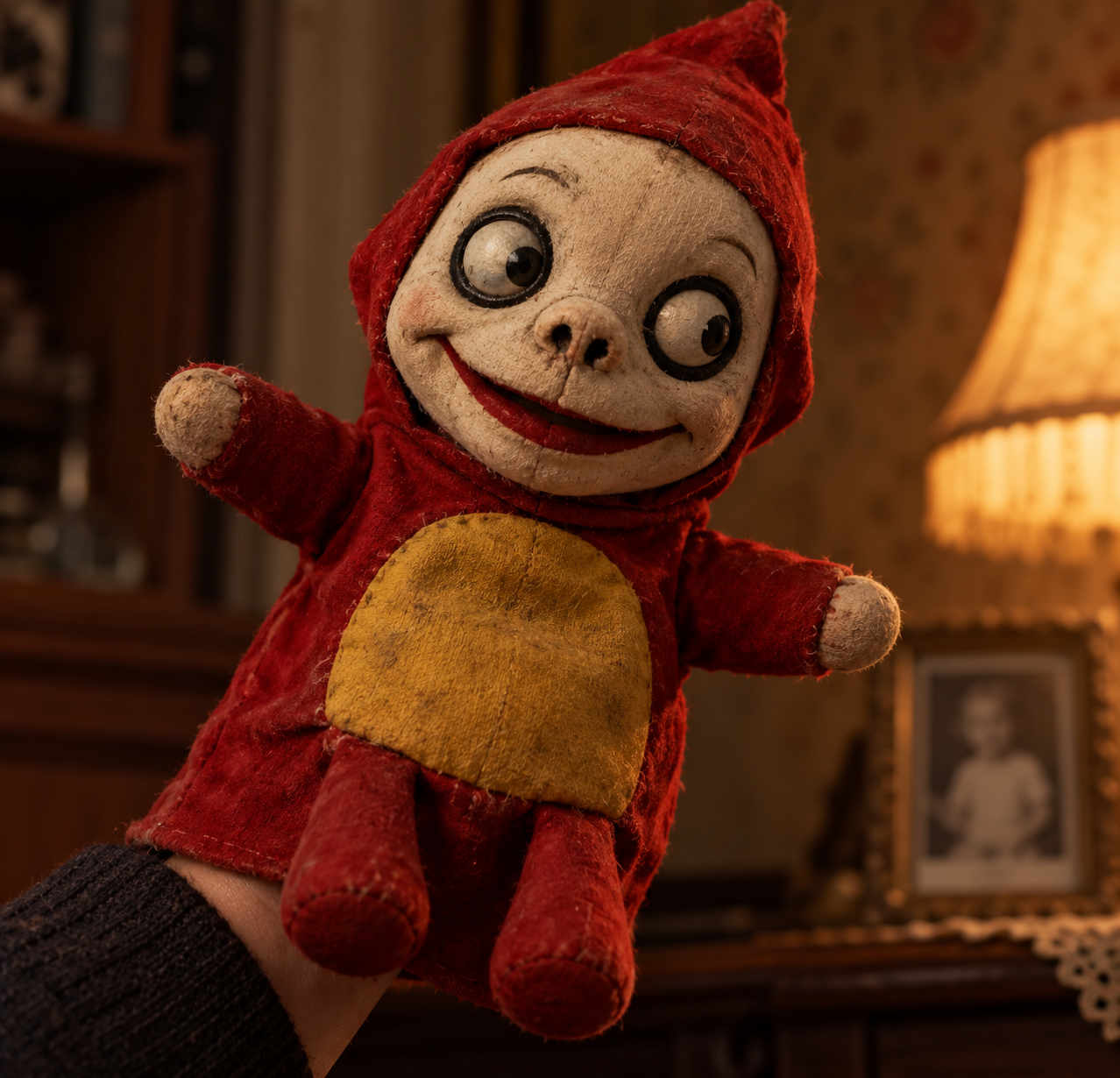
Louise discovers Freddie is the spirit inside Pupkin and releases him by unearthing his remains and helping him understand that he died. With Freddie gone, she douses Pupkin in lighter fluid and burns the puppet to ash on the backyard grill.

Under Pupkin’s influence she regresses, wets the bed, bites, and cuts deep scratches into her arm with a kitchen knife. She recovers once Freddie’s remains are unearthed, receives Louise’s childhood stuffed animals, attends Freddie’s funeral, and safely returns to San Francisco.
🔷 Supporting Characters

Louise finds his bones inside a buried traveling trunk and helps his spirit understand his death, allowing him to pass peacefully into Tickytoo Woods. His remains are finally buried beside Nancy and Eric. Pasted text
Survives the events and continues co-parenting Poppy with Louise.
Leaves after Louise and Mark physically fight but returns six months later to help clear the ruined yard and puppet debris.
Hospitalized with breathing problems, she finally confesses the 68-year-old secret to Louise. She survives and later hosts the family after Freddie’s funeral. Pasted text
Survives the ordeal, helps with the spiritual intervention, and leads prayers when Freddie is finally reburied.
Helps restrain the possessed Poppy during the trip to Barb and survives the ordeal, later attending Freddie’s funeral and joking with Mark.
Successfully sells the renovated house six months later to a Toronto software engineer for a high price.
Handles the estate paperwork and survives everything, later comically falling into Freddie’s open grave at the funeral without being injured. Pasted text
Successfully finishes the chaotic service and remains otherwise unharmed.
Survives and participates in the memorial celebrating Nancy’s puppet legacy.
Appears only in Mark’s flashbacks; his house burns when Mark sets fire to papier-mâché masks while trying to escape Pupkin’s influence.
Their ultimate lives are not revealed; they appear only in Mark’s college flashbacks.
Martin saves two-year-old Mark by diving into the freezing pond and pulling him out after he falls through the ice.
Survives the supernatural events and later attends Freddie’s proper cemetery burial.
🕳️ Potential Plot Holes
Louise cuts off Mark’s forearm with a circular saw, then the siblings tell authorities that Mark accidentally amputated his own arm during a DIY project and that falling shelves caused Louise’s extensive injuries. Given the nature of the amputation, Louise’s serious facial and eye trauma, and the condition of the garage, it seems unlikely that police and medical personnel would accept the explanation without significantly more scrutiny. This works as a necessary cover story for the supernatural events, but the ease with which authorities accept it is a major real-world plausibility gap.
Freddie supposedly drowns at a Howard Johnson’s hotel pool in Columbia, after which his parents secretly transport his body home, tell people he died of lockjaw, and bury him beneath the backyard cypress tree. A child dying at a public hotel would ordinarily create witnesses, records, and involvement from authorities, making it extremely difficult for the family to substitute an entirely different cause of death and privately dispose of the body. The novel never provides enough explanation for how Freddie’s parents managed such an elaborate cover-up, making this one of the story’s biggest logistical gaps.
Brody explains that Nancy surviving Eric by a matter of minutes means Eric’s property passes to her and is consequently distributed according to Nancy’s will, dramatically changing what Louise and Mark inherit. This sounds legally questionable because South Carolina has survivorship provisions that can affect inheritance when two people die close together. However, the exact result would depend on the language of Eric and Nancy’s wills and how the property was titled, details the novel does not fully provide. Because of those unknowns, this is better treated as a possible legal inconsistency than a definite plot hole.
📚 Book Club Q&A's
⭐ Final Rating & Thoughts
How to Sell a Haunted House had all the ingredients for a horror novel I should have loved: a creepy old house, a dysfunctional family, buried childhood trauma, and a seriously disturbing puppet. Unfortunately, the execution just didn’t work for me.
I was intrigued enough to keep reading, and I’ll give Hendrix credit for coming up with something genuinely bizarre and memorable. Pupkin is certainly not a villain I’m going to forget anytime soon. But the book felt far too long for the story it was telling. The extended puppet sequences became repetitive, the campiness often overwhelmed the horror, and by the time the story reached its final stretch, I was more exhausted than scared.
I also think this was partly a mismatch between Hendrix’s style and my personal taste. The combination of absurd humor, over-the-top horror, and emotional family drama clearly has an audience, but I wanted something tighter, more unsettling and less campy.
There’s a clever story about grief, sibling resentment, and inherited trauma underneath all the puppet chaos. I just wish it had been about 100 pages shorter—and considerably less exhausting.
✨ Adaptation description
Adaptation
How to Sell a Haunted House is being developed as a feature film based on Grady Hendrix’s 2023 horror novel. Legendary Entertainment acquired the film rights in 2023, with Sam Raimi and Rob Tapert’s Ghost House Pictures and Adam Goldworm’s Aperture Entertainment involved in producing. James Ashcroft (Coming Home in the Dark) is attached to direct, while Grady Hendrix is adapting his own novel for the screen.
As of October 2026, the film remains in development. No cast, filming dates, or release date have been officially announced. Hendrix’s agency materials published in 2026 continue to list the film rights as sold to Legendary, with Ashcroft directing and Raimi producing.
The novel follows estranged siblings Louise and Mark Joyner, who reunite in Charleston after the sudden deaths of their parents. While preparing their childhood home for sale, they must sort through their mother’s enormous collection of dolls and handmade puppets—including the increasingly dangerous Pupkin—and confront long-buried secrets from their family’s past. The book combines supernatural horror and grotesque puppet imagery with dark comedy and a more emotional story about grief, childhood trauma, family secrets, and sibling reconciliation.
✨ Books Like How to Sell a Haunted House (2023)
See an error on this page?