

Katabasis (2025)
Select Sections to Print
×Book Details
Katabasis (2025)
Jump to Section
⚠️ Trigger Warnings
- Graphic violence and gore
- Death and murder
- Body horror
- Blood
- Suicide
- Suicidal ideation
- Depression
- Panic attacks
- Academic burnout and extreme stress
- Sexual harassment
- Sexual assault / attempted sexual assault
- Abuse of power
- Academic abuse and exploitation
- Sexism and misogyny
- Animal experimentation
- Animal cruelty and animal death
- Dismemberment
- Chronic illness
- Chronic pain
- Medical procedures and surgery
- Forced/painful medical procedures
- Vomiting / emetophobia
- Sleep deprivation
⏱️ 2-Minute Spoiler Summary
Cambridge PhD student Alice Law accidentally kills her abusive academic advisor, Professor Jacob Grimes, and travels through the Eight Courts of Hell to resurrect him, accompanied by fellow student Peter Murdoch. Their journey reveals that Grimes has harmed generations of students and that Peter secretly sabotaged his research after Grimes stole his work.
After Peter sacrifices himself to save Alice from the murderous Kripke family, Alice hunts down the Kripkes, continues through Hell, and reaches King Yama carrying the powerful Dialetheia. There she discovers Grimes has been manipulating both students from beyond the grave, engineering their journey so they would retrieve the Dialetheia for his own ambitions.
Alice finally turns against him. Instead of bringing Grimes back, she sacrifices Grimes’s soul to resurrect Peter. Yama restores the lifespans they surrendered to enter Hell and returns them to Cambridge. Alice and Peter emerge alive, abandon academia, and choose to build lives no longer controlled by Grimes.
📖 Full Spoiler Summary
Alice Law Accidentally Kills Her Advisor
At Cambridge University, Alice Law is a PhD student studying analytic magick under the brilliant and notoriously cruel Professor Jacob Grimes. Her entire academic future depends on him: without his approval and recommendation, she has little hope of graduating or finding a job.
Then Alice accidentally kills him.
During what should be a routine magical experiment, Alice fails to properly close a pentagram, causing a catastrophic accident that leaves Grimes dead. Horrified by what she has done but equally terrified of what his death means for her career, Alice becomes convinced there is only one solution. If souls really do descend into Hell after death, she will go there, find Grimes, and bring him back.
Alice constructs a transportative pentagram capable of taking her into the Eight Courts of Hell, but just as she activates it, Peter Murdoch appears. Peter is another of Grimes’s graduate students and everything Alice believes she is not: naturally brilliant, confident, charming, and seemingly destined for academic success. Rather than stop her, Peter alters the spell so he can accompany her.
Getting into Hell comes with a brutal price. Both Alice and Peter must surrender half of their remaining lifespans. They agree and descend together.
The Long Road Through Hell
Alice and Peter arrive in the Fields of Asphodel, where they unexpectedly encounter Archimedes, the Cambridge department cat, who apparently possesses the ability to travel between the living world and the underworld.
They also meet the Shades of four Cambridge undergraduates who died thirty years earlier in a magical accident supervised by a much younger Grimes. Their presence offers Alice an early warning that her revered advisor has left bodies behind him before. The students also explain that Hell operates through an enormous bureaucracy: even someone as powerful and important as Grimes must wait his turn to pass through the courts.
Their search leads Alice and Peter into the Court of Pride, Superbia, which takes the form of an endless library. There they encounter the Shade of philosopher G.E. Moore, who functions as a kind of infernal dean. Moore attempts to trap them in the library permanently by demanding that they “define the good,” effectively recruiting them into Hell’s endless academic bureaucracy.
Alice manages to beat him at his own game, constructing a logic proof that allows her and Peter to escape. From there, they reach the Lethe, the river whose waters erase memory.
Alice discovers that she is strangely resistant to the Lethe’s effects because of a permanent pentagram Grimes tattooed into her skin during a research trip to Venice. The protection comes with painful memories. Grimes subjected Alice to the procedure despite the immense physical and psychological trauma it caused her, another reminder of how completely she allowed him to control her life in the name of academic success.
Alice Begins to Suspect Peter
As they move deeper into Hell, Alice and Peter enter the Court of Desire, where physical urges become grotesquely exaggerated. Peter begins behaving strangely, worsening Alice’s already fragile trust in him.
Then she searches his bag and discovers notes describing a spell of organic exchange. Her own name is underlined.
Alice immediately reaches a terrifying conclusion: Peter may be planning to trade her soul for Grimes’s.
Before she can determine the truth, they are attacked by skeletal creatures made from bone and chalk. Their unlikely rescuer is Elspeth Bayes, another former student of Grimes who died by suicide years earlier.
Elspeth now lives aboard a boat traveling along the Lethe, accompanied by Archimedes. She tells them about Nicomachus Kripke, Magnolia Kripke, and their son Theophrastus, a family of rogue magicians roaming Hell. The Kripkes hunt other magicians and drain their blood, which they can then use to fuel their own magick.
More importantly, Elspeth possesses knowledge of the Dialetheia, a True Contradiction powerful enough to challenge the fundamental rules governing Hell.
Alice and Peter become desperate enough to try stealing that knowledge from her. Once Elspeth realizes they have come to Hell specifically to resurrect Grimes, she is furious. She remembers him not as the genius Alice has spent years trying to impress, but as a destructive man who hurt the students under his control. Using her strange command over butterflies, Elspeth violently throws Alice and Peter from her boat.
Peter Sacrifices Himself
Stranded in the Court of Violence, Alice and Peter are captured by the Kripkes and imprisoned inside an impossible Escher trap.
With escape looking increasingly unlikely, the resentment and suspicion between them finally erupts. Alice confronts Peter about the organic exchange spell and his involvement in Grimes’s death.
Peter admits that the laboratory accident was not entirely Alice’s fault. He had deliberately sabotaged Grimes’s research after discovering that Grimes had stolen his work. His act of revenge helped create the conditions that led to the fatal accident.
But Alice has also misunderstood the notes in his bag. Peter insists he never intended to sacrifice her. The exchange spell was meant for himself. If a soul had to be traded to bring Grimes home, Peter had planned to give up his own.
When the Kripkes close in, Peter proves it. Using his blood and the Hangman’s Paradox, he creates a way for Alice to escape the trap. There is no way for him to follow.
Alice gets out while Peter remains behind.
The Kripkes drain him until his soul is completely obliterated.
Alice Goes to War With the Kripkes
Now alone, Alice continues into Lower Hell, where a mysterious Shade named John Gradus guides her toward the city of Dis.
There she encounters Gertrude, who leads a Rebel Citadel populated by souls attempting to overthrow Hell’s existing order and rebuild the underworld according to their own ideals. Alice briefly considers what they are trying to accomplish, but eventually sees their project as another futile attempt to impose a new system upon an endless one.
By this point, her original mission has also changed. Peter is gone, and Alice is consumed by rage over what the Kripkes did to him.
She returns to the upper deserts and begins hunting them.
Alice traps Magnolia and Theophrastus inside a Zeno’s Paradox, killing them. She saves something even worse for Nicomachus. Using an Erichtho spell, Alice binds his soul to a reconstructed corpse she secretly prepared back in the Cambridge laboratory. Rather than allowing Nicomachus to simply die, she condemns him to continuing agony inside the body she has created for him.
With Peter avenged, Alice resumes her journey toward the ruler of Hell.
Grimes Was Manipulating Them All Along
Alice finally reaches King Yama, the Lord of Death.
She comes bearing the Dialetheia, which takes the physical form of a strange Janus-headed flower given to her by Elspeth. Its existence as a True Contradiction gives Alice something powerful enough to bargain with.
Yama summons the Shade of Professor Grimes, and Alice finally learns the truth behind her journey.
Grimes has effectively been haunting both Alice and Peter since his death. He manipulated their thoughts and planted the ideas that pushed them toward Hell because he needed them to retrieve the Dialetheia for him. His ambitions extend far beyond returning to Cambridge: Grimes intends to use its power in his attempt to conquer the gods themselves.
The revelation finally destroys Alice’s remaining loyalty to him. For years, she endured his cruelty, exploitation, and abuse because she believed his approval would validate everything she had sacrificed for academia. Even after his death, she surrendered half her lifespan and crossed Hell to save him.
Now she understands that Grimes still sees her exactly as he always has: as something useful.
So Alice changes the terms of the exchange.
Rather than sacrifice herself to resurrect Grimes, she uses the Erichtho spell she has prepared to offer Grimes’s soul instead.
And in return, she asks for Peter Murdoch.
Alice and Peter Return to Cambridge
Alice’s gamble works. Grimes is sacrificed, while Peter is restored despite having previously been obliterated into nonexistence.
King Yama is so affected by the Dialetheia and the contradiction Alice has brought before him that he goes even further. He restores the years Alice and Peter surrendered when they entered Hell, giving them back their full remaining lifespans.
Their journey ends where it began.
Alice and Peter emerge from the pentagram at Cambridge beneath the moonlight, alive and finally free of Grimes.
After sacrificing so much of themselves in pursuit of academic success—and literally going through Hell for the professor whose approval once controlled their futures—they no longer want the lives they were fighting so desperately to preserve.
Instead of returning to the same system, Alice and Peter decide to leave academia behind.
For the first time, they choose simply to live.
🔚 Ending Explained
How Does Katabasis End?
At the end of Katabasis, Alice Law finally reaches the throne of King Yama at the very edge of the Underworld. She carries the Dialetheia, the strange Janus-headed flower given to her by Elspeth Bayes. The flower is a “True Contradiction”—something that logically should not be able to exist, yet does.
King Yama summons the Shade of Professor Jacob Grimes, and Alice learns the devastating truth: Grimes has been manipulating her and Peter Murdoch from the beginning. He has effectively been “haunting” them, planting the ideas that inspired their journey into Hell. His goal was never to be rescued out of gratitude or affection. He wanted them to retrieve the Dialetheia so he could use its impossible properties to continue his research and increase his own power.
Even Peter’s apparent destruction in the Escher trap means little to him. Grimes regards Peter’s “obliteration” as another fascinating possibility to study.
That reaction finally destroys the image Alice has carried of her advisor. For years, she has treated Grimes as an intellectual giant whose approval could determine the value of her entire life. Now she sees him for what he really is: not a god, not a genius worthy of worship, but an ordinary, cruel man who has spent years convincing his students that their suffering is the price of greatness.
And Alice refuses to follow his script any longer.
Instead of rescuing Grimes and returning to Cambridge with the recommendation letter that could secure her academic future, Alice uses the Erichtho spell she has been researching throughout the journey. Through an organic exchange, she sacrifices Grimes’s soul and uses it to pull Peter back from nonexistence.
Grimes, the man Alice entered Hell to save, becomes the price she pays to save Peter instead.
King Yama accepts the Dialetheia and, apparently entertained by everything Alice and Peter have endured, returns the half of their remaining lifespans they originally surrendered as the cost of entering Hell.
Alice and Peter then climb a spiral staircase out of the Underworld and emerge in a courtyard at Magdalene College, Cambridge, beneath a sky full of stars.
They have returned to the place where their obsession began, but they are no longer interested in playing by its rules. Their academic careers may effectively be over. They may never graduate, receive prestigious appointments, or become the scholars they once imagined themselves becoming.
For the first time, that possibility feels like freedom.
The novel ends with Alice and Peter contemplating a future that is wonderfully uncertain: picnics, movies, ordinary experiences, and the chance to discover who they are when they are no longer competing for Grimes’s approval.
What the Ending Really Means
At its heart, the ending of Katabasis is about Alice realizing that no achievement is worth surrendering her humanity for.
Her journey begins because she believes Grimes holds the key to her future. Without him, she fears her years of work have been wasted. Going literally to Hell therefore becomes an exaggerated version of what Alice has already been doing metaphorically: sacrificing her health, relationships, dignity, and happiness for academic success.
By the end, she understands that Grimes never deserved that devotion.
Rejecting the Ivory Tower
Grimes represents the ugliest version of the academic system Alice has worshipped. His pursuit of knowledge has become completely detached from empathy. People are valuable to him primarily as students, assistants, experiments, or intellectual resources.
Alice once believed that becoming like him would mean she had succeeded.
Her final choice proves that she no longer does.
Saving Peter instead of Grimes is therefore far more than choosing one person over another. Alice chooses human connection over prestige, compassion over intellectual purity, and an uncertain life over a prestigious one built around someone else’s definition of success.
The recommendation letter that once seemed worth going to Hell for becomes meaningless.
The Pentagram Tattoo and the Lethe
The pentagram tattoo on Alice’s arm is one of the clearest symbols of Grimes’s control over her. It is permanent, bodily evidence of how thoroughly he has marked her life.
But near the end of the journey, the waters of the Lethe begin washing the tattoo away.
The moment represents liberation rather than simple forgetting. Alice does not need to erase everything that happened to her; she needs to stop allowing Grimes to define what those experiences mean.
What remains is imperfect and “moth-eaten,” but it belongs to her.
The Dialetheia Represents Breaking the Rules
The Dialetheia—a True Contradiction—also captures the larger meaning of Alice’s transformation.
Grimes believes in systems. Academia has its hierarchy. Magick has its logic. Alice and Peter have spent their lives believing that if they understand the rules well enough, they can eventually win.
The Dialetheia proves that reality does not always have to obey a closed system.
Alice ultimately does the same thing.
She refuses the choices that appear to have been written for her. She does not rescue Grimes. She does not accept Peter’s disappearance as mathematically necessary. She does not return obediently to the academic ladder.
She creates another possibility.
In that sense, Alice herself becomes a kind of contradiction: the brilliant scholar who willingly abandons the version of success she spent her entire life pursuing.
Why Alice Saves Peter
Peter’s sacrifice in the Escher trap represents the logical extreme of the worldview both characters have been taught. Faced with an impossible problem, Peter identifies the rational solution and sacrifices himself.
Alice’s refusal to accept that outcome is deliberately less rational.
It is an act of love, loyalty, and grace.
Their relationship has been shaped by competition for much of the novel. Grimes’s academic world encourages them to view one another as rivals because prestige is scarce: one student wins the fellowship, gets the recommendation, earns the position, or becomes the favorite.
By choosing Peter, Alice finally rejects that scarcity mentality.
She no longer needs to defeat him to prove that she matters.
The Meaning of the Final Scene
There is something especially fitting about Alice and Peter emerging back at Cambridge.
Geographically, they have returned to where they started. Emotionally, they could hardly be further away.
Cambridge once represented everything Alice wanted: achievement, intellectual recognition, and entry into an elite world of scholarship. After Hell, its power over her has been broken.
The “ladder” they spent their lives climbing can finally be thrown away.
That gives the ending its unexpectedly hopeful tone. Alice and Peter don’t emerge from Hell with prestigious careers waiting for them. They emerge with something the people around Grimes repeatedly sacrificed in pursuit of greatness:
a life.
And suddenly the small things—movies, picnics, friendship, love, curiosity without competition—seem more meaningful than the accomplishments they once considered essential.
The great irony of Katabasis is that Alice goes to Hell believing she must bring her professor back in order to save her future.
Instead, she has to leave Grimes in Hell to finally have one.
👤 Characters & Fates
🔶 Main Characters
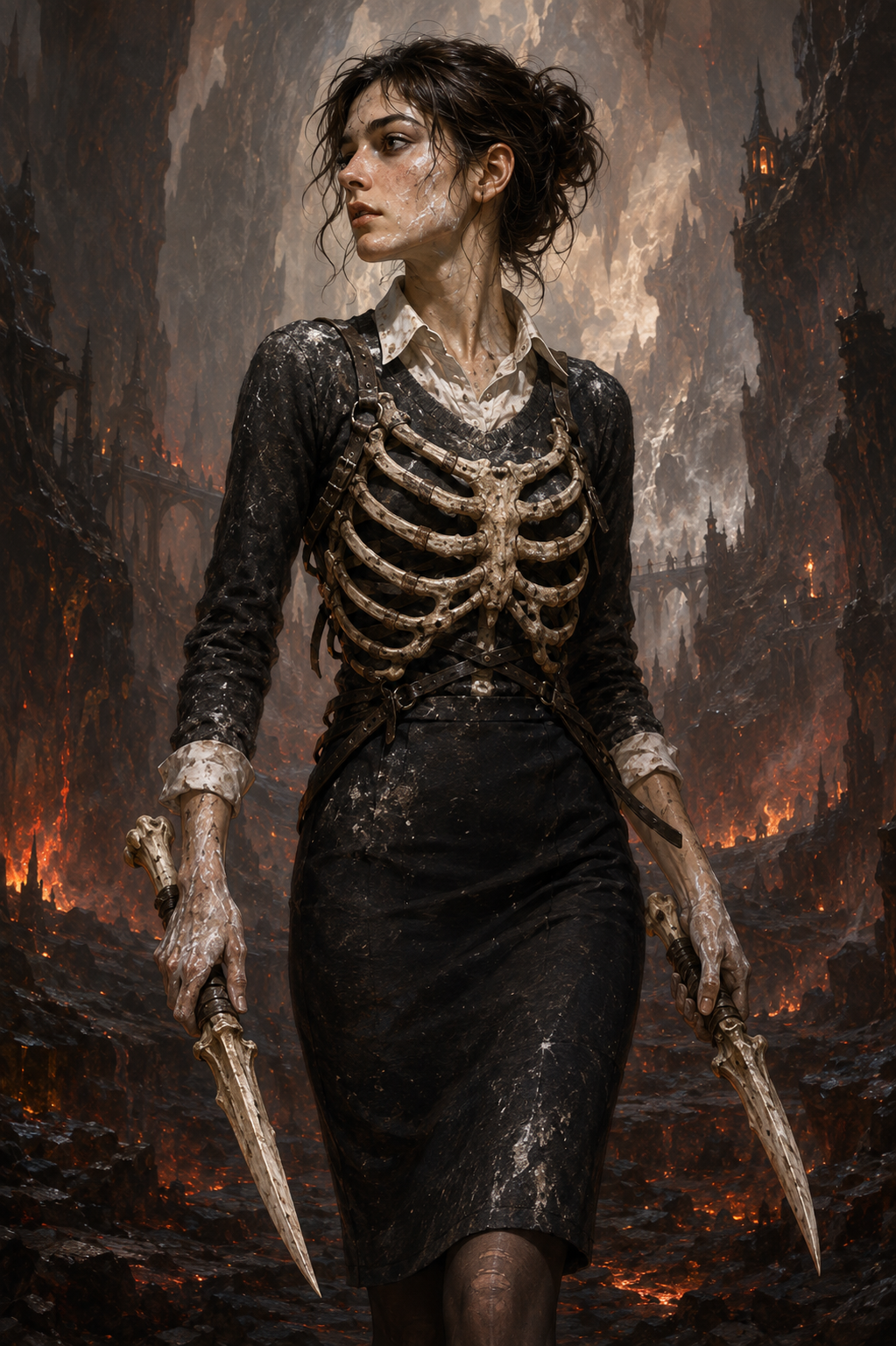
She ultimately rejects Grimes and sacrifices his soul to restore Peter from nonexistence. Alice returns to Cambridge, leaves academia behind, and begins a relationship with Peter, choosing an ordinary life over academic prestige.
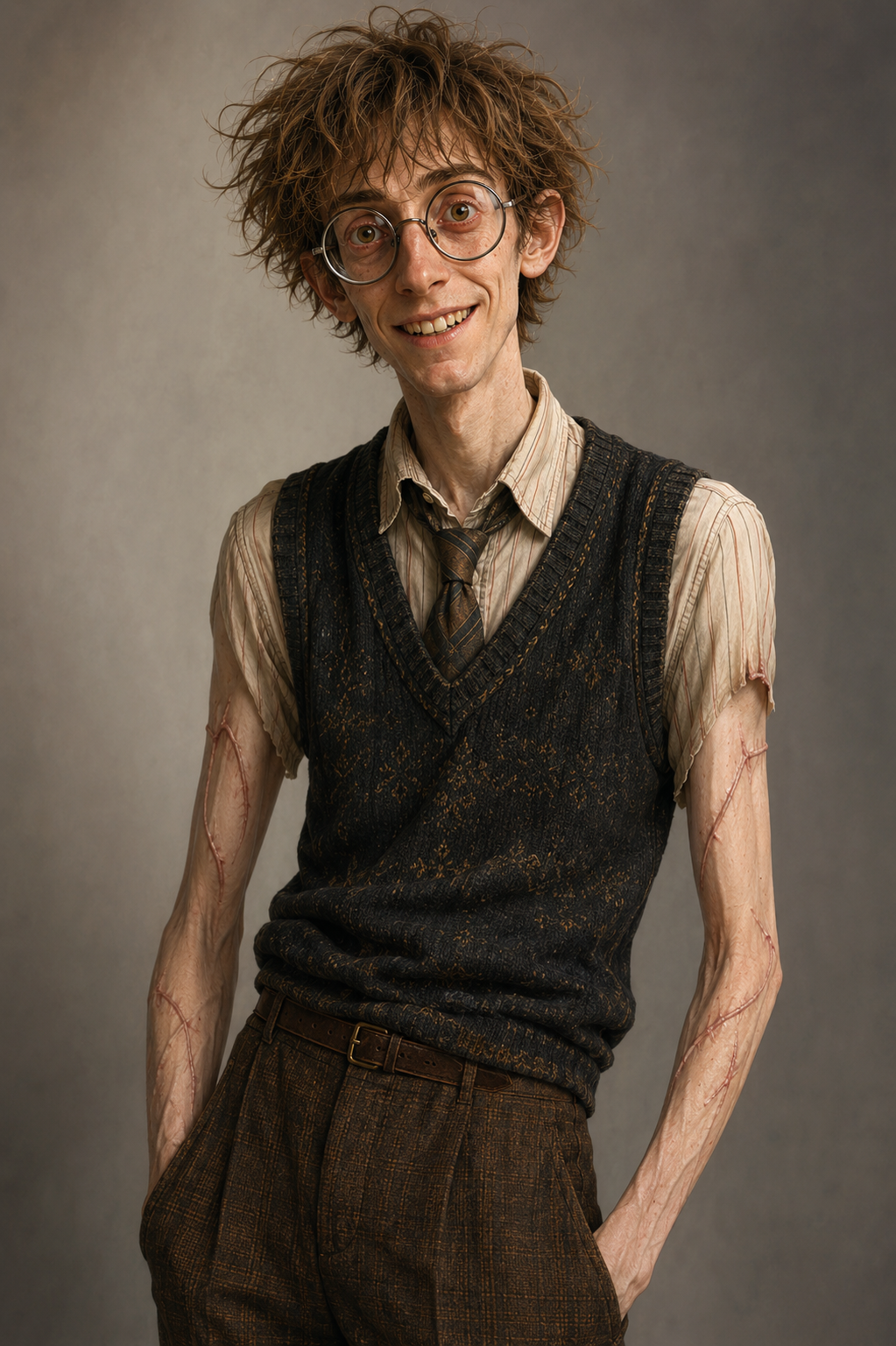
Peter is obliterated from existence, but Alice resurrects him by exchanging Grimes’s soul for his. He returns bearing scars from having his soul drained and starts a romantic relationship with Alice.
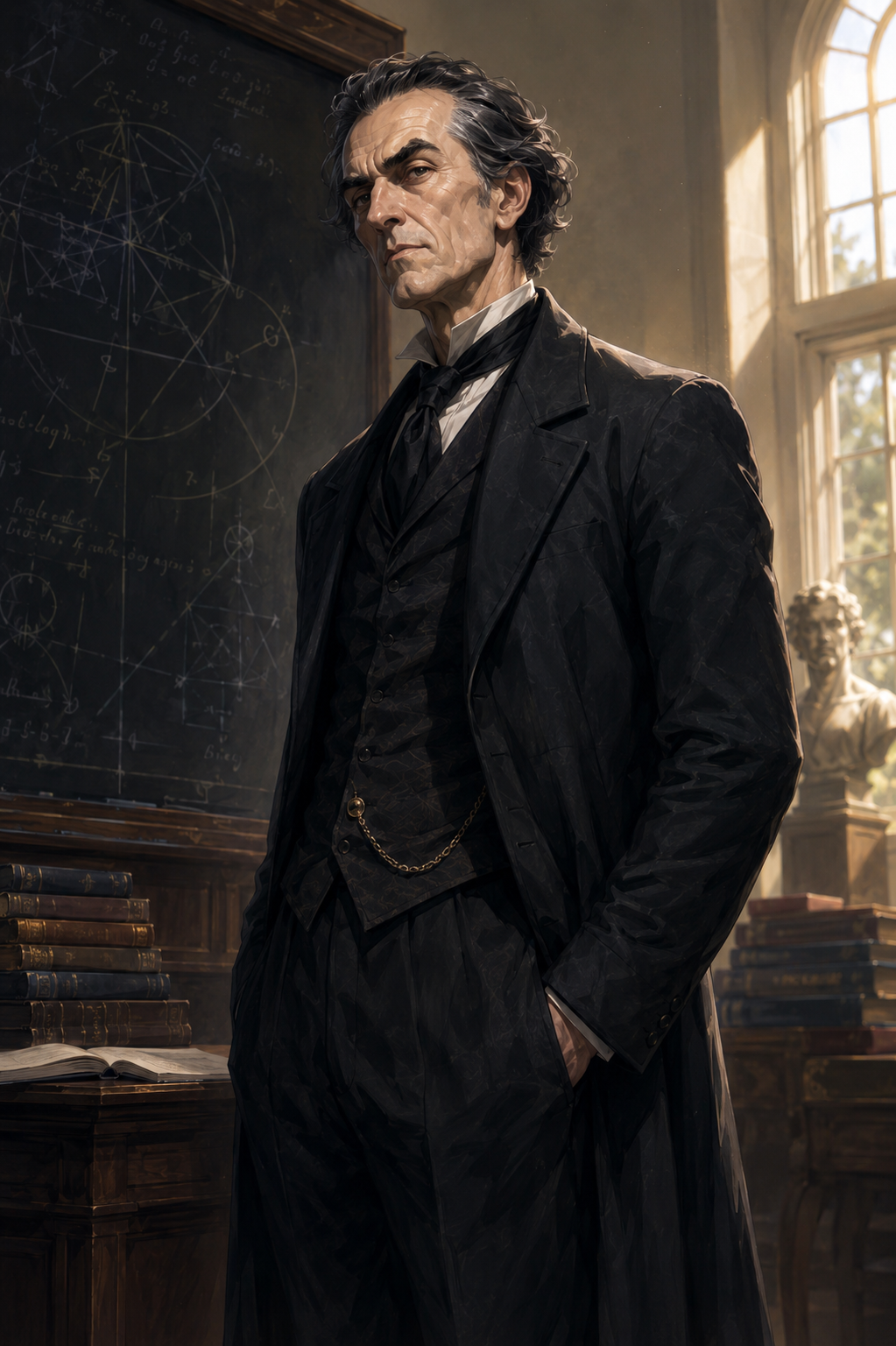
Alice finally recognizes him as an ordinary, abusive man rather than a genius worthy of worship and sacrifices his soul to resurrect Peter, destroying Grimes permanently.

She chooses not to leave Hell yet and remains aboard the Neurath with Archimedes, hoping eventually to cross the Lethe on her own terms.
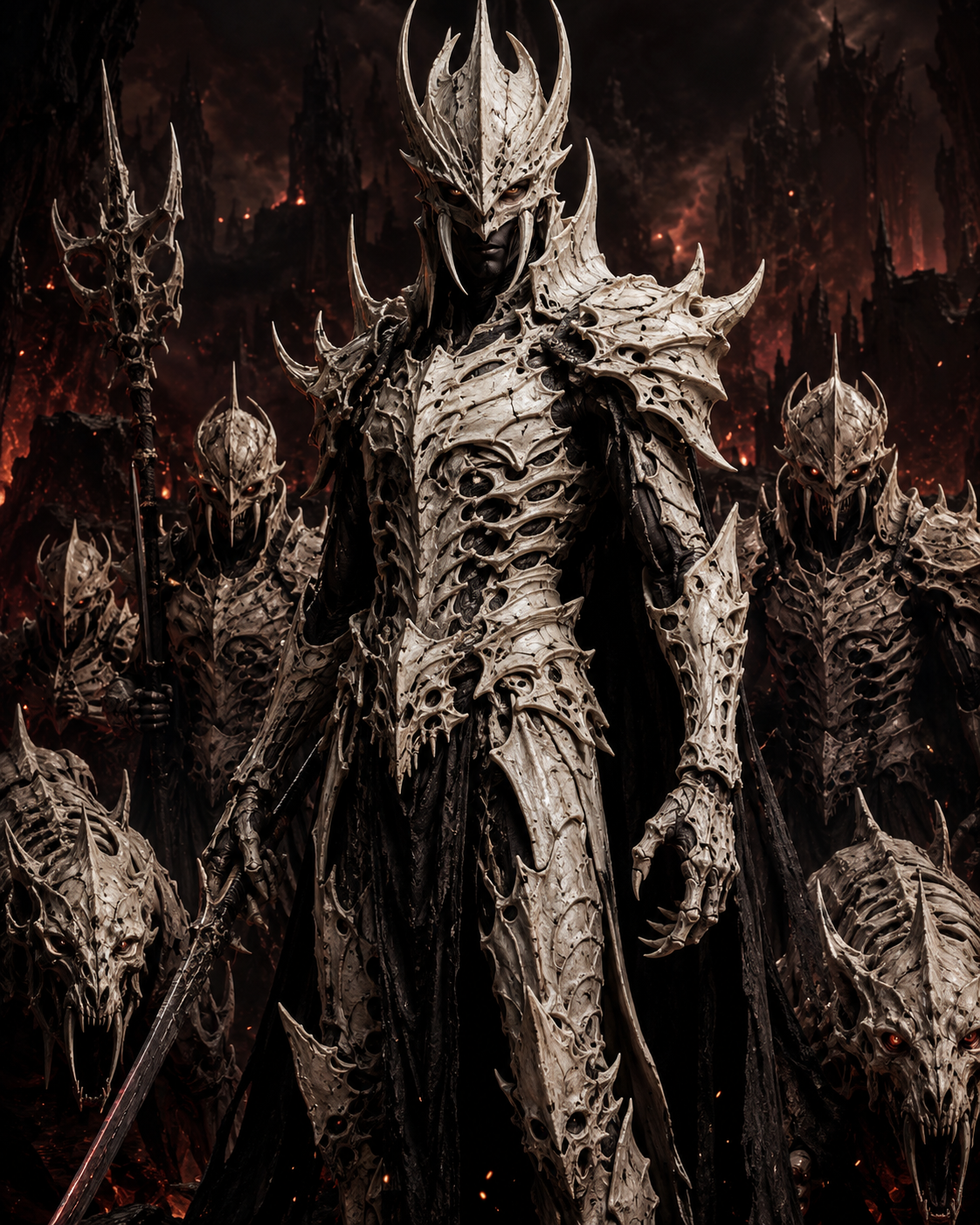
Alice binds his soul to a reconstructed corpse back at Cambridge, subjecting him to agony; his spirit is eventually stripped of its memories and drowns in the Lethe.
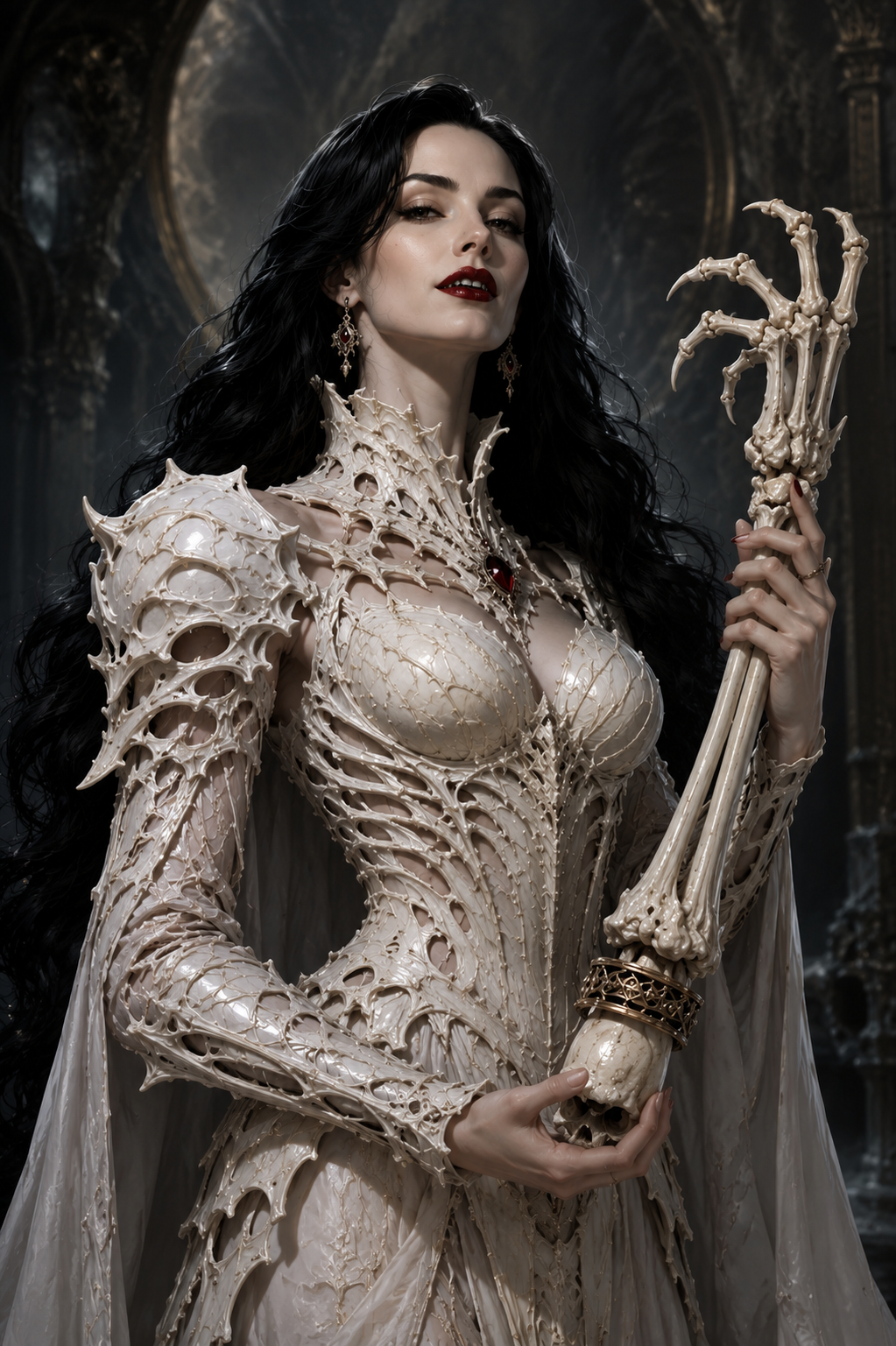
After Nicomachus is lost, Magnolia carries their son Theophrastus into the Lethe and deliberately erases both herself and her child from existence.
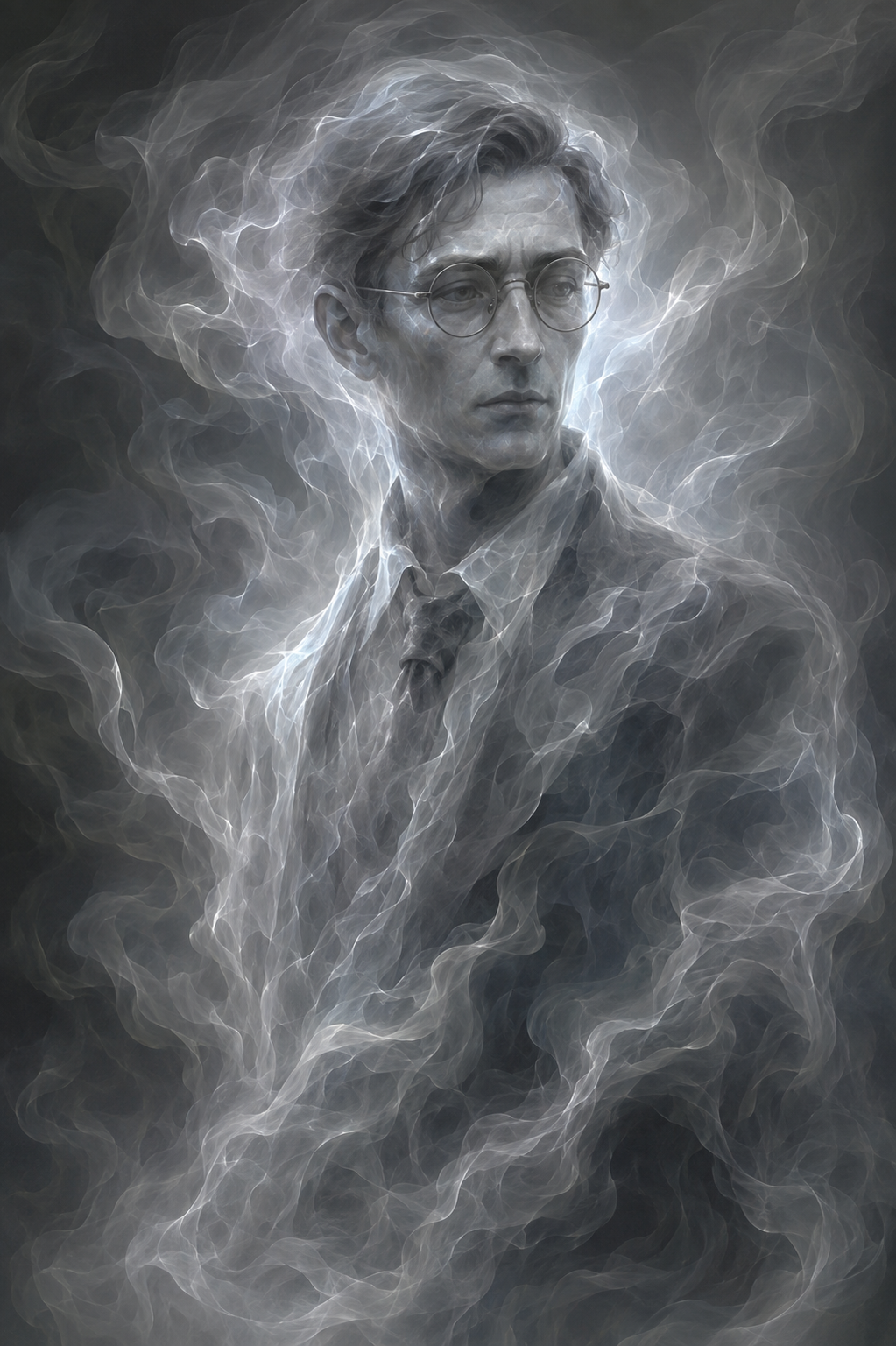
He finally receives an act of grace, crosses the Lethe, drinks away his memories, and reincarnates.
🔷 Supporting Characters
He ultimately stays in Hell with Elspeth aboard the Neurath.
Magnolia carries him into the Lethe, where he disappears beneath the water as mother and son surrender themselves to oblivion.
Alice and Peter leave him in his office descending into logical madness, endlessly scrawling premises.
She remains in her citadel, trapped in the eternal quiet of the world she created.
After Alice exchanges Grimes for Peter, Yama restores the half-lifetimes Alice and Peter paid to enter Hell and sends them home.
Elspeth sprays her with Lethe water, temporarily incapacitating her so Alice and Peter can escape.
They remain shuffling through Asphodel’s enormous queue, too afraid of reincarnation’s uncertainty to move on.
She remains at Cambridge, regarding the chaos surrounding Grimes’s students with condescension.
He continues his studies at Cambridge.
She takes medical leave and disappears from the program.
He winds up locked in an eternal physical brawl atop a workshop table.
He remains alive and continues his academic career toward tenure.
He reportedly flees to Canada, marries his pregnant girlfriend, and becomes a tour guide.
She remains at Cambridge, facing no meaningful consequences for enabling the department’s culture.
He remains in the bazaar haggling with desperate Shades.
It continues wandering the bazaar and talking souls out of personal responsibility.
She remains beside the river, offering forgetfulness and release to souls ready to move on.
He remains stationed at the gates of Dis.
He remains in the desert of Greed, attacking other Shades and taking satisfaction in their suffering.
🕳️ Potential Plot Holes
Grimes’s death leaves his body violently fragmented across a Cambridge laboratory, and police and emergency services arrive to investigate. Yet Alice later reveals that she “dug him up” and secretly stored his remains in an unused basement room. It is difficult to reconcile how she could recover and relocate the remains of such a high-profile death without authorities noticing that the body—or significant portions of it—had disappeared.
The novel establishes that dying in Hell causes “total annihilation of the self,” with the soul dissipating completely. Peter is explicitly described as having been obliterated, yet Alice later restores him through an organic exchange using Grimes’s soul. If Peter truly ceased to exist and no soul remained, it is unclear what the spell could retrieve or exchange Grimes for. The resurrection seems to contradict the previously established finality of annihilation.
📚 Book Club Q&A's
⭐ Final Rating & Thoughts
Katabasis is one of the strangest books I’ve read—and I still can’t decide whether that’s a warning or a compliment. There were moments when I thought R.F. Kuang had written something absolutely brilliant, and others when the dense philosophy, academic theory, and infodumping had me seriously considering a DNF.
But here’s the problem: I cannot stop thinking about it.
The writing is exceptional, the concept is wildly original, and the way Kuang transforms academia into something genuinely hellish is clever and unsettling. This is definitely not a breezy fantasy adventure; it demands attention and I sometimes feel more interested in its ideas than its story.
Normally, that would hurt my rating more. Yet somehow, Katabasis left me wanting to read it again—which is especially bizarre because I don’t even reread my 5-star books.
I can genuinely imagine this becoming a modern classic: the kind of novel people study, dissect, and argue about for years.
Was it exhausting? Absolutely. Was it unforgettable? Without question.
And that’s why Katabasis earns 4 stars.
✨ Adaptation description
Katabasis — TV Adaptation
As of August 2026, R.F. Kuang’s 2025 fantasy novel Katabasis is being developed as a television series by Amazon MGM Studios for Prime Video. The adaptation was announced in August 2025, just before the novel’s publication. (Reactor)
Format: Television series
Studio: Amazon MGM Studios
Streaming Platform: Prime Video
Based on: Katabasis (2025) by R.F. Kuang
Showrunner / Writer: Angela Kang (The Walking Dead)
Executive Producers: Angela Kang, R.F. Kuang, Mandy Safavi, Ben Smith, Jeffrey Weiner, and Adam Docksey (Reactor)
Release Date: Not announced
Cast: Not announced
Current Status: In development
✨ Books Like Katabasis (2025)
See an error on this page?