

Mad Mabel (2025)
Select Sections to Print
×Book Details
Mad Mabel (2025)
Jump to Section
⚠️ Trigger Warnings
- Alcoholism
- Bullying
- Child abuse and neglect
- Child death
- Death
- Depression
- Domestic abuse
- Emotional abuse
- Graphic violence and gore
- Grooming
- Gun violence
- Homophobia and homophobic slurs
- Hostage situation
- Medical trauma
- Mental illness
- Murder
- Psychiatric institutionalization
- Sexual assault and harassment
- Suicide
- Teacher-student relationship
- Threats with a weapon
- Vandalism
⏱️ 2-Minute Spoiler Summary
In 2025 Melbourne, 81-year-old Elsie Fitzpatrick is exposed as Mabel Waller, the infamous “Mad Mabel” convicted of a double murder at age fifteen in 1959. As renewed attention threatens the quiet life she has built, Elsie agrees to tell her side of the story to young journalists Adeem Anand and Libby Conquest.
Mabel grew up at the wealthy Rosehill estate with her cruel, controlling father, Elliott, and her troubled mother, Mary. After witnessing Elliott having sex with Susan McGinty during a dinner party, young Mabel innocently describes what she saw to Mary while recovering from a broken arm in the hospital. Realizing her husband is having an affair, Mary jumps from Mabel’s seventh-floor hospital balcony and dies.
Afterward, Mabel becomes especially close to her Aunt Cess and Cess’s inseparable friend Ness, who give her some of the stability missing from her home life. While in the hospital, Mabel also believes she has reunited with Daphne Barton, a girl she knew in kindergarten who had later gone to England. Daphne becomes Mabel’s beloved “bosom friend” and remains by her side through years of bullying, loneliness, and turmoil.
Mabel’s adolescence grows even more complicated when her history teacher, Mr. Loukas, draws her into an inappropriate relationship. She eventually discovers he has a fiancée and a pattern of pursuing young students. After Mabel angrily punctures his tire, he is later crushed beneath his car while changing it, although his fiancée Tessa is ultimately charged with his death.
Mabel later falls in love with Christos, a Greek classmate who stands by her despite the rumors surrounding her. Their relationship is far healthier than what she experienced with Mr. Loukas, and Christos remains loyal even when his mother forbids him from seeing her outside school.
The events that create the legend of “Mad Mabel” begin when Elliott discovers that Cess and Ness are lovers. In a homophobic rage, he kills Cess. When Mabel confronts him, Elliott taunts her and once again tries to convince her that she is responsible for the terrible things around her. Mabel fights back and kills her father with his silver-handled umbrella. She is blamed for both deaths and institutionalized while pregnant with Christos’s child. After she gives birth to a son, Ness adopts the baby.
More than sixty years later, Adeem and Libby uncover a devastating truth about Daphne. The real Daphne Barton existed and had known Mabel as a young child, but she never returned from England. The Daphne whom Mabel believed she reunited with in the hospital—and who remained her closest companion afterward—was imaginary.
Elsie also discovers that her longtime neighbor Peter is actually the son she had with Christos. Peter already knows the truth: before Ness died, she told him Elsie was his biological mother and made him promise to look after her. His years of protectiveness suddenly make sense, and he finally calls Elsie “Mum.”
Meanwhile, Elsie has grown close to her neighbor Roxanne and Roxanne’s seven-year-old daughter, Persephone, whom she protects from her violent father, Shane. When Shane eventually returns with a gun and takes Persephone hostage, Elsie throws herself in front of the girl and takes the bullet meant for her. Elsie dies surrounded by Peter and the neighbors who have become her family.
In the epilogue, Persephone is living in a new home and talking to an imaginary friend named Daisy, who wears the same magenta glasses as the Daphne Mabel once saw.
📖 Full Spoiler Summary
Elsie Fitzpatrick’s Past Comes Back
In 2025 Melbourne, 81-year-old Elsie Fitzpatrick lives a solitary but content life on Kenny Lane, where she mostly keeps her neighbors at a comfortable distance. That changes when Joan slips a news article under her door about “Mad Mabel”—the 15-year-old girl convicted of a notorious double murder in 1959.
Elsie is Mad Mabel. Her real name is Mabel Waller, and she has spent decades living quietly under another name.
Her past resurfaces at an especially inconvenient time. Elsie becomes concerned when her 93-year-old neighbor and self-declared nemesis, Ishaan Patel, stops responding. Convinced something has happened to him, she climbs his fence to check on him, cuts her leg in the process, and discovers Ishaan dead on his kitchen floor.
His death appears natural, but Joan draws attention to Elsie’s criminal past and makes her look suspicious. The police confiscate Elsie’s shoe for DNA testing, leaving her facing the possibility that, more than sixty years after becoming Mad Mabel, she could once again find herself associated with a murder.
Mabel’s Childhood at Rosehill
Long before she became Elsie, Mabel grew up at Rosehill, a grand Edwardian estate, with her wealthy parents, Elliott and Mary Waller. From the outside, the Wallers appear privileged and respectable. Inside Rosehill, Mabel’s childhood is dominated by instability.
Elliott, who runs a prosthetic-limb business, is cold, vain, and controlling. Mary struggles with depression and alcoholism and sometimes treats her daughter like a doll, dressing her up and painting her lips blood red.
Mabel eventually learns that she once had a younger sister, Kitty, who died of polio at only one year old. Elliott has spent years blaming Mabel for the death, insisting that three-year-old Mabel deliberately unlocked a door and allowed Kitty outside. His accusations help create the idea that there is something dangerous or “mad” about Mabel long before anyone else begins calling her that.
Another tragedy follows after Mabel breaks her arm at summer camp. Shortly before the accident, during a dinner party at Rosehill, Mabel had wandered upstairs and discovered Elliott having sex with a platinum-blond woman in the hallway near her bedroom. She does not fully understand what she is witnessing, but recognizes her father partly by his distinctive maroon-and-grey diamond socks. The woman is Susan McGinty, one of the guests at the party.
While recovering in the hospital, Mabel innocently tells her mother Mary what she saw, describing Elliott holding Susan against the wall while the two made strange noises. Mabel has no idea she is exposing her father’s affair, but Mary immediately understands. Devastated by Elliott’s betrayal, she jumps from Mabel’s seventh-floor hospital balcony and dies.
Daphne Becomes Mabel’s Best Friend
After Mary’s death, Aunt Cess and her close friend Ness become two of the most important people in Mabel’s life. They give her the warmth and support she rarely receives from Elliott, whose relationship with his daughter only grows more hostile.
Mabel also reconnects with Daphne Barton, a quirky girl she remembers from kindergarten who is being treated for tuberculosis. They quickly become “bosom friends,” and Daphne provides the companionship Mabel has desperately needed. Mabel trusts her completely and comes to depend on her presence during the worst moments of her adolescence.
School is considerably less forgiving. Billy Harris, a vicious bully, learns about Kitty and begins calling Mabel a “baby killer.” He even forces a kiss on her, while the other students do little to help.
Desperate for kindness and validation, Mabel becomes attached to her history teacher, Mr. Loukas, after he tells her she is “amazing.” His attention develops into a secret and inappropriate romantic relationship that Mabel initially mistakes for genuine affection.
The truth becomes clear when she goes to his house and encounters his fiancée, Tessa. Mabel discovers that she is not the special exception Mr. Loukas made her believe she was; he has a disturbing attraction to young students. Humiliated and furious, she punctures one of his car tires.
Mr. Loukas is later found crushed beneath his car while attempting to change the tire. Mabel is questioned, further strengthening the community’s belief that disaster follows her wherever she goes, although Tessa is eventually charged with his death.
Christos Stands by Mabel
One person at school refuses to treat Mabel like a monster. Christos, a Greek boy whose parents own a local fish-and-chip shop, is something of an outsider himself because his family are migrants. Although his talent as a football player gives him more social acceptance than Mabel, he understands what it feels like not to belong.
Christos apologizes for failing to intervene when Billy mistreated her and tells Mabel directly that he does not believe she killed anyone. Their friendship grows during lunch breaks outside the library, where they share his mother’s spanakopita and sweets and discover how easily they can make each other laugh.
Eventually, their friendship becomes romantic. During a trip to a secluded beach cove, they share fish and chips and Mabel experiences what she considers her first real kiss. Being with Christos feels completely different from what happened with Mr. Loukas. She feels safe enough to talk openly about her family and grief rather than worrying about pleasing him.
Even after the scandal surrounding Mr. Loukas turns Mabel into an even greater target, Christos remains loyal. Billy begins directing racial slurs at him for associating with her, but Christos continues walking Mabel to and from school. His mother eventually learns about Mabel’s reputation and forbids Christos from seeing her outside of school. Despite her objections, Christos refuses to abandon Mabel, and the two continue seeing each other at school.
The Murders at Rosehill
While Mabel’s reputation deteriorates, another battle is unfolding at home. Cess reveals that Rosehill does not actually belong to Elliott. Mabel inherited the property through her grandfather’s will.
Elliott, now planning a future with Susan and Susan’s daughter, Amelia, wants control of the valuable estate. He begins using Mabel’s increasingly notorious reputation against her, insisting that she is mentally unstable and attempting to gain custody of her so he can control Rosehill. The cruel nickname “Mad Mabel” becomes another weapon against her.
The conflict finally ends in violence.
Mabel returns home and discovers Elliott confronting Cess and Ness after finding the two women in bed together. Enraged by their relationship, Elliott kills Cess.
When Mabel confronts him, Elliott responds with the same psychological cruelty he has used against her throughout her childhood. Rather than accept responsibility for what he has done, he taunts his daughter: “Actually, you did it, Mad Mabel.”
Mabel takes Elliott’s silver-handled umbrella and kills him.
At only fifteen, she is blamed for both deaths and becomes permanently known to the public as the murderous Mad Mabel.
Mabel Loses Christos and Her Baby
After the murders, Mabel is confined to a psychiatric institution, abruptly ending the life she had known and separating her from Christos.
She is also pregnant with his child.
Mabel eventually gives birth to a baby boy with dark hair that reminds her of his Greek father. She does not get to raise him. Ness, who has survived the loss of Cess and remained one of Mabel’s few sources of love, adopts the newborn.
Mabel loses both Christos and her son, adding them to the long list of people taken from her during her youth. Eventually, she becomes Elsie Fitzpatrick and creates an entirely new life in which almost no one knows the girl she used to be.
Elsie Decides to Tell the Truth
More than six decades later, the renewed interest in Mad Mabel threatens the anonymity Elsie has carefully maintained. Her home is vandalized with “MAD” painted across it in red, and strangers once again become fascinated by the teenage killer they think they know.
Rather than continue hiding, Elsie agrees to be interviewed by young journalists Adeem Anand and Libby Conquest for their YouTube documentary. For the first time, she has an opportunity to tell her own version of what happened at Rosehill.
The interviews also reveal something about Mabel’s childhood that Elsie herself never understood.
Adeem and Libby investigate Daphne Barton and discover that the real Daphne never returned from England. The girl Mabel remembers reconnecting with in the hospital and having beside her throughout her adolescence could not have been there.
Daphne was an imaginary friend.
Mabel’s mind had created the companion she desperately needed while coping with isolation, abuse, and repeated trauma. To Mabel, however, Daphne had always been completely real.
Kenny Lane Becomes Elsie’s Family
As Elsie confronts her past, she unexpectedly becomes more connected to the people around her in the present.
She grows particularly protective of her neighbors, seven-year-old Persephone and her mother, Roxanne. Persephone’s violent father, Shane, begins appearing around Kenny Lane, and Elsie initially nicknames the intimidating stranger the “Italian Stallion.”
One night, while Roxanne is away working an office-cleaning shift, Shane attempts to get into their home. Elsie realizes Persephone may be in danger and pretends to be her babysitter, grabbing the girl and getting her safely inside her own house.
Even Joan, despite causing much of Elsie’s trouble, becomes part of the strange little community that has formed around her.
The mystery surrounding Ishaan is eventually resolved as well. His death is ruled accidental, caused by a vitamin overdose, clearing Elsie of suspicion.
Then Elsie learns that her neighbor Peter is the son she gave birth to while institutionalized—the child she had with Christos and believed she had lost from her life forever. Even more surprising, Peter has known for years that Elsie is his biological mother. Before Ness died, she told him the truth and made him promise to look after Elsie, explaining why Peter has always been so protective of her. When Elsie prepares to leave Kenny Lane, Peter finally acknowledges their relationship openly and calls her “Mum” for the first time.
Elsie Saves Persephone
The publicity surrounding Mad Mabel has made Elsie fear that her presence is putting the people on Kenny Lane at risk. Now that she has finally allowed herself to care about them, she decides to sell her home and leave in an attempt to protect them.
She never gets the chance.
Shane returns armed with a gun and takes Persephone hostage. When he fires at his daughter, Elsie lunges in front of the child and takes the bullet herself.
The wound is fatal.
Elsie dies surrounded by Peter, Roxanne, Joan, and Persephone. After spending much of her life isolated by the things that happened when she was a child, she dies among the family and friends she finally allowed herself to have.
In the epilogue, Roxanne and Persephone have moved into a new home and are beginning again. Persephone is talking to someone no one else can see: an imaginary friend she calls Daisy.
Daisy wears magenta glasses, just like the Daphne who once kept Mabel company.
🔚 Ending Explained
The ending of Mad Mabel brings Elsie Mabel Fitzpatrick’s story full circle. What begins as the story of a woman who has spent most of her life defined by violence, scandal, and the cruel nickname “Mad Mabel” ultimately becomes a story about choice, friendship, motherhood, and the possibility of reclaiming a life from the people who tried to define it.
How Mad Mabel Ends
The final confrontation takes place on Kenny Lane at 1:11 a.m., when Shane, Persephone’s violent father, breaks into Roxanne’s home. Elsie wakes to find him outside with an unconscious Persephone and a gun.
Shane intends to use his daughter to punish Roxanne, but Elsie refuses to let him reduce Persephone to a weapon in his vendetta. She confronts him, telling him that Persephone is a person—not a “tool for revenge.”
When Shane drops Persephone and points the gun toward her head, Elsie reacts.
She throws herself in front of Persephone and takes the bullet.
Crucially, Elsie describes what she does as both instinctive and a choice. She knows exactly what she is risking when she moves between Shane and the child. The wound is fatal, but Elsie does not die frightened or alone. Peter, Roxanne, Joan, and Persephone surround her—the community that has gradually become the family she never truly had.
And in one of the ending’s most bittersweet touches, Elsie considers herself lucky.
After decades of isolation, she dies surrounded by people who love her.
The revelations that follow finally clear Elsie’s name. Toxicology results establish that Ishaan Patel died from a lethal vitamin overdose, meaning Elsie was not responsible for his death. Public opinion swings dramatically in her favor. The woman once infamous as “Mad Mabel” becomes “Magnificent Mabel,” and a banner flies over Melbourne declaring, “FORGIVE US, MABEL.”
Peter also inherits the Rosehill estate, worth more than twenty million dollars. Rather than simply keeping the fortune, he uses his inheritance to help Roxanne and Persephone establish a safe and comfortable life.
Elsie does not live to enjoy this new future, but the people she loves do.
The Meaning of Elsie’s Final Choice
Elsie’s sacrifice is especially powerful because death has haunted her identity since childhood.
For most of her life, other people have defined her through deaths she either did not cause or could not prevent. Most devastatingly, she was branded a “baby killer” after Kitty’s death. Later, suspicion surrounding Ishaan once again allows the world to fit Elsie into the familiar role of dangerous, unstable “Mad Mabel.”
Saving Persephone reverses that narrative.
This time, Elsie is confronted with a child in mortal danger, and she has the power to intervene. Her decision to step in front of the bullet is therefore more than an act of heroism. She finally gets to choose what her relationship with death means.
The girl accused of destroying a child becomes the woman who willingly dies to save one.
Importantly, Elsie does not need the public’s later exoneration to achieve that redemption. The banner and the nickname “Magnificent Mabel” provide social vindication, but Elsie has already reclaimed herself before any of that happens. Her redemption comes through what she chooses to do—not through society finally deciding that she was worthy all along.
Daphne, Daisy, and the Magenta Line
The final appearance of Daisy, Persephone’s imaginary friend, gives the ending a more complicated emotional note.
Throughout Elsie’s life, Daphne functions as what Elsie describes as a thick magenta line running through her existence. Daphne represents the mind’s ability to create companionship when reality becomes unbearable. She gives young Mabel someone to speak to, trust, and rely upon when the adults around her fail her.
In the epilogue, Persephone talks to Daisy, who wears the same bedazzled Eiffel Tower shirt and magenta glasses associated with Daphne.
The parallel suggests that Elsie and Persephone are connected by more than affection. Both are children shaped by frightening circumstances who retreat into imagination for safety.
But Daisy does not necessarily mean that Persephone is destined to repeat Elsie’s life.
That distinction matters.
Elsie had Daphne because she was profoundly alone. Persephone has Daisy while also having people who love and protect her. She has Roxanne, Peter, Joan, and the community Elsie helped create. Imagination may still help Persephone process what happened to her, but unlike Elsie, she does not have to depend upon an imaginary friend as her only source of emotional survival.
The cycle therefore echoes without repeating itself exactly.
The Meaning of Elsie’s Socks
Even the maroon socks with grey diamonds Elsie wears on her final morning carry symbolic weight.
They once belonged to her father and represented something she coveted as a child but that was inseparable from his cruelty and power. By eventually wearing them herself, Elsie effectively takes possession of something that once belonged to the man who controlled so much of her childhood.
It is a small act of reclamation.
By the end, her father’s belongings—and, symbolically, her memories of him—no longer belong exclusively to the story he created about her. Elsie can carry pieces of her past without allowing that past to dictate who she is.
Friendship, Motherhood, and Chosen Family
The ending also completes the novel’s argument about friendship.
Elsie spends much of her life searching for the kind of intimate companionship she once imagined through Daphne. Eventually, she finds something real in Roxanne and Joan, as well as in the unconventional family that develops around Kenny Lane.
That is why her description of herself as “lucky” is so heartbreaking. Objectively, Elsie has experienced an extraordinary amount of suffering. Yet at the moment of her death, she measures her life differently. She is no longer counting what was taken from her.
She is looking at who stayed.
Her relationship with Persephone also allows Elsie to experience a form of maternal love she had long been denied. The novel describes that love not simply as happiness but as the “tiny, little stabbing pain” produced by caring so deeply about someone that their suffering becomes frightening.
Elsie understands that feeling completely when Persephone is threatened. Her willingness to die for her is the ultimate expression of it.
Why the Ending Is Bittersweet Rather Than Simply Tragic
Elsie dies, but Mad Mabel does not end as a tragedy in the conventional sense.
Her death comes only after she has finally experienced the things she spent a lifetime missing: friendship, belonging, family, and the knowledge that she matters to other people. The world eventually clears her name, but more importantly, Elsie has already stopped allowing the world’s version of Mabel Waller to determine who Elsie Fitzpatrick is.
There is also deliberate irony in the public suddenly replacing one simplistic label with another. “Mad Mabel” becomes “Magnificent Mabel,” but neither nickname can contain the complexity of the woman herself. Society first turns her into a monster and then into a hero. The reader knows she was always something much more human than either.
What the Ending Suggests About the Future
Elsie’s greatest legacy is not the rehabilitation of her reputation. It is the life Persephone now has the chance to live.
Peter’s inheritance gives Roxanne and Persephone financial security, but Elsie leaves them something more important: a community. Persephone may carry psychological scars, as Daisy’s appearance suggests, but she will process those scars in circumstances radically different from Elsie’s childhood.
That makes the final parallel between Daphne and Daisy both unsettling and hopeful.
Trauma does not disappear simply because the person responsible for it is gone. It leaves traces. But those traces do not have to determine the rest of someone’s life.
Elsie cannot undo what happened to Mabel Waller. What she can do—and ultimately does—is help ensure that Persephone’s childhood does not have to end the same way hers did.
That is the real redemption at the heart of Mad Mabel. Elsie cannot rewrite her past, but in saving Persephone, she changes someone else’s future.
👤 Characters & Fates
🔶 Main Characters

She dies protecting Persephone from Shane’s bullet, finally remembered as a hero rather than a murderer; Peter also gets to call her “Mum” before she dies.

She never actually existed as Mabel knew her—the real Daphne Barton remained in England, while Mabel created an imaginary version of her as a psychological survival mechanism.

After murdering Cess when he discovers her with Ness, Elliott is beaten to death by Mabel with his own silver-handled umbrella.

Elliott discovers Cess and Ness together and murders Cess in a homophobic rage, prompting Mabel to kill him.
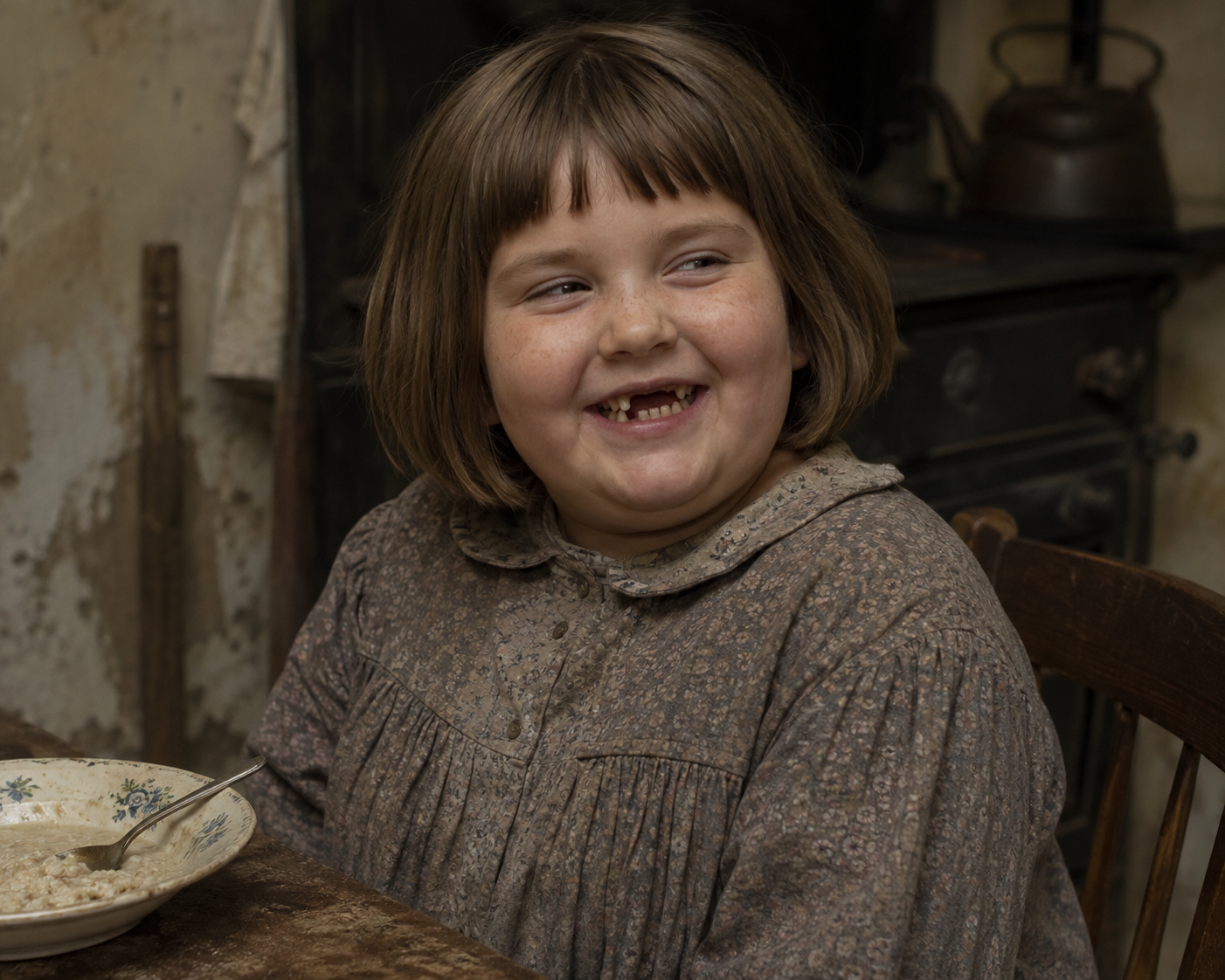
Elsie takes Shane’s bullet to save her; afterward Persephone and Roxanne receive financial help through Peter and move somewhere safe, while Persephone develops an imaginary friend named Daisy.

Peter finally calls Elsie “Mum” before she dies and inherits the roughly $20 million Rosehill estate through a legal loophole, using his wealth to help Roxanne and Persephone.

He survives a serious head injury caused during a confrontation with Billy, but his relationship with Mabel ends when she is institutionalized after the murders; unbeknownst to him, she is pregnant with Peter.

After learning from Mabel about Elliott’s affair with Susan, Mary dies by suicide by jumping from Mabel’s hospital balcony.

She dies before the present-day storyline, but her decision to raise Peter ultimately means Elsie was never as alone as she believed.
🔷 Supporting Characters

Toxicology eventually proves Ishaan accidentally died from a lethal vitamin overdose, clearing Elsie of his death.
Joan reconciles with Elsie, gets her lawyer nephew Bailey to protect her, and ultimately develops companionship with Peter.
During the final confrontation, Shane fires at Persephone, but Elsie throws herself in front of the bullet and is killed protecting her.
After Elsie’s death, Peter uses his inheritance to help Roxanne and Persephone achieve financial security and move into a safe home.
He suffers a brain injury after a fall during a confrontation involving Christos and later attempts to sexually assault Mabel in a bike shed.
His fiancée Tessa murders him with a fireplace poker after discovering his behavior and disguises the killing as a car accident.
They become genuine friends to Elsie and ultimately produce Magnificent Mabel, helping restore her reputation after her death.
Kitty actually dies from polio at only one year old, meaning Mabel was never responsible for her death.
Elliott’s death destroys those plans, and Susan ultimately loses her chance to obtain the Rosehill estate.
Tessa is ultimately revealed to have murdered Loukas with a fireplace poker after discovering his betrayal and staged his death as a car accident.
Amelia breaks her arm after Elliott deliberately refuses to catch her when she falls from a tree, confirming to Mabel that her father is fundamentally monstrous.
He successfully protects Elsie during the interrogation and safely takes her home afterward.
After Elsie’s death, Nugget remains with Persephone.
🕳️ Potential Plot Holes
Mabel Waller was once internationally notorious as “Mad Mabel,” the teenage girl convicted of a sensational double murder. Yet after her release, she is able to remain in Melbourne for decades simply living under her middle name, Elsie, without being recognized or tracked down by journalists. Considering the enormous publicity surrounding her case, her ability to disappear so completely until a neighbor happens across an old article feels difficult to reconcile with the fame the novel establishes.
📚 Book Club Q&A's
⭐ Final Rating & Thoughts
Mad Mabel was an engaging, darkly funny read that kept me interested from beginning to end, even if some of its biggest choices didn’t entirely work for me. Sally Hepworth’s accessible writing and steady pacing made the story incredibly easy to settle into, and Elsie/Mabel was easily the highlight. She’s sharp, complicated, funny, and sympathetic, and I loved the way the novel explored the difference between who someone really is and the identity the world creates for them.
My biggest issue was that one of the novel’s major twists felt too familiar. I’ve encountered variations of the same idea several times recently, so I figured out where the story was heading earlier than I would have liked. I also thought Mabel’s childhood became overloaded with tragedy. So many terrible things happen to her that eventually the emotional impact started feeling manufactured rather than organic.
Still, I genuinely enjoyed reading Mad Mabel. It was entertaining, compelling, surprisingly funny, and never difficult to follow.
✨ Adaptation description
As of August 2026, there is no official announcement for a screen adaptation of Mad Mabel.
✨ Books Like Mad Mabel (2025)
See an error on this page?