

Never Let Me Go (2005)
Select Sections to Print
×Book Details
Never Let Me Go (2005)
Jump to Section
⚠️ Trigger Warnings
- Systemic dehumanization and exploitation
- Forced organ harvesting
- Death and terminal illness
- Medical trauma and physical pain
- Childhood bullying and social ostracization
- Infertility
- Grief and loss
- Emotional manipulation
- Suicide ideation (brief reference)
- Disturbing stories involving mutilation
- Sexual content
- Pornography references
⏱️ 2-Minute Spoiler Summary
Kathy H., Ruth, and Tommy D. grow up at Hailsham, an unusual English boarding school whose students are actually clones created to donate their organs. Hailsham encourages them to create art, with the best pieces taken by Madame for a mysterious Gallery. Although the children know vaguely that they will become donors, Miss Lucy eventually forces them to understand that they will never have normal adult lives.
As teenagers, Ruth and Tommy become a couple even though Kathy and Tommy share a strong connection. At the Cottages, they hear a rumor that Hailsham couples who can prove they are truly in love can postpone their donations. Tommy becomes convinced that Madame collected their childhood artwork to judge their souls and determine whether couples truly love each other. As the friendship between the three begins to fall apart, Kathy leaves the Cottages and becomes a carer.
Years later, when Ruth is seriously weakened by her donations, she finally confesses that she knew Kathy and Tommy had feelings for each other and deliberately kept them apart because she was afraid of losing them. Trying to make amends, she gives them Madame’s address and urges them to apply for a deferral. After Ruth completes (dies) following her second donation, Kathy becomes Tommy’s carer, and the two finally become lovers.
When they visit Madame and Miss Emily, however, they learn that deferrals never existed. Hailsham’s Gallery was actually part of an attempt to prove to society that clones had souls and deserved humane treatment. The campaign ultimately failed, Hailsham closed, and the organ-donation system continued.
With no way to buy themselves more time, Tommy eventually undergoes further donations and completes (dies). Kathy visits Norfolk and briefly imagines seeing Tommy again before driving away. After spending more than eleven years caring for donors, she is now preparing to begin her own donations, knowing that she will eventually meet the same fate as Ruth and Tommy.
📖 Full Spoiler Summary
Kathy H. is thirty-one years old and has spent more than eleven years working as a “carer,” looking after organ donors as they recover between surgeries. With her own time as a donor approaching, she begins looking back on the people and places that shaped her life, especially her childhood at Hailsham and her relationships with Ruth and Tommy D.
What initially sounds like an ordinary boarding-school childhood gradually reveals something far more disturbing. Kathy and the other children at Hailsham are clones, created for the sole purpose of eventually donating their vital organs.
Growing Up at Hailsham
Hailsham is an isolated English boarding school where the children are raised by adults called “guardians.” Their lives seem protected and almost idyllic. They attend classes, play sports, form friendships, and become consumed by the same jealousies and social hierarchies as any other children. But Hailsham places an unusual amount of importance on creativity.
Students regularly produce paintings, drawings, poems, and other artwork for the school’s “Exchanges,” where they use tokens to acquire one another’s creations. The very best pieces are periodically taken away by a mysterious woman known only as Madame, supposedly for something called her “Gallery.” Nobody fully explains what the Gallery is for, but the students understand that having their work chosen is important.
Kathy becomes particularly close to Ruth, a charismatic and imaginative girl who also has a manipulative streak. Ruth enjoys inventing elaborate stories and convincing other children to participate in them, including a fantasy in which she and her friends serve as secret guards protecting their favorite guardian, Miss Geraldine.
Kathy also becomes interested in Tommy D., a sensitive boy who is regularly bullied because he is terrible at art. Other students deliberately provoke him until he explodes into screaming, kicking tantrums. Kathy is kinder to him than most, and after one humiliating incident on the football field, she tries to comfort him.
One guardian, Miss Lucy, takes a particular interest in Tommy. She tells him that he shouldn’t feel ashamed about not being creative, which contradicts everything the students have been taught. Tommy becomes calmer after hearing this, but Miss Lucy eventually retracts what she said and insists that creativity really does matter.
Miss Lucy is increasingly troubled by the way Hailsham prepares its students for their futures. Technically, the children have been told about donations, but the information has been presented so gradually and vaguely that they don’t truly understand what it means. During an emotional confrontation, Miss Lucy finally tells them plainly that they will never become actors, office workers, or anything else they might imagine. Their lives have already been decided. They will become organ donors, undergo repeated operations, and eventually die—or “complete”—after one of those donations.
Soon afterward, Miss Lucy leaves Hailsham.
Kathy, Ruth, and Tommy
One of Kathy’s most important childhood possessions is a cassette by singer Judy Bridgewater containing the song “Never Let Me Go.” Kathy privately interprets the song as being about a woman who has desperately wanted a baby and finally gets one. She sometimes holds a pillow like a child and dances around her room, imagining the woman begging the baby never to leave her.
During one of these private moments, Kathy realizes Madame is watching her from the doorway. To Kathy’s confusion, Madame is crying.
The incident stays with her, particularly because the Hailsham students have already noticed that Madame seems frightened or repulsed by them. Once, a group deliberately tests this theory by crowding around her and watching her recoil.
Kathy later loses her beloved cassette. Ruth, knowing how much it meant to her, eventually gives her another tape as a replacement. It isn’t the same album, but the gesture becomes one of the moments Kathy remembers when thinking about the genuine affection beneath the complications of their friendship.
As the children grow older, relationships become increasingly important. Ruth and Tommy eventually become a couple, leaving Kathy in the uncomfortable position of remaining close to both of them while suppressing her own connection with Tommy.
Life at the Cottages
At sixteen, Kathy, Ruth, Tommy, and several other Hailsham students move to the Cottages, a collection of poorly heated farm buildings where older clones live with little supervision. Their only regular authority figure is Keffers, the gruff caretaker who occasionally visits to inspect the property.
For the first time, the Hailsham students mix closely with clones raised elsewhere. The older residents, known as “veterans,” seem sophisticated to them, and Ruth becomes determined to fit in. Kathy notices that Ruth copies gestures and habits she sees the veterans using, apparently without realizing that the veterans themselves have picked them up from television.
Two veterans, Chrissie and Rodney, are especially fascinated by the Hailsham students because they have heard a rumor about them: couples from Hailsham who can prove they are genuinely in love may supposedly receive a three-year deferral before beginning their donations.
Nobody knows exactly how such a deferral works, but the rumor becomes tied to another mystery from Hailsham—Madame’s Gallery.
Around the same time, Chrissie and Rodney tell Ruth that they may have spotted her “possible.” Because the clones assume they were copied from ordinary people somewhere in the world, they occasionally search for strangers who might be their genetic originals. Rodney believes he has seen a woman working in an office in Norfolk who looks remarkably like Ruth.
Ruth becomes excited because she has long fantasized about working in a modern office herself. Kathy, Tommy, Ruth, Chrissie, and Rodney travel to Norfolk to investigate.
The woman turns out not to be Ruth’s possible.
Humiliated and disappointed, Ruth lashes out. She says they shouldn’t expect to have been copied from respectable people with attractive lives. People like them probably came from society’s “trash”—prostitutes, addicts, criminals, and other people no one would care about.
Tommy’s Theory About the Gallery
During the Norfolk trip, Kathy and Tommy separate from the others and visit second-hand shops. Against enormous odds, they find another copy of Kathy’s long-lost Judy Bridgewater cassette.
The discovery brings them closer, and Tommy shares a theory he has been developing about Hailsham.
He now believes Miss Lucy’s strange behavior about creativity was connected to Madame’s Gallery. If couples can receive donation deferrals by proving they are truly in love, perhaps their childhood artwork was collected because it revealed their inner selves. Madame could examine their art and determine whether two people claiming to love each other genuinely belonged together.
Tommy therefore begins creating elaborate drawings of imaginary animals filled with intricate mechanical details. He hopes his drawings might finally demonstrate something important about who he is.
The growing intimacy between Kathy and Tommy threatens Ruth. Although Ruth and Tommy’s relationship is already unstable, Ruth deliberately undermines the possibility of Kathy replacing her. She tells Tommy that Kathy thinks his animal drawings are ridiculous. She also tells Kathy that although Tommy likes her, he would never want her as a girlfriend because of Kathy’s sexual history.
Ruth’s interference works.
Rather than confront the situation, Kathy decides to leave the Cottages and begin training as a carer. Her departure separates the three friends for years.
Ruth Tries to Make Things Right
Kathy becomes an unusually successful carer, traveling between recovery centers and supporting donors through their surgeries. Eventually she encounters another former Hailsham student, Laura, who tells her that Hailsham has closed.
The news makes Kathy increasingly nostalgic for the people she knew there. She eventually becomes Ruth’s carer after Ruth’s first donation leaves her weak and sick.
Their old friendship slowly returns, although both understand that Ruth’s remaining life will probably be short. Ruth asks Kathy to take her to see Tommy, who has already begun donating as well.
The three make a trip to see an abandoned boat stranded in the marshes. On the journey, their old tensions finally surface. Ruth admits that she knew Kathy and Tommy had feelings for each other and deliberately kept them apart because she was afraid of losing them.
She wants to repair some of the damage while she still can.
Ruth has spent years trying to track down Madame and gives Kathy and Tommy her address. She urges them to become a couple and apply for the rumored deferral. If anyone deserves the extra years together, Ruth believes they do.
Not long afterward, Ruth undergoes her second donation and completes (dies).
Kathy and Tommy Finally Get Their Chance
After Ruth’s death, Kathy becomes Tommy’s carer. With nothing left separating them, they finally begin a romantic relationship.
They decide to follow Ruth’s advice and visit Madame. Tommy brings his drawings, believing they might help prove the depth of his feelings and provide the evidence needed for a deferral.
At Madame’s house, they unexpectedly find the elderly and physically frail Miss Emily, Hailsham’s former head guardian.
Kathy and Tommy explain that they are in love and want a deferral.
There is no deferral.
There never was.
Miss Emily explains that Hailsham itself was part of a larger campaign to improve conditions for clones. Before places like Hailsham existed, clones were generally raised in horrific institutions because society preferred not to think about the human beings whose organs were keeping everyone else alive.
Hailsham’s founders wanted to demonstrate that the cloned children were fully human. That was the real purpose of the students’ artwork. Madame collected their creations so they could be displayed to influential people as evidence that the children had inner lives—that they had souls.
For a time, the movement achieved some success. Hailsham students were raised in comfort and given education, culture, and affection. But public support eventually disappeared, Hailsham closed, and the wider donation system continued.
Tommy’s artwork cannot save them because nobody was ever judging whether the students were truly in love.
Kathy also finally asks Madame why she cried when she saw Kathy dancing to “Never Let Me Go” as a child. Madame remembers the moment very differently. Watching Kathy cling to the imaginary baby, she saw a child holding tightly to an older, kinder world that Madame believed was disappearing.
Tommy Completes
Kathy and Tommy leave knowing that there is no loophole in the system and no extra time waiting for them.
During the drive home, Tommy suddenly asks Kathy to stop the car. He gets out, walks into a dark field, and erupts into a furious scream, releasing the same helpless rage he expressed through his childhood tantrums. Kathy follows him into the darkness and holds him until he calms down.
Their relationship continues, but Tommy’s health deteriorates as his donations progress. Eventually he tells Kathy that he wants another carer. He believes their relationship has become too painful, and he doesn’t want Kathy beside him when he reaches the end.
They separate.
Tommy undergoes another donation and completes.
Kathy is left alone with the memories of the two people who defined most of her life. She drives to Norfolk, which the Hailsham students once jokingly called England’s “lost corner” because they imagined everything misplaced eventually turned up there.
Standing near a field bordered by a fence tangled with rubbish, Kathy allows herself to imagine that everything she has lost has somehow washed up there. For a moment, she pictures Tommy appearing in the distance and waving to her.
Then she stops imagining.
Kathy returns to her car and drives away. Her career as a carer is ending, and she has received notice that she will soon begin her own donations. There is no escape or last-minute reprieve. After spending years caring for people like Ruth and Tommy as they moved toward completion, Kathy quietly prepares to follow them.
🔚 Ending Explained
How Does Never Let Me Go End?
The ending of Never Let Me Go destroys the last hope Kathy and Tommy have been holding onto: the belief that clones who can prove they are genuinely in love might be allowed to postpone their donations.
After Ruth dies following her second donation, Kathy and Tommy follow through on the final gift she gave them—Madame’s address. Ruth had spent years regretting the way she deliberately kept the two of them apart, and before her death, she urged them to find Madame and apply for a rumored three-year “deferral.”
Kathy and Tommy travel to Littlehampton, where they find Madame and, unexpectedly, their former Hailsham guardian Miss Emily. Tommy brings his recent drawings of imaginary animals, believing that artwork might help prove the depth of his feelings for Kathy.
But there is nothing to prove.
Deferrals never existed.
There is no special exception for clones who fall in love, and there never has been.
What Was the Gallery Really For?
The revelation about deferrals also finally explains one of the novel’s biggest mysteries: Madame’s Gallery.
At Hailsham, Madame regularly collected the students’ best artwork. Over the years, Kathy, Tommy, Ruth, and the others developed theories about why she wanted it. Eventually, Tommy became convinced that the artwork was meant to reveal something about a student’s inner self—perhaps even allowing Madame to determine whether two people were truly in love.
The truth is both simpler and much more disturbing.
Madame and Miss Emily were trying to prove to ordinary people that the clones had souls.
Hailsham was part of a reform movement attempting to give clones humane childhoods. By displaying their paintings, poems, and other creative work, its supporters hoped to force society to acknowledge an uncomfortable truth: the children being raised for organ donation were emotionally and intellectually human.
The experiment achieved some success, but it ultimately failed.
Society had become dependent on the medical advances made possible by the donor program. People might have been disturbed by what happened to clones, but they were not willing to give up the treatments that saved their own children, spouses, and parents.
Then the Morningdale scandal, involving attempts to genetically engineer children with enhanced abilities, frightened the public even further. Sympathy for clones disappeared, funding dried up, and institutions like Hailsham closed.
Miss Emily therefore gives Kathy and Tommy the cruelest possible answer: Hailsham was considered the humane version of their system.
And now even that is gone.
Tommy’s Final Breakdown
After leaving Madame’s house, Kathy and Tommy drive through the countryside.
Tommy eventually asks Kathy to stop the car. He gets out, walks into a dark field, and begins screaming.
It mirrors the enormous tantrums he had as a child at Hailsham, but this one carries an entirely different meaning. As a boy, Tommy screamed because he was frustrated by a world he didn’t understand. Now he screams because he finally understands it completely.
There is no loophole.
There is no reward for being creative.
There is no reward for loving someone.
There is no way out.
Kathy finds him in the darkness and holds him until the outburst passes. It is one of the most painful moments in the novel because their love has finally become undeniable at precisely the moment they learn that it cannot save them.
Soon afterward, Tommy tells Kathy that he wants a different carer.
On the surface, the decision is painful. They have spent so much of their lives missing each other, and now Tommy voluntarily separates from Kathy when they have very little time left.
But his reasoning echoes something he once told her about two people trying to hold onto each other in a powerful river. Eventually, the current becomes too strong.
Tommy knows where his donations are leading. Rather than forcing Kathy to accompany him through the final stages of his deterioration, he chooses to let her go.
He later makes his fourth donation and completes.
In the language of their world, that sounds almost peaceful.
It means he dies.
Kathy’s Final Visit to Norfolk
After Tommy’s death, Kathy drives to Norfolk, the place that has carried special significance since their childhood.
At Hailsham, the children jokingly imagined Norfolk as the “lost corner” of England—the place where things that disappeared might eventually turn up again.
As an adult, Kathy stands beside a field where rubbish has become tangled along a fence. She imagines everything she has lost gathering there: Hailsham, Ruth, Tommy, and the life the three of them might have had.
For a moment, she allows herself to imagine Tommy appearing on the horizon.
She pictures him waving to her.
But Kathy does not pretend the vision is real. She does not cross the fence or attempt to follow it. She simply allows herself the fantasy and then lets it disappear.
Finally, she gets back into her car and drives away.
Her time as a carer is nearly finished.
Kathy will soon begin making donations herself.
The novel ends before her death, but there is no ambiguity about what awaits her.
What Does the Ending of Never Let Me Go Mean?
The devastating thing about the ending is that Ishiguro refuses to give Kathy and Tommy the escape story we instinctively want for them.
They don’t expose the donor program.
They don’t run away.
They don’t discover that love can save them.
Instead, they discover that love cannot change what is going to happen—and choose to love anyway.
That is what makes the ending larger than its dystopian premise.
Kathy, Tommy, and Ruth face an exaggerated version of something every human being faces: we know that our relationships will eventually end. People separate. People change. People die. No amount of love can permanently protect someone from loss.
Tommy’s image of two people being carried away from each other by a powerful current captures this perfectly. They can hold on for a while, but eventually the force carrying them forward becomes stronger than they are.
The tragedy isn’t that they fail to defeat the current.
It’s that they were given so little time together before it took them.
Norfolk and the Meaning of “Lost Things”
Norfolk changes meaning dramatically over the course of the novel.
As children, Kathy and her friends imagine it almost literally: lose something at Hailsham and perhaps it has somehow ended up in Norfolk.
By the final pages, Kathy understands that lost things don’t actually come back.
The rubbish trapped against the fence becomes a beautiful but bleak image of memory. Pieces of the past accumulate inside her just as debris accumulates against the wire.
Kathy cannot recover Ruth.
She cannot recover Tommy.
She cannot recover Hailsham.
But she can remember them.
That distinction matters. Memory cannot undo loss, but it can prevent the people she loved from disappearing completely.
Why Hailsham Matters
The revelation about Hailsham makes the novel’s society even more disturbing.
Miss Emily and Madame were not secretly villains. In their own deeply compromised way, they were trying to help.
They gave the students art, education, friendship, and something resembling an ordinary childhood because they believed clones deserved to experience those things.
Yet even these supposedly compassionate reformers never seriously questioned whether the donation system itself should exist.
Their goal was essentially to make exploitation kinder.
That creates one of the novel’s most uncomfortable moral questions: is it enough to treat someone humanely while continuing to participate in a system that denies their humanity?
Hailsham’s failure suggests the answer is no.
Why Don’t Kathy and Tommy Rebel?
Their lack of rebellion can initially seem strange. Once they learn the truth, why don’t they simply run?
Because the system has shaped their understanding of what is possible since childhood.
The students are never given one dramatic moment when someone announces, You were created so other people can use your organs. Instead, the truth is introduced gradually, wrapped in euphemisms such as “donations,” “carers,” and “completion.”
By adulthood, the system doesn’t need guards surrounding them.
Its expectations have already become part of how they understand themselves.
That is one of the novel’s darkest ideas: the most effective systems of control are the ones people have been taught to experience as normal.
The Meaning of Kathy’s Final Vision
Kathy imagining Tommy in the distance could easily have become sentimental, but Ishiguro deliberately keeps the moment restrained.
Tommy doesn’t magically return.
Kathy doesn’t convince herself that he has.
She permits herself one brief vision of the person she loved, then accepts that he is gone.
That is essentially what Kathy has been doing throughout the entire novel. Never Let Me Go is her act of gathering lost things. She has spent the book reconstructing Hailsham, Ruth, Tommy, and countless tiny moments that would otherwise disappear with her.
And that makes the title especially poignant.
“Never let me go” sounds like a plea to another person.
By the ending, it also feels like a plea directed toward memory itself.
Don’t let these people vanish.
Don’t let this childhood vanish.
Don’t let this life vanish simply because the world decided it wasn’t important.
Kathy cannot control what will happen to her body. Soon, the same society that consumed Ruth and Tommy will begin taking pieces of her as well.
But for the length of her story, she has preserved something the system could never measure in a Gallery or remove through surgery:
the fact that they were here, that they loved one another, and that their lives mattered.
👤 Characters & Fates
🔶 Main Characters

After Ruth dies following her second donation and Tommy dies after his fourth, Kathy’s time as a carer ends. She prepares to become a donor herself, knowing she too will eventually “complete.”
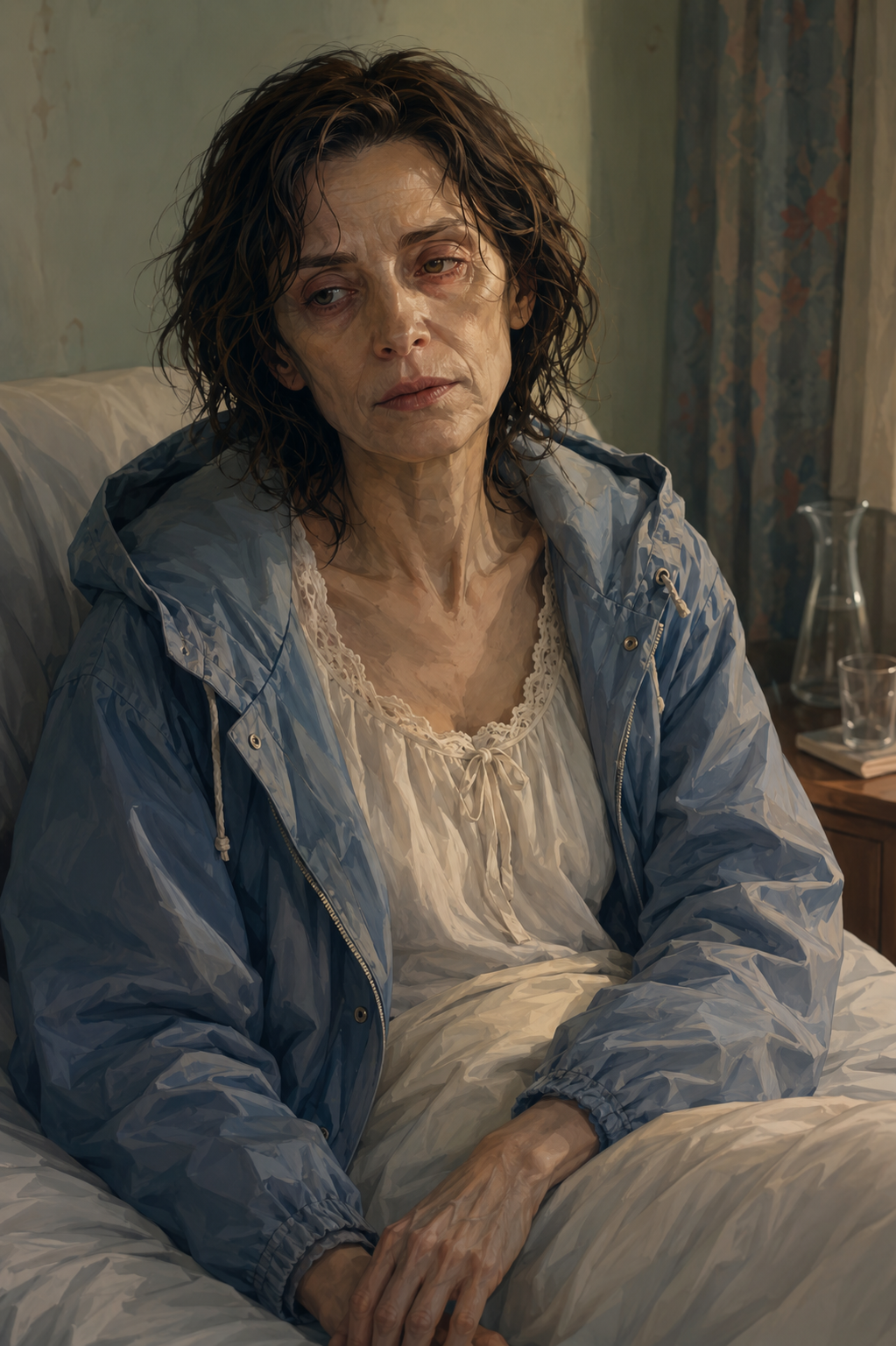
After her first donation leaves her severely weakened, she tries to make amends by giving Kathy and Tommy Madame’s address so they can seek a rumored deferral. She dies after her second donation.
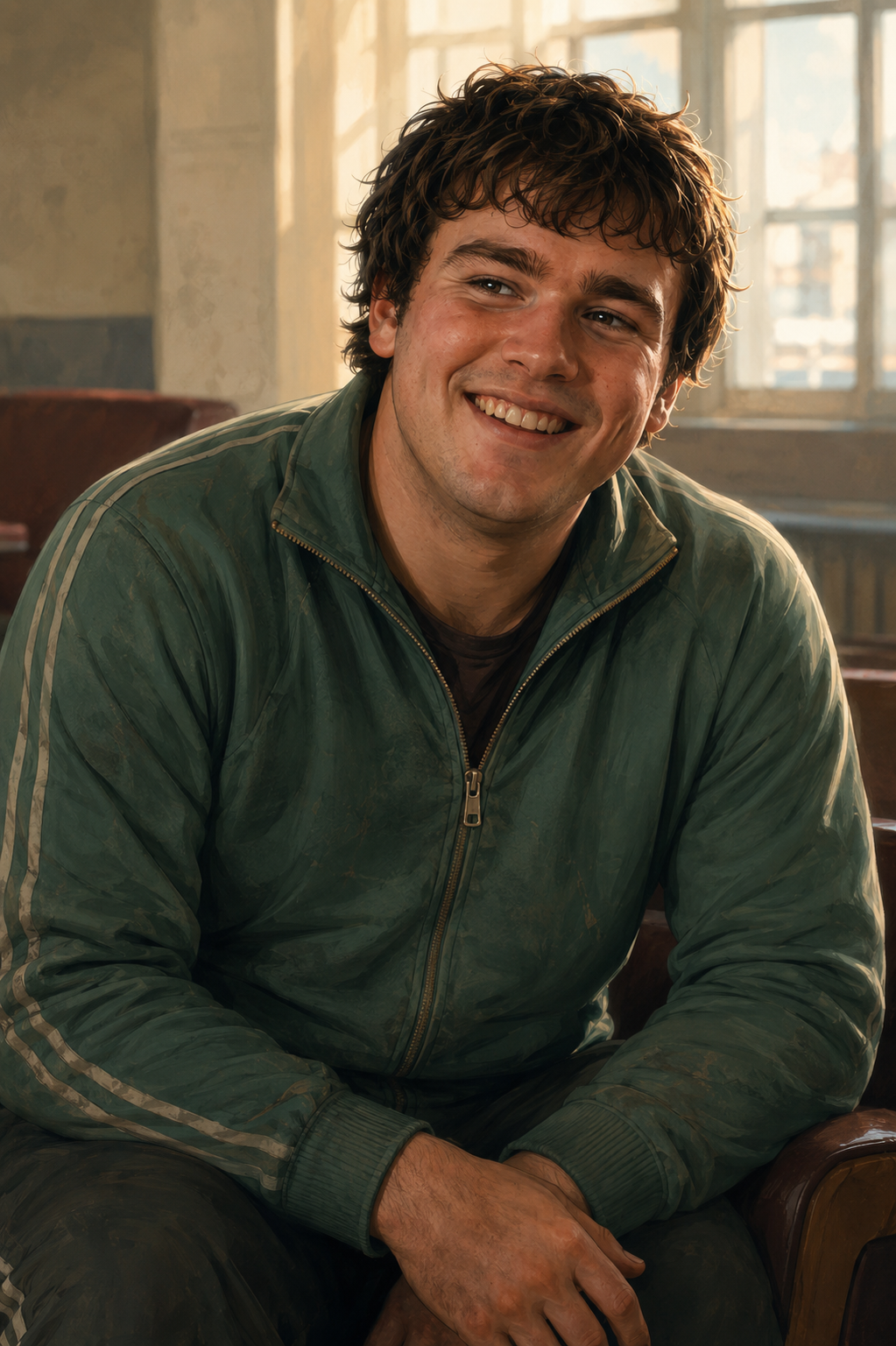
He and Kathy learn that deferrals never existed and their artwork cannot save them. Tommy later asks for another carer so Kathy will not witness his death and “completes” after his fourth donation.
🔷 Supporting Characters

Elderly and wheelchair-bound, she reveals to Kathy and Tommy that deferrals were always a myth and Hailsham has failed and closed. She lives with Madame while selling her possessions to pay debts.
She lives with Miss Emily after Hailsham closes. Despite fighting for the clones, she remains instinctively frightened and repulsed by them and watches society return to harsher treatment.
Her honesty conflicts with Hailsham’s philosophy, and she is forced to leave the school.
Her eventual fate is never revealed.
The hoped-for deferral never saves her; she “completes” during her second donation.
Kathy later encounters him as a donor in North Wales; he is still alive and doing reasonably well but is saddened by Chrissie’s death.
By then Laura is an exhausted, worn-down carer, illustrating what years within the donation system do to the students.
Kathy last sees him around the time she leaves the Cottages for carer training; his later fate is unknown.
His fate is never stated, although he presumably enters the same carer-and-donor system as the other students.
Her ultimate fate is unknown; Laura mentions having seen her several times after they left the Cottages.
Years later Kathy sees him at a recovery center in Wiltshire, wheelchair-bound and so weakened or medicated by his donations that he does not recognize her.
Her later life and fate are never revealed.
He is last seen helping Miss Emily into a car as she accompanies furniture she has sold; his later fate is unknown.
His individual fate is unknown, although he presumably eventually enters the donation program like the other Hailsham students.
🕳️ Potential Plot Holes
The students are allowed surprising amounts of freedom: they can drive, travel to towns, and move around without guards, even though they know they will eventually be forced to donate their organs. It can seem strange that none of them simply runs away. However, the novel establishes that the clones have been conditioned from childhood to accept their fate. They have been “told and not told” what awaits them, growing up inside a system where becoming carers and donors is presented as the natural course of their lives. Their lack of rebellion is therefore intentional rather than an oversight.
Madame spends years advocating for the humane treatment of clones, yet she visibly recoils when the Hailsham students approach her. This initially seems contradictory: why would someone fighting for the clones be personally repulsed by them? Miss Emily eventually explains that even those who championed the clones were often frightened of them. Madame genuinely believed they deserved humane treatment while still sharing society’s deeply ingrained discomfort with them, making her behavior an intentional contradiction in her character rather than a plot hole.
📚 Book Club Q&A's
⭐ Final Rating & Thoughts
Never Let Me Go is the kind of book that quietly works its way under your skin and stays there. I gave it 5 out of 5 stars because Ishiguro manages to create something deeply unsettling without relying on action, shocking twists, or an elaborate dystopian world. Instead, the horror comes from how ordinary everything feels.
This is definitely a slow, introspective read, and I can see why it wouldn’t work for everyone. But for me, the pacing was part of what made it so effective. The story unfolds gradually, allowing you to understand the characters and their world almost the same way they do—through memories, incomplete explanations, and things left unsaid.
What affected me most was the book’s exploration of love, identity, morality, free will, and what makes a life meaningful. Ishiguro trusts the reader to recognize the implications rather than explaining everything outright, which makes the story even more powerful.
It’s beautifully written, emotionally devastating, and quietly horrifying. Five stars—and absolutely a book that will stay with me.
✨ Adaptation description
Never Let Me Go — Film Adaptation
Kazuo Ishiguro’s 2005 novel Never Let Me Go was adapted into a 2010 feature film directed by Mark Romanek and written by Alex Garland. The film stars Carey Mulligan as Kathy H., Keira Knightley as Ruth, and Andrew Garfield as Tommy. Produced by DNA Films and Film4, the adaptation follows the three friends from their childhood at Hailsham through adulthood, as they confront the reality that they were created to become organ donors.
A television adaptation was later developed by FX, with Melissa Iqbal as writer and executive producer. The series was ordered in 2022 but was cancelled in February 2023 before production began.
Key Differences
The film follows the novel’s central storyline closely but significantly condenses Kathy, Ruth, and Tommy’s lives. Many of the smaller incidents at Hailsham and the Cottages are removed, while the love triangle and the characters’ limited time together become more prominent.
The film also makes the dystopian premise clear much earlier. It opens with text explaining that medical breakthroughs beginning in the 1950s dramatically increased human life expectancy. The novel instead allows the truth about the students and the donation system to emerge gradually through Kathy’s memories.
The movie adds electronic identification devices implanted in the students’ wrists, which they scan when entering or leaving certain locations. The novel contains no equivalent system of physical monitoring.
Tone Changes
Both versions are melancholic and restrained, but the novel is more nostalgic, ambiguous, and introspective. Because Kathy narrates her own memories, seemingly insignificant childhood experiences can occupy considerable space and acquire greater meaning much later.
The film is more immediately romantic and tragic. Its shorter runtime concentrates the story around Kathy, Tommy, and Ruth and makes the emotional consequences of their relationships more overt.
The brutality of donation is also more visual. Hospitals, surgical procedures, scars, and the physical deterioration of donors give the film a more tangible medical dimension than the novel’s deliberately understated descriptions.
Structural Changes
The novel unfolds through Kathy’s nonlinear and associative memories. She frequently jumps between periods of her life, revisits earlier events, and digresses into related memories.
The film restructures the story into a much clearer chronological progression through Hailsham, the Cottages, and the characters’ adult lives as carers and donors, with dated title cards marking major periods.
As a result, much of the detailed social life at Hailsham disappears. Childhood games, friendships, arguments, rumors, exchanges, and the complicated social hierarchy among the students are substantially condensed.
Character Changes
Kathy and Ruth’s friendship is simplified. Their relationship in the novel develops independently of Tommy and includes years of affection, rivalry, manipulation, loyalty, and resentment. The film places greater emphasis on Tommy as the source of tension between them.
Kathy’s feelings for Tommy are clearer earlier in the film. The movie establishes her romantic longing while Tommy and Ruth are together, creating a more conventional love triangle. The novel allows Kathy’s emotional and sexual development to follow a more complicated path before she and Tommy eventually become a couple.
Ruth is more explicitly aware of Kathy and Tommy’s connection. Her decision to pursue Tommy therefore feels more directly connected to jealousy and her desire to keep the two apart. This also strengthens the significance of her later remorse and attempt to bring them together.
Chrissie and Rodney have smaller roles. Their lives and relationship at the Cottages receive less attention, although they remain important to the rumor that couples who can prove they are genuinely in love might receive donation deferrals.
Tommy’s Artwork
Tommy’s strange drawings of imaginary animals receive considerably more attention in the novel. His artistic development becomes connected to questions about creativity, individuality, and whether art can reveal something fundamental about a person’s inner self.
The film retains Tommy’s drawings and his belief that they might help prove his love for Kathy, but their development is compressed. Consequently, the artwork functions more directly as part of the characters’ attempt to obtain a deferral.
The Judy Bridgewater Tape
Kathy’s Judy Bridgewater cassette remains an important symbol in both versions, but its context changes.
In the novel, Kathy listens to “Never Let Me Go” while imagining a woman who has been told she cannot have children miraculously holding a baby of her own. Madame secretly witnesses Kathy cradling a pillow while listening and begins to cry. Kathy later loses the cassette and eventually finds another copy during the trip to Norfolk.
The film connects the song more directly to Kathy’s feelings for Tommy, strengthening its role within the central romantic storyline. The emphasis therefore shifts somewhat away from Kathy’s imagined experience of motherhood and toward her longing for Tommy.
What the Adaptation Emphasizes
The film places the Kathy–Tommy–Ruth relationship at the center of the story. Their predetermined deaths give their missed opportunities particular urgency: years that would be regrettable in an ordinary relationship become devastating when the characters have so little time.
The possibility of a deferral consequently becomes one of the film’s strongest emotional threads. Kathy and Tommy are not hoping to escape their fate permanently; they simply want additional time together.
The film’s final narration makes this idea especially explicit. Kathy reflects on whether donors are really so different from everyone else, since every human life ends and people inevitably wonder whether they had enough time.
What the Film Softens, Removes, or Expands
The film reduces much of the everyday world surrounding the central story, including Hailsham’s elaborate childhood culture, Kathy and Ruth’s many smaller conflicts, Kathy’s other relationships, and numerous conversations and theories among the students.
It expands the visible physical reality of donation, allowing the audience to see hospitals, medical procedures, scars, recovery centers, and the deterioration of the donors.
Most significantly, the adaptation concentrates Ishiguro’s sprawling meditation on memory, mortality, friendship, art, identity, and humanity into a more focused romantic tragedy about three people who realize too late how little time they have together.
✨ Books Like Never Let Me Go (2005)
See an error on this page?