
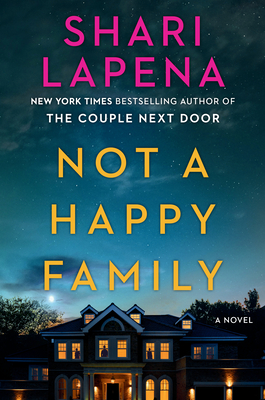
Not a Happy Family (2021)
Select Sections to Print
×Book Details
Not a Happy Family (2021)
Jump to Section
⚠️ Trigger Warnings
- Graphic physical violence and murder
- Ligature strangulation
- Throat slitting and stabbing
- Blood, bodily decay, and disturbing crime-scene imagery
- Patricide
- Death by hanging
- Domestic violence
- Emotional and verbal abuse
- Child abuse
- Child-on-child and sibling violence
- Poisoning / attempted murder
- Stalking and obsessive behavior
- Alcoholism and heavy alcohol use
- Recreational drug use
- Terminal illness / pancreatic cancer
- Infertility and fertility treatments
- Financial fraud and exploitation
⏱️ 2-Minute Spoiler Summary
Fred and Sheila Merton are wealthy, deeply unhappy parents whose three adult children all have reasons to hate them. At Easter dinner in their Hudson Valley mansion, Fred viciously humiliates Catherine, Dan, and Jenna, then announces that he and Sheila are selling the house. He also threatens changes to his will that could cost the children millions.
The next morning, longtime housekeeper and former nanny Irena Dabrowski discovers Fred and Sheila murdered. Sheila has been strangled, while Fred has had his throat slit and been stabbed fourteen times. Assuming one of the children did it, Irena instinctively protects them by washing a bloody carving knife and returning it to the knife block.
Detectives Eric Reyes and Barr quickly discover that all three siblings have huge financial motives—and all three lied about Easter night. Dan secretly went driving for hours. Catherine left her house around the time of the murders. Jenna lied about boyfriend Jake Brenner spending the night when he had actually returned to New York.
The family finances make everything even messier. Fred’s will leaves most of his $26 million estate divided among four children, not three. The surprise fourth heir is Rose Cutter, Catherine’s longtime friend, who is actually Fred’s daughter from an affair with Rose’s mother, Ellen. Rose already knew the truth because a law-firm employee leaked the will to her. She’s also hiding another crime: she took $500,000 from Dan for a supposedly private mortgage investment, forged the paperwork, and lost his money speculating in stocks.
Suspicion initially falls heavily on Dan when police find disposable protective coveralls and booties in his garage. But Catherine has an even more disturbing secret. She admits to husband Ted that she drove to her parents’ house that night and found them already murdered. Convinced Dan must have done it, she left without calling police—and stole a pair of diamond earrings from Sheila’s dead body on her way out.
Then Fred’s sister Audrey Stancik, who claims Fred intended to leave her half his fortune, nearly dies after someone poisons her iced tea with antifreeze.
The investigation finally turns toward Jenna. A witness remembers seeing Irena’s distinctive car outside the Merton house around the time of the murders. Irena proves she was home, but explains that all three Merton children knew where she kept her spare keys. Forensics then finds one of Jenna’s hairs inside Irena’s car.
Jenna really is the killer. After Easter dinner, she stole Dan’s protective clothing and Irena’s car, returned to her parents’ house disguised in the coveralls, strangled Sheila with an electrical cord, slit Fred’s throat, and stabbed him fourteen times. She staged a robbery, then buried the bloody clothing and stolen property beneath a concrete foundation being poured on an isolated farm. She later poisoned Audrey as well.
Reyes figures out what happened, but the evidence isn’t strong enough to convict Jenna. The hair in Irena’s car can be explained away as innocent transfer, and the physical evidence remains hidden beneath the concrete. Jenna therefore walks free while her siblings, compromised by their own lies and suspicious behavior, are in no position to expose her.
A year later, Catherine has a baby daughter and moves into the Merton mansion with Ted, although their marriage remains strained by everything he has learned about her. Rose has been prosecuted for defrauding Dan. Jenna remains free.
But Audrey hasn’t given up. When she sees that the rural property containing the concrete foundation is for sale, she realizes Jenna’s buried evidence may still be underneath it. Audrey calls the realtor and decides to buy the property herself, planning to dig up the foundation and uncover the proof that could finally put Jenna away.
📖 Full Spoiler Summary
Easter Dinner with the Mertons
Fred Merton has made a fortune founding Merton Robotics, but money hasn’t made his family particularly happy. He is cruel, controlling, and openly contemptuous of his three adult children, while his wife, Sheila, is anxious, submissive, and dependent on Xanax.
The family’s dysfunction is on full display when everyone gathers at Fred and Sheila’s mansion in the wealthy Hudson Valley enclave of Brecken Hill for Easter dinner. Eldest daughter Catherine is a successful dermatologist married to dentist Ted Linsmore, but she desperately wants to inherit her parents’ beautiful home. Middle child Dan is an unemployed MBA graduate drowning in financial problems after spending years expecting to take over Merton Robotics. His wife, Lisa, knows how badly he needs money. Youngest daughter Jenna is a rebellious sculptor who still lives on Fred’s monthly allowance and arrives with her struggling-artist boyfriend, Jake Brenner.
Fred seems determined to make everyone miserable. He announces that he and Sheila are selling the mansion, crushing Catherine’s assumption that it will someday be hers. He mocks her fertility struggles, then turns on Dan, explaining that he sold Merton Robotics precisely because he believed his son would destroy the company if allowed to run it. Jenna’s art receives equally vicious treatment.
By the end of dinner, everyone is furious. Catherine and Ted leave first, followed by Dan and Lisa. The family’s longtime former nanny and current housekeeper, Irena Dabrowski, also goes home, and Jenna eventually drops Jake at the train station so he can return to New York.
By the following morning, Fred and Sheila are dead.
Two Brutal Murders and Three Suspicious Children
Irena arrives at the mansion on Easter Monday and discovers Sheila’s body on the living room floor. She has been strangled. Fred is in the kitchen surrounded by blood, his throat slit and his back stabbed fourteen times.
The house appears to have been robbed. Jewelry, silver, and cash are missing, but Irena immediately suspects something much worse than a random burglary: she thinks one of the Merton children may have murdered their parents. When she spots a bloody carving knife on the kitchen floor, her instinct is to protect the children she helped raise. She washes the knife thoroughly and puts it back into the knife block, destroying potential forensic evidence before calling the police.
Detectives Eric Reyes and Barr take over the investigation. The brutality of the murders is striking, but the autopsy provides another important discovery. Fred had advanced pancreatic cancer and probably had only three or four months left to live. Whoever killed him hadn’t needed to wait much longer for nature to do the job.
For Fred’s children, however, waiting could have been financially dangerous.
All three stand to inherit millions, and all three begin lying almost immediately.
Dan and Lisa claim they were home together all night. In reality, Dan left after the disastrous dinner and drove around alone for approximately three hours, leaving Lisa to provide him with a false alibi.
Catherine and Ted also claim they stayed home, but security footage from a neighbor’s camera catches Catherine leaving at 11:09 p.m. and returning at 12:41 a.m.
Jenna’s story isn’t clean either. She initially lets police believe Jake spent the night with her, but surveillance footage proves he boarded the 8:40 p.m. train to New York.
Instead of narrowing their suspect list, Reyes and Barr discover that virtually everyone in the Merton family has something to hide.
Fred’s Will Creates Even More Suspects
Fred’s estate attorney, Walter Temple, reveals another potential motive. Fred’s widowed sister, Audrey Stancik, says her brother recently told her he intended to change his will and leave half his fortune to her. Walter confirms that Fred had scheduled an appointment with him, but Fred died before making any changes.
The existing will therefore remains valid. Irena receives $1 million, Audrey receives $1 million, and smaller amounts go to charity. Most of the remaining $26 million is divided among Fred’s children.
That’s when Catherine, Dan, and Jenna discover there are four of them.
The fourth heir is Rose Cutter, Catherine’s close friend since high school. Rose’s mother, Ellen Cutter, once worked as Fred’s secretary at Merton Robotics and had an affair with him. Rose is Fred’s illegitimate daughter—and therefore Catherine, Dan, and Jenna’s half-sister.
Even more shocking, Rose already knew.
Janet Shewcuk, a junior associate at Walter’s firm and an old law-school friend of Rose’s, illegally revealed the contents of Fred’s will to her two months before his death.
Rose has another secret involving the Mertons. Desperate for money, she convinced Dan to give her $500,000 for what she presented as a private mortgage on a wealthy man’s house. The supposed borrower was Amir Ghorbani, who lives at 22 Brecken Hill Drive.
The mortgage doesn’t exist. Rose forged the documents and gambled Dan’s $500,000 on stocks, losing it. Dan believes his investment is legitimate and has become so anxious about his money that he repeatedly drives past Ghorbani’s house at night. His strange behavior gives police yet another reason to question what he was doing around Brecken Hill.
Catherine Reveals What Really Happened That Night
A search of Dan’s garage produces a particularly alarming discovery: an opened package containing disposable protective coveralls and booties. The detectives realize the murderer could have worn protective clothing, explaining the lack of blood evidence connecting any obvious suspect to Fred’s extraordinarily bloody killing.
But Catherine soon makes an even more damaging confession to Ted.
She really did leave home on Easter night. She drove to her parents’ mansion at around 11:30 and went inside—only to discover Fred and Sheila already dead.
Catherine immediately decided Dan must have killed them. Instead of calling 911, she left, believing that delaying discovery of the bodies would give her brother more time to get away.
But she did something else first.
Sheila was wearing antique diamond stud earrings Catherine had always coveted. Seeing them on her dead mother’s ears, Catherine removed them and took them home.
When police later search Catherine’s house, they find the earrings in her jewelry box. Catherine may not have murdered her parents, but stealing jewelry from her mother’s corpse makes her look extraordinarily guilty.
Then someone apparently tries to eliminate another member of the family. Audrey is hospitalized after drinking iced tea contaminated with antifreeze. She survives and becomes convinced one of Fred’s children poisoned her.
The Evidence Finally Points to Jenna
The clue that breaks the case open comes from Carl Brink, a local man who was driving near Brecken Hill between 11 p.m. and midnight on Easter Sunday. He remembers seeing a vehicle near the Merton driveway because of its distinctive personalized license plate: IRENA D.
That seems to point directly toward Irena. But her landline records prove she was at home on a continuous phone call from 11:11 until 11:43.
Someone else must have been driving her car.
Irena explains that she keeps spare house and car keys hidden beneath a planter on her back patio. More importantly, Catherine, Dan, and Jenna all know where she keeps them.
When forensic investigators examine Irena’s vehicle, they find a single strand of hair in the driver’s seat.
It belongs to Jenna.
Jenna Murdered Both of Her Parents
The truth is that Jenna carefully planned the murders after Easter dinner.
Fred’s cruelty wasn’t the only thing driving her. During their argument, he told Jenna that he intended to change his will and give Audrey half of his fortune. If he followed through, Jenna and her siblings would lose millions.
After dropping Jake at the station, Jenna went to Dan’s unlocked garage and stole disposable coveralls, booties, and a mask, deliberately using something that could later point suspicion toward her brother. She then went to Irena’s house, retrieved the hidden spare keys, and took Irena’s car.
Wearing the protective clothing, Jenna drove back to her parents’ mansion and rang the bell. When Sheila answered the door, Jenna strangled her with an electrical cord.
She then summoned Fred into the kitchen. Approaching him from behind, she slit his throat and stabbed him fourteen times in the back.
Jenna took cash, jewelry, and silver to make the killings resemble a robbery. Afterward, she removed the bloody protective clothing, placed it and the incriminating evidence into a bag, and drove into the countryside.
She had already identified the perfect hiding place. At an isolated farm where a new outbuilding was being constructed, Jenna buried the bag beneath an area where fresh concrete was about to be poured. Once the foundation covered it, the physical evidence connecting her to the murders was effectively entombed.
Jenna was also responsible for Audrey’s poisoning. She had slipped through an open window at Audrey’s house and poured antifreeze into her iced tea, hoping to remove another threat.
Jenna Gets Away with Murder—for Now
Reyes eventually understands that Jenna killed Fred and Sheila, but knowing the truth and proving it in court are two different things.
The strongest physical evidence is the strand of Jenna’s hair found in Irena’s driver’s seat. Jenna’s defense can easily argue that the hair arrived there through innocent transfer, particularly because Jenna and Irena had physical contact. Without the buried protective clothing and stolen property, Reyes doesn’t have enough evidence to guarantee a murder conviction.
Jenna therefore remains free.
She also recognizes how effectively her family’s dysfunction protects her. Catherine, Dan, and Jenna all lied to police. All had financial motives. Catherine secretly visited the murder scene and stole Sheila’s earrings. Dan disappeared for hours and owned the protective clothing. Jenna can simply deny everything while pointing out that none of the siblings can accuse another without drawing suspicion back onto themselves.
Rose, however, doesn’t escape the consequences of her own crimes. Her fraudulent investment scheme is exposed, and she is prosecuted for stealing Dan’s $500,000.
A year after the murders, Catherine has finally given birth to a daughter. She, Ted, and the baby move into Fred and Sheila’s mansion, giving Catherine the house she wanted all along. But Ted has learned disturbing things about his wife and her family, leaving him deeply uneasy and distrustful of Catherine.
Audrey has received the $1 million Fred left her, but she hasn’t forgotten what happened—or Jenna.
Then Audrey spots a “FOR SALE” sign on the rural farm where Jenna buried the murder evidence beneath the concrete foundation. Audrey realizes that the proof everyone needs may still be sitting exactly where Jenna left it.
She calls the realtor.
Audrey intends to buy the property herself, dig up the concrete foundation, and find the evidence that could finally prove Jenna murdered Fred and Sheila.
🔚 Ending Explained
How the Book Ends
Toward the end of Not a Happy Family, Detectives Reyes and Barr finally get what appears to be a forensic break in the Merton murder case: a single strand of Jenna Merton’s hair is found in the driver’s seat of Irena Dabrowski’s car.
The discovery supports the detectives’ growing suspicion that Jenna used Irena’s car on the night Fred and Sheila Merton were murdered. But it still isn’t enough. Jenna and her attorney point out that the hair could easily have been transferred innocently—Jenna had hugged Irena before, and Irena could have carried the hair back to her car on her clothing. With no other physical evidence connecting Jenna to the murders, the police have no grounds to arrest her.
The reader, however, soon learns that Jenna really did kill both of her parents.
Jenna’s Murder Plan
On Easter night, Fred had announced that he was considering leaving half of his $26 million fortune to his sister, Audrey Stancik. After dinner, Jenna dropped her boyfriend, Jake Brenner, at the Aylesford train station and began putting her plan into motion.
She first drove to her brother Dan’s house, slipped into his unlocked garage, and stole a disposable hazmat suit, booties, and a mask. She then went to Irena’s house, where she retrieved a spare set of house and car keys hidden beneath a planter on the back patio.
Disguised in the protective suit, Jenna drove Irena’s car to the Merton mansion.
When Sheila opened the door, Jenna chased her into the living room and strangled her with an electrical cord. She then lured Fred into the kitchen, approached him from behind, slit his throat, and stabbed him fourteen times in the back.
Jenna deliberately ransacked the master bedroom to make the killings look like a robbery. She gathered cash, silver, jewelry, and her blood-covered protective clothing into a canvas bag and took everything to a nearby rural farm property. There, she buried the evidence beneath the freshly poured concrete foundation of a new outbuilding.
Jenna is also responsible for the earlier attempt on Audrey’s life. She had secretly entered Audrey’s house through an open window and poured antifreeze into her iced tea.
The Merton Siblings’ Pact
After Audrey tells the family about the DNA evidence from Irena’s car, Catherine and Dan confront Jenna.
Instead of panicking, Jenna turns the situation back on them.
All three Merton children had motives for wanting Fred dead. All three had lied to the police. None had a completely convincing alibi. And Jenna knows something particularly damaging about Catherine: Catherine went to the mansion on Easter night, discovered Sheila’s body, and stole her mother’s antique diamond earrings directly from her dead ears before leaving without calling 911.
That secret gives Jenna leverage.
If Catherine or Dan exposes Jenna, they risk drawing renewed police attention to themselves and potentially jeopardizing their shares of the family fortune. The siblings therefore arrive at an unspoken agreement: no one tells the truth.
Jenna gets away with murder because the rest of her family is too compromised to turn her in.
One Year Later
The epilogue shows that inheriting the Merton fortune has hardly produced a happy ending.
Catherine and Ted have a baby daughter and move into the Merton mansion—the house Catherine coveted throughout the novel. But getting everything she wanted does not make Catherine happy. Ted now knows what his wife is capable of, and their marriage is poisoned by distrust.
Dan has been cleared legally, but his reputation has been destroyed. Meanwhile, Rose Cutter faces prosecution for the real estate fraud involving Dan’s $500,000 investment.
And then there is Audrey.
Audrey receives the $1 million Fred left her in his will. While driving near Jenna’s home, she notices that the rural property containing the new concrete outbuilding is for sale.
She knows what is underneath it.
Rather than simply walking away with her inheritance, Audrey calls the realtor and announces that she wants to buy the property.
The novel ends with the strong implication that Audrey intends to tear up the concrete foundation, recover the buried evidence, and finally prove that Jenna murdered Fred and Sheila.
What the Ending Means
The ending is deliberately satisfying and unsatisfying at the same time. Jenna has committed what appears to be the perfect murder, and the police cannot prove it. But she has made one crucial mistake: she buried the truth instead of destroying it.
That distinction drives the final image of the novel.
The Concrete Foundation: Buried Guilt
The concrete outbuilding is the clearest symbol in the ending. Jenna believes that by sealing the murder weapon, bloody clothing, and stolen property beneath concrete, she has permanently buried her crime.
Instead, she has created a physical monument to it.
The evidence remains intact beneath the surface, just as the Merton family’s secrets have always existed beneath its wealthy, respectable exterior. The family can cover its ugliness, lie about it, and build something new on top of it—but the truth is still there.
Audrey’s decision to buy the property suggests that buried secrets eventually demand excavation.
The Merton Mansion: Catherine Gets Exactly What She Wanted
Catherine’s fate is one of the novel’s sharpest ironies.
She has spent much of the story wanting the family mansion. In the end, she gets it. She gets the inheritance, the prestigious house, a husband, and a new baby—the outward appearance of the successful life she values.
But the mansion has become a kind of golden cage.
Catherine knows her sister murdered their parents. Ted knows Catherine discovered Sheila’s corpse and stole jewelry from it. Their wealth depends upon silence, and their marriage is now built around knowledge neither of them can forget.
The house Catherine regarded as a prize becomes a reminder of everything the family has done to possess it.
Sheila’s Diamond Earrings: Catherine’s Moral Corruption
The stolen earrings expose Catherine more effectively than almost anything else she does.
Catherine presents herself as polished, successful, and respectable, but when she discovers her murdered mother, her instinct is not to call for help. She takes something valuable from Sheila’s body.
That moment reveals how thoroughly Fred’s values have infected his children. Catherine may not be a murderer like Jenna, but she has learned the same fundamental lesson: when an opportunity presents itself, take what you can and protect yourself afterward.
The earrings also explain why Catherine cannot simply become the moral hero once she learns Jenna is guilty. She has already compromised herself.
Jenna Wins by Understanding Her Family
Jenna’s greatest weapon at the end isn’t her ability to murder without leaving evidence. It is her understanding of her siblings.
She knows Catherine and Dan will not sacrifice themselves merely to see her punished. Their shared guilt creates a form of mutually assured destruction: if one sibling starts telling the truth, everyone becomes vulnerable.
For perhaps the first time, the Merton children genuinely cooperate.
The irony is that the only thing capable of uniting this dysfunctional family is their collective need to conceal wrongdoing and protect their money.
Fred’s Legacy Lives On
Fred dies, but the family dynamic he created survives him.
His cruelty, manipulation, obsession with money, and habit of using vulnerability against others have been absorbed by his children. Jenna uses secrets as weapons. Catherine prioritizes status and inheritance. Dan lies to protect himself. Their relationships remain transactional and suspicious even after the tyrannical father at the center of the family is gone.
In that sense, killing Fred does not free them from him.
They have become versions of him.
Why Audrey Matters in the Final Scene
Audrey prevents the ending from becoming completely nihilistic.
The police have failed. Catherine and Dan will not expose Jenna. Jenna believes she has successfully manipulated everyone who could threaten her.
But Audrey has no reason to participate in the siblings’ pact.
More importantly, Fred himself inadvertently gives Audrey the means to destroy Jenna: the $1 million inheritance. Jenna murders Fred partly because she fears losing his money to Audrey, only for Fred’s bequest to finance Audrey’s attempt to uncover Jenna’s crime.
That gives the ending a wonderfully dark irony. The money Jenna killed to protect may ultimately be what brings her down.
Audrey’s motives are not especially noble—her pursuit of Jenna is fueled by resentment and vengeance as much as justice—but that fits the novel. Not a Happy Family does not suddenly introduce a morally pure character to restore order. Instead, one damaged member of the family may finally expose another.
The Bigger Meaning of the Ending
At its core, the ending is about what happens when a family values money and self-preservation more than love or loyalty.
Fred’s death should remove the source of the Merton family’s dysfunction. Instead, it reveals how deeply that dysfunction has already spread. His children inherit far more than his millions: they inherit his suspicion, selfishness, cruelty, and willingness to manipulate the people closest to them.
The title becomes especially fitting by the end. The Mertons are not merely “not a happy family.” They are a family in which intimacy itself has become dangerous. Everyone knows something incriminating about someone else, and every relationship contains the possibility of betrayal.
The ending therefore denies the reader the clean resolution of a conventional murder mystery. The killer is revealed to us, but not caught. Justice remains unfinished.
And yet Jenna’s victory feels temporary.
The final image of Audrey preparing to buy the land transforms the concrete slab from Jenna’s perfect hiding place into a countdown. Somewhere underneath it lies everything necessary to unravel her carefully constructed story.
Jenna has escaped justice for now.
But the truth is still buried there, waiting for someone willing to dig.
👤 Characters & Fates
🔶 Main Characters

Jenna slits his throat and stabs him 14 times on Easter night; his autopsy reveals terminal pancreatic cancer that would have killed him within months.

Jenna strangles her with an electrical cord; later that night Catherine secretly removes valuable diamond earrings from her corpse.

She escapes prosecution despite Reyes realizing she is guilty, inherits millions, and also tries to kill Audrey with antifreeze—but Audrey ultimately buys the property where Jenna buried the evidence and plans to excavate it.

She avoids prosecution, inherits millions, has a baby girl, and moves into the Merton mansion, but Ted remains deeply disturbed and distrustful of her.

He is cleared of murder and inherits millions, but remains publicly humiliated and loses the $500,000 Rose fraudulently took from him.
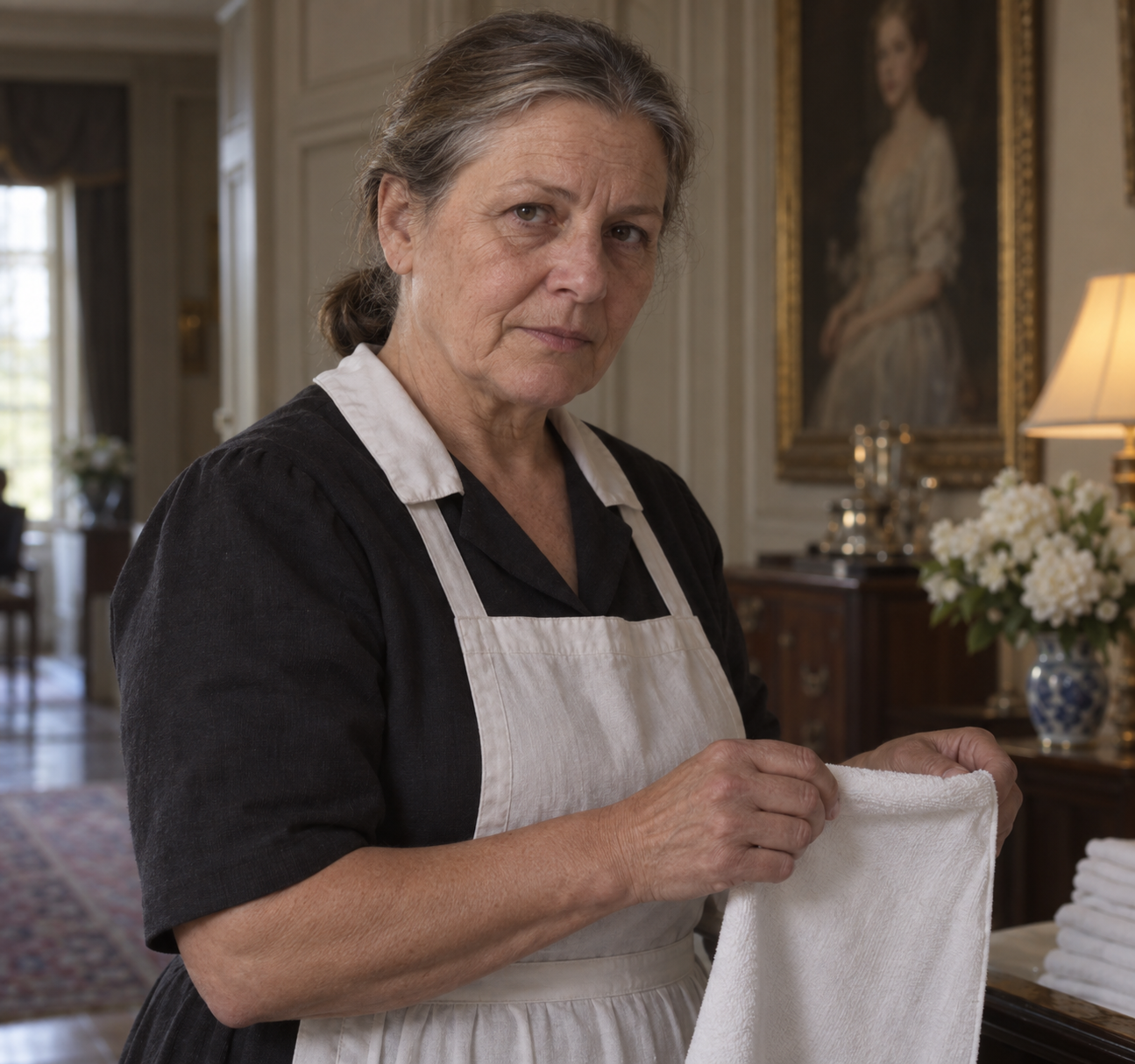
She is briefly arrested but cleared by her landline records, inherits $1 million, cuts ties with the Mertons, and retires south.

He correctly concludes Jenna murdered her parents but cannot arrest her because the hair alone cannot establish guilt beyond a reasonable doubt.

Audrey survives, inherits $1 million, and buys the farm containing Jenna’s buried evidence so she can excavate the concrete foundation and potentially expose her.

She is revealed as Fred’s fourth child and receives an equal share of his estate, but faces prosecution, disbarment, and possible prison for defrauding Dan.
🔷 Supporting Characters

A year later he lives with Catherine and their baby in the Merton mansion but is haggard, trapped, and deeply distrustful of his wife.
She becomes deeply disillusioned after discovering his $500,000 loss but remains with him as his inheritance approaches.
He admits the truth, demands $5,000 from Jenna for studio rent, and ends their relationship.
She helps Reyes uncover Jenna’s connection to Irena’s car but cannot obtain enough evidence to charge her.
She is devastated and humiliated when Rose’s $500,000 fraud is exposed and realizes her daughter may go to prison.
He reports Janet’s breach and its connection to Rose to Detective Reyes.
Wracked with guilt after the murders, she confesses the breach to Walter and police, effectively destroying her legal career.
He provides evidence that helps police unravel Rose’s $500,000 scheme.
He admits driving while high and reveals seeing Irena’s distinctive car near the Merton house on the murder night, helping police eventually connect Jenna to it.
She concludes Fred had only about three to four months to live even without being murdered.
Her forensic work exposes Irena’s attempt to destroy evidence.
She remains outside the crime itself but helps police understand the toxic family dynamics behind it.
He successfully shuts down interrogations when detectives lack sufficient evidence against Dan.
She publishes major stories that intensify public scrutiny and humiliation of the family.
She confirms Ellen remained home during the relevant timeframe, eliminating her as a suspect.
His treatment saves Audrey, allowing her to survive without permanent organ damage and eventually pursue Jenna’s buried evidence.
He turns the detailed autopsy work over to Dr. Sandy Fisher.
She appears only through Dan’s memories and has no involvement in the murders.
Rose sends her home as the fraud investigation intensifies, leaving her job effectively doomed along with Rose’s practice.
🕳️ Potential Plot Holes
Jenna’s plan depends on Dan being away, his garage being unlocked, and an unused disposable coverall from an old insulation project still being exactly where she expects it to be. This is extremely convenient, but not necessarily a plot hole. Jenna knows her brother and may know both his habits and what he keeps in his garage. It is better viewed as a risky logistical gamble that happens to work rather than an actual contradiction.
The police’s strongest physical evidence against Jenna is a single strand of her hair found in the driver’s seat of Irena’s car. Yet Jenna is specifically described as pulling the hood of her disposable coverall tightly around her face so that no hair is exposed. That makes it difficult to explain how she shed a hair while driving. The defense’s secondary-transfer explanation—that Irena picked up the hair while hugging Jenna and later transferred it to the seat—is actually plausible, but if so, the hair may have nothing to do with the murders at all. This is a genuine inconsistency in how the incriminating hair is presented.
📚 Book Club Q&A's
⭐ Final Rating & Thoughts
Not a Happy Family is exactly the kind of domestic thriller I love: fast-paced, twisty, and packed with enough dysfunctional family drama to keep me suspicious of absolutely everyone. I was hooked from the beginning and flew through it.
What worked especially well for me was how relatable the Merton family felt. These aren’t cartoon villains or ridiculously over-the-top suspects—they’re deeply flawed people carrying years of resentment, jealousy, financial pressure, and emotional baggage. Fred’s constant criticism and manipulation create a family dynamic where practically everyone has a legitimate reason to hate him, which makes the mystery genuinely difficult to solve.
I also loved the pacing. There was always another secret coming out, another character behaving suspiciously, or another piece of information that made me rethink my theory. Shari Lapena kept me guessing without making the story unnecessarily complicated.
More than anything, though, the family dynamics hit home for me. The pressure of never quite living up to a parent’s expectations gave the story an emotional layer beyond the murder mystery. Messy, addictive, and ridiculously entertaining—this is domestic suspense done exactly right.
✨ Adaptation description
As of September 2026, there is no official announcement of any screen adaptation of Not a Happy Family.
✨ Books Like Not a Happy Family (2021)
See an error on this page?