
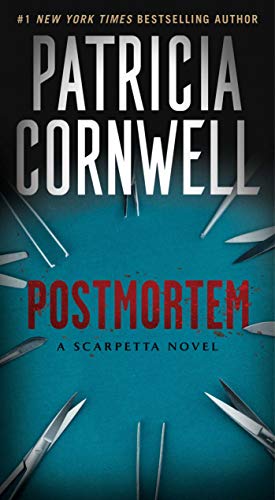
Postmortem (1990)
Series
Select Sections to Print
×Book Details
Postmortem (1990)
Series
Jump to Section
⚠️ Trigger Warnings
- Graphic violence and murder
- Sexual assault and rape
- Physical torture
- Graphic autopsies and medical detail
- Strangulation
- Serial murder
- Suicide
- Home invasion
- Stalking
- Death of a parent
- Childhood neglect
- Animal cruelty
- Misogyny and sexual harassment
⏱️ 2-Minute Spoiler Summary
Dr. Kay Scarpetta investigates a Richmond serial killer targeting women in their homes. Suspicion initially falls on the latest victim’s husband, Matt Petersen, and later on Scarpetta’s lover, Bill Boltz, especially after reporter Abby Turnbull reveals Boltz once drugged and raped her. At the same time, Scarpetta discovers her boss, Alvin Amburgey, has been sabotaging her office and planting evidence to destroy her career.
The breakthrough comes when Scarpetta realizes all the murdered women had previously called 911. The killer is Roy McCorkle, a civilian 911 operator who uses emergency calls to hear potential victims’ voices and obtain their addresses. After investigators plant a fake story suggesting forensic evidence can identify him, McCorkle panics and breaks into Scarpetta’s house to kill her. Scarpetta reaches for her revolver but discovers it is unloaded. Pete Marino, who has secretly been watching her house, arrives in time and shoots McCorkle dead. Boltz leaves town in disgrace, Amburgey’s sabotage is exposed, and Scarpetta takes Lucy to Florida to recover.
📖 Full Spoiler Summary
A Fourth Woman Is Murdered
In Richmond, Virginia, Dr. Kay Scarpetta, the state’s Chief Medical Examiner, is called out late on a rainy Friday night when another woman is found brutally murdered in her home. The victim, Lori Petersen, is a talented young surgeon, and her death is particularly alarming because she appears to be the fourth victim of the same serial killer already terrorizing the city.
The killer, whom the press has dubbed “Mr. Nobody,” targets women in their homes, sexually assaults them, binds them, and strangles them. Despite an enormous investigation, the police still have no idea who he is or how he chooses his victims.
At Lori’s house, Scarpetta works alongside Sergeant Pete Marino, a veteran homicide detective whose abrasive personality immediately puts them at odds. Marino is suspicious of Lori’s husband, Matt Petersen, a handsome literature student and actor who had been away at a dress rehearsal when his wife was killed. Matt appears genuinely devastated, but Marino sees several reasons to look more closely at him.
Matt had access to theatrical makeup through the production, potentially giving him a way to disguise himself. Police also discover his survival knife hidden in a dresser drawer. More troublingly, fingerprint examiner Neils Vander uses a new laser technique to examine Lori’s body and discovers Matt’s fingerprints on her shoulder.
Scarpetta is less convinced that this makes Matt a murderer. A husband’s fingerprints on his wife are hardly surprising, and she worries that Marino is forcing the evidence to fit his theory rather than following it wherever it leads.
There is another strange clue on Lori’s body. Under the laser, particles on her skin sparkle. Similar residue has appeared in the other murders, suggesting the substance came from the killer. Scarpetta eventually identifies it as a cheap borax-based soap powder—the kind commonly used in dispensers in public and government buildings.
It is a small clue, but potentially an important one. The killer may be carrying something from his workplace directly to the crime scenes.
Scarpetta Comes Under Attack
While Scarpetta is trying to identify the murderer, someone seems determined to undermine her professionally.
Her boss, Dr. Alvin Amburgey, the Commissioner of Health and Human Services, already has a strained relationship with her. Amburgey is controlling, politically minded, and eager to protect himself as public outrage over the murders grows. He begins scrutinizing Scarpetta’s office and restricts what she can say publicly about the investigation.
The situation becomes even worse because confidential information keeps reaching the press.
Reporter Abby Turnbull is aggressively pursuing the serial-killer story and repeatedly publishes details that should not be public. One particularly damaging revelation concerns Lori Petersen’s final moments: Lori apparently managed to call 911 during the attack, but the call was disconnected before she could ask for help.
Scarpetta cannot understand how Abby keeps obtaining protected information. The leaks make it look as though Scarpetta has lost control of her own office.
Her personal life offers little relief. Her ten-year-old niece, Lucy, is visiting from Miami. Lucy is exceptionally intelligent and already fascinated by computers, but she is also lonely and desperate for Scarpetta’s attention. Because the murders consume so much of Scarpetta’s time, Lucy is frequently left with Scarpetta’s dependable housekeeper, Bertha.
Scarpetta also has a complicated relationship with Bill Boltz, Richmond’s handsome Commonwealth’s Attorney. Their involvement is private and tentative, partly because both of their careers are connected to the murder investigation.
As the case becomes increasingly difficult, Scarpetta turns to FBI profiler Benton Wesley. Wesley helps build a psychological picture of the murderer, but even the FBI cannot yet explain the most important question: why these particular women?
The Killer Strikes Abby Turnbull’s Family
Then another woman is murdered.
The fifth victim is Henna Yarborough, and this killing suddenly connects the investigation to someone Scarpetta knows: Henna is Abby Turnbull’s sister.
Abby is no longer simply a reporter chasing the biggest story in Richmond. She has become part of it.
Her sister’s murder also leads Abby to reveal something she has kept secret. She tells Scarpetta that Bill Boltz once drugged and raped her.
The accusation horrifies Scarpetta. Her relationship with Boltz had already been uncertain, but Abby’s story forces her to see him differently. Marino becomes even more interested when forensic information provides another disturbing connection: Boltz is a nonsecretor, meaning his blood type cannot be determined from certain bodily fluids.
The killer is also believed to be a nonsecretor.
To Marino, Boltz suddenly looks like a serious suspect. He has access to information about the investigation, he has allegedly committed sexual violence before, and he shares an unusual biological characteristic with the murderer.
Scarpetta cannot simply dismiss the possibility, but the evidence still does not fully fit. The investigation has accumulated suspects and clues without producing a convincing explanation for how the killer finds his victims.
Someone Tries to Destroy Scarpetta
At the same time, the attacks on Scarpetta’s professional reputation escalate.
Her dedicated autopsy technician, Wingo, discovers what appears to be a serious mistake involving a physical evidence recovery kit, or PERK, stored in the morgue refrigerator. The kit has apparently been mislabeled in a way that makes Scarpetta look grossly negligent.
Scarpetta knows she would not have made such an error.
The mystery begins to unravel because of Wingo. He notices Amburgey secretly smoking in his car and manages to retrieve one of his discarded cigarette butts. Betty, the laboratory’s meticulous chief serologist, tests the saliva and discovers that Amburgey has type AB blood.
That matches the biological material associated with the suspicious PERK.
The supposed mistake was not Scarpetta’s at all. Amburgey planted the evidence to discredit her.
The strange activity involving Scarpetta’s office computer is connected to the sabotage as well. With help from programming analyst Margaret, Scarpetta realizes that someone has been accessing the system and manipulating information. A technical setting involving the computer’s “echo” helps expose what has been happening.
The threat inside Scarpetta’s office has therefore been separate from the serial murders. Amburgey has been exploiting the chaos surrounding the case in an attempt to damage Scarpetta’s career.
But exposing him still leaves the larger question unanswered.
Mr. Nobody is still out there.
The 911 Connection
Scarpetta and the investigators decide to turn the press coverage against the killer.
With Abby now cooperating, they arrange for a false story to appear suggesting that forensic evidence has revealed the murderer suffers from a rare genetic disorder called Maple Syrup Urine Disease, or MSUD. The claim is deliberately fabricated. They hope that convincing the killer that police can identify him biologically will frighten him into making a mistake.
As Scarpetta continues reviewing the victims, the answer to the mystery finally emerges.
The women did not know one another. They did not share the same job, neighborhood, social circle, or obvious routine.
But they had all called 911.
That explains something investigators have been unable to understand from the beginning: how the killer could select women who otherwise seemed completely unrelated.
He was finding them through the emergency communications system.
The killer is Roy McCorkle, a twenty-seven-year-old civilian communications officer working the evening shift as a 911 operator. His job gives him access to vulnerable women at exactly the moment they are frightened and seeking help. He can hear their voices and obtain information that allows him to locate their homes.
The clue involving the cheap soap powder also finally makes sense. McCorkle works in a public facility where that type of soap is used. The seemingly insignificant residue transferred from his environment to the women he murdered.
Once the false MSUD story appears, McCorkle becomes increasingly paranoid. Believing investigators are closing in on him, he decides to go after Scarpetta herself.
McCorkle Comes for Scarpetta
McCorkle breaks into Scarpetta’s home and confronts her with a knife.
For Scarpetta, the investigation suddenly becomes terrifyingly personal. The man whose victims she has examined is now standing inside her own house, and she realizes she may be about to die exactly as they did.
She manages to reach her .38 revolver, hoping she can defend herself.
Then she discovers that the gun is unloaded.
McCorkle moves in to kill her, but Scarpetta is not as alone as she thinks.
Despite their difficult relationship throughout the investigation, Marino has become increasingly concerned about her safety. Without telling her, he has been keeping watch outside her house.
As McCorkle attacks, Pete Marino bursts inside wearing a dark blue police jumpsuit and shoots him dead before he can kill Scarpetta.
Mr. Nobody is finally stopped.
The Aftermath
Solving the murders does not erase everything Scarpetta has learned along the way.
Bill Boltz, disgraced by Abby’s accusation and the suspicion surrounding him, conveniently leaves on “vacation.” Whatever possibility Scarpetta once saw for a relationship with him is effectively destroyed.
Amburgey’s campaign against Scarpetta also collapses. Abby now knows enough about his attempt to frame and sabotage Scarpetta to threaten his career, leaving him unable to continue wielding power over her as before.
Marino, meanwhile, has changed in Scarpetta’s eyes. Their relationship began with distrust and professional hostility, but he ultimately proves that beneath his crude behavior he is a capable detective who was willing to put himself in danger to protect her.
The investigation leaves Scarpetta physically and emotionally exhausted. She has spent weeks examining murdered women, defending her professional reputation, questioning people she trusted, and ultimately facing the killer herself.
Once it is over, she leaves Richmond for a while and takes Lucy with her to Florida.
After spending so much of Lucy’s visit distracted by death and work, Scarpetta can finally give her niece the attention she has been craving—and begin recovering from everything that happened.
🔚 Ending Explained
How Postmortem Ends
The ending of Postmortem brings the danger directly into Dr. Kay Scarpetta’s home, turning a case she has approached through autopsies, laboratory evidence, and careful deduction into a terrifyingly personal confrontation.
The Final Confrontation
The serial killer known as “Mr. Nobody” is Roy McCorkle, a twenty-seven-year-old civilian communications officer for the city. Scarpetta and the investigators deliberately provoke him by planting a newspaper story suggesting that forensic testing has revealed a genetic abnormality in the killer. The strategy works—but it also makes Scarpetta his next target.
McCorkle breaks into her house while she is sleeping. Scarpetta awakens to his distinctive foul smell and discovers him in her bedroom wearing a white nylon stocking over his face and a navy-blue jumpsuit. Armed with a knife and electrical cords, he prepares to restrain her in the same manner as his previous victims.
Scarpetta manages to roll from the bed and grab the .38 revolver she keeps beneath her pillow. She points it at McCorkle and orders him to remove his mask.
Before he can attack her, Pete Marino bursts into the room and shoots McCorkle, killing him.
Only afterward does Scarpetta make a horrifying discovery: her revolver was never loaded. In the confusion and exhaustion surrounding the investigation, she had forgotten to put bullets in it. Her apparent last line of defense had been nothing more than a bluff.
Who Was Mr. Nobody?
McCorkle’s job provides the final piece explaining how he selected his victims.
As a 911 communications employee, he had access to emergency calls and the addresses associated with them. He could listen to women speaking during vulnerable moments and identify those who appeared to live alone. The connection between the victims wasn’t social or professional—it was that they had, for various reasons, come into contact with the emergency communications system.
That revelation makes the murders especially disturbing. The women weren’t targeted because they had done something reckless. They had reached out to a system designed to protect them, and the predator was inside that system.
When Marino removes McCorkle’s mask, there is nothing particularly extraordinary about him. He is simply a young man with dirty-blond, kinky hair and a pale face. The terrifying “Mr. Nobody” turns out to be frighteningly ordinary.
What Happens to Amburgey and Boltz?
Solving the murders also allows Scarpetta to understand the separate conspiracy that has been threatening her career.
Dr. Alvin Amburgey, the Commissioner of Health and Human Services, is exposed as the person responsible for tampering with Scarpetta’s computer records and planting the fraudulent evidence kit that made it appear her office had mishandled crucial evidence.
The breakthrough comes through Wingo and Betty, who test a cigarette butt discarded by Amburgey. His rare AB blood type matches the biological material associated with the fabricated evidence, giving Scarpetta proof that the apparent mistakes in her office were deliberate sabotage.
Abby Turnbull then uses what she knows to help force Amburgey from his position.
Scarpetta’s relationship with Bill Boltz collapses as well. After Abby reveals that Boltz drugged and sexually assaulted her, whatever possibility existed between Kay and Boltz is destroyed. He conveniently disappears on an unplanned “vacation” as the consequences close in around him.
Rather than mourning the relationship, Scarpetta ultimately feels relieved to be free of him.
Scarpetta and Lucy
The novel doesn’t end with Scarpetta simply returning to work as though nothing happened.
The investigation has traumatized both her and Lucy, her brilliant but emotionally vulnerable ten-year-old niece. Scarpetta decides to take Lucy home to Miami and remain there for several weeks.
It’s an unusually personal choice for a woman who habitually responds to pain by burying herself in work. After spending the novel confronting death professionally, Scarpetta finally acknowledges that surviving something does not mean emerging from it untouched.
What the Ending Really Means
The most striking detail in the climax isn’t simply that Marino kills McCorkle.
It’s Scarpetta’s empty gun.
Throughout Postmortem, Scarpetta’s power comes from knowledge. She understands bodies, evidence, chemistry, computers, and forensic science better than almost anyone around her. When other people make assumptions, she demands proof.
Yet when McCorkle enters her bedroom, all of that expertise cannot guarantee her safety.
Scarpetta believes she is holding a loaded weapon.
She isn’t.
That moment strips away the illusion of absolute control that has sustained her throughout the investigation. Scarpetta can understand violence better than most people, but understanding danger does not make her immune to it.
There’s an additional irony in Marino becoming the person who saves her. For much of the novel, their relationship is combative. He is crude, dismissive, and frequently sexist toward her, while she distrusts his instincts and resents his attitude. Yet beneath their hostility, Marino has been watching her house because he realizes she may be in danger.
Their partnership survives because both eventually recognize something valuable in the other: Scarpetta needs Marino’s instincts just as Marino needs Scarpetta’s science.
The Corruption of Safety
McCorkle’s occupation gives the ending its darkest thematic twist.
911 should represent rescue.
Instead, it becomes McCorkle’s hunting ground.
Women call because they’re frightened, injured, lost, or vulnerable, and that vulnerability gives him access to them. The institution meant to connect victims with protection inadvertently connects a predator with victims.
The same inversion appears in Scarpetta’s professional life. Her government position should give her authority, yet Amburgey uses that bureaucracy against her. Her relationship with Boltz should provide intimacy and trust, yet he proves capable of horrific betrayal.
Again and again, supposedly safe structures conceal danger.
The Ordinary Face of Evil
There is also something deliberately anticlimactic about finally seeing McCorkle.
“Mr. Nobody” has existed throughout the investigation largely through what he leaves behind: fibers, odors, bodily fluids, fingerprints, injuries, and corpses. For Scarpetta, he has essentially been a collection of forensic clues.
Then Marino removes the mask.
And there is simply Roy McCorkle.
The point isn’t that he looks monstrous. It’s almost the opposite. The monster has an ordinary face, an ordinary job, and access to an ordinary municipal system.
That makes him more frightening.
Scarpetta’s Real Victory
Scarpetta survives, her professional reputation is restored, Amburgey’s sabotage is exposed, McCorkle is dead, and her relationship with Boltz is over.
But Postmortem doesn’t offer a triumphant detective-story ending where solving the mystery restores everything to normal.
There is no real return to normal.
Scarpetta has learned how easily institutions can fail, how badly she can misjudge people, and how vulnerable even someone as fiercely independent as she is can become.
That makes her decision to leave Richmond temporarily with Lucy especially meaningful. Her final act isn’t solving another puzzle. It’s choosing human connection over isolation.
And that is ultimately where the first Kay Scarpetta novel leaves her: brilliant and capable, but no longer protected by the belief that competence alone can keep chaos outside the door. She has survived her first encounter with the kind of evil she will spend the series studying—but survival has made her more guarded, more aware of her own vulnerability, and perhaps more willing to admit that she cannot face everything alone.
👤 Characters & Fates
🔶 Main Characters

McCorkle breaks into her home and nearly murders her, but Marino shoots him dead; Scarpetta is also cleared of Amburgey’s sabotage and leaves for Florida with Lucy to recover.
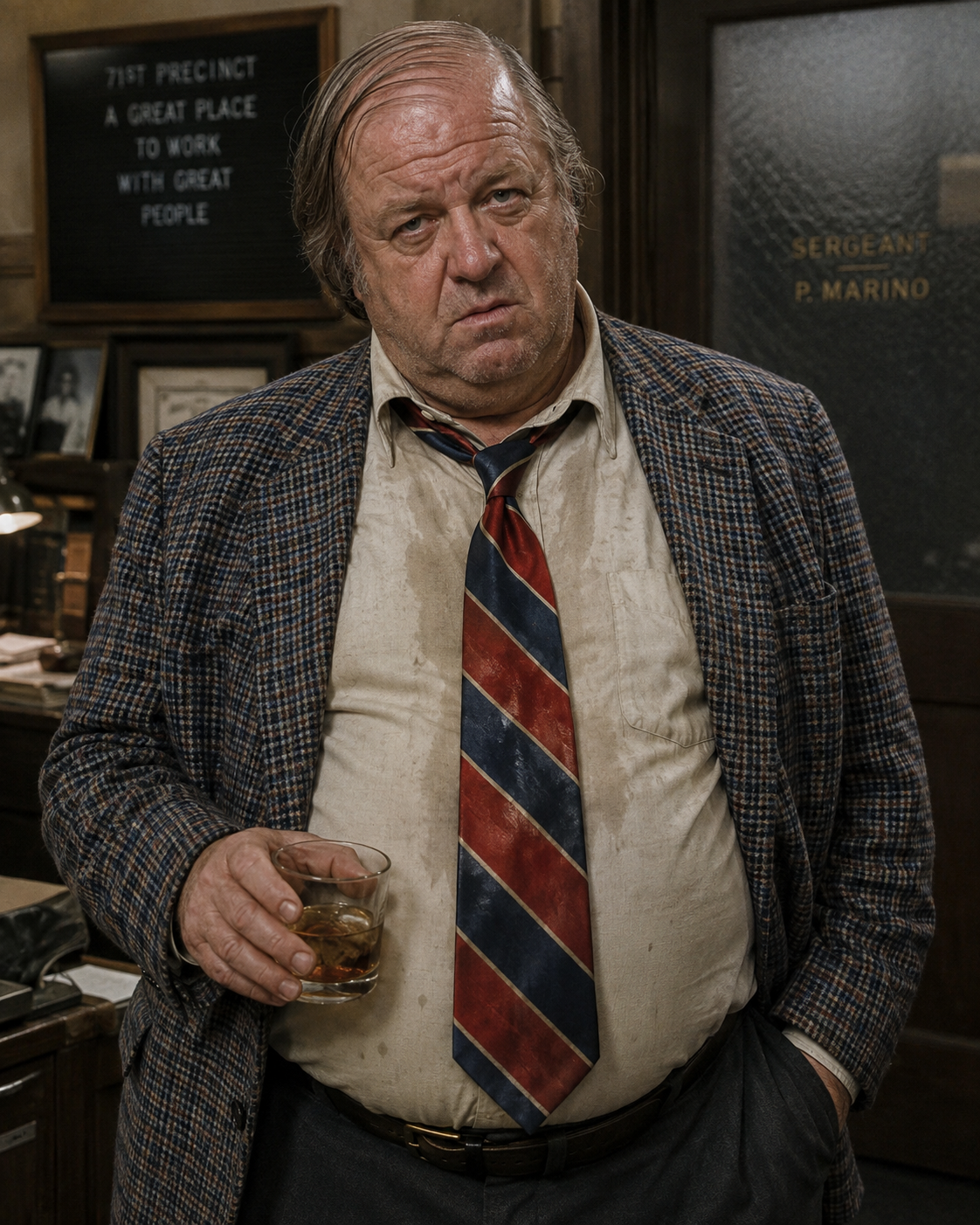
He bursts into Scarpetta’s bedroom as McCorkle is attacking her and shoots the killer four times, killing him.

After the police deliberately provoke him with a false story about his supposed genetic defect, he breaks into Scarpetta’s home to kill her but is shot four times by Marino; his final words are “Oh, shit.”

She survives and uses what she knows about Amburgey’s sabotage to help force him out of Richmond.

His relationship with Scarpetta ends, and he abruptly leaves on “vacation” as the truth about his behavior begins surfacing.

He survives the case and returns to his work at Quantico after McCorkle is killed.
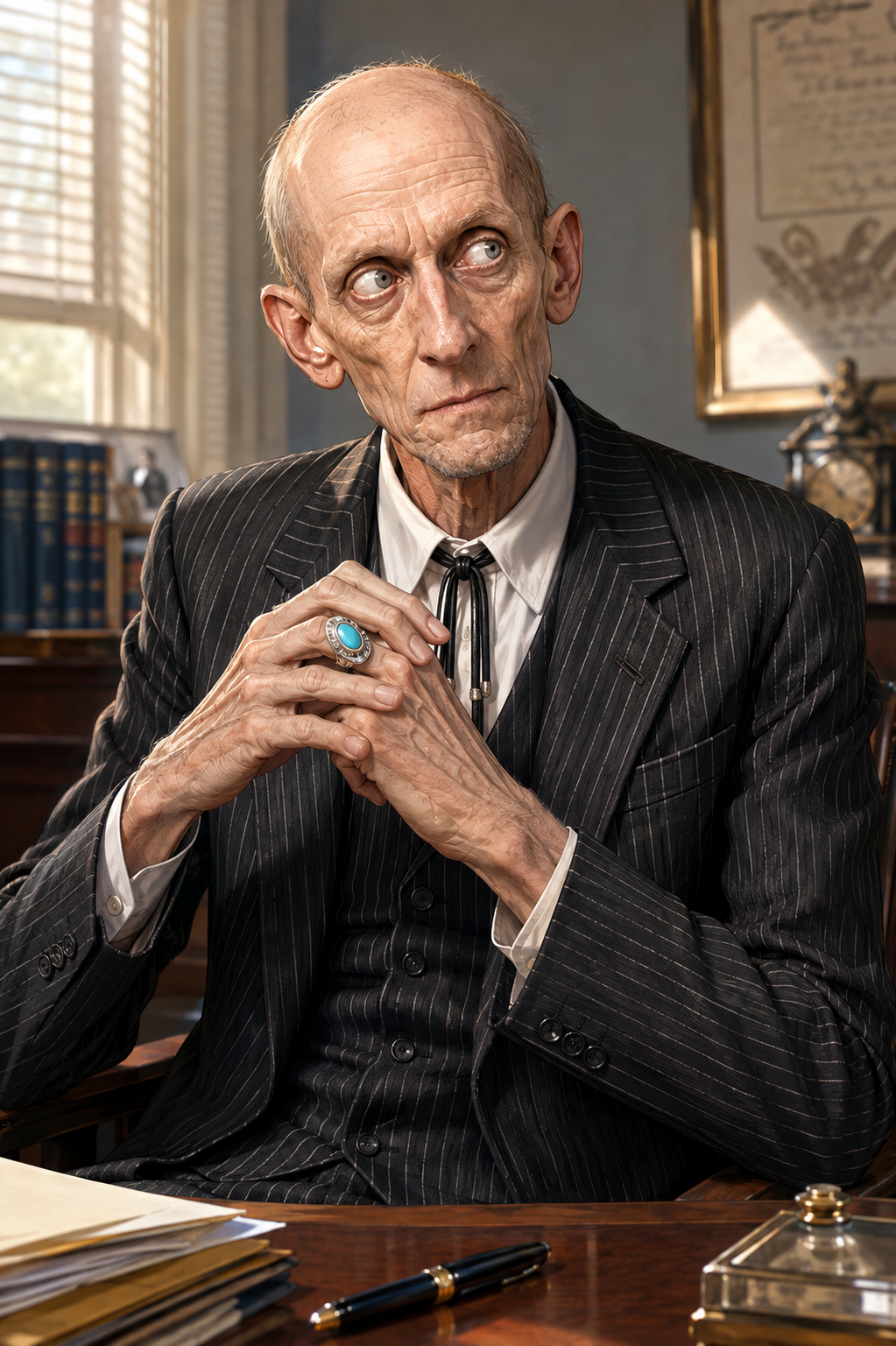
Wingo obtains Amburgey’s cigarette butt, allowing testing to connect his rare AB blood type to the planted evidence; the sabotage is exposed and Amburgey is forced out of Richmond.

She survives the terrifying aftermath of McCorkle’s attack and returns to Florida with Scarpetta for therapy and an extended vacation.
🔷 Supporting Characters

McCorkle tortures, sexually assaults, strangles, and murders her in her home, where her husband Matt later discovers her body.
He is ultimately cleared after passing a polygraph and McCorkle is identified as the real killer; traumatized by Lori’s murder, he moves out of their home.
He survives and continues working at the forensic laboratory after helping provide one of the case’s major technical breakthroughs.
She survives the events of the novel and remains a dependable presence in Scarpetta’s household.
McCorkle murders her after she makes a 911 call from Abby’s home, possibly because he mistakes her for Abby or targets her through that call.
He remains on Scarpetta’s staff after the case, his actions having helped save her career and expose Amburgey.
She remains part of the forensic team after her laboratory work helps expose the sabotage.
Her records ultimately help trace the unauthorized computer calls back to Amburgey’s home, providing another piece of evidence that he was sabotaging Scarpetta.
🕳️ Potential Plot Holes
Margaret says the computer break-in was discovered because she accidentally left the system’s echo function turned on. Later, however, Scarpetta concludes that Amburgey deliberately turned on the echo because he wanted the unauthorized commands to remain visible and be discovered. Both explanations cannot easily be true: either Margaret accidentally created the evidence trail, or Amburgey intentionally created it as part of his sabotage.
All five murder victims had interacted with the 911 system shortly before being targeted, including Cecile Tyler, who accidentally dialed 911 instead of 411. Yet despite an extensive serial-killer investigation involving police and FBI profilers, no one systematically compares the victims’ recent 911 activity until late in the case. Since access to the 911 system is ultimately the crucial link connecting the victims to the killer, the failure to investigate that connection earlier is a significant procedural hole.
📚 Book Club Q&A's
⭐ Final Rating & Thoughts
Postmortem completely hooked me. For a book originally published in 1990, it feels remarkably ahead of its time, especially in the way Patricia Cornwell puts forensic science at the center of the investigation. The medical details are fascinating (and occasionally very gross 😅), the mystery moves quickly, and Kay Scarpetta is exactly the kind of protagonist I love: intelligent, competent, observant, and very good at her job.
I also really enjoyed the dynamics between Scarpetta, Marino, and Benton Wesley, and I’m already invested enough in these characters to want to continue the series.
The one thing keeping this from five stars was the resolution. I love trying to solve a mystery alongside the investigators, and I want to feel like the clues gave me at least a fighting chance. Here, the eventual reveal left me feeling more frustrated than shocked because I didn’t think I could have realistically figured it out.
Still, the journey was so gripping that the disappointing payoff didn’t ruin the experience. Smart, disturbing, forensic-heavy, and incredibly addictive. I’ll definitely be reading more Kay Scarpetta.
✨ Adaptation description
Scarpetta — TV Adaptation Overview
Source Material: Patricia Cornwell’s Kay Scarpetta novel series, beginning with Postmortem (1990)
Adaptation: Scarpetta
Format: Television crime drama
Premiere: March 11, 2026
Streaming: Prime Video
Developer / Showrunner: Liz Sarnoff
Production Companies: Amazon MGM Studios, Blumhouse Television, Blossom Films, and Comet Pictures
Key Cast: Nicole Kidman as present-day Kay Scarpetta, Rosy McEwen as younger Kay, Jamie Lee Curtis as Dorothy Farinelli, Bobby Cannavale as Pete Marino, Simon Baker as Benton Wesley, and Ariana DeBose as Lucy
The series does not adapt Postmortem straight through. Instead, it uses material from different points in Cornwell’s long-running series—particularly Postmortem and the much later Autopsy—to tell a story across two periods of Scarpetta’s life.
Key Differences
The biggest departure is the decision to combine the beginning and a much later stage of Scarpetta’s story. Rather than introducing Kay in 1990 and progressing chronologically through Cornwell’s novels, the television series presents both the younger medical examiner and the experienced present-day Scarpetta.
Events and relationships from the books are consequently rearranged so that the audience can see their origins alongside their long-term consequences. The adaptation is therefore less a direct dramatization of Postmortem than a reworking of material from across the Scarpetta series.
Tone Changes
Cornwell’s early novels have a clinical, methodical quality, with considerable attention paid to autopsies, laboratory work, forensic evidence, police procedure, and Scarpetta’s controlled internal observations.
The television series shifts toward a more overtly psychological and emotionally volatile crime-thriller tone. Violence and crime scenes remain important, but interpersonal conflict is heightened, particularly within Scarpetta’s family.
Kay and Dorothy’s relationship becomes especially explosive. Their confrontations give the adaptation a louder emotional register than the comparatively restrained professional atmosphere of Postmortem.
Structural Changes
The novels are essentially chronological, with readers watching Scarpetta’s career and relationships develop across dozens of books.
The series instead uses dual timelines, moving between the late 1990s and the present. Younger Kay’s investigation is presented alongside the older Kay’s confrontation with the consequences of that period.
This allows the adaptation to reveal information retrospectively: something shown in the younger timeline can explain a relationship, trauma, or decision seen in the present-day storyline.
The approach also means the series can draw from Book #1 and Book #25 simultaneously, rather than treating the novels as individual cases to be adapted season by season.
Character Changes
Kay Scarpetta: Nicole Kidman portrays the veteran Scarpetta, while Rosy McEwen plays her younger counterpart. The dual casting makes Kay’s transformation a central part of the adaptation. Her family history is also dramatized differently, including changes surrounding her father’s death that make the event more immediately traumatic and violent.
Dorothy Farinelli: Jamie Lee Curtis’s Dorothy receives substantially greater dramatic prominence. She is more confrontational and chaotic, and her complicated relationship with Kay becomes one of the show’s major emotional threads rather than remaining primarily background family history.
Pete Marino: Bobby Cannavale retains Marino’s role as the homicide detective closely connected to Scarpetta, although the series places additional weight on the tension and emotional complications within their relationship.
Benton Wesley: Simon Baker’s Benton remains connected to the investigative and profiling side of Scarpetta’s world, while his personal relationship with Kay receives greater importance within the serialized structure.
Lucy: Ariana DeBose plays the adult Lucy, allowing the series to contrast her with the much younger Lucy introduced in Postmortem. Her relationship with Kay becomes part of the adaptation’s examination of how this unconventional family has evolved over decades.
What the Adaptation Emphasizes
The series places particular emphasis on consequences over time. The dual timelines allow viewers to see not merely what happens to Scarpetta but what years of exposure to murder, violence, institutional conflict, and complicated relationships have done to her.
It also emphasizes family relationships, particularly Kay, Dorothy, and Lucy. Scarpetta’s personal history therefore operates alongside the murder investigation rather than functioning mainly as background characterization.
The contrast between younger and older Kay additionally makes Scarpetta’s evolution one of the central stories: the series can directly juxtapose the ambitious younger medical examiner with the guarded and experienced woman she eventually becomes.
What It Softens, Removes, or Expands
Expanded: Kay and Dorothy’s family history, their unresolved resentments, Lucy’s place within the family, and the long-term emotional consequences of Scarpetta’s work receive considerably more screen time.
Softened: The painstaking procedural rhythm of Postmortem is reduced. Detailed forensic work remains part of Scarpetta’s identity, but the television narrative does not depend as heavily on extended step-by-step examinations of laboratory evidence and investigative procedure.
Reworked: Scarpetta’s personal history and certain character relationships are altered or reorganized to support the dual-timeline narrative.
Removed or compressed: Some of the slower procedural material and secondary investigative threads from the novels are condensed so the season can maintain a larger serialized mystery.
Overall, Scarpetta uses Cornwell’s novels as the foundation for a multi-era character and crime drama rather than a book-by-book adaptation, making the contrast between who Kay Scarpetta was and who she has become a central organizing device.
✨ Books Like Postmortem (1990)
See an error on this page?