
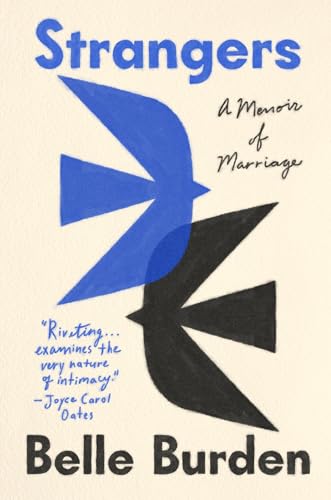
Strangers: A Memoir of Marriage (2026)
Select Sections to Print
×Book Details
Strangers: A Memoir of Marriage (2026)
Jump to Section
⚠️ Trigger Warnings
- Infidelity and marital betrayal
- Extramarital affairs
- Divorce and contentious divorce proceedings
- Suicide attempt
- Suicidal ideation
- Drug overdose
- Sudden death of a parent
- Death of a parent
- Heroin overdose and substance-related death
- Terminal cancer
- Death of a close friend
- Grief and bereavement
- COVID-19 pandemic and mass death
- Childhood emotional abuse
- Childhood physical abuse
- Harsh religious discipline
- Child abuse
- Forced child labor
- Gang violence
- Prescription drug misuse and concealment
- Pregnancy and childbirth complications
- HELLP syndrome / severe preeclampsia
- Life-threatening birth trauma
⏱️ 2-Minute Spoiler Summary
Belle Burden’s twenty-two-year marriage to James collapses almost overnight at the beginning of the COVID-19 pandemic. In March 2020, Belle, James, and their daughters Evie and Carrie are isolating at their Martha’s Vineyard home when Belle gets a message from a stranger telling her James is having an affair with his wife. James admits it but initially claims it was brief and meaningless. The next morning, however, he appears with a duffel bag and announces that he wants a divorce. He leaves for New York, saying that a “switch has flipped,” and soon makes clear that he intends to continue the affair.
The sudden abandonment forces Belle to reconsider the marriage she thought she understood. She and James met as young lawyers at Davis Polk and married in 1999. Shortly before the wedding, James persuaded her to change their prenuptial agreement so that only jointly owned property would be divided in a divorce; anything held individually would remain separate. Belle’s lawyer warned her against the change, but she agreed because she didn’t want to create conflict before the wedding.
That decision becomes enormously important. Belle later used her own inherited money to buy their Tribeca apartment and Martha’s Vineyard house, putting James’s name on both properties. As they raised Finn, Evie, and Carrie, Belle stepped back professionally, handled most of the parenting, and allowed James to control the family finances while he built a successful career at a hedge fund.
After James leaves, Belle discovers how vulnerable this arrangement has made her. Financial disclosures reveal that James accumulated a multimillion-dollar fortune entirely in his own name. Under the prenup, he can keep all of it while still claiming half of the two homes Belle purchased with her inheritance. He also shows little interest in sharing custody, eventually reducing his involvement with the children to Thursday dinners that gradually disappear.
Belle fights the prenup in court, but in July 2021 a judge upholds it. James then demands that she either buy out his share of both homes or sell them. Terrified of losing her financial security and the homes she paid for, Belle reaches such a severe emotional crisis that she experiences suicidal thoughts and requires psychiatric treatment.
Then, just an hour before their divorce trial in October 2021, they settle. James gives up his claims to the Tribeca apartment, the Martha’s Vineyard house, the beach key, and their club membership. In return, he keeps his individual fortune while paying child support and tuition. Their divorce becomes final in July 2022, and Belle reclaims the name Burden.
During the divorce, Belle also returns to writing, something she had abandoned years earlier. She turns her experience into an essay for the New York Times “Modern Love” column. James is required to read it before publication and surprisingly tells her it is good, sad, and difficult to read but that he supports it. Published in 2023 as “Was I Married to a Stranger?”, the essay brings Belle widespread attention and eventually helps lead to her memoir.
Belle never receives the explanation she once desperately wanted from James. Instead, she accepts that the happy years of their marriage were still real even though the marriage ended in a way she never imagined.
Late in 2023, she unexpectedly sees James across a New York street. He calls her name and waves enthusiastically. Belle smiles, waves back, says hello, and keeps walking. They share three children and decades of history, but they have become strangers.
The memoir ends back on Martha’s Vineyard. The osprey nest that James once obsessed over has been repaired, and the birds have returned. Belle looks up at them and simply says, “Welcome home.”
📖 Full Spoiler Summary
James Walks Out
In March 2020, as COVID-19 shuts down New York City, Belle Burden retreats to the family’s Martha’s Vineyard home, “Meadowpath,” with her husband James and their two younger daughters, fifteen-year-old Evie and twelve-year-old Carrie. Their oldest child, seventeen-year-old Finn, is staying with a friend’s family on Long Island. At first, the family seems to be weathering the strange new reality together. James becomes particularly fixated on the pair of ospreys that return every year to nest on a pole near their lake.
Then, on March 21, Belle receives a phone message from a nervous young man who tells her that James is having an affair with his wife.
Confronted, James admits it. He insists that the affair has only lasted a few weeks and means nothing. Almost immediately, however, the situation becomes even more alarming: the other woman’s husband reports that she has attempted suicide with sleeping pills and is being taken away in an ambulance. James speaks to her briefly and assures Belle that she is going to be fine.
Belle has barely had time to process the affair when, at six the next morning, James enters their bedroom fully dressed and carrying a duffel bag. He tells her he has decided he wants a divorce and is leaving.
On his drive back to New York, he tells Belle that a “switch has flipped.” He initially seems willing to surrender the houses and custody of their children, but he also wants Belle to help present their separation as amicable. Within days, his family closes ranks around him: eight days after his departure, his siblings send Belle a joint message cutting off contact with her.
Following a therapist’s advice, Belle initially hides the separation from her daughters as they are already frightened by the pandemic. Evie nevertheless senses how badly her mother is struggling and begins cooking elaborate dinners for her every night. Belle leans heavily on her mother, Amanda Burden, her stepmother Susan Burden, her brother Carter, and close friends.
Susan, a family therapist, reaches out to James and urges him to seek therapy. James responds by angrily telling Belle that he plans to continue his affair and will give Belle nothing.
The Prenup Belle Almost Forgot
In late April, James’s boss lends him a private seaplane so he can return to Martha’s Vineyard and tell the children about the divorce in person. Wearing a mask, he paces around explaining that he has not been happy. Carrie screams and runs away. Evie remains silent.
Then James does something that hints at what the divorce is really going to become. After asking Belle to make him a turkey sandwich, he starts aggressively searching boxes in the basement for the prenuptial agreement they signed in 1999. Neither of them can find it, but weeks later his attorney locates a signed copy in storage.
The memoir reaches backward to explain why that document is so dangerous for Belle.
Belle grew up in an extraordinarily prominent family. Her maternal grandmother was fashion icon Babe Paley, and her father, Carter Burden Jr., came from a wealthy family with connections to the Vanderbilts, John Jay, and the founders of Standard Oil. But wealth had never guaranteed security. When Belle’s father suddenly died at fifty-four in 1996, the family discovered that he had secretly been taking prescription diet pills and had left roughly $40 million in debt. Belle, Susan, and Carter spent years dealing with the aftermath.
Belle originally wanted to write fiction, but a brutal critique from a classmate named Greg in college crushed her confidence. She eventually attended law school, worked for Legal Aid in Brooklyn, and then joined Davis Polk.
That was where she met James in 1998.
Despite a somewhat rebellious youth, James seemed quiet and dependable as an adult. They fell deeply in love, became engaged at Grand Central in October 1998, and married the following June.
Shortly before their wedding, however, James requested a major change to their prenup. Instead of dividing assets earned during their marriage, they would divide only property held jointly. Anything either spouse kept in an individual name would remain that person’s separate property. Belle’s family lawyer Tom explicitly advised her not to accept the change.
Belle agreed anyway because she wanted to avoid a fight just before the wedding.
The Marriage Belle Thought She Had
For years, the consequences of that decision remained invisible.
In 2001, Belle used her entire inheritance trust from her mother’s stepfather to purchase a large Tribeca loft. She put James on the deed with her. In 2005, she used another trust to purchase Meadowpath and again made James a joint owner.
They built a family together. Finn was born in 2002 after Belle survived life-threatening HELLP syndrome during labor, followed by Evie in 2004 and Carrie in 2007.
James eventually left corporate law for finance and became a senior hedge-fund executive. Belle increasingly organized her life around his career. He did little of the everyday work of raising the children—Belle describes him as not doing “bath, bed, or homework”—so she and their longtime babysitter, Tenzin, carried most of the parenting responsibilities. Belle even turned down significant professional opportunities, including a foundation job in 2012, and eventually stopped paying attention to the family finances because James handled them.
There were signs that something was changing before he left. James failed to make partner at his hedge fund in December 2018, delaying his prospects until 2020. During an estate-planning meeting in July 2019, he unexpectedly resisted eliminating their prenup. He also became increasingly absorbed in an elite group of tennis friends.
Belle did not understand the significance of those developments until after the marriage collapsed.
Belle Learns What James Has Hidden
As the spring and summer of 2020 pass, more pieces fall into place. Carrie reveals that James told her his mistress’s birth name. Belle discovers that the woman is fifteen years younger than she is and has an impressive corporate career. Evie then reveals something even more painful: she had known about the affair for weeks before Belle did because she saw a revealing message appear on Belle’s iPad.
With much of her old life suddenly gone, Belle develops new routines. She walks eight miles a day around Vineyard Haven collecting sea glass, volunteers at a food bank, and works with attorney Nancy Bynum on a pro bono case helping an undocumented fourteen-year-old girl obtain Special Immigrant Juvenile status.
She also begins reconsidering the women in her family. Both Babe Paley and Amanda had tolerated infidelity in their relationships. Belle realizes how deeply she absorbed the idea that women should remain quiet, accommodating, and loyal even when men betray them.
The Martha’s Vineyard social circle becomes another strange part of the separation. Some friends openly support Belle, while others distance themselves or defend James. Even the question of which spouse will retain membership in their private tennis club becomes a subject of gossip.
In September, Belle returns to New York with Evie, Carrie, and their Goldendoodle, Charlie Blue. James has removed all of his personal possessions from the apartment. Then Belle learns that he has hired an extremely aggressive divorce attorney who apparently intends to keep her tied up in litigation for years.
The true financial shock arrives in January 2021.
James has quietly accumulated a multimillion-dollar fortune, all held in his name alone. Belle, meanwhile, used her inheritance to purchase the couple’s two major properties and placed James’s name on both.
The prenup therefore produces a brutal result: James can keep all of his personal fortune while simultaneously claiming half of the Tribeca apartment and half of Meadowpath.
The Divorce Battle Pushes Belle to the Edge
Belle decides to fight.
Despite Susan warning her that James is likely to retaliate, Belle files a formal counterclaim in February 2021. The custody negotiations reveal another painful reality. When Belle’s lawyer proposes a normal fifty-fifty parenting arrangement, James removes his own parenting time. He does not want overnights, holidays, or vacations with the children. Eventually his involvement is largely reduced to Thursday-night dinners, and even those fade away.
At the same time, Belle begins rediscovering the part of herself she abandoned decades earlier. She wakes at five every morning to write about what has happened and joins Lizzie Simon’s memoir-writing class over Zoom.
But legally, things get worse.
In July 2021, the judge dismisses Belle’s counterclaim and rules that the prenup is enforceable. The following month, James’s attorney tells Belle that she must either buy out James’s half of the Tribeca apartment and Meadowpath or sell both properties.
The possibility of losing the homes she purchased with her own inheritance, while James retains the fortune he accumulated during their marriage, devastates her. Her mental health deteriorates until she experiences severe suicidal thoughts. A psychiatrist treats her with medication and therapy as the divorce approaches trial.
Then, in October 2021, only an hour before the trial is scheduled to begin, the two sides finally reach a settlement.
James gives up his claims to the Tribeca apartment and Meadowpath, along with the beach key and club membership. Belle keeps the homes. James keeps his individually held fortune and agrees to pay child support and tuition.
The divorce is finalized in July 2022. Belle officially becomes Belle Burden again. At Meadowpath, she removes the house’s sign from the gate and burns it in the fireplace, physically stripping away a name associated with the family life that has ended.
Belle Tells Her Own Story
Writing now becomes central to Belle’s new life.
In May 2022, she submits an essay called “And Then He Was Gone” to the New York Times “Modern Love” column. Before it can eventually be published, the editor requires James to review it.
Belle sends the essay to the man she has barely been able to understand since he walked out. His response surprises her. He tells her that the piece is good, sad, and difficult to read—and that he supports it.
The essay appears in 2023 under the title “Was I Married to a Stranger?” It attracts widespread attention, including supportive letters from readers, backlash on local social media, and gossip coverage.
Yet public attention cannot answer Belle’s central private question. James never gives her a satisfying explanation for why he abruptly abandoned their marriage and transformed into someone she barely recognized.
Eventually, Belle stops needing one.
She decides that James’s behavior at the end does not erase the twenty years of happiness and family life that came before it. Those years remain real to her, particularly through their three children and the memories they created together. She also comes to view James as more complicated than a straightforward villain, recognizing how his own childhood experiences with money and unresolved family problems helped shape him.
Belle and James Become Strangers
In October 2023, Belle is walking near the Brooklyn Bridge subway station when she unexpectedly hears someone calling her name.
It is James.
He is standing across the street, waving enthusiastically at her almost as though he is greeting an old friend. Belle smiles and waves back. She says hello.
And then she keeps walking.
They spent more than two decades married. They raised three children together. James remains the father of her children and someone who will always be part of her history, but the intimacy between them is gone. They have become strangers.
The memoir ends where the collapse of the marriage began: Martha’s Vineyard.
The osprey pole that once fascinated James has been righted and reinforced, and the osprey couple returns to its nest. Belle walks through the marsh and looks up at the birds.
“Welcome home,” she tells them.
This time, Meadowpath is Belle’s home too.
🔚 Ending Explained
How the Book Ends
Strangers: A Memoir of Marriage ends in late 2023, with Belle Burden no longer searching for the explanation James never gave her.
In October, Belle is walking near the Brooklyn Bridge subway station when she unexpectedly hears James calling her name. The location is striking: it is the same station where the two emerged on their first date twenty-five years earlier. James stands across the street, waving enthusiastically as though greeting a long-lost friend. Belle smiles, waves back, says hello—and keeps walking with her friend. She does not cross the street.
Belle has accepted by this point that many of the questions surrounding the collapse of her marriage will never be answered. James never provides the explanation or apology she once desperately wanted. She does not know whether he had been unfaithful before his final affair or how long his relationship with his mistress lasted. He remains at his hedge fund and continues to have a limited relationship with their children, taking them to occasional dinners, tennis matches, and Rangers games but declining overnights, holidays, and vacations.
The clearest indication that the family has moved forward comes in a quiet conversation between Belle’s daughters. Carrie admits that she misses their old family life and wishes she could be little again. Evie answers simply, “We are good now.” The statement does not deny what the family lost. Instead, it recognizes that they have created something stable after it.
The memoir ultimately closes on Martha’s Vineyard with the ospreys that have appeared throughout Belle’s story. Their enormous nest had grown so heavy that the pole supporting it began to tilt dangerously. Wildlife experts eventually reinforced the pole and cut away several feet of accumulated material, reducing the once-massive nest to a flat, bare foundation.
A year later, Belle sees that the osprey couple has returned.
She walks through the woods, past landmarks associated with her children’s childhoods, and into the marsh. Looking up at the birds settled once again into their repaired home, Belle calls out:
“Welcome home.”
What the Ending Means
The ending is ultimately about rebuilding rather than restoring. Belle does not get her marriage back, her former family structure back, or even the answers that might allow her to make perfect sense of what happened. Instead, she discovers that a life can be dismantled and still become whole again.
The osprey nest provides the memoir’s final and most important symbol. Like Belle’s marriage, it had accumulated layer upon layer over many years until the structure beneath it could no longer support the weight. Saving it requires something initially brutal: much of the nest has to be cut away. What remains looks stripped and bare, but the underlying structure is finally secure. The returning birds demonstrate that home does not depend upon preserving everything that existed before. Sometimes survival requires removing what has become unsustainable and building again on a stronger foundation.
That symbolism also changes the meaning of Belle’s encounter with James. Meeting him at the place associated with their first date creates an almost perfect narrative circle, but Belle refuses to complete that circle literally. James is across the street, and she leaves him there. She can acknowledge him warmly without moving toward him. The past is no longer something she needs either to recover or destroy.
Her decision reflects one of the memoir’s central ideas about closure. Belle once wants explanations: Why did James leave? How much of their marriage had been a lie? Were there other affairs? What happened with his mistress? By the ending, she understands that healing cannot depend upon James eventually supplying the missing information. Some questions will remain unanswered because the person capable of answering them has chosen not to.
Belle’s transformation is also about reclaiming authority. During her marriage, she surrendered significant financial and personal control because dependence felt like security. After James leaves, she is forced to understand her finances, protect her homes, reclaim her maiden name, and become the central authority in her own family. The woman who begins the crisis feeling powerless gradually becomes the person responsible for creating stability.
Writing becomes part of that transformation. By publishing her story, Belle rejects the tradition of silence represented by women in earlier generations of her family, including her mother and grandmother Babe Paley. Instead of preserving appearances or protecting the men who hurt them, Belle chooses to describe what happened. Her openness is especially significant because she wants her children to inherit something different: the belief that love should not require surrendering one’s identity, independence, or voice.
The tone of the ending is therefore peaceful rather than triumphant. Belle does not defeat James, expose him, or receive a satisfying confession. Nor does she need to turn him into a monster in order to move forward. She can recognize his flaws and the influence of his own unresolved past without excusing what he did.
Even the title, Strangers, takes on a different meaning by the end. James became a stranger to Belle, but the deeper shock was discovering how much could remain unknowable inside a twenty-two-year marriage. The ending accepts that uncomfortable truth: intimacy does not guarantee complete knowledge of another person.
And that makes “Welcome home” especially powerful as the memoir’s final statement. Belle is ostensibly speaking to the returning ospreys, but the words also describe her own journey. Home has survived, although it no longer looks the way it once did. Her children are still there. The foundation has been repaired. Belle herself has returned—not to her old life, but to a life that finally belongs to her.
The ending doesn’t suggest that nothing was lost. It suggests something quieter and more hopeful: what remains can be enough to build a home again.
👤 Characters & Fates
🔶 Main Characters

Reclaims the Burden name, wins full ownership of the Manhattan apartment and Martha’s Vineyard home, publishes her Modern Love essay and memoir, and emerges at peace as the matriarch of her family.
Never remarries, remains wealthy and at his hedge fund, gives up his claims to their properties, and continues seeing the children only occasionally with no overnights or holidays; Belle last encounters him years later across a Brooklyn street, where they simply wave at each other like strangers.
Graduates high school, completes a real-estate internship, enters college, remains close to Belle, and continues seeing James for occasional dinners.
Attends boarding school, graduates, gets into college, and ultimately reassures Belle that despite losing their old family structure, “we are good now.”
Gets accepted to high school in New York and grows into a confident teenager, though she admits she still misses their former life together as a family.
Dies suddenly at 54 in January 1996 from sudden arrhythmia death syndrome; afterward, the family discovers his secret diet-pill use and roughly $40 million in hidden debt.
Remains one of Belle’s closest confidantes and champions throughout the divorce, legal battles, and publication of her story.
Continues her urban-planning career and remains fiercely supportive of Belle, including celebrating the publication of her essay.
🔷 Supporting Characters
Dies of lung cancer in 1978 but remains a symbolic presence in Belle’s life as Belle finally breaks the family pattern of silence.
Dies before the memoir’s main timeline.
Dies before the main story and is remembered both affectionately and for his betrayals of Babe.
Remains in New York with his wife Charmaine and continues supporting Belle.
Remains happily married to Carter and part of Belle’s close support network.
Amanda immediately fires Rose after Belle tells her what has been happening.
Attempts suicide by overdosing on sleeping pills the night the affair is exposed and survives; Belle never learns whether she and James ultimately remain together.
Dies before Belle and James’s 2020 separation and divorce.
Ultimately becomes an irrelevant memory when Belle returns to writing and successfully publishes her work.
Dies of a heroin overdose in his Tribeca loft in November 1999.
Dies from rare terminal breast cancer in July 2013 after a years-long illness.
Remains one of Belle’s closest friends and touchstones, living in Wilmington, Delaware.
Remains a trusted member of Belle’s support circle.
Remains a beloved figure in the family’s life.
Continues working with Belle to represent immigrant youth through Safe Passage Project.
Mentors Belle through the early drafting of her story.
Continues living with Belle and the children in New York and is treated with Prozac for his anxiety.
🕳️ Potential Plot Holes
James frantically searches for the couple’s missing signed prenup after leaving Belle, yet a scanned copy is mysteriously produced by his lawyer only weeks later from a “storage facility.” The mystery is heightened by a 2019 estate-planning meeting in which James specifically asked to postpone discussing the prenup before anyone could reveal that the signed document was missing. Belle never discovers whether James already knew where the agreement was, secretly recovered it, or genuinely had no idea where it was. This isn't a true plot hole, more of a mystery.
📚 Book Club Q&A's
⭐ Final Rating & Thoughts
What impressed me most about Strangers is how much nuance Belle Burden brings to the end of her marriage. This could easily have been a furious takedown of the husband who blindsided her, but instead, she examines the marriage—and herself—with surprising honesty. She acknowledges James’s cruelty without turning him into a one-dimensional villain, while also questioning the choices she made along the way.
As someone who has been through divorce, I found so much of this deeply relatable. It reinforced something I already believe: a marriage ending is a failure, regardless of who leaves, but staying married doesn’t necessarily mean a marriage succeeded either.
Burden is also an excellent writer. Her account is raw, vulnerable, sometimes infuriating, and occasionally even funny. Yes, her extraordinary wealth makes parts of her experience difficult to relate to, but the emotional devastation of realizing you may never have truly known your spouse is universal. I loved this memoir—not because it’s a happy story, but because it’s thoughtful, complicated, and ultimately hopeful.
✨ Adaptation description
Screen Adaptation
Netflix is developing a feature-film adaptation of Belle Burden’s Strangers: A Memoir of Marriage. The streamer won the film rights in a competitive six-way bidding war in March 2026.
Gwyneth Paltrow is attached to star as Belle Burden and will also executive produce. Stacey Sher (Erin Brockovich, Pulp Fiction) is producing, with playwright and screenwriter Heidi Schreck (What the Constitution Means to Me) writing the screenplay.
The film will adapt Burden’s memoir about the sudden collapse of her 20-year marriage. The story begins during the COVID-19 pandemic, when Belle is living with her family on Martha’s Vineyard and her husband unexpectedly announces that he is leaving her. What follows is both a divorce story and a broader examination of marriage, privilege, family history, betrayal, motherhood, and Belle’s reconstruction of her life.
As of October 2026, the project is currently in development, so filming dates, additional casting, a director, and a Netflix release date have not yet been announced.
✨ Books Like Strangers: A Memoir of Marriage (2026)
See an error on this page?