
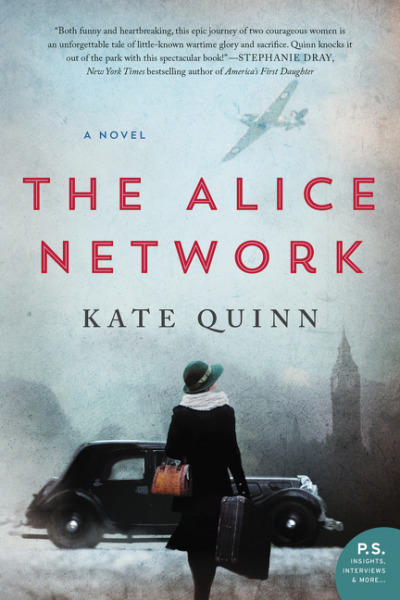
The Alice Network (2017)
Select Sections to Print
×Book Details
The Alice Network (2017)
Jump to Section
⚠️ Trigger Warnings
- Physical torture and mutilation
- War massacres and atrocities
- Sexual violence and sexual assault
- Sexual harassment and groping
- Sexual exploitation and coerced/transactional sex
- Unplanned pregnancy and out-of-wedlock pregnancy
- Illegal abortion
- Death of infants and children
- Suicide and suicide attempts
- Self-harm
- Holocaust and concentration camps
- Graphic descriptions of corpses and human suffering
- Military violence and combat
- Bombings and artillery shelling
- Landmine explosions
- Executions by firing squad
- Alcoholism and substance abuse
- PTSD and combat trauma
- Panic attacks
- Hallucinations and nightmares
- Grief and bereavement
- Misogyny and sexism
- Explicit language and misogynistic slurs
- Verbal abuse
⏱️ 2-Minute Spoiler Summary
The Alice Network follows two women whose lives become connected through a French collaborator responsible for devastating betrayals during both World Wars. The story alternates between Eve Gardiner, a British spy working in German-occupied France during World War I, and Charlie St. Clair, a pregnant American teenager searching for her missing cousin in 1947.
In 1915, 22-year-old Eve Gardiner is recruited into British Intelligence despite her severe stutter. She joins the legendary Alice Network, led by the fearless Louise de Bettignies, known as Lili. Posing as a young French waitress at Le Lethe, a restaurant in occupied Lille, Eve gathers valuable intelligence from German officers. The restaurant’s owner, René Bordelon, is a wealthy French collaborator who becomes obsessed with her. Eve begins sleeping with him to obtain military secrets, but the relationship leaves her pregnant. She secretly undergoes an abortion with help from fellow spy Violette.
After Lili is arrested, René discovers Eve’s hidden pistol and realizes she is a spy. He brutally tortures her, crushing her finger joints with a marble bust, before claiming that she betrayed Lili under interrogation. Eve is imprisoned alongside Lili and Violette, who believes Eve is responsible for their capture. Lili dies in prison in 1918, leaving Eve devastated. Her British handler, Captain Cameron, later falsely tells her that René is dead, preventing her from pursuing revenge.
In 1947, 19-year-old Charlie St. Clair arrives in England with her controlling mother, who plans to take her to Switzerland for an abortion. Charlie instead escapes to London to find her beloved cousin Rose Fournier, who disappeared during World War II. Her search leads her to Eve, now a bitter, alcoholic 54-year-old with permanently damaged hands, and Eve’s Scottish driver, Finn Kilgore. When Charlie mentions that Rose worked at a restaurant called Le Lethe for a man named René, Eve agrees to help.
The three travel across France, discovering that René survived World War I and opened another Le Lethe in Limoges during the Nazi occupation. Charlie learns that Rose became pregnant and moved to Oradour-sur-Glane, where she gave birth to a daughter. Tragically, both Rose and her baby were murdered during the June 10, 1944 massacre, when SS soldiers locked the village’s women and children inside a church, shot them, and burned the building. Worse, René had informed on Rose to the Nazi collaborators, setting the massacre in motion.
Determined to make René pay, Eve tracks him to Grasse, where he is living under another name. At the same time, Charlie discovers from surviving German trial records that Eve never betrayed Lili. Another prisoner, Mlle Tellier, was the actual informant.
During the final confrontation, René shoots Eve and threatens to kill Charlie. Charlie strikes his hand with the same marble bust he once used to torture Eve, allowing Eve to retrieve her pistol and shoot him four times. Charlie then prevents Eve from killing herself.
With the truth finally established, Eve leaves to visit Lili’s grave with Violette. Charlie decides to keep her baby and marry Finn. In the 1949 epilogue, Charlie and Finn are happily married, running a café and garage near Grasse, and raising their daughter, Evelyn Rose Kilgore, named for Eve and Rose. Eve, now traveling the world and proudly wearing her wartime medals, returns to visit them.
📖 Full Spoiler Summary
The Alice Network by Kate Quinn unfolds across two timelines: World War I, beginning in 1915, and post-World War II Europe in 1947. The alternating first-person narratives follow Evelyn “Eve” Gardiner, a British spy whose wartime experiences have left her deeply scarred, and Charlotte “Charlie” St. Clair, a pregnant American teenager searching for her missing cousin. Their stories eventually intersect through a French collaborator named René Bordelon, whose betrayals span both wars.
Eve Joins the Alice Network (1915)
In May 1915, Eve Gardiner is a 22-year-old half-French, half-English file clerk in London. She speaks French and German fluently but has a severe stutter that makes people underestimate her. Captain Cecil Aylmer Cameron, a Scottish British Intelligence officer, recognizes that her language skills and unassuming appearance would make her an excellent spy.
Eager to contribute to the war, Eve accepts his offer. She undergoes espionage training in Folkestone, learning codes, ciphers, lock-picking, and shooting. Cameron becomes her handler, and Eve gradually develops romantic feelings for him.
In France, she meets Louise de Bettignies, known by several aliases, including Alice Dubois and Lili. Lili leads the Alice Network, an espionage ring operating in German-occupied territory. Fearless and resourceful, she quickly becomes Eve’s mentor and closest friend.
Eve assumes the identity of Marguerite Le François, a supposedly 17-year-old orphan from Roubaix, and travels to occupied Lille. There, she works with Lili’s lieutenant, Léonie van Houtte, known as Violette, a former Red Cross nurse who teaches Eve how to survive undercover.
Her assignment is to secure employment at Le Lethe, an elegant restaurant owned by René Bordelon, a wealthy French profiteer who willingly serves the German occupiers.
The Dangerous Affair with René Bordelon
René is charming, sophisticated, and deeply unpleasant. His restaurant attracts powerful German officers, including Kommandant Hoffman and General von Heinrich, who discuss military operations over dinner.
Eve becomes a waitress and uses her apparent nervousness and stutter to appear harmless. René initially questions her background after noticing that her accent doesn’t match her supposed hometown, but she convinces him she is simply an inexperienced girl.
As German officers talk freely around her, Eve memorizes information about troop movements, artillery positions, and aircraft deliveries. She transcribes the intelligence onto rice paper concealed inside her hairpins and passes it to Lili.
Her work becomes increasingly dangerous when René takes a personal interest in her. He begins seducing her with expensive drinks and attention, and Eve eventually decides that becoming his mistress will give her access to even more valuable information.
The arrangement works. She learns about a secret visit by the German Kaiser, allowing Lili to organize intelligence for an air strike against his train. Unfortunately, the train is delayed, and the attack fails.
The relationship also comes with serious personal consequences. Eve discovers she is pregnant with René’s child. Terrified that the pregnancy will expose her identity or force her out of the network, she seeks help from Violette, who performs a painful illegal abortion.
Eve continues spying, determined not to abandon her mission.
Lili’s Arrest and Eve’s Torture
The network begins unraveling when Crown Prince Rupprecht of Bavaria recognizes Lili at a train station. Lili is arrested, but manages to swallow a coded message before the Germans can recover it.
Eve is arrested as well, though she successfully plays the role of a frightened, dim-witted girl and is released.
She meets Cameron in Tournai, where he urges her to leave occupied France and return to safety. However, his superior, Major George Allenton, orders Eve back to Lille. Before she returns, Eve and Cameron spend a passionate night together. Cameron also reveals that his intelligence code name is “Evelyn.”
Back at Le Lethe, disaster awaits.
René has discovered Eve’s hidden Luger pistol and realizes that she is a spy. He restrains her in his study and demands the identity of the Alice Network’s leader. When Eve refuses to cooperate, he uses a heavy marble bust of Charles Baudelaire to systematically crush the joints in her fingers.
Despite the excruciating torture, Eve refuses to reveal Lili’s identity.
René eventually drugs her with opium and claims that she confessed while delirious. Calling her his “little Judas,” he tells Eve that she betrayed Lili, then turns her over to the German authorities.
Eve has no reliable memory of what she might have said under the drugs and torture. The possibility that she betrayed her closest friend becomes a source of lifelong guilt.
Prison, Lili’s Death, and Eve’s Broken Life
Eve, Lili, and Violette are tried in Brussels. Lili initially receives a death sentence, later commuted to life imprisonment, while Eve and Violette are sentenced to hard labor.
Violette believes René’s accusation that Eve betrayed Lili and spits in her face. Lili, however, offers Eve a gesture of forgiveness, blowing her a kiss.
The women are sent to Siegburg Prison in Germany, where conditions are brutal.
In September 1918, shortly before the war ends, Lili dies from complications involving a pleural abscess following surgery. Eve survives imprisonment but emerges physically and emotionally devastated.
When she returns to England in 1919, her hands are permanently mutilated, and she believes herself responsible for Lili’s death.
Cameron tells her that René was killed by citizens of Lille in 1917. In reality, he is lying to keep Eve from pursuing revenge. Cameron later commits suicide in 1924.
For decades, Eve lives with the conviction that she failed the woman who trusted her most.
Charlie Searches for Rose (1947)
Thirty-two years after Eve’s recruitment, Charlie St. Clair, a 19-year-old American college student, arrives in England with her controlling mother.
Charlie is unmarried and pregnant, a situation her wealthy family considers scandalous. Her mother has arranged an illegal abortion in Switzerland, referring to the pregnancy as “the Little Problem.”
Charlie is already struggling with grief over her older brother, James, a Marine who survived the Battle of Tarawa but returned from World War II severely traumatized and eventually killed himself.
The other person haunting Charlie’s thoughts is her beloved French cousin, Rose Fournier, who disappeared during the German occupation of France. Charlie refuses to accept that Rose is necessarily dead.
During a stop in Southampton, she escapes her mother and heads to London, following a possible lead.
That lead brings her to Eve Gardiner, now 54 years old and living as a foul-mouthed, heavily drinking recluse. Her damaged hands are nearly useless, and she keeps a pistol close by.
Eve employs Finn Kilgore, a 30-year-old Scottish veteran, as her driver and general assistant. Finn served in the Royal Artillery during World War II, witnessed the liberation of Bergen-Belsen, and later spent time in Pentonville Prison for assault.
Initially, Eve wants nothing to do with Charlie. But when Charlie mentions that Rose once worked at a restaurant called Le Lethe in Limoges for a man named René, Eve immediately recognizes the connection.
René Bordelon is apparently alive.
Eve agrees to help Charlie find Rose, and the three set off for France in Finn’s dark blue Lagonda convertible.
Following Rose’s Trail Across France
Their first important stop is Rouen, where Charlie visits Rose’s mother, Tante Jeanne Fournier.
Jeanne reveals that Rose became pregnant in 1943 and was thrown out of the family home. This information devastates Charlie, who recognizes the similarity to her own situation. It also gives her a new clue about Rose’s disappearance.
Eve soon realizes Charlie is pregnant, although Charlie has been trying to conceal it.
The travelers continue to Roubaix, where they find Violette, Eve’s former fellow spy, now operating an antique china shop.
The reunion is uncomfortable. Violette still carries bitterness from their wartime imprisonment, but she confirms something crucial: René did not die in 1917. He survived World War I and disappeared from Lille.
Charlie’s mother catches up with her in Roubaix and demands that she continue to Switzerland. This time, Charlie refuses. She is determined to find out what happened to Rose and will not abandon the search.
As the journey continues, Eve gradually reveals her experiences in the Alice Network. Charlie begins to understand why René’s name has such a powerful effect on her.
Charlie also grows closer to Finn. Their friendship develops into romance, despite the complications of her pregnancy and his troubled past.
To avoid questions about her unmarried status, Charlie buys a fake wedding ring in Paris and invents a dead husband named Donald McGowan.
The Truth About Rose and Oradour-sur-Glane
In Limoges, the travelers find the abandoned second Le Lethe, which René operated during World War II under the name René du Malassis.
Once again, he had profited from serving an occupying army, this time entertaining Nazi officers and collaborating with the Vichy authorities.
A local woman recognizes Rose’s photograph and reveals that she went to the nearby village of Oradour-sur-Glane to have her baby.
Charlie and Finn travel there, hoping that Rose might have survived.
Instead, they discover a village of burned buildings and bullet-scarred ruins.
On June 10, 1944, German SS soldiers massacred the inhabitants of Oradour-sur-Glane. The men were killed separately, while the women and children were confined inside the village church, shot, and burned alive.
The travelers meet Madame Marguerite Rouffanche, the sole female survivor of the massacre. She confirms that Rose, living under the name Hélène Joubert, had given birth to a daughter.
Both Rose and her infant daughter were killed inside the church.
For Charlie, the discovery ends years of uncertainty in the worst possible way. The cousin she loved, and the baby she never knew existed, are both dead.
René’s Connection to the Massacre
Back in Limoges, Major Allenton, Eve’s former intelligence superior, arrives with wartime honors that Eve never collected, including the Croix de Guerre, Légion d’Honneur, and Order of the British Empire.
He also reveals more about René’s activities during World War II.
René served as an informer for the Vichy Milice and supplied SS officer Sturmbannführer Diekmann with Rose’s name and location in Oradour-sur-Glane. His information directly set in motion the events that led to the village massacre.
The revelation connects Charlie’s loss to Eve’s past. The same man who tortured Eve and helped destroy the Alice Network was also responsible for betraying Rose.
The group learns that René may be living in retirement in Grasse, in southern France, under yet another identity.
Before heading there, Charlie contacts Violette and asks her to investigate the original German trial records from 1916. She wants to know whether Eve actually confessed under torture or whether René lied.
The Final Confrontation in Grasse
In Grasse, Charlie and Finn locate René living comfortably in a villa under the name René Gautier.
Using false identities, they confront him at a restaurant. René shows little remorse for anything he has done.
He admits informing on Rose because he disliked inquisitive waitresses and wanted her removed from his life. He treats the deaths that followed as inconsequential.
Eve is determined to kill him.
While she prepares to confront René alone at his villa, Charlie receives a telegram from Violette containing the results of her investigation.
The German records establish that Eve never betrayed Lili.
The actual informant was another prisoner, Mlle Tellier, who revealed Lili’s identity in exchange for a lighter sentence. René had deliberately lied to Eve, allowing her to spend more than thirty years believing she was responsible for her friend’s capture.
Charlie rushes to the villa to tell Eve.
Inside, Eve and René have already exchanged gunfire. Eve has been shot in the shoulder and is bleeding heavily. René holds both women at gunpoint, intending to let Eve bleed to death before killing Charlie.
Charlie tells Eve what Violette discovered: she never betrayed Lili.
Then Charlie spots the marble bust of Baudelaire, the same object René once used to destroy Eve’s hands.
She grabs it and smashes it down onto René’s hand, crushing his fingers and forcing him to drop his weapon.
Eve retrieves her Luger and shoots René four times, killing him.
Afterward, Eve considers using her final bullet to kill herself, but Charlie intervenes and stops her.
Finn arrives to help the injured Eve. They arrange the scene to resemble a robbery and escape to Paris.
A New Beginning for Eve, Charlie, and Finn
In Paris, Eve leaves Charlie and Finn a farewell note. She acknowledges that she finally knows she did not betray Lili.
She decides to travel with Violette to visit Lili’s grave, something she can now face without the burden of believing she caused her friend’s death.
Eve leaves Charlie her pearl necklace and gives Finn a silver Bentley convertible.
Charlie returns to London and reconciles with her parents, but she no longer intends to follow the future they have planned for her. She announces that she will keep her baby, whom she affectionately calls “the Rosebud,” and marry Finn.
The epilogue takes place in the summer of 1949.
Charlie and Finn are now married and operate a roadside café and garage outside Grasse. Their daughter, Evelyn Rose Kilgore, affectionately called Evie Rose, is eighteen months old. Her name honors both Eve and Charlie’s murdered cousin.
Eve arrives for a visit, having spent the intervening years traveling the world and proudly wearing the medals she once refused to accept.
The novel closes with Eve reunited with Charlie, Finn, and their daughter, the three surviving companions together again after everything they endured.
🔚 Ending Explained
How The Alice Network Ends
The ending of The Alice Network brings Charlie St. Clair’s search for her cousin Rose together with Eve Gardiner’s decades-old guilt, culminating in a confrontation with René Bordelon that gives both women the closure they have been seeking.
The Final Confrontation in Grasse
After discovering that Rose Fournier died in the 1944 Oradour-sur-Glane church massacre, Charlie, Eve, and Finn learn that the man responsible for betraying her was none other than René Bordelon, Eve’s former employer, abuser, and tormentor from World War I. René informed the Milice about Rose—whom he knew as Hélène Joubert—simply because he disliked the “nosy waitress.”
They track René to Grasse, where he is living comfortably under the name René Gautier. Eve intends to kill him and slips away alone to his villa with her Luger.
But just as Eve goes after René, Charlie receives information that completely changes Eve’s understanding of her own past. A telegram from Violette Lameron confirms that wartime trial records identify Mlle Tellier as the woman who betrayed Louise de Bettignies, or Lili, leader of the Alice Network.
Eve never betrayed Lili.
For thirty-two years, Eve has believed that she broke under René’s torture and caused Lili’s capture. Now Charlie realizes that the guilt at the center of Eve’s life is based on something that never happened.
Charlie races to René’s villa to tell her.
Inside René’s study, Eve and René exchange gunfire. Eve grazes his ear, but René shoots Eve in the shoulder. With Eve bleeding badly, René takes control of the situation and plans to let her bleed to death before killing Charlie.
Charlie fights back psychologically first. She tells René what she has just learned: Eve never betrayed Lili. René failed to break her.
Enraged, René lunges toward Charlie.
That is when Charlie grabs the marble bust of Charles Baudelaire sitting in René’s study—the same bust René used in 1915 to crush Eve’s fingers during his interrogation of her—and smashes it onto René’s hand.
His fingers are crushed, and he drops his gun.
Charlie kicks the weapon toward Eve.
And Eve finally kills René, firing four shots into his chest and head.
Charlie Saves Eve
Killing René does not immediately free Eve from the trauma she has carried for decades. Instead, Eve raises the Luger to her own temple.
Charlie stops her.
She swings the Baudelaire bust at Eve’s hand, knocking the gun away and breaking Eve’s already damaged knuckles again. Then Charlie makes Eve confront the truth contained in Violette’s telegram:
She did not betray Lili.
The revelation fundamentally changes Eve’s understanding of herself. She has spent more than three decades believing that her greatest moment of courage ended in failure and betrayal. Instead, she discovers that despite René’s torture, she held out.
Finn arrives, treats Eve’s gunshot wound, and helps make René’s death look like a robbery. The three flee Grasse in the Lagonda, eventually throwing the bloodstained Baudelaire bust into the Seine.
What Happens to Charlie, Finn, and Eve
Back in Paris, Eve quietly leaves Charlie and Finn behind. She gives Finn the keys to a silver Bentley convertible and returns the South Sea pearl necklace Charlie pawned to finance the search for Rose, giving it back to her as a wedding present.
Eve then visits Lili’s grave with Violette, finally able to face the woman whose death has haunted her without believing herself responsible for it. Rather than retreating into alcoholism and self-destruction, she begins traveling the world as a big-game hunter.
Charlie, meanwhile, returns to London and reconciles with her parents. She refuses to be ashamed of her pregnancy, announces that she is keeping her “Rosebud,” and marries Finn.
At the Dorchester Hotel, Charlie has one final moment of closure when she sees a vision of Rose waving goodbye. Charlie waves back.
She can finally let Rose go.
The Epilogue: Summer 1949
Two years later, Charlie and Finn have built an entirely new life near Grasse.
They run a successful roadside café and auto repair garage and have an eighteen-month-old daughter named Evelyn Rose Kilgore—Evie Rose.
Her name joins together the two women whose lives shaped Charlie’s own: Eve and Rose.
Eve comes to visit them, proudly wearing her four wartime medals. The damaged, alcoholic woman Charlie first encountered has become someone capable of acknowledging her courage rather than defining herself by what was done to her.
The novel therefore ends not with René’s death, but with Charlie, Finn, Eve, and Evie Rose together beneath the French sunshine—a deliberately hopeful image of people who survived war and trauma creating something new from what remained.
What the Ending Means
The ending is ultimately about reclaiming the story of your own life.
For most of the novel, both Charlie and Eve allow other people to define them. Charlie is treated as the disgraced unmarried daughter whose pregnancy needs to be quietly erased. Eve thinks of herself as the broken spy who betrayed the woman she loved and admired most.
By the end, both women discover that those identities are false.
Charlie chooses motherhood, Finn, and the unconventional future she actually wants. Eve learns that the defining failure of her life was never her failure at all. René tortured her body, but he did not succeed in making her betray Lili.
That distinction is what finally makes survival possible.
The Baudelaire Bust: Violence Reversed
The marble bust of Baudelaire provides the ending’s most satisfying piece of symbolism.
In 1915, René uses it to crush Eve’s fingers. Her hands become the permanent physical evidence of his power over her. More than thirty years later, Charlie uses the same object to crush René’s fingers.
The reversal is almost perfectly symmetrical.
The object associated with Eve’s torture becomes the instrument that allows her to defeat her torturer. Even the connection to Baudelaire and Les Fleurs du Mal—The Flowers of Evil—reinforces the idea of something meaningful emerging from corruption and suffering.
And afterward, they throw the bust into the Seine.
They do not keep the instrument of revenge as a trophy. Its purpose is finished.
Why Eve Killing René Matters
René’s death gives Eve revenge, but revenge itself does not heal her.
That distinction matters enormously.
Immediately after killing him, Eve still tries to kill herself. If René’s death were the true solution to her trauma, she would already be free.
Instead, what saves Eve is truth.
Learning that she never betrayed Lili dismantles the belief that has poisoned her life for thirty-two years. René could torture her, mutilate her hands, and destroy much of her future—but he could not make her betray the Alice Network.
Eve’s greatest victory therefore isn’t shooting René.
It is choosing to live afterward.
Charlie’s Pregnancy and Evie Rose
Charlie’s pregnancy provides the ending with its strongest image of renewal.
Earlier, her unborn child is treated as a problem: something shameful that must be eliminated through “the Appointment.” Charlie gradually rejects that judgment and begins calling the baby her Rosebud.
By the epilogue, that child has become Evelyn Rose.
The name transforms remembrance into continuation. Rose died in one war; Eve nearly destroyed herself because of another. Evie Rose belongs to the generation that comes afterward.
She carries their names without having to carry their suffering.
That is why the café and garage are important too. Charlie and Finn don’t end as glamorous adventurers chasing another mystery. They build something ordinary: a marriage, a business, a home, a child.
After lives shaped by destruction, creation becomes the victory.
The Pearls and the Bentley
Eve’s final gifts also show how far the characters have traveled.
Charlie originally pawns her grandmother’s pearl necklace to fund her search for Rose. Eve recovering it and returning it as a wedding gift restores something Charlie sacrificed in pursuit of the truth. The pearls reconnect Charlie with her family and female inheritance—but now on her own terms.
The silver Bentley Eve leaves Finn similarly represents movement and freedom. Finn has spent the postwar years isolated and defined partly by his own troubled past. The car points him toward a future in which his mechanical abilities become part of the stable life he builds with Charlie.
Rose’s Final Goodbye
Charlie seeing Rose at the Dorchester is less about solving the mystery than about finally accepting its answer.
Charlie began her journey because she could not tolerate uncertainty. As long as Rose was merely “missing,” Charlie could continue imagining that she might still be alive somewhere.
Finding out what happened to Rose destroys that hope—but it also allows Charlie to grieve.
When Rose waves and Charlie waves back, Charlie isn’t abandoning her cousin.
She is releasing her.
Rose no longer has to be a mystery Charlie must solve. She can become someone Charlie loved and lost.
The Bigger Meaning of the Ending
The ending of The Alice Network deliberately moves from war to family, guilt to truth, death to birth, and isolation to connection.
René represents the destructive side of power: manipulation, collaboration, cruelty, selfishness, and the willingness to sacrifice other people for personal survival. The final chapters answer that destruction not merely with his execution but with everything that comes afterward.
Charlie creates a family.
Finn creates a home and business.
Eve creates a life beyond her trauma.
And Evelyn Rose represents a generation that can carry the memory of the women who came before her without being destroyed by their wounds.
That is why the sunny 1949 epilogue feels so different from the darkness preceding it. The characters haven’t erased what happened to them. Eve’s damaged hands remain damaged. Rose remains dead. Lili remains dead. Two world wars cannot be undone.
But survival no longer means merely continuing to exist.
For Eve especially, the final triumph is that René does not get to determine how her story ends. After thirty-two years of believing he destroyed the most important part of her, she discovers that he never did.
And instead of dying with him, Eve walks away and lives.
👤 Characters & Fates
🔶 Main Characters

Learns she never betrayed Lili under torture, then kills René with four shots from her Luger after Charlie crushes his hand. She survives being wounded, abandons her plans for suicide, and by 1949 is traveling the world as a big-game hunter and visiting Charlie, Finn, and her goddaughter Evie Rose.

Discovers Rose and her infant daughter died in the Oradour-sur-Glane massacre, then crushes René’s hand with his Baudelaire bust so Eve can kill him. She keeps her baby, reconciles with her parents, marries Finn, and by 1949 runs a successful garage and café with him while raising their daughter Evie Rose.

Charlie and Eve track him to Grasse, where he boasts about informing on Rose. Charlie smashes his hand with his beloved Baudelaire bust, and Eve shoots him four times, killing him; Finn stages the scene so his death is treated as an unsolved robbery.

Is arrested after Crown Prince Rupprecht recognizes her, sentenced to death, and has the sentence commuted to 15 years’ hard labor. She dies in Siegburg Prison in September 1918 from complications of a pleural abscess after surgery without anesthesia.

Helps Eve and Charlie escape after René’s murder and stages the crime scene. He marries Charlie, settles near Grasse, runs a successful roadside garage and café with her, and raises their daughter Evie Rose.

Becomes pregnant by Resistance worker Étienne and moves to Oradour-sur-Glane under the name Hélène Joubert, where she gives birth to Charlotte. After René informs on her, Rose and her infant daughter are trapped inside the village church during the June 10, 1944 massacre, shot, and burned alive.
🔷 Supporting Characters

Has a brief affair with Eve in 1915 and later falsely tells her René died in 1917 to prevent her from seeking revenge. Haunted by wartime guilt, he dies by suicide with a gun at Sheffield Barracks in 1924.
Is imprisoned at Siegburg and initially believes Eve betrayed the network. She survives, marries a journalist, opens an antique china shop, and in 1947 uncovers records proving Mlle Tellier was the real traitor, finally clearing Eve.
Tracks Charlie to Roubaix but cannot force her to attend the planned abortion in Switzerland. She eventually reconciles with Charlie in London and accepts Charlie’s decision to keep her baby and marry Finn.
Survives both wars, unknowingly helps Eve locate René in 1947, and later delivers Eve’s long-unclaimed war medals to Charlie and Finn.
Survives WWII after losing her husband, two sons, and Rose, living alone and consumed by grief and regret.
Returns home suffering severe PTSD after fighting at Tarawa and eventually dies by suicide with a gun.
Escapes the burning church through a high window despite being shot five times, survives by hiding in a pea patch, and later testifies against SS perpetrators at the 1953 Bordeaux trial.
Escapes arrest during WWI and remains in Lille after the war, helping rebuild the devastated city.
Is raped and impregnated by German soldiers in 1915, undergoes an abortion performed by Violette, and nevertheless continues resistance work during the war.
Passes five letters and a full confession to German authorities in exchange for leniency, then dies by suicide with poison after the 1918 Armistice.
Continues working at Le Lethe through the remainder of WWI and survives the occupation.
Offers Lili use of his personal car to cross into Belgium, never realizing that the woman he recognizes is actually running a major British espionage network.
Remain part of the German occupation apparatus during WWI, never realizing how much valuable information Eve steals from their conversations.
Is raised happily by Charlie and Finn near Grasse and, at 18 months old in 1949, meets her globe-trotting godmother Eve.
🕳️ Potential Plot Holes
The novel hinges on a major coincidence: René Bordelon, the collaborator who seduces, betrays, and tortures Eve in Lille during World War I, is also the man who employs Charlie’s cousin Rose under the name René du Malassis during World War II. Decades apart and in entirely different regions of France, Eve and Rose independently become entangled with the same villain. It is possible, but the coincidence is enormous and exists primarily to connect Charlie’s search for Rose with Eve’s past.
René was a notorious collaborator who associated with German officers, worked with the Milice, informed on civilians, and publicly shot a sous-chef in front of witnesses. Yet after the liberation, he manages to settle comfortably in Grasse as “René Gautier,” retaining his real first name and living openly enough that local restaurant staff recognize him and know where he lives. Given the postwar pursuit and punishment of collaborators, René’s ability to escape consequences with such a flimsy identity is difficult to believe. It is possible that he simply avoided prosecution amid the chaos after the war, but the novel gives little explanation for how such a conspicuous collaborator manages it.
📚 Book Club Q&A's
⭐ Final Rating & Thoughts
Historical fiction can be hit or miss for me, but The Alice Network reminded me why I keep coming back to the genre. This book had me completely hooked, emotionally invested, and desperately rooting for its characters from beginning to end.
Eve was easily my favorite character. She's abrasive, damaged, stubborn, and absolutely unforgettable. I loved her sharp tongue, her determination, and the emotional depth behind her tough exterior. Charlie surprised me, too. Watching her grow from a sheltered young woman into someone with real courage and backbone was incredibly satisfying. And Finn? Top-tier fictional husband material!
The revenge storyline was everything I wanted it to be, but what made this book special was how beautifully Kate Quinn balanced revenge with friendship, guilt, redemption, and healing. I wasn't just interested in what happened next. I genuinely cared about what happened to these people.
My only small complaint is that I wanted more of Rose and more details about the Alice Network itself. Otherwise, this was a gripping, emotional, beautifully satisfying read with an ending I absolutely adored. Historical fiction doesn't always win me over, but this one completely delivered.
✨ Adaptation description
The Alice Network — TV Adaptation
Kate Quinn’s bestselling 2017 historical novel The Alice Network is currently in development as a television limited series at Warner Bros. The project has been in development for several years, but as of October 2026, it has not moved into announced production. IMDbPro continues to list the adaptation as a TV miniseries in development, with no cast members attached and no release date.
Adaptation Overview
- Source Novel: The Alice Network by Kate Quinn
- Published: 2017
- Format: Television limited series / miniseries
- Studio: Warner Bros.
- Status: In development
- Release Date: Not announced
- Cast: Not announced
- Filming: No production dates announced
The planned series is expected to adapt the novel’s intertwined story of Eve Gardiner, a young British woman recruited into the real-life Alice Network of female spies during World War I, and Charlie St. Clair, a pregnant young American searching for her missing cousin in post–World War II Europe. The project is described as spanning World War I, World War II, and the aftermath of the wars in 1947.
Warner Bros.’ involvement has been reported for several years. When another Kate Quinn novel, The Rose Code, was optioned for television in 2021, industry reporting specifically noted that The Alice Network was already set up at Warner Bros. for development as a limited series.
What About the Cast?
No actors have officially been cast. Kate Quinn previously created a fantasy cast for the novel, but it was simply her personal imagining of who could play the characters and was never an announcement of actors attached to the adaptation.
Names associated with Quinn’s fantasy casting—including Emma Thompson as older Eve, Mia Wasikowska as young Eve, Eva Green as Lili, and Kate Winslet as Violette—should therefore not be treated as actual casting news.
Current Status
There have been no confirmed announcements of a screenplay, director, showrunner, network/streaming platform, filming start, or premiere date. The most recent publicly available production listing still categorizes The Alice Network as “In Development,” and IMDb lists zero cast members.
✨ Books Like The Alice Network (2017)
See an error on this page?