
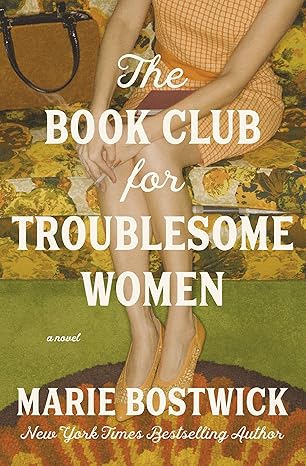
The Book Club of Troublesome Women (2025)
Select Sections to Print
×Book Details
The Book Club of Troublesome Women (2025)
Jump to Section
⚠️ Trigger Warnings
- Infertility and reproductive pressure
- Unplanned pregnancy
- Restricted access to contraception / reproductive control
- Miscarriage (mentioned)
- Suicide / parental suicide
- Depression
- Anxiety
- Prescription drug misuse / dependence
- Accidental medication overdose
- Psychiatric hospitalization
- Infidelity / extramarital affairs
- Marital betrayal
- Sexism and misogyny
- Gender discrimination
- Financial and reproductive control within marriage
- Racial segregation and discrimination
- Death of a parent / family member
- Stroke
- Animal illness and threatened euthanasia
- Assassination of John F. Kennedy / national grief
⏱️ 2-Minute Spoiler Summary
In 1963, Margaret Ryan is a 33-year-old housewife living in the new Virginia suburb of Concordia with her husband, Walt, and their three children. Restless with the repetitive routines expected of suburban women, Margaret secretly rents a typewriter and begins writing. After submitting an essay to A Woman’s Place, she unexpectedly lands a $25-per-issue column. At the same time, she starts a neighborhood book club with three women who are struggling with their own versions of the same problem: they have talents and ambitions that don’t fit neatly into the lives society expects them to lead.
The group includes Charlotte Gustafson, a wealthy former New Yorker and frustrated artist trapped in an unhappy marriage; Viv Buschetti, a former WWII field nurse and mother of six who has just discovered she is pregnant again; and Bitsy Cobb, a 23-year-old stable worker who dreams of becoming a veterinarian but was discouraged from applying to veterinary school because she is a woman. Charlotte chooses Betty Friedan’s The Feminine Mystique as their first book, and over vodka stingers, the four begin confessing what they actually want from their lives. They nickname themselves “the Bettys.”
Those conversations push each woman toward change. Viv secretly returns to nursing while pregnant. Bitsy proves her veterinary instincts by saving Katharine Graham’s seriously ill horse, Delilah, after her veterinarian husband, King, recommends euthanasia. Margaret becomes increasingly serious about writing, creating tension with Walt, who dismisses her work as a “jobette.” Charlotte confronts both her failed artistic ambitions and her loveless marriage to Howard, who openly cheats on her.
Their lives begin breaking open. Walt eventually admits that his contempt for Margaret’s writing came partly from jealousy over his own unfulfilled ambitions, and the two begin rebuilding their marriage as equals. Viv’s husband, Tony, discovers both her pregnancy and the secrets she has been keeping, but their confrontation ultimately leads to greater honesty between them. Viv eventually gives birth to their seventh child, a daughter named Betty.
Bitsy’s marriage ends spectacularly when King reveals that he has impregnated a waitress named Sally Ann and plans to marry her. Rather than being devastated, Bitsy realizes she is finally free. She enrolls at American University to finish her biology degree and pursue veterinary school. Charlotte also frees herself after her daughter Denise photographs Howard with another woman. Using the evidence to secure a favorable divorce settlement, Charlotte buys a townhouse and plans to open an art gallery devoted to female artists.
Margaret’s biggest rebellion comes through her writing. She produces an honest essay about the restrictions placed on both women and men and how The Feminine Mystique transformed her book club. Her editor, Leonard Clement, fires her for refusing to stick to harmless household fluff. The Bettys respond by pooling their money with local booksellers Helen and Edwin Babcock to purchase a full-page advertisement in the magazine and publish Margaret’s essay themselves. Readers flood her with supportive letters, and Katharine Graham invites her to a Georgetown luncheon where Margaret meets prominent female journalists and First Lady Jacqueline Kennedy.
On November 22, 1963, President John F. Kennedy is assassinated. The Bettys gather together to watch the horrifying news, reminded how quickly life can change. Margaret and Walt decide to leave Concordia and pursue new possibilities together.
The epilogue jumps to 2006. Margaret, now 76, has become a successful author and journalist and remains married to Walt. Bitsy achieved her dream of becoming an equine veterinarian, while Viv spent years doing medical mission work with Tony. Denise became a celebrated author living in Oxford. Charlotte died ten years earlier after building the successful art gallery she dreamed of creating. At a gala honoring Margaret’s career, the surviving Bettys reunite and raise their vodka stingers, celebrating friendships that began with four dissatisfied women sitting around a suburban kitchen table in 1963.
📖 Full Spoiler Summary
Four Women Find Each Other in Concordia
Book Club for Troublesome Women follows four women living in the newly developed suburb of Concordia, Virginia, primarily between March and November 1963. Told in third person and shifting among their perspectives, the story begins with Margaret Ryan, a 33-year-old mother of three who is increasingly dissatisfied with the narrow life expected of a suburban housewife.
Margaret loves her husband, Walt Ryan, an accountant and World War II veteran, and their children—11-year-old Beth, Bobby, and Susan—but she wants something that belongs to her. She secretly rents a typewriter she names Sylvia and begins writing while Walt is at work. After submitting an essay called “A Holiday to Remember” to A Woman’s Place magazine, she receives what appears to be a rejection because her Christmas piece doesn’t fit the magazine’s upcoming Easter issue. Then editor Leonard Clement calls: executive publisher David Miles loved her writing and has ordered Clement to give her a column paying $25 an issue.
Margaret also wants something more stimulating than the neighborhood coffee klatches hosted by gossip-loving Barb Fredericks, so she organizes a book club. She invites three very different neighbors: Vivian “Viv” Buschetti, a 41-year-old mother of six and former World War II field hospital nurse; Bitsy Cobb, a 23-year-old stable worker married to an equine veterinarian 19 years older than she is; and Charlotte Gustafson, a wealthy, eccentric former New Yorker whom Margaret first notices directing movers while wearing a full-length mink coat.
Margaret proposes A Tree Grows in Brooklyn, but Charlotte has another idea: Betty Friedan’s The Feminine Mystique.
At their first meeting, Charlotte makes vodka stingers that she calls “truth serum,” and the conversation becomes far more personal than Margaret expected. Viv reveals that she has just discovered she is pregnant with her seventh child at 41, just as she hoped to return to nursing. Bitsy admits that she and her husband, Kingsley “King” Cobb, cannot conceive. King refuses fertility testing and insists Bitsy must be the problem because he once had an affair years earlier and believes that proves his fertility.
Margaret finally reveals her own secret: she is now a paid columnist. The women dub themselves “the Bettys” and begin meeting every month.
Secret Jobs, Abandoned Ambitions, and Unhappy Marriages
The book club becomes a place where the women can admit things they cannot comfortably say anywhere else.
Margaret travels to New York to meet Leonard and David at A Woman’s Place. Leonard makes his expectations clear: Margaret is supposed to write pleasant, harmless “fluff” for housewives, not anything challenging. During the trip, she unexpectedly sees Charlotte with Lawrence Ahlgren, a Danish abstract expressionist painter from Charlotte’s past, and immediately senses their intimacy.
Charlotte’s life looks privileged from the outside, but her marriage to corporate executive Howard Gustafson is miserable. Howard has mistresses, and Charlotte’s powerful father, George Beverly Gilbert III, originally encouraged the marriage after Charlotte became pregnant outside wedlock. Charlotte’s psychiatrist, Dr. Ernest Barry, is equally dismissive of her unhappiness, essentially prescribing domesticity as the cure for her dissatisfaction.
Her brightest relationship is with her 16-year-old daughter, Denise, an exceptionally talented writer determined to attend Oxford. Denise privately tells Margaret that Charlotte once overdosed on sleeping pills, revealing how serious her mother’s struggles have been. She also asks Margaret to read a story she has written for her Oxford application.
Viv begins reclaiming her former identity as a nurse. She takes a part-time position at the Washington clinic of Dr. Francesca “Fran” Giordano, working alongside Earlene Jackson, a Black veteran of the Army Nurse Corps. Viv initially conceals both her pregnancy and her job from her husband, Tony, because she fears that once he knows she is pregnant, everyone will treat her like an invalid rather than a capable medical professional.
Bitsy’s frustration runs just as deep. She had earned an A-minus average in college and wanted to become a veterinarian, but male professors refused to provide recommendations for female veterinary-school applicants. Instead, she married King and now works around horses without being allowed the professional authority she knows she is capable of earning.
Bitsy Proves What She Can Do
Bitsy finally gets an opportunity to demonstrate her abilities when Katharine Graham, the Washington heiress and publisher, brings her beloved aging horse Delilah to the stable. Delilah develops severe laminitis, and King recommends putting her down.
Bitsy refuses to accept his judgment. She believes she can save Delilah using a treatment she learned from her father and openly challenges her husband.
The Bettys rally around her. Viv uses her nursing skills to sew special canvas boots from a pup tent, while Margaret helps ice Delilah’s hooves and Charlotte arrives with blankets and hot toddies. For 72 exhausting hours, they work together to keep the horse alive.
Bitsy succeeds. Delilah survives.
Instead of being proud of his wife, King is humiliated and furious that Bitsy publicly contradicted him and proved him wrong. He disappears for five days.
Other marriages are reaching breaking points as well. Tony finally notices Viv’s changing body and realizes she is pregnant. He is deeply hurt that she has hidden both the pregnancy and her nursing job from him. Their confrontation leads Viv to promise that she will stop keeping important parts of herself secret. Their marriage survives, and she later gives birth to their seventh child, a girl appropriately named Betty.
Margaret and Charlotte Force Each Other to Be Honest
Margaret’s growing confidence creates tension with Walt. At a party Charlotte hosts to celebrate Denise’s achievements, Walt dismissively refers to Margaret’s writing as a “jobette.” Margaret is furious that something so important to her can be reduced to a hobby simply because she is a woman.
Their conflict is interrupted when Walt’s father suddenly dies. Margaret supports Walt through his grief, and the crisis finally pushes him into honesty. He admits that his behavior was partly driven by jealousy. He feels trapped in accounting and ashamed that Margaret has found something she loves while he has not. Recognizing the real source of their conflict allows them to begin rebuilding their marriage on more equal terms.
Charlotte faces her own moment of reckoning after meeting Lawrence again in Manhattan. Although the old attraction remains, she ultimately refuses to sleep with him. She later gets drunk in Georgetown, and Margaret comes to retrieve her.
Their friendship erupts into a brutal argument. Margaret accuses Charlotte of hiding behind eccentricity instead of taking her artistic ambitions seriously, calling her a fake and a coward. Charlotte fires back that Margaret is equally cowardly because she is wasting her talent writing meaningless “horseshit for housewives.”
The insults hurt because both women know there is truth in them.
Charlotte and Bitsy Break Free
Charlotte responds by locking herself in her studio and painting seriously. She eventually takes her new work to elderly Russian gallery owner Nikolai Fedorov in Philadelphia. His assessment is honest: Charlotte has produced work filled with passion and sincerity, but she does not possess the extraordinary talent required to become a great artist.
Rather than destroying her, the verdict frees her. Charlotte realizes she can build a meaningful life around art without needing to become a famous painter. She decides to buy a townhouse in Alexandria, stop seeing Dr. Barry, and open a gallery dedicated to promoting female artists.
Her daughter soon provides the leverage Charlotte needs to escape Howard. Denise photographs her father having sex with another woman. Armed with proof of his infidelity, Charlotte demands a divorce settlement that gives her custody and enough financial independence to escape both Howard and the control of her father.
Bitsy’s marriage ends even more abruptly when King finally returns after his five-day disappearance. He announces that he has gotten a waitress named Sally Ann pregnant and intends to leave Bitsy and marry her.
Bitsy has recently experienced a late period and briefly wondered whether she herself might finally be pregnant, but it proves to be a false alarm. Instead of mourning either loss, she feels an unexpected rush of relief. King is leaving, there is no baby tying her to him, and she can finally choose her own future.
She registers at American University to complete her biology degree and sets her sights once again on veterinary school.
Margaret Refuses to Write Fluff
Margaret’s transformation comes through the talent she has been hiding behind her harmless magazine columns. Inspired by the Bettys and The Feminine Mystique, she writes a serious essay about the restrictions society places on women—and also on men forced into roles they may not have chosen.
Leonard is furious. Margaret was hired to entertain housewives, not challenge them. When she refuses to retreat, he fires her.
The Bettys refuse to let the essay disappear. Charlotte, Viv, Bitsy, and Margaret join forces with local booksellers Helen and Edwin Babcock and pool enough money to purchase a full-page advertisement in A Woman’s Place. Instead of advertising a product, they use the page to publish Margaret’s essay themselves.
The gamble works. Letters pour in from women who recognize their own frustrations in Margaret’s words.
Katharine Graham is among those who notice. She invites Margaret to a luncheon at her Georgetown home, where Margaret finds herself among accomplished female journalists, including Helen Thomas, Nancy Dickerson, and Susan Stamberg, as well as First Lady Jacqueline Kennedy. Graham cannot simply hand Margaret a job at the Washington Post, but she encourages her to make connections and find her own way over the barriers blocking women from serious journalism.
Margaret finally sees that losing her little magazine column may have opened the door to something much larger.
November 1963 Changes Everything
Then, on November 22, 1963, President John F. Kennedy is assassinated in Dallas.
The Bettys gather together around the television as the country absorbs the news. After spending months imagining different futures for themselves, they are suddenly confronted with how fragile and unpredictable the future actually is.
Margaret and Walt decide they no longer want to remain trapped by the life they chose because it was expected of them. They sell their Concordia house and prepare to pursue new educational and professional opportunities together.
The Bettys’ suburban book club has accomplished far more than any of them expected. It has helped Viv return to medicine, Bitsy reclaim her dream of veterinary school, Charlotte escape her marriage and build a career in the art world, and Margaret find the courage to write what she actually believes.
The Bettys, Forty-Three Years Later
The story jumps forward to October 2006. Margaret Ryan, now 76, is preparing for a gala honoring her long career as an author and journalist. She and Walt have remained married for more than 50 years. Together they earned three advanced degrees, lived in interesting places, and raised their three children while Margaret built the writing career that began with a rented typewriter in Concordia.
The other Bettys also followed through on the futures they once barely dared to imagine.
Viv spent a decade traveling the world with Tony on medical mission ships before his death. She now lives with her youngest daughter, Dr. Betty Buschetti, who became an obstetrician.
Bitsy became an equine veterinarian, fulfilling the dream she had been told was inappropriate for a woman. She later married a vintner named Kyle and lives on a California ranch devoted to rescuing horses.
Denise achieved her own childhood ambition as well. Now a world-renowned author of seven books, she lives permanently in Oxford.
Charlotte is the one Betty missing from the reunion. She died ten years earlier of congestive heart failure, but she spent the later years of her life successfully running the art gallery she created after leaving Howard.
At Margaret’s gala, the surviving Bettys reunite and once again drink the vodka stingers that Charlotte called “truth serum.” More than four decades have passed since they first sat together in Margaret’s suburban kitchen, but each of them can trace the life she ultimately built back to those meetings in 1963, when four women began telling one another the truth about what they wanted.
🔚 Ending Explained
How The Book Club for Troublesome Women Ends
The ending of The Book Club for Troublesome Women brings the women’s quiet rebellion full circle. What began as four suburban housewives reading a provocative book together in 1963 ultimately becomes the catalyst for four very different lives—each shaped by the realization that fulfillment does not have to look the way society tells them it should.
The Final Turning Point in 1963
Margaret’s writing career takes a major step forward after her full-page essay appears in A Woman’s Place. She is invited to an exclusive luncheon at Katharine Graham’s Georgetown estate, where she finds herself among pioneering female journalists including Helen Thomas, Nancy Dickerson, and Susan Stamberg, as well as First Lady Jacqueline Kennedy.
Margaret hopes the invitation might lead to a job at the Washington Post, but Graham tells her she cannot offer her one. Instead, she gives Margaret something arguably more important: perspective. A friend may give a woman a leg up, but ultimately, she has to pull herself over the wall.
Then history intrudes.
On November 22, 1963, President John F. Kennedy is assassinated. Four days later, the Bettys and their families gather at Margaret’s house to watch his funeral on television. The sight of three-year-old John F. Kennedy Jr. saluting his father’s casket devastates them.
For Margaret and Walt, Kennedy’s death becomes an unexpected reckoning with their own lives. That night, Walt confesses that he has spent years working as an accountant even though he never wanted that career. He chose it because it was what a responsible husband and father was supposed to do.
Margaret realizes that they have both been trapped by essentially the same thing: prescribed roles. She has been told what a wife and mother should want; Walt has been told what a husband and provider should want.
So they decide to stop following the script.
They put their Concordia dream house up for sale. Rather than preserving the picture-perfect suburban life they were taught to aspire to, they choose education, new careers, and a marriage in which both of them have room to become themselves.
What Happens to the Bettys
The epilogue jumps forward forty-three years to October 2006. Margaret is now seventy-six and preparing to receive a career achievement award at a gala in Washington, D.C.
Her marriage to Walt endured. Over the decades, they earned three advanced degrees between them, taking turns supporting one another through school and career changes. Walt finally followed his love of history and became a research librarian at the Library of Congress. After more than fifty years of marriage, they have sold their Arlington home and moved into a walkable D.C. condominium.
Viv also eventually finds a way to combine family and meaningful work. Once her seventh child, Betty, is grown, she and Tony spend ten years aboard a medical hospital ship, providing healthcare in impoverished countries. After Tony dies, Viv returns to Virginia and lives with their daughter, Dr. Betty Buschetti, who has become an obstetrician.
Bitsy’s seemingly disastrous breakup with King becomes her liberation. She earns her degree, goes to veterinary school, and becomes a successful equine veterinarian. She eventually marries Kyle, a vintner, has two daughters, and settles on a California vineyard where she operates a horse rescue ranch.
Charlotte dies in 1996 from congestive heart failure, ten years before the epilogue. But she, too, found the life that suited her. After accepting that she did not possess the extraordinary artistic talent necessary to become the painter she dreamed of being, she redirected her passion toward helping other artists. She ran an Alexandria gallery devoted to championing unknown female artists. Her daughter Laura eventually takes over the gallery, while Denise becomes an acclaimed author of seven books and settles in Oxford.
At Margaret’s gala, Viv, Bitsy, and Denise gather with her. Charlotte is gone, but her presence is unmistakably felt.
Then Walt arrives with a tray of green vodka stingers—the same drink the women once called their “truth serum.”
They raise their glasses:
“To those who were, those who are, and those who will be.”
And Margaret performs one final, quietly significant act. She gives her business card to Emma, a young aspiring newspaper intern, offering the next generation the same kind of encouragement and connection that women such as Katharine Graham once offered her.
What the Ending Means
At its heart, the ending is about permission—and eventually realizing that you do not actually need anyone else to grant it.
Each of the women begins the novel constrained by a different version of what a woman is supposed to be. Margaret is supposed to be satisfied with motherhood. Bitsy is supposed to sacrifice her ambitions for her marriage. Charlotte believes her life can only have artistic meaning if she becomes a great artist. Viv struggles to reconcile her enormous family with her desire to contribute beyond her home.
None of them ends up living the same version of liberation.
That matters.
The novel does not argue that fulfillment means abandoning marriage, motherhood, or domestic life. Viv remains deeply family-centered. Margaret stays married to Walt for more than fifty years. Bitsy leaves one marriage and eventually builds another family. Charlotte discovers purpose not by becoming famous herself, but by helping other women succeed.
Their revolution is having the freedom to decide.
The House and the Birch Trees
Margaret and Walt selling their Concordia house is therefore much more than a move.
Concordia was literally planned for them. Even the birch trees in Margaret’s yard were dictated by the development’s master plan, while Charlotte was denied the same trees. The neighborhood represents a world in which there is supposedly a correct arrangement for everything: the house, the yard, the husband’s career, the wife’s role, the children, and the future.
Putting up the For Sale sign means rejecting that prewritten life.
Margaret and Walt are not rejecting each other. They are rejecting the idea that happiness comes from successfully performing the roles assigned to them.
The Meaning of Kennedy’s Death
Kennedy’s assassination provides the emotional catalyst because it violently reminds Margaret and Walt that time is finite.
Watching John-John salute his father forces them to confront how suddenly a future can disappear. Walt realizes the absurdity of spending decades in a career he hates simply because it is respectable. Margaret recognizes the same danger in suppressing her own ambitions.
The national tragedy therefore becomes an intensely personal awakening: there may not always be time later to become the person you wanted to be.
Charlotte’s Most Important Realization
Charlotte’s ending offers another variation on the same idea.
Her freedom does not come from discovering that everyone underestimated her artistic genius. Instead, she learns something much harder: she genuinely isn’t destined to become a great painter.
And surprisingly, accepting that truth frees her.
She stops measuring the worth of her life by whether she personally achieves artistic greatness. She can instead use her eye, money, passion, and influence to create opportunities for women whose talent deserves recognition. Her gallery becomes her contribution.
The novel therefore separates purpose from prestige. A meaningful life does not necessarily require becoming the thing you once imagined yourself becoming.
The “Truth Serum” Comes Full Circle
The vodka stinger is one of the loveliest pieces of symbolism in the ending.
The drink originates with Charlotte and becomes associated with the women speaking honestly to one another. Their friendship works because, within the group, they gradually stop performing the roles expected of them.
Bringing the stingers back in 2006 connects the older women to the young housewives they once were.
Charlotte cannot physically join the toast, making the moment bittersweet rather than purely celebratory. Yet the ritual she helped create survives her. The friendship outlasts the neighborhood, their marriages and careers changing, geographical distance, and even death.
That makes their toast—“those who were, those who are, and those who will be”—the thematic heart of the epilogue.
“Those who were” includes Charlotte and the women who came before them. “Those who are” are Margaret, Bitsy, Viv, and the women of their generation who fought for lives larger than the ones prescribed for them. And “those who will be” are their daughters, Emma, and the women who come afterward.
Why Margaret Giving Emma Her Card Matters
The final gesture completes a chain of female mentorship.
Katharine Graham cannot simply hand Margaret the career she wants. She can, however, give her encouragement and a leg up. Margaret still has to pull herself over the wall.
Forty-three years later, Margaret is now in the position Graham once occupied.
She cannot build Emma’s career for her. But she can reach down and offer that same hand.
That is why the novel does not end simply with Margaret receiving an award. Her personal success isn’t the ultimate victory. Passing opportunity forward is.
The women’s rebellion has moved beyond four friends sitting together in a suburban kitchen.
It has become generational.
The Meaning of the Ending
Ultimately, The Book Club for Troublesome Women ends on an optimistic but deliberately bittersweet note. Charlotte is dead. Tony is gone. The young women who once believed they had all the time in the world are now elderly. Their lives did not unfold perfectly, and liberation did not protect them from grief, aging, disappointment, or death.
But they lived differently because they found one another.
The book club gave them a language for dissatisfaction they had previously experienced alone. Their friendship then gave them the courage to act on it.
And importantly, the novel extends that critique beyond women. Walt’s confession reveals that the same rigid social system that confines women can also imprison men. Genuine partnership becomes possible only when Margaret and Walt stop asking, What is a husband supposed to do? What is a wife supposed to do? and begin asking what each of them actually wants from the one life they have.
The 2006 epilogue proves that their decisions in 1963 were not temporary acts of rebellion. They redirected entire lives—and influenced the generation that followed.
The final toast captures the book’s larger message beautifully: progress is cumulative. One generation questions the rules. Another breaks through them. The next begins life with possibilities its mothers and grandmothers had to fight to imagine.
And Margaret’s last act suggests that the work is never completely finished. There will always be another woman standing at another wall.
The best thing the women who made it over can do is reach back and offer her a hand.
👤 Characters & Fates
🔶 Main Characters

She and Walt sell their Concordia home and build a new life; Margaret earns advanced degrees and becomes an award-winning author and journalist. In 2006, at 76, she receives a career achievement award and offers mentorship to young intern Emma Quinn, continuing the support Katharine Graham once gave her.
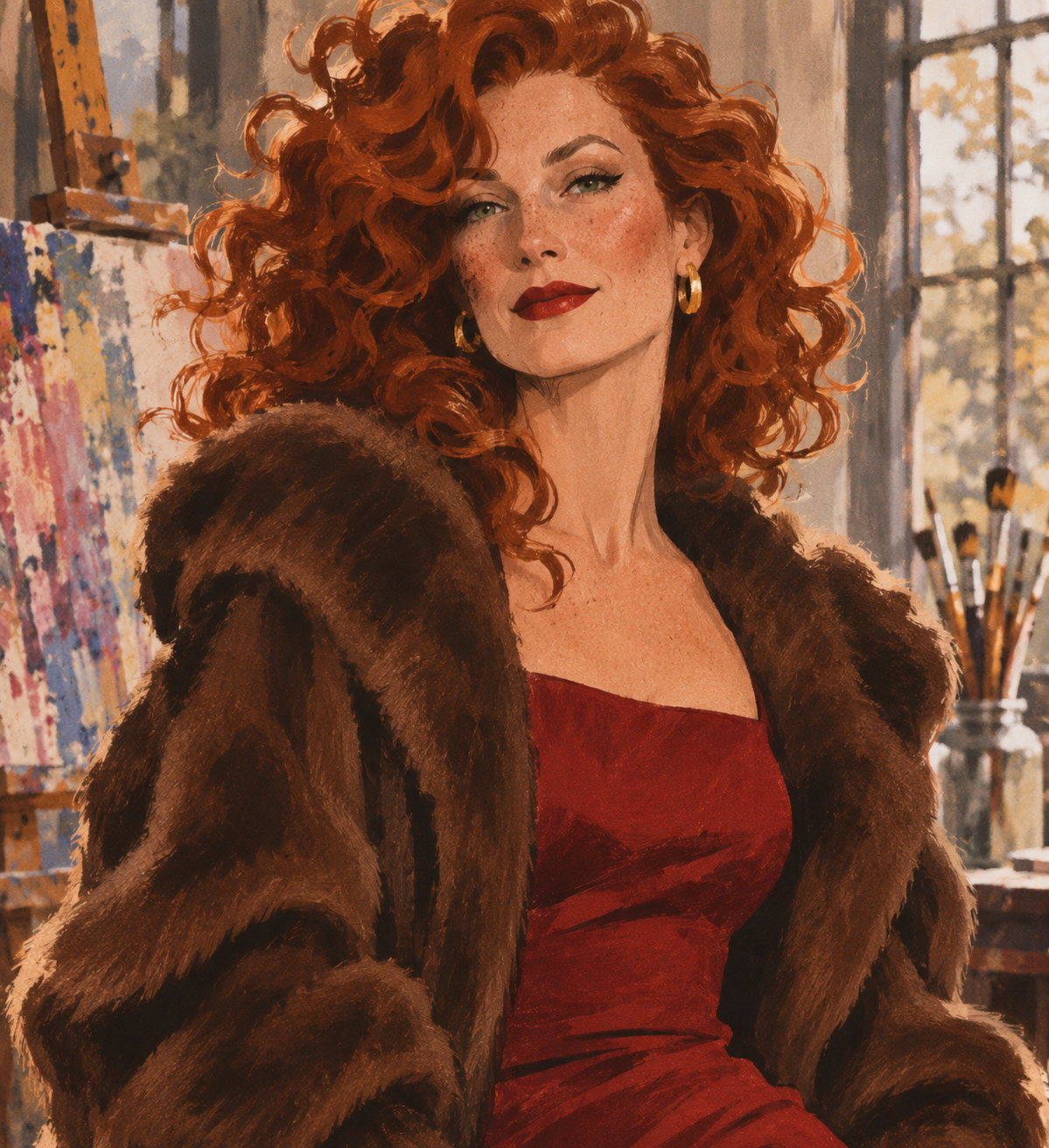
After Denise photographs Howard cheating, Charlotte blackmails Howard and her father into granting her a lucrative divorce, financial independence, and custody of her children. She fires Dr. Barry, buys his building, transforms it into a gallery promoting female artists, and runs it until dying of congestive heart failure in 1996.

She gives birth to Betty, then later spends ten years with Tony aboard an international medical hospital ship serving impoverished communities. After Tony dies, Viv lives with her youngest daughter, Dr. Betty Buschetti, and remains surrounded by family into her 80s.

King leaves her after impregnating waitress Sally Ann, and Bitsy is thrilled to discover her own late period was a false alarm and she is finally free. She finishes college, graduates from UC Davis veterinary school, becomes a renowned equine veterinarian, marries vintner Kyle, has two daughters, and runs a California horse-rescue ranch.
🔷 Supporting Characters

He and Margaret sell their Concordia home, support each other through advanced degrees, and remain happily married for more than 50 years; Walt eventually fulfills his dream of becoming a research librarian at the Library of Congress.
After disappearing for five days, he returns to reveal that he impregnated waitress Sally Ann, demands a divorce from Bitsy, and leaves her to marry Sally Ann.
He reconciles with Viv and later spends ten years alongside her aboard international medical mission ships before eventually dying.
Denise catches and photographs him having sex with another woman; Charlotte uses the photos to force a lucrative divorce, child support, and his removal from her home.
She attends Oxford University, settles in England, and becomes a world-renowned author of seven acclaimed books; in 2006 she attends Margaret’s award gala.
She wins the fight to play trombone, grows into an independent woman, and jokingly sends Margaret an orchid corsage for her 2006 career-achievement gala.
Both grow up in the increasingly supportive Ryan household and join Beth in sending champagne to celebrate Margaret’s 2006 award.
All seven grow up successfully; Jenny becomes a Delta pilot, while youngest child Betty becomes an obstetrician at Sibley Memorial Hospital and eventually has the widowed Viv live with her.
Howie returns home after the divorce, while Laura eventually takes over Charlotte’s Alexandria art gallery and successfully continues it after Charlotte dies.
Charlotte threatens to expose Howard’s affair photographs publicly, forcing G.G. to surrender and agree to her divorce, financial, and trust-fund demands.
Her threats become meaningless after Charlotte successfully blackmails G.G. and secures her independence.
She continues her historic publishing career until her death in 2001; decades later, Margaret still keeps her photograph as a reminder of the woman who helped open doors for her.
Bitsy saves her during a grueling 72-hour vigil using ice-filled canvas boots, and Delilah makes a full recovery.
She continues operating her Brookland practice with Earlene Jackson after Viv leaves to prepare for Betty’s birth.
She participates in the 1963 March on Washington and becomes Dr. Fran’s full-time clinical nurse after Viv steps down.
Edwin forms his own two-man book club with Walt, while the couple proudly celebrates Margaret’s eventual success.
Margaret and her supporters outmaneuver him by purchasing a full-page advertisement in his own magazine and publishing the essay he refused to print.
He exploits that image for magazine publicity before Clement eventually fires Margaret.
Charlotte fires him, buys the building containing his office, gives him 29 days to leave, and converts the property into her art gallery.
Charlotte rejects him and chooses to develop her artistic future independently rather than trade sex for access to the art world.
He helps Charlotte establish her Alexandria gallery, setting her on the path to becoming a successful champion of female artists.
She snubs Margaret at the grocery store after Margaret publicly criticizes suburban conformity in her essay.
King divorces Bitsy and marries Sally Ann.
She connects Bitsy with American University to finish her undergraduate degree and later welcomes her into veterinary school at UC Davis.
Days later, John F. Kennedy is assassinated; Jackie appears on television in her bloodstained pink suit and later with her children at his funeral.
Margaret gives Emma her business card and invites her to lunch, passing forward the mentorship Katharine Graham once offered Margaret.
He and Bitsy raise two daughters and live on their California vineyard and horse-rescue ranch; he accompanies her to Margaret’s 2006 gala.
She becomes a successful obstetrician at Sibley Memorial Hospital and, by 2006, shares her Virginia home with her widowed mother Viv.
She takes over Margaret’s light “fluff” column.
Margaret discovers there is no actual rule against girls playing trombone and forces him to allow Beth to participate.
She goes on to become one of NPR’s celebrated “founding mothers.”
She spends nearly 50 years covering the White House and becomes the first female officer of the National Press Club.
Margaret responds by forging Walt’s signature and depositing her paycheck anyway.
He suffers a stroke and dies, triggering Walt’s realization that he needs to change his own life and support Margaret’s ambitions.
After Jerry dies, she is forced to sell her house because she lacks financial knowledge and employable skills, profoundly affecting Walt’s view of Margaret’s career.
He assists Bitsy throughout the exhausting 72-hour effort that ultimately saves Delilah.
Charlotte confronts them at the office, leaving them humiliated and in tears while she proceeds with her plan to destroy Howard’s leverage over her.
Both continue their historic careers in journalism and government press relations.
After Kennedy’s assassination, the children become enduring symbols of the tragedy; John-John’s funeral salute helps spur Walt to stop postponing the life he truly wants.
🕳️ Potential Plot Holes
After Leonard fires Margaret for submitting her serious column about The Feminine Mystique, the Bettys pool their money to buy a full-page advertisement in A Woman’s Place and publish the essay themselves. They are told the advertising deadline is at the end of the week, and the piece appears in the next issue. For a national magazine in 1963, that turnaround is extremely unlikely. Issues were generally prepared well in advance, with advertising space, typesetting, printing, binding, and nationwide distribution requiring substantial lead time. The story compresses this process considerably to get Margaret’s essay into print quickly.
📚 Book Club Q&A's
⭐ Final Rating & Thoughts
What struck me most about The Book Club for Troublesome Women was how eye-opening it was. It’s astonishing to realize how recently women were expected to build their entire lives around their husbands, often with limited control over their own money, careers, education, and futures. Watching Margaret, Charlotte, Viv, and Bitsy begin questioning those expectations made this both an empowering and incredibly satisfying read.
I especially loved that each woman wanted something different. Their version of fulfillment wasn’t identical, and the book never suggested there was only one “right” way to be a liberated woman. Some of their journeys involved careers, others education, family, creativity, or simply finally having the freedom to choose for themselves.
Yes, everything ultimately comes together a little too perfectly, but I didn’t mind that at all. After spending the book watching these women encounter obstacle after obstacle simply because of their gender, I wanted that satisfying payoff. This was funny, moving, infuriating, educational, and ultimately hopeful. I absolutely loved watching these “troublesome” women discover just how much more they were capable of.
✨ Adaptation description
Adaptation
As of October 2026, there is no official film or television adaptation announced for Marie Bostwick’s The Book Club for Troublesome Women. The novel was published in 2025 by Harper Muse and follows four women living in a newly developed Virginia suburb in 1963 whose lives begin to change after they form a book club and read Betty Friedan’s The Feminine Mystique.
Marie Bostwick has had one of her novels adapted previously. Her novel The Second Sister became the 2018 Hallmark Hall of Fame television movie Christmas Everlasting, starring Tatyana Ali, Dondré T. Whitfield, Dennis Haysbert, and Patti LaBelle. However, that adaptation is unrelated to The Book Club for Troublesome Women.
✨ Books Like The Book Club of Troublesome Women (2025)
See an error on this page?