
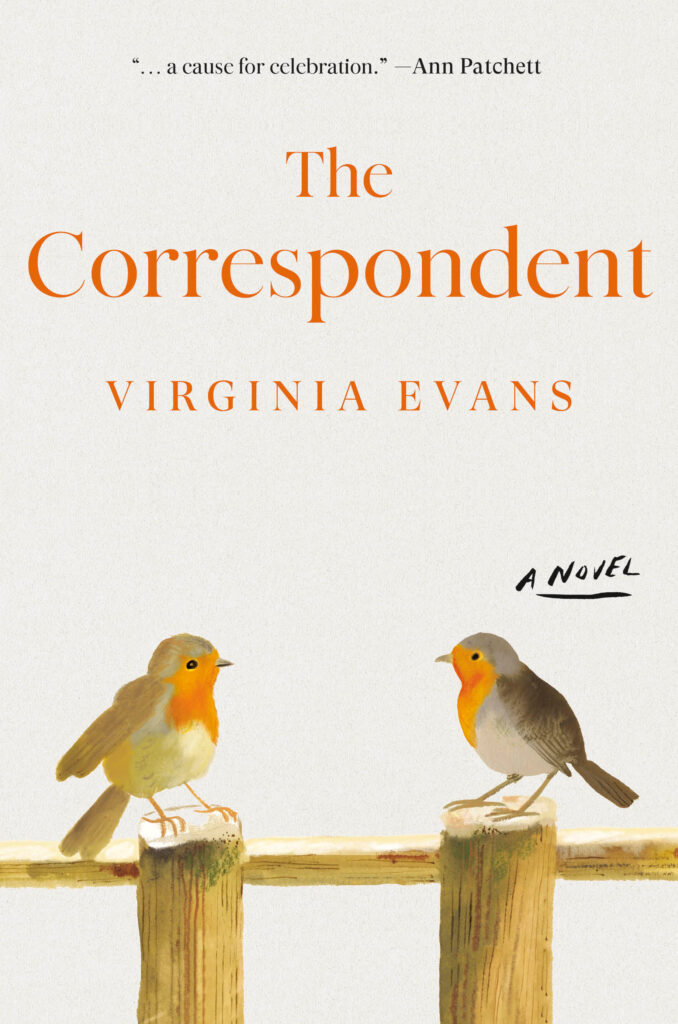
The Correspondent (2025)
Select Sections to Print
×Book Details
The Correspondent (2025)
Jump to Section
⚠️ Trigger Warnings
- Death of a child
- Terminal illness/cancer
- Grief and loss
- Accidental death
- Suicide attempt
- Mental illness and psychiatric hospitalization
- Bullying
- Drug addiction and overdose
- Infertility
- Miscarriage
- IVF
- Infant death
- The Holocaust/concentration camps
- Physical punishment of a child
- Stalking and threatening behavior
- War and displacement
- Vision loss/blindness
- Animal death
- Infidelity
- Adoption trauma
- Racism
- Sexism
⏱️ 2-Minute Spoiler Summary
Sybil Van Antwerp, a seventy-three-year-old retired law clerk, spends her life writing letters while secretly dealing with progressive blindness. Beneath her controlled exterior, she carries decades of guilt over the childhood death of her son, Gilbert (“Colt”), which damaged her relationships with her surviving children, particularly her estranged daughter Fiona.
Sybil forms a close bond with troubled teenager Harry Landy, who eventually stays with her after attempting suicide. She also begins receiving hostile letters from “DM,” revealed to be Dezi Martinelli, whose father Sybil helped send to prison decades earlier. Still consumed by grief after Gilbert’s death, Sybil had deliberately refused to advocate for mercy in the case.
As her eyesight worsens, Sybil begins repairing her life. She reconciles with Fiona, discovers a biological sister named Hattie Gleason through DNA testing, travels to Scotland to meet her newly discovered family, and falls in love with her neighbor Theodore Lübeck.
Sybil finally confesses the truth about Gilbert’s death: while distracted by work, she impatiently told eight-year-old Gilbert to jump from a dock without checking the water. He dove onto a shallow rock shelf and broke his neck, leaving Sybil consumed by guilt for the rest of her life.
In 2021, Sybil dies suddenly from a pulmonary embolism at her writing desk. Afterward, Fiona follows her mother’s instructions by sending Dezi Martinelli a financial gift and a letter of forgiveness, while Theodore helps preserve the relationships Sybil spent decades building through her correspondence.
📖 Full Spoiler Summary
Sybil Van Antwerp and a Life Written in Letters
At seventy-three, Sybil Van Antwerp has built a life around words. A retired law clerk living alone in Annapolis, Maryland, she spends part of nearly every day at her desk writing letters—to family members, old friends, former colleagues, authors she admires, and people she has never met. Some write back. Others don’t. Either way, the correspondence gives Sybil a carefully controlled way to remain connected to the world without having to let people get too close.
That control begins slipping away in 2012 when Sybil totals her Cadillac in a car accident. She has been hiding a frightening truth from almost everyone around her: she is losing her eyesight because of a hereditary condition, and eventually she will become completely blind.
The accident forces her to acknowledge that her independence won’t last forever, but Sybil remains stubbornly private. Her son, Bruce Van Antwerp, a dependable lawyer who lives nearby, knows only part of what is happening. Her daughter, Fiona Van Antwerp-Beaumont, lives in London and is largely estranged from her. Even when Sybil needs people, asking for help does not come naturally to her.
Her letters are easier.
One of her most important correspondents is Harry Landy, the teenage son of her former colleague, Judge James Landy. Harry is brilliant, socially awkward, and badly bullied at school. His home life offers little refuge because his mother, Marly Landy, suffers from severe mental illness and has repeatedly required psychiatric hospitalization. Sybil recognizes something of herself in Harry’s oddness and intelligence, and their regular letters become a genuine friendship.
She also writes to famous authors, including Ann Patchett, Kazuo Ishiguro, and Joan Didion. Her correspondence with Didion becomes particularly personal because both women know what it is like to lose a child.
It is the subject Sybil has spent most of her life avoiding.
The Past Sybil Doesn’t Want to Face
Years earlier, Sybil and her former husband, Daan Van Antwerp, had three children: Bruce, Fiona, and Gilbert, whom the family called Colt. Gilbert died when he was only eight years old, and his death shattered the family.
For decades, Sybil has carried an unbearable burden of guilt about what happened. She allows others to know that Gilbert died in a diving accident, but she never tells them the entire story. After his death, she became emotionally distant from the children who survived. In particular, she pushed Fiona away.
Fiona grew up believing her mother simply did not love her enough. The truth is almost the opposite: after losing Gilbert, Sybil became terrified that loving Fiona deeply would leave her vulnerable to another devastating loss. Instead of risking that pain, she protected herself by withdrawing from her daughter.
The damage follows them into adulthood.
Sybil’s closest friend, Rosalie Van Antwerp, has problems of her own. Rosalie cares for her disabled son, Paul, as well as her husband, Lars, whose dementia is steadily worsening. Yet she remains one of the few people close enough to Sybil to challenge her.
That friendship is tested when Sybil learns that Fiona secretly visited Rosalie while in the United States. Even worse, Rosalie knows something Fiona has kept from her mother: Fiona has suffered miscarriages and struggled with infertility.
Sybil initially sees Rosalie’s silence as a betrayal. Eventually, however, the revelation forces her to recognize how much of Fiona’s life she has missed. She finally writes her daughter the kind of letter she should have written years ago, explaining how Gilbert’s death changed her and why she pushed Fiona away.
It doesn’t erase decades of hurt, but it finally gives mother and daughter a way back to each other.
Harry Comes to Stay
While Sybil slowly repairs her relationship with Fiona, Harry Landy reaches a crisis.
The bullying, isolation, and chaos surrounding his mother’s illness become overwhelming, and Harry attempts suicide by taking an overdose of pills. Afterward, he needs somewhere stable to recover, and Sybil opens her home to him.
Harry stays for several months.
Their friendship, previously conducted largely through letters, becomes part of Sybil’s everyday life. They spend time on puzzles and mathematics, and neither has to pretend to be less unusual for the other’s comfort. Sybil gives Harry the safe, intellectually curious environment he desperately needs, while Harry gives Sybil companionship at a time when her shrinking vision is making her world increasingly difficult to navigate.
He will also become instrumental in helping her uncover a completely unexpected part of her past.
The Letters From DM
Not all of Sybil’s correspondence is welcome.
After her longtime mentor and former boss, Judge Guy D. Donnelly, dies, columnist Alex Toole writes about him and publicly wonders what became of Sybil. The attention brings someone from her past back into her life.
A person signing the letters “DM” begins sending Sybil vicious messages, accusing her of being a “cold metal bitch” whose devotion to “perfect justice” destroyed lives.
Eventually, Sybil identifies DM as Dezi Martinelli.
Decades earlier, Dezi’s father, Enzo Martinelli, appeared before Judge Donnelly and Sybil and was sentenced to prison. Enzo’s wife, Florencia Martinelli, desperately pleaded for mercy. Sybil could have advocated for leniency.
She didn’t.
At the time, Gilbert had recently died, and Sybil was consumed by grief, anger, and guilt. Rather than allowing compassion to influence her judgment, she deliberately withheld it. Enzo went to prison, and the consequences spread through the Martinelli family.
Dezi has never forgotten.
His letters force Sybil to confront another uncomfortable truth about herself: her grief didn’t only damage her own family. At one of the worst moments of her life, she allowed it to affect someone else’s fate.
A Sister Sybil Never Knew She Had
As Sybil’s eyesight continues deteriorating, her former husband Daan develops cancer and eventually dies. His death closes another chapter of her old family life just as an entirely new one unexpectedly opens.
Bruce has given Sybil a DNA kit, and the results reveal that she has a biological sister.
Her name is Hattie Gleason, a botanist living in Scotland.
With Harry’s help—and assistance from Basam Mansour, a Syrian refugee who once worked in customer service for the DNA company—Sybil manages to connect with Hattie. She learns that her biological parents were Louisa Gleason and Charles Thorne, opening a history she never knew belonged to her.
Sybil eventually travels to Scotland, where she meets Hattie as well as her half-brothers, John, Douglas, and Declan. At an age when she assumed her life would only become smaller as her eyesight disappeared, her family unexpectedly becomes larger.
Theodore, Mick, and a Different Kind of Future
Sybil’s romantic life also takes an unexpected turn.
Mick Watts, a loud, outgoing retired attorney from Texas, pursues her enthusiastically and eventually proposes marriage. Mick offers Sybil one possible future, but another man gradually becomes much more important.
Her neighbor Theodore Lübeck is quieter and gentler. A German-Jewish man who brings Sybil roses and offers companionship without overwhelming her, Theodore becomes increasingly present as her vision fades.
Sybil ultimately chooses Theodore rather than Mick.
Their relationship gives her something she has resisted for much of her life: intimacy without the illusion that she can control what will happen next.
Before she loses her sight completely, however, there is one final truth she needs Theodore to know.
What Really Happened to Gilbert
Sybil finally writes Theodore the confession she has carried for decades.
Gilbert’s death was not simply a terrible childhood accident.
The family had been on vacation, and Sybil was sitting on a dock absorbed in a legal file. Eight-year-old Gilbert wanted to jump into the water and kept trying to get his mother’s attention.
Sybil was distracted and irritated.
Without looking up, she told him to go ahead.
“Just go, Colt. Jump!”
Gilbert obeyed his mother.
He dove directly into a shallow rock shelf and broke his neck.
For decades, Sybil has lived with the knowledge that if she had looked up—if she had given her son her attention for only a moment—she might have stopped him. His death explains so much of what followed: her emotional withdrawal from Fiona, her harshness toward the Martinellis, and her tendency to keep people safely contained within letters rather than risk the vulnerability of loving them in person.
By finally telling Theodore what happened, Sybil stops hiding the worst moment of her life from someone she loves.
Sybil’s Final Letters
The last years of Sybil’s life are not defined solely by loss.
She repairs her relationship with Fiona. She discovers Hattie and the siblings she never knew existed. She helps Harry through one of the darkest periods of his life. She finds companionship with Theodore. And although she cannot undo what she did to the Martinelli family, she finally acknowledges the harm she caused.
Then, in 2021, Sybil dies suddenly from a pulmonary embolism.
She is found at the place that defined so much of her life: her writing desk.
Her death does not end her correspondence immediately. Sybil has left instructions behind, and Fiona carries out one of the most important. She sends Dezi Martinelli a financial gift along with a letter offering forgiveness and attempting, however imperfectly, to close the wound that began with Enzo’s sentencing decades earlier.
Theodore also continues maintaining some of the relationships Sybil built through her letters, allowing the connections she created to survive after she is gone.
Sybil spent much of her life believing letters could say what she could not manage to say face-to-face. In the end, those letters remain behind, carrying her confessions, apologies, friendships, and love to the people whose lives became intertwined with hers.
🔚 Ending Explained
The Ending of The Correspondent
The Correspondent ends with Sybil Van Antwerp finally doing what she has resisted for most of her life: allowing herself to be fully known. Her failing eyesight takes away the independence she has fiercely protected, but it also pushes her toward reconciliation, confession, and genuine intimacy.
In April 2019, Sybil travels to London to see Fiona, marking a major change for a woman who has spent decades refusing to travel. Mother and daughter journey through Oxford and the Yorkshire moors before continuing to Fort William, Scotland, where Sybil meets her biological sister, Hattie Gleason, and her three half-brothers. Rather than feeling displaced among these relatives she has only just discovered, Sybil experiences an unexpected sense of belonging. Scotland feels like home.
As her vision deteriorates almost completely, Sybil writes an enormously important letter to Theodore Lübeck. For the first time, she tells someone the full truth about the death of her eight-year-old son, Gilbert, whom she called Colt.
Gilbert had wanted Sybil to watch him dive from a boulder. But Sybil was distracted and irritated, absorbed in a legal file. Without looking at where he intended to jump, she told him, “Just go, Colt. Jump!” Gilbert obeyed her and dove into shallow water, striking the rock shelf beneath the surface.
This is the guilt Sybil has carried for decades. Gilbert’s death was an accident, but Sybil has always believed that her impatience and inattention helped cause it. Her grief afterward affected virtually everything: her marriage, her relationship with Fiona, her work, and particularly her ability to show mercy to others.
Telling Theodore the truth is therefore more than a confession. It is Sybil finally allowing another person to carry part of the burden with her.
She then makes another extraordinary choice: she asks Theodore to move into her Annapolis home and live with her as her eyesight disappears. Sybil has spent her life creating intimacy through correspondence, which allows her to reveal herself while still maintaining distance and control. Now she chooses physical presence. She no longer wants merely to write to someone she loves. She wants someone beside her.
Sybil also rejects Mick Watts’s marriage proposal. Mick represents an earlier version of her life—professional, intellectual, controlled—and marrying him would require her to move to Texas. Theodore offers something different: companionship without possession. Sybil chooses that quieter form of love.
Her life ends unexpectedly on November 10, 2021, when she dies from a pulmonary embolism while sitting at her writing desk. The date carries an especially poignant significance: November 10 was Gilbert’s birthday.
After Sybil’s death, her letters continue doing what they have always done—connecting people.
Following her mother’s wishes, Fiona sends Dezi Martinelli money along with a letter offering forgiveness and reconciliation. Dezi had spent years blaming Sybil for the destruction of his family after she helped send his father, Enzo, to prison. Sybil eventually recognized that her judgment in that case had been influenced by the rage and grief she was carrying after Gilbert’s death.
Meanwhile, Theodore sends Fiona an unsent letter Sybil had written to her former husband, Daan. Through it, Fiona finally receives the truth about Gilbert’s death that her mother had been unable to tell her while alive.
Sybil’s influence also survives through Harry Landy, who reaches adulthood and writes a novel of his own, Dynasty of Sight. The lonely, troubled boy with whom Sybil once corresponded has become a writer—one of the clearest signs that the relationships she created through words will outlive her.
What the Ending Means
At its heart, the ending is about the difference between communicating and actually allowing yourself to be known.
Sybil has spent her life writing letters because letters give her control. She can choose her words, revise them, decide what to reveal, and keep the recipient safely somewhere else. Her correspondence is genuine—often profoundly so—but it also functions as emotional armor.
That is why asking Theodore to live with her matters so much. Sybil finally chooses presence over correspondence. She accepts the vulnerability of needing another person and being seen by them every day.
Her blindness deepens that idea. There is an intentional irony in Sybil becoming physically blind just as she begins to understand herself with unprecedented clarity. Throughout her life, she has been extraordinarily perceptive about language, law, and other people’s behavior while remaining remarkably blind to the ways grief has shaped her own actions.
By the end, she can no longer physically see, yet emotionally she finally can.
The Weight of Gilbert’s Death
Gilbert’s death is the hidden center of Sybil’s entire life.
Her statement—“Just go, Colt. Jump!”—has become unbearable in her memory because those ordinary words accidentally preceded catastrophe. She cannot undo them, so she spends decades mentally prosecuting herself.
That connects Gilbert’s death directly to the novel’s larger concern with justice and mercy.
Sybil understands justice professionally. What she struggles to understand is mercy.
Her treatment of the Martinelli family demonstrates what happens when grief becomes judgment. After Gilbert dies, Sybil’s pain hardens her. She fails to advocate for compassion when Florencia Martinelli begs for it, and Dezi grows up carrying the consequences.
By reaching out to Dezi at the end of her life, Sybil cannot erase what happened. She can only acknowledge her part in it and attempt restitution.
That distinction is important: the novel does not absolve Sybil. It allows her to take responsibility without requiring her to spend the rest of her life punishing herself.
The Writing Desk
Sybil dying at her writing desk is fitting rather than merely tragic.
The desk has been both her sanctuary and her hiding place. It is where she organizes the chaos of life into sentences and where she creates relationships that feel safer than face-to-face intimacy.
By the time she dies there, however, its meaning has changed.
Sybil has already confessed the truth. She has reconciled with Fiona. She has found Hattie. She has attempted to repair the damage done to Dezi. She has invited Theodore into her life.
The desk is no longer a barricade between Sybil and the world. It has become the place from which she finally reached it.
The “Stones”
The secrets Sybil thinks of as stones capture the emotional burden she has carried. Gilbert’s death is the heaviest one.
For decades, Sybil seems to believe that carrying that weight is part of her punishment. If she stops suffering, perhaps she is somehow betraying her son.
Her eventual confession changes that. Giving the secret to Theodore—and ultimately allowing Fiona to know it—doesn’t make the past disappear. Instead, the burden becomes shared.
That is why the ending doesn’t offer Sybil uncomplicated peace. What she reaches is something more believable: relief without absolution.
Why November 10 Matters
Having Sybil die on Gilbert’s birthday brings her story full circle, but it doesn’t suggest that she is being punished.
For most of her life, Gilbert’s death has effectively frozen Sybil in time. Her identity has remained tethered to the worst moment of her life.
Yet she does not die as the woman she was immediately after losing him.
She dies after traveling, finding family, repairing her relationship with her daughter, accepting companionship, confessing her greatest secret, and attempting to make amends.
Gilbert’s birthday therefore becomes associated not only with what Sybil lost, but with the life she eventually learned to inhabit despite that loss.
The Final Significance
The title ultimately takes on another meaning. Sybil is the correspondent because writing is how she has always existed in relation to other people. But the ending quietly challenges the limits of that identity.
Letters saved her. They gave shape to grief, created friendships, mentored Harry, connected her with Theodore, and allowed her to say things she could never speak aloud.
But they could not substitute for living.
That is why Scotland, Fiona, Hattie, Theodore, and Sybil’s confession matter so much. Near the end of her life, Sybil stops merely documenting human connection and begins participating in it.
Her death is sudden, but the novel’s ending isn’t especially bleak. There is something deeply hopeful in the aftermath. Fiona knows her mother more completely. Dezi receives the mercy his family was once denied. Harry carries Sybil’s literary influence forward. Theodore preserves the truths she entrusted to him.
Sybil spent much of her life believing that the right words could impose order on suffering. By the end, she discovers something more important: words cannot change what happened, but they can tell the truth about it, ask forgiveness for it, and carry love beyond the life of the person who wrote them.
👤 Characters & Fates
🔶 Main Characters
Reconciles with Fiona, meets her biological sister Hattie, and finally confesses that her dismissive “Just go, Colt. Jump!” contributed to Gilbert’s fatal dive. She dies suddenly of a pulmonary embolism at her writing desk on November 10, 2021, Gilbert’s birthday.

He attends Stanford University and becomes a writer, eventually publishing Dynasty of Sight and dedicating it to Sybil.

He moves into Sybil’s home as her blindness progresses and remains with her until her sudden death, afterward helping preserve her correspondence and connections with her newfound family.

She outlives Sybil and eventually receives the enormous collection of Sybil’s letters, allowing her to reconstruct their sixty-year history.

She finally reconciles with Sybil, takes her through Britain to meet Hattie, and after Sybil dies carries out her wishes by sending Dezi Martinelli money and a letter of forgiveness.
🔷 Supporting Characters
After Stewart cheats on him, Felix rebuilds his life, publishes an essay in Vogue, and visits Sybil in Scotland before her death.
He proposes marriage, but Sybil rejects him, refusing to move to Texas or surrender her independence.
He dies after diving onto a shallow rock shelf; moments beforehand, an irritated Sybil refuses to watch him and tells him, “Just go, Colt. Jump!”, a secret she carries for decades.
He dies of colon cancer in Belgium in 2015 and leaves Sybil an inheritance that later helps fund her European journey.
After vandalizing Sybil’s garden and exchanging letters with her, he eventually receives money from Sybil’s estate to help pay for his own son’s drug rehabilitation.
He is fired for his unauthorized involvement with Sybil but, through Bruce’s recommendation, lands a career-track job in transportation infrastructure.
Sybil travels to Scotland to meet her and her half-brothers, finally experiencing the biological family she never knew she had.
He dies in 2012, prompting Alex Toole’s article about Sybil that ultimately brings Dezi back into her life.
He eventually sells the family home as his children leave and finds a quieter existence listening to audiobooks.
She remains in and out of psychiatric treatment and eventually moves to California, where her sister helps manage her care.
He stays involved throughout Sybil’s declining health and handles her estate after her sudden death.
Sybil furiously rebukes her by letter, particularly for reducing Sybil’s relationship with Judge Donnelly to that of a “work wife.”
After prison he never successfully reunites with his family and eventually dies in Italy after being struck by a car while ragged and drunk.
🕳️ Potential Plot Holes
Sybil states in 2012 that Gilbert died 39 years earlier, placing his death in July 1973. This fits other established details, including his age and Rosalie’s memory of Sybil being pregnant in 1964. Yet Sybil later tells Dezi Martinelli that Gilbert had died only four weeks before Enzo Martinelli’s sentencing, while Dezi dates that sentencing to 1981. Both timelines cannot be correct: Gilbert could not have died in 1973 and also just four weeks before a 1981 hearing.
Basam Mansour tells Sybil that Bruce purchased her Kindred Project DNA kit on December 23, 2011. However, Sybil describes receiving and opening the kit as a Christmas present in December 2013. Nothing explains why Bruce would have purchased the kit two years earlier and held onto it until 2013, making the dates appear inconsistent.
📚 Book Club Q&A's
⭐ Final Rating & Thoughts
The Correspondent gave me one of the strangest love/hate reading experiences I’ve had in a while. I was completely hooked at first—the letters, the slowly unfolding mysteries, and Sybil herself made this feel like a potential five-star read. I especially loved that Sybil could be selfish, difficult, funny, vulnerable, and incredibly frustrating all at once. She felt like a real person rather than a character designed to be likable.
But as the book continued, some of the emotional resolutions became a little too convenient for me. Sybil can be genuinely infuriating, yet the people around her seem remarkably willing to forgive her. Several conflicts that felt like they deserved complicated consequences were resolved more easily than I could believe, which weakened some of their impact.
Still, I couldn’t put this book down. The epistolary format worked beautifully, the emotional moments hit hard, and Sybil stayed in my head after I finished. I may have wanted to shake her repeatedly, but I also cared about her—and that’s probably why The Correspondent ultimately earned a very solid 4 stars.
✨ Adaptation description
The Correspondent — Film Adaptation
The Correspondent, Virginia Evans’ bestselling 2025 debut novel, is being developed as a feature film by Lionsgate, with Jane Fonda attached to star as Sybil Van Antwerp and produce. The project was acquired after a competitive bidding process. Todd Lieberman is producing through Hidden Pictures, while Cat Vasko is adapting the screenplay. Vasko and Evans are executive producers. (People.com)
Announced: 2026
Studio: Lionsgate
Production company: Hidden Pictures
Format: Feature film
Screenwriter: Cat Vasko
Producer: Todd Lieberman
Executive producers: Cat Vasko, Virginia Evans
Cast: Jane Fonda — Sybil Van Antwerp
Status: In development
Evans has since spoken enthusiastically about the adaptation, saying that Fonda had read the novel and wanted to play Sybil before the movie was publicly announced. She has also praised Vasko’s screenplay approach and said she trusts her vision completely. (People.com)
What the Film Will Adapt
The novel follows Sybil Van Antwerp, a 73-year-old retired law clerk in Annapolis whose life is organized around correspondence. She writes letters and emails to family, friends, authors she admires, acquaintances, and strangers, while repeatedly writing—but never sending—letters connected to the most painful event of her past.
As Sybil begins losing her eyesight, relationships and correspondence gradually force her to confront decades of grief, particularly the truth surrounding the childhood death of her son Gilbert and the guilt she has carried ever since.
✨ Books Like The Correspondent (2025)
See an error on this page?