
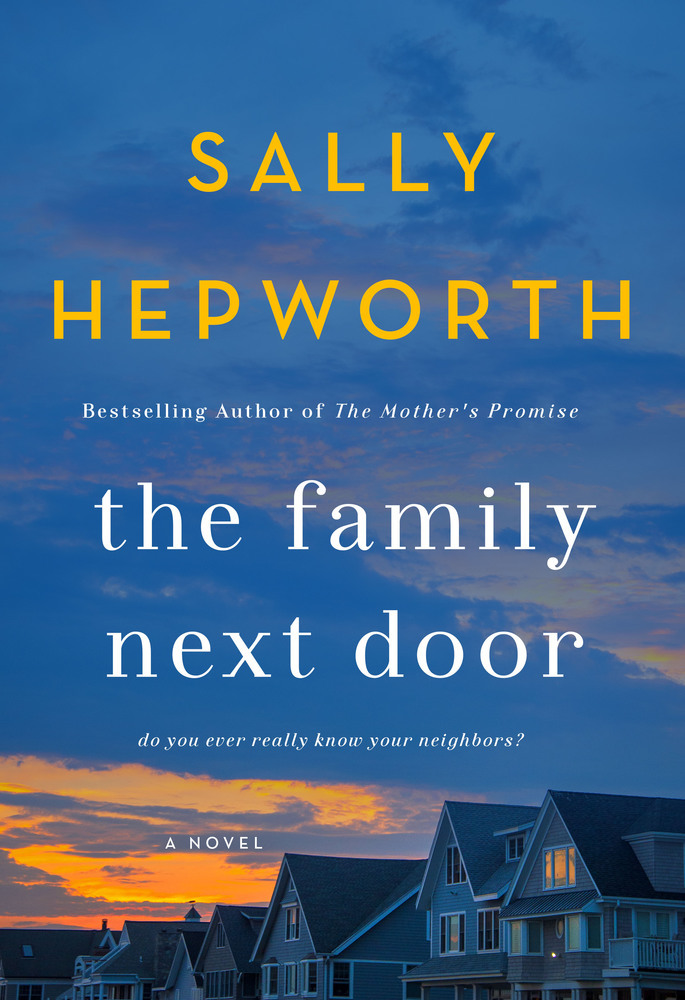
The Family Next Door (2018)
Select Sections to Print
×Book Details
The Family Next Door (2018)
Jump to Section
⚠️ Trigger Warnings
- Child abduction and kidnapping
- Stillbirth
- Miscarriage
- Postpartum depression
- Postpartum psychosis
- Postpartum anxiety
- Infant abandonment
- Psychiatric hospitalization
- Mental illness and depression
- Infidelity
- Paternity uncertainty
- Marital deception
- Child injury and medical emergencies
- Infant heatstroke and dehydration
- Burns involving a child
- Severe physical injury and trauma
- Traffic accident
- Alcohol abuse and dependency
⏱️ 2-Minute Spoiler Summary
A mysterious woman named Isabelle Heatherington moves onto Pleasant Court after recognizing neighbor Essie Walker as possibly being Sophie Heatherington, her baby sister who was abducted from a Sydney hospital thirty-two years earlier. A secret DNA test confirms it: Essie was kidnapped as an infant by the woman she has always believed is her mother, Barbara.
Barbara had suffered a stillbirth followed by severe postpartum psychosis and, in a delusional state, took baby Sophie from the hospital and raised her as Essie. When the truth resurfaces, Barbara suffers another psychological break and flees with Essie’s three-year-old daughter, Mia. She ultimately saves Mia from being hit by a tram but is struck herself. Barbara survives, finally remembers and confesses the kidnapping, and is sent for psychiatric treatment rather than prison.
At the same time, the supposedly perfect families around Essie are dealing with secrets of their own. Neighbor Fran confesses that she cheated on Nigel while he was severely depressed and fears newborn Ava belongs to her lover, though Ava’s blood type eventually confirms Nigel is her biological father. Neighbor Ange discovers that her serially unfaithful husband Lucas secretly fathered another woman’s daughter and finally leaves him.
Six months later, Essie has chosen to keep the identity she grew up with while building a relationship with her biological Heatherington family. Isabelle moves to Melbourne with Jules and is expecting a baby, Fran and Nigel are rebuilding their marriage, Ange is adjusting to life without Lucas, and Barbara completes psychiatric treatment. The novel ends with Essie bringing Mia and Polly to visit Barbara, where grandmother and granddaughters head into the kitchen to bake a cake together.
📖 Full Spoiler Summary
A Stranger Arrives on Pleasant Court
Pleasant Court is the kind of quiet Melbourne cul-de-sac where everyone knows everyone else’s business—or at least thinks they do. Essie Walker lives there with her husband, Ben, their three-year-old daughter Mia, and six-month-old Polly. Essie’s mother, Barbara, conveniently lives right next door and is constantly available to help with the children.
That closeness is partly practical and partly protective. Three years earlier, after Mia’s birth, Essie suffered a severe postpartum mental health crisis. Overwhelmed and exhausted, she once left baby Mia alone in her pram at a beach playground and went home. Mia was found unharmed, but Essie subsequently spent time at Summit Oaks, a psychiatric facility. Although she has recovered, Ben and Barbara remain watchful, especially now that Polly’s sleep regression has left Essie exhausted again.
Then Isabelle Heatherington moves into a rental house on the street.
The neighbors are immediately curious about the stylish single newcomer, but Isabelle has not chosen Pleasant Court by accident. She has come from Sydney because she believes Essie may actually be Sophie Heatherington, her younger sister who was abducted from a Sydney hospital when she was only nineteen days old.
Isabelle’s mother, Linda, spent the rest of her life grieving Sophie’s disappearance. Years later, Isabelle happened to see Essie on television during coverage of a small fire on Pleasant Court and was stunned by her resemblance to Linda. Even more striking was Essie’s unusual eye coloring, a distinctive feature that made Isabelle wonder whether the resemblance could be more than coincidence.
She has come to Melbourne to find out.
After befriending Essie, Isabelle manages to collect several hairs belonging to Mia and sends them away for DNA testing. While she waits for the results, she becomes increasingly involved in Essie’s life—and in the carefully concealed problems of the other families on Pleasant Court.
Fran Is Terrified of Who Ava’s Father Might Be
A few houses away, Fran appears to have a stable marriage with her husband, Nigel, and their daughters, three-year-old Rosie and newborn Ava. Underneath that stability, however, Fran is consumed by guilt.
Nigel previously suffered a devastating year-long depression after losing their savings in a bad investment. He became almost completely withdrawn, leaving Fran feeling as though she had lost her husband while still having to care for him and Rosie.
During that period, Fran began an affair with her handsome colleague Mark. It was brief—only seven encounters—but after Nigel recovered and their marriage improved, Fran discovered she was pregnant.
Now she cannot stop wondering whether Ava belongs to Nigel or Mark.
Unable to live with the uncertainty, Fran runs obsessively, pushing herself until she is in physical pain. She asks her obstetrician, Dr. Price, whether he can secretly arrange a paternity test, but he refuses to do so without Nigel’s knowledge.
Eventually, Fran breaks down and tells Essie and neighbor Ange Fenway about the affair. Ange reacts far more harshly than Fran expects because infidelity strikes directly at the secret fault line in her own marriage.
Ange’s Perfect Marriage Falls Apart
Ange has spent years constructing the image of the perfect Pleasant Court family. She is a successful real estate agent, her husband Lucas is a handsome photographer, and their sons, eleven-year-old Will and eight-year-old Ollie, complete the picture.
But Ange has known for years that the picture is false.
When Will was still a toddler, she discovered Lucas having sex with a client named Josie in his photography darkroom. Terrified he would leave her, Ange claimed she was pregnant even though she wasn’t. She then carefully tracked her ovulation and became pregnant for real, resulting in Ollie. Her deception worked: Lucas stayed.
Years later, Ange discovers a hidden phone and realizes Lucas is keeping secrets again. She follows him and finds him with Erin, a woman he previously photographed, and Erin’s toddler daughter, Charlie.
At first, Ange assumes Lucas is simply having another affair. Then she sees Charlie make an oddly specific gesture, shielding her eyes with her forearm exactly the way Lucas and Will do.
Ange instantly understands.
Charlie is Lucas’s daughter.
Lucas admits he slept with Erin several years earlier and fathered Charlie. Although Ange has spent years tolerating his infidelity in the name of preserving their family, this betrayal finally breaks something in her. When she confronts him, she also admits how she lied about being pregnant years earlier to stop him from leaving.
But confessing her own manipulation doesn’t change what Lucas has done. Ange realizes she no longer wants to maintain a perfect marriage at any cost. She tells him to leave, and Lucas moves into an apartment in nearby Black Rock.
Essie’s Attraction to Isabelle Leads to the Truth
While her neighbors’ marriages unravel, Essie is dealing with something she cannot understand: an intense attraction to Isabelle.
She thinks about her constantly and fantasizes about kissing her. Because Essie has never experienced anything like it before, the feelings leave her confused and increasingly unsettled.
One night, she goes to Isabelle’s house and looks through the window. Instead of finding Isabelle alone, she sees her passionately embracing Julian “Jules,” Isabelle’s longtime partner, who has traveled down from Sydney by motorcycle.
Essie is devastated by a rejection that Isabelle never actually made, and the intensity of her reaction frightens everyone around her. Given her history of postpartum depression and her increasingly erratic behavior, Essie begins to fear that she is becoming seriously ill again. Ben and Barbara share that fear, and Essie is admitted to Summit Oaks.
There, Isabelle finally tells her why their connection has felt so powerful.
The DNA test confirms that Mia is Isabelle’s biological niece. Essie is not Barbara’s biological daughter at all. She is Sophie Heatherington, the baby who disappeared from the Sydney hospital thirty-two years earlier.
Isabelle explains that she believes their confusing attraction may have been a form of genetic sexual attraction—the intense sense of familiarity that can occur when close biological relatives meet as adults without knowing they are related.
For Essie, the revelation overturns everything she knows about herself.
For Barbara, it is catastrophic.
Barbara Takes Mia and Runs
Isabelle confronts Barbara with the truth, but Barbara has spent more than three decades psychologically protecting herself from what happened. Faced with the reality that Essie was abducted rather than born to her, she begins to mentally unravel.
In a dissociated state, Barbara takes Mia and drives away.
Essie and Ben are horrified. Barbara has always been one of the people they trusted most with their children, but now she is confused, frightened, and traveling with their three-year-old daughter.
Police trace Barbara through surveillance footage near Albury, suggesting she is driving toward Sydney. Bushfires have closed the Hume Highway, however, forcing her to turn around and head back toward Melbourne.
By the time Barbara reaches St. Kilda, she has almost completely lost touch with the present. In her mind, she is a young mother again, and Mia has become Essie.
When Barbara gets out of the car to ask for directions, Mia climbs out and wanders toward traffic. The immediate danger cuts through Barbara’s delusion. She races after her granddaughter, grabs her, and throws her safely onto a tram platform.
Barbara cannot save herself.
A tram strikes her.
Barbara Finally Remembers What Happened
Barbara survives, and the full story of Essie’s disappearance finally emerges.
Decades earlier, Barbara desperately wanted a child. After suffering two miscarriages, she became pregnant again, only to deliver a stillborn daughter at thirty-five weeks.
The loss shattered her psychologically. Barbara developed severe postpartum psychosis and PTSD and blocked out the reality that her baby had died. While still in the hospital, she encountered nineteen-day-old Sophie Heatherington unattended in a corridor.
In Barbara’s delusional state, she believed Sophie was her own baby.
She took her.
Barbara fled Sydney for Melbourne, renamed the child Essie, and raised her as her daughter. Over the following thirty-two years, she buried what she had done so completely that she effectively constructed an alternate version of her own past.
Now, with the truth finally forced into the open, Barbara confesses everything to Essie from her hospital bed. Despite the enormous consequences of what Barbara did—both to Essie and to the Heatherington family—Essie still sees the woman who raised and loved her as her mother. She holds Barbara’s hand and forgives her.
Because Barbara was suffering from severe mental illness when she took Sophie, she is ultimately found not guilty of kidnapping and ordered to spend five months receiving psychiatric treatment at Summit Oaks.
Fran and Nigel Learn the Truth About Ava
Fran finally tells Nigel about her affair with Mark and admits that she does not know whether Ava is biologically his.
Nigel is devastated, but his response surprises her. After everything they have survived together, he is more frightened of losing Fran and their family than he is of discovering Ava’s paternity. He refuses to have the baby tested. As far as he is concerned, Ava is his daughter regardless.
The question is eventually answered anyway.
During the brutal heatwave, Ava becomes dangerously dehydrated and develops heatstroke, requiring hospitalization. Nigel sees on her medical records that her blood type is O negative. Both he and Fran are also O negative, which confirms that Nigel—not Mark—is Ava’s biological father.
The discovery removes the uncertainty that has tormented Fran, but the affair itself cannot simply disappear. She and Nigel begin rebuilding their marriage with the truth finally between them rather than another secret.
The Women of Pleasant Court Start Over
Ange also begins creating a life that is less concerned with appearances. She and Lucas remain separated and work out how to co-parent Will and Ollie. Instead of obsessing over presenting herself as the woman with the perfect home, husband, career, and children, Ange returns to abstract painting—something she enjoys simply because it belongs to her.
Essie faces a much larger question: who is she now?
She meets her biological father, Graham Heatherington, and her brother, Freddy, and begins forming relationships with the family that lost Sophie decades earlier. But she does not abandon the identity she has lived with for thirty-two years. She chooses to remain legally Essie Walker rather than becoming Sophie Heatherington again.
Isabelle becomes her sister not just biologically, but in practice. Six months later, Isabelle and Jules have moved to Melbourne, and Isabelle is heavily pregnant with their first child.
Barbara, meanwhile, completes her psychiatric treatment and moves into a small home in Hampton. Her relationship with Essie survives, but things cannot return completely to the way they were. She is no longer allowed to be alone with Mia and Polly.
Near the end of the novel, Essie brings both girls to visit Barbara unexpectedly. Rather than ending with the kidnapping that tore one family apart or the secrets that nearly destroyed several others, the story closes on an ordinary family moment: Barbara takes her granddaughters into the kitchen to bake a cake.
After thirty-two years of living inside a secret she could not even allow herself to remember, Barbara finally has nothing left to hide.
🔚 Ending Explained
How the Book Ends
The ending of The Family Next Door finally exposes the secrets that have been simmering beneath Pleasant Court’s picture-perfect surface. But rather than ending with punishment or another dramatic twist, the novel focuses on what happens after the truth comes out—and whether these families can build something healthier from the wreckage.
Essie Learns Who She Really Is
The DNA results confirm what Isabelle has suspected: Essie Walker is Sophie Heatherington, the baby who disappeared from a Sydney hospital thirty-two years earlier.
Essie’s biological father, Graham, and her brother, Freddy, travel to Melbourne to meet her. The reunion is emotional, and Essie chooses to welcome her biological family into her life. But she does not allow the discovery to erase the person she has spent thirty-two years becoming. She decides to remain Essie Walker, explaining that she simply feels more like Essie than Sophie.
Six months later, the two sides of her life have begun to come together. Isabelle and Jules have moved to Melbourne, allowing the sisters to build the relationship they were denied as children. Isabelle also gives birth to a daughter and names her Sophie Elizabeth—giving the name of her lost baby sister a new, joyful meaning.
Barbara Faces What She Did
Barbara survives being struck by the tram and finally receives psychiatric treatment that helps explain what happened decades earlier. Doctors conclude that after the stillbirth of her daughter, she suffered from severe postpartum psychosis and PTSD. In that profoundly disturbed state, she took baby Sophie from the hospital and raised her as Essie.
Because of her mental condition at the time of the abduction, Barbara is found not guilty of kidnapping. She spends five months receiving inpatient treatment at Summit Oaks before moving into a smaller home in Hampton.
Her relationship with Essie is much harder to repair.
At first, their interactions are painfully formal. Essie cannot simply forget that the woman she has always considered her mother stole her from another family, no matter how complicated Barbara’s mental state had been. Yet she also cannot erase thirty-two years of genuine maternal love.
The novel resolves this conflict quietly. Essie unexpectedly arrives at Barbara’s house with the girls and tells her that their family clearly has a need for a grandmother. Barbara is invited back into their lives—not because the past has been excused, but because Essie has decided there is still room for love alongside what Barbara did.
The final domestic image is wonderfully ordinary: Barbara heads into the kitchen to bake a cake with her granddaughters.
Ange Finally Stops Pretending
Ange follows through with her decision to divorce Lucas. She refuses to preserve their marriage simply because it looks good from the outside.
Six months later, the arrangement is beginning to settle. Lucas lives nearby in Black Rock and has the boys every second weekend and on Wednesday nights. He is also developing a relationship with Charlie, the daughter whose existence helped destroy the image of the family Ange had worked so hard to maintain.
Ange, meanwhile, starts painting again.
Importantly, she isn’t painting for recognition, approval, or social media. She is doing it because she enjoys it. For a woman who has spent much of the novel curating the appearance of a perfect life, that small decision represents an enormous change.
Fran and Nigel Begin Again
Fran and Nigel receive their own unexpected moment of clarity after baby Ava is hospitalized with heatstroke and dehydration.
Nigel rushes home from Brisbane and, while looking at Ava’s medical information, discovers that she is O negative. Because both he and Fran are also O negative, the revelation confirms that Ava is biologically his daughter.
But Nigel’s most important response comes before biology can fully resolve the emotional problem. He tells Fran that even if Ava had not been his, it would not have changed how he felt about her.
The discovery removes one enormous source of uncertainty, but it does not magically repair their marriage. Fran and Nigel begin cautiously rebuilding their relationship, treating each other with a slightly awkward, “nervous politeness.” Their ending is deliberately tentative: they are not suddenly healed, but they are genuinely trying.
What the Ending Means
The ending of The Family Next Door is ultimately about the difference between looking like a happy family and actually becoming one.
For most of the novel, Pleasant Court operates through concealment. Everyone is watching everyone else, yet almost nobody understands what is happening inside the houses around them. Ange performs marital perfection. Fran conceals her infidelity. Essie hides her struggles with motherhood. Barbara has built an entire family around a buried truth. Even Isabelle arrives pretending to be an ordinary new neighbor.
Once those secrets are exposed, several families actually fall apart.
And yet the novel suggests that this destruction is healthier than the lives they were maintaining before.
The Cool Change
The breaking of Melbourne’s oppressive heatwave provides the clearest symbol of that transformation.
For much of the novel, the unbearable heat mirrors the emotional atmosphere of Pleasant Court: everyone is irritable, trapped and waiting for something to break. By the ending, the temperature finally drops.
The cool change arrives at almost exactly the moment when the characters no longer have to maintain their secrets. The pressure has broken. Their circumstances may still be complicated, but they can finally breathe.
Ange’s Painting
Ange’s abstract painting may be the ending’s most effective image of personal freedom.
She attacks the canvas with ordinary household objects—a spatula, butter knife and sponge—mixing colors until they become muddy and imperfect. Earlier, Ange would have judged the result by how it looked to other people.
Now she decides not to photograph or post it.
It belongs only to her.
That is the opposite of the life she has been living. Ange spent years turning her marriage, children, home and appearance into evidence that she was succeeding. The imperfect painting represents something she has almost forgotten how to possess: a private self that does not require an audience.
Barbara’s Blanket
Barbara’s cream knitted baby blanket carries a much sadder symbolism.
She makes it for Isabelle’s new baby while wondering whether giving it would be loving or horribly inappropriate. That uncertainty captures Barbara’s entire position at the end of the novel.
Her maternal instincts are real. So is the terrible harm she caused.
The blanket therefore becomes a symbol of love that cannot be separated cleanly from guilt. Barbara cannot undo the family she fractured, but she can still try, carefully and without entitlement, to contribute something gentle to the family that exists now.
Why Essie Keeps Her Name
Essie choosing to remain Essie Walker rather than becoming Sophie Heatherington is crucial.
The revelation of her biological identity does not magically reveal her “true” identity. Sophie explains where Essie came from; she does not replace the woman Essie became.
Her decision allows the novel to hold two truths simultaneously: Barbara stole Sophie, and Barbara raised Essie.
Neither fact cancels the other.
That is also why Essie can reconnect with Graham, Freddy and Isabelle without abandoning Barbara completely. She refuses the idea that she must choose which family is “real.” Biology matters, history matters, and lived relationships matter.
The name Sophie Elizabeth then completes that idea beautifully. Isabelle does not need Essie to become Sophie again. Instead, the lost name is passed forward to a new baby. Sophie stops representing only the child who disappeared and becomes associated with birth, continuity and possibility.
Forgiveness Without Erasure
Barbara’s fate gives the ending its greatest moral complexity.
The novel does not treat postpartum psychosis as a convenient excuse that makes the kidnapping harmless. Isabelle lost her sister. Graham lost his daughter. Essie lost an entire childhood with her biological family.
But Barbara is also not reduced to a calculating child thief. Her actions occurred during catastrophic psychiatric illness following the death of her baby, and the woman who subsequently raised Essie genuinely loved her.
Essie therefore offers something more complicated than absolution.
She offers continued relationship.
When she brings the girls to Barbara’s house, she is not declaring that nothing happened. She is deciding that what happened does not have to determine every relationship that follows it.
Biology Versus Chosen Family
Nigel’s storyline reinforces the same idea from another direction.
Ava’s blood type confirms that Nigel is her biological father, providing Fran with enormous relief. But emotionally, the more important revelation is Nigel saying that it would not have mattered if he weren’t.
The novel repeatedly complicates the idea that biology automatically determines family. Barbara is not Essie’s biological mother, yet she was unquestionably her mother for thirty-two years. Graham is Essie’s biological father, yet he must now build a relationship with the adult daughter he never had the opportunity to raise. Nigel realizes that his love for Ava would survive even without a genetic connection.
Family, the ending argues, can begin with biology—but ultimately it is sustained through presence, commitment and choice.
Why the Ending Feels So Hopeful
The novel doesn’t give Pleasant Court a neat happily-ever-after.
Ange is divorced. Fran and Nigel’s marriage remains fragile. Essie has gained a biological family while having to completely reconsider her relationship with the mother who raised her. Barbara must live permanently with the consequences of what she did.
But something fundamental has improved: they have stopped pretending.
By the final chapters, the carefully maintained boundaries between these women are disappearing. They enter one another’s homes. Their children mingle. They share food, problems, childcare and conversation. Motherhood becomes something experienced communally rather than something each woman must privately perform perfectly.
That is why Barbara baking a cake with Essie’s daughters is such a fitting final image. After a novel filled with extraordinary secrets, the resolution is deliberately ordinary.
The families of Pleasant Court do not recover by restoring what existed before.
They recover by replacing perfection with honesty, isolation with connection, and the appearance of a happy family with the much messier work of actually being one.
👤 Characters & Fates
🔶 Main Characters

DNA confirms she is Sophie, Isabelle’s abducted sister. She remains Essie Walker, reconnects with her biological family, reconciles with Ben, and forgives Barbara, allowing her to remain in her daughters’ lives.

She reunites Essie with their family, moves permanently to Melbourne with Jules, and later gives birth to a daughter named Sophie Elizabeth.

After Isabelle exposes the truth, Barbara suffers a psychotic break, abducts Mia, and is critically injured saving her from a tram. She spends five months at Summit Oaks and later reconciles with Essie, who allows her supervised contact with her granddaughters.

Fran confesses the affair to Nigel, but Ava’s O-negative blood type proves Nigel is her biological father. After Ava survives severe heatstroke and dehydration, Fran and Nigel slowly rebuild their marriage.

He is devastated by Fran’s confession but discovers Ava is biologically his because they share the only possible blood type. He forgives Fran, telling her her paternity would not have changed his love for Ava, and they reconcile.

She discovers Lucas has a secret three-year-old daughter, Charlie, and divorces him despite his pleas. Six months later, she embraces a messier, more authentic life and returns to painting purely for herself.

Ange discovers he fathered Charlie with former client Erin and divorces him. Lucas moves to Black Rock, shares custody of his sons, and remains involved in Charlie’s life.

He supports Essie through the revelation of her kidnapping and Barbara’s breakdown. Six months later, he reduces his workload so he can spend more time at home with Essie and their daughters.
🔷 Supporting Characters

Barbara abducts her during a psychotic episode, then saves her from an oncoming tram and is struck herself. Mia survives unharmed and later resumes supervised visits with Barbara.
She remains safe during the family upheaval and, six months later, is thriving and beginning to toddle.
She helps alert Fran when Ava becomes dangerously overheated and remains a happy, protective big sister after Ava recovers.
She nearly dies from heatstroke and dehydration but recovers. Her O-negative blood type proves Nigel is unquestionably her biological father.
He adjusts well to the divorce and begins dating Candace, prompting Ange to teach him explicitly about respecting women.
He adapts happily to shared custody and enthusiastically accepts Charlie as his half-sister.
He relocates to Melbourne with Isabelle, finds a teaching job there, and becomes father to their daughter, Sophie Elizabeth.
He reunites with Essie after 32 years and breaks down at her resemblance to Linda. He becomes a devoted grandfather who visits Essie and her daughters frequently.
She dies of cancer before Sophie is found, never learning that her daughter survived. Isabelle later names her own daughter Sophie Elizabeth in tribute.
He travels to Melbourne to meet Essie, is stunned by her resemblance to their mother, and becomes part of her newly expanded family.
She continues raising Charlie as a single mother while allowing Lucas to maintain an informal presence in his daughter’s life.
Her existence destroys Ange and Lucas’s marriage, but she gains relationships with her half-brothers Will and Ollie while remaining in Lucas’s life.
He never learns about the pregnancy or paternity scare, and Fran decides to leave her law firm permanently so she never has to see him again.
She disappears from Lucas and Ange’s lives after Ange announces the supposed pregnancy and Lucas chooses his family.
She remains loyal even after Barbara’s kidnapping secret is exposed, viewing her as someone profoundly damaged by psychological trauma rather than simply a criminal.
Just before beginning IVF, she conceives naturally, bringing enormous joy to Lois and Barbara.
She remains in Sydney while Graham and Freddy develop their new relationship with Essie.
He never performs the secret test, forcing Fran toward the confession that ultimately saves her marriage.
She successfully gives Essie the new look, unknowingly helping push Barbara toward recognizing the truth she has suppressed.
She relocates to Queensland after an electrical fire damages the cottage, inadvertently setting the novel’s central mystery in motion.
They continue living quietly on the street, with their cat occasionally setting off Ange’s surveillance system.
He abandons Barbara for his hairdresser, Laurel, and provides no meaningful support afterward.
She leaves with John, effectively disappearing from Barbara’s life while Barbara is left alone to endure her stillbirth and subsequent breakdown.
She dies before the novel begins, but her legacy survives through Essie, whose full name is Esther Walker.
She goes to the movies with Will as he begins his transition into adolescence.
🕳️ Potential Plot Holes
Barbara had just suffered a stillbirth at the same hospital from which Sophie disappeared, then left the hospital with a baby and soon relocated to Melbourne. Those circumstances should have made her an unusually obvious person for investigators to examine. Even allowing for much weaker hospital security and recordkeeping in the 1980s, it is difficult to reconcile a major infant-abduction investigation with authorities apparently never discovering that a woman who had just lost her own baby left the hospital claiming to have a living newborn.
📚 Book Club Q&A's
⭐ Final Rating & Thoughts
Apparently, suspicious suburban families are my thing now. Give me a picture-perfect neighborhood where everyone is smiling while secretly hiding something terrible, and I am ALL IN.
The Family Next Door wasn’t the kind of thriller that completely shocked me, but it didn’t need to be. I was invested from the beginning, constantly wondering what everyone was hiding and how all these seemingly separate secrets were going to come together. I didn’t predict the reveals, and while none of them made my jaw hit the floor, they were satisfying enough to keep me happily turning pages.
What really made this one stand out was the focus on motherhood and postpartum mental health. There’s a lot more going on here than cheating spouses and nosy neighbors, and some of the heavier storylines gave the book an emotional weight I wasn’t expecting.
Was it a perfect thriller? No. Was I entertained the entire time? Absolutely. And sometimes that’s exactly what I want.
✨ Adaptation description
The Family Next Door — Adaptation Overview
Sally Hepworth’s 2018 novel The Family Next Door was adapted into a six-episode Australian television miniseries, premiering on ABC TV and ABC iview on August 10, 2025. It was adapted for television by Sarah Scheller, directed by Emma Freeman, and produced as a Beyond Entertainment and Muse Entertainment co-production, with investment from Screen Australia and ABC and support from VicScreen. Hepworth served as an executive producer and was involved with the production.
The series stars Teresa Palmer as Isabelle Heatherington, Philippa Northeast as Essie, Bella Heathcote as Ange, Catherine McClements as Barbara, Ming-Zhu Hii as Fran, Bob Morley as Lucas, Daniel Henshall as Nigel, Táne Williams-Accra as Ben, Jane Harber as Lulu, and Maria Angelico as Holly.
The Australian setting remains, but Pleasant Court has been relocated from suburban Sandringham, Melbourne, to the fictional seaside community of Osprey Point. Producer Melinda Wearne confirmed that moving the story to the coast was specifically created for the adaptation.
In the United States and Canada, the series began streaming on Acorn TV on February 23, 2026.
Key Differences From the Novel
Isabelle becomes much more clearly the protagonist
This is probably the biggest overall change.
The novel is an ensemble domestic thriller, but Essie is its emotional center. Isabelle initially functions as the mysterious outsider whose interest in Essie gradually becomes suspicious.
The series reverses that balance. Teresa Palmer’s Isabelle becomes the driving force of the mystery, and viewers spend considerably more time following her investigation. Even the official premise describes Isabelle as the woman whose obsessive investigation casts suspicion on the neighboring families.
The show also gives Isabelle an elaborate professional backstory that isn’t central to the novel: she works in child protection and has been suspended after improperly obtaining a child’s DNA while investigating her sister’s disappearance. She continues collecting DNA and accessing records while in Osprey Point, placing both herself and her police-detective partner Jules in professional jeopardy.
That turns the adaptation into more of an investigative mystery, whereas the novel spends more time letting the reader live inside the women’s secrets.
Structural Changes
The novel rotates among Essie, Fran, Ange, Barbara and Isabelle, with mysterious first-person passages gradually revealing Barbara’s past.
The television series instead gives its six episodes character-centered titles:
Ange → Essie → Lulu → Fran → Isabelle → Barbara.
That creates a much more deliberate television structure: Isabelle moves from household to household, investigating each family as a possible connection to the missing Sophie.
The writers therefore transform several of the neighbors’ private problems into red herrings in Isabelle’s investigation.
Sarah Scheller explained that translating so much internal narration to television without relying on voice-over was a major challenge, and that the writers deliberately merged storylines, created new characters and redesigned clues for the episodic mystery.
Lulu and Holly Are Entirely New
One of the largest additions is Lulu and Holly, a lesbian couple raising young Elvis.
They do not exist in Hepworth’s novel.
Their family occupies an entire episode and becomes one of Isabelle’s major false leads. Isabelle discovers that Lulu grew up in foster care and was connected to an old child-abduction case. Eventually, the explanation is much less sinister: Elvis was Lulu’s sister’s daughter, whom Lulu took in after her sister died of a drug overdose. Elvis’s biological father, Peter, then reappears and threatens their family stability.
Their storyline also expands the show’s examination of what constitutes a family — biological parenthood, adoptive parenting, queer parenting, motherhood and the question of whether biological connections automatically confer parental rights.
Hepworth herself singled them out after seeing the adaptation, joking that Holly and Lulu were her favorite couple despite the fact that she hadn’t created them.
Fran’s Story Is Significantly Rewritten
Fran’s secret remains infidelity, but the television series changes who she is sleeping with.
In the book
Fran previously had an affair with Mark, a work colleague, while Nigel was experiencing severe clinical depression.
The affair has already ended.
Her much bigger fear is that baby Ava may actually be Mark’s biological daughter rather than Nigel’s. Fran’s obsessive running is partly self-punishment for what she has done.
In the show
Fran is having an affair with Lucas — Ange’s husband.
And it is still happening during the story.
That change neatly combines Fran’s infidelity plot with Ange’s marital plot, allowing one secret to explode across two Pleasant Court households rather than introducing Mark as another character.
The show consequently removes the novel’s major question about Ava’s paternity.
Ange and Lucas Are Reworked
The novel’s Lucas has a complicated history of cheating.
Most importantly, Ange discovers that his relationship with Erin has produced a daughter, Charlie. The revelation that Lucas has essentially created another family becomes the final proof that Ange cannot maintain the perfect-family façade she has constructed.
The series replaces much of that storyline with the revelation that Lucas is sleeping with Fran.
It also gives Ange a larger professional and financial storyline involving real estate, the proposed Eureka development, investor Clive Murphy and her efforts to keep the project alive.
So television Ange’s crisis isn’t simply:
Is my husband cheating again?
It becomes:
My marriage, finances, career and carefully manufactured image of success are all collapsing simultaneously.
Essie’s Attraction to Isabelle Is Softened/Removed
This is one of the strangest elements of the novel, and the series largely eliminates it.
In the book, Essie becomes extraordinarily attached to Isabelle. She thinks about Isabelle during sex with Ben, changes her appearance so dramatically that she resembles her, and begins wondering whether she is sexually attracted to her.
After Isabelle reveals that they are sisters, she explains Essie’s confusing attraction through the controversial concept of “Genetic Sexual Attraction.”
The television adaptation does not retain that explanation or make incestuous attraction an important part of Essie and Isabelle’s relationship.
Instead, their unusually strong connection plays primarily as emotional recognition and friendship before the biological relationship is discovered.
That substantially changes the tone of their relationship.
Isabelle’s Search for Sophie Is Expanded
In the novel, Isabelle already has a fairly focused theory about Essie.
Television turns the search into a much broader mystery.
Isabelle essentially works her way through Pleasant Court, looking for evidence that one of these families could somehow be connected to her missing sister.
Lulu and Elvis become suspects.
Fran’s confidential child-protection information becomes relevant.
Barbara’s history becomes increasingly suspicious.
Even seemingly trivial objects become clues.
One particularly important television invention is Rosie’s stuffed rabbit, Penny. Isabelle discovers that the rabbit originally belonged to Mia, which ultimately helps steer her toward Barbara’s past. Later she finds old baby footprints bearing information from a Sydney hospital and finally establishes that Barbara’s documented baby died — meaning Essie cannot be the child Barbara gave birth to.
The writers specifically said they spent weeks devising a clue that would function visually on television.
Barbara’s Backstory Is Altered
The fundamental revelation remains intact:
Barbara is not Essie’s biological mother. Essie is Sophie Heatherington, Isabelle’s long-missing sister.
But the details surrounding Barbara’s biological baby and the discovery are reworked.
The novel gradually reveals Barbara’s traumatic history through mysterious first-person flashbacks. After a devastating stillbirth and psychological breakdown, Barbara takes baby Sophie from the hospital and raises her as Essie.
The show instead allows Isabelle to actively reconstruct Barbara’s history through records, physical clues and DNA.
That makes the revelation something Isabelle solves rather than something the novel gradually allows the reader to understand through Barbara’s memories.
Essie’s Family Is Changed
There are smaller family alterations as well.
In the novel, Essie and Ben’s daughters are Mia and baby Polly.
The television version gives Essie and Ben Mia and George, changing the younger child.
More importantly, the book gives Essie considerably more closure with her biological family after her identity is revealed.
In the novel, DNA confirms that Essie is Sophie, and her biological father Graham and brother Freddy travel to Melbourne to meet her. Essie ultimately chooses to remain Essie Walker rather than reclaiming Sophie as her primary identity.
That extended biological-family reunion is not reproduced in the same way in the television adaptation.
The Setting Changes the Story’s Social World
Book
Pleasant Court is an affluent suburban cul-de-sac in Sandringham, Melbourne.
Television
Pleasant Court sits in Osprey Point, a fictional Victorian seaside community.
That isn’t simply cosmetic.
The adaptation introduces local politics, housing shortages, development battles, surfing and the economics of a desirable coastal town. Barbara becomes involved in fighting the Eureka development while Essie and Ben struggle with the reality that they can barely afford to remain in the community.
The producers explicitly said the coastal relocation allowed them to broaden the demographics beyond the novel’s middle-class suburban environment.
Tone Changes
The book is primarily a domestic psychological thriller with a strong streak of suburban satire. Much of the suspense comes from realizing that every apparently ordinary Pleasant Court family is hiding something.
The series leans more heavily into mystery/crime drama.
Isabelle investigates.
She obtains DNA.
She searches databases.
She follows suspects.
Police and child-protection records become important.
Individual families become potential solutions to the central mystery.
At the same time, the series expands the social-drama element: housing affordability, development, queer parenting, depression, motherhood, professional identity and the isolation experienced by parents all receive more screen time.
Teresa Palmer specifically described the show’s depiction of motherhood as emphasizing its messy, isolating side rather than presenting idealized parenting.
What the Adaptation Emphasizes
The television version puts much greater emphasis on Isabelle’s grief and obsession with finding Sophie. The missing-child mystery becomes the spine connecting virtually everything else.
It also foregrounds different versions of motherhood and family: Essie’s ambivalence about motherhood, Barbara’s consuming maternal identity, Lulu and Holly raising Elvis, Fran coping with Nigel’s depression while carrying most of their family’s responsibilities, and Ange desperately maintaining the image of a successful household.
The novel distributes its attention more evenly among the women’s separate secrets. One contemporary comparison of the two likewise noted that the television adaptation weights the narrative much more heavily toward the missing-child storyline, whereas the book gives the families’ individual problems roughly equal importance.
What the Series Softens, Removes or Expands
The adaptation softens/removes Essie’s apparent sexual attraction to Isabelle and the book’s Genetic Sexual Attraction explanation; Fran’s uncertainty over Ava’s paternity; Lucas’s Erin/Charlie storyline; and some of the novel’s extended aftermath involving Essie’s biological father and brother.
It expands Isabelle from mysterious neighbor into active investigator; Jules and Isabelle’s relationship; Barbara’s involvement in local politics; Ange’s real-estate ambitions and financial problems; Nigel’s depression as an ongoing domestic issue; and the entire Lulu/Holly/Elvis/Peter storyline.
And structurally, it converts a multi-POV domestic thriller about several women’s secrets into a six-part neighborhood mystery largely organized around Isabelle trying to answer one question: what happened to her baby sister?
✨ Books Like The Family Next Door (2018)
See an error on this page?