
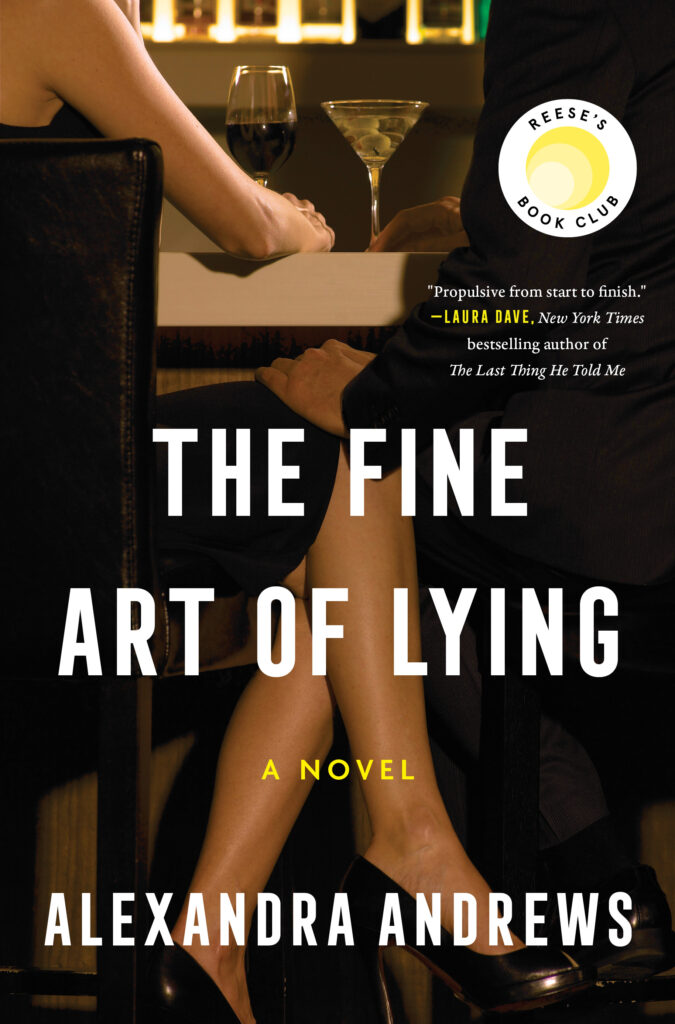
The Fine Art of Lying (2026)
Select Sections to Print
×Book Details
The Fine Art of Lying (2026)
Jump to Section
⚠️ Trigger Warnings
- Murder
- Gun violence
- Graphic blood and crime scene imagery
- Infidelity
- Blackmail and coercion
- Threatened loss of child custody
- Infant medical trauma / NICU hospitalization
- Death of a parent
- Grief
- Financial crime and money laundering
- Alcohol use
- Smoking
- Drug use
- Minor animal bite / injury
⏱️ 2-Minute Spoiler Summary
Clare Bast is an art history PhD candidate whose career has stalled since the birth of her three-year-old daughter, Sadie. She lives a privileged but increasingly suffocating life with her husband, Jed Bast, a lawyer who serves as general counsel for Gatepost, a midsized hedge fund, and feels particularly controlled by Jed’s wealthy, domineering mother, Dorothy. At a party hosted by Jed’s boss, Alec Wolfe, and Alec’s wife, Tasha, Clare meets French art dealer Gabriel Prévost. Gabriel has recently acquired Longfin, a rare and extremely valuable painting by Blake Webley, the artist Clare has spent years studying.
Gabriel invites Clare to see Longfin at his brownstone, and the two begin an affair. For Clare, Gabriel and the painting reconnect her with the part of herself that existed before marriage and motherhood. But after Jed’s sister spots them together, Dorothy figures out what is happening and threatens to use the affair—and her legal connections—to help Jed take Sadie away from Clare. Terrified, Clare and Gabriel end their relationship.
Two weeks later, a drunken Clare runs into Gabriel at his gallery’s anniversary party and goes home with him. While they are upstairs, someone enters the brownstone. Gabriel goes downstairs to investigate while Clare hides under the bed. She hears a struggle and sees an intruder wearing black Reebok sneakers enter the bedroom, remove Longfin from the wall, and leave. Downstairs, Clare finds Gabriel dying in a pool of blood. Afraid that revealing she was there will expose the affair and cost her custody of Sadie, she wipes away her fingerprints and flees without calling the police.
The NYPD soon discovers the affair and considers Clare a suspect. Then deleted messages from Gabriel telling Clare to leave her husband turn suspicion toward Jed. Clare begins investigating on her own and learns that Gabriel bought Longfin with an $18 million line of credit for a mysterious client. She also receives an unexplained $50,000 payment from Kallsten Holdings, a secretive Cyprus shell company.
Working with private art investigator Elise Vargas and her journalist friend Maggie, Clare uncovers connections among Gabriel, Gatepost, and another shell company called Axion. Then she makes an alarming discovery at the Bast family’s East Hampton house: Longfin is hidden in a crate.
Jed is arrested after police find his fingerprint at Gabriel’s home. He finally admits that Axion—the mysterious investor providing nearly three-quarters of Gatepost’s managed capital—is secretly owned by sanctioned Russian oligarch Viktor Semenov, who is also Tasha’s godfather. Jed discovered that his firm was effectively doing business with a sanctioned oligarch, but Tasha threatened him into silence. He insists that Longfin mysteriously arrived by courier two days before Gabriel’s murder. Clare initially thinks he must be lying because she personally saw the painting hanging in Gabriel’s bedroom on the night he died.
That contradiction turns out to be the key to everything: there were two Longfins.
Tasha had engineered the entire situation. She introduced Gabriel to Axion, encouraged the museum that owned Longfin to sell it, and arranged for Clare to work with Gabriel so Clare’s affair could eventually be used as leverage against Jed. After Gabriel discovered Viktor was behind Axion, Tasha devised an insurance scam: Longfin would be “stolen,” secretly transferred to Viktor, and Gabriel would collect $18 million in insurance money.
Gabriel agreed—but secretly hired artist Tony Fang to create a perfect forgery. He mailed the real Longfin to Jed for safekeeping and hung the fake in his bedroom for the staged robbery. Tasha’s bodyguard, Emil, arrived to steal it as planned. When Gabriel unexpectedly confronted him, Emil panicked and shot him, then unknowingly escaped with the forgery.
Clare hides the real Longfin in the bottom of Sadie’s rabbit Noodle’s cage, then turns Tasha’s scheme against her. She plants the genuine painting in the Wolfes’ Southampton garden shed and anonymously tells Elise where to find it. Police recover it there, and Emil’s black Reeboks match evidence from the murder scene. He takes a plea deal and reveals that Tasha ordered the staged theft.
Tasha is convicted of theft and manslaughter, while the charges against Jed are dropped. Jed is nevertheless disbarred for helping conceal Gatepost’s sanctions violations, and Clare divorces him.
One year later, Clare and Sadie are living in South Harlem, and Clare has transformed her expertise in art into a career working as an investigator for Elise. Gabriel’s estate has donated Longfin to the Metropolitan Museum of Art, where the painting that started everything is finally on permanent public display.
📖 Full Spoiler Summary
A Murder, Two Months in the Making
The Fine Art of Lying opens with Clare Bast naked in an apartment, staring down at the bloody body of a dying man. Her wedding ring is smeared with blood, and rather than processing what has happened, her art-historian brain fixates on the color of the pool spreading around her feet: Venetian red. She knows she should call 911, but doing so would expose where she has been—and potentially destroy her marriage and cost her daughter. Instead, she wipes away her fingerprints, gathers her belongings, and disappears into the night.
Two months earlier, Clare’s life looks considerably more ordinary. She is married to Jed Bast, general counsel for the hedge fund Gatepost, and they have a three-year-old daughter, Sadie. Clare was once pursuing a PhD in art history at Columbia and remains “all but dissertation,” but her academic ambitions stalled after Sadie’s difficult birth and NICU stay. Although she loves her daughter, she feels as though the person she used to be has gradually disappeared.
That feeling is especially strong around Jed’s wealthy family. His mother, Dorothy, is domineering and obsessed with appearances, while Clare still carries the insecurity of having grown up poor in Binghamton with her single mother, Nessa. Jed’s family can provide money, connections, and security, but Clare never completely feels that she belongs among them.
At an anniversary party hosted by Jed’s boss, Alec Wolfe, and Alec’s Swiss-Russian wife, Tasha, Clare meets French art dealer Gabriel Prévost. Tasha has deliberately introduced them, supposedly because Gabriel could use Clare’s expertise. What immediately catches Clare’s attention is Gabriel’s connection to Blake Webley, the Abstract Expressionist painter who is the subject of her unfinished dissertation.
Gabriel has recently acquired one of Webley’s rare paintings: Longfin.
Clare and Gabriel Begin an Affair
Gabriel explains that the Museum of Contemporary Art recently deaccessioned Longfin and sold it to him. He supposedly has an anonymous buyer but is keeping the painting at his West 20th Street brownstone until January for tax reasons. When Clare visits his home to see it, the experience awakens something she thought she had lost. Gabriel is interested in her knowledge and treats her as an art historian rather than simply Jed’s wife or Sadie’s mother.
The attraction between them quickly becomes physical, and they begin an affair in front of Longfin.
Clare is consumed by guilt because she did love Jed when they married, but she continues seeing Gabriel several mornings a week. Their relationship gives her an escape from the version of herself she has become. Eventually, however, the secret begins leaking into her real life.
While Clare and Gabriel are walking along the High Line, they encounter Jed’s sister Lauren. Clare hastily claims she has started doing consulting work for Gabriel, and Jed believes the story. Around the same time, he mentions problems at Gatepost: nearly three-quarters of the fund’s managed capital belongs to a single mysterious investor, leaving the firm dangerously dependent on that client.
Clare’s affair becomes even riskier when she loses track of time with Gabriel and is late collecting Sadie from school. Dorothy picks Sadie up instead. At Dorothy’s seventy-fourth birthday dinner, she corners Clare and reveals that Lauren told her about Gabriel. Dorothy has even consulted a family-court judge about adultery and custody.
The message is unmistakable: if Clare does not end the affair, Dorothy will use the Bast family’s money and influence to help Jed take Sadie away from her.
Clare immediately chooses her daughter. She goes to Gabriel intending to end things, only to discover that he has reached the same conclusion. Their relationship has become too dangerous.
Gabriel Is Murdered and Longfin Disappears
Two weeks later, Clare goes drinking with her graduate-school friends Cassandra and Lev. They discover that Gabriel’s gallery, Prévost-Kline, is holding its twentieth-anniversary opening nearby, and an intoxicated Clare agrees to go.
The moment Gabriel sees her, their resolve collapses. They leave the party together and return to his brownstone, where Longfin is now hanging in his bedroom.
While they are upstairs, they hear heavy noises below. Gabriel grabs a bronze Jean Arp sculpture and goes downstairs to investigate. Clare hears a struggle followed by a thud. Terrified, she crawls beneath the bed.
Someone enters the bedroom.
From her hiding place, Clare can see little beyond the intruder’s plain black Reebok sneakers. The person removes Longfin from the wall and leaves. Once the house becomes quiet, Clare emerges and discovers Gabriel at the bottom of the stairs, mortally wounded in a pool of blood.
This is the scene from the novel’s prologue.
Clare panics. Calling the police means admitting she was sleeping with Gabriel, and Dorothy’s custody threat immediately comes back to her. Instead, she wipes away her fingerprints, dresses, and leaves Gabriel without calling for help.
Two days later, Jed casually shows her the news on his phone: Gabriel Prévost has been murdered.
Clare Becomes a Suspect
Detectives Pam Breznick and Greg Nguyen soon arrive at the Bast apartment. Jed, acting as both husband and lawyer, blocks their questions, but the detectives eventually approach Clare alone and reveal that they already know about the affair.
Clare admits she was involved with Gabriel but lies about the murder night, claiming she went straight home. The police tell her there was no forced entry and that whoever entered Gabriel’s brownstone used the correct keypad code. Nothing obvious appears to have been stolen.
Clare knows differently. Longfin is missing.
She begins investigating without telling the police what she witnessed. Gabriel’s business partner, Michael Kline, reveals that Longfin was not actually a gallery purchase. Gabriel acquired it through his private consulting business, making the identity of its intended buyer even harder to trace.
Then private art investigator Elise Vargas approaches Clare. Someone has hired Elise to locate Longfin, and she knows enough about the case to warn Clare that the NYPD considers her its leading suspect.
Things become stranger when $50,000 suddenly appears in Clare’s bank account from Kallsten Holdings Ltd., a Cyprus shell company. Clare’s journalist friend Maggie discovers that Kallsten is represented by nominee director Peter DeGroot, making its true owner nearly impossible to identify.
The police investigation then shifts dramatically. Detectives recover deleted texts in which Gabriel urged Clare to leave Jed, giving Jed an obvious motive for murder. Desperate to stop the police from building a case against her husband, Clare finally reveals that Longfin was stolen and gives them Elise’s information.
Clare also tells Elise the truth: she was hiding under Gabriel’s bed when he was murdered and watched the killer take the painting.
Clare Finds Longfin in Jed’s House
Elise discovers that Gabriel borrowed $18 million to purchase Longfin but left no record identifying his buyer. Gabriel’s assistant also remembers Peter DeGroot being associated with another Cyprus entity called Axion.
Then Clare notices disturbing clues pointing toward Jed. He casually uses the same incorrect John Ashbery quotation Gabriel once used and mentions having recently gone to East Hampton. When Clare secretly searches Jed’s phone, she discovers 133 files referencing Axion, including communications involving Peter DeGroot and Alec Wolfe.
She drives to the Bast family’s East Hampton house and searches it.
Hidden in a hallway closet is a wooden crate.
Inside is Longfin.
Clare takes the painting back to Manhattan and hides it in her friend Mina Gellman’s apartment. When she returns home, she finds the police arresting Jed for first-degree manslaughter. His fingerprint has been discovered inside Gabriel’s brownstone.
Jed Reveals Gatepost’s Secret
Jed finally tells Clare what he has been hiding.
Gatepost’s mysterious primary investor, Axion, is secretly owned by Viktor Semenov, a sanctioned Russian oligarch—and Tasha Wolfe’s godfather. Jed discovered the connection and confronted Alec. Tasha responded by making it clear that she knew about Clare’s relationship with Gabriel and Longfin. Fearing what she could do to Clare and their family, Jed kept quiet about Gatepost’s sanctions violations.
But he insists he did not kill Gabriel.
According to Jed, a courier unexpectedly delivered Longfin to their apartment building on November 4. Panicking because of everything surrounding Axion, he hid the crate in East Hampton.
There is an enormous problem with his story.
Clare saw Longfin hanging on Gabriel’s bedroom wall on November 6, two days after Jed claims the same painting arrived at his building.
For a while, Clare believes this proves her husband is lying. Then she discovers that the courier really did deliver a crate to Jed on November 4.
There can only be one explanation.
There are two versions of Longfin.
Tasha’s Scheme and Gabriel’s Double-Cross
Clare and Maggie gradually uncover how thoroughly Tasha Wolfe manipulated everyone involved. Tasha introduced Gabriel to Peter DeGroot and Axion. She encouraged MoCA curator Clement Rosier to consider deaccessioning Longfin. Most disturbingly, she was also the person who suggested Gabriel hire Clare.
Clare’s affair was not an accidental complication. Tasha helped create it because it gave her leverage over Jed.
After Gabriel discovered that Axion belonged to sanctioned oligarch Viktor Semenov, Tasha proposed a solution that would satisfy Viktor while concealing the illegal transaction. Gabriel would stage the theft of Longfin, secretly allow the painting to reach Viktor, and collect $18 million from his insurer.
Gabriel agreed—but planned his own double-cross.
He hired artist Tony Fang to create an extraordinarily convincing forgery of Longfin. Tony’s studio contains practice versions of the painting, confirming Clare’s theory. Gabriel then mailed the real painting to Jed on November 4, apparently using it as both safekeeping and insurance against Tasha.
The Longfin Clare saw hanging in Gabriel’s bedroom on November 6 was the fake.
That night, Tasha’s bodyguard Emil entered the brownstone to perform the staged robbery. He was supposed to take the painting, not kill Gabriel. But Gabriel unexpectedly came downstairs carrying the bronze sculpture. Emil panicked and shot him, then took the painting as instructed without realizing he was stealing a forgery.
The real Longfin has been in Clare’s possession all along.
Clare Turns the Scheme Against Tasha
Knowing the genuine painting could still implicate Jed—and herself—Clare hides it in an almost absurdly ordinary place. She removes the canvas from its stretcher, rolls it up, and uses it to line the bottom of Sadie’s rabbit Noodle’s cage before leaving the rabbit with a sitter.
She then confronts Tasha and spots Emil wearing the same kind of black Reebok sneakers she saw from beneath Gabriel’s bed. Clare tells Tasha something she does not yet know: Emil stole a fake.
Now Clare uses the genuine Longfin to create evidence against the woman who manipulated all of them.
She retrieves the painting, drives to the Wolfes’ Southampton property, and secretly plants it inside their unlocked garden shed. Then she anonymously tips off Elise.
Police obtain a search warrant and recover Longfin on the Wolfes’ property. Emil’s sneaker tread further connects him to Gabriel’s murder. Faced with the evidence, he accepts a plea deal and admits that Tasha sent him to Gabriel’s house to stage the theft and that he shot Gabriel when their planned robbery went wrong.
Tasha Wolfe is convicted of theft and manslaughter and faces as much as twenty-five years in prison.
The charges against Jed are dropped, but his own choices still have consequences. His participation in concealing Gatepost’s sanctions violations costs him his legal career, and he is disbarred. Clare also accepts that their marriage cannot be repaired. She divorces him.
One Year Later
A year later, Clare and Sadie are living together in South Harlem. Clare has finally turned the expertise she once feared she had wasted into a career, working professionally as an art investigator for Elise Vargas.
Gabriel’s estate has officially donated the genuine Longfin to the Metropolitan Museum of Art. After being bought, hidden, forged, stolen, mailed across New York, concealed in a rabbit cage, and planted as evidence in a garden shed, the real painting is finally placed on permanent public display.
Clare, meanwhile, has built a life outside the Bast family and the marriage that once defined her. She is supporting herself through the art world she nearly abandoned and raising Sadie on her own terms.
🔚 Ending Explained
How the Book Ends
The ending reveals that Gabriel Prévost’s murder, the theft of Longfin, and Gatepost’s sanctions scandal are all pieces of the same elaborate scheme.
Clare discovers that Gatepost had been conducting illegal business connected to sanctioned Russian oligarch Viktor Semenov. After Jed confronted Gabriel about the fraud, Gabriel realized how dangerous his situation had become. Tasha Wolfe devised a solution: stage the theft of Blake Webley’s Longfin from Gabriel’s home, secretly deliver the painting to Viktor, and allow Gabriel to collect the $18 million insurance payout.
But Gabriel secretly double-crossed them. He hired painter Tony Fang to create an extraordinarily convincing copy of Longfin. Gabriel displayed the forgery in his bedroom for the planned burglary while mailing the real painting to Jed’s building for safekeeping.
On November 6, Tasha sends her bodyguard, Emil, to Gabriel’s house to carry out the staged robbery. Gabriel unexpectedly confronts him with a bronze Jean Arp sculpture. Emil panics and shoots Gabriel, then escapes with what he believes is the real Longfin. In reality, he has stolen Tony’s forgery.
Once Clare pieces everything together, she realizes that possessing the genuine painting leaves both her and Jed dangerously exposed. She removes Longfin from its stretcher, wraps the canvas in Saran wrap, and hides it beneath the bedding in her daughter Sadie’s rabbit Noodle’s cage.
Clare then turns Tasha’s own scheme against her. After confronting Tasha and recognizing Emil’s black Reebok sneakers as matching those worn by Gabriel’s intruder, Clare deliberately lets Tasha know that the stolen painting was fake. On Thanksgiving, Clare retrieves the genuine Longfin, secretly drives to the Wolfes’ Southampton estate, and hides it inside their garden shed.
She anonymously alerts private art investigator Elise Vargas.
Police subsequently recover Longfin from the Wolfes’ property and match Emil’s sneaker tread to the footprint at Gabriel’s crime scene. Emil takes a plea deal and admits that Tasha sent him to stage the burglary and that he shot Gabriel when the situation went wrong. Tasha is arrested and ultimately convicted of theft and manslaughter, facing up to twenty-five years in prison.
The manslaughter charges against Jed are dropped, but his own actions still have consequences. His involvement in concealing Gatepost’s sanctions violations leads to his disbarment.
Clare also refuses to restore their marriage. When Jed offers to forgive her and start over, she tells him she wants a divorce instead. She finally confronts Dorothy Bast as well, rejecting Dorothy’s attempts to control her and making it clear that she will not allow Sadie to grow up molded into another version of her grandmother.
One Year Later
Clare and four-year-old Sadie are living in a two-bedroom apartment on 110th Street in South Harlem overlooking Central Park. Clare has formally abandoned her Columbia PhD program—and feels no regret about it.
Instead, she has turned the skills that helped her solve Gabriel’s murder into a career. She now works as a professional art investigator for Elise Vargas.
Jed, meanwhile, has moved back into his parents’ Fifth Avenue home. He remains unemployed after his disbarment but shares joint custody of Sadie.
The real Longfin ultimately ends up exactly where Clare believes great art belongs. Gabriel’s ex-wife and heir, Beatriz Barros, donates it to the Metropolitan Museum of Art, where it goes on permanent display.
And Clare isn’t finished. She continues building investigative dossiers on Tasha, Alec Wolfe, and Viktor Semenov, determined to make sure the powerful people behind the larger corruption cannot simply walk away.
What the Ending Means
At its heart, the ending is about Clare learning to distinguish between a life that looks right and one that actually belongs to her.
That idea is embodied perfectly by the two versions of Longfin. For much of the novel, there is a real painting and an almost indistinguishable fake—and that becomes a metaphor for Clare herself. Her Upper East Side existence has all the outward signs of success: an affluent husband, a child, social status, an impressive academic background, and financial security. Yet increasingly, that life feels like a forgery.
The genuine Longfin is treated very differently. Clare literally removes it from its frame. She rolls it up, wraps it in plastic, hides it underneath rabbit bedding, and ultimately drags it through an absurdly messy criminal scheme. Yet underneath all of that dirt and indignity, it remains authentic.
That mirrors Clare’s transformation. She loses the polished frame surrounding her life—her marriage, Park Avenue privilege, academic ambitions, and acceptance by the Bast family—but emerges more fully herself.
Even Noodle’s rabbit cage participates in that reversal. The rabbit begins as another domestic obligation Jed has imposed on Clare. By hiding Longfin inside the cage, Clare transforms a symbol of her constrained domestic existence into the tool that allows her to take control of the situation. She stops merely managing the life other people have constructed for her and begins using its pieces for her own purposes.
Her move to South Harlem therefore matters beyond geography. Clare deliberately leaves the insulated world represented by Dorothy and Fifth Avenue. Her new apartment may represent less wealth and status, but it represents considerably more freedom.
The ending also complicates the novel’s obsession with lying. Clare unquestionably becomes an accomplished liar herself: she hides evidence, manipulates Tasha, plants the painting, and engineers the circumstances that lead police toward the truth. But the novel draws a distinction between lies designed to dominate other people and lies used to escape domination. Tasha lies to manipulate; Dorothy uses social expectations and threats to control; Clare eventually learns to use deception strategically to break out of the trap they have constructed around her.
That doesn’t necessarily make Clare morally innocent. It makes her morally complicated—and capable.
Jed provides the contrasting character arc. He spends the novel choosing safety, approval, and avoidance. Even when he recognizes wrongdoing, he lacks Clare’s willingness to rupture the system surrounding him. His ending is therefore pointedly circular: after losing his career and marriage, he returns to his parents’ home. Clare moves outward; Jed retreats backward.
Tasha suffers from the opposite flaw. She believes everyone can be controlled because everyone has something they want badly enough. Her mistake is underestimating two people. Gabriel quietly sabotages her plan by commissioning the fake Longfin, and Clare ultimately becomes better at manipulation than Tasha anticipated.
The final tone is therefore quietly triumphant rather than conventionally happy. Clare hasn’t restored her marriage, recovered her old life, or escaped every consequence. Instead, she has stopped wanting those things.
Most importantly, motherhood no longer requires Clare to disappear. Her confrontation with Dorothy makes that explicit: protecting Sadie doesn’t mean preserving the Bast family’s version of stability. It means showing Sadie that a woman can have boundaries, ambitions, flaws, desires, and an identity beyond being someone’s wife or mother.
That gives the closing idea—“Fate was what happened to the ill prepared”—its significance. At the beginning, Clare experiences her life largely as something happening to her. By the end, she’s investigating, documenting, anticipating, and acting.
She hasn’t learned how to control fate.
She’s learned how to stop waiting for it.
👤 Characters & Fates
🔶 Main Characters

She hides the real Longfin and plants it on Tasha’s property, helping frame Tasha and Emil. She divorces Jed, moves to South Harlem with Sadie, abandons her PhD, and becomes a professional art investigator for Elise Vargas.

He is arrested for manslaughter after his fingerprints are found at Gabriel’s home, but the charge is dropped when Emil confesses. Jed is disbarred for covering up Gatepost’s sanctions fraud, divorces Clare, moves back in with his parents, and shares custody of Sadie.

Emil shoots and kills him during Tasha’s staged robbery. Gabriel’s estate eventually donates the recovered real Longfin to the Metropolitan Museum of Art.

Clare plants the real Longfin in Tasha’s Southampton shed, and Emil takes a plea deal and testifies against her. Tasha is convicted of theft and manslaughter and faces up to 25 years in prison.
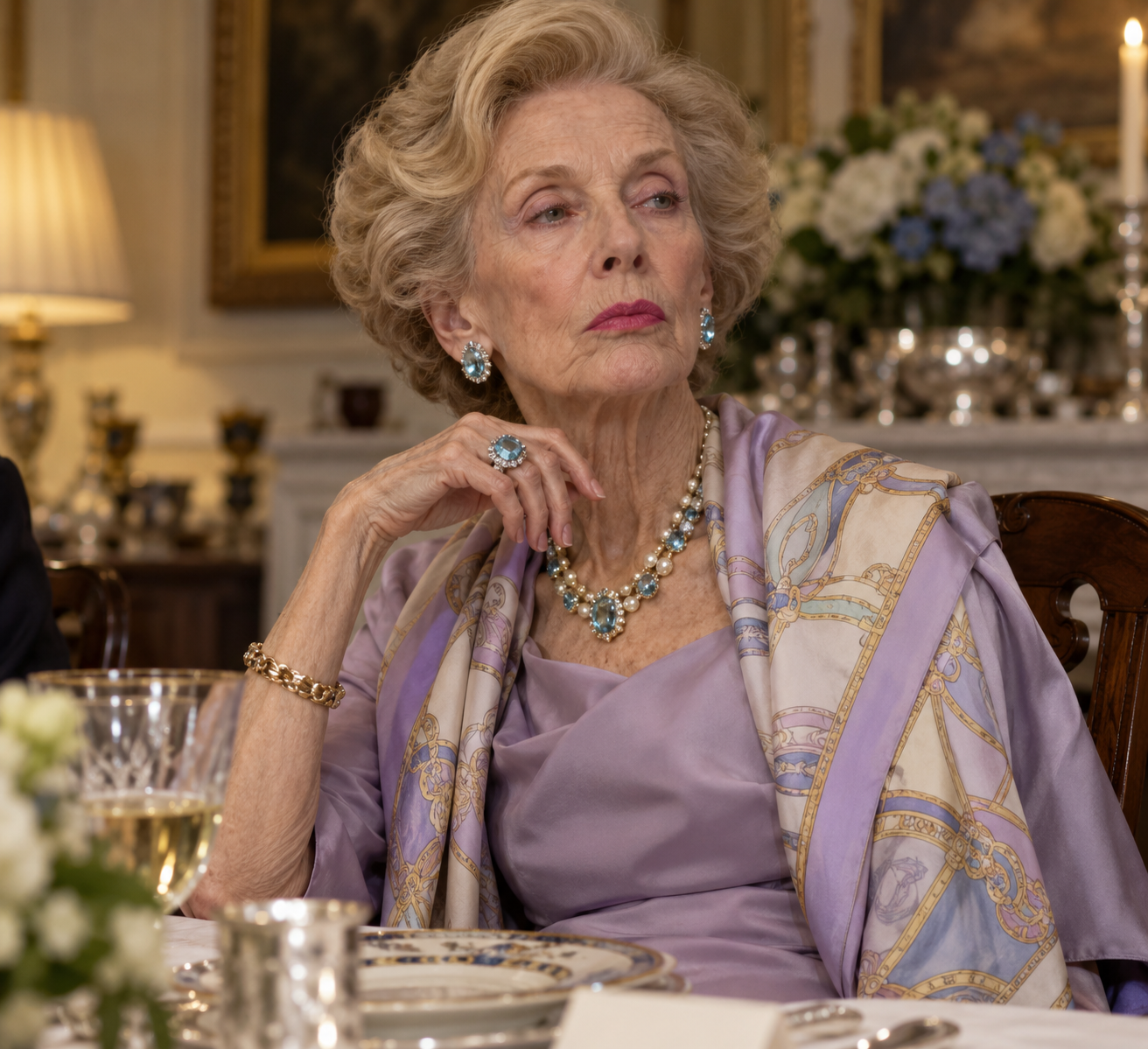
She takes Jed back into her home after his disbarment and divorce, but Clare finally stands up to her and refuses to allow Dorothy to manipulate her or Sadie again.

Clare anonymously tips her to the painting’s location on Tasha’s property, allowing Elise to solve the case. Elise later hires Clare as a professional art investigator.
🔷 Supporting Characters

She adjusts well to her parents’ divorce, lives primarily with Clare in South Harlem, and continues spending time with Jed and her grandparents.
He avoids murder charges, but Gatepost collapses after its sanctions violations are exposed and Tasha is prosecuted.
Police connect his Reebok sneaker tread to the crime scene. He accepts a plea deal, confesses to killing Gabriel in a panic, and testifies against Tasha.
He realizes Tasha used him, cooperates with police, and retains his position at MoCA.
Clare tells him that Tasha sent him a forgery rather than the genuine painting. He remains beyond U.S. reach in Russia while Clare begins building an investigative dossier on him.
He carries out Gabriel’s wishes by donating the recovered real Longfin to the Metropolitan Museum of Art.
Clare confronts him in his Bushwick studio, where he admits making the fake and reveals Gabriel promised it would never be sold as an original.
She returns to Denver when her boyfriend Dave’s mother’s cancer relapses but remains Clare’s closest confidante.
The discovery of Longfin on Tasha’s property shifts the case, and Breznick ultimately secures Emil’s confession.
He participates in Jed’s arrest and later in the investigation that brings down Emil.
She continues her privileged life with Grant while renovating their $6 million East Hampton home.
He remains married to Lauren and continues their affluent East Hampton lifestyle.
He continues living with Dorothy on the Upper East Side and allows Jed to move back home after his disbarment and divorce.
He remains in Cyprus and outside the reach of the NYPD investigation.
She gives birth to her second child, a boy, and remains Clare’s friend.
They continue their academic and art-world careers in New York.
She died unexpectedly of a heart attack at work when Sadie was six months old.
🕳️ Potential Plot Holes
Clare spends hours in Gabriel’s bedroom over multiple visits and is naked there on the night of his murder. Although she wipes down a few obvious surfaces before fleeing, she could not realistically remove all traces of herself. Hair, skin cells, fibers, or DNA would likely remain on bedding and other surfaces. This becomes especially conspicuous because police find Jed’s fingerprint from an earlier visit but apparently recover nothing connecting Clare to the house.
Kallsten Holdings wires $50,000 directly into Clare’s private bank account as part of the attempt to frame her, but the novel never explains how Tasha or her associates obtained the necessary account and routing numbers. Clare rarely uses the account, has not received deposits there since leaving Columbia years earlier, and handles household finances through a separate joint account with Jed. The framing scheme therefore depends on access to information Tasha is never shown acquiring.
Gabriel keeps extraordinarily valuable artwork in a Manhattan townhouse, yet there appears to be no useful camera or security footage showing Emil entering or leaving on the murder night. Later, Clare manages to infiltrate the Wolfes’ Southampton property, access a shed with a simple four-digit code, and plant Longfin without being captured by cameras or triggering alarms. None of this is impossible, but the lack of meaningful security at multiple ultra-wealthy properties is conspicuously convenient for the plot.
The police recover deleted messages from Gabriel’s phone, showing that they are willing to examine digital evidence, yet Clare’s location data never seems to become a serious part of the investigation. If her phone accompanied her to Gabriel’s house, cell-site or other available location records could potentially contradict her claim that she went home after the gallery opening. This is not necessarily a true plot hole—cell-site data is not precise enough to prove someone was inside a particular townhouse, and obtaining more detailed records can require additional legal process—but given that Clare becomes a murder suspect, the apparent lack of investigation into her phone’s location is still a noticeable omission.
📚 Book Club Q&A's
⭐ Final Rating & Thoughts
I had a blast with The Fine Art of Lying. Alexandra Andrews’ writing is sharp and engaging, the pacing is relentless, and the Manhattan art-world setting gives the story a glamorous, slightly seedy edge that I loved. The behind-the-scenes look at galleries, collectors, obscene wealth, and the questionable ways art and money intersect was easily one of my favorite parts.
Where it lost me a little was just how over-the-top everything became. There are so many lies, schemes, betrayals, and increasingly elaborate twists that eventually I stopped being shocked that someone was lying and started assuming everyone was. The larger conspiracy also requires some serious suspension of disbelief, and Clare’s transformation from overwhelmed, panicked housewife to remarkably capable schemer happens a little too quickly to feel completely convincing.
Still, none of that stopped me from having fun. This is messy, twisty, wealthy-people-behaving-badly entertainment with great momentum. It may not be subtle or entirely believable, but it certainly isn’t boring—and sometimes that’s exactly what I want from a thriller.
✨ Adaptation description
Adaptation
The Fine Art of Lying by Alexandra Andrews is being developed as a television drama series by UCP (Universal Content Productions), a division of Universal Studio Group, with Scarlett Johansson’s These Pictures producing. Alexandra Andrews is attached as an executive producer, keeping the novel’s author directly involved in the project.
The adaptation was announced in June 2026, shortly after the novel’s May 2026 publication. As of October 2026, the project is currently in development, so no network or streaming platform, cast, director, episode count, production start date, or release date has been announced.
The novel follows Clare Bast, a Manhattan mother and former art-history scholar whose affair with charismatic French art dealer Gabriel Prévost pulls her into a murder investigation and an increasingly complicated web of stolen art, forgery, financial crime, and deception.
✨ Books Like The Fine Art of Lying (2026)
See an error on this page?