

The Great Alone (2018)
Select Sections to Print
×Book Details
The Great Alone (2018)
Jump to Section
⚠️ Trigger Warnings
- Domestic violence
- Child abuse
- Physical abuse
- PTSD & war trauma
- Toxic & codependent relationships
- Graphic violence & injury
- Murder
- Body disposal
- Kidnapping
- Animal cruelty & animal death
- Hunting & butchering
- Cancer & terminal illness
- Death of a parent
- Pregnancy & childbirth
- Traumatic brain injury & coma
⏱️ 2-Minute Spoiler Summary
In 1974, Vietnam POW Ernt Allbright moves his wife Cora and thirteen-year-old daughter Leni to a remote Alaska homestead, convinced that wilderness life will cure his problems. Instead, the isolation worsens his untreated PTSD, paranoia, and violence. Leni befriends Matthew Walker, but after Matthew’s mother dies in an accident, he leaves Kaneq. As Ernt becomes increasingly abusive toward Cora, their neighbors Large Marge and Tom Walker try to protect the women.
Years later, Leni and Matthew reunite and fall in love despite the growing hatred between their fathers. When Leni becomes pregnant, Ernt discovers the relationship and brutally attacks her. Cora finally fights back, shooting and killing Ernt to save their daughter. Large Marge helps them hide his body, but during their escape Matthew falls into a crevice and suffers severe brain damage. Leni is forced to leave Alaska without him.
Leni and Cora hide in Seattle under false identities, where Leni gives birth to MJ, Matthew’s son, and builds a new life. When Cora develops terminal cancer, she writes a confession taking responsibility for Ernt’s death so Leni can stop living as a fugitive. After Cora dies, Leni returns to Alaska with MJ. The charges against her are eventually dropped, and she reunites with Matthew, who survived his injuries but remains permanently affected by them. Leni, Matthew, and MJ ultimately return to the homestead and begin building a life together.
📖 Full Spoiler Summary
The Allbrights Start Over in Alaska
In 1974, thirteen-year-old Leni Allbright has already grown accustomed to her family constantly starting over. Her father, Ernt Allbright, returned from Vietnam after years as a prisoner of war profoundly changed him. He suffers from nightmares, paranoia, violent mood swings, and an inability to hold down a job. Her mother, Cora, remains fiercely devoted to him despite the instability, always believing that the loving man she married is still somewhere inside him.
Their latest chance at reinvention arrives in a letter from Earl “Mad Earl” Harlan, the father of Ernt’s late Army friend Bo Harlan. Bo has left Ernt forty acres and a cabin in the tiny community of Kaneq, Alaska. Ernt immediately becomes convinced that Alaska is the answer to everything. Far away from civilization, he believes they can live off the land, escape the pressures that have made him miserable, and finally become the family they were meant to be.
Leni is skeptical, but Cora once again chooses hope. The family loads their belongings into an old VW bus and heads north.
Kaneq is far more primitive than they imagined. At the general store, they meet Marge Birdsall, better known as Large Marge, a former lawyer who abandoned city life for Alaska. She warns them that Alaska is unforgiving and that anyone who isn’t prepared can die quickly. Their new home proves her point: the Harlan property contains a filthy, dilapidated one-room cabin without electricity or running water.
Fortunately, Kaneq is a community where survival depends on neighbors helping one another. The locals arrive to teach the Allbrights how to garden, hunt, preserve food, chop wood, and prepare for winter. Among them are Tom Walker, whose family helped establish Kaneq, his wife Geneva “Genny” Walker, and their son Matthew.
For the first time in years, Leni begins to feel that she might actually belong somewhere.
Leni and Matthew Find Each Other
Because there are so few children in Kaneq, Leni and Matthew quickly become close. Matthew is funny, kind, and easy to talk to, giving Leni a friendship she has rarely had during her family’s constant moves. Their parents also become friendly, and Genny helps teach the Allbrights the practical skills they desperately need.
For a while, Alaska appears to be working its magic on Ernt too. During the endless summer days, he is energetic and optimistic. But as winter approaches and daylight disappears, his darker tendencies intensify.
He becomes increasingly influenced by Mad Earl, a paranoid survivalist who believes society is headed toward collapse. Ernt begins training obsessively for disaster, stockpiling weapons and treating outsiders as threats. His nightmares worsen, he drinks more heavily, and the isolation that he thought would heal him instead magnifies his anger.
The Walkers then suffer a devastating tragedy when Genny falls through thin ice and dies. Matthew witnesses his mother’s death and is overwhelmed by grief. Unable to recover emotionally in Kaneq, he eventually leaves to live with relatives in Fairbanks.
Leni loses the one person her age who truly understands her just as life inside her own home becomes increasingly dangerous.
Ernt Turns on Cora
As Ernt deteriorates, Cora becomes the target of his rage. Leni begins witnessing the horrifying cycle that has defined her parents’ marriage: Ernt explodes and beats Cora, then breaks down afterward, apologizing and promising that it will never happen again. Cora repeatedly forgives him because she still loves him and believes his cruelty comes from what happened to him in Vietnam.
Leni gradually understands that her mother’s love cannot save him.
After one especially violent episode, Ernt attacks Cora and the situation ends with her badly injured, including a broken arm and nose. Large Marge and Tom Walker realize how serious the abuse has become. They arrange for Ernt to take lucrative work on the North Slope pipeline during the winter, both to bring money into the household and, more importantly, to get him away from Cora and Leni. Large Marge stays close to the women while he is gone.
Without Ernt there, their home becomes peaceful. Cora and Leni get a glimpse of what their lives could be without constantly monitoring his moods.
But Ernt eventually returns, and so does the fear.
Leni and Matthew Fall in Love
By 1978, Leni is seventeen and has grown into a capable Alaskan who feels more at home in the wilderness than anywhere else. Matthew has also returned, and their childhood friendship develops into love.
Their relationship gives Leni something she has never really had: the possibility of a future separate from her parents’ destructive marriage. But being together becomes increasingly dangerous because the relationship between Ernt and Tom Walker has collapsed.
Tom wants Kaneq to grow and believes carefully managed tourism and development could improve life for the community. Ernt sees those plans as an attack on everything Alaska represents. His resentment is also intensely personal. He is jealous of Tom’s wealth, confidence, and friendship with Cora, and he becomes convinced that Tom wants to take both his land and his wife.
Ernt’s paranoia reaches frightening new heights. He builds a huge log wall around the Allbright property and tops it with razor wire, supposedly to protect his family. In reality, it becomes a prison designed to isolate Cora and Leni from everyone who might help them.
Leni and Matthew continue seeing each other secretly. They dream about escaping the cycle that has trapped her family, but their relationship has consequences neither of them is prepared for.
Leni becomes pregnant.
Cora Kills Ernt
Knowing exactly what her father will do if he discovers the pregnancy, Leni realizes she and Cora have to leave. Matthew becomes part of their escape plan.
Before they can get away safely, however, Ernt discovers that Leni is pregnant with Matthew’s child.
His reaction is terrifying. Enraged by the idea that Tom Walker’s son has impregnated his daughter, Ernt turns his violence on Leni. He attacks her with a belt, beating her viciously while Cora watches.
For years, Cora has endured his abuse herself. Watching him attack their daughter finally destroys whatever hope she had left that he could change.
She gets a gun and shoots Ernt in the back, killing him.
The women now face another terrifying problem. They know Ernt abused them, but they fear Cora will still be prosecuted for killing him, particularly because he was shot from behind. Large Marge agrees to help them cover up the death. Ernt’s body is weighted down and sunk beneath the ice of a lake, making it appear that he simply disappeared.
But the attempt to escape produces another tragedy.
Matthew, who has come to help Leni, suffers a catastrophic fall into a crevice. He survives, but his injuries are devastating. He is left with severe brain damage and falls into a coma.
Leni is pregnant, her father is dead, Matthew may never wake up, and remaining in Alaska could expose both her and her mother.
So she leaves him behind.
Leni and Cora Disappear
Leni and Cora flee Alaska and go to Cora’s estranged parents, Cecil and Golliher, in Seattle. They assume new identities, with Leni living as Susan Grant, because Ernt’s disappearance has made them fugitives.
Leni gives birth to Matthew’s son, Matthew Junior, known as MJ.
Motherhood gives her a reason to keep moving forward, but she never stops loving Matthew or Alaska. She builds a new life in Seattle, attends the University of Washington, and pursues photography, carrying with her both the beauty of Alaska and the trauma of everything that happened there.
Years pass while Cora continues protecting the secret that allowed them to escape.
Then, in 1986, Cora is diagnosed with terminal lung cancer.
Facing death, she realizes that Leni cannot spend the rest of her life hiding because of a crime Cora committed. Before she dies, she writes a full confession explaining that she killed Ernt and that Leni was not responsible. Her final act gives her daughter the chance to stop running.
After Cora’s death, Leni decides it is finally time to go home.
Leni Returns to Alaska
Leni takes MJ back to Alaska knowing she may be arrested as soon as she arrives. She brings Cora’s confession and faces Chief Curt Ward, who investigated the Allbrights’ disappearance years earlier.
She is initially taken into custody, but the circumstances surrounding Ernt’s death are now understood far differently than they once were. Tom Walker, who has become politically influential, intervenes and reaches out to the governor. Ultimately, the charges against Leni are dropped.
For the first time since she fled, she is free.
More importantly, she finally learns what became of Matthew.
He survived.
His recovery has been long and incomplete. The brain injury permanently changed him, leaving him with difficulties speaking and communicating, but he has regained enough mobility to walk and has learned to express himself through painting.
When Leni sees him again, she introduces him to the son he never knew he had.
Leni, Matthew, and MJ Come Home
The reunion does not magically restore the years they lost, and Matthew is not the same young man Leni remembers. Still, the love between them remains, and Leni no longer wants fear to dictate where she belongs.
She chooses Alaska.
Together, Leni, Matthew, and MJ begin rebuilding their lives on the Allbright homestead. The place that once became Ernt’s fortress can finally become the home Leni had wanted it to be.
After years of violence, hiding, grief, and separation, Leni is able to remain in the landscape she loves without living under her father’s control. She and Matthew have lost years they can never recover, but they are given the chance to raise their son together and create the family and home that neither of them thought they would have.
🔚 Ending Explained
How The Great Alone Ends
The ending of The Great Alone brings Leni back to Alaska, but this time she returns on her own terms. The place that once represented fear, isolation, and her father’s violence becomes the place where she can finally reclaim her life.
After Cora dies of lung cancer in 1986, she leaves Leni a confession letter taking responsibility for Ernt’s death, along with two one-way tickets to Alaska. Her final request is simple but enormous: she wants Leni to go home and “take your name and your life back.”
Leni returns to Alaska with her young son, MJ, and goes directly to the police in Homer. Cora’s letter gives her an opportunity to place all the blame on her mother, but Leni refuses. Instead, she tells the truth: Cora shot Ernt after he attacked Leni, and Leni helped her mother dispose of his body and conceal the killing.
Leni is arrested, but the people of Alaska once again rally around her. Tom Walker uses his connections with the governor to explain the circumstances surrounding Ernt’s death and the years of abuse Leni and Cora endured. The charges against Leni are ultimately dropped.
More importantly, returning to Alaska means returning to Matthew.
Matthew survived the fall that nearly killed him, but the accident permanently changed him. He lives with physical and cognitive limitations and initially believes Leni would be better off without him. When he learns that MJ is his son, he is frightened by the idea of becoming a father because he no longer sees himself as the boy Leni once loved.
Leni refuses to see him that way. Matthew’s survival does not make him damaged or lesser; surviving itself required extraordinary courage. Their reunion gives both of them the chance to build the life that violence and tragedy interrupted years earlier.
The people of Kaneq then gather on the water to scatter Cora’s ashes, bringing her home to the place she loved despite everything that happened there. It is a fitting farewell to a woman whose life was defined by contradictions: Cora was deeply trapped by Ernt, but she was also capable of extraordinary courage when saving her daughter finally mattered more than saving her marriage.
The novel eventually jumps forward to 2009. Leni has become a successful photographer and built a life with Matthew on the Walker homestead. Together they have three children: MJ, Kenai, and Cora.
After everything Leni endured, she stays in Alaska.
But now, staying is a choice.
What the Ending Means
The most important transformation in the ending is the meaning of Alaska itself.
For Ernt, the wilderness represented isolation. He wanted to disappear beyond the reach of society, surround his family with walls, and create a world in which nobody could interfere with his authority. His idea of freedom depended upon cutting himself—and eventually Cora and Leni—off from everyone else.
Leni ultimately discovers the opposite truth. Survival does not come from isolation. It comes from connection.
By the time she returns, Kaneq is changing. There is electricity, tourism, and the Walker lodge. The progress Ernt would have regarded as corruption instead becomes evidence that Alaska can evolve without losing what makes it extraordinary. Leni can belong to the wilderness without allowing it to imprison her.
That transformation is captured beautifully by Ernt’s wall. He built the log wall topped with razor wire as protection against imaginary enemies, but it became a physical manifestation of his paranoia and possessiveness. When Leni returns, she discovers that the neighbors have hacked the wall apart. Ernt’s fortress has literally been dismantled by the community he tried to keep outside.
His power is gone.
Leni Chooses Truth
Leni’s confession to the police is also crucial because she finally stops living according to decisions made for her by other people.
For much of her childhood, Leni survives by keeping secrets. She hides Ernt’s abuse. She protects Cora. She lies about what happens inside their home. After Ernt’s death, another lie allows her and Cora to escape.
Those lies were necessary for survival, but they also keep Leni psychologically connected to the past.
Returning to Alaska and telling the truth is therefore an act of liberation. She risks punishment because she would rather face the consequences as Leni Allbright than continue living safely under a false identity.
Cora’s final gift isn’t really the confession letter or even the plane ticket. It is permission for her daughter to stop running.
Matthew and the Breaking of the Cycle
Matthew’s relationship with MJ provides the clearest evidence that the cycle of violence has finally been broken.
Near the end, Matthew teaches MJ to skip rocks, just as he once taught Leni. It is an intentionally small moment after a novel filled with enormous acts of violence and survival.
Ernt believed fathers prepared children for life through toughness, fear, weapons, and suffering. Matthew teaches his son something utterly unnecessary.
He teaches him to play.
That simplicity matters. MJ gets something Leni never had: a childhood in Alaska without constantly preparing for the next explosion of violence.
Matthew’s scars remain, just as Leni’s emotional scars remain. The ending does not pretend trauma disappears once the danger is gone. Instead, Hannah makes a distinction between being scarred and being destroyed. Matthew and Leni carry visible and invisible evidence of what happened to them, but those wounds no longer dictate what their lives must become.
Cora’s Final Redemption
Cora’s ending is deliberately more complicated.
She repeatedly failed to protect Leni because she could not break away from Ernt, even after recognizing what he was doing to them. Her love for him became inseparable from fear, dependency, hope, and denial.
But when Ernt finally turns his violence fully on Leni, Cora makes the choice she had been unable to make for herself. She kills him to save her daughter.
Her final letter continues that act of protection. Even after death, she tries to take responsibility for what happened so Leni can stop paying for her parents’ choices.
Scattering Cora’s ashes in Alaska therefore isn’t simply sentimental. It allows Leni to remember her mother as more than either a victim or an accomplice to Ernt’s abuse. Cora was flawed, frightened, loving, destructive, brave, and ultimately willing to sacrifice herself for her daughter.
She finally comes home too.
The Camera and Leni’s Future
Leni becoming a professional photographer is one of the ending’s loveliest pieces of symbolism.
Matthew gave Leni her first real camera when they were young. Throughout the novel, photography allows her to step outside frightening moments and observe them—to frame something chaotic and make sense of it.
As an adult, she turns that way of seeing into her life’s work.
It reflects one of the novel’s central ideas about Alaska and, more broadly, about life: beauty and horror can occupy the same landscape. Leni doesn’t have to deny one in order to acknowledge the other.
Her childhood was horrific.
Alaska is still beautiful.
Her mother failed her.
Her mother loved her.
Matthew is permanently changed.
They can still have a wonderful life.
The ending allows all of those truths to coexist.
The Meaning of the Ending
Ultimately, The Great Alone ends by redefining what it means to be strong.
Ernt believes strength means domination, self-sufficiency, violence, and needing no one. Leni’s life proves exactly the opposite. The strongest people in the novel survive because they love, help, forgive, protect, and allow themselves to be helped.
The repeated idea that Alaska doesn’t create character but reveals it reaches its fullest meaning here. The wilderness exposes Ernt’s paranoia and cruelty, but it also reveals Cora’s capacity for sacrifice, Matthew’s resilience, the community’s loyalty, and Leni’s extraordinary ability to endure without becoming hardened by what she endured.
And the final family on the homestead is the ultimate answer to the Allbright family that arrived there decades earlier.
Ernt brought his wife and daughter to Alaska hoping to create a world nobody else could enter. Leni and Matthew instead create a home filled with children, neighbors, family, and community.
The land hasn’t changed its fundamental nature. Alaska remains beautiful, dangerous, enormous, and unforgiving.
What changes is Leni’s relationship to it.
She arrived as a thirteen-year-old girl who had no choice about where she lived, whom she followed, or what she endured. She ends the novel as a woman who consciously chooses Alaska, Matthew, her family, her career, and her own name.
She doesn’t escape the Great Alone.
She makes it home.
👤 Characters & Fates
🔶 Main Characters

After helping Cora hide Ernt’s body, she flees to Seattle as “Susan Grant,” gives birth to Matthew’s son MJ, and becomes a successful photographer. After Cora dies of lung cancer, Leni returns to Alaska, is arrested but has the charges dropped, reunites with Matthew, and by 2009 lives with him and their three children on the Kaneq homestead.
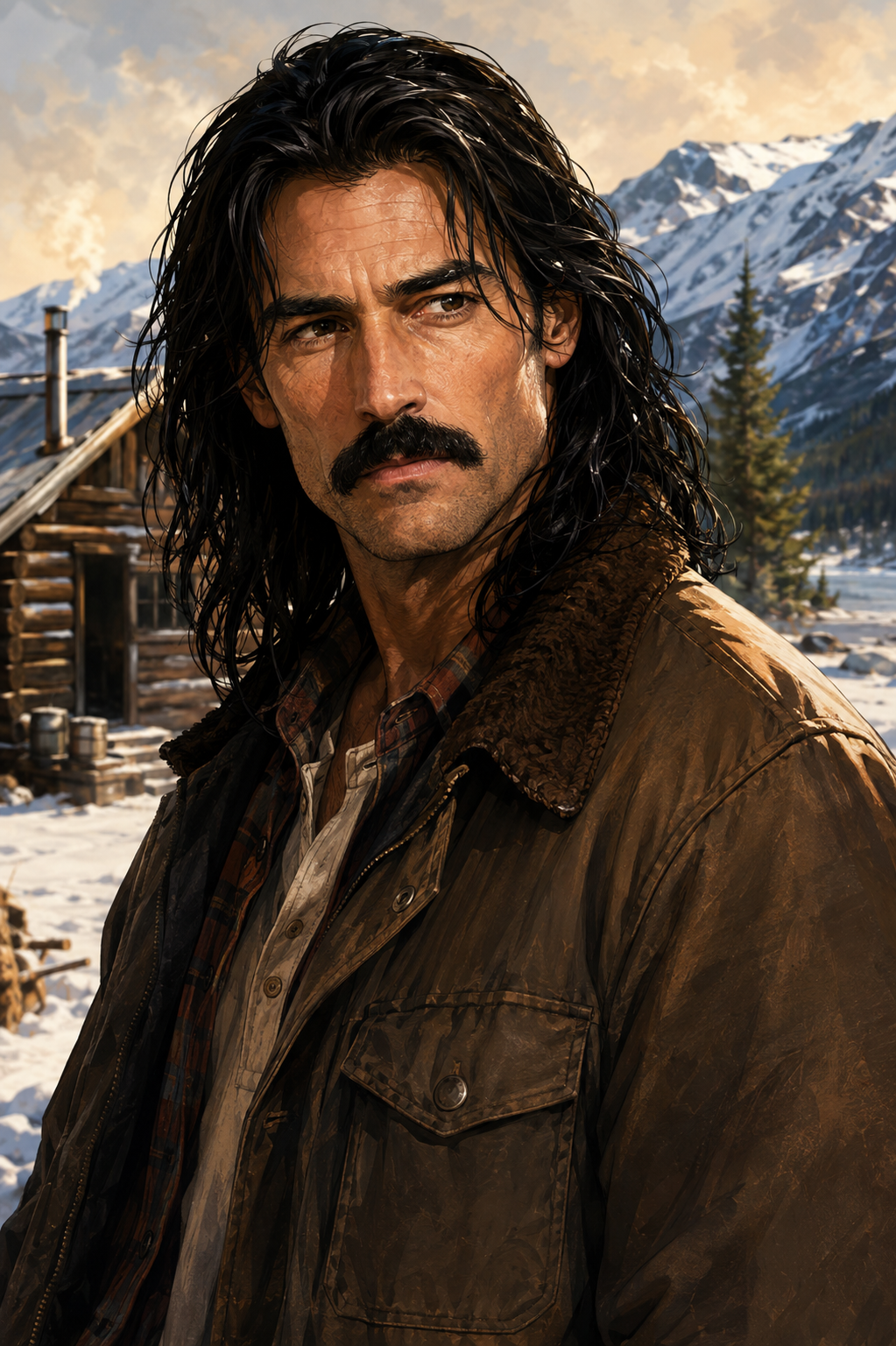
When he discovers the pregnant Leni plans to escape with Matthew, he brutally attacks her. Cora shoots him twice in the back, killing him, then she and Leni break his limbs to fit his body through a hole in Glass Lake and sink him with iron animal traps; his remains are never recovered.

Cora shoots Ernt dead while he is attacking Leni and helps dispose of his body before fleeing to Seattle. She dies of stage-four lung cancer in 1986, leaving Leni a notarized confession taking responsibility for Ernt’s murder so her daughter can reclaim her identity and life.

During their attempted escape, Matthew falls into a crevice and suffers catastrophic brain damage, spending months in a coma and being left with permanent physical and cognitive impairments. He eventually learns to walk, paint, and work as a guide; years later Leni returns with their son MJ, and they ultimately build a life together and have two more children.

Tom survives, transforms the Walker property into a successful fishing lodge, marries Atka, and eventually meets his grandson MJ. When Leni confesses her role in Ernt’s disappearance, Tom uses his political connections to help get the charges against her dropped.

After Cora kills Ernt, Marge helps stage his disappearance and arranges Cora and Leni’s escape from Alaska. She remains a beloved pillar of Kaneq and is there when Leni finally returns home.
🔷 Supporting Characters

He dies of a heart attack in 1978, but by then his influence on Ernt has helped push the Allbright family toward catastrophe.
Genny falls through thin river ice in 1974 and dies; her body is not recovered until the spring thaw, when it is found miles away and badly ravaged by animals.
Bo dies as a POW in Vietnam, with Ernt forced to witness his death—one of the traumatic experiences that continues to haunt Ernt afterward.
MJ finally meets Matthew when Leni returns to Kaneq and grows up on the family homestead as the fourth generation of Walkers, eventually gaining two younger siblings.
When Leni returns in 1986, Ward maneuvers her into providing a written confession and arrests her, but political intervention ultimately results in the charges being dropped.
Cecil helps Cora and Leni live secretly in Seattle as “Susan and Michelle Grant” and helps raise MJ, remaining supportive after Cora’s death.
She helps raise MJ and remains part of Leni’s life until Leni finally chooses to stop hiding and return to Alaska.
🕳️ Potential Plot Holes
Cora and Leni flee to Seattle and assume false identities even though Seattle is Cora’s hometown and her parents still live there. The Gollihers had already been questioned about their daughter and granddaughter’s disappearance, yet they are able to secretly shelter them nearby for years without authorities discovering them. Leni even attends the University of Washington while living under an assumed identity. Given the investigation into Ernt’s disappearance and the authorities’ known connection between Cora and her parents, Seattle would seem like one of the most obvious places to look for them.
📚 Book Club Q&A's
⭐ Final Rating & Thoughts
The Great Alone reminded me exactly why I fell in love with Kristin Hannah’s writing after reading The Women. She has this incredible ability to take huge, devastating subjects—war trauma, abuse, survival, motherhood, first love—and turn them into a story that feels intensely personal.
What impressed me most was how beautifully Alaska is woven into everything. The wilderness isn’t simply a setting; it’s breathtaking, dangerous, isolating, and almost a character of its own. I loved the survival elements, the close-knit community, and especially watching Leni grow from a frightened thirteen-year-old into someone shaped by everything she has endured.
This is an emotionally heavy book, particularly because of the domestic violence and the complicated relationship between Leni and her parents. There were moments that were genuinely difficult to read, but I never felt like the darkness existed simply for shock value.
And that ending? Yep. Kristin Hannah got me. I cried.
Heartbreaking, beautiful, immersive, and unforgettable. The Great Alone is an easy 5 stars—and apparently I’m back on my Kristin Hannah journey after all.
✨ Adaptation description
The Great Alone — Film Adaptation
Kristin Hannah’s The Great Alone is in development as a feature film at Sony’s TriStar Pictures. The rights were actually acquired before the novel’s publication in 2018, so this is a long-running development project rather than a newly announced adaptation. (Kristin Hannah)
Production: TriStar Pictures / Sony Pictures
Source Novel: The Great Alone by Kristin Hannah (2018)
Format: Feature film
Screenwriter: Julia Cox
Producers: Elizabeth Cantillon and Laura Quicksilver
Original rights acquisition: 2018
Current Status: In development
Director: Not announced
Cast: Not announced
Release Date: Not announced
Julia Cox was announced as the screenwriter in June 2018, with Elizabeth Cantillon and Laura Quicksilver producing. Nicole Brown was overseeing the project for TriStar at the time. (TheWrap)
✨ Books Like The Great Alone (2018)
See an error on this page?