
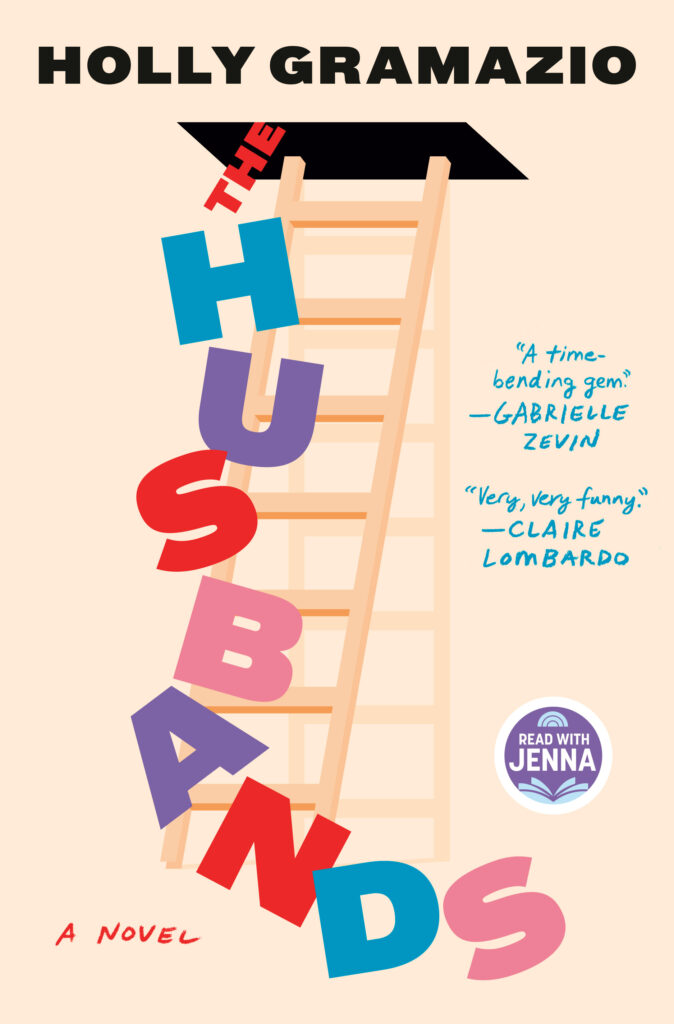
The Husbands (2024)
Select Sections to Print
×Book Details
The Husbands (2024)
Jump to Section
⚠️ Trigger Warnings
- Physical assault / accidental shooting
- Intentional self-harm
- Fire / arson
- Serious injury / spinal injury
- Drugging someone without consent
- Recreational drug use
- Alcohol use / intoxication
- Vomiting
- Hospitalization / medical procedures
- Unwanted pregnancy
- Emotional manipulation / gaslighting
- Infidelity
- Blackmail
- Theft / breaking and entering
- Online bullying
- Surveillance / controlling behavior
- Taxidermy
- Death of a spouse
- Death of a parent
⏱️ 2-Minute Spoiler Summary
After Lauren discovers that her magical attic replaces her husband—and rewrites her entire life every time a man enters it, she begins cycling through husbands in search of the perfect one. What initially feels like an incredible opportunity becomes increasingly destructive. She loses Carter, a husband she genuinely loves, experiences an ultra-wealthy but unsettling marriage to Felix, and befriends fellow reality-jumper Bohai, who eventually chooses to stop searching and settle down.
Lauren becomes increasingly desperate to control her realities, eventually drugging her ex Amos to get him into the attic and later threatening Zach with an air rifle after his spinal injury makes him afraid to climb the attic ladder. When she accidentally shoots her neighbor Toby, Lauren realizes the endless ability to choose again has made it impossible for her to commit to any life.
She finally chooses Sam as her last husband without knowing whether he is “the one.” Lauren then deliberately burns down her flat—and the magical attic with it—so she can never replace him. The novel ends with Lauren and Sam watching their home burn as she accepts the uncertainty of the one life she has chosen.
📖 Full Spoiler Summary
Lauren Discovers the Attic
Lauren returns to her flat in Norwood Junction, London, after a hen party for her best friend, Elena, expecting to come home to the same single life she left that morning. Instead, she finds a strange man named Michael Callebaut waiting for her. Even more alarming, Michael insists that he is her husband.
At first, Lauren assumes there has been some kind of mistake. But everything around her says otherwise. Her phone contains years of photos and messages documenting their relationship. Her belongings have changed. Her home has been redecorated. Even her legal name reflects the marriage. As far as everyone else is concerned, Lauren and Michael have been together for years.
Then Michael goes into the attic.
He disappears, and a completely different man comes down.
Lauren gradually realizes that her attic somehow generates husbands. Whenever her current husband climbs up and disappears from view, reality rewrites itself around the man who comes back down. Lauren remains the same person with her original memories, but almost everything else can change. Her career, finances, friendships, home, family history, and even past decisions adjust to fit whatever life she supposedly built with her new husband.
At first, the possibilities seem incredible. If Lauren doesn’t like a husband, she can simply send him upstairs and try again.
Lauren Starts Cycling Through Husbands
Lauren quickly learns how easy it is to become addicted to replacing men. When Kieran turns out to be angry and unpleasant, she tricks him into investigating a fake leak by hiding a Bluetooth speaker near the attic and playing the sound of dripping water. Up he goes, and another husband takes his place.
Some replacements are perfectly nice but have small qualities Lauren cannot stop noticing. Jason Paraskevopoulos, a cheerful gardener, has transformed their backyard into a beautiful green oasis. Lauren enjoys being with him, but his open-mouthed chewing begins irritating her. With an endless supply of possible husbands waiting upstairs, even minor annoyances become reasons to wonder whether someone better might be next.
Then Ben Persaud, an escape-room enthusiast, shows Lauren how dangerous the attic really is. In Ben’s version of reality, Lauren’s sister Nat is no longer married to Adele, which means Lauren’s beloved niece and nephew, Magda and Caleb, don’t exist.
Lauren had been treating each new husband as though she were merely swapping out one man for another. Now she understands that she is also gambling with everyone else’s lives. Every reset can erase relationships, children, careers, and entire histories.
Still, she keeps going.
Another husband, Rohan, is an enthusiastic amateur actor who performs in an Elizabethan costume. Lauren soon discovers that their marriage comes with a social life she never expected: Rohan and their neighbors, Toby and Maryam, are part of a swinging circle. Rather than finding this exciting, Lauren finds the whole arrangement exhausting and sends Rohan away too.
The more husbands she tries, the harder it becomes to accept any of them. Every flaw comes with the same tempting question: what if the next one is better?
Carter Seems Like the One
Eventually, Lauren meets Carter, a gentle American who feels different from the others. Instead of immediately searching for reasons to reject him, she genuinely enjoys being with him. Their relationship feels comfortable and natural, and Lauren begins to believe she may finally have found someone worth keeping.
They attend Elena’s wedding together, and for once Lauren can imagine simply stopping. She doesn’t need another husband. She wants Carter.
But the attic doesn’t care what Lauren wants.
Carter goes upstairs looking for their wedding photographs. He disappears before Lauren can stop him, and another man comes down in his place.
Lauren is devastated. Until now, she has always controlled the resets. Carter’s disappearance shows her the other side of the attic’s power: the husbands she loves are just as temporary as the ones she dislikes.
She desperately begins cycling through men again, hoping Carter will eventually return. Husband after husband appears, but Carter doesn’t. Lauren has access to seemingly infinite possibilities, yet she cannot retrieve the one possibility she actually wants.
Felix Gives Lauren the Perfect Life—Almost
Eventually, exhaustion leads Lauren to stay with Felix Bakker, a wealthy Dutch CFO whose life gives her almost absurd financial security. Instead of her ordinary London existence, Lauren now lives in a luxurious Sussex mansion with a swimming pool. Felix also has a son, Vardon, who prefers to be called Mikey, making Lauren a stepmother.
For a while, wealth provides a distraction from the husband cycle. But Lauren gradually becomes uncomfortable with Felix’s professional and personal life. His company, Wardrell Stern, develops invasive surveillance technology, including systems that analyze people’s microexpressions to determine whether employees are lying.
Worse, Felix’s obsession with monitoring extends into their marriage. Their home is covered by CCTV, leaving Lauren with the unsettling sense that her husband is watching her rather than actually knowing her.
She decides she wants him gone.
Getting rid of Felix proves more difficult than simply asking him to check the attic, so Lauren bluffs. She threatens to expose his “secret,” even though she has no idea what that secret might be. Felix’s frightened reaction tells her there really is something to hide, and she successfully maneuvers him into the attic.
Another reality replaces his.
Bohai Understands What Lauren Is Going Through
Then Lauren meets someone completely different: Bohai Zhang.
When Bohai comes down from the attic, he immediately understands what has happened because Lauren’s attic isn’t his first encounter with this phenomenon. He has spent four years traveling through magical cupboards and has accumulated more than four hundred spouses.
For the first time, Lauren has someone who remembers alternate realities just as she does.
Their relationship becomes platonic rather than romantic. Bohai is a friend and confidant who understands the strange detachment that comes from knowing any life can be erased and replaced. The two can talk openly about spouses, alternate histories, and the psychological toll of constantly starting over.
But even Bohai eventually chooses to stop. He meets a woman named Laurel and decides he loves her enough to remain in one reality. He settles in Sydney and begins building an ordinary life with her.
His decision leaves Lauren confronting a possibility she has resisted: eventually, she will have to stop searching too.
Lauren Becomes Desperate to Escape Amos
One of the most troubling complications is the repeated appearance of Lauren’s real-life ex-boyfriend Amos. Different versions of him emerge as her husband, forcing Lauren to confront a relationship she thought she had already left behind.
During one cycle, Amos plans to move to New Zealand. Lauren panics because if he leaves before she can persuade him to enter the attic, she may be permanently trapped in that reality.
Her desperation pushes her much further than before.
Lauren steals drugs from a dealer named Padge and secretly drugs Amos, leaving him barely conscious. She then goes into the attic herself and deliberately smashes her hand onto broken glass, badly cutting herself. Bleeding and pretending to be trapped, she calls for Amos and manipulates him into climbing up to rescue her.
The plan works. Amos enters the attic and disappears.
But Lauren has crossed a disturbing line. What began as casually rejecting unsuitable husbands has escalated into drugging and physically harming people—including herself—to maintain control over the attic.
Zach Pushes Lauren Past Her Breaking Point
The situation becomes even worse with Zach.
Zach falls from the attic ladder and fractures his spine, requiring surgery and a long recovery. After such a traumatic injury, he understandably refuses to climb the ladder again.
For Lauren, however, his refusal means something terrifying: she may finally be stuck.
Instead of accepting the life she has, Lauren becomes obsessed with forcing another reset. She eventually steals an air rifle from Felix’s mansion and uses it to threaten Zach, attempting to force him back into the attic at gunpoint.
The confrontation spirals out of control. During the struggle, Lauren accidentally shoots her neighbor Toby in the leg.
The attic gives Lauren a way to erase the immediate consequences. Once reality resets, Toby’s injury disappears along with that version of her life. But Lauren remembers what she did. She can no longer pretend that the attic is simply a bizarre gift that allows her to optimize her future. Her determination to preserve unlimited choice has turned her into someone willing to drug, manipulate, injure, and threaten other people rather than accept an imperfect life.
She finally understands that as long as the attic exists, she will always be tempted to try one more husband.
Lauren Chooses Sam and Burns the Attic
Lauren decides that the only way to stop is to make another reset impossible.
She chooses Sam as her final husband without carefully evaluating whether he is the best possible option. That is precisely the point. Lauren has spent so long searching for certainty that she has made genuine commitment impossible. There will always be another man upstairs, another version of her life, another possibility that might be slightly better.
This time, she refuses to look.
Lauren gathers the belongings she most wants to save, including her favorite large houseplant, and deliberately sets fire to the attic. The flames spread through the flat, destroying the magical space along with most of Lauren and Sam’s possessions.
Outside, Lauren and Sam sit together on the curb and watch their home burn.
Lauren doesn’t know whether Sam is her perfect husband. She doesn’t know whether their relationship will last or whether the life ahead of them will be easier or harder than one of the countless lives she discarded. For the first time since discovering the attic, however, there is no escape hatch waiting above her ceiling.
The endless alternatives are gone.
Lauren has chosen one husband, one reality, and one uncertain future. Sitting beside Sam as the flat burns, she accepts that this imperfect life is now simply “the one we’ve got.”
🔚 Ending Explained
How Does The Husbands End?
The Husbands ends with Lauren doing the one thing that can finally stop the endless parade of husbands: she burns down the attic—and accidentally takes the rest of her flat with it.
The decision comes after Lauren’s use of the attic has spiraled far beyond harmless experimentation. Her lowest point occurs with Zach, when she tries to force him into the attic at gunpoint and accidentally shoots her neighbor Toby instead. Although sending Zach upstairs resets reality and erases the incident, Lauren remembers what happened. She realizes the attic hasn’t simply given her choices; it has changed what she is willing to do to get rid of a life she doesn’t want.
After Zach disappears, Lauren finds herself married to Amos, her real-life ex-boyfriend. For a moment, Amos represents something different from the other husbands because Lauren actually knew and loved him before the attic existed. But even he isn’t enough to stop the cycle.
Lauren sends Amos upstairs to get a blanket.
This time, however, she doesn’t wait to see who comes down.
Instead, she leaves the flat and goes to a pub. By refusing to meet and immediately evaluate the next husband, Lauren makes her final choice before she even knows what she’s choosing. Whoever comes down from the attic will be the husband she keeps.
That man is Sam.
Lauren barely knows anything about him. His contact icon on her phone is a pigeon. His handwriting is terrible. He drinks vinegar-based drinks. Most importantly, Lauren has no idea whether he is the “best” husband the attic could have produced.
And that’s exactly why she chooses him.
Lauren sends Sam out to buy baking powder, then begins rescuing the few possessions she can’t bear to lose, including passports, laptops, her pineapple-shaped jug, and her enormous houseplant, Buddy.
Then she climbs into the attic.
Rather than carefully controlling its strange energy, Lauren allows everything to overload. The fairy lights melt, the heater keeps running, fireworks ignite, and soon the attic is burning.
The fire spreads.
By the time Sam returns, the entire flat is going up in flames.
Lauren and Sam end the novel sitting together on the curb, watching their home burn. Almost everything they owned is gone, and Sam points out the absurd practical consequences—including the fact that he’s now wearing essentially his only surviving pair of trousers.
But the attic is gone.
There will be no more husbands.
And for the first time since Lauren came home and discovered a stranger claiming to be married to her, there is only one version of her life left to live.
What Does the Ending Mean?
The ending isn’t really about Lauren deciding that Sam is the right husband.
She has no way of knowing that.
It’s about Lauren finally accepting that choosing someone means giving up the possibility of everyone else.
For most of the novel, the attic turns relationships into an optimization problem. If a husband is irritating, incompatible, boring, unattractive, inconvenient, or simply not quite right, Lauren can send him upstairs and try again.
There is always another option.
And because another option always exists, no option ever feels good enough.
The novel repeatedly plays with the Secretary Problem, the mathematical strategy in which someone searching for the best candidate rejects an initial percentage of possibilities before choosing the next candidate who surpasses everything they’ve previously encountered.
Lauren essentially tries to apply that logic to marriage.
But relationships can’t actually work that way.
Even if Lauren found an extraordinary husband, the attic would still be upstairs whispering that the next one might be better.
Sam breaks that pattern because Lauren deliberately chooses him without evaluating him first. She doesn’t discover that he’s perfect. She decides that perfection is no longer the requirement.
The choice itself becomes more important than the person being chosen.
Why Does Lauren Burn the Attic?
Lauren understands something uncomfortable about herself: simply promising not to use the attic isn’t enough.
Eventually, Sam will annoy her.
They’ll fight. He’ll disappoint her. She’ll discover habits she hates. Their marriage will become complicated and ordinary.
And upstairs will be a magical escape hatch offering another husband.
So Lauren removes the possibility altogether.
Burning the attic is an act of self-imposed limitation.
Throughout the novel, unlimited freedom initially appears to be the ultimate fantasy. By the ending, it has become a prison. Lauren can’t build a life because she’s constantly able to replace it.
Destroying the attic means accepting consequences again.
She can no longer reload reality whenever she dislikes the result.
The Fire Symbolism
The fire is both destructive and cleansing.
Lauren destroys her home, but she also destroys the mechanism that has prevented her from having a real one.
That’s why ending the novel with Lauren and Sam sitting on the pavement matters. Earlier husbands arrived with fully formed lives: furniture, photographs, finances, friendships, memories and years of supposedly shared history.
With Sam, Lauren ends up with almost nothing.
They have to start from scratch.
Ironically, that makes this relationship more authentic than almost every marriage the attic created for her. Instead of inheriting a fabricated past with Sam, Lauren now has the opportunity to create an actual future with him.
Why Do Buddy and the Pineapple Jug Matter?
The things Lauren saves are wonderfully impractical.
She rescues Buddy, her enormous houseplant, even though getting him out of the burning flat is inconvenient. She also saves the strange pineapple-shaped jug she loves.
Those objects represent something the attic repeatedly erased: attachment.
Every time Lauren changed husbands, her possessions, finances, décor and history could change too. She became accustomed to living inside realities that were disposable.
Buddy and the pineapple jug aren’t valuable because they’re objectively the best things she owns. They’re valuable because they’re hers.
That same principle now applies to her life.
Lauren doesn’t need the best possible version.
She needs one she can become attached to.
Why Sam?
Sam isn’t presented as Lauren’s soulmate, and that’s crucial to the ending.
If the novel had revealed that Sam was secretly the objectively perfect husband, it would undermine almost everything the story has been exploring. Lauren would simply have won the attic lottery.
Instead, Sam is an unknown.
Choosing him means accepting risk.
Lauren is effectively saying: I’ll find out who this person is by actually living a life with him.
Whether their marriage ultimately lasts isn’t the point. Lauren has finally accepted that relationships require time, compromise, disappointment, uncertainty and the possibility of failure.
She can’t know the ending before beginning the relationship.
The Final Exchange
The book’s closing conversation perfectly captures its message.
As Lauren and Sam sit outside their burning home, Sam wonders whether there might be another world where they’re together but their house isn’t currently on fire.
Lauren tells him:
“You actually can’t.”
It’s a funny line, but it’s also the thesis of the novel.
For hundreds of pages, Lauren has been able to ask exactly that question:
What if everything were the same, except this one annoying thing were different?
The attic always answered by producing another reality.
Now there isn’t another one.
There is no version where Lauren gets Sam plus the flat, all her possessions, the perfect marriage and none of the consequences.
There is only this life.
What the Ending Ultimately Says
The Husbands begins with what seems like the ultimate romantic fantasy: What if you never had to settle?
Its ending turns that question around.
What if refusing to settle means you never actually get to live?
Lauren discovers that commitment isn’t the moment when you finally prove you’ve found the best possible option. It’s the moment when you stop comparing your choice against imaginary alternatives.
That’s why the ending is hopeful without being conventionally romantic. Lauren doesn’t know whether Sam is her soulmate. She doesn’t know whether they’ll stay married. She doesn’t even know where they’re going to live.
But she finally has something the attic could never give her:
a future that hasn’t already been written for her.
The attic offered Lauren infinite lives but made none of them matter. Burning it down leaves her with one imperfect, inconvenient, uncertain life—and because it’s the only one she has, she can finally begin living it.
👤 Characters & Fates
🔶 Main Characters

After accidentally shooting Toby during her desperate attempt to get Zach into the attic, she finally chooses Sam sight-unseen and burns down her flat—and the attic—to permanently end the cycle.

He eventually falls in love with Laurel, stops jumping, settles permanently in Sydney, and reveals that Laurel is pregnant and they are engaged.

Lauren steals drugs from Padge, drugs Amos, fakes a bloody injury, and manipulates his semi-conscious body into the attic, where he disappears and is replaced by Sam.

He accidentally enters the attic looking for wedding photographs and vanishes; Lauren later tracks another version of him down in Denver, but he has no memory of her and rejects her advances, eventually telling her to find another realtor.

Lauren discovers Felix is hiding something serious and bluffs that she knows his secret, successfully blackmailing him into entering the attic and disappearing.

Lauren burns down their home before she can change her mind, leaving Sam sitting beside her on the curb watching it burn with only his pineapple-shaped jug and a cinnamon swirl.
🔷 Supporting Characters

She survives into Lauren’s final reality, with Lauren already anticipating that Nat will be absolutely unbearable when she discovers Lauren has burned down their property.
She marries Rob and remains Lauren’s friend, although Lauren’s attempts to explain the magical husbands never truly succeed.
Lauren accidentally shoots him in the leg with an air rifle while trying to force Zach upstairs; the next reality erases his injury, but Lauren remembers it, and the horror of what she did helps convince her to destroy the attic.
She helps deal with Zach’s broken back but later moves away with Toby after their landlord imposes a predatory rent increase.
Lauren quickly replaces him, but another version of Michael later reappears; they briefly date and ultimately remain friends.
Lauren sends him away largely because she cannot tolerate his open-mouthed chewing, only to encounter another version of him later as the gardener at Felix’s mansion.
Lauren discovers that Caleb and Magda do not exist in Ben’s reality, so she immediately replaces him to get her niece and nephew back.
Lauren discovers that she, Rohan, and their neighbors participate in a swinging arrangement involving scheduled Wednesday sexual encounters, prompting her to replace him.
He fractures his spine falling from the attic ladder and becomes terrified of going upstairs; Lauren eventually threatens him with an air rifle, accidentally shoots Toby during the confrontation, and finally escapes Zach when reality resets.
He remains in that reality after Lauren leaves; importantly, Lauren steals his illegally used air rifle—the same weapon she later uses while threatening Zach and accidentally shoots Toby with.
Lauren repeatedly sacrifices otherwise acceptable realities to restore them, ensuring they remain part of the family in her final permanent world.
She remains Nat’s wife and Lauren’s sister-in-law in the final reality, with Caleb and Magda safely restored.
She becomes pregnant and engaged to Bohai, prompting him to settle in Sydney and plan to destroy his own magical portal, hidden in a blanket box.
Lauren breaks into his home, steals unlabeled drugs stored in supermarket ice-cream tubs, and later uses them to drug Amos.
In one rewritten reality, Taj is bizarrely Amos’s ex-wife; she nevertheless remains Lauren’s friend and helps her navigate dating apps.
🕳️ Potential Plot Holes
Bohai says his Duolingo progress resets whenever he changes realities, suggesting that online accounts and their data are rewritten along with the rest of his life. Yet his contact with Lauren survives these same shifts, allowing them to continue texting each other across realities. If digital records reset based on the new timeline, it is unclear why their message history and contact information remain intact while other account data disappears.
The book generally treats Lauren as physically continuous between realities: her memories and body travel with her even though the world around her changes. However, after the confrontation involving Toby and Zach, Lauren’s bleeding toe and injured ankle disappear when the reality resets. If Lauren herself is not rewritten by the attic, her existing injuries should presumably remain with her.
📚 Book Club Q&A's
⭐ Final Rating & Thoughts
The Husbands had such a clever, original premise that I genuinely thought I was going to love it. A magical attic that produces an endless supply of husbands? There were so many interesting directions this could have gone.
Unfortunately, the execution just didn't work for me.
My biggest issue was how repetitive it became. Once I understood the rules of the attic, watching Lauren cycle through husband after husband started to feel exhausting rather than entertaining. At 352 pages, this felt much longer than the story needed to be.
I also struggled with Lauren herself. So many of the husbands seemed perfectly decent, yet she was incredibly quick to reject them over minor flaws. I kept waiting for her to consider what she might need to change or bring to a relationship, and I never felt like the book explored that deeply enough.
Ironically, I flew through it because I desperately wanted to know how everything would end. The premise kept me curious, but curiosity wasn't enough to make me enjoy the journey.
Creative concept, disappointing execution. ⭐✨ 1.5/5
✨ Adaptation description
The Husbands TV Adaptation
As of August 20026, Holly Gramazio’s 2024 novel The Husbands is being adapted into an eight-episode comedic drama series for Apple TV, produced by A24. The project was officially announced in April 2025, with Juno Temple starring as Lauren. (Apple)
- Based on: The Husbands by Holly Gramazio (2024)
- Format: Eight-episode television series
- Streaming: Apple TV
- Production Company: A24
- Lead: Juno Temple as Lauren
- Lead Writer: Miriam Battye (Succession, Beef, Dead Ringers)
- Executive Producers: Miriam Battye, Craig Gillespie, Annie Marter, Holly Gramazio and A24
- Status: Upcoming; no premiere date has been announced. (Apple)
Apple originally announced Craig Gillespie as the lead director, but more recent production credits list Adam Randall, Josephine Bornebusch and Kate Hewitt as directors, with Gillespie remaining an executive producer. (Apple)
Cast
Lauren’s rotating husbands include Joe Alwyn, Richard Gadd, Kingsley Ben-Adir, Joel Kinnaman, Daniel Ings, Bob Morley and Fehinti Balogun. Additional cast members include Tom Basden, Joe Wilkinson, Gemma Whelan, Rebekah Murrell and Shazad Latif. (Radio Times)
Premise
The central premise appears unchanged from the novel. Lauren returns to her London flat one night and discovers a man named Michael who insists that he is her husband—even though she has never seen him before. When Michael enters the attic to change a lightbulb, he disappears and another husband emerges.
Lauren eventually realizes that the attic can produce an apparently endless succession of husbands, with her life changing to accommodate each new marriage. The series will explore the same central question as the novel: when unlimited alternatives are available, how do you ever decide that the life you have is enough? (Apple)
✨ Books Like The Husbands (2024)
See an error on this page?