
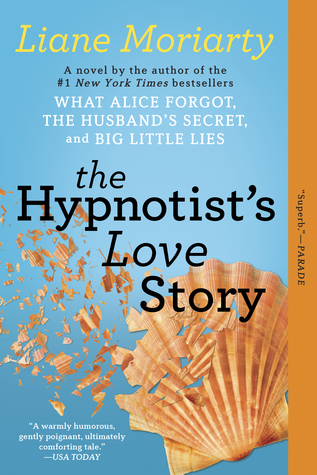
The Hypnotist’s Love Story (2011)
Select Sections to Print
×Book Details
The Hypnotist’s Love Story (2011)
Jump to Section
⚠️ Trigger Warnings
- Stalking and obsessive behavior
- Harassment and unwanted contact
- Invasion of privacy
- Trespassing and breaking and entering
- Grief and bereavement
- Death of a spouse
- Cancer and terminal illness
- Death of a parent
- Injury and hospitalization
- Child injury
- Pregnancy
- Infertility
- Miscarriage anxiety
- Abortion discussions
- Cesarean section
- Infidelity and extramarital affairs
- Secret paternity
- Threats and intimidation
- Defamation and reputational harm
- Police involvement
- Restraining orders and legal proceedings
⏱️ 2-Minute Spoiler Summary
Ellen O’Farrell, a 35-year-old hypnotherapist living in Sydney, thinks she has finally found a wonderful boyfriend in Patrick Scott, a widowed land surveyor raising his eight-year-old son, Jack. But on their fourth date, Patrick confesses something alarming: his ex-girlfriend, Saskia Brown, has been stalking him for three years. She follows him everywhere, sends relentless messages, and refuses to accept that their relationship is over.
Ellen is intrigued rather than frightened, partly because she is fascinated by human behavior. What she doesn’t realize is that Saskia has already begun watching her, too. Using the fake name Deborah Vandenberg, Saskia books hypnotherapy appointments with Ellen, complaining of mysterious leg pain. Ellen unknowingly welcomes her boyfriend’s stalker into her home, where she also runs her practice.
As their romance develops, Ellen learns more about Patrick’s past. His first wife, Colleen, died of cancer shortly after giving birth to Jack. Saskia subsequently moved in with Patrick and helped raise Jack, becoming a mother figure to the little boy. When Patrick ended their two-year relationship, Saskia lost not just her boyfriend but the family she had grown to love.
Three months into their relationship, Ellen discovers she is pregnant. Patrick surprises her with a romantic getaway to Noosa, but during the flight, he mentions Saskia’s unexplained leg pain. Ellen suddenly realizes that Deborah is Saskia—and that she has accidentally told Saskia exactly where they are staying.
At a scenic lookout in Noosa, Patrick gets down on one knee to propose. Just as he produces an aquamarine ring, Ellen spots Saskia approaching. She blurts out two revelations at once: she’s pregnant, and his stalker is standing behind him. Despite the interruption, Patrick is delighted about the baby and proposes again. Ellen accepts.
Back in Sydney, Patrick and Jack begin moving into Ellen’s house. Saskia’s behavior grows increasingly disturbing. She secretly enters the home, leaves behind a book Ellen lent her, and even bakes Anzac biscuits in Ellen’s kitchen. She also follows the couple to an ultrasound appointment, watching the new family form without her.
Ellen has other problems, too. A disgruntled client, Rosie, realizes during hypnosis that she doesn’t love her wealthy husband, Ian Roman. When Ian discovers what happened, he threatens to destroy Ellen’s career through the media. Another client, Luisa, accuses Ellen of being a fraud after learning that Ellen is pregnant while Luisa herself struggles with infertility.
The stalking reaches its breaking point one night when Ellen wakes to find Saskia standing at the foot of her bed, holding her ultrasound photographs. Patrick attacks Saskia, and during the struggle, Patrick, Saskia, and Jack tumble down the spiral staircase. Jack breaks his arm badly, while Saskia suffers serious pelvic and ankle fractures.
Despite everything, Ellen visits Saskia in the hospital and uses hypnosis to help her imagine finally closing the door on Patrick and Jack. Patrick pursues legal protection, and Saskia receives a one-year good behavior bond, an Apprehended Violence Order, and mandatory psychiatric treatment.
Ellen’s professional troubles are resolved when Mary-Kate McMasters, a client who happens to be a defamation barrister, helps stop Ian’s threatened smear campaign. Rosie also pressures Ian to leave Ellen alone.
The accident finally prompts Patrick and Jack to discuss Saskia honestly. Jack reveals that he has blamed himself for her disappearance because he lost a lucky marble she gave him. Patrick assures him that the breakup had nothing to do with him. Patrick also reassures Ellen that although he loved Colleen, his relationship with Ellen is a different, deeper love.
Saskia gradually rebuilds her life through therapy, friendships, and a new living arrangement. Her mysterious leg pain disappears. Ellen reconnects with her biological father and gives birth to a daughter, Grace Lily Scott, on Valentine’s Day.
Six months later, Saskia spots Ellen pushing baby Grace through Circular Quay. Rather than approaching her, Saskia simply smiles and walks away, finally leaving Patrick and his family in peace.
📖 Full Spoiler Summary
The Hypnotist’s Love Story by Liane Moriarty follows Ellen O’Farrell primarily through third-person narration, with occasional first-person chapters from Saskia Brown, the woman stalking Ellen’s new boyfriend. The story unfolds chronologically, with memories and conversations gradually revealing the complicated relationships that brought everyone to this point.
Ellen Falls in Love with a Man Who Has a Stalker
At thirty-five, Ellen O’Farrell has a comfortable life in Sydney. She works as a clinical hypnotherapist from the charming 1970s house she inherited from her grandparents, overlooking the ocean. Her career is satisfying, her friendships are solid, and she enjoys being independent. What she hasn’t managed to find is a lasting romantic relationship.
After several disappointing boyfriends, including Jon, an atheist engineer who subtly looked down on her profession, Ellen begins dating Patrick Scott, a thirty-five-year-old self-employed land surveyor. Patrick is thoughtful, attractive, and a devoted single father. Their connection feels promising almost immediately.
On their fourth date, however, Patrick makes a startling confession. His ex-girlfriend, Saskia Brown, has been stalking him for three years.
He shows Ellen text messages proving that Saskia is watching them inside the restaurant where they’re eating. She follows him, calls at inappropriate hours, sends endless emails and letters, and seems to know his whereabouts constantly. Although she has never physically attacked him, her relentless presence has made his life miserable.
Ellen is understandably surprised, but she doesn’t run away. As a hypnotherapist, she’s fascinated by the strange ways people behave, and part of her is curious about the woman who can’t let Patrick go. She likes Patrick enough to continue seeing him, and they spend their first night together at her house.
What Ellen doesn’t know is that Saskia has already begun investigating her.
Through Saskia’s first-person narration, we learn that she watched Patrick and Ellen leave a movie theater and go to dinner. She knows their relationship has become intimate, and she is consumed by jealousy. Rather than confront Ellen directly, she books an appointment at Ellen’s hypnotherapy practice under the false name Deborah Vandenberg.
Her stated problem is debilitating, unexplained leg pain. Her real purpose is to get close to the woman who has replaced her.
Patrick’s Past and the Family Saskia Lost
As Ellen and Patrick become more serious, he introduces her to his eight-year-old son, Jack Scott, a skinny, energetic little boy. Ellen quickly grows fond of Jack, although becoming involved with a widower and his child brings complications she hasn’t experienced before.
Patrick’s first wife, Colleen Scott, died of cancer shortly after Jack was born. Patrick was devastated, and his grief shaped much of his life afterward.
Saskia entered his life during that difficult period. She eventually moved in with Patrick and helped raise Jack, becoming an important maternal figure. For two years, she shared their home and participated in the everyday routines of family life.
Then Patrick ended their relationship.
For Patrick, the breakup meant leaving a relationship that no longer worked. For Saskia, it meant losing both the man she loved and the little boy she had helped raise. She has never accepted that separation.
Ellen begins meeting the other people in Patrick’s life. His parents, Maureen and George Scott, welcome her, as does his younger brother, Simon. During dinner at the Scotts’ house, Saskia unexpectedly appears at the front door.
Patrick is furious and threatens to call the police. Saskia retreats, but Ellen notices that Maureen and Simon still feel some sympathy for her. Saskia has no family nearby, particularly since her mother’s death, and they remember how much she once meant to Patrick and Jack.
Ellen also introduces Patrick to her own circle, including her mother, Anne O’Farrell, a doctor who raised Ellen alone, and her godmothers, Mel and Phillipa, known as Pip. Her close friend Julia, whose husband left her for a much younger woman, urges Patrick to seek an Apprehended Violence Order against Saskia.
Although Ellen recognizes that Saskia’s behavior is unacceptable, she continues to wonder what makes someone cling so desperately to a relationship.
An Unexpected Pregnancy and a Proposal in Noosa
Only three months into their romance, Ellen realizes her period is late. A pregnancy test confirms that she’s expecting Patrick’s baby.
The news is overwhelming. Their relationship is still new, and Patrick already has a child. Ellen isn’t sure how to tell him, so she keeps the pregnancy to herself while she considers what it will mean for their future.
At work, she continues seeing clients with a wide variety of problems.
Rosie, a bride-to-be trying to stop smoking before marrying wealthy media businessman Ian Roman, makes an uncomfortable discovery during hypnosis: she doesn’t actually want to marry him. Mary-Kate McMasters, a prickly woman with a fear of driving, attends sessions without revealing much about her professional life. Ellen also treats Alfred Boyle, a shy accountant whose public-speaking anxiety traces back to a childhood experience.
And, of course, she continues treating Deborah Vandenberg, unaware that her mysterious client is Saskia.
Hoping to escape the constant stress of being watched, Patrick surprises Ellen with a romantic weekend in Noosa.
During their flight, he casually mentions that Saskia used to experience terrible unexplained leg pain, which interfered with her love of bushwalking.
Ellen immediately recognizes the connection. Her client Deborah has described the same symptoms. The woman she’s been treating is Patrick’s stalker.
Even worse, Ellen remembers casually telling Deborah about the Noosa trip, including where she and Patrick would be staying at the Sheraton.
Saskia now knows exactly where to find them.
Sure enough, Saskia books a last-minute trip to Noosa.
Patrick, unaware of Ellen’s discovery, arranges a beautiful sunset picnic at a scenic lookout. He gets down on one knee and presents Ellen with an aquamarine engagement ring.
But as he proposes, Ellen sees Saskia approaching.
Unable to contain either secret any longer, Ellen blurts out that she’s pregnant and that Saskia is standing right behind him.
Saskia greets them casually before walking away, leaving Patrick stunned.
Once he recovers, Patrick is thrilled about the pregnancy. He proposes again, and Ellen happily accepts. Despite the bizarre interruption, they return to Sydney engaged and expecting a baby.
Moving In Together While Saskia Gets Closer
Patrick and Jack begin moving into Ellen’s house. Cardboard boxes fill the hallway as the three prepare to become a family.
But Saskia is still finding ways into their lives.
Ellen discovers a book she lent Deborah sitting neatly on her hall table beside a pink camellia. The objects prove that Saskia has entered her home without permission.
Soon afterward, Ellen accompanies Patrick and Jack on their regular trip to Katoomba in the Blue Mountains. Every month, they visit Colleen’s grave and spend time with her parents, Frank and Millie.
Ellen had originally planned to meet her biological father, David Greenfield, an orthopedic surgeon she has never known. But when her mother reschedules their lunch, Ellen decides to accompany Patrick and Jack instead.
At the cemetery, Patrick introduces her to Colleen’s headstone. Later, while visiting Frank and Millie, Ellen becomes overwhelmed and bursts into tears. Her pregnancy hormones intensify an already emotional experience as she confronts the lasting presence of Patrick’s deceased wife.
Returning home brings another disturbing discovery: freshly baked Anzac biscuits have been left on her doorstep.
Ellen realizes Saskia didn’t simply leave a gift. She used Ellen’s own kitchen to bake them.
The stalking has moved well beyond unwanted messages and public encounters. Saskia is entering the house where Ellen, Patrick, and Jack sleep.
Saskia also follows the couple to an ultrasound appointment. Watching Ellen and Patrick prepare for their baby, she cries in the waiting room, painfully aware that they are building the family she once imagined sharing with Patrick.
Ellen’s Professional Life Begins Falling Apart
While Ellen deals with Saskia’s increasingly invasive behavior, several of her hypnotherapy clients create problems of their own.
Luisa Bell, who has been seeking help for unexplained infertility, discovers that Ellen is pregnant. Furious that her hypnotherapist is expecting a child while she remains unable to conceive, Luisa accuses Ellen of being a fraud and demands her money back.
Then Ian Roman arrives at Ellen’s practice in a rage.
Rosie, who went through with marrying him, has apparently admitted that hypnosis helped her recognize she didn’t love him. Ian blames Ellen for interfering in his marriage and threatens to use his considerable media influence to destroy her reputation.
Soon, journalist Lisa Hamilton from the Daily News contacts Ellen seeking a response to serious allegations about her practice.
Ellen fears that her professional reputation could be ruined.
There are happier developments among her clients, too. After helping Alfred Boyle explore the childhood roots of his public-speaking anxiety, Ellen notices that he might be compatible with Mary-Kate McMasters. She arranges for them to encounter each other in her waiting room, and a romance begins.
At home, Patrick is becoming increasingly stressed by Saskia’s behavior. Ellen uses hypnosis to help him relax and sleep, but while deeply hypnotized, he begins speaking about Colleen.
He reveals lingering grief and guilt over her death, saying that no relationship could ever compare with what he had with his first wife.
Ellen is deeply unsettled. She knows Patrick loved Colleen, but hearing him express those feelings so directly leaves her wondering whether she will always come second to a woman who died.
Saskia Breaks In and Jack Gets Hurt
The situation reaches its breaking point one night when Ellen wakes from disturbing dreams.
Her bedroom is glowing with an eerie orange light caused by a dust storm. At the foot of the bed stands Saskia, silently holding Ellen’s ultrasound photographs.
Saskia has entered their home yet again, this time coming directly into their bedroom while they sleep.
Patrick wakes and reacts furiously, tackling Saskia. Jack appears in the hallway, screaming in terror as the confrontation turns into a chaotic physical struggle.
As Patrick tries to force Saskia out, the three of them tumble down the spiral staircase.
The consequences are serious.
Jack suffers a badly broken arm. Saskia sustains severe pelvic fractures and a broken ankle. Patrick rushes Jack to the hospital, while paramedics take Saskia for treatment.
Despite everything Saskia has done, Ellen decides to visit her in the hospital.
Rather than confront her with anger, Ellen offers to help her let go. She guides Saskia through a hypnotic visualization in which she imagines closing a door on Patrick and Jack, accepting that their lives are no longer hers to share.
It’s an unexpected encounter between the two women, especially after Saskia’s intrusion has resulted in Jack’s injury.
Patrick, however, is determined to protect his family. He compiles a detailed record of Saskia’s stalking incidents and pursues formal legal action, including trespass charges and an Apprehended Violence Order.
The Family Finally Talks About Its Past
The accident forces Patrick and Jack to confront something they’ve avoided discussing for years.
Jack reveals that when he was five, Saskia gave him a lucky marble. He lost it and secretly believed that Saskia disappeared from their lives because he’d been careless with her gift.
For three years, the little boy has carried the belief that he caused the breakup.
Patrick is heartbroken to learn this. He reassures Jack that Saskia’s departure had nothing to do with the marble and that none of it was his fault.
Ellen and Patrick also need to resolve the doubts raised by his hypnotic confession about Colleen.
During a walk along the beach, Patrick explains that he loved Colleen deeply when they were young, but his love for Ellen is different. He describes it as a more mature, complete love, reassuring her that she isn’t simply replacing his first wife.
Their relationship emerges from the crisis stronger, with both finally able to discuss the complicated past that has been affecting their future.
Ellen’s professional problems are resolved as well.
Mary-Kate McMasters reveals that she is a defamation barrister and offers Ellen her legal expertise free of charge. She confronts Ian Roman and Lisa Hamilton, successfully stopping the threatened newspaper article.
Rosie also takes action against her husband, threatening to expose his own embarrassing secrets to the tabloids if he continues harassing Ellen.
With Ian forced to back down, Ellen’s practice is safe.
Saskia Lets Go and Ellen’s Family Grows
Saskia faces the legal consequences of her actions. At her court hearing, she receives a one-year good behavior bond, an Apprehended Violence Order, and mandatory weekly psychiatric therapy.
Her recovery is gradual.
Working with her psychiatrist, Saskia begins processing the grief and loss that have dominated her life. She takes up knitting, develops genuine friendships with her colleague Lance and his wife, Kate, and moves in with her old friend Tammy.
As her life becomes more stable, the mysterious leg pain that originally brought her to Ellen’s practice disappears completely.
For the first time in years, Saskia is building a life that doesn’t revolve around Patrick and Jack.
Ellen also makes progress in her personal life beyond her relationship with Patrick. She finally meets her biological father, David Greenfield, and the two share a pleasant lunch at an olive festival, beginning a relationship that had been missing throughout her life.
On Valentine’s Day, Ellen gives birth by planned Cesarean section to a healthy daughter, Grace Lily Scott.
Six months later, the family is doing well. Patrick is a loving father, Jack adores his little sister, and Ellen is happily settled into the life she and Patrick have created together.
The story ends with one last encounter that never quite happens.
Walking through Circular Quay, Saskia spots Ellen in the distance, pushing baby Grace in a stroller.
For years, Saskia would have followed, watched, or found some excuse to insert herself into Patrick’s family. This time, she does none of those things.
She smiles quietly to herself, turns away, and disappears into the passing crowd, leaving Ellen and her family undisturbed.
🔚 Ending Explained
How The Hypnotist’s Love Story Ends
The climax unfolds on a surreal night when Sydney is covered by an apocalyptic orange dust storm. Ellen O’Farrell wakes to discover Saskia Brown standing inside her bedroom, holding Ellen’s ultrasound photographs. Patrick wakes and tackles Saskia, while his eight-year-old son, Jack, watches in terror. The confrontation ends catastrophically when Patrick, Saskia, and Jack tumble down the spiral staircase. Jack badly breaks his arm, while Saskia suffers pelvic fractures and a broken ankle.
The fall becomes the physical breaking point of Saskia’s three-year obsession. Ellen later visits her in the hospital, but instead of confronting her with anger, she recognizes that Saskia has finally reached “rock bottom.” Ellen uses hypnotherapy to help her imagine closing a large wooden door on Patrick and Jack, locking it, and throwing away the key. It is an attempt to give Saskia something she has never been able to create for herself: an ending.
Patrick, meanwhile, finally takes formal action. He compiles his stalking log for police, Saskia is charged with trespassing, and an Apprehended Violence Order is issued against her. Yet Patrick also begins to understand the emotional damage surrounding the breakup. Jack reveals that Saskia once gave him a lucky marble, which he subsequently lost. For three years, he has secretly believed that losing the marble somehow caused Saskia to leave. Patrick reassures him that the breakup had nothing to do with him, finally freeing Jack from a guilt the adults never realized he was carrying.
Several other storylines resolve alongside the central conflict. Mary-Kate McMasters, who turns out to be a defamation barrister, prevents the Daily News from publishing a damaging story about Ellen. Rosie also protects Ellen by threatening her media-magnate husband, Ian Roman, with an embarrassing tabloid story of her own if he continues his vendetta.
Ellen’s mother, Anne, experiences her own version of awakening. After spending thirty-five years romanticizing David Greenfield, Ellen’s biological father, she discovers that actually being with him is far less exciting than remembering him. She ends their relationship, finally relinquishing the fantasy she had preserved for decades.
The epilogue brings the story into much gentler territory. On Valentine’s Day, Ellen gives birth by planned C-section to Grace Lily Scott, a healthy baby girl with Anne’s distinctive violet eyes. Six months later, Patrick has become a calmer, more relaxed father. His insomnia and rage have subsided, Jack adores Grace, and Ellen and Patrick have settled into family life.
Saskia receives a one-year good-behavior bond and undergoes mandatory psychiatric treatment. She moves in with Tammy, takes up knitting, and becomes godmother to her colleague Kate’s baby. Even her unexplained leg pain disappears.
Her final scene provides the novel’s real emotional ending. While walking through Circular Quay, Saskia sees Ellen in the distance pushing baby Grace. She does not approach her. She simply smiles, turns away, and disappears peacefully into the crowd.
What the Ending Means
The ending is ultimately about letting go—not forgetting the past, but refusing to continue living inside it. Nearly every major character has constructed a story about the past and then become trapped by it. Saskia cannot relinquish Patrick and Jack. Patrick remains emotionally shaped by Colleen’s death and his anger toward Saskia. Jack believes a lost marble caused Saskia to abandon him. Anne has spent decades preserving an idealized version of David.
Ellen’s profession makes this especially meaningful. Hypnosis is normally something she deliberately induces, yet the novel suggests that people enter emotional “trances” all the time. They repeat stories about themselves until those stories begin to feel like objective reality. The ending is therefore filled with characters metaphorically waking up.
The orange dust storm and staircase fall mark the violent culmination of that process. Saskia literally hits rock bottom after years of refusing to accept that her relationship is over. The spiral staircase is particularly fitting: her obsession has kept her circling the same emotional point again and again without actually moving forward. The fall finally breaks that cycle.
Ellen’s image of the locked wooden door provides the opposite symbol. Closure does not simply happen to Saskia; she has to choose it. Closing, locking, and abandoning the door represents creating a psychological boundary between the life she once had and the life she still has the opportunity to build.
Jack’s lucky marble shows how differently the same relationship can be experienced by different people. Patrick sees Saskia primarily as the woman who stalked him. Saskia sees herself as someone who lost a partner and a child she loved. Jack sees her disappearance through a child’s logic and concludes that he somehow caused it. His confession exposes one of the novel’s central ideas: people can live beside one another while carrying completely different versions of the same story.
Saskia taking up knitting is a quieter but important symbol. The repetitive energy that once went into following Patrick, monitoring his life, and replaying the past is redirected toward making something. Her disappearing leg pain reinforces the transformation: once she begins releasing the psychological fixation that has kept her emotionally stuck, her body also stops expressing that distress.
Ellen’s response to Saskia is equally important. She does not excuse the stalking—Saskia still faces police action, an AVO, psychiatric treatment, and legal consequences—but Ellen refuses to reduce her to a monster. The ending therefore separates empathy from absolution. Saskia can be responsible for what she has done and still be capable of becoming someone different.
Patrick undergoes a similar change. His willingness to acknowledge his own mistakes in ending his relationship with Saskia does not make him responsible for her subsequent behavior. Instead, it shows him abandoning the rigid anger and need for control that have defined him. His calmer relationship with Ellen, Jack, and Grace suggests that he has finally stopped organizing his present around old grief.
Anne’s breakup with David echoes the same theme in miniature. She discovers that nostalgia can be every bit as deceptive as obsession. The man she has remembered for thirty-five years is more compelling than the real man standing in front of her. Giving him up means choosing reality over fantasy.
And that is why Saskia’s final appearance at Circular Quay matters so much. Earlier, seeing Ellen and Patrick would have drawn her toward them. Now she sees Ellen and Grace and chooses not to enter their story. She smiles and walks away.
There is no dramatic punishment, revenge, or final confrontation. Saskia simply disappears into the crowd as another person with a life of her own.
That quiet choice is her redemption.
The novel therefore ends less like a conventional psychological thriller and more like a compassionate relationship drama: closure comes not from destroying the person who hurt you, but from changing the story you keep telling yourself about them. Grace’s birth completes that idea. Even her name suggests what the ending ultimately offers its characters—grace without pretending that the damage never happened, and the possibility of beginning again.
👤 Characters & Fates
🔶 Main Characters

She becomes engaged to Patrick, survives Saskia’s intrusion, and later gives birth by C-section to their daughter, Grace Lily Scott, on Valentine’s Day. Six months later, she is happily raising Grace and Jack while running a thriving part-time hypnotherapy practice.

He finally confronts his grief and Saskia, obtains legal protection against her, moves in with Ellen, and becomes a relaxed, devoted father to baby Grace, finally free of his insomnia and constant fear of Saskia.

She fractures her pelvis and ankle after falling down Ellen’s spiral staircase during the break-in. Ellen hypnotically helps her let go of Patrick; Saskia receives an AVO and good-behavior bond, undergoes psychiatric therapy, rebuilds friendships, takes up knitting, and eventually sees Ellen with baby Grace without feeling compelled to follow them.

He breaks his arm during Saskia’s staircase fall but recovers and finally resolves his guilt over losing Saskia’s lucky marble. He happily embraces Ellen and becomes an adoring older brother to baby Grace.
🔷 Supporting Characters

She died years before the main story, but Patrick eventually learns to remember and love her without allowing his grief to prevent him from building a new life with Ellen.
Anne briefly rekindles a romance with David but ends it after realizing she preferred her idealized memory of him. She becomes a doting grandmother to Grace, who inherits her violet eyes.
His reunion with Anne fails romantically, but he develops a genuine father-daughter relationship with Ellen and proudly embraces being Grace’s grandfather.
She begins dating Patrick’s friend Sam “Stinky,” moves in with him, and enjoys seeing her ex-husband William receive his own romantic comeuppance.
She welcomes Ellen into the family, helps care for Jack and Grace, and secretly sends hospitalized Saskia a get-well card containing Jack’s letter and marble.
He remains happily involved with the family, playing Monopoly, joking, and teasing Maureen.
He warmly accepts Ellen, cooks celebratory meals, and remains close to Patrick and the extended family.
She remains happily married and becomes one of Grace’s many devoted honorary grandmothers.
She remains close to Ellen’s family and enthusiastically dotes on baby Grace.
She marries Ian partly out of spite toward an ex but later leaves him after his affair with a supermodel. She ultimately protects Ellen by threatening Ian with an embarrassing tabloid exposé if he targets her again.
Mary-Kate McMasters legally shuts down his attack, Rosie eventually leaves him, and he returns to superficial relationships with supermodels.
She threatens an injunction that kills the smear story, refuses payment from Ellen, and begins a happy romance with fellow client Alfred Boyle.
He successfully gives a funny speech to 200 accountants and begins a thriving relationship with Mary-Kate after meeting her in Ellen’s waiting room.
They warmly accept Ellen and continue being devoted grandparents to Jack as Patrick builds his new family.
After angrily demanding a refund and accusing Ellen of fraud, Luisa becomes pregnant and later calls Ellen to joyfully share the news and apologize.
He awkwardly expresses happiness over Ellen’s engagement and continues serving as her professional mentor.
Despite Flynn’s disapproval, Danny achieves commercial success through aggressive advertising and media appearances.
She gives birth to her second child and remains part of Ellen’s close friendship circle.
He falls in love with Julia, moves in with her, and forms a happy relationship despite Julia’s initial snobbery about him.
She drops the story after Mary-Kate threatens legal action and reveals Ian’s personal vendetta.
She becomes close friends with Saskia, practices yoga with her, and asks Saskia to be godmother to her baby boy.
He visits her in the hospital, lends her a DVD player, and joins Kate and Tammy in creating a supportive social circle around her.
She becomes Saskia’s housemate, introduces her to new people, and helps arrange a potential romance with Toby.
He quickly becomes engaged to a dental hygienist who later becomes pregnant with twins, while Ellen realizes she never truly loved him and finally lets him go emotionally.
She eventually tells Ellen that Jon’s wife is pregnant with twins, inadvertently confirming how completely Ellen has moved on.
He moves overseas and disappears from Ellen’s life, leaving behind little more than memories and Ellen’s habit of adjusting car seats for tall men.
He remains long separated from Ellen and survives mainly as a bittersweet memory from her past.
They died before the story begins, but their house becomes the home where Ellen, Patrick, Jack, and Grace eventually build their new family.
She is born by C-section on Valentine’s Day, inherits Anne’s violet eyes, bonds intensely with Patrick and Jack, and thrives surrounded by her extended family.
Tammy and Kate deliberately arrange opportunities for Saskia to meet the newly single Toby, leaving a future relationship between them possible.
His younger wife eventually leaves him for another man, giving Julia a satisfying sense of karmic justice.
He disappears from Julia’s adult life and survives only as an embarrassing teenage memory shared with Ellen.
He disappears from Ellen’s life and remains simply a memory of her adolescent romantic idealism.
🕳️ Potential Plot Holes
Patrick has been stalked by Saskia for three years and believes she has entered his home, car, and workplace, yet he and Ellen take remarkably few precautions after he moves into Ellen’s house. Most glaringly, Ellen continues keeping a spare key under the stone owl above her door, allowing Saskia to enter repeatedly and eventually appear in their bedroom while they sleep. Given Patrick’s documented fear of Saskia, failing to remove the key, change locks, or improve security is a significant lapse in logic.
📚 Book Club Q&A's
⭐ Final Rating & Thoughts
Liane Moriarty gave me such a fantastic setup here that I kept waiting for the story to explode. A woman discovers her new boyfriend has been stalked by his ex for years—only to unknowingly have that very stalker sitting across from her as a hypnotherapy client? I was completely intrigued. Unfortunately, the payoff never came.
The strongest part of the book was Saskia’s perspective. Getting inside her head made her surprisingly sympathetic and added a psychological element I really enjoyed. Moriarty also kept me reading quickly because I genuinely wanted to know where all of this was going. But after more than 400 pages of escalating possibilities, the story ultimately felt far too gentle for me.
I kept expecting a major twist, a shocking revelation, or at least a genuinely suspenseful confrontation. Instead, nearly every potentially explosive storyline resolved in an oddly tidy, reasonable way. I finished the book feeling less shocked than confused that that was it.
There were interesting characters and a clever premise buried in here, but I needed much more payoff. For me, this was a whole lot of buildup leading to a surprisingly small destination.
✨ Adaptation description
Adaptation
The Hypnotist’s Love Story was developed as a television adaptation for ABC in 2019, based on Liane Moriarty’s 2011 novel. ABC Studios and Mandeville Television produced the pilot, with Katie Wech writing and executive producing and Francesca Gregorini directing. Heather Graham also served as an executive producer, alongside David Hoberman, Todd Lieberman, and Laurie Zaks, while Moriarty was attached as a producer.
ABC ultimately did not order the pilot to series, so the adaptation remains an unproduced/abandoned television project. There is no completed series or publicly released adaptation to watch.
The proposed series starred Juliet Rylance as Ellen O’Farrell, the hypnotherapist at the center of the story, and Heather Graham as Saskia, the obsessive ex-girlfriend who stalks Ellen’s new boyfriend. The cast also included Jane Seymour as Anne, Adan Canto, and Liza Lapira.
The television premise closely followed the novel’s central setup: Ellen begins a relationship with a single father and learns that his former girlfriend has been stalking him—while remaining unaware that she has already encountered the woman herself.
✨ Books Like The Hypnotist’s Love Story (2011)
See an error on this page?