
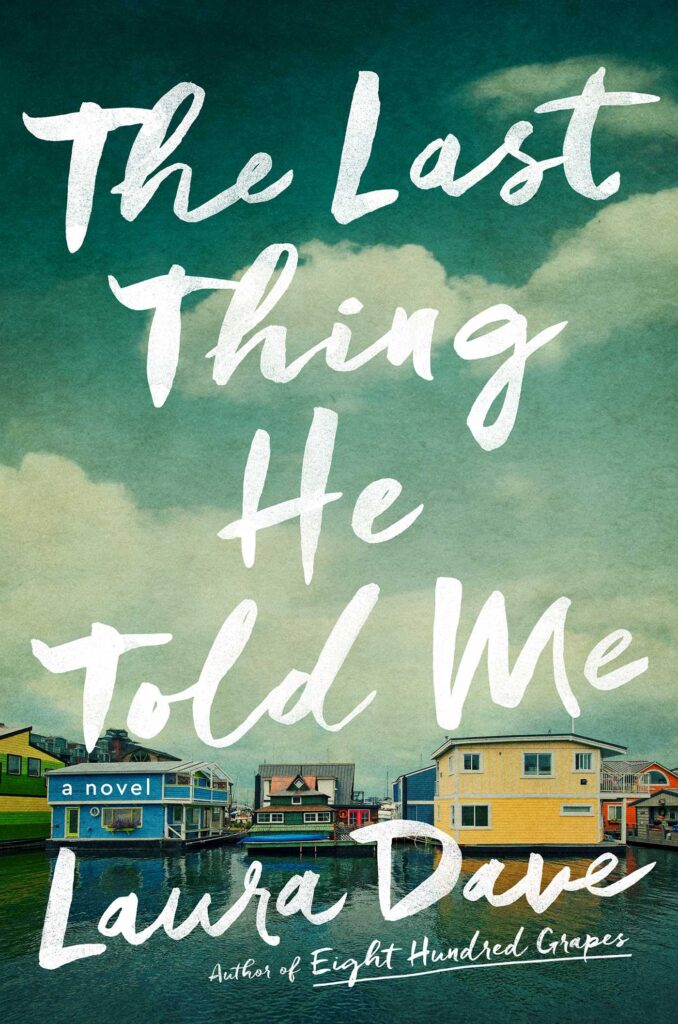
The Last Thing He Told Me (2021)
Series
Select Sections to Print
×Book Details
The Last Thing He Told Me (2021)
Series
Jump to Section
⚠️ Trigger Warnings
- Missing person / disappearance of a spouse and parent
- Parental abandonment
- Death of a parent
- Hit-and-run death
- Grief and loss
- Child endangerment
- Threats of violence
- Organized crime
- Drug trafficking and narcotics references
- Marijuana use
- Fraud and embezzlement
- Federal investigation / FBI involvement
- Deception and false identities
- Custody loss threats
- Vomiting due to extreme stress
⏱️ 2-Minute Spoiler Summary
Hannah Hall’s husband, Owen Michaels, suddenly disappears after his tech company is raided for fraud, leaving Hannah a note saying “Protect her” and giving his daughter Bailey more than $600,000. Hannah soon discovers that Owen and Bailey have been living under fake identities for years.
Hannah and Bailey travel to Austin, where they learn that Owen is actually Ethan Young and Bailey was originally Kristin. Ethan’s first wife, Kate, was the daughter of attorney Nicholas Bell, who worked with a dangerous crime syndicate. After Kate was killed in a suspicious hit-and-run, Ethan helped authorities prosecute Nicholas and his criminal associates, making himself and his daughter targets. When Witness Protection was compromised, Ethan created new identities for himself and Bailey and disappeared.
The collapse of Owen’s company threatens to expose his real identity, forcing him to run again. Rather than make Bailey enter Witness Protection and abandon her entire life, Hannah secretly approaches Nicholas and makes a deal: Nicholas will ensure Bailey is protected and allowed to remain Bailey Michaels, while he gets to know his granddaughter. The price is that Owen can never return without putting himself in danger.
Years later, Hannah and Bailey are living in Los Angeles and have become so close that Bailey calls Hannah Mom. At one of Hannah’s exhibitions, a disguised Owen briefly passes her wearing the wedding ring she made for him. He whispers a private phrase that confirms his identity, letting Hannah know that he is alive and still loves her, before disappearing again.
📖 Full Spoiler Summary
Owen Disappears
Hannah Hall has built a quiet life in Sausalito, California, where she works as a professional woodturner and lives on a floating home with her husband, Owen Michaels, and his sixteen-year-old daughter, Bailey. Hannah and Owen are happily married, but her relationship with Bailey is much more difficult. Bailey remains deeply attached to her father and has never fully accepted Hannah as her stepmother, treating her with a mixture of resentment and indifference.
That fragile family dynamic is shattered when a young girl in a soccer uniform appears at Hannah’s door carrying a note from Owen. It contains only two words: “Protect her.”
Hannah can’t reach Owen, and she soon learns that something enormous has happened at his workplace. Owen is a software engineer at The Shop, a successful technology company run by Avett Thompson, who happens to be one of Hannah’s longtime clients. The FBI and SEC have raided the company, and Avett has been arrested for a massive fraud and embezzlement scheme.
Owen, however, has vanished.
The situation becomes even stranger when Bailey comes home carrying a duffel bag that someone left in her school locker. Inside is more than $600,000 in cash, along with another message from Owen. This one tells Bailey to help Hannah and do what Hannah tells her.
Whatever Owen is running from, he clearly expected Hannah to protect Bailey in his absence.
Hannah Learns Owen Has Been Lying
Hannah turns to her oldest friend, Jules Nichols, a photo editor at the San Francisco Chronicle. Jules admits that she knew authorities were preparing to raid The Shop and called Owen shortly beforehand to warn him. His reaction now seems ominous. Instead of sounding shocked by the news, Owen simply wanted to know how much time he had.
Law enforcement soon starts circling Hannah as well. FBI agents Jeremy O’Mackey and Naomi Wu question her about Owen and suggest that he may have been involved in Avett’s crimes. Hannah doesn’t believe it. Owen had previously expressed concerns about what was happening at The Shop, and his disappearance feels less like a guilty employee fleeing prosecution than a man terrified of being found.
Then Grady Bradford, a U.S. Marshal from Austin, Texas, arrives with an even more disturbing warning. He tells Hannah that Owen isn’t who she thinks he is and advises her to get a lawyer.
Hannah calls Jake Anderson, her former fiancé and a powerful New York attorney. Although their romantic relationship ended years earlier, Jake agrees to help and hires an investigator to dig into Owen’s background.
What he discovers changes everything Hannah thought she knew about her husband.
There is no meaningful record of Owen Michaels before roughly ten years ago. Even more alarming, there is no record of Bailey Michaels either. Owen’s stories about growing up in Massachusetts, attending Princeton, and living in Seattle appear to be fabrications.
Hannah isn’t simply dealing with a missing husband. She’s dealing with a husband who apparently invented himself—and reinvented his daughter along with him.
Bailey’s Memories Lead Them to Austin
With official records providing no answers, Hannah starts paying closer attention to Bailey’s fragmented childhood memories. Bailey remembers very little about her life before Sausalito, but one image stands out: an enormous football stadium filled with orange.
She also vaguely remembers attending a wedding.
Hannah realizes the stadium could have been the University of Texas’s football stadium in Austin, where burnt orange is everywhere. Grady’s unexplained arrival from Austin suddenly seems far less coincidental.
Against the advice of the people trying to protect them, Hannah takes Bailey to Texas.
Their investigation eventually leads them to University of Texas mathematics professor Tobias “Cook” Cookman. When Cook sees a photograph of Owen, he recognizes him—but not as Owen Michaels.
He knew him as Ethan Young.
From there, Hannah finally begins reconstructing the life Owen erased.
Ethan had once been married to a woman named Kate Smith, also known as Olivia, and Bailey wasn’t born Bailey Michaels. Her original name was Kristin. Kate’s father was Nicholas Bell, a powerful Austin attorney with dangerous connections.
Nicholas wasn’t simply a successful lawyer. He represented members of a violent criminal organization and became deeply entangled with the syndicate surrounding his clients.
Ethan had married into a family with enemies capable of killing people.
The Truth About Bailey’s Mother
Bailey has grown up believing that her mother died in a car accident when she was young. That much is essentially true, but Owen concealed the circumstances surrounding her death.
Kate was killed in a hit-and-run, and Ethan became convinced that her death wasn’t an accident. He believed she had been deliberately targeted because of Nicholas Bell’s involvement with organized crime.
After losing his wife, Ethan’s priority became protecting his daughter.
Rather than continue living under Nicholas’s influence, Ethan cooperated with authorities and provided evidence against Nicholas and his criminal associates. His testimony helped the government build cases against dangerous people, but it also made Ethan and Kristin targets.
They were supposed to disappear into the Witness Protection Program. The problem was that their safety was compromised when information leaked. Ethan no longer believed the government could reliably protect his daughter.
So he disappeared on his own.
Ethan Young became Owen Michaels. Kristin Young became Bailey Michaels. They eventually settled in Sausalito, where Owen created an ordinary life convincing enough that even the woman he married never suspected that virtually everything he’d told her about his past was false.
For years, the disguise worked.
Then The Shop collapsed.
The federal investigation meant Owen’s name, photograph, fingerprints, employment history, and other identifying information could suddenly receive intense scrutiny. The publicity threatened to connect Owen Michaels to Ethan Young, which could expose Bailey to the people Ethan had spent years hiding from.
Owen wasn’t primarily running from the FBI.
He was running because being publicly identified could get his daughter killed.
Hannah Refuses to Erase Bailey’s Life
Grady Bradford finally explains that he has known the truth all along. His goal isn’t to prosecute Owen but to keep Hannah and Bailey alive. He wants them to enter Witness Protection, where they can disappear again and wait for Owen to join them when it becomes safe.
On the surface, it is the sensible option.
But Hannah now understands why Owen didn’t simply contact Grady himself. After what happened the first time, Owen doesn’t completely trust the government to protect Bailey.
Hannah also sees what entering WITSEC would cost Bailey. She would have to abandon the identity she has lived under for most of her life, along with her friends, school, theater ambitions, and future. Owen has already forced his daughter to become someone else once. Hannah doesn’t want Bailey to spend the rest of her life running.
Instead, she decides to confront the one person capable of changing the situation: Nicholas Bell.
Hannah secretly goes to Nicholas’s heavily protected estate, taking an enormous risk by approaching the very family Owen spent years trying to escape. Nicholas is stunned by her appearance and by the possibility of reconnecting with his granddaughter.
Hannah offers him a deal.
Nicholas will use his influence and connections to make certain that Bailey is left alone. She will be allowed to remain Bailey Michaels and continue living her life rather than disappearing into Witness Protection.
In return, Nicholas will be permitted to have a relationship with his granddaughter.
But there is a devastating condition.
Owen can never come home.
Nicholas can protect Bailey as long as Owen stays away, but if Ethan Young resurfaces, Nicholas cannot guarantee what his former criminal associates will do to him.
Hannah accepts.
Owen’s Final Sacrifice
The deal gives Bailey something Owen has desperately wanted for her all along: a chance at a normal future. But it also means Hannah loses the man she loves.
Owen can’t return without risking the fragile protection Hannah has secured for Bailey. Hannah finally understands that his disappearance was never about abandoning them. Every decision he made—from creating a false identity to leaving the money and the cryptic messages—was designed around one goal: keeping his daughter safe.
His note telling Hannah to “Protect her” was also an enormous act of trust. Owen believed that if he could no longer protect Bailey himself, Hannah would.
And she does.
Years pass.
Hannah and Bailey eventually build a life in Los Angeles, and their once-difficult relationship transforms completely. The teenage girl who once resisted Hannah’s presence has grown into a woman who considers Hannah her mother and calls her “Mom.”
Owen remains absent.
Then, during an exhibition of Hannah’s woodworking, she notices a man moving through the gallery. He looks different enough that most people would never recognize him, but Hannah notices something unmistakable: he is wearing the wedding ring she made for Owen.
As he passes her, he quietly says, “The could-have-been boys still love you.”
It’s a private reference only Owen would understand.
Hannah realizes immediately that her husband is alive.
He hasn’t returned to reclaim his old life or endangered Bailey by revealing himself. He has simply found a way to see Hannah for a moment and let her know that he is still out there—and that he still loves her.
Then Owen disappears back into the crowd, leaving Hannah and Bailey to continue the safe, permanent life his absence made possible.
🔚 Ending Explained
How Does The Last Thing He Told Me End?
The ending of The Last Thing He Told Me is bittersweet: Hannah finally learns the truth about Owen, but solving the mystery doesn’t bring him home. Instead, she makes a choice that permanently separates them while giving Bailey the chance to keep the life and identity Owen wanted for her.
The Final Events
After discovering that Owen Michaels is actually Ethan Young, Hannah learns why he disappeared. Years earlier, Owen betrayed the criminal organization connected to his father-in-law, Nicholas Bell, and has been living under an assumed identity ever since. His sudden disappearance isn’t about escaping the investigation into The Shop—it’s about preventing his past from catching up with Bailey.
Rather than accept U.S. Marshal Grady Bradford’s offer to place herself and Bailey in Witness Protection, Hannah takes an enormous risk. She goes directly to Nicholas Bell and proposes a deal.
Nicholas will use his influence to make sure Bailey is left alone. In return, Hannah will allow him to have a relationship with the granddaughter he hasn’t seen since she was a child.
The arrangement gives Bailey something WITSEC cannot: the ability to remain Bailey Michaels and continue living the life she already has. But there is one devastating condition. Owen can never safely return. The organization may be willing to leave Bailey alone, but it will never forgive the man who betrayed it.
Hannah accepts that price.
She returns to California without Owen, finally understanding what his last message—“Protect her”—was really asking of her. Protecting Bailey doesn’t simply mean keeping her physically alive. It means protecting the person Bailey has become.
What Happens to Hannah and Bailey?
Hannah’s choice permanently changes her relationship with Bailey.
At the beginning of the novel, Bailey barely tolerates her stepmother. Owen is the only real connection between them, and without him, there seems to be little reason for them to remain a family.
By the end, that has completely changed.
Hannah has sacrificed the possibility of getting her husband back so Bailey can keep her identity, her friends, her ambitions, and her future. She doesn’t replace Owen in Bailey’s life, but she does become the parent who stays.
The epilogue confirms just how important that choice becomes.
Years later, Bailey is in her twenties and living in Los Angeles. She and Hannah are still close, and Bailey now calls Hannah “Mom.” The transformation that began with Owen’s disappearance is complete: Hannah is no longer simply Bailey’s father’s wife. She is her mother.
Does Owen Ever Come Back?
Not exactly—but the novel gives Hannah one final moment with him.
At an exhibition of Hannah’s woodturning work, she notices a mysterious man among the crowd. His appearance has changed, but Hannah recognizes him.
Most importantly, she recognizes the wedding ring she made for Owen.
He approaches her, briefly touches her hand, and tells her:
“The could-have-been boys still love you.”
Then he disappears again.
The phrase refers back to something Owen once told Hannah about all the men she might have loved or married if her life had unfolded differently. By repeating it, he confirms his identity without openly revealing himself.
Owen is alive.
He has also apparently been watching Hannah and Bailey from a distance, even though he cannot safely become part of their lives again.
What Does the Ending Mean?
The ending ultimately reveals that the central love story isn’t only the marriage between Hannah and Owen. It’s also the relationship Owen leaves behind between Hannah and Bailey.
Owen’s final instruction—”Protect her”—initially sounds like a request to keep Bailey physically safe. Hannah eventually understands that protection can mean something much larger.
Witness Protection might keep Bailey alive, but it would also require her to abandon her name, her history, her friends, and much of the identity she has spent sixteen years developing. Hannah realizes that Bailey shouldn’t have to disappear because of decisions made by adults before she was old enough to understand them.
So Hannah makes the same kind of sacrifice Owen does.
Owen gives up his family so Bailey can be safe. Hannah gives up Owen so Bailey can remain herself.
That parallel is what makes the ending both painful and satisfying.
The Wedding Ring
The ring Owen wears during his brief appearance in the epilogue is especially important because Hannah made it herself from white oak and steel.
Owen Michaels may have been a fabricated identity, but his marriage wasn’t emotionally fake. His past, his name, and much of the story Hannah believed about him were lies, yet his love for Hannah was real.
The ring survives even after “Owen Michaels” effectively ceases to exist.
It becomes proof that beneath all those false identities, there was something genuine between them.
The Hoodie
A quieter piece of symbolism appears when Hannah gives Bailey a hoodie to keep her warm on their flight home.
Earlier, Owen had done something similar for Hannah. By repeating the gesture, Hannah symbolically assumes the role Owen can no longer occupy.
She has become the person who notices what Bailey needs and takes care of her.
It’s a small moment, but it anticipates the epilogue’s biggest emotional revelation: Bailey eventually calls Hannah “Mom.”
Woodturning
Hannah’s profession also mirrors the structure of the story.
Woodturning involves shaping and stripping away material until the object’s underlying form emerges. Hannah spends the novel doing essentially the same thing with Owen’s identity.
First Owen Michaels disappears.
Then his carefully constructed history falls away.
Eventually Hannah reaches Ethan Young and the truth about his past.
But underneath all those layers, she discovers that the most important part of him hasn’t changed: his devotion to Bailey.
The mystery reveals that almost everything Hannah knew about Owen’s history was false while simultaneously proving that the most important things she knew about his character were true.
Sacrifice, Identity, and Chosen Family
The novel’s biggest theme is sacrifice. Owen’s disappearance initially looks like abandonment, but by the end Hannah understands it as an act of love. He leaves precisely because staying would endanger Bailey.
Hannah then makes her own version of that sacrifice. She could choose the possibility of eventually reuniting with Owen through government protection, but doing so would force Bailey into a life she doesn’t want. Hannah chooses Bailey instead.
The ending also complicates the novel’s obsession with identity. Owen isn’t Owen. Bailey isn’t really a Michaels. Names, histories, and official records can all be rewritten.
But the novel ultimately argues that identity isn’t only about what you’re called or where you came from. It’s also about the relationships you choose and the actions you take.
That’s why Bailey calling Hannah “Mom” matters so much. Hannah isn’t her biological mother, and Owen’s disappearance technically removes the connection that made them stepmother and stepdaughter in the first place.
They remain family anyway.
Why the Ending Is Bittersweet
There is no conventional reunion.
Hannah solves the mystery, finds Owen, and learns why he left—but none of that allows her to bring him home. The life they built together is permanently gone.
Yet Owen’s final appearance prevents the ending from feeling entirely tragic.
He survived. He still loves Hannah. He knows Bailey is safe. And from somewhere beyond the edges of their everyday lives, he appears to be keeping watch over them.
Meanwhile, Hannah and Bailey have created something neither of them expected: a family that survives even after the person who originally connected them disappears.
That’s the real resolution of The Last Thing He Told Me. Hannah fulfills Owen’s final request not merely by keeping Bailey alive, but by giving her a life she doesn’t have to run from. In losing Owen, Hannah becomes the person he trusted her to become—and Bailey finally gains the mother she never expected to have.
👤 Characters & Fates
🔶 Main Characters

She makes a deal with Nicholas Bell that allows Bailey to remain free but means Owen can never return; years later, Hannah and Bailey live in Los Angeles as mother and daughter, and Hannah briefly encounters Owen, who whispers that he still loves her.

He permanently disappears under another identity to protect Bailey, but years later secretly approaches Hannah at a gallery show and tells her he still loves her.

She remains Bailey Michaels rather than entering witness protection, grows close enough to Hannah to call her “Mom,” and as an adult lives a normal life in Los Angeles with boyfriend Shep.
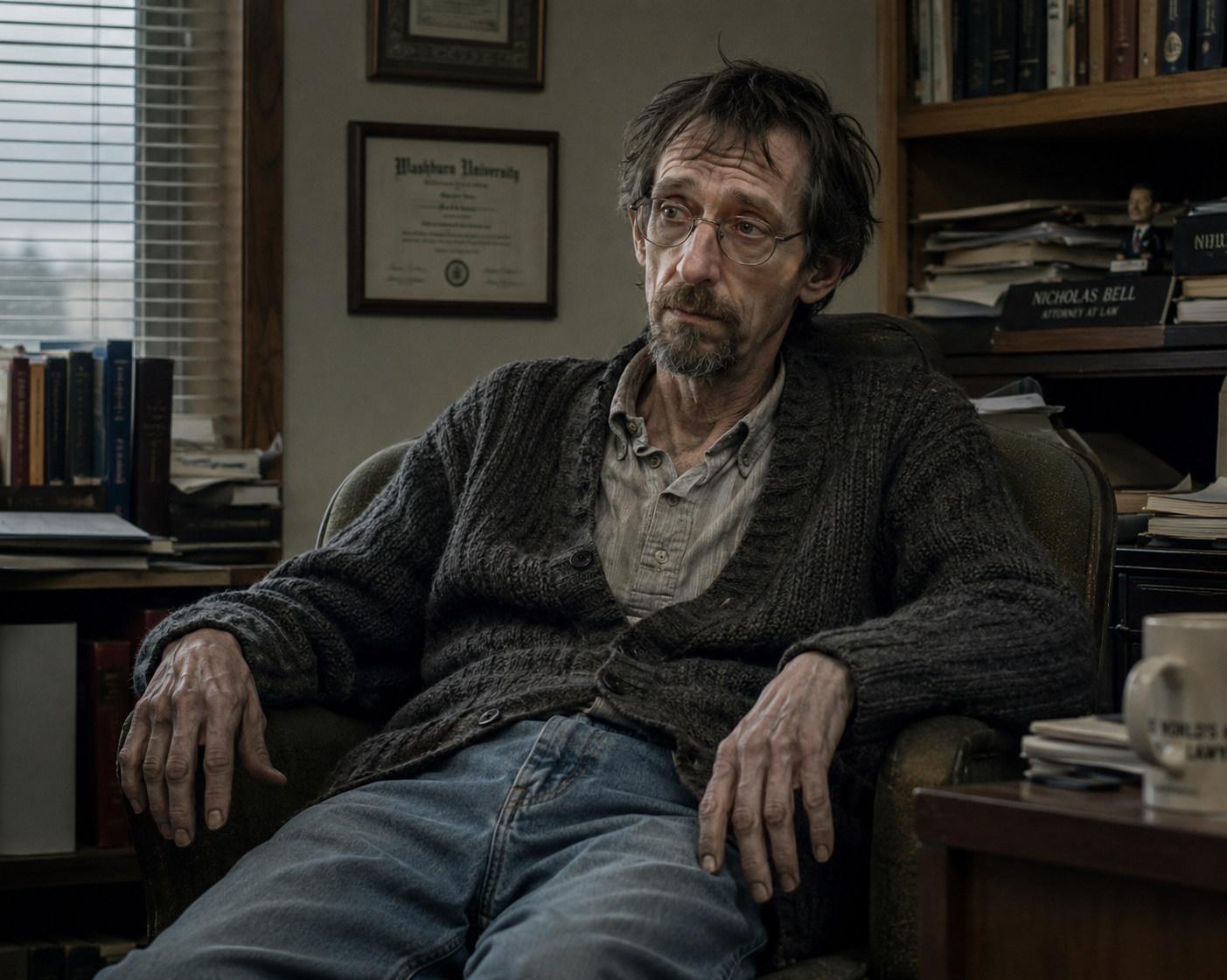
Hannah boldly negotiates with him: Nicholas protects Bailey from his criminal associates and gets a relationship with his granddaughter, while Owen must stay away permanently.
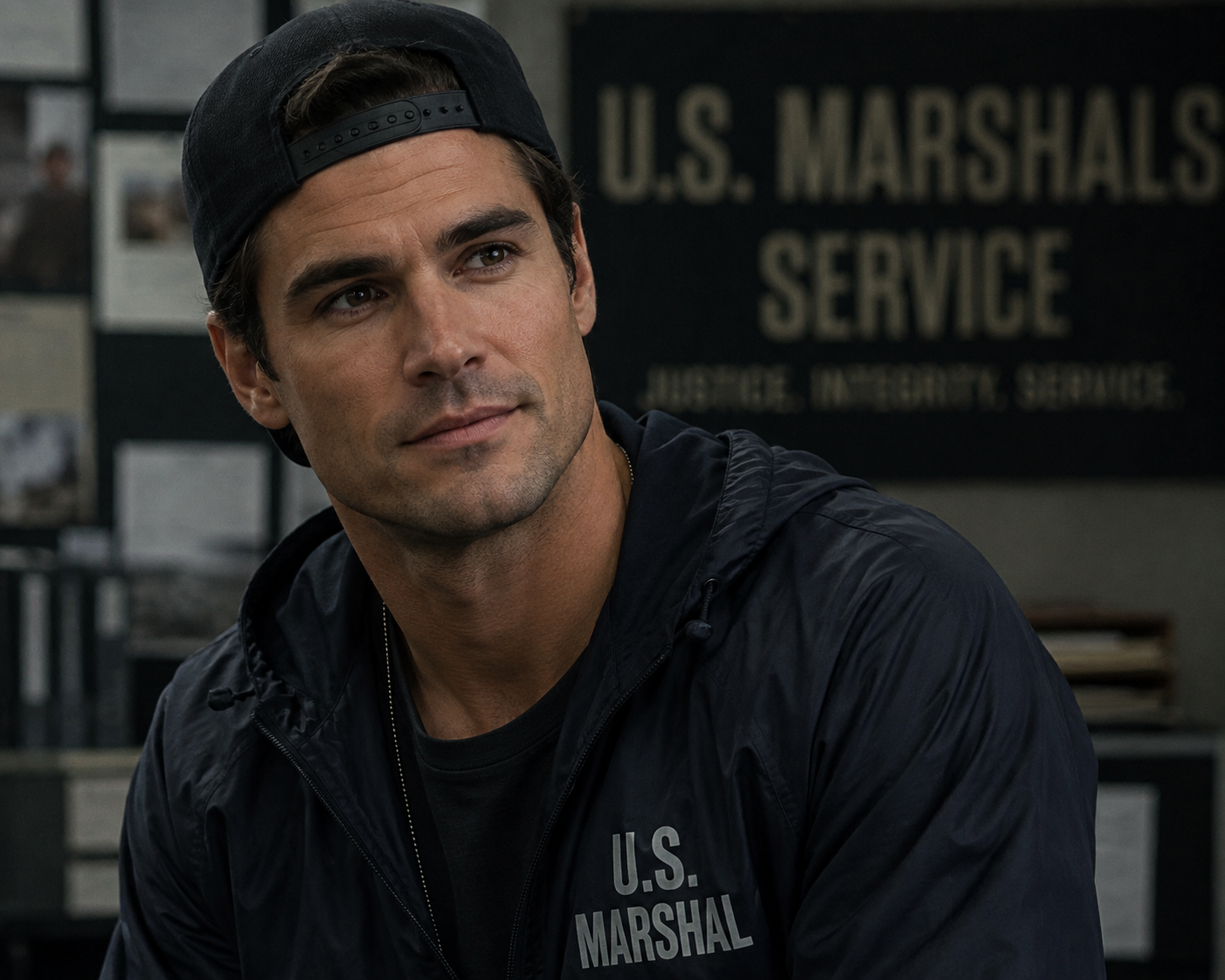
Hannah rejects his plan and makes her own deal with Nicholas Bell instead, leaving Grady unable to reunite Owen with his family.
🔷 Supporting Characters

She remains Hannah’s trusted friend and emotional support after Owen disappears.
He is arrested and indicted for fraud and embezzlement and faces decades in prison.
After trying to flee to Australia, she ends up under house arrest in St. Helena.
He offers Hannah refuge in New York, but she ultimately chooses Bailey and the life they build together instead.
He gives Hannah the information she needs to uncover Owen’s true history and then largely exits the story.
He is stunned and emotional when Hannah and Bailey flee his bar before the Bell family can reclaim Bailey.
She was killed in a hit-and-run years before the novel begins, leaving Owen to raise Bailey alone and eventually flee Austin with her.
Carl eventually admits he has been lying about his own troubles, while he and Patty remain in Sausalito.
They never capture Owen or succeed in forcing Hannah to reveal where he has gone.
Her discovery becomes one of the final clues Hannah needs to uncover Owen’s real identity.
He dies before the novel begins but remains an important influence and moral compass in Hannah’s life.
They remain largely absent from Hannah’s adult life and never repair the damage they caused.
She collects the twenty dollars Owen promised her and simply returns to her normal life.
He eventually disappears from Bailey’s life as she grows up, with Shep appearing as her boyfriend in the epilogue.
He disappears from the story after the awkward encounter, never realizing how important his mistake was.
He meets Hannah at her gallery exhibition years later, shortly before Hannah’s secret encounter with Owen.
🕳️ Potential Plot Holes
Owen works for years as the chief coder at a major Silicon Valley company that eventually goes public, yet apparently no one discovers that “Owen Michaels” has no legal history before 2009. Given the scrutiny typically surrounding senior employees and major shareholders during an IPO, it is difficult to believe his fabricated identity would survive without raising questions.
The ending establishes that Owen cannot return to Hannah and Bailey because members of the criminal organization may continue watching them in hopes of finding him. Yet years later, Owen walks into Hannah’s public gallery exhibition and approaches her personally. Even with his altered appearance, deliberately appearing at a predictable public event connected to Hannah creates exactly the kind of exposure he has spent years avoiding and could potentially reveal that he is still alive.
📚 Book Club Q&A's
⭐ Final Rating & Thoughts
The Last Thing He Told Me had me completely hooked at first. A missing husband, a cryptic note, a federal investigation, and a teenager who suddenly finds herself at the center of it all? I was expecting a tense, twisty thriller, and the opening absolutely delivered on that promise.
Unfortunately, the suspense faded pretty quickly. What started as a compelling mystery gradually became a much slower family drama, and by the final third, I felt like I was being handed explanations rather than discovering them alongside the characters. Introducing so much backstory and so many important details that late in the book made the resolution feel less satisfying than it should have.
The strongest part for me was the evolving relationship between Hannah and Bailey. Their emotional journey gave the story some much-needed heart and ultimately worked better for me than the mystery itself.
This isn't a bad book, but it definitely wasn't the thriller I thought I was getting. Strong beginning, meaningful emotional core, but a meandering middle and underwhelming payoff left me at 2.5 stars.
✨ Adaptation description
The Last Thing He Told Me — TV Adaptation
Laura Dave’s 2021 novel The Last Thing He Told Me was adapted into an Apple TV thriller series created by Laura Dave and Josh Singer and produced by 20th Television and Hello Sunshine. The series stars Jennifer Garner as Hannah Hall, Angourie Rice as Bailey Michaels, and Nikolaj Coster-Waldau as Owen Michaels. Season 1 premiered in 2023 and adapts the original novel across seven episodes. (Entertainment Tonight)
The series was subsequently renewed rather than remaining a limited series. Season 2 premiered February 20, 2026, with eight episodes, and is based on Dave’s sequel, The First Time I Saw Him. The second season begins five years later, when Owen unexpectedly resurfaces and Hannah and Bailey are pulled back into the danger surrounding his past. (Apple)
The Last Thing He Told Me on Apple TV
Key Differences
The opening is restructured. The novel begins with Hannah remembering her second date with Owen. The series instead opens with a flash-forward showing Hannah frantically searching a hotel room for Bailey, immediately establishing the story as a thriller before returning to the days surrounding Owen’s disappearance. (Entertainment Tonight)
Hannah’s public profile is increased. The show introduces an upcoming magazine article about Hannah’s woodturning career. That storyline isn’t in the novel and makes Hannah more publicly visible just as Owen disappears. (Entertainment Tonight)
Owen’s disappearance unfolds differently. In the novel, Hannah learns about the investigation into The Shop while listening to the radio as she waits for Bailey. In the series, she calls Owen’s workplace, drives there herself, and discovers the FBI raid and his empty parking space. This gives Hannah a more active role in discovering the crisis. (Entertainment Tonight)
Bailey’s note is changed. Owen’s message to Bailey in the novel explicitly instructs her to help and trust Hannah. The television version removes that instruction, leaving Bailey to develop her trust in Hannah more independently. (Entertainment Tonight)
Tone Changes
The novel combines domestic suspense with an introspective family drama, since everything is filtered through Hannah’s first-person narration. The series pushes the material further toward a conventional mystery-thriller, creating suspense through visual clues, additional confrontations, and events Hannah doesn’t personally witness.
For example, the series adds scenes in Sausalito while Hannah and Bailey are in Austin: Grady watches the houseboat, encounters a mysterious man photographing it, and eventually searches the house himself. None of those sequences occur in the novel. (Entertainment Tonight)
At the same time, the emotional center remains Hannah and Bailey rather than Owen’s criminal backstory. Dave described the adaptation process as an attempt to make the story more “propulsive” while retaining its human and haunting qualities. (Entertainment Tonight)
Structural Changes
The book can remain almost entirely inside Hannah’s perspective, moving repeatedly between the investigation and memories of her relationship with Owen. Television requires a broader viewpoint, so secondary characters are given scenes and actions independent of Hannah.
The series also rearranges several clues. Bailey’s memories of Austin, Owen’s reaction to the city, the mysterious “L. Paul,” the piggy bank, and information uncovered by Jules and Jake are redistributed across episodes. Some clues Hannah discovers herself in the novel are instead uncovered collaboratively by the supporting characters. (Entertainment Tonight)
Character Changes
Hannah Hall: Hannah is blonde in the novel, while Jennifer Garner plays her with dark brown hair. More importantly, the television Hannah is somewhat more externally active because viewers cannot hear the extensive internal narration that drives the book.
Bailey Michaels: Bailey receives a larger independent presence. The series shows more of her relationship with Bobby, theater life, and reaction to her father’s disappearance rather than presenting these primarily through Hannah’s observations. (Jen Ryland Reviews)
Jules Nichols: Jules becomes more directly involved in solving the mystery. Among other things, Hannah sends her to the houseboat to retrieve Bailey’s piggy bank, where Jules discovers a hidden key—an incident created for the series. (Entertainment Tonight)
Grady Bradford: His role is expanded substantially. The series can follow Grady when Hannah isn’t present, allowing him to investigate the houseboat and the people watching it. This turns him into a more active parallel investigator. (Entertainment Tonight)
Jake: Jake is also incorporated more directly into the ongoing investigation, although some of his actions and interactions with Hannah differ from the novel.
What the Adaptation Emphasizes
The series emphasizes momentum, immediate danger, and investigation. Scenes such as the FBI raid, surveillance around the houseboat, break-ins, and characters independently searching for information make the threat surrounding Hannah and Bailey more visible.
It also expands the Hannah-Bailey partnership. The novel’s emotional destination is already their transformation into a family, but television gives Bailey greater narrative independence, allowing viewers to watch her choose to trust Hannah rather than experiencing that evolution exclusively through Hannah’s perspective.
What It Softens, Removes, or Expands
The adaptation reduces some of Hannah’s internal reflection and smaller interactions encountered during the Austin investigation. Minor characters and incidental encounters—including people Hannah meets while traveling—are eliminated or condensed. (Entertainment Tonight)
Conversely, it expands the supporting cast and off-page action. Grady, Jules, Jake, Bailey, Bobby, and figures connected with The Shop can participate directly in events that the novel either relates to Hannah afterward or never depicts.
Owen’s flashbacks are also used more selectively. Rather than reproducing every memory from the novel, the series rearranges them around the investigation so that information about Hannah and Owen’s marriage arrives when it contributes to the episode’s mystery.
Season 2 and the Sequel
Season 2 is a somewhat different adaptation situation. Laura Dave was still developing The First Time I Saw Him while the television continuation was being created. Dave shared the story, themes, and part of her manuscript with the television team, but the two versions subsequently developed separately. As a result, Season 2 and the second novel share the same core story without following each other as closely as Season 1 follows the first book. (Us Weekly)
Cast members Angourie Rice and Judy Greer have described the two versions as complementary: certain characters receive greater prominence in one version than the other, and some events unfold differently even though the central narrative remains the same. (Us Weekly)
✨ Books Like The Last Thing He Told Me (2021)
See an error on this page?