
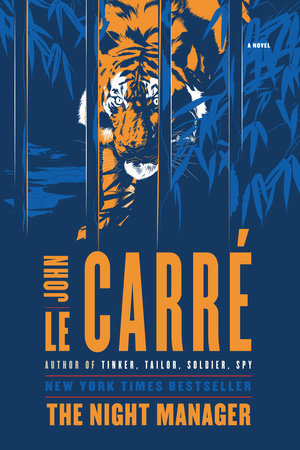
Book Details
The Night Manager (1993)
Jump to Section
⚠️ Trigger Warnings
- Physical violence, murder, and torture
- Graphic executions and throat-cutting
- Severe beatings and physical assault
- Captivity, chaining, and torture
- Gun violence and armed combat
- Child kidnapping and endangerment
- Suicide
- Drug trafficking and substance abuse
- Intravenous drug use
- Arms trafficking
- Chemical weapons and weapons of mass destruction
- Landmines and cluster bombs
- Rape and sexual assault (references)
- Sexual content and prostitution
- Misogynistic and objectifying language
- Animal death and mutilation
- Animal cruelty and distress
⏱️ 2-Minute Spoiler Summary
Jonathan Pine is working as the night manager of a luxury hotel in Zurich when wealthy British businessman Richard Roper arrives with his entourage: his young mistress Jed Marshall, his majordomo Major Lance “Corky” Corkoran, his bodyguards Frisky and Tabby, and others. Seeing Roper brings back painful memories for Pine because he already knows exactly what kind of man Roper is.
Six months earlier, while working at a Cairo hotel, Pine became involved with Sophie Alekan, the mistress of powerful Egyptian playboy Freddie Hamid. Sophie secretly gave Pine documents to photocopy, and he discovered they detailed a massive weapons deal between Roper and Hamid involving heavy weaponry and chemical agents. Pine passed the information to his contact at the British Embassy, believing he was doing the right thing. Instead, the leak was traced back to Sophie. Hamid brutally beat her, and although Pine helped her escape to Luxor, where they became lovers, she eventually returned to Cairo. Pine later found her murdered in her hotel room.
Now face-to-face with Roper in Zurich, Pine secretly gathers information about his stay and passes it to British intelligence. Soon afterward, Leonard Burr, who runs a small British enforcement agency investigating Roper, recruits Pine for a deep-cover operation called Limpet. Burr knows Roper likes to employ people with compromised pasts, so his team manufactures an elaborate criminal history for Pine. Pine assumes multiple identities, participates in a staged killing in Cornwall, obtains a Canadian passport through another false identity, and eventually makes his way to the Bahamas.
There, Burr and American agent Joe Strelski stage the kidnapping of Roper’s eight-year-old son, Daniel. Pine “rescues” Daniel, taking a savage beating in the process. A grateful Roper brings the badly injured Pine to his private island, Crystal, where Pine slowly earns his trust.
Pine bonds with Daniel and becomes increasingly attracted to Jed. At the same time, Burr’s team deliberately undermines Corky’s standing with Roper’s business partners, allowing Pine to replace him as Roper’s corporate frontman. Pine secretly breaks into Roper’s office and photographs documents revealing an enormous arms-for-drugs scheme: Roper plans to supply Western military weapons to South American drug cartels in exchange for tonnes of cocaine destined for Europe. Jed catches Pine near the office, forcing him to admit that he is spying on Roper. Already disillusioned with Roper, she sides with Pine, and their attraction becomes a romantic relationship.
Roper takes Pine to Curaçao and Panama, where Pine signs financial documents and sees the operation firsthand. He witnesses military demonstrations at a jungle training camp and inspects thousands of coffee boxes concealing cocaine. Whenever he can, he secretly sends Burr information about the shipments, containers, ships, and warehouses.
But Operation Limpet is betrayed from within British intelligence. Geoffrey Darker and his faction want the investigation shut down, and Pine’s real identity eventually reaches Roper.
Pine is captured aboard Roper’s yacht, the Iron Pasha, where Corky, Frisky, and Tabby brutally torture him. Pine refuses to betray Jed. Back in London, Burr forces corrupt insiders into a political compromise: Roper must release Pine and Jed in exchange for the criminal case against him being suppressed.
Roper reluctantly agrees. As Pine and Jed are brought onto the yacht’s deck, Pine manages to attack Frisky and Tabby despite his injuries. Roper holds Jed at gunpoint but ultimately honors the deal and abandons them safely onshore.
Roper escapes immediate prosecution because of the high-level cover-up, but his enormous arms-for-cocaine deal is destroyed. Pine and Jed survive and disappear together to a secluded cottage in Lanyon, Cornwall.
📖 Full Spoiler Summary
Pine Comes Face-to-Face With Richard Roper
In January 1991, as the Gulf War begins, Jonathan Pine is working as the English night manager at the luxurious Hotel Meister Palace in Zurich. One night, the hotel welcomes an especially important guest: fabulously wealthy British businessman Richard Onslow Roper. He arrives surrounded by his inner circle, including his young mistress Jed “Jemima” Marshall, his majordomo Major Lance “Corky” Corkoran, and his bodyguards Frisky and Tabby.
For Pine, however, Roper isn’t simply another rich hotel guest. Seeing him immediately brings back memories of Cairo and the woman whose death Pine still carries with him.
Six months earlier, Pine was working as night manager at the Queen Nefertiti Hotel in Cairo. One of its residents was Sophie Alekan, the mistress of Freddie Hamid, a powerful Egyptian playboy whose family owned much of Cairo, including the hotel. Sophie secretly asked Pine to photocopy a collection of confidential documents for her.
While copying them, Pine realized he was looking at something enormous. The documents contained detailed inventories of heavy weapons, guidance systems, and chemical agents—including Sarin, Soman, and Tabun—that Roper was planning to sell to Hamid.
Believing he had a duty to act, Pine gave copies to his friend Mark Ogilvey, a diplomat at the British Embassy. The information was sent to London, and Roper’s planned transaction was disrupted. But the leak had devastating consequences. Suspicion immediately fell on Sophie, and Hamid brutally beat her.
Pine helped the injured Sophie escape Cairo and hide at Chicago House in Luxor. During their time there, they became lovers. Pine begged her not to return to Cairo, but Sophie went back anyway. Soon afterward, she was murdered in her hotel penthouse. Pine was the one who found her body, leaving him with lasting guilt over the role his decision to leak the documents had played in exposing her.
Now, with Roper staying at his Zurich hotel, Pine quietly gathers everything he can: registration forms, fax records, direct-dial telephone numbers, and other information from Roper’s stay. He passes the material to Wing Commander Quayle of British intelligence.
Shortly afterward, Pine is accidentally trapped for sixteen hours in the hotel’s deep wine cellar during a power outage. The claustrophobic experience becomes a turning point. He no longer wants to remain a passive observer moving from one luxury hotel to another. Sophie is dead, Roper is still thriving, and Pine wants to do something about it.
Burr Turns Pine Into a Criminal
Back in London, Leonard Burr has already made Roper one of his primary targets. Burr heads a small, poorly funded enforcement agency and believes Roper is deeply involved in international black-market arms trafficking. He has the support of senior civil servant Rex Goodhew, but he is constantly battling other factions within British intelligence.
One of his biggest obstacles is Geoffrey Darker, part of the River House’s Procurement Studies Group. Darker and other “Pure Intelligence” officials are far less interested in bringing down wealthy arms merchants whose connections can be useful to them.
Burr travels to Switzerland and recruits Pine for a deep-cover operation called Limpet.
Pine already has a background that makes him unusually suited to the job. His father, a British infantry sergeant, was killed in Aden and posthumously awarded the Military Medal. Orphaned, Pine grew up in military institutions before eventually serving in elite Close Observation Platoons in Northern Ireland. During Operation Night Owl, Pine and his partner killed three IRA suspects in an ambush.
But Roper prefers to surround himself with compromised people whose secrets make them easier to control. Burr therefore needs Pine to appear far more criminal than he actually is.
The team begins constructing an elaborate false history for him. In Cornwall, Pine becomes Jack Linden, supposedly a violent and unstable man involved in drug-running with an Australian named Jumbo Harlow. Pine participates in a staged confrontation in which it appears that he has killed Harlow, although Harlow is actually hidden safely away by Burr’s team. Pine even cuts his own hand, creating a permanent scar that helps make the story convincing.
From there, he flees to Quebec and adopts another identity, Jacques Beauregard. While working at the Château Babette in Espérance for André and Angélique Latulipe, he becomes involved with their daughter Yvonne. Through another carefully constructed deception involving an elderly priest, Pine manages to obtain a genuine Canadian passport in the name Thomas Lamont.
His fictional descent into criminality is now convincing enough to put him in Roper’s path.
Pine Saves Roper’s Son and Enters His Inner Circle
Using the Lamont identity, Pine works aboard charter yachts before becoming a chef at Mama Low’s restaurant on Hunter’s Island in the Bahamas. Burr and American enforcement agent Joe Strelski then arrange the event designed to bring Pine directly into Roper’s world.
While Roper and his party are eating at Mama Low’s, armed men stage the kidnapping of Roper’s eight-year-old son, Daniel.
Pine intervenes exactly as planned. He disarms one attacker, breaks the man’s arm, and rescues Daniel. But making the attack look convincing comes at a steep price: the second gunman beats Pine severely, leaving him with head trauma and broken ribs.
A grateful Roper has Pine flown by private helicopter to Crystal, his private island in the Exumas, where his personal surgeon treats him.
As Pine recovers at Woody’s House, Roper and Corky investigate him intensely. Pine survives their questions by carefully blending real pieces of his life with the false history Burr’s team created for him.
At the same time, Burr and Strelski are quietly working to remove Corky from Roper’s business operation. They leak information about Corky’s past financial and personal misconduct to Roper’s Latin American associates. Once Corky becomes a liability, Roper needs someone else to serve as his official “signer”—the respectable-looking managing director whose name can appear on the shell companies used in his illegal transactions.
Pine is perfectly positioned to replace him.
Pine Discovers Roper’s Real Deal
Life on Crystal draws Pine deeper into Roper’s world. He develops a genuine bond with Daniel, teaching the boy to fish and sail. He also becomes increasingly attracted to Jed, whose own feelings toward Roper have become complicated and disillusioned.
Pine eventually takes an enormous risk and breaks into Roper’s private office. Using a tiny camera concealed inside a lighter, he photographs documents revealing the full scope of Roper’s latest operation.
Roper is arranging a massive exchange with South American drug cartels. He will provide them with Western military weapons, and in return the cartels will supply tonnes of pure cocaine for distribution throughout Europe.
Jed catches Pine near the office, forcing him to reveal what he is really doing. He tells her that he is spying on Roper and explains that the wealthy businessman she lives with is actually an arms merchant and killer. Rather than expose Pine, Jed sides with him. Their existing attraction deepens into a romantic relationship, making Pine’s position inside Roper’s household even more dangerous.
The Arms-for-Cocaine Deal Moves Forward
Roper next takes Pine to Curaçao, giving him yet another identity through a false New Zealand passport in the name Derek S. Thomas. Pine is now functioning as the corporate face of Tradepaths Limited, one of the shell companies being used to execute the deal.
At a bank in Willemstad, Pine signs paperwork authorizing a $25 million payment for weapons loaded aboard the SS Lombardy.
From there, the group travels to Panama. At Cerro Fábrega, known as “Fabergé,” Pine visits a secret jungle training camp run by Colonel Emmanuel and a collection of international mercenaries. He and Roper watch live-fire military demonstrations, giving Pine a firsthand look at the machinery behind Roper’s business.
In the Colón Free Zone, Pine enters a warehouse marked with an “EAGLE” sign and sees thousands of coffee boxes concealing tonnes of pure cocaine. As managing director of Tradepaths, he signs the official waybills for the shipment.
Whenever he gets even a brief opportunity, Pine records the information Burr needs: container numbers, warehouse locations, waybill details, and ship identities. Through a local contact named Sánchez, he secretly passes coded notes to Burr’s deputy, Rob Rooke.
The operation is working. Pine has penetrated Roper’s organization and obtained direct evidence of the entire transaction.
The greatest danger, however, is coming from his own side.
Operation Limpet Is Betrayed
In London and Washington, powerful people begin sabotaging Operation Limpet from within. Darker and his Pure Intelligence allies want Burr’s investigation stopped, both to protect their institutional interests and to conceal their own involvement.
Dr. Paul Apostoll, a cartel lawyer who has secretly been informing for American enforcement, is tortured and murdered.
Then the betrayal reaches Pine. Darker’s faction allows Pine’s real identity to reach Sir Anthony Joyston Bradshaw, who immediately warns Roper.
Pine’s cover is destroyed.
Roper now knows that the man he brought into his home, trusted with his son, and made the official frontman for his business has been spying on him. He also discovers Pine’s relationship with Jed.
Aboard Roper’s yacht, the Iron Pasha, Pine is imprisoned in the forward security hold. Corky, Frisky, and Tabby subject him to savage beatings and torture. Despite the pain, Pine refuses to give them what they want and will not implicate Jed.
Burr Forces Roper to Let Pine and Jed Go
While Pine is being tortured, Burr fights desperately from London to save him. He corners corrupt lawyer Harry Palfrey and uses intercepted telephone lines to trap Bradshaw.
Burr gives Bradshaw a choice: face immediate prosecution for fraud and illegal arms dealing, or personally call Roper aboard the Iron Pasha and order him to release Pine. In return, the British and American criminal case against Roper will be suppressed.
Bradshaw makes the call.
Roper realizes that the political protection shielding him in London is collapsing and that his enormous cartel transaction has already been compromised. He reluctantly agrees to release both Pine and Jed.
When they are brought onto the yacht’s deck, however, Pine still has enough strength left to fight back. Despite everything he has endured, he suddenly attacks Frisky and Tabby, smashing their heads together and incapacitating them.
Roper grabs Corky’s pistol and holds Jed at gunpoint. He could kill them, but doing so would violate the political bargain that has just been forced upon him. Instead, he lets them go, abandoning Pine and Jed on the coastline as the Iron Pasha sails away.
Roper does not immediately face trial. The same high-level political forces that interfered with Burr’s investigation ensure that the case against him is buried.
But Roper doesn’t escape completely untouched. His enormous arms-for-cocaine transaction is destroyed.
More importantly for Pine, he and Jed survive. After everything that began with Sophie’s murder in Cairo and led Pine through a manufactured criminal life and into the center of Roper’s empire, he finally leaves the operation behind. Pine and Jed retreat together to the remote cottage at Lanyon in Cornwall, where they begin a quiet, secluded life away from Roper and the intelligence world that nearly killed them.
🔚 Ending Explained
How the Book Ends
The ending of The Night Manager begins with the collapse of Operation Limpet. Jonathan Pine’s infiltration of Richard Roper’s organization has succeeded almost too well, but the operation is betrayed from within the British establishment. Geoffrey Darker and the “Pure Intelligence” faction at the River House move to protect their own political and economic interests, while Sir Anthony Joyston Bradshaw warns Roper that Pine is an undercover operative.
By then, the consequences are already brutal. Dr. Paul Apostoll, the cartel lawyer secretly informing for US Enforcement, has been tortured and murdered in Coconut Grove. Pine is stripped of his false identities, chained and gagged in the forward hold of Roper’s yacht, the Iron Pasha, and subjected to days of beatings and torture by Frisky, Tabby, and Major Lance Corkoran.
Pine refuses to talk. No matter what they do to him, he will not reveal his communications with the intelligence operation or implicate Jed Marshall. His silence becomes his final act as an operative: even after his cover has been destroyed, he can still protect the people who trusted him.
Meanwhile, Leonard Burr realizes that official channels will not save Pine. Instead, he launches an audacious bluff. Using an emergency wiretap warrant obtained through corrupt lawyer Harry Palfrey, Burr confronts Sir Anthony Joyston Bradshaw at his country estate. He falsely tells Bradshaw that Geoffrey Darker has already been arrested and that an international warrant has been issued for Bradshaw himself.
Bradshaw panics exactly as Burr hopes he will and contacts Roper aboard the Iron Pasha. Burr then delivers his ultimatum through Bradshaw: release Pine unharmed within an hour, or Burr will expose Roper’s arms-for-drugs operation and turn him over to American authorities.
Roper gives in—not because he has suddenly developed a conscience, but because the political calculation has changed. Keeping Pine is no longer worth the risk.
Frisky and Tabby unchain Pine and bring him onto the deck with Jed. Despite being badly injured, Pine manages one last burst of resistance, smashing Frisky and Tabby’s heads together and kicking them unconscious. Roper grabs Corkoran’s Browning pistol and holds Jed at gunpoint, but the agreement with Burr effectively stays his hand.
Pine, Jed, and Corkoran are put into a launch. Pine and Jed are finally released on shore.
But there is no satisfying arrest of Richard Roper.
Roper remains free because powerful figures within the British establishment suppress the evidence rather than expose the government’s own connections to the international arms trade. The distinction between crime and politics has become almost meaningless. Roper’s enormous arms-and-cocaine deal has been destroyed, but the man himself escapes prosecution.
The novel instead gives its real resolution to Pine and Jed.
They disappear together to Lanyon in West Cornwall, the same place where Pine once constructed the criminal identity of “Jack Linden.” Now the cottage becomes his genuine home. Pine grows a thick Cornish beard, while Burr quietly visits local villagers and establishes a protective fiction around the couple. People such as Ruth Trethewey are encouraged to dismiss questions about “Jack Linden” and regard Pine simply as an innocent Irish stranger who has come to Cornwall to begin again with his lady.
Pine has spent much of the novel pretending to be other people. At the end, hidden behind yet another story, he finally gets the chance to stop pretending.
What the Ending Means
The ending is deliberately cynical about institutions but hopeful about individuals. Pine does not defeat the corrupt system surrounding Roper. Burr does not clean up British intelligence. Roper does not stand trial. Instead, the victory is smaller and more personal: Pine and Jed escape the machinery that has been using them and recover lives of their own.
That makes Lanyon Cottage especially important. Earlier, Cornwall was where Pine manufactured “Jack Linden,” one of the many identities required to infiltrate Roper’s world. Returning there reverses its meaning. A place associated with fabrication becomes a place of authenticity. The remote Cornish landscape also stands in stark contrast to Roper’s world of luxury hotels, yachts, private islands, expensive wine, and carefully cultivated appearances. Roper possesses spectacular things; Pine ends with something far less glamorous but far more valuable—a private life that actually belongs to him.
Even Pine’s thick beard contributes to that sense of transformation. Throughout the novel, he has been a professional chameleon: Jack Linden, Jacques Beauregard, Thomas Lamont, Derek Thomas. His appearance, history, accent, relationships, and loyalties have repeatedly been turned into performances. The bearded man living quietly in Cornwall feels almost like someone who has finally stepped outside that endless sequence of constructed selves.
The Iron Pasha also completes a symbolic circle. Pine ends up chained in its forward hold, another enclosed space in which his identity is stripped away. It recalls his earlier confinement in the Meister Palace wine cellar, when he confronted the emptiness of the life he had been living. That earlier imprisonment helped propel him toward action; this final imprisonment becomes the ordeal through which that transformation is completed.
Most importantly, Pine’s refusal to speak under torture shows how much he has changed. His heroism isn’t simply that he survives. He chooses what he is willing to sacrifice himself for. He protects Jed even when his mission has effectively collapsed and there is little institutional reward left to gain.
Jed makes a parallel choice. Her life with Roper offered luxury without freedom. She ultimately rejects the protected but objectified existence of being Roper’s mistress and accepts the enormous risks involved in helping Pine. Cornwall therefore represents liberation for both of them: they exchange wealth, glamour, and proximity to power for obscurity, intimacy, and autonomy.
Burr’s ending is more complicated. He wants Roper brought down, but once Operation Limpet is sabotaged from within his own government, he recognizes the limits of what he can accomplish. His bluff against Bradshaw becomes a rescue operation rather than a final attempt to obtain conventional justice. He cannot save the system, so he saves Pine and Jed.
And that is where the novel’s bleakest theme emerges. Roper survives because the corruption Pine has uncovered is larger than Roper himself. The arms dealer may be monstrous, but he is useful to respectable people with political and economic power. Destroying one transaction does not destroy the network that made it possible.
So the ending offers atonement without complete justice.
Pine cannot undo Sophie Alekan’s murder or erase the guilt that helped drive him into Roper’s world. But he can refuse to repeat the same failure. Where Sophie could not be saved, Jed is. Where Pine once existed at a distance from his own life, moving through hotels and borrowed identities, he finally chooses attachment and permanence.
That is why the quiet final image matters more than Roper’s failure to face prosecution. The institutions remain compromised. Roper remains wealthy and free. Darker and the intelligence establishment continue operating in the shadows.
But Jonathan Pine is no longer theirs.
The man who spent the novel disappearing into invented identities ultimately disappears one final time—and, paradoxically, that disappearance allows him to become himself.
👤 Characters & Fates
🔶 Main Characters
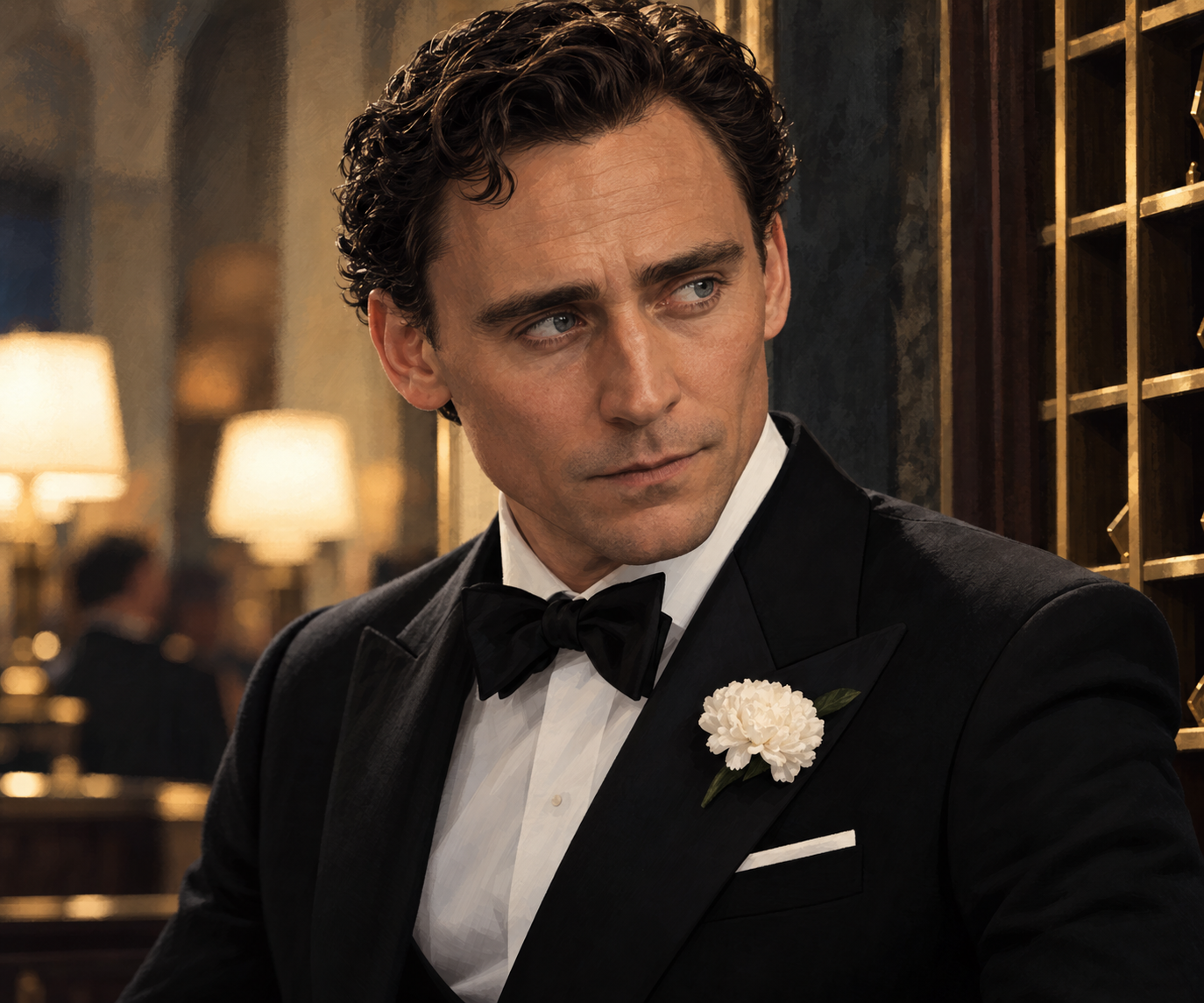
Roper discovers Pine is a spy and has him brutally tortured aboard the Iron Pasha, but Pine survives and overpowers Frisky and Tabby. Burr ultimately forces Roper to release Pine and Jed, who disappear together to Lanyon Cottage in West Cornwall under Pine’s assumed identity.

His enormous arms-for-drugs transaction is destroyed, but corrupt British intelligence and government interests protect him from prosecution. He ultimately sails away free rather than facing justice.

Roper holds her at gunpoint after Pine’s betrayal is exposed, but Burr’s ultimatum forces him to release her with Pine. Jed escapes Roper permanently and settles with Pine at Lanyon Cottage in Cornwall. Pasted text
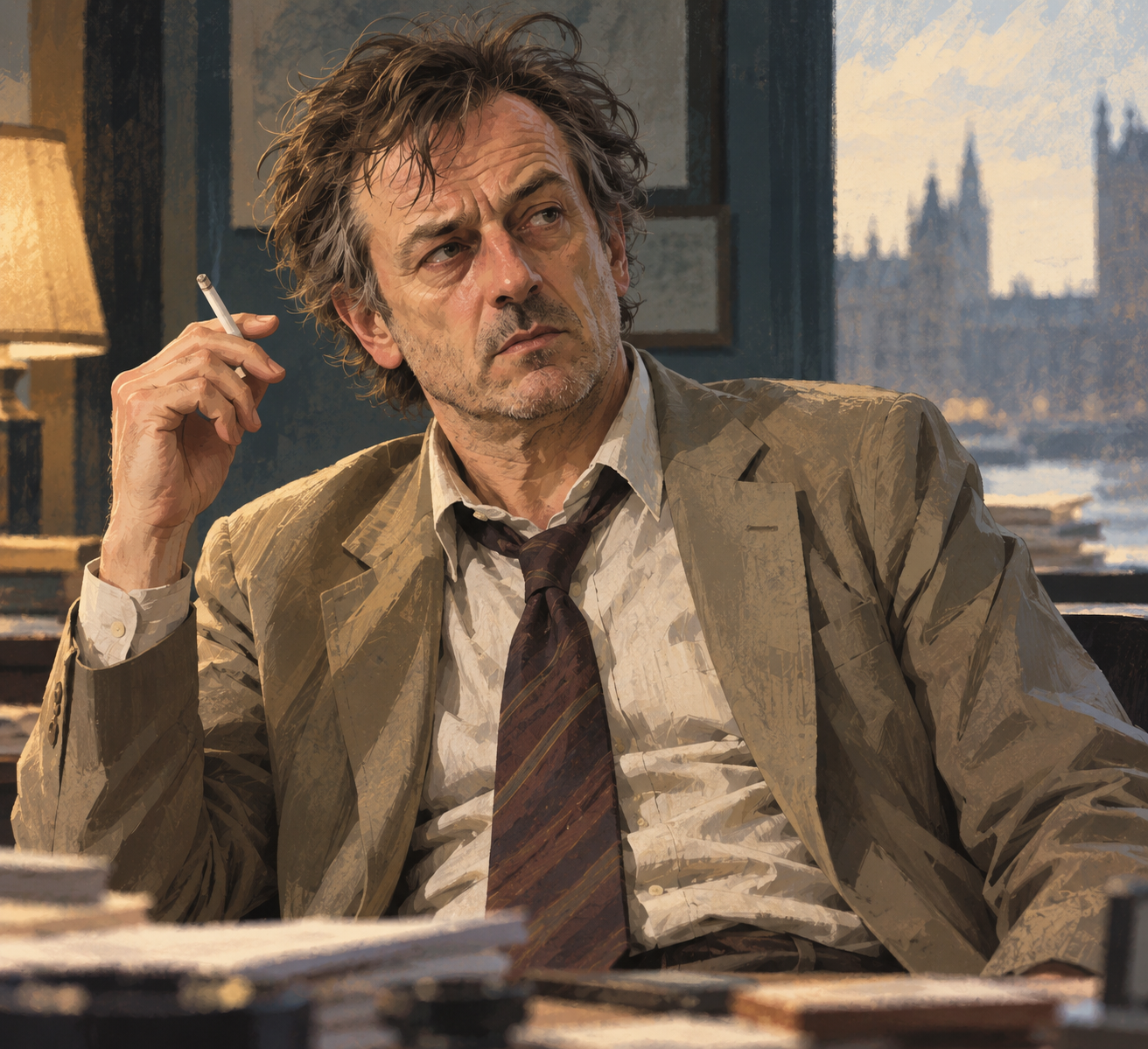
Burr succeeds in destroying Roper’s cartel transaction and saves Pine and Jed by blackmailing Bradshaw into forcing their release. He nevertheless has to accept that political corruption will allow Roper himself to escape prosecution.
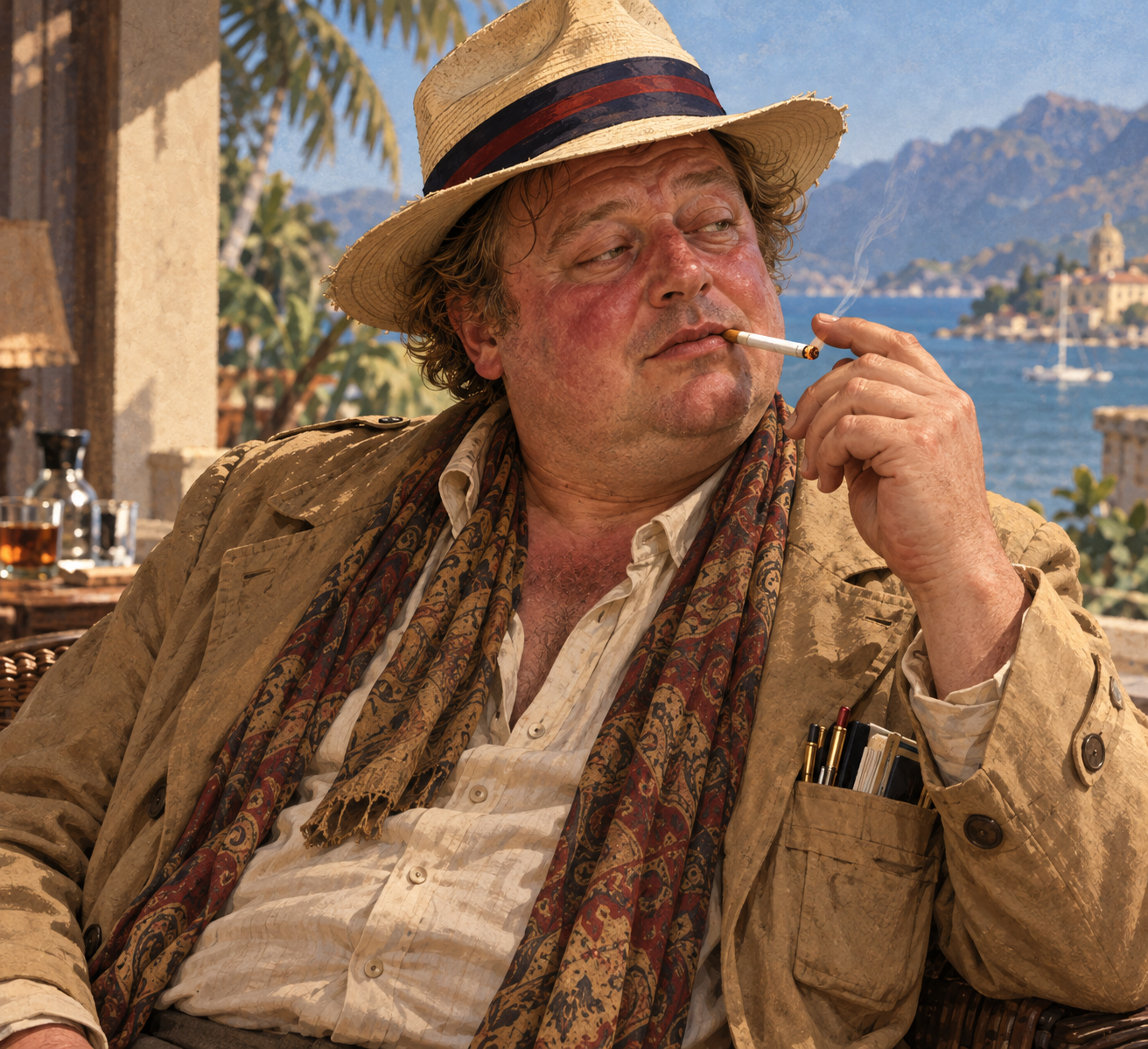
His suspicions prove correct when Pine is exposed. Corky participates in Pine’s interrogation and torture aboard the Iron Pasha, but survives and leaves with Roper after Pine and Jed are released.
🔷 Supporting Characters

After Pine gives her documents to the British Embassy, information leaks back to Hamid; Sophie is brutally beaten and murdered in her Cairo penthouse by Hamid’s enforcers.
He has Sophie beaten and murdered but survives the novel himself; his proposed arms transaction with Roper is abandoned.
He suffers no consequences for Sophie’s death and is instead promoted, continuing his diplomatic/intelligence career.
He remains at his intelligence post in Switzerland.
Darker’s faction subjects him to threats and bribery attempts and ultimately sidelines him after sabotaging Limpet, although Goodhew continues fighting the corruption from within government.
Darker successfully sabotages Operation Limpet, helps leak Pine’s identity to Roper, and emerges with even greater institutional control over British intelligence.
He survives and remains Burr’s loyal right-hand man after Operation Limpet collapses.
Jumbo is never actually murdered; Burr’s team safely hides him while Pine uses his supposed death to establish his criminal credentials. Pasted text
They remain behind in Canada when Pine abandons this identity and returns to his covert mission.
He never learns the truth and is unknowingly duped into helping establish Pine’s false identity. Pasted text
After Apostoll is murdered, Washington and Langley suppress the case and Strelski is pushed out of the operation.
Daniel is safely returned to Roper and later sent back to boarding school in England, never realizing Pine was an undercover operative.
He survives and continues operating the cartel’s mercenary training camp.
Consumed by guilt and fear after betraying Apostoll and Pine, Palfrey drinks heavily and kills himself by throwing himself beneath a double-decker bus near Baker Street.
Burr terrifies Bradshaw with a bluff that Darker has been arrested, forcing Bradshaw to telephone Roper aboard the Iron Pasha and demand that Pine and Jed be released.
During the climax aboard the Iron Pasha, Pine fights back and knocks Frisky unconscious by smashing his head against Tabby’s. Pasted text
Pine finally retaliates and knocks Tabby unconscious alongside Frisky by smashing the two men’s heads together.
Darker’s faction exposes Apostoll as an informant; cartel killers bind and torture him and his mistress before executing them in his Coconut Grove penthouse with a “Colombian necktie.”
Neither suffers meaningful consequences; both survive the operation and continue their wealthy, privileged lives.
At the end, Ruth protects Pine after his return by following Burr’s instructions and encouraging the community to accept him as an innocent stranger beginning a new life.
They remain in Cornwall and ultimately accept the official story surrounding “Jack Linden” when Pine secretly returns.
Both are left disillusioned and sidelined when Washington suppresses the investigation following Apostoll’s murder.
They remain at the Meister Palace after Pine leaves to undertake Operation Limpet.
🕳️ Potential Plot Holes
Burr’s operation to get Pine into Roper’s inner circle depends on an unusually complicated staged kidnapping of Roper’s son Daniel. Roper must stop at Hunter’s Island, his group must dine ashore, Daniel must be in the right place at the right time, and Pine must successfully “rescue” him. Most implausibly, Pine is genuinely beaten badly enough to suffer serious injuries, meaning the operation risks killing or permanently disabling its own undercover agent. The scheme works, but only because nearly every variable falls into place.
Geoffrey Darker’s faction knows Pine’s real identity while Pine is penetrating increasingly sensitive parts of Roper’s organization, yet it does not expose him immediately. Pine is consequently allowed to reach Crystal Island, become involved with Tradepaths, observe the Cerro Fábrega operation, and obtain evidence concerning the arms-for-drugs transaction. Darker may have wanted to protect his own position and avoid openly revealing how much he knew about Burr’s operation, but delaying the leak gives Pine far more access—and creates far more danger for Darker’s interests—than seems necessary.
Roper’s private island is presented as a heavily guarded “citadel,” yet Pine can enter Roper’s private rooms, pick the lock on his study, and photograph highly sensitive financial and arms documents with his concealed camera. Human security can certainly have blind spots, especially once Pine has earned Roper’s trust, so this is not an outright contradiction. Still, the ease with which he repeatedly accesses extraordinarily incriminating material sits awkwardly beside Roper’s reputation for paranoia and sophisticated security.
📚 Book Club Q&A's
⭐ Final Rating & Thoughts
I genuinely admired The Night Manager more than I enjoyed actually reading it. John le Carré’s storytelling is incredibly intelligent, with layers of deception, shifting identities, morally compromised characters, and institutional corruption that make the novel feel far more sophisticated than a straightforward spy thriller. Jonathan’s infiltration into Roper’s world was easily the strongest part for me, and once the story gained momentum, there were some genuinely tense and exciting stretches.
But getting through it took work. The prose is dense, the pacing can be painfully deliberate, and le Carré frequently expects you to figure out who is speaking, what they mean, and why it matters without much assistance. I found myself rereading passages more often than I wanted to, which kept pulling me out of the story.
Still, the characters and intricate plotting were strong enough that I’m glad I stuck with it. This was my first le Carré, and despite struggling with his writing style, I’m interested enough to try another. I suspect his brilliant storytelling may be more enjoyable for me on screen.
✨ Adaptation description
Screen Adaptation
John le Carré’s 1993 novel The Night Manager was adapted into a six-part television series starring Tom Hiddleston as Jonathan Pine, Hugh Laurie as Richard Roper, Olivia Colman as Angela Burr, Elizabeth Debicki as Jed Marshall, and Tom Hollander as Corky. The first season was directed by Susanne Bier, adapted for television by David Farr, and produced by The Ink Factory for BBC One and AMC. It premiered in the UK on February 21, 2016, followed by its U.S. premiere on AMC on April 19, 2016.
Season 1 adapts the complete novel but substantially modernizes and restructures it. John le Carré himself acknowledged that the production changed the book considerably, including its locations, geopolitical backdrop, characters, and ending.
The series has since continued beyond the novel. Season 2 premiered in January 2026, with Hiddleston and Colman returning, and takes place years after the events of Season 1. Because le Carré never wrote a sequel to The Night Manager, the later seasons tell an original story rather than adapting additional source material.
Key Differences
The story is moved from the early 1990s to the 2010s. The novel was written for the immediate post-Cold War world, while the television adaptation updates the story to the era of the Arab Spring and contemporary Middle Eastern conflicts. Cairo is now experiencing the 2011 Egyptian revolution when Pine meets Sophie. Roper’s international arms operation is similarly updated to involve modern weapons and Middle Eastern buyers rather than reproducing the novel’s early-1990s geopolitical landscape.
Much of the novel’s geography is replaced. The book sends Pine through locations including Canada, the Caribbean and Central America, with Roper’s luxury yacht serving as an important base of operations. The series eliminates much of this material and places Roper primarily at his lavish Mallorca estate, while eventually returning the action to Cairo for the climax. Le Carré specifically noted the loss of the Canadian and Central American sections and Roper’s yacht when discussing the adaptation.
Leonard Burr becomes Angela Burr. One of the most visible character changes is Pine’s intelligence handler. The novel’s Leonard Burr is a man, while the series reimagines the role as Angela Burr, played by Olivia Colman. Colman’s real-life pregnancy was incorporated into the character, making Burr heavily pregnant throughout the operation. She serves as the moral center of the television version while battling intelligence officials attempting to obstruct her investigation.
The intelligence conspiracy is simplified and made more immediate. The novel devotes considerably more space to bureaucratic maneuvering among British and American intelligence agencies and officials whose interests overlap with Roper’s. The series retains the idea that powerful insiders are protecting him but compresses the institutional intrigue into a smaller group of recognizable antagonists, allowing Burr’s struggle against corruption to unfold more directly on screen.
Pine’s internal life is streamlined. Le Carré spends much more time inside Jonathan Pine’s head, gradually revealing his history, guilt, loneliness, military experiences and complicated reasons for volunteering to infiltrate Roper’s organization. The series turns much of this psychological material into action, dialogue and visual storytelling, making Pine’s motivation more immediately connected to Sophie’s murder and his desire to bring Roper down.
Corky has a completely different fate. Major Lance “Corky” Corkoran remains deeply suspicious of Pine in both versions, but the television series dramatically escalates their conflict. Pine kills Corky during a violent confrontation. Corky does not die in the novel. The change removes one of the continuing threats to Pine’s cover and gives Pine a more direct role in the story’s violence.
Pine himself becomes considerably more action-oriented. The television adaptation gives him direct responsibility for several violent acts that do not occur in the novel. Most notably, he kills Freddie Hamid in revenge for Sophie’s death, kills Corky when his cover is threatened, and ultimately sabotages Roper’s weapons operation. The novel’s Pine operates more as an undercover intelligence asset caught inside forces larger than himself.
Tone Changes
The novel is a slower, denser and more morally ambiguous espionage story. Much of its tension comes from surveillance, bureaucracy, divided loyalties and the realization that supposedly respectable governments and intelligence services may be entangled with the criminals they claim to oppose.
The television series retains that corruption but shifts toward a sleeker international thriller. Exotic locations, luxury settings, romance, violence and increasingly large action sequences give the story a more cinematic quality. The central conflict between Pine and Roper also becomes more pronounced, turning their relationship into a direct psychological contest between two men who increasingly understand—and manipulate—one another.
The result is a stronger emphasis on infiltration, suspense, personal revenge and immediate physical danger, while some of the novel’s institutional complexity and weary post-Cold War cynicism are condensed.
Structural Changes
The novel moves through numerous locations, organizations, aliases and intelligence operations and spends substantial time establishing the mechanics behind Burr’s plan. It also gives considerable attention to the people working around Pine rather than maintaining an exclusive focus on his undercover experience.
The six-episode series compresses those threads into a more linear infiltration story. Pine meets Sophie, fails to save her, encounters Roper again years later, agrees to work for Burr, establishes a criminal identity, infiltrates Roper’s inner circle and becomes increasingly indispensable to him.
The largest structural departure occurs near the end. Screenwriter David Farr has said that much of the final two episodes was newly created for television and that the final episode’s narrative is essentially original.
Character Changes
Angela Burr replaces the novel’s Leonard Burr and becomes one of the adaptation’s central characters. Her pregnancy, her personal determination to expose Roper and her confrontations with officials protecting him give the intelligence side of the story a clearer human focal point.
Jonathan Pine is more conventionally heroic and physically active on television. While both versions portray him as psychologically damaged and increasingly entangled with Roper, the series allows Pine to personally strike back against several of his enemies.
Richard Roper remains charming, wealthy, intelligent and ruthless, but the series places more emphasis on his luxurious lifestyle and his almost paternal fascination with Pine. Their relationship becomes one of the show’s primary sources of tension.
Jed remains Roper’s mistress and Pine’s love interest, but the television version ultimately gives her a different resolution. Rather than settling into a new life with Pine, she leaves him and returns to the United States at the end of Season 1.
Corky becomes a more immediate physical obstacle to Pine. His suspicions ultimately lead to a confrontation in which Pine kills him—a major departure from the novel, where Corky survives.
The Ending Is Completely Reworked
This is the adaptation’s biggest change.
In the novel, Pine’s operation ultimately fails to produce the clean victory Burr hoped for. Corrupt elements within British and American intelligence undermine the investigation, Pine’s identity is exposed, and Roper captures and tortures him aboard his yacht.
Burr eventually sacrifices the operation to save Pine and Jed. He bluffs Roper’s associates into believing he has enough evidence to destroy them and effectively bargains for the couple’s release.
Roper escapes. His deal succeeds. The corrupt network surrounding him largely survives. Pine and Jed retreat together to Cornwall, but Burr and his allies have failed to bring Roper to justice. The ending reinforces the novel’s central cynicism: knowing who the villains are does not necessarily mean the system will punish them.
The television series reverses that outcome.
Pine sabotages Roper’s weapons shipment, destroying the weapons and causing Roper’s buyers to lose hundreds of millions of dollars. Burr succeeds in confronting and arresting Roper in Cairo, but the furious buyers intercept the vehicle carrying him away. Roper disappears into their custody, with the implication that the men he cheated will exact their own revenge.
Pine and Jed also do not settle down together. Jed returns to America and her son, while Pine remains behind at the hotel.
The novel therefore ends with Roper free and the intelligence operation defeated, while the television adaptation ends with Roper’s empire destroyed and Pine successfully bringing about his downfall.
What the Adaptation Emphasizes
The series places greater emphasis on Pine and Roper’s personal battle, Pine’s relationship with Jed, Angela Burr’s determination to expose corruption, the seductive luxury surrounding Roper’s criminal empire, and the physical danger of Pine’s undercover role.
It also makes revenge a stronger element of Pine’s journey. Sophie’s murder remains the event that first connects him to Roper, but the television version allows Pine to retaliate directly against the people responsible.
What It Softens, Removes, or Expands
The adaptation reduces the novel’s lengthy intelligence bureaucracy, internal monologues, post-Cold War political context, Caribbean and Central American storyline, and Roper’s yacht-based operation. Pine’s complicated psychological history is also compressed to keep the story moving as a six-episode thriller.
At the same time, it expands Angela Burr, Pine and Jed’s romance, Pine’s rivalry with Corky, Roper’s relationship with Pine, and the action surrounding the final arms deal.
Most importantly, the adaptation replaces le Carré’s deliberately uneasy resolution with a much more decisive collapse of Roper’s operation—changing the final impression from a compromised intelligence mission in which corruption survives to a thriller in which Pine successfully destroys the criminal organization he infiltrated.
Season 2 marks a complete break from the novel: with the events of le Carré’s book exhausted by Season 1, the series continues Jonathan Pine’s story using newly created material rather than another Night Manager book.
✨ Books Like The Night Manager (1993)
See an error on this page?