
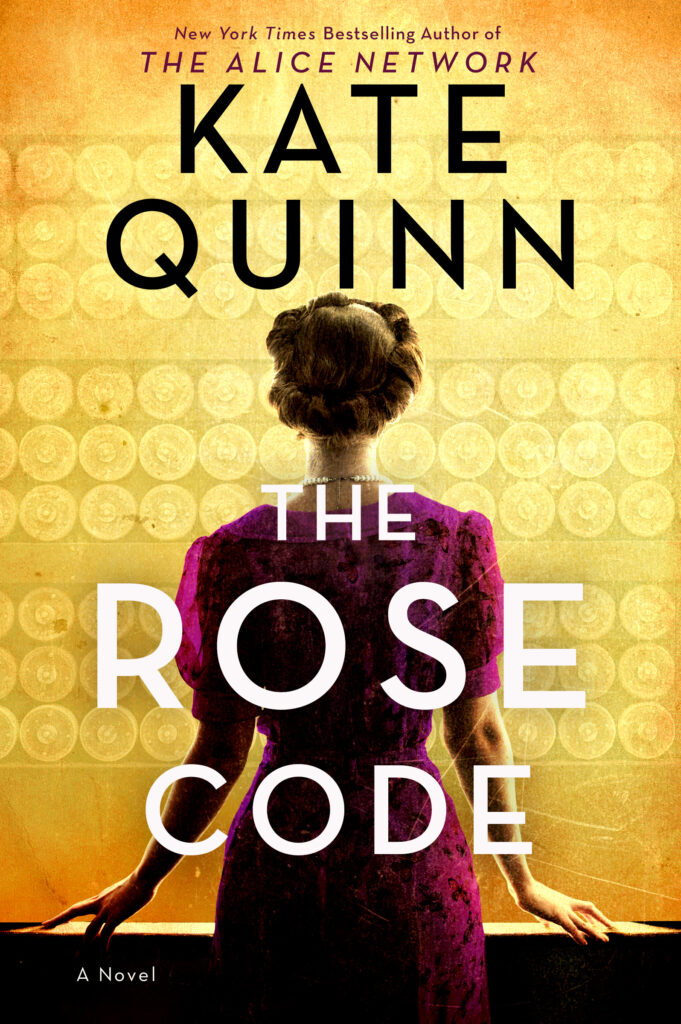
The Rose Code (2021)
Select Sections to Print
×Book Details
The Rose Code (2021)
Jump to Section
⚠️ Trigger Warnings
- War violence, aerial bombardment & civilian casualties
- Graphic injury, dismemberment & death
- Death of a child
- Stillbirth / dead infant
- Involuntary psychiatric institutionalization
- Psychiatric abuse & forced drugging
- Straitjackets & physical restraint
- Forced / threatened lobotomy
- Medical and surgical trauma
- Domestic & parental abuse
- Physical & emotional abuse
- Sexual harassment & coercion
- Sexual assault / rape
- PTSD & psychological trauma
- Mental breakdowns
- Suicidal ideation & suicide references
- Terminal illness / cancer
- Death from illness
- Childhood polio & disability
- Infidelity / extramarital affair
- Holocaust & genocide references
- Antisemitic persecution / mass murder
⏱️ 2-Minute Spoiler Summary
The Rose Code follows three women whose friendship is forged at Britain’s secret WWII codebreaking center, Bletchley Park, and destroyed by betrayal. Osla Kendall, a wealthy debutante romantically involved with Prince Philip, meets ambitious working-class Mab Churt and painfully shy Beth Finch, whose extraordinary talent for puzzles makes her a brilliant cryptanalyst. The three become inseparable as they help crack German codes.
Their friendship begins to unravel when Beth decrypts advance warning of a German bombing raid on Coventry but cannot reveal the classified intelligence. Mab travels there with her husband, Francis Gray, and six-year-old Lucy, who is secretly Mab’s daughter rather than her sister. Both Francis and Lucy are killed. Mab blames Osla for losing hold of Lucy during the bombing, unaware that Beth knew the attack was coming.
In June 1944, Beth discovers that someone inside Bletchley Park has been passing secrets to the Soviets. Before she can expose the traitor, Mab learns about Beth’s knowledge of Coventry. The resulting confrontation, combined with the traitor’s manipulation of MI-5, leads to Beth being declared mentally unstable and forcibly committed to an asylum.
Three and a half years later, Beth sends coded messages to Osla and Mab, begging them to rescue her before doctors perform a lobotomy. They discover that the traitor is Giles Talbot, Osla’s fiancé, who engineered Beth’s imprisonment to protect himself. The women help Beth escape and reunite former Bletchley codebreakers to decrypt the evidence against Giles.
On the day of Princess Elizabeth and Prince Philip’s wedding in November 1947, the three women chase Giles to Victoria Station and tackle him. Osla calls Prince Philip for help, and MI-5 arrests Giles, who confesses. Beth is exonerated and joins GCHQ, Osla eventually marries another man, and Mab returns to her family. The three friends finally reconcile. A 2014 epilogue reveals that all three went on to live full lives after the war.
📖 Full Spoiler Summary
Beth Finch’s Message from the Asylum
The Rose Code unfolds across two timelines, moving between the women’s years at Bletchley Park during World War II and a mystery playing out over twelve days in November 1947.
The story opens shortly before the wedding of Princess Elizabeth and Lieutenant Philip Mountbatten. Osla Kendall, a wealthy, glamorous former debutante, receives a mysterious letter from Clockwell Sanitarium containing a Vigenère cipher. Using the keyword “LASSIES,” she decrypts a telephone number and discovers that her estranged former friend Mab Churt has received the same message.
The sender is Beth Finch, their former best friend from Bletchley Park. Beth has spent nearly three and a half years locked inside Clockwell because everyone believes she suffered a mental breakdown. Beth insists that she is perfectly sane. During the war, she discovered a traitor inside Bletchley Park, and that person arranged to have her declared insane before she could expose them.
There is one major problem: Osla and Mab haven’t spoken to Beth since D-Day, when their friendship ended disastrously.
Three Very Different Women Arrive at Bletchley Park
The story jumps back to 1939 and 1940 to reveal how the three women met.
Canadian-born Osla is intelligent, vivacious, wealthy, and fluent in German. She wants to do something meaningful during the war rather than simply remain part of high society. While working at an airplane factory, she meets Prince Philip of Greece at Claridge’s and begins a romance with him.
In June 1940, Osla meets Mab Churt on a train to Bletchley. Mab comes from a poor Shoreditch family and has educated herself relentlessly. She is determined to escape poverty, find a respectable husband, and build the secure life she has never had.
Both women have secretly been recruited to Bletchley Park, headquarters of Britain’s Government Code & Cypher School. Mab is assigned to Hut 6, operating Typex machines on German Air Force Enigma traffic, while Osla works in Hut 4 translating and organizing decrypted German naval messages.
They are billeted with the Finch family, where they meet twenty-four-year-old Beth. Her domineering mother treats her like an incompetent servant, but Osla notices that Beth is astonishingly good at difficult crossword puzzles. She recommends Beth for Bletchley Park.
Beth is recruited to work with legendary cryptanalyst Dilly Knox. Although she initially doubts herself, she soon proves extraordinarily talented. In September 1940, she finds an important crib in Italian Naval Enigma traffic, and Dilly begins personally mentoring her.
As the Blitz rages, Osla, Mab, and Beth become deeply attached to one another. Beth even teaches them to communicate using a Vigenère cipher with “LASSIES” as their private keyword.
Their work also forces them to understand the terrible burden of secrecy. When Mab is terrified that Hitler is about to invade Britain and endanger her family, Beth privately reveals that decrypted intelligence shows the invasion has been postponed. It comforts Mab, but Beth has violated the oath she swore when she joined Bletchley Park—a decision that will later be used against her.
Love and Success During the War
By 1941, the women are involved in increasingly important intelligence work. Dilly’s team cracks Italian Naval Enigma messages revealing plans for an attack on Allied convoys. The intelligence contributes to the British victory at the Battle of Cape Matapan, where Philip serves aboard HMS Valiant.
During the celebration afterward, the women reveal some of their secrets. Osla admits that her mysterious boyfriend is Prince Philip. Beth has become attracted to Harry Zarb, a married Bletchley codebreaker with a disabled child, and Mab warns her not to become involved with him.
Mab herself is being courted by Francis Gray, a quiet Foreign Office official and World War I poet. After Beth’s increasingly hostile relationship with her mother ends with Mrs. Finch throwing her out, the three women flee to London. The following morning, Mab impulsively marries Francis in a ceremony arranged with help from Osla and Philip.
Beth’s career continues to soar. By December 1941, she cracks the Abwehr Spy Enigma, helping British intelligence identify German spies operating inside Britain.
But success at Bletchley brings increasing pressure. Harry eventually suffers an emotional breakdown from the relentless codebreaking work, and Beth comforts him. Their attraction becomes an affair.
Osla faces problems of her own. After files disappear from Hut 3, MI-5 questions her because of her relationship with Philip, whose German relatives include people married to Nazi officers. Osla has already demonstrated how weak Bletchley’s security can be by smuggling papers out of the compound, but instead of addressing the vulnerability, officials reprimand her. Realizing that her relationship could damage Philip’s naval career, she abruptly stops writing to him.
The Coventry Bombing Destroys the Trio
The most devastating moment comes in November 1942.
Mab plans to travel to Coventry with Francis, Osla, and six-year-old Lucy. Everyone believes Lucy is Mab’s younger sister, but Mab has hidden the truth for years: Lucy is actually her daughter, born when Mab became pregnant at seventeen and subsequently raised by Mab’s mother.
Before the trip, Beth decrypts a German message revealing that Coventry will be bombed on November 8.
She faces an impossible situation. Warning her friends would mean revealing classified intelligence. Beth still regrets breaking her oath when she told Mab that Hitler’s invasion had been postponed, so this time she remains silent.
The bombing is catastrophic. Francis and Lucy are both killed.
Mab is consumed by grief and turns against Osla because Osla lost hold of Lucy during the bombing. Beth, meanwhile, says nothing about having known the raid was coming. The friendship that once held the three women together begins to collapse.
Osla eventually reconnects with Philip, but their relationship cannot survive the realities of his position. After hearing that he spent Christmas at Windsor Castle charming Princess Elizabeth, Osla finally confronts him. She understands that Philip needs the stability and belonging offered by the royal family and that she cannot realistically be part of that future. In 1944, she returns his naval insignia and ends their relationship.
Beth Finds the Rose Code
By 1944, Bletchley Park has expanded enormously. Dilly Knox has died of cancer, but before his death he left behind mysterious encrypted messages involving a non-German Enigma cipher he called “Rose.”
On June 5, the night before D-Day, Beth works on the old Rose traffic and finally breaks one of the messages.
To her shock, the plaintext is in English.
The message thanks a source inside Dilly’s former section, ISK, for providing information. Beth realizes that someone inside Bletchley Park has been secretly selling intelligence to Moscow since 1942.
Knowing the traitor could discover what she has done, Beth hides the Rose files inside Dilly’s wall safe at Courns Wood and keeps the only key. She intends to report everything to Bletchley commander Edward Travis.
She never gets the chance.
Peggy Rock, another codebreaker, has discovered that Beth knew about the Coventry raid. Mab finally learns the truth and confronts Beth with Osla beside her. Furious that Beth allowed Francis and Lucy to travel into danger without warning them, Mab calls her a Judas.
At the same time, the traitor realizes Beth has cracked Rose and moves quickly to destroy her credibility. MI-5 is told that Beth has become mentally unstable. Her affair with Harry, her emotional behavior, her knowledge of the Coventry raid, and even her earlier violation of secrecy are all used as evidence against her.
When investigators question Osla and Mab, they reluctantly confirm that Beth once shared classified information with them. Her own mother also testifies against her.
Beth loses her Bletchley pass. On D-Day, MI-5 agents seize her at the gates and take her away to Clockwell Sanitarium.
During the drive, Beth receives an anonymous message offering her a choice: surrender the Rose evidence and remain silent, or spend the rest of her life locked in an asylum.
Beth chooses the asylum.
She swallows the key to Dilly’s safe.
Giles Talbot Is the Traitor
Back in November 1947, Osla convinces Mab that Beth’s claims deserve to be investigated. The two travel to Clockwell, unaware that Beth has just learned doctors intend to perform a lobotomy on her within days.
Before they reach her, Beth receives another visitor: Giles Talbot, the charming former Bletchley employee who is now Osla’s fiancé.
Giles is the traitor.
He admits that he passed Bletchley intelligence to the Soviets because he believed helping Britain’s wartime ally was patriotic. When Beth cracked Rose, Giles manipulated events to destroy her. He tipped Peggy off about Beth’s Coventry secret, knowing it would turn Mab against her, and helped convince MI-5 that Beth was mentally unstable.
Now he threatens to make certain the lobotomy goes ahead unless Beth gives him the Rose files.
When Osla and Mab finally meet Beth in Clockwell’s rose garden, she tells them Giles is the man they have been looking for. Osla is horrified, but the pieces fit. For the first time, both women understand that Beth has been telling the truth.
They decide to get her out.
Osla stages a dramatic faint to distract the staff while Mab steals keys. Beth fights off an orderly, biting his cheek when he tries to stop her, and escapes in Mab’s Bentley.
The Bletchley Codebreakers Reunite
The three women drive to Courns Wood and retrieve the Rose file from Dilly’s safe using the key Beth swallowed and recovered years earlier.
Unfortunately, their evidence isn’t enough. The message Beth originally decrypted mentions a source inside ISK but never actually names Giles. Unless they can break the remaining Rose messages, Giles can simply accuse Beth of inventing everything.
So Beth calls in the old Bletchley crowd.
A group of veteran codebreakers—including Harry Zarb, Peggy Rock, Alan Turing, the Prof, Asa Briggs, Maurice, and others—gathers to finish the job. Peggy obtains an Enigma machine, and the group gains access to a Bombe under repair in London. Mab’s second husband, Mike Sharpe, unexpectedly proves invaluable because he worked as an RAF Bombe engineer during the war.
The night before the Royal Wedding, they finally crack the Rose settings.
This time, there is no ambiguity. The decrypted message explicitly identifies Giles Talbot as the source providing intelligence to Moscow.
The Chase Through Victoria Station
On November 20, 1947, as Britain celebrates the wedding of Princess Elizabeth and Prince Philip, Giles realizes Beth has escaped and tries to flee the country.
Osla, Mab, Beth, Harry, and Mike race after him through London and catch up with him at Victoria Station, packed with people celebrating the Royal Wedding.
As Elizabeth and Philip exchange their vows over the radio, the three women corner Giles on the platform. They tackle him, and Osla pulls off the emerald engagement ring he gave her and hurls it at his face.
The police promptly arrest everyone involved in the brawl.
Osla uses her permitted phone call in spectacular fashion: she calls Prince Philip’s private line at Buckingham Palace. MI-5 intervenes, takes Giles into custody, and Giles eventually confesses.
Beth Is Finally Free
Giles is transferred to a high-security facility in Scotland, while Beth is completely exonerated after spending more than three years imprisoned for something she did not do. She accepts a position at GCHQ with Peggy and remains connected to Harry.
Osla, freed from Giles and finally able to leave her relationship with Philip in the past, begins a romance with Major John Cornwell, the officer who once rescued her from the Café de Paris bombing.
Mab returns to York with Mike and their twins, finally finding the stable family life she had wanted for so long.
Before separating, Osla, Mab, and Beth return to Bletchley Park. After everything that happened—the secrets, Coventry, Beth’s imprisonment, and years of bitterness—they finally forgive one another and restore the friendship that the war destroyed.
The novel then jumps forward to 2014, when the Duchess of Cambridge reopens the restored Bletchley Park. Ninety-six-year-old Mab Sharpe is there demonstrating a Bombe machine. Osla eventually became Lady Cornwell and a celebrated satirist whose memoirs were published after her death. Beth lived to ninety-eight and spent her career at GCHQ, keeping the secrets of her wartime service for the rest of her life.
🔚 Ending Explained
How The Rose Code Ends
The ending of The Rose Code brings Osla, Mab, and Beth back together for one final codebreaking mission—this time not to help win a war, but to expose the traitor who destroyed their friendship and nearly destroyed Beth.
In November 1947, the women realize they have a problem: the one decrypted Soviet message from the wartime Rose cipher refers only to a “source inside ISK.” It strongly points toward Giles Talbot, but it does not actually name him. If they accuse Giles without definitive proof, he could easily turn the situation against Beth, especially given her history of institutionalization.
They need the rest of the Rose messages.
The Mad Hatters Reunite
Beth and Harry Zarb call together a remarkable group of former Bletchley Park codebreakers—the “Mad Hatters”—at Dilly Knox’s former estate, Courns Wood. Alan Turing, Peggy Rock, Asa Briggs, and others return to the kind of work they once performed in secrecy during the war.
Peggy manages to obtain an authentic Enigma machine from a secret GCHQ storage bunker, and the group relocates to a closed London maintenance facility where a surviving Bombe machine remains.
There is one problem: the Bombe needs repairing.
Unexpectedly, Mike Sharpe, Mab’s husband, turns out to have worked as an RAF engineer servicing Bombes during the war. He helps Mab repair and rewire the machine, making him an essential part of the operation.
On the eve of the Royal Wedding, the Bombe finally cracks the Rose settings.
And this time, there is no ambiguity.
The decrypted message explicitly identifies Giles Talbot as the Soviet mole who passed intelligence from Bletchley Park to Moscow.
Giles Tries to Escape
On November 20, 1947—the day of Princess Elizabeth and Prince Philip’s wedding—Giles discovers that Beth has escaped Clockwell Sanitarium after seeing an MI-5 notice in the newspaper.
Realizing that the truth is closing in on him, he attempts to flee Britain through Victoria Station.
Osla, Mab, Beth, Harry, and Mike race after him through London, fighting their way through the enormous crowds celebrating the Royal Wedding. As Elizabeth and Philip exchange their vows over the radio, the women finally corner Giles on the platform.
And after years of betrayal, imprisonment, grief, and anger, the confrontation is wonderfully undignified.
Osla throws a heavy leather-bound book at him. Mab tackles him. Then Osla pulls off the emerald engagement ring Giles gave her and hurls it straight into his face.
The police arrive and arrest the entire brawling group.
But Osla still has one extraordinary connection left to use. With her permitted phone call, she contacts Prince Philip’s private line at Buckingham Palace.
MI-5 intervenes and takes Giles into custody. Under interrogation, he breaks down and confesses. He is eventually imprisoned in a high-security facility in Kiloran Bay, Scotland.
The traitor has finally been exposed.
What Happens to Beth, Osla, and Mab?
Beth Finch is completely exonerated. She is freed from Clockwell Sanitarium and accepts a position at GCHQ alongside Peggy Rock, allowing her extraordinary cryptographic abilities to become her career rather than something others fear or try to control. She also resumes her relationship with Harry Zarb.
Beth sells Osla’s discarded emerald engagement ring and uses the money to pay for medical treatment for her former Go partner from the asylum—a fitting transformation of something associated with Giles into an act of compassion.
Osla Kendall ends her engagement to Giles and finally leaves behind the identity she has spent years fighting: the beautiful but supposedly empty-headed “silly deb.” She begins a genuine relationship with Major John Cornwell, the man who rescued her during the Café de Paris bombing and who sees far more in her than her appearance or social connections.
Mab Sharpe returns to York with Mike and their twins. She has finally made peace with much of the grief and guilt she has carried since Lucy’s death and allows herself to fully embrace the family and love she has built.
Before separating, Osla, Mab, and Beth meet one last time outside the gates of Bletchley Park.
After years of anger, misunderstanding, and estrangement, they forgive one another.
Together, they shout Dilly Knox’s poem—the words tying them once again to the strange, secret world that brought them together.
Their war is finally over.
The 2014 Epilogue
The novel then jumps forward nearly seventy years.
In 2014, the Duchess of Cambridge, Kate Middleton, visits the restored Bletchley Park, where she meets 96-year-old Mab Sharpe, who is demonstrating a Bombe machine.
We also learn what became of the other women.
Osla eventually married John Cornwell and became Lady Cornwell. She developed a successful career as a satirist, and after her death in 1974, her wartime writings were published as Bletchley Bletherings.
Beth devoted her life to cryptography, working for GCHQ until retirement. At 98 years old, she remains faithful to the oath she took decades earlier, keeping the secrets of Bletchley Park until the end of her life.
The women who once performed extraordinary work without recognition finally become part of history.
What the Ending Means
At its heart, the ending of The Rose Code is about breaking codes in more ways than one.
Throughout the novel, Osla, Mab, and Beth live inside systems that tell them who they are supposed to be. Osla is supposed to be beautiful rather than intelligent. Mab is supposed to remain trapped by her class. Beth is supposed to be obedient, quiet, and incapable of controlling her own life.
Bletchley Park initially gives all three women a place where those assumptions temporarily disappear. Their minds matter there.
But secrecy, grief, betrayal, and misunderstanding eventually tear that world—and their friendship—apart.
Their final mission allows them to reclaim it.
The Rose Code
The Rose cipher itself mirrors the structure of the novel. Its secrets are hidden beneath layers that must be carefully stripped away before the truth can emerge.
The same is true of the women.
For years, grief, guilt, anger, and secrets have remained buried between them. Cracking the Rose does more than expose Giles. It forces Osla, Mab, and Beth to confront the truths they have avoided and finally understand what happened to one another.
The final code they break is therefore both literal and emotional.
Osla’s Emerald Ring
Osla throwing her engagement ring at Giles is one of the ending’s most satisfying symbolic moments.
The ring represents the future Giles offered her—a respectable marriage that would have returned Osla to the glamorous social world she once thought she wanted. But that future is built on deception.
Throwing the ring at him is Osla rejecting not only Giles but the shallow version of herself that other people have repeatedly tried to impose upon her.
Its later fate completes the symbolism. Beth sells the ring and uses the money to help another woman from Clockwell. Something associated with betrayal and appearances becomes something useful and compassionate.
Mab’s Hat
Mab’s hats have always functioned as a kind of armor.
Her carefully chosen “smart hat” represents the identity she constructs for herself: ambitious, polished, determined, and unwilling to let poverty dictate her future. After Lucy’s death, abandoning that image reflects how completely grief has broken her.
By 1947, the return of her slanted fedora signals that Mab has found herself again.
She has not forgotten Lucy or erased what happened. She has simply learned how to live while carrying that loss.
“LASSIES” and the Friendship
The Vigenère key LASSIES, which Beth once taught the others in their shared bedroom, becomes a symbol of the bond between the three women.
Codes depend upon shared knowledge. So does friendship.
For years, Osla, Mab, and Beth lose that shared understanding. Each woman possesses only part of what happened, and their incomplete information allows resentment to replace trust.
Once the truth is finally known, their friendship becomes readable again.
That is why their final reunion at Bletchley Park matters so much. They do not return to exactly who they were before. Too much has happened for that.
Instead, they finally understand one another.
Why Beth’s Ending Matters Most
Beth undergoes perhaps the most dramatic transformation.
She begins as a frightened young woman controlled by an abusive mother and conditioned to believe that obedience is safety. By the end, even the threat of a lobotomy cannot force her into submission.
Giles offers her a path to freedom if she will surrender the Rose decrypts. Beth refuses.
That decision shows how completely she has changed. She would rather risk losing her freedom than betray what she knows is right.
Her eventual career at GCHQ is therefore particularly meaningful. The very qualities that caused people to label her strange, difficult, or unstable—her obsessive concentration, extraordinary memory, and cryptographic brilliance—become the foundation of an independent life.
Beth does not need to become “normal.”
She needs to live somewhere her mind is valued.
The Meaning of the 2014 Epilogue
The enormous jump to 2014 gives the ending its bittersweet final note.
During the war, the Bletchley Park codebreakers could not tell anyone what they had accomplished. They helped change history and then returned to ordinary life carrying achievements they were forbidden to discuss.
They were, as the famous description suggests, the geese who laid the golden eggs but never cackled.
The reopening of Bletchley Park reverses that silence.
The place that once depended upon secrecy has become a memorial. The machines that once had to be hidden are now demonstrated publicly. The people who could not speak about their work are finally recognized for it.
And having Mab there personally connects those two worlds.
The young woman who once arrived determined to reinvent herself is now an elderly woman standing inside history.
The Ending’s Central Message
Ultimately, The Rose Code argues that secrets can protect people, but they can also imprison them.
The secrecy surrounding Bletchley Park helped win a war, yet secrecy also damages Osla, Mab, and Beth personally. Their inability to explain themselves—to outsiders and eventually to one another—allows guilt, suspicion, and resentment to flourish.
Their healing begins when the truth finally becomes understandable.
That is why exposing Giles is only part of the ending. The deeper resolution is the reconciliation between the three women.
They cannot undo Lucy’s death. They cannot recover the years Beth lost inside Clockwell. They cannot erase Giles’s betrayal or return to the carefree friendship they had when they first arrived at Bletchley Park.
But they can finally stop allowing those events to define them.
Osla finds an identity beyond beauty and social status. Mab accepts love without treating it as another survival strategy. Beth claims ownership of the extraordinary mind everyone else tried to control.
And their final return to Bletchley Park brings the novel full circle: the place where they learned to break codes becomes the place where they finally break through the secrets, grief, and misunderstandings that separated them.
The war may have ended years earlier, but for Osla, Mab, and Beth, this is the moment they finally come home.
👤 Characters & Fates
🔶 Main Characters
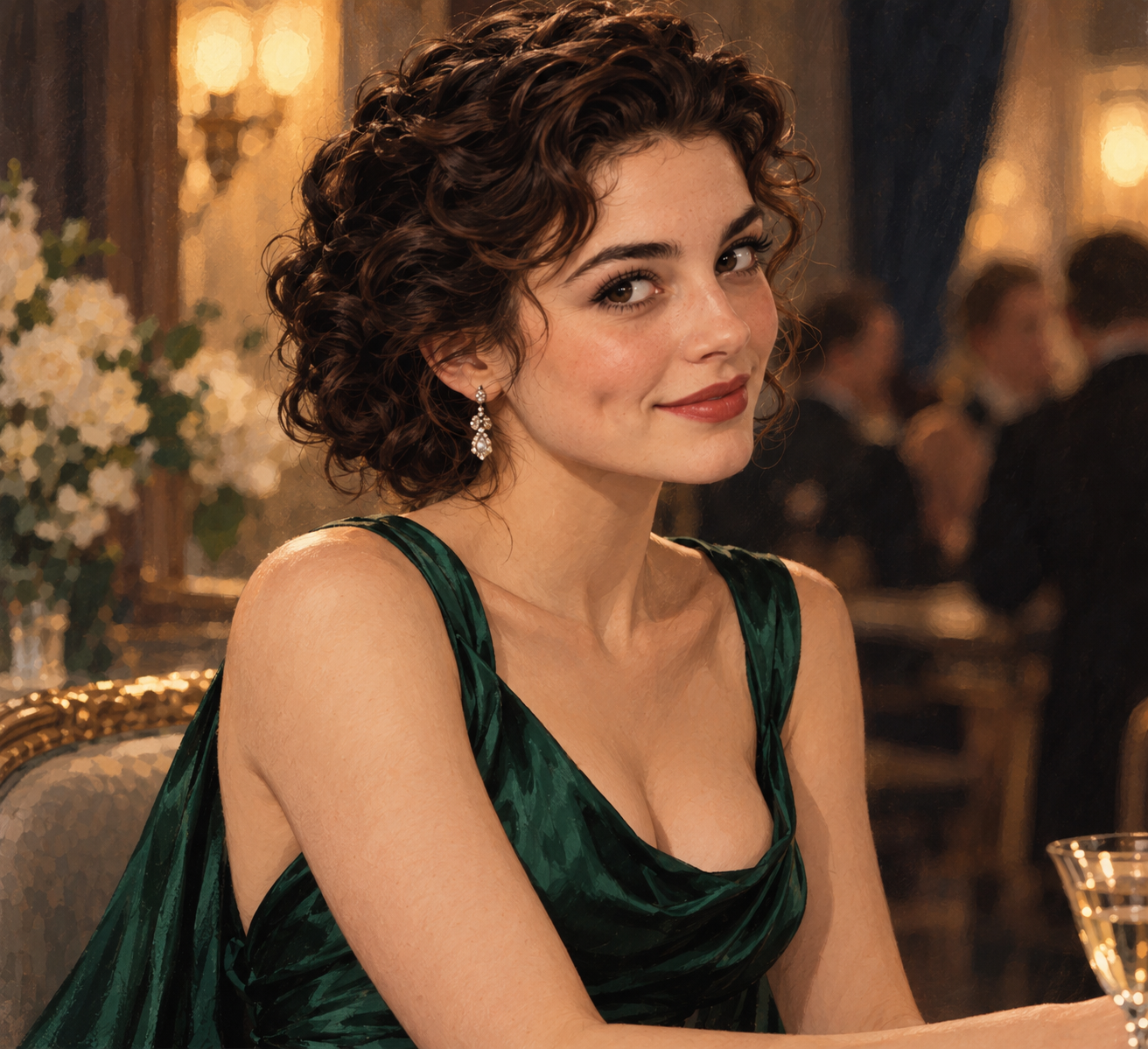
Discovers fiancé Giles Talbot is the Soviet mole, throws her emerald engagement ring in his face, and helps bring about his arrest. She later marries Major John Cornwell, becomes Lady Cornwell, has a family, and becomes a celebrated satirist; Bletchley Bletherings is published after her death in 1974.

Reconciles with Osla and Beth and helps expose Giles, including repairing the Bombe with Mike. She remains happily married to Mike Sharpe, raises their twins in Yorkshire, and at age 96 demonstrates a Bombe for Kate Middleton during Bletchley Park’s 2014 reopening.
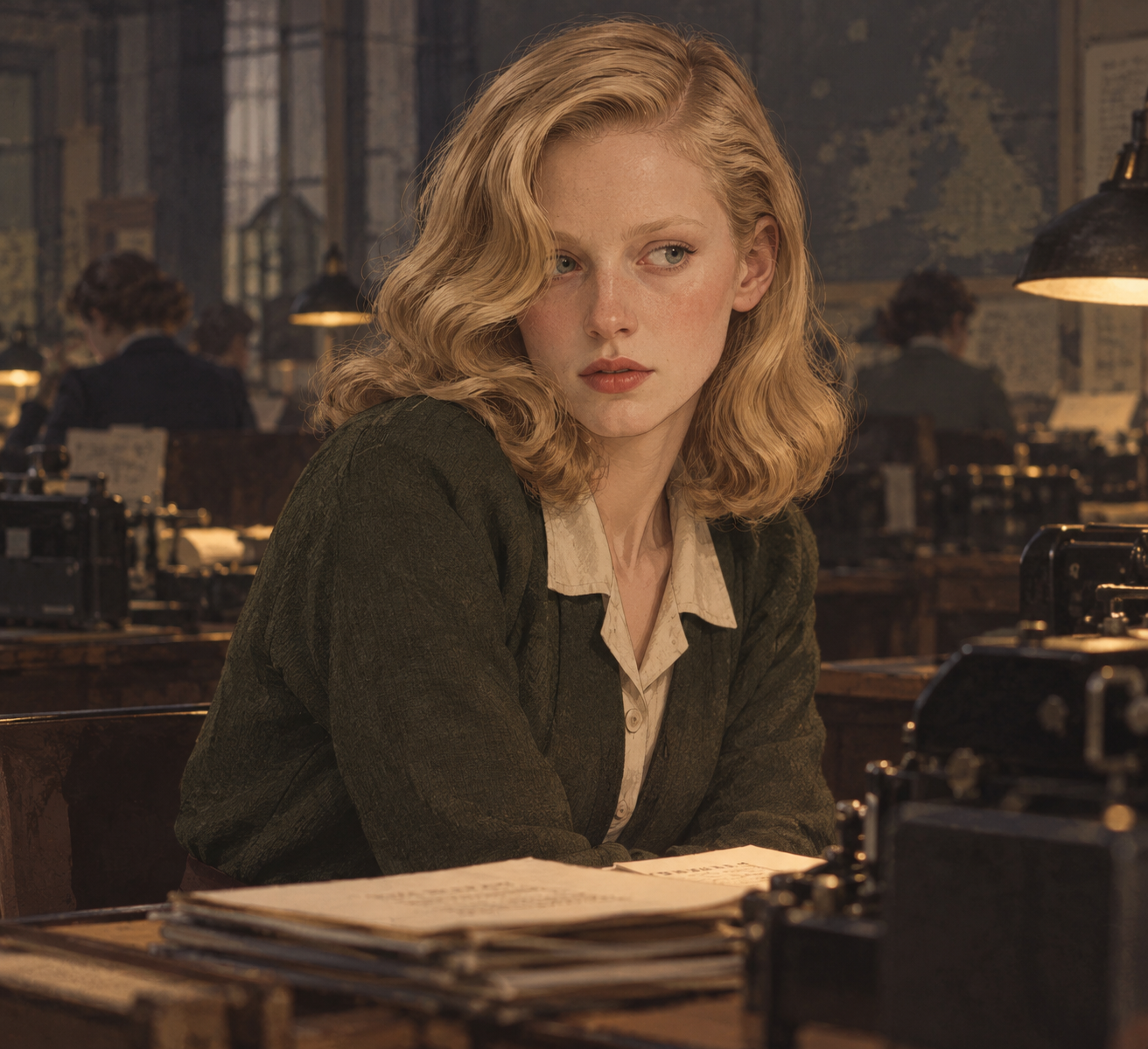
Giles frames her as insane and has her confined at Clockwell Sanitarium for three and a half years, where she faces a forced lobotomy. She escapes with Osla and Mab, proves Giles is the traitor, is exonerated, reunites with Harry Zarb, works at GCHQ for decades, and uses money from Giles’s pawned engagement ring to obtain treatment for her lobotomized asylum friend.

Beth and the Mad Hatters crack the Rose messages proving his guilt. Osla confronts him at Victoria Station and throws his engagement ring at him before the group tackles him; MI-5 arrests him, he confesses under interrogation, and he is imprisoned in a high-security facility at Kiloran Bay, Scotland.
🔷 Supporting Characters
His relationship with Osla ends and he marries Princess Elizabeth on November 20, 1947. On his wedding day, he receives Osla’s call from jail and helps ensure MI-5 acts against Giles.
Dies during the Coventry bombing after going back into their burning home to rescue six-year-old Lucy, who had run inside for her riding boots.
Leaves Bletchley to join the Fleet Air Arm in 1944, survives the war, reunites with Beth in 1947, helps crack Rose, and tackles Giles at Victoria Station.
Helps expose and capture Giles, then returns to Yorkshire with Mab and their twins, remaining her husband.
Dies of lymphatic cancer in early 1943, leaving the Rose material hidden in his wall safe at Courns Wood, which becomes vital to exposing Giles.
Helps crack Rose, continues working alongside Beth at GCHQ, and remains her lifelong friend.
Is replaced on the service side by Edward Travis in 1942.
Oversees Bletchley through the end of the war and later retires to Surrey.
Her husband finally leaves her in 1947 and moves into his own flat, leaving her screaming in bed while their home is put up for sale.
Visits Beth in the asylum and mails her Vigenère messages, then finally leaves his abusive wife and refuses to return.
At age six, runs back into the family’s Coventry home to retrieve her new riding boots during an air raid; Francis follows to save her, and both are killed when the house is destroyed.
Lives to see Mab marry Francis Gray and enter the comfortable social world she had always dreamed about.
Meets Osla again after Giles’s exposure, marries her, becomes the 8th Baron Cornwell, and raises a family with her.
Helps the group crack Rose and expose Giles; historically, he is later prosecuted for homosexuality and dies in 1954.
Is outwitted when Osla fakes a fainting spell and Mab steals the keys, allowing Beth to escape before the operation.
Marries Philip at Westminster Abbey on November 20, 1947, while Osla, Mab, and Beth race to expose Giles.
Officially reopens the restored Bletchley Park in 2014 and meets 96-year-old Mab, who demonstrates a Bombe machine for her.
Continues translating in Hut 4 and later transfers to the Admiralty in London.
Knows about Harry’s relationship with Beth and does not object as long as he continues being a good father to Christopher.
Undergoes successful ankle surgery in 1947, paid for by Harry’s family, which greatly improves his ability to walk.
Assists in proving Giles’s treason and then returns to his academic career at Oxford.
Helps expose Giles and afterward returns to civilian life.
Helps break Rose and then returns to his banking career.
Reconciles with Beth after her escape and joins the 1947 effort to crack Rose.
Continues her codebreaking work through V-E Day.
Later marries into the Middleton family; decades later, her granddaughter Kate participates in Bletchley Park’s 2014 reopening.
Completes his piece honoring Francis after his death.
Continues promoting Philip’s royal future and later serves in India after the war.
Leads Britain through WWII and lives to see Allied victory.
Survives the war and is remembered as one of Britain’s most celebrated naval commanders.
Is subjected to a prefrontal lobotomy shortly before Beth’s escape, leaving her severely impaired; Beth later pawns Giles’s emerald engagement ring and uses the money to secure specialized medical care for her.
🕳️ Potential Plot Holes
On D-Day in 1944, Beth swallows the brass key to Dilly Knox’s safe so it cannot be taken from her. Yet when she escapes Clockwell Sanitarium more than three years later, she still possesses that exact key and carries it hidden in her shoe. Presumably the key would have passed through her digestive system within days, meaning Beth somehow had to retrieve it, clean it, and keep it concealed through years of confinement, searches, medication, and clothing changes. The novel never explains how she managed this, making the key’s reappearance a genuine continuity gap.
After Beth discovers evidence that Giles is passing secrets to the Soviets, Giles manages to turn the accusation against her with remarkable ease. MI-5 accepts evidence that Beth previously violated secrecy rules, listens to her abusive mother’s claims about her instability, revokes Beth’s clearance, and ultimately allows her to be institutionalized. There is some explanation for this: Britain is approaching D-Day, security officials are extremely paranoid, and Giles carefully exploits Beth’s history and reputation. Still, it is difficult to believe that authorities would dispose of a highly valuable cryptanalyst without thoroughly investigating the actual intelligence she claimed proved there was a Soviet mole inside Bletchley Park. The setup works narratively, but requires an unusually convenient failure of intelligence procedure.
In 1947, Beth reunites a group of former Bletchley Park codebreakers who manage to obtain an Enigma machine and gain access to a surviving Bombe so they can crack the Rose messages themselves. It makes for a fantastic climax, but the ease with which civilians and former employees gain access to highly sensitive government equipment is difficult to accept literally. This is less a true plot hole than a deliberate historical-thriller contrivance: the novel bends postwar security realities so its old Bletchley team can reunite for one final codebreaking mission.
The novel places the devastating Coventry bombing that kills Francis and Lucy Gray in November 1942 and makes Beth’s knowledge of the attack central to the breakdown of her friendship with Mab. The real Coventry Blitz occurred on November 14–15, 1940. This is not an accidental plot hole: Kate Quinn deliberately changes the historical timeline and circumstances surrounding Bletchley Park’s knowledge of the raid to serve the novel’s fictional storyline. Readers familiar with WWII history may nevertheless notice the discrepancy immediately.
📚 Book Club Q&A's
⭐ Final Rating & Thoughts
The Rose Code is exactly what I want from historical fiction: a story that teaches me something while making me completely invested in the people living through it. I went in expecting an interesting WWII novel about Bletchley Park and codebreaking, but I didn’t expect to become so emotionally attached to Osla, Mab, and Beth.
The codebreaking itself was fascinating without ever feeling overly technical, and I loved learning about the incredible work being done behind the scenes by women whose contributions were largely kept secret for decades. But what really made this book work for me was the friendship. These women love each other, hurt each other, make mistakes, carry enormous grief, and ultimately show up for one another when it matters most. Their relationships felt complicated and wonderfully human.
I also loved the pacing. Despite its length, this never felt like a slog. The dual timelines created genuine suspense, and by the final stretch, I absolutely could not put it down.
If you loved The Women by Kristin Hannah, I think this is an easy recommendation. It has that same combination of history, extraordinary women, friendship, heartbreak, and emotional payoff. I finished it with a serious book hangover—and those are always the best kind.
✨ Adaptation description
TV Adaptation
Kate Quinn’s The Rose Code is being developed as a premium scripted television series by Black Bear Television, the television division of Black Bear Pictures. The company optioned the novel in 2021, shortly after its publication. Black Bear is especially notable for producing The Imitation Game (2014), the Oscar-winning film about Alan Turing and the codebreakers of Bletchley Park.
Production Details
- Source: The Rose Code by Kate Quinn (2021)
- Format: Premium episodic television series
- Production Company: Black Bear Television / Black Bear Pictures
- Announced: March 2021
- Status: In development
- Cast: Not announced
- Writer / Showrunner: Not announced
- Director: Not announced
- Network / Streaming Service: Not announced
- Release Date: Not announced
Black Bear acquired the television rights in a competitive situation and announced plans to develop and produce the novel specifically as a premium TV series.
Creative Direction
Black Bear has described its vision for The Rose Code as “The Imitation Game meets The Crown.” The series is intended to return audiences to the world of Bletchley Park while approaching it through the perspective of its female codebreakers. The production announcement specifically highlighted the novel’s combination of wartime espionage, female friendship, romance, secrecy, and personal sacrifice.
The story is expected to center on Osla Kendall, Mab Churt, and Beth Finch, three very different women brought together by their secret wartime work at Bletchley Park. Their friendship develops under the extraordinary pressure of breaking German military codes while being forbidden from discussing their work with outsiders. The novel’s later mystery involving betrayal, a suspected traitor, and the women’s fractured friendship provides the story with its thriller element.
Current Status
As of October 2026, there has been no publicly announced cast, director, showrunner, network or streaming home, production start date, trailer, or release date. The most substantial public announcement remains Black Bear Television’s original acquisition and development announcement.
✨ Books Like The Rose Code (2021)
See an error on this page?