
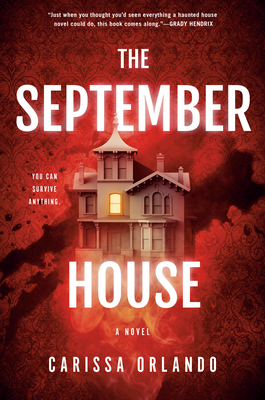
The September House (2023)
Select Sections to Print
×Book Details
The September House (2023)
Jump to Section
⚠️ Trigger Warnings
- Domestic abuse
- Physical violence
- Alcoholism and relapse
- Child abuse and neglect
- Murder and violent deaths of children
- Graphic violence and gore
- Body horror
- Suicide
- Animal death
- Mental illness and paranoia
- Involuntary psychiatric hospitalization
- Strong language/profanity
⏱️ 2-Minute Spoiler Summary
Margaret and Hal Hartman buy a beautiful Victorian house that becomes violently haunted every September. Margaret adapts by creating strict rules for surviving its ghosts, including the helpful housekeeper Fredricka and dangerous child ghost Elias, while Hal eventually relapses into drinking and demands they move. Margaret refuses, and Hal disappears shortly before their daughter Katherine arrives looking for him.
Katherine cannot see the supernatural activity and becomes convinced Margaret is mentally ill, especially after discovering evidence of Hal’s relapse. Margaret also learns that her comforting neighbor Edie is actually the ghost of a former resident who died by suicide in the house. When police search the property, they discover Hal’s mangled body in the basement and initially suspect Margaret of murdering him.
The house then erupts, making its ghosts visible to Katherine and the officers. The true evil, Master Theodore Vale, emerges and kills several officers before abducting Katherine. Margaret learns that Vale murdered the child ghosts haunting the house—Angelica, Julian, Charles, Constance, James, and Henry—more than a century earlier.
Margaret follows Vale into the basement, where she and Katherine fight him with help from Fredricka, Edie, Elias, and the murdered children. Katherine weakens Vale with a wooden paddle, the ghosts tear into him, and Margaret finally kills him with an axe Fredricka gives her. With Vale destroyed, the trapped spirits are released and leave the property. Katherine finally believes everything Margaret has been telling her and stays to help her mother clean up the house and recover.
📖 Full Spoiler Summary
Margaret Learns to Live With the House
Margaret and Hal Hartman believe they have found their dream home when they buy a beautiful old Victorian house. The real estate agent does mention that the property has a disturbing history involving century-old murders, a mentally ill former owner, and members of his household, but Margaret and Hal are too enamored with the house to be frightened away.
They soon discover that its history is very much alive.
Every September, the house becomes violently haunted. Blood runs down the walls, screams echo through the rooms at night, and mutilated ghosts appear throughout the property. Margaret calls some of the spirits the “pranksters,” although their injuries reveal that whatever happened to them was anything but playful.
Over time, Margaret learns that surviving September means following rules. She knows which rooms are safe, where particular ghosts appear, and which disturbances can simply be ignored. One of the most constant spirits is Fredricka, the former housekeeper, whose skull is split open but who continues performing household chores as though nothing has happened. Margaret gradually comes to regard Fredricka less as a threat than as a strange companion.
Other ghosts require more caution. Elias, a milky-eyed little boy, becomes aggressive when anyone invades his space and will bite them. Margaret learns that his mother, Hattie, is buried on the property and that keeping her bones properly buried helps keep Elias calm. Maintaining the house therefore becomes more than ordinary cleaning and repairs. Margaret has an entire secret routine designed around keeping the dead satisfied.
Hal never adjusts as well. After enduring three Septembers, his drinking and volatile temper return. He becomes increasingly desperate to sell the house, but Margaret refuses. She loves her home and has worked too hard to learn how to coexist with its ghosts.
Their conflict reaches a breaking point, and then Hal disappears.
Katherine Comes Looking for Her Father
Hal vanishes in August, just before the worst time of year. Their adult daughter, Katherine, becomes worried when she cannot reach him and decides to come to the house herself.
Margaret desperately tries to discourage the visit. She knows September is approaching and understands exactly how dangerous the house can become, but she cannot explain the truth without sounding delusional. Katherine arrives anyway and quickly becomes suspicious of both parents.
She already knows about Hal’s history of alcoholism and begins to suspect that he has relapsed. Breaking into his locked office with a crowbar, she finds empty whiskey bottles along with his AA chips, confirming that he had indeed started drinking again.
The discovery only makes Margaret’s situation worse. Katherine believes her mother is behaving strangely, while Margaret is trying to hide an entire supernatural world that Katherine apparently cannot see.
Margaret continues performing the rituals that have kept her alive for years, including digging up and reburying Hattie’s bones when necessary to pacify Elias. To Katherine, however, her mother’s increasingly bizarre behavior looks like evidence of a psychiatric crisis.
Margaret finds comfort in her neighbor Edie, a warm, motherly woman who often sits rocking with her on the porch. Edie seems to be one of the few people who understands Margaret’s attachment to the house and the loneliness of living with things other people cannot see.
There is just one problem: Edie isn’t actually Margaret’s neighbor.
Margaret’s Reality Begins to Collapse
As Katherine investigates Hal’s disappearance, she learns from the police that there are no neighbors living anywhere nearby. Margaret eventually discovers the truth about Edie: she is another ghost.
Edie once lived in the house herself during the 1990s. Terrified by the haunting and overwhelmed by isolation, she died by suicide after overdosing on sleeping pills. Margaret has been casually spending time with a dead woman without realizing it, proving that even after years in the house, she does not fully understand the boundaries between the living and the dead.
Katherine becomes increasingly convinced that Margaret is mentally ill. The situation becomes especially frightening when Margaret vomits a swarm of flies, an event that Katherine interprets very differently from her mother. Because Katherine cannot see the blood-soaked walls or the mutilated spirits Margaret sees every September, Margaret’s explanations only make her sound more unstable.
Katherine eventually tries to have her mother committed to a psychiatric hospital.
Margaret also discovers that another source of reassurance is gone. Father Cyrus, the priest who believed her stories about the house and had provided some validation that she wasn’t imagining everything, has died after suffering from dementia. With Hal missing, Edie revealed as a ghost, and Father Cyrus dead, Margaret is left with almost no living person who believes what she has experienced.
Then the investigation into Hal takes a much darker turn.
Hal Is Found in the Basement
Police learn from a cab driver that Hal returned to the house carrying cans of gasoline. Officers Jones, McDouglas, Coop, and Price arrive to search the property, and the evidence increasingly points toward something terrible having happened there.
Price and Coop eventually enter the basement.
They find Hal’s mangled body.
His death immediately makes Margaret the obvious suspect. She was the last person living with him, their marriage had deteriorated, and her strange behavior now appears even more incriminating. The officers move to arrest her for Hal’s murder while Katherine is forced to confront the possibility that her mother may be responsible.
But the house has finally reached the point where it can no longer hide what Margaret has been seeing.
The supernatural violence erupts around them. Blood, apparitions, and grotesquely injured spirits become visible to everyone. Katherine and the police finally see the ghosts for themselves, including Blythe, a woman who was burned alive, and her husband Jasper.
For Katherine, the revelation changes everything. Her mother has not been hallucinating. Margaret’s bizarre rules, rituals, and stories have been survival mechanisms developed during years of living inside a genuine haunting.
And the mutilated ghosts aren’t the greatest danger in the house.
Master Vale Reveals Himself
The true source of the house’s evil is Master Vale, whose full name is Theodore Vale.
He emerges from the basement as a horrifying, emaciated figure covered in sores. Unlike Fredricka, Edie, Elias, and many of the other ghosts, Vale is actively malicious. He is the force that has dominated the house and kept its victims trapped in a cycle of terror.
Once he appears, the situation becomes a massacre.
Vale attacks the police officers with supernatural strength, brutally contorting McDouglas, Coop, and Price until their bodies resemble broken spiders. The officers who entered the house believing they were investigating a murder become victims of the same evil that has haunted the property for more than a century.
Vale then takes Katherine into the basement.
Margaret follows, knowing exactly what he intends to do. The truth about the house’s so-called pranksters finally becomes clear: they were children Vale kidnapped and murdered. Angelica, Julian, Charles, Constance, James, and Henry were not simply unfortunate children who died in the house. They were his victims, and their grotesque injuries are the physical remnants of what he did to them.
The terrible history Margaret and Hal once dismissed as an old real-estate disclosure has been surrounding Margaret all along.
Margaret and Katherine Fight Back
Margaret confronts Vale in the basement and experiences a psychic connection that reveals more of his past. She sees that Theodore himself grew up under the abuse of his father, George Vale. His suffering explains where part of his history began, but it does not change what Theodore eventually became: a predator who tortured and murdered children and continued terrorizing the house long after his own death.
For the first time, however, Margaret does not have to face him alone.
The ghosts she has spent years learning to live beside turn against their tormentor. Fredricka, Edie, Elias, and the murdered children unite against Master Vale. The spirits Margaret once viewed primarily as dangers or inconveniences become her allies because they have all been trapped by the same man.
Katherine joins the fight as well. She strikes Vale with a wooden paddle bearing the words “Master of the House,” weakening the entity who has claimed that title for generations.
The ghosts descend on him and begin physically tearing him apart.
Fredricka then gives Margaret an axe.
After years of surviving the house through routines, avoidance, and carefully negotiated rules, Margaret finally has the opportunity to destroy the force behind its horrors. She takes the axe and kills the weakened Master Vale, ending his control over the house.
With Vale destroyed, the haunting changes immediately. The ghosts who have remained trapped there finally have the freedom to leave. One by one, the spirits wander away from the property, no longer bound to the rooms where they suffered and died.
Margaret survives, and Katherine finally understands that everything her mother had been telling her was true.
Rather than abandoning Margaret after the ordeal, Katherine decides to stay. Mother and daughter begin cleaning the bloodied, damaged house together and recovering from everything that has happened.
Margaret does not lose the home she fought so hard to keep. Instead, with Master Vale gone and the ghosts finally released, the house that demanded years of elaborate survival rules can at last become what Margaret always wanted it to be: her home.
🔚 Ending Explained
The ending of The September House turns its haunted-house horror into something much more personal: Margaret finally stops adapting to abuse and fights back against it. After spending years surviving both Hal and the house by learning their rules, she realizes that survival is no longer enough when Katherine becomes the target.
The Final Confrontation
The climax begins after the police discover Hal’s body in the basement, crushed and contorted into the grotesque shape of a “broken spider.” With Margaret already under suspicion for her husband’s disappearance, the discovery appears to confirm the worst possible explanation: that she murdered him.
But before Margaret can be arrested, the house erupts.
Blood pours from the walls, the ghosts begin screaming, and birds swarm through the house. Then Master Vale—Theodore Vale—finally reveals himself. The malevolent presence that has controlled the house for more than a century attacks the officers, twisting and breaking their bodies with supernatural force.
Vale then turns his attention to Katherine, dragging her into the basement and taking her into the hidden back room where he murdered children generations earlier.
Margaret follows.
For most of the novel, Margaret has survived by obeying rules. She knows where she can walk, which ghosts to avoid, what rituals must be performed, and how to endure September until the house settles down again. She approached Hal much the same way, constantly adjusting herself around his drinking, anger, and violence.
But when Vale threatens Katherine, Margaret finally refuses to accommodate another monster.
She tells him, essentially, that this is her house and he needs to get out.
And this time, Margaret isn’t alone. Fredricka, Edie, Elias, and the murdered children gather around her, transforming the house’s collection of victims into what Margaret describes as a “motherfucking army.”
Katherine grabs the old “Master of the House” paddle and repeatedly strikes Vale with it. The ghosts attack him as well, tearing into the man who tortured and murdered them. Margaret delivers the final blow, burying an axe in Vale’s skull.
After more than a century, Master Vale is finally destroyed.
Why the Ending Matters
The supernatural battle is also the culmination of the novel’s larger story about domestic abuse and the ways people learn to survive it.
Margaret has spent years becoming extraordinarily good at living with monsters.
She learns Hal’s moods. She minimizes his violence. She hides things from Katherine. She cleans up afterward. Eventually, she develops almost exactly the same relationship with the haunted house. Bleeding walls, screaming ghosts, and horrifying apparitions simply become problems to manage.
That parallel is crucial.
The house is terrifying, but Margaret’s ability to normalize terror is what makes the story disturbing.
Her rules keep her alive, but they also keep her trapped in a cycle where endurance becomes indistinguishable from acceptance. The climax occurs when Margaret finally decides there is something she will not simply endure: someone hurting her daughter.
Her transformation isn’t really from frightened woman to fearless woman. Margaret has been remarkably brave all along. The change is that she stops using that strength merely to withstand violence and begins using it to end the violence altogether.
The “Master of the House” Paddle
The paddle carries some of the ending’s most pointed symbolism.
It originally belonged to George Vale, who used it to beat his son Theodore. Theodore therefore begins as a victim of abuse before becoming Master Vale, an abuser and murderer himself.
That history does not excuse Theodore. Instead, it establishes one of the novel’s central ideas: violence can reproduce itself across generations when nobody breaks the pattern.
So it matters that Katherine eventually turns the paddle against him.
The object that once represented unquestioned authority and punishment becomes a weapon wielded by the next generation against the person perpetuating that violence. Katherine refuses to inherit the submissiveness and silence that allowed the cycle to continue.
The Ghosts Finally Fight Back
The ghosts are also transformed during the climax.
For most of the novel, they exist as remnants of terrible things that have already happened. Their mutilated bodies preserve the history of the house, but they remain trapped within it.
When they join Margaret against Vale, the victims of the house collectively turn against their abuser.
Their intervention makes the final battle larger than Margaret alone. She is fighting her own monster, but she is surrounded by generations of people who were never able to defeat theirs.
Once Vale is gone, many of those spirits are finally able to leave.
Their haunting was never simply about the house being cursed. They were trapped inside a story that had never reached its proper conclusion.
Now it has.
Margaret and Katherine
The emotional resolution is ultimately between mother and daughter.
Katherine spends much of the novel believing Margaret is either lying to her or mentally deteriorating. Margaret, meanwhile, has spent years concealing enormous parts of her marriage and her life in the belief that she was protecting Katherine.
By the end, secrecy is no longer possible.
Katherine has seen the house herself. She has seen Vale. She has fought beside her mother. Margaret no longer has to convince anyone that what happened to her was real.
Katherine choosing to remain with Margaret afterward therefore carries enormous weight. Their relationship can finally exist without Hal—and without Margaret constantly constructing explanations designed to hide the truth.
The Meaning of the “Broken Spider”
The grotesque broken-spider imagery reinforces the physical consequences of domination throughout the novel. Bodies are literally twisted into unnatural shapes by forces more powerful than themselves.
Hal ultimately becomes one of those bodies.
That is especially significant because Hal occupies an uncomfortable position in the novel: he is both a victim of the house and an abuser within his family. His suffering does not erase what he did to Margaret, just as Theodore’s childhood abuse does not erase what Theodore later does to others.
The novel repeatedly refuses the comforting idea that victimhood automatically produces innocence.
Trauma can be inherited.
So can violence.
The question is what someone chooses to do with it.
Why Fredricka Stays
Not every ghost disappears once Vale is defeated.
Fredricka remains, but her continued presence feels fundamentally different. Without Vale controlling the house, she is no longer simply another trapped victim endlessly reenacting the past. She can rest.
That distinction helps explain why the novel doesn’t end with Margaret fleeing the house.
In a more conventional haunted-house story, escape would be the victory. Here, Margaret has repeatedly insisted that this is her home. Allowing Vale to drive her away would mean surrendering it to him.
Instead, she removes the monster.
The house itself was never the true enemy. The person who poisoned it was.
The Ending’s Tone and Future
After the frenzy of the climax, the ending becomes surprisingly peaceful.
There are still horrifying practical consequences. Hal is dead. Three police officers are dead. The house is wrecked. Margaret and Katherine have survived something almost impossible to explain.
But Officer Jones survives, meaning Margaret is no longer the only living person who knows what happened inside the house. For perhaps the first time in the novel, she does not have to carry an unbelievable truth entirely by herself.
More importantly, September’s familiar cycle has been broken.
Throughout the novel, Margaret’s life moves in circles: September comes, the haunting intensifies, she follows the rules, survives, cleans everything up, and waits for the next September. Her marriage followed a similar rhythm of violence, reconciliation, denial, and repetition.
By killing Vale, Margaret finally interrupts that pattern.
The ending therefore isn’t really about Margaret defeating a ghost. It’s about a woman who spent years becoming exceptionally skilled at surviving abuse finally deciding that survival is not the same thing as freedom.
Hal is gone. Vale is gone. Katherine knows the truth. The ghosts are largely free.
And Margaret remains in the house.
For once, she isn’t staying because she has learned how to live with a monster.
She’s staying because the monster is gone.
👤 Characters & Fates
🔶 Main Characters

She finally rejects the house’s “rules,” confronts Master Vale, and splits his head open with an axe, ending his reign. She survives and remains in the house with Katherine to rebuild her life.

She witnesses Master Vale murder the police officers and helps Margaret fight him with a wooden paddle. She survives and stays with Margaret afterward, beginning to repair their relationship.

After relapsing, Hal returns with gasoline intending to burn the house down, but Master Vale catches him and crushes his body into a grotesque “broken spider” shape in the basement.
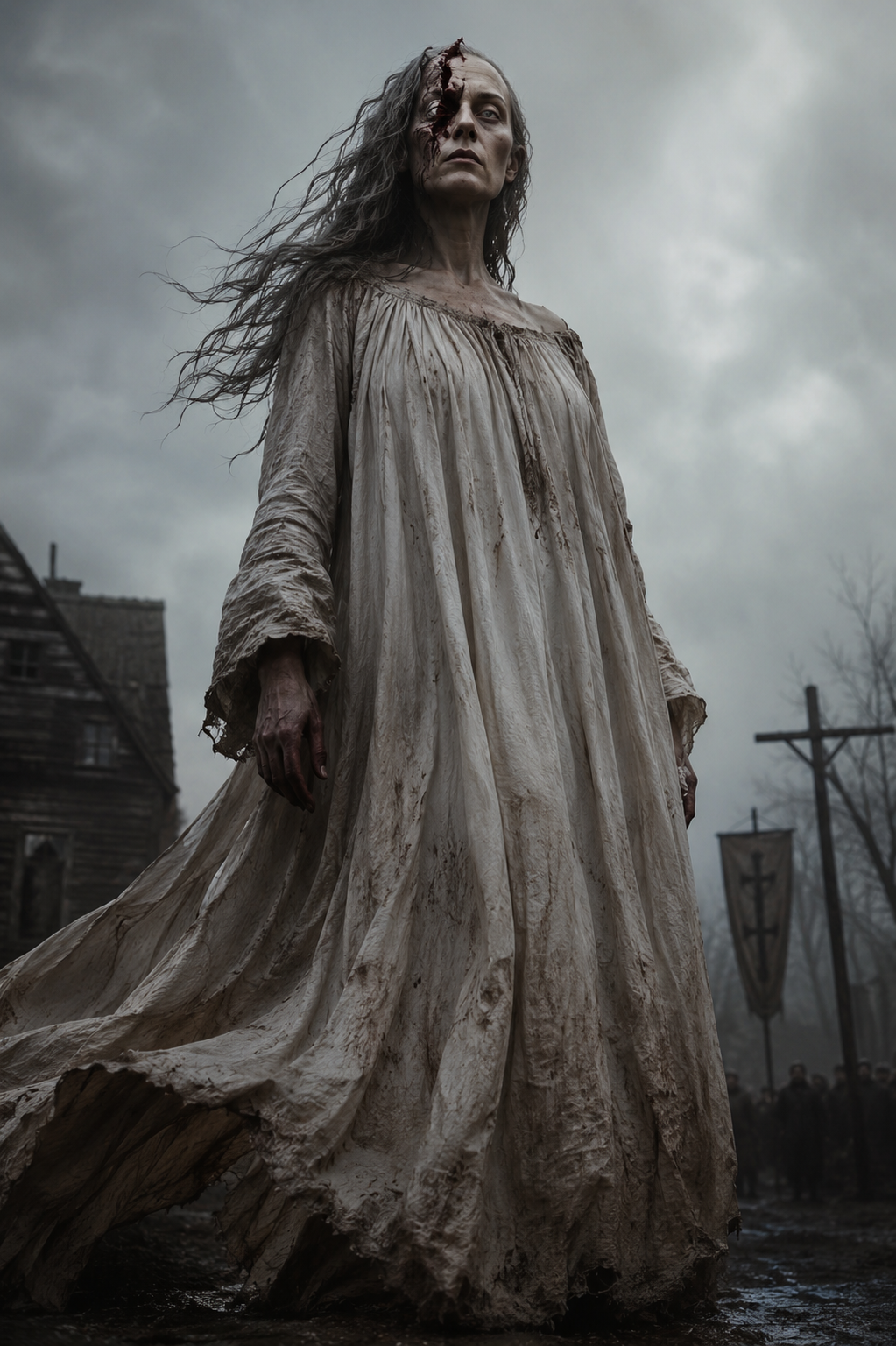
Fredricka stands against Master Vale and gives Margaret the axe she uses to kill him. Unlike many ghosts who depart afterward, Fredricka stays behind to “rest” and remain Margaret’s companion.
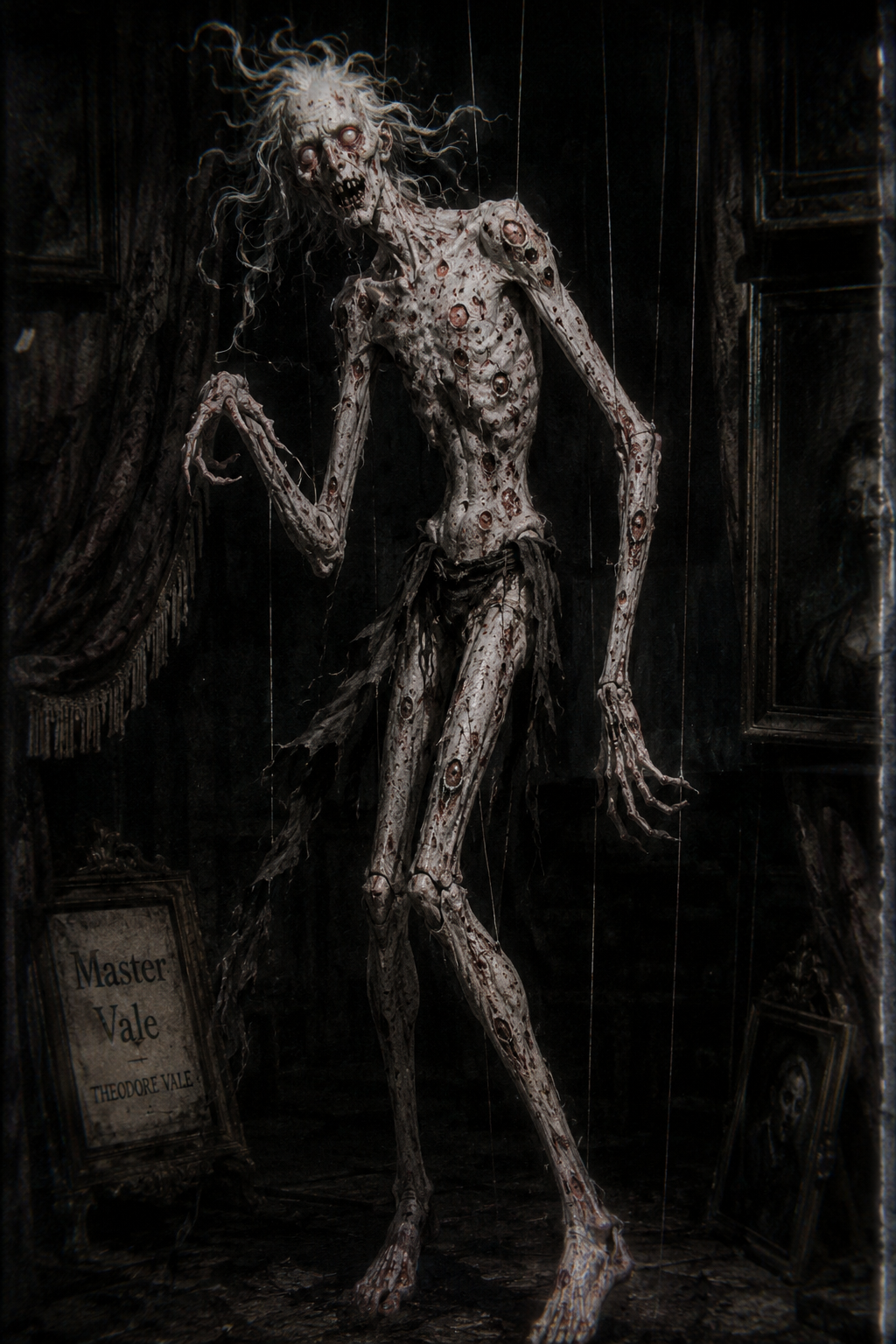
After murdering three police officers, Vale is overwhelmed by the ghosts of his victims, who mutilate him in the same ways he mutilated them. Margaret finishes him by burying an axe in his head, permanently breaking his power.
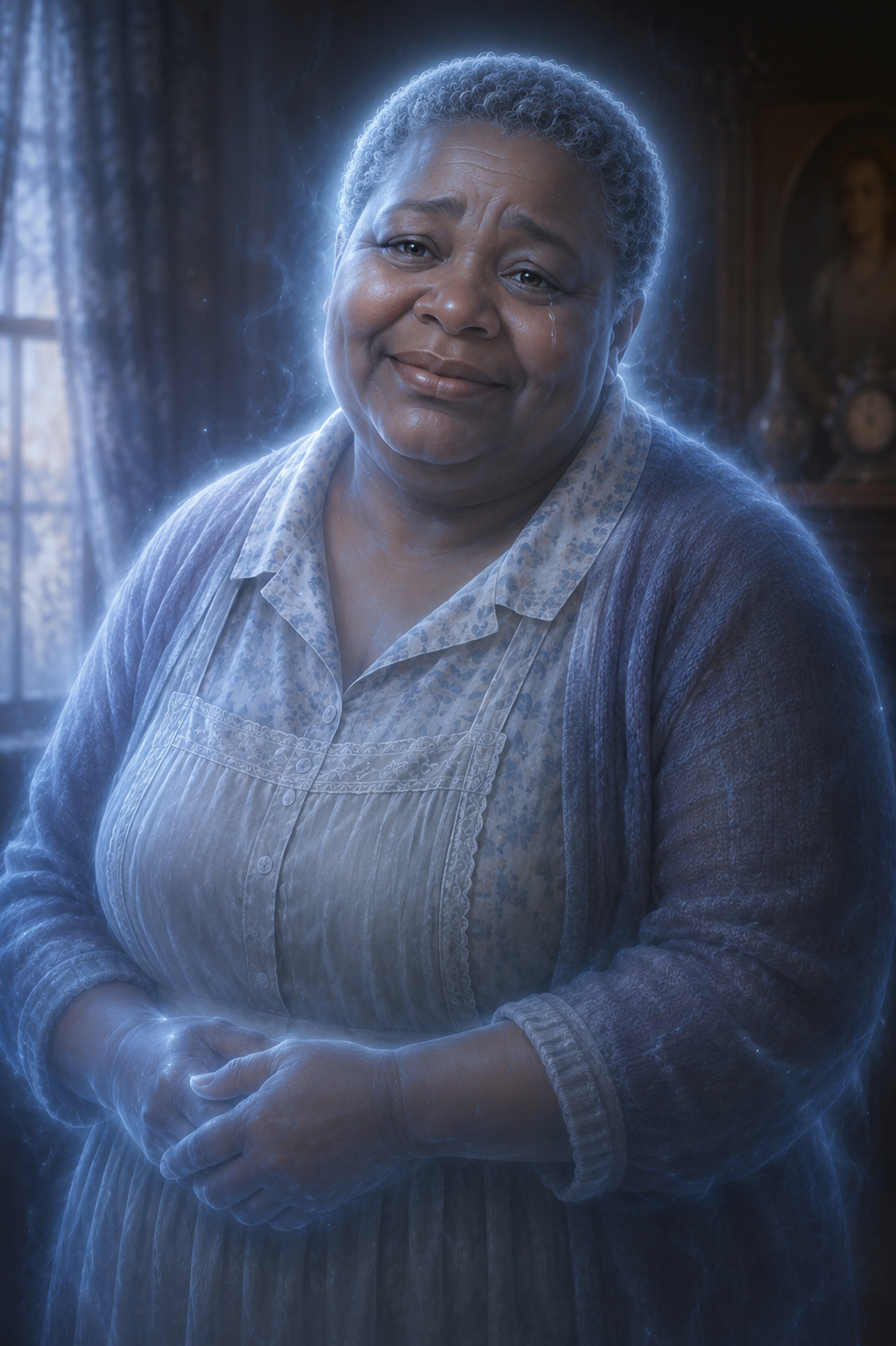
Edie reveals that she once owned the house and killed herself with sleeping pills because she could no longer endure the haunting. After Vale is destroyed, she finally finds peace and walks away from the property.
🔷 Supporting Characters

He joins the ghosts attacking Master Vale and is finally reunited with his mother, Hattie. The two walk hand-in-hand into the woods together.
She repeatedly strikes Vale in the head during the final battle. After his destruction, she remains briefly in the yard making a grass crown, finally free of him.
Julian disembowels Master Vale during the ghosts’ attack, mirroring his own mutilation, then leaves the property to search for his ancestors.
They slash Vale repeatedly during the final confrontation and, once he is destroyed, finally leave the property together.
James attacks Vale’s leg during the final battle. After Vale dies, James’s legs are restored, and Margaret sees him happily doing cartwheels in the yard.
Henry tears Vale’s arm completely from its socket during the final confrontation. After Vale’s destruction, Henry’s missing hand is restored.
Blythe joins the supernatural assault on Vale using smoke and boiling ooze. After his destruction, she is last seen peacefully perched on the roof with a bird.
Despite his own murderous past, Jasper joins the other ghosts against Master Vale during the final confrontation and survives Vale’s destruction.
Price, Coop, and McDouglas are brutally murdered when Master Vale twists their bodies into grotesque “broken spider” shapes. Jones survives after being pinned to the ceiling and witnessing the supernatural massacre.
Vale attacks him during the blessing, causing him to vomit a swarm of flies. Cyrus, already suffering from advanced dementia, dies peacefully about a week later.
Hattie appears during the final confrontation and is reunited with Elias after Vale’s destruction. Mother and son leave the property together, finally at peace.
He dies of a heart attack in 1882, long before Theodore’s own murderous legacy is finally ended by Margaret.
She remains alive but estranged from Margaret at the end of the novel.
🕳️ Potential Plot Holes
Hal’s body remains in the basement for roughly a month after Master Vale kills him. Although Margaret notices that the basement smells dank and wrong, she does not encounter the unmistakable odor of decomposition until she finally enters it. A body decomposing for that long in an enclosed basement would likely create an overwhelming smell that spread beyond the basement itself, making it difficult to believe Margaret—or Katherine—would not have noticed it much earlier.
Hal pours gasoline throughout the house intending to burn it down, but instead of simply igniting the gasoline upstairs and escaping, he descends into the basement to continue his plan. Hal already knows that Master Vale inhabits the basement and is terrified of him, making his decision to voluntarily enter the most dangerous part of the house unnecessarily risky when burning the house did not require him to go downstairs.
📚 Book Club Q&A's
⭐ Final Rating & Thoughts
The September House had such a promising setup that I’m almost impressed by how thoroughly it lost me. A creepy Victorian house, gruesome ghosts, mysterious rules, and a family with plenty of secrets? I was ready to be terrified. Instead, I spent most of the book wondering when it was finally going to get scary.
The horror felt more campy and ridiculous than genuinely unsettling, and the mystery surrounding the house and Hal’s disappearance never delivered the payoff I wanted. Even worse was my experience with the audiobook. The relentless screaming may have made sense within the story, but listening to it was absolutely exhausting. By the final chapters, I was so irritated that I genuinely considered DNFing with only about ten pages left—which pretty much says everything.
I wanted suspense, psychological depth, or at least a haunted house that could give me chills. Instead, I got a story that felt increasingly silly and over-the-top. 1 out of 5 stars. This September, I should’ve stayed somewhere else.
✨ Adaptation description
✨ Books Like The September House (2023)
See an error on this page?