
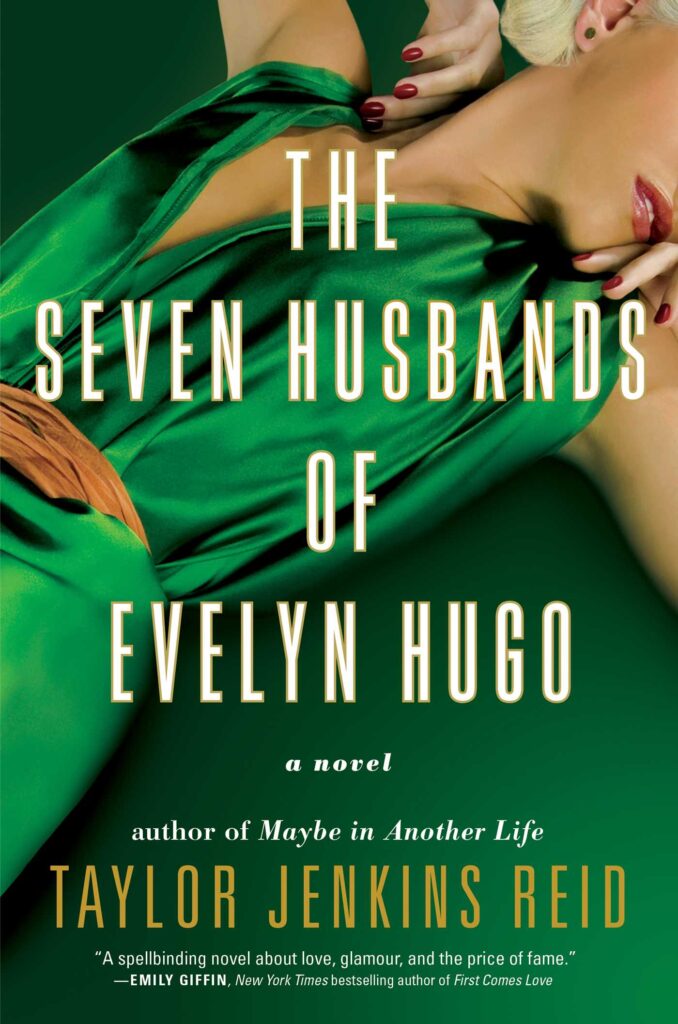
The Seven Husbands of Evelyn Hugo (2017)
Select Sections to Print
×Book Details
The Seven Husbands of Evelyn Hugo (2017)
Jump to Section
⚠️ Trigger Warnings
- Physical abuse and domestic violence
- Child abuse
- Sexual assault and sexual coercion
- Statutory rape
- Abortion
- Suicide and physician-assisted suicide
- Homophobia and homophobic slurs
- Alcoholism and substance abuse
- Death and grief
- Terminal illness and cancer
- Car accidents and fatal injury
- Miscarriage (faked/references)
- AIDS epidemic and AIDS-related deaths
- Racism and racial slurs
⏱️ 2-Minute Spoiler Summary
Hollywood legend Evelyn Hugo secretly hires journalist Monique Grant to write her biography and reveals the truth behind her seven marriages. Evelyn escaped an abusive childhood through her first husband, used several later marriages for career advancement or publicity, survived an abusive marriage to Don Adler, and built a genuine family with her gay best friend and fifth husband, Harry Cameron. But the true love of Evelyn’s life was actress Celia St. James, with whom she maintained a secret relationship for decades.
Evelyn eventually reveals why she specifically chose Monique: after Harry crashed his car while driving drunk, Evelyn moved his dead lover into the driver’s seat to protect Harry’s reputation. That man was James Grant, Monique’s father, meaning Evelyn allowed him to be blamed for the accident. After finally spending her later years with Celia, Evelyn loses Celia, Harry, her seventh husband Robert, and her daughter Connor. Now dying of breast cancer, Evelyn completes her confession and ends her own life. Monique prepares to publish the truth—including that despite Evelyn’s seven famous husbands, Celia was the person she truly loved.
📖 Full Spoiler Summary
Evelyn Chooses Monique
In the present day, Monique Grant is a relatively unknown writer at Vivant magazine whose personal life is falling apart. Her husband, David, has moved to San Francisco for a job, and their separation is turning into a divorce. Professionally, Monique is still trying to prove herself when legendary Hollywood actress Evelyn Hugo unexpectedly requests her by name for what everyone assumes will be a Vivant interview.
Now in her late seventies, Evelyn has spent decades as one of Hollywood’s most famous—and most mysterious—stars. She is especially notorious for having had seven husbands, and the public has always been fascinated by which of them she truly loved.
When Monique arrives at Evelyn’s Manhattan apartment, however, Evelyn reveals that she has no intention of giving Vivant the interview they expect. Instead, she wants Monique to write her authorized biography, with the book to be published after Evelyn’s death. Monique will receive all the proceeds.
Monique cannot understand why someone as famous as Evelyn would choose an inexperienced writer she has never met. Evelyn promises she will explain eventually. First, she wants Monique to hear the entire story.
From Evelyn Herrera to Evelyn Hugo
Evelyn grows up as Evelyn Herrera in Hell’s Kitchen, the daughter of Cuban immigrants. Her mother dreams of becoming an actress but dies when Evelyn is young, leaving Evelyn with an abusive father. Desperate to escape him, Evelyn quickly learns that her beauty can be used as a means of survival.
At fourteen, she marries Ernie Diaz, not because she loves him but because he is going to California and can take her with him. Once in Hollywood, Evelyn begins reinventing herself. She dyes her dark hair blonde, minimizes her Cuban identity, changes her surname to Hugo, and carefully constructs the glamorous image that will eventually make her famous.
Producer Harry Cameron recognizes her potential and becomes one of the most important people in her life. He helps Evelyn begin building her career, but she quickly realizes that talent and beauty alone won’t get her the roles she wants. Determined to move up in Hollywood, she sleeps with studio executive Ari Sullivan in exchange for a part that could advance her career. As her star begins to rise, she no longer needs the marriage that brought her to California and divorces Ernie.
Her second husband, actor Don Adler, seems like the perfect match. He is Hollywood royalty, and their marriage makes Evelyn an even bigger star. Behind closed doors, however, Don is controlling and physically abusive. Evelyn initially remains with him because leaving could jeopardize her career, but the marriage becomes increasingly unbearable.
Evelyn Falls in Love with Celia
While filming Little Women, Evelyn meets rising actress Celia St. James. At first, Evelyn sees Celia as competition. Celia is enormously talented, and Evelyn worries that she will steal attention from her. But their rivalry gives way to friendship, attraction, and eventually a secret romantic relationship.
For Evelyn, this is different from every relationship she has had before. She has married men for escape, ambition, security, or publicity, but she genuinely loves Celia.
Their relationship is also dangerous. They are living in an era when being exposed as two women in love could destroy both of their careers. Evelyn therefore becomes obsessed with protecting their secret, even when doing so hurts Celia.
After Evelyn learns Don has been unfaithful, their marriage finally collapses. She later learns from actress Ruby Reilly, whom Don also marries, that his abusive behavior was not limited to Evelyn.
Once Evelyn is single, however, the press begins paying even closer attention to her relationship with Celia. Evelyn decides they need a spectacular heterosexual distraction.
Her solution is singer Mick Riva.
Evelyn deliberately convinces Mick to marry her in Las Vegas, intending for the marriage to be quickly annulled. The stunt works as publicity, but it creates a much larger problem when Evelyn discovers she is pregnant. She has an abortion, knowing she does not want Mick’s child.
When Celia learns Evelyn actually slept with Mick, she feels deeply betrayed. To Evelyn, the sex meant nothing and was simply part of protecting them. To Celia, Evelyn crossed a line she cannot accept. Their relationship falls apart, and they remain separated for years.
Marriage for Publicity—and a Family Built on Secrets
Evelyn’s fourth husband is actor Rex North, her costar in Anna Karenina. Their marriage is essentially a business arrangement designed to generate publicity for their movie and strengthen both of their careers. Neither is pretending privately that it is based on love.
The arrangement works until Rex falls genuinely in love with actress Joy Nathan and wants to marry her. Evelyn needs their divorce to benefit her as much as it benefits Rex, so she and Harry manufacture a scandal: they pretend they have been having an affair.
The supposed affair gives Evelyn and Rex a dramatic reason to divorce and conveniently sets up Evelyn’s next marriage—to Harry Cameron.
Harry is gay, and Evelyn knows it. By this point, he is also her closest friend and one of the few people who truly understands her. Their marriage is not romantic, but it is built on genuine love, loyalty, and trust. Together they have a daughter, Connor, whom they both adore.
Eventually, Evelyn and Celia find their way back to each other. Their lives settle into an unconventional arrangement involving Evelyn, Harry, Celia, and football player John Braverman. Publicly, Celia is married to John and Evelyn is married to Harry. Privately, Evelyn and Celia are together, while Harry and John are lovers.
For a time, the arrangement gives all four of them something close to the lives they actually want. Evelyn and Celia can love each other without destroying their careers, Harry and John can do the same, and Connor grows up surrounded by adults who love her.
But Evelyn and Celia’s relationship remains complicated by Evelyn’s ambition and the compromises she is willing to make for her career. Their love survives years of separations, reconciliations, jealousy, and sacrifice, but they repeatedly struggle over Evelyn’s willingness to use sex and public relationships as tools.
Max Girard and Another Break with Celia
After years of hiding, Evelyn’s choices once again damage her relationship with Celia. Evelyn agrees to perform a sexually explicit scene with actor Don Adler in a film directed by Max Girard, believing it will be important for her career. Celia considers it another betrayal.
The two women separate again.
Later, Evelyn marries Max, believing that he understands and loves the real woman behind the movie-star image. Instead, she eventually realizes that Max is in love with Evelyn Hugo the icon—the glamorous fantasy he has admired for years—not the actual person she is.
By then, Evelyn knows exactly who she truly wants.
She leaves Max and reunites with Celia.
Harry’s Death and Evelyn’s Connection to Monique
Tragedy has already begun dismantling the family they created. John Braverman dies suddenly from a heart attack, devastating Harry. His grief contributes to increasingly serious drinking.
Then Harry dies in a car crash.
Evelyn arrives at the scene and discovers Harry badly injured in the driver’s seat while another man is dead in the passenger seat. Harry admits he had been drinking and tells Evelyn that the other man is someone he loves.
Knowing that a drunk-driving scandal—and the revelation that Harry had been with a male lover—could destroy Harry’s reputation and deeply hurt Connor, Evelyn makes a horrifying decision. She moves the dead man into the driver’s seat so police will believe he was driving.
Harry later dies from his injuries.
For years, the world believes the other man caused the accident.
That man was James Grant, Monique’s father.
Evelyn finally reveals that this is why she chose Monique to write her biography. Monique grew up believing her father had died while driving drunk, and Evelyn knows that her actions helped create that story.
Monique is furious and horrified. Evelyn gives her a letter James wrote to Harry shortly before the crash. The letter reveals that James and Harry were in love, but James had decided that he could not abandon Monique and her mother. He intended to return to his family and end the relationship.
For Monique, the revelation completely changes the story she has believed about her father. He was not the reckless drunk driver responsible for Harry Cameron’s death. Evelyn deliberately made him appear to be one in order to protect Harry.
Evelyn does not ask Monique to forgive her. Instead, she gives Monique the truth and allows her to decide what to do with it.
Evelyn Finally Gets a Life with Celia
After leaving Max, Evelyn is finally ready to prioritize Celia over Hollywood. But their time together is limited. Celia has COPD and knows she does not have many years left.
To give them legal and financial protection, Evelyn marries Celia’s brother, Robert Jamison, making him her seventh and final husband. The marriage allows Evelyn, Celia, Robert, and Connor to live together while maintaining an acceptable public explanation for their closeness.
At last, Evelyn and Celia are able to spend their remaining years together more openly within their private world. Celia is not simply Evelyn’s secret lover anymore. She is, in every way that matters to Evelyn, her wife.
Celia eventually dies, leaving Evelyn devastated.
Robert later dies as well. Then Evelyn suffers the loss she never imagined surviving when Connor dies of breast cancer. By the time Monique meets her, nearly everyone Evelyn loved most is gone.
Evelyn Tells the World the Truth
After finishing her story, Evelyn reveals that she also has breast cancer. Monique begins to understand that the timing of the biography is not accidental. Evelyn is putting her affairs in order.
Before leaving Evelyn’s apartment, Monique realizes that Evelyn intends to die by suicide rather than wait for the cancer to kill her. She faces an impossible choice: intervene and potentially force Evelyn to endure an ending she does not want, or walk away.
Monique leaves.
Soon afterward, Evelyn dies from an apparent accidental overdose.
Monique now possesses the story Evelyn spent her entire life hiding: the truth about her ambition, her marriages, Harry, James Grant, and above all, Celia.
The great mystery surrounding Evelyn Hugo has always been which of her seven husbands was the love of her life.
The answer is none of them.
Evelyn’s great love was Celia St. James, the woman she loved across decades of secrecy, breakups, reconciliations, marriages, and loss. Monique ultimately prepares to publish Evelyn’s biography, fulfilling Evelyn’s final wish to stop protecting the carefully manufactured legend of Evelyn Hugo and finally tell the world who she really was.
🔚 Ending Explained
How The Seven Husbands of Evelyn Hugo Ends
The ending of The Seven Husbands of Evelyn Hugo delivers its biggest revelation by finally explaining why Evelyn specifically chose Monique Grant to write her biography.
Evelyn reveals that Monique’s father, James Grant, was the man in the car with Harry Cameron on the night Harry died. James and Harry had been having an affair and were deeply in love. Harry was driving drunk when he crashed the car, killing James and leaving himself gravely injured.
When Evelyn arrived at the scene, she realized that if the truth came out, Harry could be blamed for James’s death and his sexuality could become public. Evelyn therefore made a ruthless decision: she moved James’s body into the driver’s seat, making it appear that James had been driving drunk and had caused the accident. Harry later died from his injuries.
Evelyn gives Monique a bloodstained letter James had written to Harry. In it, James explains that although he loves Harry, he cannot abandon his wife and daughter. For Monique, the revelation is devastating on two levels: she discovers that her father had been in love with another man, and that Evelyn deliberately allowed him to be remembered as the person responsible for the crash.
Monique is furious. Evelyn does not expect forgiveness and makes little attempt to excuse herself. Harry was her chosen family, and in that moment, protecting him mattered more to her than protecting the reputation of a dead man she did not know.
But Evelyn has one more truth to reveal: she has terminal breast cancer.
As their interviews end, Monique notices that Evelyn has conveniently sent her housekeeper, Grace, on an all-expenses-paid vacation. She realizes Evelyn intends to take her own life before cancer can dictate the terms of her death. Monique could intervene, but she chooses not to. Her decision is influenced by an article she once wrote about physician-assisted death and the right to die with dignity.
Evelyn dies that night.
The novel then jumps forward to Monique’s eventual publication of Evelyn’s biography. Although the book will be called The Seven Husbands of Evelyn Hugo, Monique reveals the essential truth behind the provocative title:
Evelyn’s story was never really about her seven husbands. It was about Celia St. James.
Celia was the great love of Evelyn’s life—and, in every way that mattered, her wife.
What the Ending Means
The ending transforms the entire novel. What initially appears to be the scandalous story of a Hollywood star and her seven marriages becomes a story about the enormous cost of hiding one authentic love.
The Seven Husbands Were the Distraction
The title is deliberately misleading because Evelyn herself spent decades misleading the public.
Her husbands were real relationships of varying importance, but they also functioned as camouflage. Some gave her security, some advanced her career, some protected her sexuality, and some were genuine friendships. Yet none occupies the emotional position Celia does.
That makes the final distinction between “husbands” and “wife” crucial.
Evelyn had seven husbands in the eyes of the world. But Celia was the person with whom she wanted an actual life.
The irony is that the public obsessed over precisely the least important part of Evelyn’s romantic history.
The Hair-Tie Rings
Evelyn and Celia’s makeshift wedding rings beautifully reinforce that contrast.
Their marriages to men came with diamonds, photographers, headlines, gowns, and carefully manufactured stories. Their private commitment to each other has almost none of those things.
Instead, they use hair ties as wedding rings.
They are practically worthless, yet emotionally priceless. The symbolism is simple: Evelyn’s glamorous marriages were often performances, while the relationship society refused to recognize was the most genuine marriage of her life.
Evelyn’s Final Choice Is About Control
Evelyn’s decision to end her life is consistent with the woman she has been throughout the entire novel.
She has spent her life refusing to let other people completely determine what happens to her. When Hollywood demands a different identity, she reinvents herself. When marriage becomes useful, she marries. When divorce becomes necessary, she leaves. When the truth threatens the people she loves, she manipulates the truth.
Her final confrontation is with something she cannot charm, negotiate with, or outmaneuver: cancer.
So Evelyn asserts control over the one thing she still can—the circumstances of her death.
It is simultaneously tragic and completely characteristic of her.
Evelyn’s Treatment of Monique’s Father Complicates Her Legacy
The revelation about James prevents the ending from becoming a simple celebration of Evelyn.
Evelyn has done extraordinary things for people she loves, but that devotion has always possessed a dangerous edge. Her moral universe is intensely personal: she protects her people, even when someone outside that circle has to pay the price.
Harry was family.
James wasn’t.
So Evelyn protected Harry.
What makes the revelation particularly painful is that Evelyn understands exactly what she took from Monique. James was already dead, but Evelyn also allowed his reputation to die with him.
The novel therefore refuses to give readers an easy verdict on Evelyn. She can be loving, loyal, courageous, selfish, manipulative, generous, and ruthless—sometimes within the same decision.
That ambiguity is central to the book’s argument that people cannot easily be divided into good and bad.
Monique Becomes More Like Evelyn
There’s also a subtle transfer of power between the two women.
At the beginning, Monique is uncertain about her career, her marriage, and her own value. Evelyn deliberately pushes her toward becoming more assertive.
By the end, Monique has learned something from her—not necessarily Evelyn’s morality, but Evelyn’s refusal to let other people determine her worth.
She becomes more ambitious and decisive. She recognizes the enormous professional opportunity sitting in front of her and intends to use it.
Even more significantly, Monique begins confronting the same ethical questions Evelyn has spent her life answering: When does someone deserve the truth? When is protecting someone more important than telling it?
After learning about James, Monique even considers whether her mother needs to know everything about her father’s secret life. That parallel is deliberate. Monique condemns Evelyn’s manipulation of truth while simultaneously discovering how complicated truth becomes when someone you love might be hurt by it.
Public Image vs. Private Truth
This is ultimately where the entire novel lands.
Evelyn Hugo was a construction.
Her name, appearance, marriages, sexuality, interviews, photographs, and public relationships were carefully managed. She understood that Hollywood wanted a beautiful fantasy, and she became exceptionally good at providing one.
But the biography destroys that construction.
For perhaps the first time, Evelyn willingly gives up control over how the world sees her in exchange for control over what the world finally knows about her.
That distinction matters.
She knows people may condemn her after reading Monique’s book. She accepts it because being known truthfully has finally become more important than being admired.
Evelyn’s True Legacy
The ending radically changes what Evelyn Hugo will represent after her death.
The world thought it knew a glamorous Hollywood icon famous for movies, beauty, scandals, and seven husbands. Monique’s biography will reveal something far more complicated: Evelyn was a bisexual woman who spent much of her life hiding the woman she loved because Hollywood and society made honesty extraordinarily costly.
That makes the biography both confession and reclamation.
Evelyn cannot undo the choices she made. She cannot restore Celia, Harry, Connor, or James. She cannot make herself innocent.
What she can do is finally stop pretending.
And that’s why the final emphasis on Celia is so powerful. After hundreds of pages devoted to seven husbands, the novel quietly reveals that they were never the point.
The world will remember Evelyn Hugo for seven husbands. Evelyn Hugo wants the truth to remember her for one wife.
👤 Characters & Fates
🔶 Main Characters
After losing Celia, Harry, Connor, and nearly everyone she loves, Evelyn develops terminal breast cancer. Once Monique finishes interviewing her, Evelyn deliberately overdoses on medication and dies by suicide on her own terms.

She learns Evelyn framed her dead father as the drunk driver to protect Harry, but ultimately decides to publish Evelyn’s story. She finalizes her divorce, advances her career, and becomes a celebrated journalist.
After years of separations and reconciliations, Celia and Evelyn finally spend ten peaceful years together in Spain. Celia dies of respiratory failure from COPD/emphysema in Evelyn’s arms.
After John’s death, Harry falls in love with James Grant. Harry crashes while driving drunk with James; James dies at the scene and Harry later dies in the hospital. Evelyn moves James’s body into the driver’s seat to protect Harry’s reputation and Connor.
🔷 Supporting Characters
Evelyn leaves him once her Hollywood career takes off. He later remarries, has eight children, becomes a happy grandfather, and dies in the 1990s.
He abuses both Evelyn and later Ruby Reilly. His career eventually declines amid alcoholism and failures, though he wins an Oscar and eventually apologizes to Evelyn before his death.
Their marriage is annulled within 24 hours, but Evelyn becomes pregnant from their encounter and has an abortion. Celia is devastated by the betrayal, causing their first major separation.
Rex falls genuinely in love with Joy Nathan, so he and Evelyn manufacture a scandal to end their marriage. He marries Joy, and they have a daughter named Violet.
Evelyn realizes she still loves Celia and leaves Max for her. Bitter over the rejection, Max attacks Evelyn in the press after their divorce.
After Celia dies, Robert and Evelyn remain peacefully married as friends. He eventually dies at age 81, leaving Evelyn widowed for the final time.
James decides not to abandon his family for Harry, but while traveling with him on February 26, 1989, Harry crashes while driving drunk. James dies at the scene, and Evelyn moves his corpse into the driver’s seat so the world will blame James rather than Harry.
After a troubled adolescence, Connor becomes successful on Wall Street. She later develops breast cancer and dies before the novel begins, devastating Evelyn; Evelyn eventually develops the same disease.
John and Harry remain deeply in love for years until John suddenly dies of a heart attack at age 50 in 1980, leaving Harry devastated.
Ruby escapes Don, wins an Oscar, and eventually retires to a beach house in Santa Monica.
She remains at Vivant and is last seen thrilled with the successful Evelyn photo shoot, while Monique uses the opportunity to gain greater professional power.
Monique accepts that their marriage is over and finalizes their divorce, emerging far more confident and independent.
His ultimate fate is not detailed; he primarily remains part of Evelyn’s memories of the ruthless studio system.
Nick blackmails Evelyn into launching his acting career in exchange for silence. She keeps her end of the bargain, and he becomes a famous movie star.
Evelyn sends Grace away on an expensive vacation before Monique’s final visit, deliberately ensuring Grace will not be present when Evelyn takes the overdose that kills her.
Joy marries Rex after his divorce from Evelyn, and the couple eventually has a daughter named Violet.
She remains unaware of the full circumstances surrounding James’s death and reconnects emotionally with Monique, ending the story watching an Evelyn Hugo movie with her daughter.
Don fires Paula specifically knowing she will retaliate by leaking their fabricated miscarriage story, making her part of Evelyn and Don’s publicity manipulation.
Their later lives and deaths are not significant to the central story.
Her later fate is not revealed.
His later fate is not revealed.
Her later fate is not revealed.
Her ultimate fate is not specified.
Her later fate is not revealed.
His later fate is not revealed.
🕳️ Potential Plot Holes
Evelyn says she can finally tell the truth because everyone she loved is dead and there is “no one left to protect.” But publishing her biography still has consequences for the people she spent decades protecting. Her confession exposes Harry’s secret relationship with James Grant and reveals the circumstances surrounding his death, undoing the carefully constructed public image Evelyn worked so hard to preserve. It also changes how the world will remember Connor’s father. Evelyn may no longer have any living loved ones to protect, but their reputations and legacies remain, making her claim that there is “no one left to protect” somewhat inconsistent with the lengths she previously went to shield them.
📚 Book Club Q&A's
⭐ Final Rating & Thoughts
The Seven Husbands of Evelyn Hugo absolutely lived up to the hype for me. Taylor Jenkins Reid completely pulled me into the glamour, scandals, and carefully manufactured image of Old Hollywood, but it was Evelyn herself who made this book so compelling.
She is ambitious, ruthless, selfish, loving, calculating, and incredibly complicated. I didn’t always agree with her choices—and sometimes I was genuinely frustrated with her—but I loved that the book never tried to make her easily likable or morally perfect. She feels like a real person who made difficult decisions in a world that gave her very few easy ones.
The emotional relationships were the strongest part of the story for me, and I also loved the mystery surrounding why Evelyn specifically chose Monique to tell her story. I genuinely didn’t predict where that storyline was going, which made the payoff even better.
My only real issue was Monique, who never felt quite as developed or interesting as Evelyn. Still, this was addictive, glamorous, heartbreaking, and beautifully messy. Not quite a perfect five stars, but very, very close.
✨ Adaptation description
The Seven Husbands of Evelyn Hugo — Netflix Film Adaptation
Taylor Jenkins Reid’s 2017 bestselling novel The Seven Husbands of Evelyn Hugo is officially being adapted as a feature film for Netflix, with Anna Kendrick attached to direct. Kendrick joined the project in June 2026, replacing previously announced director Leslye Headland. The film is currently preparing to enter production, but Netflix has not announced a release year or cast. (Netflix)
Production Details
- Format: Feature film
- Platform/Studio: Netflix
- Director: Anna Kendrick
- Original Screenplay: Liz Tigelaar
- Current Script Revisions: Francesca Sloane
- Producers: Liza Chasin of 3dot Productions, Brad Mendelsohn of Circle Management + Productions, and David Hinojosa
- Executive Producer: Taylor Jenkins Reid
- Production Status: Preparing to enter production
- Cast: No actors officially announced
- Release Date: Not announced (Netflix)
Netflix describes the film as following young journalist Monique Grant, who is selected for a long-awaited interview with aging Hollywood star Evelyn Hugo. Evelyn recounts her seven marriages and her rise through Hollywood while gradually revealing the scandals, betrayals, relationships, and secrets hidden behind her carefully constructed public image. (Netflix)
What the Adaptation Emphasizes
Based on Netflix’s official description, the adaptation is emphasizing:
- Evelyn’s seven marriages and Hollywood scandals
- The contrast between Evelyn’s glamorous public persona and her private life
- Secrets and betrayals involving Evelyn and the people around her
- The mystery of what Evelyn ultimately reveals during her interview with Monique
- The visual glamour of Golden Age Hollywood (Netflix)
✨ Books Like The Seven Husbands of Evelyn Hugo (2017)
See an error on this page?