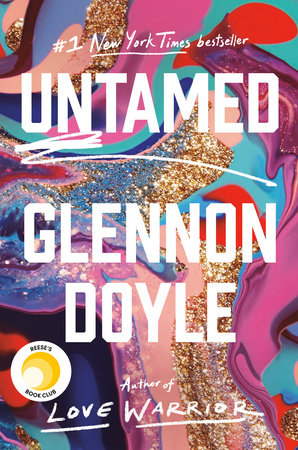
Untamed (2020)
Select Sections to Print
×Book Details
Untamed (2020)
Jump to Section
⚠️ Trigger Warnings
- Eating disorders (bulimia, bingeing, purging) and body dysmorphia
- Alcoholism, drug addiction, substance abuse, and blackout drinking
- Infidelity, marital betrayal, and divorce
- Depression, severe anxiety, and panic attacks
- Psychiatric hospitalization and psychiatric medication
- Child death and terminal illness
- Cancer and other terminal diseases
- Death, grief, and hospice care
- Immigration trauma and parent-child separation
- Racism and systemic injustice
- Police brutality and mass incarceration
- Gun violence, school shootings, and active-shooter drills
- Homophobia and religious exclusion/shaming
- Family rejection of LGBTQ+ individuals
- LGBTQ+ youth homelessness
⏱️ 2-Minute Spoiler Summary
Untamed is Glennon Doyle’s first-person memoir about how she spent much of her life trying to become the person she believed the world wanted her to be, then gradually learned to trust herself instead. The book is told through nonlinear essays and memories rather than as one chronological story. Its central metaphor comes from Tabitha, a zoo cheetah trained to chase a fake pink bunny after being raised alongside a Labrador retriever. When Glennon’s daughter Tish later sees Tabitha staring beyond her enclosure and says, “She turned wild again,” Glennon recognizes herself in the cheetah: conditioned and contained, but still capable of remembering who she really is.
Glennon traces that conditioning back to childhood. At ten, she develops severe bulimia, and as she grows older, she turns to alcohol and drugs to numb herself. At twenty-six, a positive pregnancy test pushes her to get sober. She marries the baby’s father, Craig Melton, and they eventually have three children: Chase, Tish, and Amma. Their marriage later falls apart when Craig admits to repeated infidelity. Glennon initially tries to rebuild it, even writing Love Warrior around their story of betrayal, forgiveness, and reconciliation.
Then, while promoting Love Warrior, Glennon meets retired soccer star Abby Wambach and immediately feels an overwhelming certainty that Abby is the person she loves. Their connection forces Glennon to confront the contradiction between the life she has carefully repaired and the life she now knows she wants. She ultimately decides that staying married simply because she is supposed to would teach her children to abandon themselves. She tells Craig their marriage is over, and he responds that he wants her to be happy.
Much of Untamed explains how Glennon reaches that decision. She describes learning to experience painful emotions rather than numbing them, becoming still enough to hear her own inner “Knowing,” and imagining what her life could look like if she stopped obeying society’s rules about what a good woman, wife, and mother should be.
Glennon and Abby build a life together while creating an unusually close blended family with Craig and eventually Craig’s new girlfriend. Abby helps Tish rediscover confidence through soccer; Glennon helps Chase pull away from screens and reconnect with his creativity; and Amma grows up outspoken and comfortable being herself. Glennon applies the same philosophy to her activism through Together Rising, turning grief and anger into practical action, including helping reunite immigrant families separated at the U.S. border.
By the end, Glennon no longer sees freedom as reaching some final, perfected version of herself. Instead, she embraces continually becoming who she is, refusing to organize her life around other people’s expectations. Like Tabitha the cheetah, she realizes that being conditioned does not mean her original instincts disappeared. She can still become “wild” again.
📖 Full Spoiler Summary
The Cheetah Who Remembers She Is Wild
Untamed is a first-person memoir by Glennon Doyle, told through nonlinear personal essays rather than a single chronological narrative. Glennon moves between childhood, addiction and recovery, her marriage to Craig Melton, motherhood, falling in love with Abby Wambach, divorce, remarriage, parenting, and activism. The book is organized around three stages—“Caged,” “Keys,” and “Free”—that trace how she believes she was conditioned to ignore herself and how she learned to trust her own instincts again.
The idea is introduced through Tabitha, a cheetah Glennon sees at a zoo with Abby and her youngest daughter, Amma. Tabitha has been raised alongside Minnie, a Labrador retriever, and trained to perform a “Cheetah Run” by chasing a pink stuffed bunny down a track in exchange for steak.
After the demonstration, Glennon’s older daughter Tish notices Tabitha pacing along the edge of her enclosure and staring toward the horizon. Tish tells her mother that the cheetah has “turned wild again.”
For Glennon, the moment captures what happened to her. She believes girls begin learning around age ten to distrust their bodies, instincts, desires, and emotions in favor of becoming acceptable to everyone else. They learn to chase their own versions of Tabitha’s pink bunny: approval, thinness, success, romantic love, obedience, and the appearance of having everything together.
Growing Up Caged
Glennon traces her own struggle back to age ten, when she develops severe bulimia. Food, bingeing, and purging become ways of dealing with feelings she does not know how to tolerate. During high school, her problems become serious enough that she spends time in a mental health facility.
As she grows older, alcohol and drugs become additional ways of escaping herself. She spends much of her late teens and twenties drinking, using drugs, and struggling with bulimia and addiction.
Her life changes at twenty-six when she discovers she is pregnant. Sitting on a bathroom floor with a positive pregnancy test, Glennon decides she cannot continue living as she has been. She gets sober and prepares to become a mother.
The baby’s father is Craig Melton, a former soccer player whom Glennon marries. Their first child is Chase, followed by daughters Tish and Amma. Glennon throws herself into being a wife and mother, but the stability she builds does not eliminate the deeper problem of shaping herself around what she thinks a woman is supposed to be.
Eventually, Craig reveals that he has repeatedly been unfaithful during their marriage. Glennon is devastated, but rather than immediately ending the relationship, the two attempt to repair it. Their struggle becomes central to Glennon’s memoir Love Warrior, in which she tells a story of betrayal, forgiveness, and rebuilding a marriage.
By the time Love Warrior is ready for publication, Glennon believes she has survived the crisis and knows the story she is supposed to tell next.
Then she meets Abby.
Falling in Love With Abby
At a Chicago publishing event, Glennon encounters Abby Wambach, the recently retired Olympic soccer star who is promoting her own book. The reaction is immediate. When Abby enters the room, Glennon experiences a powerful internal recognition that she describes simply as “There She Is.”
That certainty is particularly disruptive because Glennon has just written an entire book about saving her marriage.
She and Abby begin exchanging letters, and their connection deepens into love. Glennon confides in people she trusts, including her sister Amanda and her friend Liz Gilbert, the author of Eat, Pray, Love. But ultimately, the decision cannot be outsourced to friends, therapists, religious teachings, or anyone else. Glennon has to decide whether she will continue living the life she has already committed to or trust what she now knows about herself.
This dilemma becomes the clearest example of the lesson at the heart of Untamed: Glennon has spent years looking outside herself for instructions, and she now believes doing so has separated her from her own inner wisdom.
Learning to Trust Herself
The middle portion of the book focuses on the “keys” Glennon believes helped her escape that pattern.
The first is allowing herself to feel everything. For years, Glennon treated pain as evidence that something had gone wrong and used bulimia, alcohol, drugs, and other forms of avoidance to escape uncomfortable emotions. She gradually comes to believe that pain cannot be permanently avoided. Loving people guarantees eventual loss, and being alive means experiencing grief, fear, disappointment, and uncertainty.
Instead of immediately trying to fix those feelings, she learns to remain with them.
Her second key is what she calls Knowing. Glennon begins sitting alone in a quiet closet and turning inward whenever she faces difficult decisions. Rather than automatically asking what an expert, institution, religion, therapist, or cultural rule says she should do, she waits for the quieter answer she believes already exists inside her.
The third key is imagination. She begins asking what a life that feels “true and beautiful” might actually look like instead of assuming she must choose from the options society has already presented. This requires questioning the cultural “memos” she has absorbed about marriage, motherhood, sacrifice, gender, sexuality, and what makes someone a good woman.
Her relationship with Abby becomes the test of whether she actually believes these lessons.
Ending Her Marriage and Choosing Abby
Glennon eventually concludes that remaining with Craig solely because leaving would violate conventional ideas about marriage would itself be a form of dishonesty. More importantly, she thinks about what her children would learn from watching her stay.
She does not want Chase, Tish, and Amma to believe that adulthood requires abandoning themselves to preserve an institution or satisfy other people.
Glennon tells Craig that their marriage is complete. Despite everything they have been through, Craig responds with grace and tells her that he wants her to be happy.
They then face the much harder task of telling their children and families. The divorce is painful, particularly for Tish, and Glennon does not pretend that choosing what she believes is right prevents other people from being hurt.
Glennon and Abby reunite in Los Angeles and decide to build a life together. Because their relationship immediately attracts opinions and anxiety from outsiders, Abby develops an image for protecting their new family: their home is an Island surrounded by an alligator-filled moat. Their rule is “Only Love In, Only Love Out.”
Glennon applies that boundary even to people she loves, including her mother, Patricia, when their fear threatens to intrude on the new family she and Abby are creating.
Building a Different Kind of Family
One of Glennon’s biggest concerns is how the divorce and remarriage will affect her children. Rather than trying to recreate a conventional family structure, Glennon, Abby, and Craig gradually develop a cooperative blended family.
Tish initially struggles deeply with the changes. Soccer eventually becomes an important source of confidence. With support from Abby and Craig, she joins an elite travel team and earns the nickname “Elmer’s” because of her ability to keep the ball glued to her feet. Glennon watches her sensitive daughter become increasingly confident while retaining the empathy that has always defined her.
Chase, meanwhile, begins disappearing into his phone and social media. Glennon sees technology consuming the boy who once loved geography, music, reading, and writing lyrics. She helps him step away from the constant digital stimulation so he can rediscover the interests that made him feel like himself.
Youngest daughter Amma represents something different to Glennon. Bold, opinionated, and comfortable wearing what she wants and saying what she thinks, Amma seems less thoroughly conditioned by the expectations that Glennon herself absorbed as a girl. Rather than teaching Amma to become smaller or more agreeable, Glennon tries to protect that confidence.
The family eventually expands further when Craig begins dating someone new. Instead of treating his girlfriend as a rival, Glennon describes a family in which Craig, his girlfriend, Glennon, and Abby can share holidays, attend the children’s soccer games, eat together, and participate in Thanksgiving Turkey Trots. Divorce has changed the shape of their family without ending it.
Turning Pain Into Action
Glennon extends the same philosophy beyond her own household through Together Rising, the nonprofit she runs with women including her sister Amanda and friend Allison, with Liz Gilbert also part
🔚 Ending Explained
How Untamed Ends
Untamed doesn’t end with a traditional plot resolution. Instead, Glennon Doyle closes the memoir by bringing its central idea—learning to trust herself—to its fullest conclusion.
In the final chapter of Part Three, “Levels,” Glennon remembers a therapist once telling her to try yoga as a way of reconnecting with her body. At the time, simply staying on the mat was difficult. She felt restless, uncomfortable, and desperate to escape. But she made herself remain there.
Looking back, Glennon sees that experience as a metaphor for her thirties. During those years, she needed to learn how to stay: stay with discomfort, stay with pain, stay long enough to confront her addiction, her marriage, and herself instead of continually trying to escape.
But turning forty brings a different lesson.
Glennon realizes, “I’m made.” She no longer needs to prove her strength by enduring situations that require her to betray herself. From now on, she will not remain in a room, conversation, relationship, or institution that demands her self-abandonment.
So she does something deceptively simple: she picks up her yoga mat and leaves.
And in doing so, she understands that the doors to her cages were never locked.
The memoir then moves into its brief final section, “Epilogue: Human.” Glennon invokes the sacred idea of God answering the question of identity simply with “I am.”
She imagines herself being confronted with all the categories the world wants her to choose between: happy or sad, believer or doubter, good or bad, light or dark, right or wrong, gay or straight, crazy or brilliant, caged or wild.
Glennon refuses to choose.
Her answer is simply:
“I am.”
She repeats it three times.
The book then closes with its dedication to every woman resurrecting herself, the girls who will never be buried, and, most personally, Tish.
What the Ending Means
The final act of Untamed—picking up the mat and walking out—beautifully reverses one of the lessons Glennon spent years learning.
Earlier in her life, staying was courage. She had spent years escaping herself through bulimia, alcohol, drugs, and other forms of self-destruction. Learning to remain on the yoga mat taught her to tolerate discomfort rather than immediately flee it. She needed that discipline in order to discover who she actually was.
But the lesson that saves you at one stage of life can become another cage if you never allow yourself to outgrow it.
By forty, Glennon understands that staying is not automatically virtuous. Endurance can become self-abandonment. A woman does not have to remain somewhere simply because she can survive it.
That is why the unlocked door matters so much. Glennon realizes that many of her cages were maintained not by literal barriers but by expectations she had internalized: be a good wife, be a good Christian, be a good mother, keep everyone comfortable, don’t disappoint people, don’t want too much, and don’t disrupt the life you’ve already built.
Walking through the door means recognizing that she no longer needs anyone to release her.
From “Caged” to “Free”
The ending also completes the book’s three-part movement from “Caged” to “Keys” to “Free.”
At the beginning, Glennon is like the caged cheetah: she has been trained so thoroughly to behave according to expectations that captivity begins to feel natural. Much of the memoir is therefore about discovering the “keys”—her Knowing, imagination, intuition, and willingness to disappoint others rather than abandon herself.
By “Levels,” she finally understands what freedom requires.
It isn’t finding someone else to unlock the cage.
It is realizing the door is already open and choosing to walk through it.
That makes the yoga mat a particularly fitting final symbol. At first, strength meant refusing to leave it. At the end, strength means knowing when to pick it up.
Why the Book Ends With “I Am”
The epilogue takes that idea one step further.
Throughout Untamed, Glennon has been surrounded by categories telling her what kind of person she is supposed to be. Even seemingly opposite identities—good/bad, believer/doubter, gay/straight, caged/wild—still require her to fit herself inside a definition.
Her final “I am” rejects the premise that she has to choose.
The phrase carries sacred significance because it echoes the divine declaration of identity. Glennon’s spirituality has moved away from understanding God primarily as an external authority telling her how to live. Instead, the sacred becomes intertwined with the internal Knowing she has spent the entire memoir learning to trust.
So “I am” isn’t really another label.
It’s existence without qualification.
She doesn’t have to prove that she’s good enough, faithful enough, maternal enough, straight enough, gay enough, wild enough, or anything else enough.
She is.
And that is enough.
Motherhood and the Final Dedication
The dedication gives the ending another layer because Glennon’s liberation isn’t presented as something that matters only to her.
One of Untamed‘s central challenges to traditional motherhood is the idea that a good mother should sacrifice herself completely for her children. Glennon comes to believe the opposite: disappearing for your children teaches them how to disappear too.
The better inheritance is selfhood.
That makes the progression in the dedication especially meaningful: women are “resurrecting” themselves, while the next generation of girls will “never be buried” in the first place.
Glennon’s generation may have to undo what it was taught. The hope is that their daughters won’t have to spend half their lives recovering themselves.
And ending specifically with Tish makes that enormous philosophical argument intimate. Glennon’s transformation isn’t merely about saving herself. It’s about changing what her daughter learns a woman’s life is supposed to look like.
The Ending’s Larger Message
The ending of Untamed ultimately reframes what it means to be “untamed.”
It doesn’t mean becoming fearless, rebellious for rebellion’s sake, or permanently certain about who you are. Glennon deliberately refuses even the final binary of caged versus wild.
Instead, being untamed means refusing to abandon yourself in order to earn belonging.
Earlier Glennon tried to become whatever the world required: the right body, the right wife, the right mother, the right Christian, the right kind of woman. By the final pages, she no longer needs to settle on a permanent identity at all. She can change, contradict herself, doubt, believe, leave, stay, love, grieve, and begin again.
That is why Untamed doesn’t finish by declaring, “I am wild.”
It ends somewhere even freer:
“I am.”
The cage is gone, but so is the need for another label to replace it.
👤 Characters & Fates
🔶 Main Characters
Divorces Craig after falling in love with Abby Wambach, publicly comes out, marries Abby, creates a loving blended family, and builds a life centered on authenticity and freedom.
Marries Glennon, bonds deeply with her children, helps coach Tish in soccer, co-parents peacefully with Craig, and builds a life with Glennon in Florida.
Accepts the divorce, encourages the children to love Abby, finds a new girlfriend, and develops a remarkably friendly co-parenting relationship with Glennon and Abby.
Processes her parents’ divorce, becomes an elite travel soccer player, quits social media, grows into a confident leader, and becomes the primary person to whom Untamed is dedicated.
Continues growing up fiercely herself—wearing what she wants, playing soccer, getting her ears pierced, and confidently declaring, “Nah. I’m already great.”
Recognizes how technology has dulled his creativity and steps away from social media to reconnect with drawing, reading, writing music, soccer, and his family.
Survives her own painful marital breakdown, works in Rwanda prosecuting child sex offenders and helping widows reclaim land, later marries John, has daughter Alice, and continues leading Together Rising with Glennon.
🔷 Supporting Characters
Dies peacefully in an Ohio retirement facility surrounded by family; Amanda later names her daughter Alice Flaherty in her honor.
Initially fear Glennon’s divorce and relationship with Abby but ultimately embrace Abby completely, with Patricia acknowledging that Abby restored Glennon’s lost spark.
Supports Glennon through her divorce and new relationship, continues her work with Together Rising, and experiences the devastating loss of her own partner.
Remains behind the zoo fence, staring toward the horizon as though remembering the wild life she was meant to live, inspiring Glennon to reclaim her own.
Continues happily chasing a stuffed pink bunny for rewards, completely adapted to her domesticated existence.
Continues working alongside Glennon and Amanda to raise money and direct aid toward people in crisis.
Encourages Glennon rather than dismissing the connection, helping validate the life-changing attraction Glennon feels.
Her simple classroom motto becomes a lifelong mantra Glennon carries through recovery, marriage, divorce, parenting, and coming out.
Eventually leaves the class after becoming physically ill, providing Glennon with the realization that many supposedly locked “doors” are actually open.
Gets sober, confronts the truth she had avoided for years, and begins reclaiming an authentic life.
Enters therapy, confronts her buried pain, stops relying on nightly wine, and learns to face herself honestly.
Stops endlessly hustling for affection and begins imagining and pursuing a healthier, more genuinely intimate marriage.
After losing one son, she holds her seven-year-old second son as he dies from the same disease, choosing to remain fully present through unbearable grief.
After roughly ten months apart, father and son are reunited at a Washington, D.C., airport with help from Together Rising and Amanda, running into each other’s arms.
Engages openly with Glennon’s answer and develops greater understanding and acceptance of the queer people in her family and community.
Recognize the pattern and work toward allowing Jason to express sadness and softness without being shamed for it.
Becomes part of the blended family, celebrating holidays with everyone, running Turkey Trots, braiding the girls’ hair, and comfortably sharing family life with Glennon and Abby.
Remain part of Glennon’s supportive circle as she settles into her forties and her more peaceful, authentic life.
🕳️ Potential Plot Holes
Glennon says that the decision to leave Craig, tell her family, and pursue a life with Abby all happened “within two weeks.” Elsewhere, however, she describes weeks of increasingly intimate emails with Abby, prolonged conversations with her mother, and significant periods of uncertainty before making those decisions. This may be less a literal timeline error than memoir compression: the “two weeks” likely refers to the decisive period when Glennon finally acted, rather than the entire process of falling in love with Abby and questioning her marriage.
Glennon acknowledges that she deliberately shaped Love Warrior around a story of marital healing and then publicly promoted that narrative even while privately questioning whether the marriage was truly healed. That admission can make readers wonder how much Untamed is similarly shaped by hindsight and the story Glennon now wants to tell. This is not technically a plot hole—memoirs inevitably organize real events into narratives—but the book itself gives readers reason to question how literally they should interpret its reconstructed conversations, timelines, and revelations.
Early in Untamed, Glennon uses the caged-cheetah metaphor to suggest that loving Abby represents the recovery of an authentic self that had always existed beneath years of social conditioning. Later, she deliberately challenges the idea that she must have been “born this way,” asking what would be wrong with saying she chose her sexuality and marriage. These ideas initially sound contradictory, but Glennon is largely rejecting the premise that LGBTQ+ relationships require an involuntary biological explanation to be legitimate. Her broader argument is that whether her sexuality was innate, fluid, chosen, or some combination of those things should not determine whether her relationship with Abby deserves acceptance.
Glennon frequently expresses her lessons as sweeping rules, including the idea that when forced to choose between disappointing yourself and disappointing someone else, you should disappoint the other person. Yet she also recounts petty, insecure, selfish, and imperfect behavior, including her competitiveness with Craig’s girlfriend and her joking admission that her parenting standards declined considerably by the time Amma was born. These moments are not true inconsistencies in the memoir because Glennon never claims she perfectly follows her own philosophy. If anything, the anecdotes demonstrate the gap between the aspirational principles she develops and the messy reality of actually living by them.
📚 Book Club Q&A's
⭐ Final Rating & Thoughts
Untamed gave me a lot to think about, and even when I disagreed with Glennon Doyle, I appreciated that she made me stop and examine why. The first half was easily my favorite. Her cheetah metaphor, thoughts on the ways women are conditioned to behave, and observations about religion and societal expectations were powerful, funny, and sometimes uncomfortably relatable. There were moments when she articulated feelings I’d never quite known how to put into words.
Unfortunately, the second half didn’t work nearly as well for me. Doyle’s central message started to feel repetitive, and some of her ideas became so absolute that I found myself pushing back rather than nodding along. I also struggled with how self-congratulatory she could occasionally sound, and some of the perfectly polished conversations didn’t feel entirely authentic.
Still, disagreement isn’t necessarily a bad thing. I’d much rather read a memoir that makes me argue with the author than one I forget five minutes later. Untamed frustrated me, entertained me, made me laugh, and genuinely challenged some of my thinking—and that made it well worth reading.
✨ Adaptation description
Adaptation
Glennon Doyle’s bestselling 2020 memoir Untamed is being developed as a television drama series, with Sarah Paulson attached to star as Glennon Doyle. The project comes from Warner Bros. Television and J.J. Abrams’ Bad Robot, which acquired the television rights to the memoir in 2020 after a competitive bidding process. Wikipedia
Krista Vernoff, best known as the longtime showrunner of Grey’s Anatomy and Station 19, is attached to adapt the memoir for television and executive produce. Jessie Nelson, J.J. Abrams, Ben Stephenson, Alexandre Schmitt, Andrew Stearn, and Glennon Doyle have also been associated with the project as executive producers. IMDb
Doyle has said that Paulson was the person she wanted to portray her, praising her as a transformational actor and noting the importance of having a queer performer who understood the material and the issues at the heart of Doyle’s story. Wikipedia
Current Status
The adaptation remains in development. Warner Bros. Television and Bad Robot announced in 2024 that they intended to shop the series to networks and streaming platforms, but no network or streaming service, production start date, additional cast, episode count, or release date has subsequently been publicly confirmed. IMDb
Note: This project is completely unrelated to the Netflix crime drama also titled Untamed, starring Eric Bana. That series premiered in 2025 and follows a National Park Service investigator; it has no connection to Glennon Doyle or her memoir. netflix.com
✨ Books Like Untamed (2020)
See an error on this page?